Find partners
The Cutting Onions Podcast

The Cutting Onions Podcast

Hosted by Bobby Shaw

BusinessInterviews guests

Episodes

116

Latest episode

Aug 2026

Language

EN-US

About the show

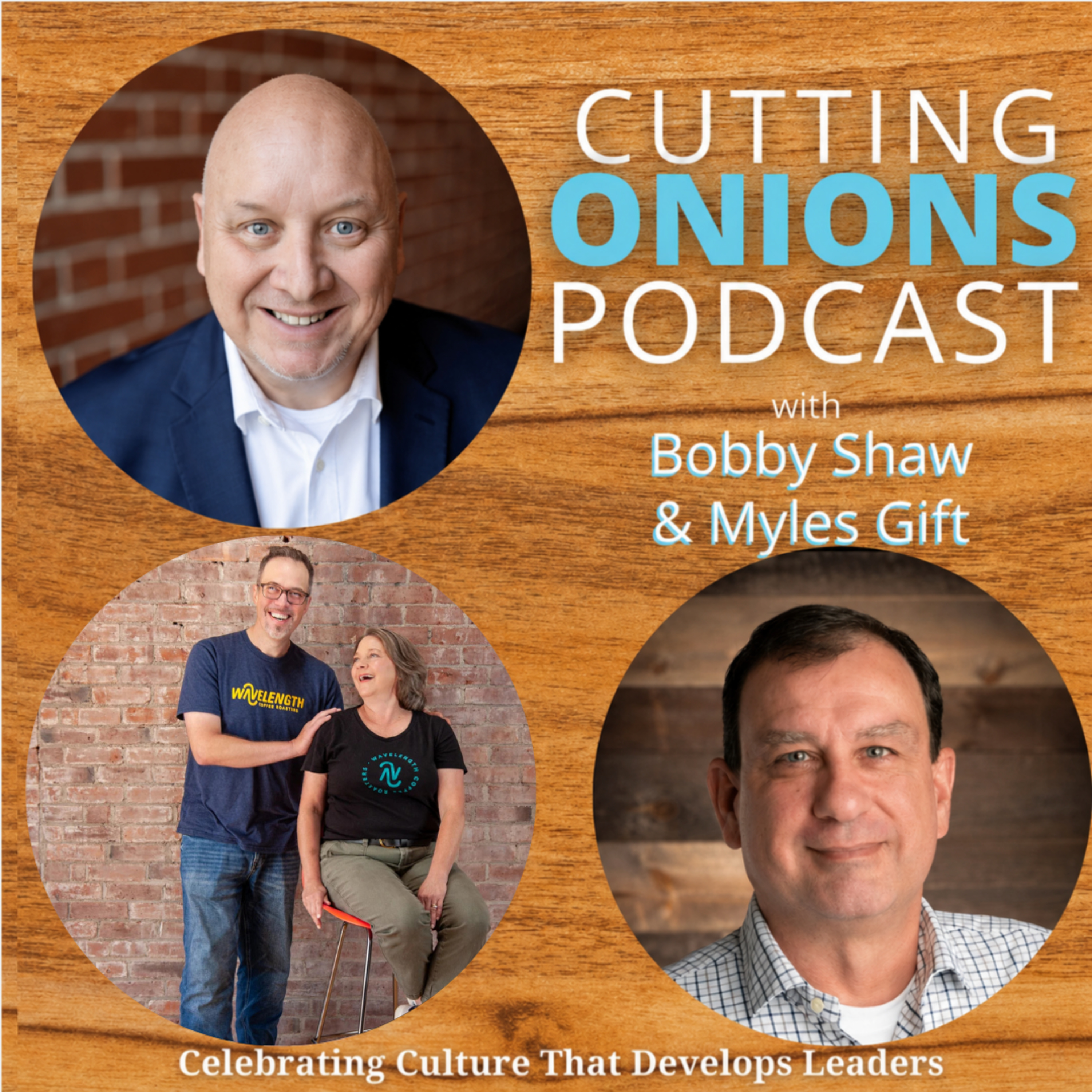
On the Cutting Onions Podcast, restaurant executives Bobby Shaw and Myles Gift celebrate leaders and organizations that build strong people cultures that develop other leaders. Bobby and Myles interview leaders who have built amazing cultures in their organizations through developing great leaders who produce amazing results, the right way.

Listen to episodes

60 recent
August 20, 2026Episode 11542 min

115. Aaron Anderson, franchisor of Sunrise Social joins us today to talk about his unique point of view as a Franchisee and a Franchisor.

Welcome back to The Cutting Onions Podcast. Today’s conversation is one Myles and I have really been looking forward to because our guest has experienced the restaurant business from almost every angle. Aaron Anderson has been a franchisee, a multi-unit restaurant operator, a concept creator, an entrepreneur and now a franchisor. He’s operated brands including Rita’s Italian Ice and The Original Hot Dog Factory, experimented with ghost kitchens, created Brunchaholics, and ultimately evolved that concept into Sunrise Social. And we think what makes Aaron’s story especially interesting is that he didn’t just study franchising from the outside. He lived it first as the person buying into someone else’s system, and now he’s sitting on the other side of the table building one of his own and supporting his franchisees. So today we’re going to talk about restaurants, entrepreneurship, scaling, franchising, leadership, and mistakes, and what it really takes to turn a great concept into a great company. We loved this conversation with Aaron and know you will too. You can enjoy this episode wherever you listen to podcasts.
August 14, 202643 min

114. Carlo D'Amore, Founder of Live In Theatre, Talks about the Importance of Play and the Power of Story

Welcome back to The Cutting Onions Podcast. Myles and I are so excited to present this conversation with Carlo D’Amore. Carlo is an actor, playwright, director, producer, experience designer, and the founder/creative director of Live In Theater (LIT) . His professional theater career spans more than three decades and includes Broadway appearances in Summer and Smoke and Latinologues , as well as Off-Broadway, regional theater, film, and television work. We spent a great deal of time in this episode talking about the importance of play and the power of storytelling and how that works in the theater, but also how that impacts the hospitality world in powerful ways. There are more similarities than you might think. Storytelling isn't merely something Carlo does professionally. There is a very personal connection between story, identity, truth, performance, and survival in his life. We loved this conversation know you will too.

August 12, 2026Episode 11356 min

113. Mike DeJong, Restaurateur and Author of Grow Smart joins us today for a conversation about The Operator Trap

What happens when the thing that made you successful becomes the very thing holding your business back? On this episode of The Cutting Onions Podcast , we sit down with Mike DeJong for a conversation about growth, leadership, systems, and one of the hardest transitions entrepreneurs and operators have to make: learning how to step out of the day-to-day without becoming disconnected from the business. We talk about what Mike calls the “Operator Trap” —when the leader becomes the person everyone depends on to solve problems, make decisions, and keep things moving. That may work for a while. But it doesn’t scale. We get into building systems without creating bureaucracy, developing leaders who can make good decisions without you in the room, understanding the metrics that really matter, and recognizing when your organization is truly ready to grow. One of my favorite parts of the conversation is the tension between letting go and staying connected . Great leadership isn’t about disappearing from the business. It’s about building people, systems, and clarity so the business doesn’t require your constant intervention. If you’re an entrepreneur, restaurant operator, or leader trying to build something bigger than yourself, I think you’ll get a lot out of this conversation. Growth shouldn’t require more heroes. It should require better systems and stronger leaders. We had a mishap with the audio last week, so it sounds like Mike and I are in a pool! But I promise you we weren’t. The convo was so good, I am sharing it as is. We hope you enjoy it!

July 24, 2026Episode 1121 hr 5 min

112. Jim Varney, co-founder of Wavelength Coffee Roasters talks Coffee, Sustainability, and Storytelling.

On today's episode of The Cutting Onions Podcast , we are excited to feature our conversation with Jim Varney. Jim is an industrial designer, engineer-minded entrepreneur, sustainability advocate, and co-founder of Wavelength Coffee Roasters . After roughly 25 years in product development and design, he made a significant mid-career pivot into specialty coffee. Alongside his wife, Deanna, they founded Wavelength in Massachusetts in 2025, officially launching the brand in November of last year. The most compelling part of Jim's story is not simply that he started a coffee company. It is that he is applying industrial design, technology, systems thinking, and environmental sustainability to an industry still dependent on many traditional processes. He and Deanna really want to show what the future can look like for roasting coffee beans. We also spent time discussing the power of storytelling and how that is central to the Wavelength brand. There is a fully integrated message from the roastery to farmers' markets, to the website, to the packaging. This was such an inspiring conversation, and we can't wait for you to hear it. Check out this episode wherever you consume your podcast content.

June 26, 2026Episode 11136 min

111. The Lost Art of Restaurant Orientation

On today’s episode of The Cutting Onions Podcast, Myles and I continue to the conversation about the basics of the business and talk about the lost art of restaurant orientations. This is a basic fundamental of the business that is crucial to having engaged, inspired, and excellent team members. Here is some of what we talked about in our conversation: Technology (LMS, onboarding software) is a useful tool, but cannot replace human conversation, eye contact, and culture transfer The industry has drifted toward mistaking the administrative package for a real orientation Orientation is the first promise leadership makes to a new team member Follow-up orientation is where you prove you meant it Culture immersion starts in the interview process and continues through the orientation. Our challenge to you this week: Talk to your newest team member and ask these powerful questions: Is there anything we could have done differently to make your onboarding better? What was confusing or unclear? Who has helped you the most? This signals your openness to feedback early. Then, pick one thing and fix it, and circle back to let them know you made the change. As Myles said, the orientation sets the tone for how the rest of the employment experience will go. Check out this conversation wherever you consume your podcast content!

June 11, 2026Episode 11033 min

110. The Return of Operational Discipline

Today on The Cutting Onions Podcast, Myles and I talk about the return of operational discipline. Here’s what we know: Restaurants are entering a season where fundamentals matter more than ever. Technology, AI, dashboards, kiosks, loyalty platforms, delivery, and automation are all useful tools, but they do not replace the discipline of running a great shift. The winning operators will consistently execute labor, food cost, cleanliness, speed, hospitality, prep, manager presence, opening routines, closing routines, and daily communication. Operational discipline is not old-school. It is the foundation that makes growth, hospitality, and technology actually work. The big question we ask is this… “Have we accidentally made restaurant leadership too complicated by chasing every new tool, trend, and technology — when what our teams really need first is clarity, standards, and a manager who is present?” Spoiler Alert: We don’t think so, but this is a good gut check for all leaders to make sure that we stay focused on the fundamentals. We can use technology as an accelerator to make us more efficient, but nothing will replace the basics. It can support what we do operationally, but it can’t replace what we do as leaders. All these years later, after leading hundreds of restaurants, we still believe some of the most important leadership lessons are hiding inside those basic routines. We hope you enjoy this episode! You can listen in wherever you consume your podcast content.

June 6, 2026Episode 1091 hr 0 min

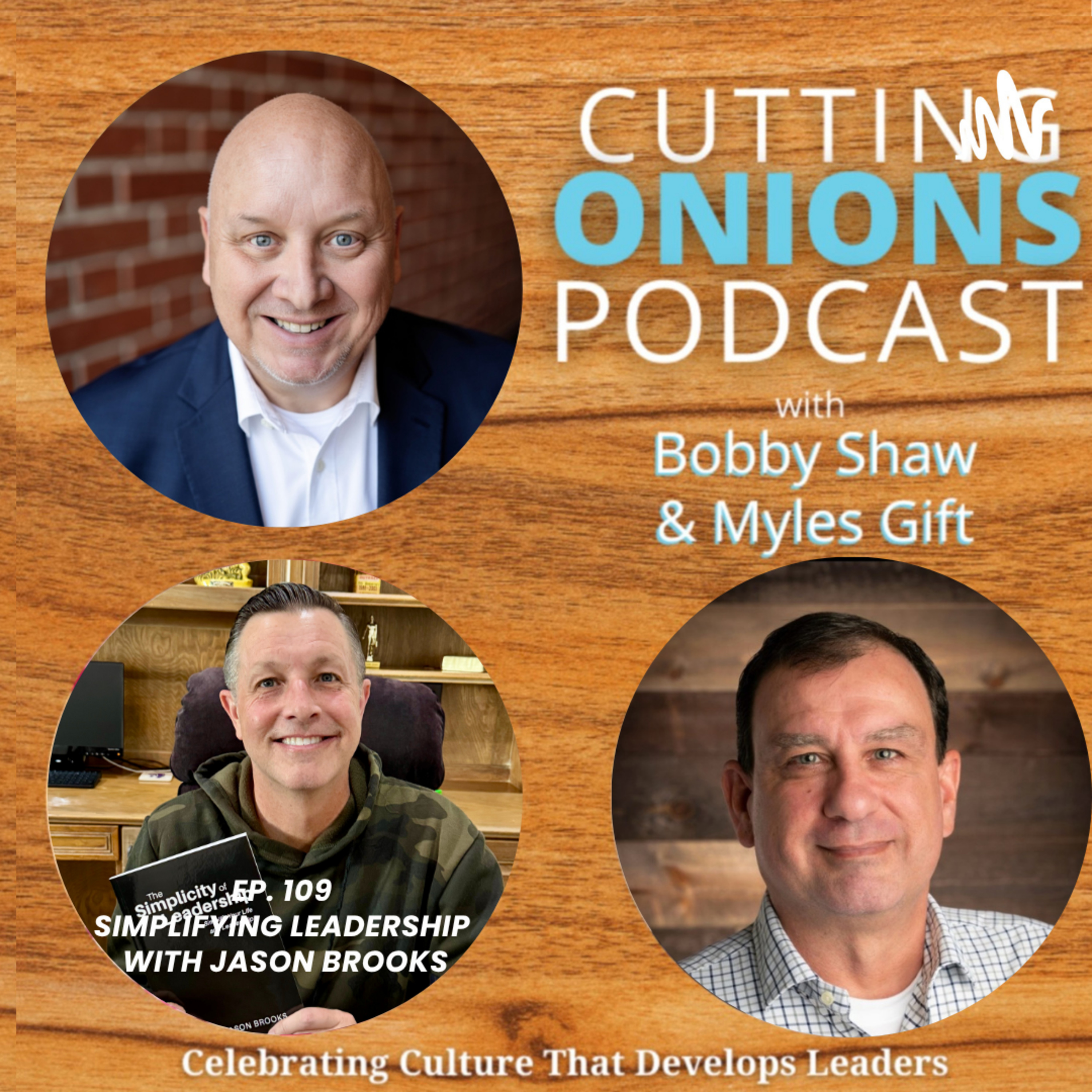
109. Simplifying Leadership with Jason Brooks

Welcome to The Cutting Onions Podcast! On today's episode we are excited to feature our conversation with restaurant executive and author, Jason Brooks. Jason has an incredible leadership story, which we get into on the podcast and it's equal parts inspiring and tactical. Jason has just written a new book titled "The Simplicity of Leadership" and it is fantastic. The Simplicity of Leadership is built around one core premise: Complexity kills. Simplicity scales. Jason’s message is that leadership does not have to be heavy, over-engineered, or buried under frameworks, meetings, reports, and corporate language. The work of a leader is to simplify the noise so people can focus, grow, communicate clearly, feel valued, own accountability, and build something that lasts. He frames the book around four leadership lanes: mindset, people, accountability, and legacy . Jason opens by grounding the book in his own hospitality journey, from server to executive leadership with Outback/Bloomin’ Brands, eventually overseeing 150 locations and nearly 10,000 hourly team members. His credibility comes from lived operational experience, not theory. The book is written as a practical playbook for leaders who want better results by subtracting the unnecessary rather than constantly adding more. Please check out Jason's website to learn more about what Jason is up to and connect with him on LinkedIn to follow along with the insights, industry updates, and lessons from the hospitality industry.

June 2, 2026Episode 1081 hr 0 min

108. Gratitude & Grit: The Two Engines of Leadership

Welcome back to The Cutting Onions Podcast . In today’s episode, we’re talking about Gratitude and Grit: The Two Engines of Leadership . Because leadership is not just about pushing harder, and it’s not just about staying positive. It takes both. Gratitude keeps us grounded, humble, and connected to the people around us. Grit keeps us moving when the work gets hard, the pressure builds, and the outcome is not guaranteed. The best leaders learn how to carry both. Gratitude reminds us of what matters. Grit reminds us to keep going. And when leaders bring those two together, they create the kind of culture people want to be part of. So this week, ask yourself: Where do I need more gratitude? And where do I need more grit?

March 16, 2026Episode 10725 min

107. Bullets Before Cannonballs & The 20-Mile March

Today on The Cutting Onions Podcast, Myles and I discuss two principles from Jim Collins’ excellent book, Great By Choice, published in 2012. Jim has a new book coming out on April 7th titled What To Make of A Life, and we can’t wait to get our hands on it! In today’s conversation, we discussed firing bullets before cannonballs and the 20-mile march. Bullets Before Cannonballs: Imagine two ships trying to hit an enemy target. One captain loads the cannon immediately and fires a massive cannonball. Huge risk. Huge cost. Huge commitment. But the other captain takes a different approach. He fires a bullet first. A small test shot. Then another. And another. And when those bullets start hitting the target… Then he loads the cannon and fires the cannonball. Jim Collins defines a bullet like this: ‘A bullet is a low-cost, low-risk, low-distraction experiment.’ In the context of the restaurant/hospitality industry, it looks like running pilots (not systemwide rollouts without testing), and then gathering data and feedback. Those are bullets. Then they scaled it and fired the cannonball. The 20-mile march story Jim Collins touches on is fascinating. He tells the story of two explorers racing to the South Pole: ⁠ Roald Amundsen ⁠ and ⁠ Robert Falcon Scott ⁠ . Amundsen approached the expedition with incredible discipline. He committed to marching 20 miles every single day. If the weather was beautiful, they marched 20 miles. If the weather was brutal, they marched 20 miles. No heroics. No overextending. Just disciplined progress. Scott’s team took the opposite approach. When conditions were good, they pushed themselves to exhaustion. When conditions were bad, they stopped. And that lack of consistency ultimately cost them the race—and tragically, their lives. So what does this have to do with leadership? Great leaders combine two things: They fire bullets before cannonballs. And they march 20 miles every day. They test ideas before committing huge resources. And they build disciplined, consistent progress over time. That combination—experimentation and discipline—is what allows organizations to win over the long haul. Are you firing cannonballs before you know where the target is? Or are you firing bullets… learning… adjusting… and then committing your resources? And once you find the target… Are you marching 20 miles every single day? Because great leadership isn’t about heroic bursts of activity. It’s about disciplined progress and smart experimentation.

March 8, 2026Episode 10042 min

106. The Power of Storytelling in Hospitality and in Life

Welcome to The Cutting Onions Podcast. This is episode 106, and today’s conversation we're talking about the power of storytelling in hospitality and in life. Alongside my co-host, as always, Myles Gift, we’re really excited about this conversation. We believe storytelling has become a really important part of the work we do in the restaurant and hospitality industry, but you see its importance everywhere in every industry across every platform. This week, there has been a lot of energy around storytelling coming from some of the major burger brands out there and their new sandwiches so that's part of this, but certainly not the full weight of it. This conversation is really on the power of storytelling and why it matters in hospitality. We talk about the three stories that every hospitality brand is telling: They're telling the story of the guest They're telling the story of their team. They're telling the story of their leadership. We’re very excited about this conversation. We hope you enjoy it as you immerse yourself in it and really think through the way that you're telling your story and the way that your brand is telling their story and using storytelling as a leadership tool. And finally, this last week, one of our childhood heroes, Harrison Ford, gave an acceptance speech at the Screen Actors Guild Awards that was a master class in why storytelling matters. We’ve posted about that a few times this week. If you haven’t seen it, we encourage you to watch it. This quote from Harrison Ford sums it up beautifully: "The stories we tell have a unique capacity to create moments of emotional connection." And isn’t that what we're all here to do? Thanks again today for joining us. We're really happy to have you here, and we'll see you on the other side.

Is this your show?

Claim this listing to keep it up to date, reach guests who want to pitch you, and manage bookings with Guestify.

Claim this listing

More Business podcasts