
Find partners
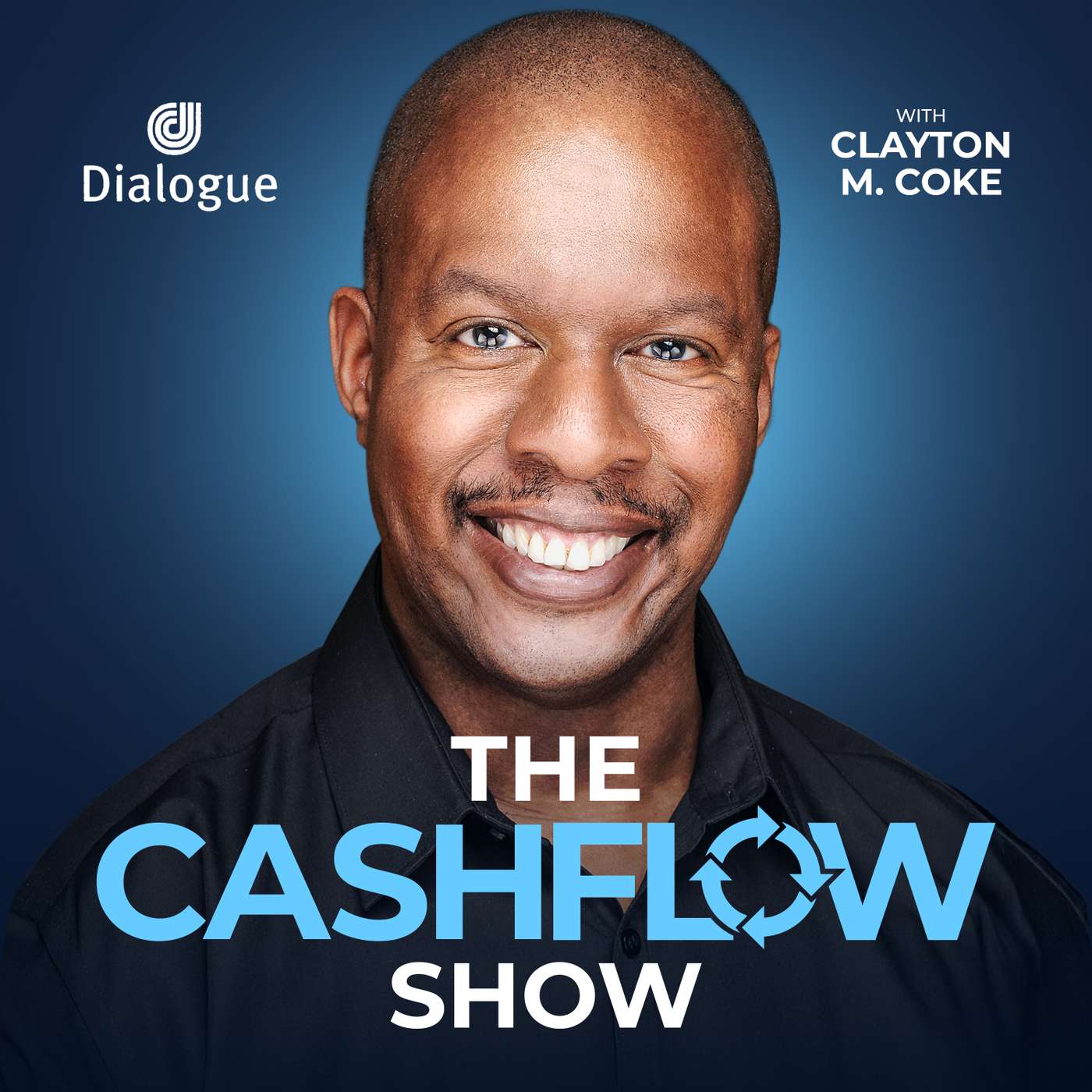
The Cashflow Show: Entrepreneurship Insights for Founders, CEOs and Business Leaders

The Cashflow Show: Entrepreneurship Insights for Founders, CEOs and Business Leaders

Hosted by Dialogue [London] Ltd

BusinessInterviews guests

Episodes

154

Latest episode

Oct 2026

Language

EN-GB

About the show

Join The Cashflow Show with Clayton M. Coke for insightful chats & raw reflections with industry leaders and innovators. Explore entrepreneurship, business growth, and finance through real stories and actionable tips. Perfect for CEOs and founders, this business podcast inspires and educates. Subscribe now for real people, real business, real talk! #BusinessPodcast #Entrepreneurship

Listen to episodes

60 recent
October 2, 2026Episode 15419 min

The £574 Billion Question: What’s Really Stopping Women from Investing? | Dr Ylva Baeckström

Episode Summary In this episode of The Cashflow Show, host Clayton M Coke speaks with Dr Ylva Baeckström, Behavioural Finance Expert at King’s Business School. They explore the UK’s £574 billion gender investment gap, the non-financial barriers holding women back, the power of short structured education, the role of early messaging and role models, and practical ways to close the gap. Chapters 00:00 – Introduction and welcome 00:26 – Dr Baeckström’s background and journey 02:23 – The £574 billion gender investment gap 02:51 – Financial capability as the key barrier 03:20 – How the gap starts in childhood 04:18 – Perception vs reality of investing 05:12 – Time commitment myths 06:33 – Investing is simpler than people think 07:28 – The importance of parental encouragement 09:21 – How 20 minutes a day for 7 days changes perceptions 10:47 – Class, exclusion and complexity 12:14 – Better ways of teaching financial education 13:11 – How eToro’s approach works 15:06 – Fear of getting it wrong 16:33 – Just starting the journey 17:03 – Vision for the future of women and investing 18:28 – Resources and the 7-Day Loud Investing Challenge Key Discussion Points The UK gender investment gap stands at £574 billion 73% of non-investing women believe they need to know a lot before starting 67% think investing requires a major time commitment Gender differences in financial confidence appear by age 16 Financial gifts and messaging differ for boys and girls from babyhood Short, practical learning (20 minutes a day for 7 days) significantly shifts perceptions and willingness to invest Fear of getting it wrong is largely based on lack of knowledge The real risk is not investing at all Key Takeaways Investing feels complex until people start learning — then the barrier drops quickly Short, accessible education is highly effective at changing attitudes and behaviour Early encouragement, especially from parents and role models, has lasting impact Exclusion (by gender, class or background) makes finance feel more complicated than it is The biggest risk for many women is remaining in cash and missing long-term growth Notable Quotes “The real risk for women and other under-invested groups is not investing at all.” – Dr Ylva Baeckström “ Just starting the journey means that you’re taking control of your situation.” – Dr Ylva Baeckström “ It’s not that complex. Absolutely everyone can learn about investing.” – Dr Ylva Baeckström Actionable Insights for Businesses Design financial education in short, practical sessions rather than long traditional courses Use plain language and remove unnecessary jargon Encourage early positive messaging about money and investing for girls and under-represented groups Support employees and customers with simple, confidence-building investment learning Focus on getting people started rather than aiming for perfect knowledge first Resources Money and Pensions Service: maps.org.uk eToro 7-Day Loud Investing Challenge (free, 20 minutes a day) – search “Loud Investing” Book: Gender and Finance: Addressing Inequality in the Financial Services Industry by Dr Ylva Baeckström The Cashflow Show can be reached here : Website: www.thecashflowshowpodcast.com Email: thecashflowshowpodcast@gmail.com Twitter: https://twitter.com/thecashflowshow Instagram: https://instagram.com/thecashflowshowpodcast To sponsor or advertise on The Cashflow Show Podcast, contact us at thecashflowshowpodcast@gmail.com Clayton M Coke can be found here: LinkedIn: https://uk.linkedin.com/in/claytoncoke Email: info@prmsltd.co.uk Twitter: https://twitter.com/prmsltd Instagram: https://www.instagram.com/prmsltd/ Our theme music is called "The Mediator - aka Theme from The Cashflow Show" [PRS] and " Better Call Clayton" [PRS] “What are YOU like?”, “60 Second Shoot-Out” &"What About The Tech?" are all intellectual properties of Dialogue [London] Ltd (c) Clayton M Coke/PRMS Ltd/Dialogue [London] Ltd | All Rights Reserved ★ Support this podcast ★

October 2, 2026Episode 15318 min

Why Half of Britons Would Switch Brands for Fair Tax | Paul Monaghan, Fair Tax Foundation

Episode Summary In this episode of The Cashflow Show, host Clayton M Coke speaks with Paul Monaghan, Chief Executive of the Fair Tax Foundation. They discuss growing public demand for responsible tax conduct, the impact of the UK’s £40 billion tax gap, the problem of phoenixing, the commercial value of the Fair Tax Mark, and why greater tax transparency benefits both businesses and society. Chapters 00:00 – Introduction and welcome 00:28 – About the Fair Tax Foundation and Fair Tax Mark 01:26 – Public support for fair tax conduct 02:54 – Employee pride and talent retention 04:19 – The £40 billion UK tax gap 04:47 – Phoenixing and unfair competition 06:12 – Protecting diligent businesses 08:09 – Commercial opportunities of the Fair Tax Mark 09:06 – How transparency builds trust 10:31 – Public demand for tax disclosure 11:29 – Transparency changes behaviour 12:57 – How realistic is greater transparency? 14:51 – What a responsible tax policy should include 16:46 – Advice for business leaders 18:10 – Where to find more information Key Discussion Points Nearly three-quarters of the British public prefer to shop with or work for businesses that pay their fair share of tax The UK tax gap stands at almost £40 billion (HMRC figure) Phoenixing and other forms of non-compliance create unfair competition for law-abiding businesses More than half of consumers say they would actively switch to Fair Tax Mark accredited businesses Employee pride is the number one reported benefit of the Fair Tax Mark Public country-by-country reporting is expanding internationally in 2026 Transparency tends to reduce aggressive tax avoidance and improve compliance Key Takeaways Responsible tax conduct enjoys broad cross-political public support Fair tax behaviour strengthens both consumer loyalty and employee retention Unfair practices such as phoenixing harm legitimate businesses and high streets Third-party accreditation (like the Fair Tax Mark) builds trust in an age of scepticism Greater transparency is both achievable and increasingly expected by the public, investors and markets Notable Quotes “Right across the political spectrum, people want businesses and individuals to make a fair tax contribution.” – Paul Monaghan “ We’re more there to celebrate than to chastise.” – Paul Monaghan “ Transparency changes behaviour when it’s in place.” – Paul Monaghan Actionable Insights for Businesses Develop a clear, public tax policy that covers both the letter and spirit of the law Be transparent about income, profit and tax paid — and add narrative to explain the numbers Consider independent accreditation such as the Fair Tax Mark Use transparency as a competitive advantage with customers, employees and investors Support measures that protect law-abiding businesses from unfair competition Resources Fair Tax Foundation: www.fairtaxmark.net Free model tax policies available on the Fair Tax Foundation website List of accredited Fair Tax Mark businesses The Cashflow Show can be reached here : Website: www.thecashflowshowpodcast.com Email: thecashflowshowpodcast@gmail.com Twitter: https://twitter.com/thecashflowshow Instagram: https://instagram.com/thecashflowshowpodcast To sponsor or advertise on The Cashflow Show Podcast, contact us at thecashflowshowpodcast@gmail.com Clayton M Coke can be found here: LinkedIn: https://uk.linkedin.com/in/claytoncoke Email: info@prmsltd.co.uk Twitter: https://twitter.com/prmsltd Instagram: https://www.instagram.com/prmsltd/ Our theme music is called "The Mediator - aka Theme from The Cashflow Show" [PRS] and " Better Call Clayton" [PRS] “What are YOU like?”, “60 Second Shoot-Out” &"What About The Tech?" are all intellectual properties of Dialogue [London] Ltd (c) Clayton M Coke/PRMS Ltd/Dialogue [London] Ltd | All Rights Reserved ★ Support this podcast ★

October 2, 2026Episode 15218 min

Why the AI Boom Is Leaving UK Businesses Exposed | Sebastian Weir, IBM

Episode Summary In this episode of The Cashflow Show, host Clayton M Coke speaks with Seb Weir, Executive Partner and AI, Analytics & Automation Practice Leader at IBM. They discuss the growing gap between AI accountability and control, the rise of “shadow AI”, organisational readiness for AI agents, security and compliance challenges, and how boards should lead responsible AI adoption. Chapters 00:00 – Introduction and welcome 00:29 – Seb’s role at IBM 00:58 – The accountability–control gap in AI 01:28 – Governance risks of rapid AI adoption 02:26 – What is shadow AI? 03:50 – Government progress on AI and sovereign technology 05:12 – Only 13% of leaders feel prepared for AI agents 05:41 – AI literacy and organisational change 07:08 – Reframing AI as a growth opportunity 09:05 – AI improving customer experience (e.g. returns) 09:32 – Security and compliance as major barriers 10:01 – Responsible, transparent and open AI 11:20 – Bias and unintended consequences 12:15 – Day-one advice for boards and founders 14:12 – Who should drive AI adoption? 15:11 – AI is not a panacea 16:07 – The next phase: process reinvention 17:02 – Humans at the core of lean, adaptable businesses 17:30 – Where to find the research and Seb Key Discussion Points 62% of UK technology leaders are accountable for AI outcomes in systems they do not fully control Shadow AI occurs when AI is embedded in platforms without clear visibility or deliberate choice Only 13% of technology leaders feel fully prepared for the scale of AI agent deployment expected in the next 12 months 58% cite security and compliance as major barriers to scaling AI Technology advances faster than organisational change and adoption Boards need stronger AI literacy across all members AI should be treated as a growth and agility lever, not only a cost-cutting tool The next stage is full process reinvention with humans placed back at the centre Key Takeaways Rapid AI adoption is creating serious governance and accountability gaps Many organisations underestimate the presence and risk of embedded or “shadow” AI Successful AI use requires deliberate risk management, transparency and organisational change Leadership must lead by example and build AI literacy at board level The biggest opportunity lies in reinventing processes, not just augmenting existing ones Notable Quotes “It’s very easy to implement technology. It’s very hard to drive adoption.” – Seb Weir “ AI is a very particular weapon for a very particular problem. It’s not a tool for all problems.” – Seb Weir “ There is not a vision here for autonomous businesses. This is about lean, adaptable businesses with human elements at its core.” – Seb Weir Actionable Insights for Businesses Identify and assess shadow AI already present in existing platforms Build AI literacy across the entire board and leadership team Lead by example — demonstrate personal use of AI tools Make conscious, risk-based decisions about where and how AI is deployed Focus on measurable use cases tied to clear business outcomes Prioritise transparency, security and understanding of bias Aim for process reinvention rather than incremental automation alone Resources IBM Institute for Business Value research (search “Institute of Business Value”) Seb Weir on LinkedIn (Sebastian Weir) AI Summit / London Tech Week appearances The Cashflow Show can be reached here : Website: www.thecashflowshowpodcast.com Email: thecashflowshowpodcast@gmail.com Twitter: https://twitter.com/thecashflowshow Instagram: https://instagram.com/thecashflowshowpodcast To sponsor or advertise on The Cashflow Show Podcast, contact us at thecashflowshowpodcast@gmail.com Clayton M Coke can be found here: LinkedIn: https://uk.linkedin.com/in/claytoncoke Email: info@prmsltd.co.uk Twitter: https://twitter.com/prmsltd Instagram: https://www.instagram.com/prmsltd/ Our theme music is called "The Mediator - aka Theme from The Cashflow Show" [PRS] and " Better Call Clayton" [PRS] “What are YOU like?”, “60 Second Shoot-Out” &"What About The Tech?" are all intellectual properties of Dialogue [London] Ltd (c) Clayton M Coke/PRMS Ltd/Dialogue [London] Ltd | All Rights Reserved ★ Support this podcast ★

October 2, 2026Episode 15121 min

The Future of E-Commerce: Payments, Trust, AI & Ghost Stores | Tom Cheesewright, Applied Futurist

Episode Summary In this episode of The Cashflow Show, host Clayton M Coke speaks with applied futurist Tom Cheesewright about insights from the DHL 2026 E-Commerce Trends Report. They explore why shoppers abandon purchases over missing payment methods, the rise of digital wallets and cryptocurrency, consumer concerns about AI, the critical importance of delivery and returns, shifting influence from influencers to user-generated content, voice commerce, and the emerging idea of “ghost stores.” Chapters 00:00 – Introduction and welcome 00:27 – What an applied futurist does 01:47 – The DHL 2026 E-Commerce Trends Report 02:15 – Payment method gaps and abandoned purchases 03:14 – Why friction at checkout still costs sales 04:41 – Digital wallets and the rise of crypto payments 05:37 – Global and cross-border commerce implications 07:00 – Consumer concerns about AI, privacy and trust 07:57 – When AI becomes invisible and valuable 09:20 – AI shopping agents and ghost stores 10:45 – Convenience vs trust in delivery and returns 12:08 – Why the physical side of e-commerce matters most 14:32 – Influencers vs user-generated content 16:27 – The UK’s different relationship with influencers 17:22 – Voice commerce and hands-free shopping 19:49 – Advice for new e-commerce businesses 21:15 – Where to find the report and Tom Key Discussion Points 62% of shoppers abandon a purchase if their preferred payment method is unavailable, yet only 45% of businesses recognise this as a cause of lost sales Digital wallets are mainstream; cryptocurrency adoption is projected to reach nearly 30% by 2030 Cross-border commerce makes broader payment options increasingly important Consumers remain cautious about AI in shopping around privacy and trust AI delivers clear value when it improves personalisation, fraud protection or convenience Convenience is critical for 92% of online shoppers, but 76% will not buy if they do not trust the delivery or returns provider Delivery and returns form the main physical interaction most customers have with an online brand Globally, user-generated content now influences more people than influencer posts (with the UK as a notable exception) Nearly half of hands-free shoppers make purchases two or three times a week via voice Key Takeaways Friction at checkout, especially missing payment options, still drives significant lost sales The physical experience of delivery and returns defines brand perception for many online shoppers AI will be accepted more readily when consumers clearly see the benefit Understanding your specific customer base is essential when deciding which payment methods and channels to prioritise New e-commerce businesses should get the physical fulfilment experience right before polishing the digital layer Notable Quotes “Consumers are fundamentally lazy and don’t want to go and make that effort.” – Tom Cheesewright “ The physical is absolutely critical now for your e-commerce brand.” – Tom Cheesewright “ Start with the physical… then build your digital layers on top.” – Tom Cheesewright Actionable Insights for Businesses Audit and expand payment options to match what your customers actually want to use Treat delivery and returns as core brand experiences, not afterthoughts Use AI in ways that deliver visible value to shoppers (personalisation, fraud protection, convenience) Monitor the growing influence of authentic user-generated content alongside traditional influencer activity Prepare for emerging channels such as voice commerce where they fit your product categories For new online businesses, prioritise reliable fulfilment and packaging before heavy digital investment Resources DHL 2026 E-Commerce Trends Report: dhl.com/2026-report (or search “DHL e-commerce 2026 trends report”) Tom Cheesewright: tomcheesewright.com The Cashflow Show can be reached here : Website: www.thecashflowshowpodcast.com Email: thecashflowshowpodcast@gmail.com Twitter: https://twitter.com/thecashflowshow Instagram: https://instagram.com/thecashflowshowpodcast To sponsor or advertise on The Cashflow Show Podcast, contact us at thecashflowshowpodcast@gmail.com Clayton M Coke can be found here: LinkedIn: https://uk.linkedin.com/in/claytoncoke Email: info@prmsltd.co.uk Twitter: https://twitter.com/prmsltd Instagram: https://www.instagram.com/prmsltd/ Our theme music is called "The Mediator - aka Theme from The Cashflow Show" [PRS] and " Better Call Clayton" [PRS] “What are YOU like?”, “60 Second Shoot-Out” &"What About The Tech?" are all intellectual properties of Dialogue [London] Ltd (c) Clayton M Coke/PRMS Ltd/Dialogue [London] Ltd | All Rights Reserved ★ Support this podcast ★

October 2, 2026Episode 15022 min

How UK Small Firms Can Save Over 5 Hours a Week with AI | Polly Dhaliwal, Enterprise Nation

Episode Summary In this episode of The Cashflow Show, host Clayton M Coke speaks with Polly Dhaliwal, Chief Operating Officer at Enterprise Nation. They discuss how UK SMEs are using AI to save an average of 5.2 hours per week, practical ways small businesses are applying the technology, the importance of using saved time creatively, age-related adoption patterns, quick wins, and the free SME AI Accelerator programme run with OpenAI. Chapters 00:00 – Introduction and welcome 00:29 – About Enterprise Nation and Polly’s role 01:54 – SMEs saving 5.2 hours a week with AI 02:48 – What the productivity gain looks like in practice 03:45 – Using saved time for creativity and strategy 05:39 – What small businesses most want AI to do 08:01 – Real example: florist wins £10,000 with AI support 09:29 – Age and AI adoption 12:39 – Older business owners as strong adopters 13:06 – Common AI use cases 14:02 – Quickest wins for time-pressed owners 17:42 – SME AI Accelerator programme with OpenAI 19:34 – Common fears around AI 21:27 – Where to find more support Key Discussion Point UK SMEs adopting AI are saving an average of 5.2 hours per week Common uses include email automation, customer service, operations, pricing and research The real value lies in how the saved time is used — especially for creativity and strategic thinking Customer support inquiries are one of the fastest and highest-impact use cases Deep research and content support also deliver strong results 40% of decision-makers over 55 are not using AI, yet experienced owners can produce excellent outputs Younger people are not always adopting AI as quickly as expected Free hands-on workshops through the SME AI Accelerator help businesses build practical skills Key Takeaways AI is already delivering measurable time savings for small businesses Saved time should be deliberately reinvested in creative and growth-focused work Starting with customer support and research often delivers the quickest results Experience and good prompting can make older business owners highly effective AI users Free, practical, in-person training accelerates adoption and confidence Notable Quotes “How we use that saved time is the most important part here.” – Polly Dhaliwal “ AI is only as good as the person who’s inputting into it.” – Polly Dhaliwal “S mall businesses are adaptable. They will adapt to anything that is thrown their way.” – Polly Dhaliwal Actionable Insights for Businesses Start with high-volume, repetitive tasks such as customer support emails Use AI for research, summarisation and first drafts to free up time Deliberately block time to work on strategy and creativity with the hours saved Train AI tools on your tone of voice and processes for better results Take advantage of free practical programmes such as the SME AI Accelerator Focus saved time on higher-value activities such as funding applications and growth planning Resources Enterprise Nation: enterprisenation.com Free newsletter every Wednesday with opportunities and support SME AI Accelerator programme (in partnership with OpenAI) Around 300 events a year across the UK and Ireland The Cashflow Show can be reached here : Website: www.thecashflowshowpodcast.com Email: thecashflowshowpodcast@gmail.com Twitter: https://twitter.com/thecashflowshow Instagram: https://instagram.com/thecashflowshowpodcast To sponsor or advertise on The Cashflow Show Podcast, contact us at thecashflowshowpodcast@gmail.com Clayton M Coke can be found here: LinkedIn: https://uk.linkedin.com/in/claytoncoke Email: info@prmsltd.co.uk Twitter: https://twitter.com/prmsltd Instagram: https://www.instagram.com/prmsltd/ Our theme music is called "The Mediator - aka Theme from The Cashflow Show" [PRS] and " Better Call Clayton" [PRS] “What are YOU like?”, “60 Second Shoot-Out” &"What About The Tech?" are all intellectual properties of Dialogue [London] Ltd (c) Clayton M Coke/PRMS Ltd/Dialogue [London] Ltd | All Rights Reserved ★ Support this podcast ★

October 2, 2026Episode 14812 min

Why Big Banks Don’t Care About Small Communities | Roger Hattam, Triodos Bank UK

Episode Summary In this episode of The Cashflow Show, host Clayton M Coke speaks with Roger Hattam, Director of Retail Banking at Triodos Bank UK. They discuss public expectations of banks’ role in local communities, the perception that big banks do not care about small communities, the types of local investment people want to see, the power of where savers place their money, and how Triodos finances projects that benefit society and the environment. Chapters 00:00 – Introduction and welcome 00:29 – Roger’s role at Triodos Bank UK 00:58 – Public expectation that banks support local communities 01:28 – How branch closures have changed perceptions 01:56 – What customers want to know about their money 02:54 – Perception that big banks don’t care about small communities 03:23 – Demand for investment in the real local economy 03:52 – Top public priorities: health, environment and high streets 04:14 – Banking’s role in healthcare and care services 05:13 – Supporting local renewable energy projects 06:09 – Giving communities a greater say in investment 07:06 – The power of where people choose to bank and save 08:03 – What Triodos stands for 09:29 – Key sectors Triodos supports 09:58 – What savers should look for in an ethical ISA 11:22 – Where to find more information Key Discussion Points 65% of people believe banks should actively support local communities 54% feel big banks do not care about small communities Only 29% believe their bank supports positive local change Customers want transparency on how their money is used locally Priority areas include health services, environmental projects, local high streets, small businesses and affordable housing 39% feel they have no say in local investment decisions Savers have real power through where they place their deposits and ISAs Triodos focuses on financing projects that are good for society and the environment Key Takeaways Many customers feel disconnected from how banks use their money There is strong public demand for banks to support visible local projects Transparency about lending and investment builds trust Choosing where to save and bank is a practical way for individuals to influence impact Ethical and values-aligned banking options exist and can deliver both financial and social returns Notable Quotes “People want to know that their banks are investing in the real economy.” – Roger Hattam “ The power is in your hands because where you choose to put that money directly affects the kind of places that money gets invested in.” – Roger Hattam “ Money has power and it has an impact on our whole systems and our whole lives.” – Roger Hattam Actionable Insights for Businesses Communicate clearly and transparently about local lending and community impact Align investment activity with the priorities local people care about most Recognise that customers increasingly judge banks on values as well as products Support visible local projects in health, environment, housing and small business Help customers understand the real-world impact of where their money is placed Resources Triodos Bank UK: triodos.co.uk Ethical Consumer – independent ratings on banks and ethical standing Good Finance – additional information on impact-focused financial services The Cashflow Show can be reached here : Website: www.thecashflowshowpodcast.com Email: thecashflowshowpodcast@gmail.com Twitter: https://twitter.com/thecashflowshow Instagram: https://instagram.com/thecashflowshowpodcast To sponsor or advertise on The Cashflow Show Podcast, contact us at thecashflowshowpodcast@gmail.com Clayton M Coke can be found here: LinkedIn: https://uk.linkedin.com/in/claytoncoke Email: info@prmsltd.co.uk Twitter: https://twitter.com/prmsltd Instagram: https://www.instagram.com/prmsltd/ Our theme music is called "The Mediator - aka Theme from The Cashflow Show" [PRS] and " Better Call Clayton" [PRS] “What are YOU like?”, “60 Second Shoot-Out” &"What About The Tech?" are all intellectual properties of Dialogue [London] Ltd (c) Clayton M Coke/PRMS Ltd/Dialogue [London] Ltd | All Rights Reserved ★ Support this podcast ★

October 2, 2026Episode 1469 min

Is 2026 the Year the AI Tech Bubble Bursts? | Shantanu Goswami, SAP UK & Ireland

Episode Summary In this episode of The Cashflow Show, recorded at Tech Show London, host Clayton M Coke speaks with Shantanu Goswami, Vice President of SAP Customer Advisory for SAP UK and Ireland. They discuss the difference between consumer and enterprise AI, why small businesses often have an advantage, the importance of focusing on problems rather than technology, how SAP embeds AI into business processes, and the value of an open technology ecosystem. Chapters 00:00 – Introduction and welcome 00:28 – Shantanu’s role at SAP 00:58 – Speaking on enterprise data and AI 01:25 – Consumer AI vs industrial AI 01:54 – Addressing fears around AI 02:19 – Why small businesses have an advantage 03:18 – Focus on problems, not technology 04:15 – Avoiding information overload and tech hype 05:12 – Background on SAP and ERP 06:08 – How SAP approaches AI differently 07:07 – Atmosphere at Tech Show London 08:00 – Embedding AI and working with partners 08:57 – Where to find SAP at the show and online Key Discussion Points There is significant confusion between AI used in personal life and AI relevant to business Large companies often face bigger barriers due to legacy systems Small and medium businesses can leapfrog legacy constraints and adopt AI more quickly Technology itself is increasingly a commodity — the real value lies in solving clear business problems Businesses should focus on desired outcomes and experiences for employees, customers and stakeholders SAP invented the ERP category and now embeds AI directly into core business processes An open ecosystem approach allows customers to combine best-of-breed and best-of-suite solutions SAP’s Business Data Cloud enables access to innovation from multiple technology partners Key Takeaways Small businesses are often better positioned than large enterprises to adopt AI quickly Success comes from clarity on the problem to be solved, not from chasing the latest technology Embedding AI into existing business processes creates more practical value than treating AI as a standalone tool An open platform approach reduces the need to choose a single technology vendor Understanding current capabilities and desired outcomes is essential before selecting tools Notable Quotes “Technology is commodity. Everybody’s technology works.” – Shantanu Goswami “ People should be thinking about problems they want to solve.” – Shantanu Goswami “ Small businesses are in a distinct advantage to get ahead in this space.” – Shantanu Goswami Actionable Insights for Businesses Start with the business problem and desired outcomes, not the technology Define the experience you want to deliver to customers, employees and stakeholders Assess where you are today before deciding where AI can help Look for solutions that embed AI into core processes rather than bolting it on Consider platforms that allow flexibility across an ecosystem of partners Small and mid-sized businesses should lean into their ability to move quickly Resources SAP booth at Tech Show London: C328 Connect with Shantanu Goswami on LinkedIn SAP Business Data Cloud and AI-enabled process solutions The Cashflow Show can be reached here : Website: www.thecashflowshowpodcast.com Email: thecashflowshowpodcast@gmail.com Twitter: https://twitter.com/thecashflowshow Instagram: https://instagram.com/thecashflowshowpodcast To sponsor or advertise on The Cashflow Show Podcast, contact us at thecashflowshowpodcast@gmail.com Clayton M Coke can be found here: LinkedIn: https://uk.linkedin.com/in/claytoncoke Email: info@prmsltd.co.uk Twitter: https://twitter.com/prmsltd Instagram: https://www.instagram.com/prmsltd/ Our theme music is called "The Mediator - aka Theme from The Cashflow Show" [PRS] and " Better Call Clayton" [PRS] “What are YOU like?”, “60 Second Shoot-Out” &"What About The Tech?" are all intellectual properties of Dialogue [London] Ltd (c) Clayton M Coke/PRMS Ltd/Dialogue [London] Ltd | All Rights Reserved ★ Support this podcast ★

October 2, 2026Episode 14411 min

UK Small Businesses as Silent Shock Absorbers | Julie Fisher, UK CEO of Simply Business

Episode Summary In this episode of The Cashflow Show, host Clayton M Coke speaks with Julie Fisher, UK CEO of Simply Business. They discuss how UK small businesses are absorbing rising costs to protect consumers, the impact on margins and mental health, the administrative burden facing SMEs, and the specific tax relief measures that could unlock growth, hiring and innovation. Chapters 00:00 – Introduction and welcome 00:27 – About Simply Business 00:57 – Small businesses as economic shock absorbers 01:26 – Rising costs and squeezed margins 01:52 – Impact on mental health and long-term planning 02:48 – Increasing intensity and admin burden 03:45 – Resilience and optimism among SMEs 04:41 – What relief would make the biggest difference 05:31 – Potential for expansion and job creation 05:59 – SMEs and private sector employment 07:27 – Supporting the passion of small business owners 08:26 – How Simply Business supports SMEs 09:45 – Message for the Spring Statement 11:12 – Where to find more information Key Discussion Points 82% of small business owners have seen costs surge in the last 12 months Only 12% have raised prices in line with those costs Nearly half report financial pressures impacting their mental health 65% say frequent policy changes hinder long-term planning Almost 400,000 businesses could be forced to close without improvement Reducing corporation tax and raising VAT thresholds would have the biggest impact 26% of SMEs are ready to expand and almost one in five ready to hire if conditions improve SMEs employ around 17 million people (60% of private sector jobs) Small businesses account for 94% of all R&D tax credit claims Key Takeaways Small businesses are protecting consumers by absorbing cost increases at the expense of their own margins Administrative and fiscal burdens are adding significant pressure Targeted tax relief could unlock expansion, hiring and economic growth Despite the challenges, the majority of small business owners remain optimistic and passionate Supporting SMEs is essential for employment, innovation and wider economic resilience Notable Quotes “They’re acting as vital shock absorbers for the economy.” – Julie Fisher “ The spring statement shouldn’t be judged by what it adds — it should be judged by the challenges it removes.” – Julie Fisher “ Small businesses are the heroes of our economy.” – Julie Fisher Actionable Insights for Businesses Track rising costs carefully and review pricing strategies regularly Prioritise cash flow planning in an environment of frequent policy change Access free practical resources and guides to reduce admin burden Engage with industry research and advocacy to support better conditions for SMEs Explore available support programmes and content that help with growth and compliance Resources Simply Business: simplybusiness.co.uk Free guides and content for small businesses available on the Simply Business website Big Dreams project – pledge to support 10,000 small businesses by 2030 The Cashflow Show can be reached here : Website: www.thecashflowshowpodcast.com Email: thecashflowshowpodcast@gmail.com Twitter: https://twitter.com/thecashflowshow Instagram: https://instagram.com/thecashflowshowpodcast To sponsor or advertise on The Cashflow Show Podcast, contact us at thecashflowshowpodcast@gmail.com Clayton M Coke can be found here: LinkedIn: https://uk.linkedin.com/in/claytoncoke Email: info@prmsltd.co.uk Twitter: https://twitter.com/prmsltd Instagram: https://www.instagram.com/prmsltd/ Our theme music is called "The Mediator - aka Theme from The Cashflow Show" [PRS] and " Better Call Clayton" [PRS] “What are YOU like?”, “60 Second Shoot-Out” &"What About The Tech?" are all intellectual properties of Dialogue [London] Ltd (c) Clayton M Coke/PRMS Ltd/Dialogue [London] Ltd | All Rights Reserved ★ Support this podcast ★

October 2, 2026Episode 14717 min

Is 2026 the Year the AI Tech Bubble Bursts? | Piers Linney MBE, Implement AI

Episode Summary In this episode of The Cashflow Show, recorded live at Tech Show London 2026, host Clayton M Coke speaks with Piers Linney MBE, co-founder and Executive Chairman of Implement AI. They discuss the practical realities of implementing AI in business, the importance of mindset and operating models, the limits of pilots, the impact on jobs and junior roles, cybersecurity considerations, ROI, and why organisations must move beyond experimentation to measurable value. Chapters 00:00 – Introduction and welcome 00:57 – What Implement AI is working on 01:23 – From pilots to the AIOS platform 02:19 – Why many organisations are not prepared 02:48 – The biggest gaps in AI adoption 03:39 – Moving from theory to practical implementation 04:08 – Impact on administrative and junior roles 06:04 – Cybersecurity and responsible adoption 07:30 – Cost, ROI and the Productive Capacity Unit 09:22 – Anxiety about jobs and the “always-on” business 11:11 – Mindset and organisational readiness 12:02 – Why AI is not just another IT project 13:00 – Start where technology is reliable and valuable 14:26 – Focus on revenue, capacity and experience 15:17 – Implement AI’s plans for the next 12 months 16:13 – Where to find more information Key Discussion Points 73% of UK businesses have increased AI investment, yet many still struggle with effective implementation Mindset, structure and willingness to rethink workflows are critical Many companies remain at the “toying with AI” stage rather than embedding it Junior and administrative roles face significant disruption AI agents can deliver high ROI by handling repetitive work and uncovering missed opportunities AI implementation should not be treated as a traditional IT project — it is an ongoing evolution Start with reliable, high-ROI use cases rather than experimental frontier technology Focus on three dimensions of value: revenue, capacity and experience Key Takeaways Technology is advancing quickly; the real challenge is organisational readiness and implementation Pilots are no longer enough — businesses need measurable, ongoing value AI will change the nature of work; individuals and organisations must learn to augment themselves with it The biggest risk is treating AI as a box-ticking exercise rather than a core operating model shift Start with practical, reliable use cases that deliver clear ROI and build from there Notable Quotes “AI is not going to take your job or kill your business. It’s somebody using it that’s going to do that.” – Piers Linney MBE “ This is not another IT project… it will never end.” – Piers Linney MBE “ Don’t just do it — find areas where it adds actual real value to your business… then just do it.” – Piers Linney MBE Actionable Insights for Businesses Move beyond pilots and identify specific, high-ROI use cases Focus first on reliable technology that improves revenue, capacity or customer experience Treat AI adoption as an ongoing evolution of the operating model, not a one-off project Prepare the organisation’s mindset and structure for change Use AI for repetitive and administrative work so people can focus on higher-value activities Conduct proper due diligence on data, security and providers, then move forward Resources Implement AI: implementai.io Implement AI Podcast (available on YouTube, Apple, Spotify and other platforms) Piers Linney on LinkedIn and via search The Cashflow Show can be reached here : Website: www.thecashflowshowpodcast.com Email: thecashflowshowpodcast@gmail.com Twitter: https://twitter.com/thecashflowshow Instagram: https://instagram.com/thecashflowshowpodcast To sponsor or advertise on The Cashflow Show Podcast, contact us at thecashflowshowpodcast@gmail.com Clayton M Coke can be found here: LinkedIn: https://uk.linkedin.com/in/claytoncoke Email: info@prmsltd.co.uk Twitter: https://twitter.com/prmsltd Instagram: https://www.instagram.com/prmsltd/ Our theme music is called "The Mediator - aka Theme from The Cashflow Show" [PRS] and " Better Call Clayton" [PRS] “What are YOU like?”, “60 Second Shoot-Out” &"What About The Tech?" are all intellectual properties of Dialogue [London] Ltd (c) Clayton M Coke/PRMS Ltd/Dialogue [London] Ltd | All Rights Reserved ★ Support this podcast ★

October 2, 2026Episode 1458 min

Is 2026 the Year Business and AI Collide? | Alice Ibidunni, Content Director at Tech Show London

Episode Summary In this episode of The Cashflow Show, host Clayton M Coke speaks with Alice Ibidunni, Content Director at Tech Show London, about the 2026 edition of the event. They discuss why the show continues to grow while many trade shows decline, the importance of practical and actionable content, the role of big-name speakers alongside industry practitioners, new peer-to-peer networking formats, and the global expansion of the Tech Show brand. Chapters 00:00 – Introduction and welcome 00:11 – Alice’s role at Tech Show London 00:41 – What is Tech Show London? 01:11 – Serendipitous connections and partnerships 02:32 – Why Tech Show London keeps growing 03:19 – Key talking points and main stage sessions 03:49 – Louis Theroux & Dr Hannah Fry: Where Technology Meets Humanity 04:54 – Networking facilities and new peer-to-peer sessions 06:24 – Future growth and global expansion 07:24 – How to find out more Key Discussion Points Tech Show London as the annual gathering for technology leaders across the full technology stack The value of real-life, serendipitous meetings and partnerships Focus on practical, actionable outcomes rather than pure hype Balancing high-profile speakers with practitioners working at the coalface New informal peer-to-peer discussion sessions introduced for 2026 Cross-industry collaboration (finance, retail, healthcare, etc.) Global expansion of the Tech Show brand into Europe, Asia and the Americas Key Takeaways In-person events still deliver unique value that online interactions cannot fully replace Content that addresses real challenges and practical solutions attracts serious audiences A mix of big names and working practitioners creates richer conversations Structured yet informal networking formats help people form meaningful connections Quality of audience matters more than pure volume Notable Quotes “Meeting people in real life, talking through scenarios together and meeting people that you’re just not going to come across online is just so vitally important.” – Alice Ibidunni “ We’re not about mass marketing to get all these crowds in if they’re not the right people with the relevant topics and challenges.” – Alice Ibidunni Actionable Insights for Businesses Prioritise events and communities that attract the right people rather than the largest crowds Create opportunities for peer-to-peer problem-solving, not just top-down presentations Balance inspiration from high-profile speakers with practical insights from people doing the work daily Design networking experiences that encourage cross-industry conversations Resources Tech Show London: techshowlondon.co.uk Global Tech Show events (Europe, Asia and upcoming Americas editions) The Cashflow Show can be reached here : Website: www.thecashflowshowpodcast.com Email: thecashflowshowpodcast@gmail.com Twitter: https://twitter.com/thecashflowshow Instagram: https://instagram.com/thecashflowshowpodcast To sponsor or advertise on The Cashflow Show Podcast, contact us at thecashflowshowpodcast@gmail.com Clayton M Coke can be found here: LinkedIn: https://uk.linkedin.com/in/claytoncoke Email: info@prmsltd.co.uk Twitter: https://twitter.com/prmsltd Instagram: https://www.instagram.com/prmsltd/ Our theme music is called "The Mediator - aka Theme from The Cashflow Show" [PRS] and " Better Call Clayton" [PRS] “What are YOU like?”, “60 Second Shoot-Out” &"What About The Tech?" are all intellectual properties of Dialogue [London] Ltd (c) Clayton M Coke/PRMS Ltd/Dialogue [London] Ltd | All Rights Reserved ★ Support this podcast ★

Is this your show?

Claim this listing to keep it up to date, reach guests who want to pitch you, and manage bookings with Guestify.

Claim this listing

More Business podcasts