Find partners
The Big Unlock

The Big Unlock

Hosted by Rohit Mahajan & Ritu M. Uberoy

TechnologyInterviews guests

Episodes

200

Latest episode

Aug 2026

Language

EN-US

About the show

THE BIG UNLOCK PODCAST is a Healthcare Digital Transformation Podcast. Stay Updated on Healthcare’s Digital Transformation Trends. Featuring C-suite Leaders and Insights on Digital Health Innovation. Explore Emerging Healthcare Technologies with Rohit Mahajan and Ritu M. Uberoy.

Listen to episodes

60 recent
August 25, 202631 min

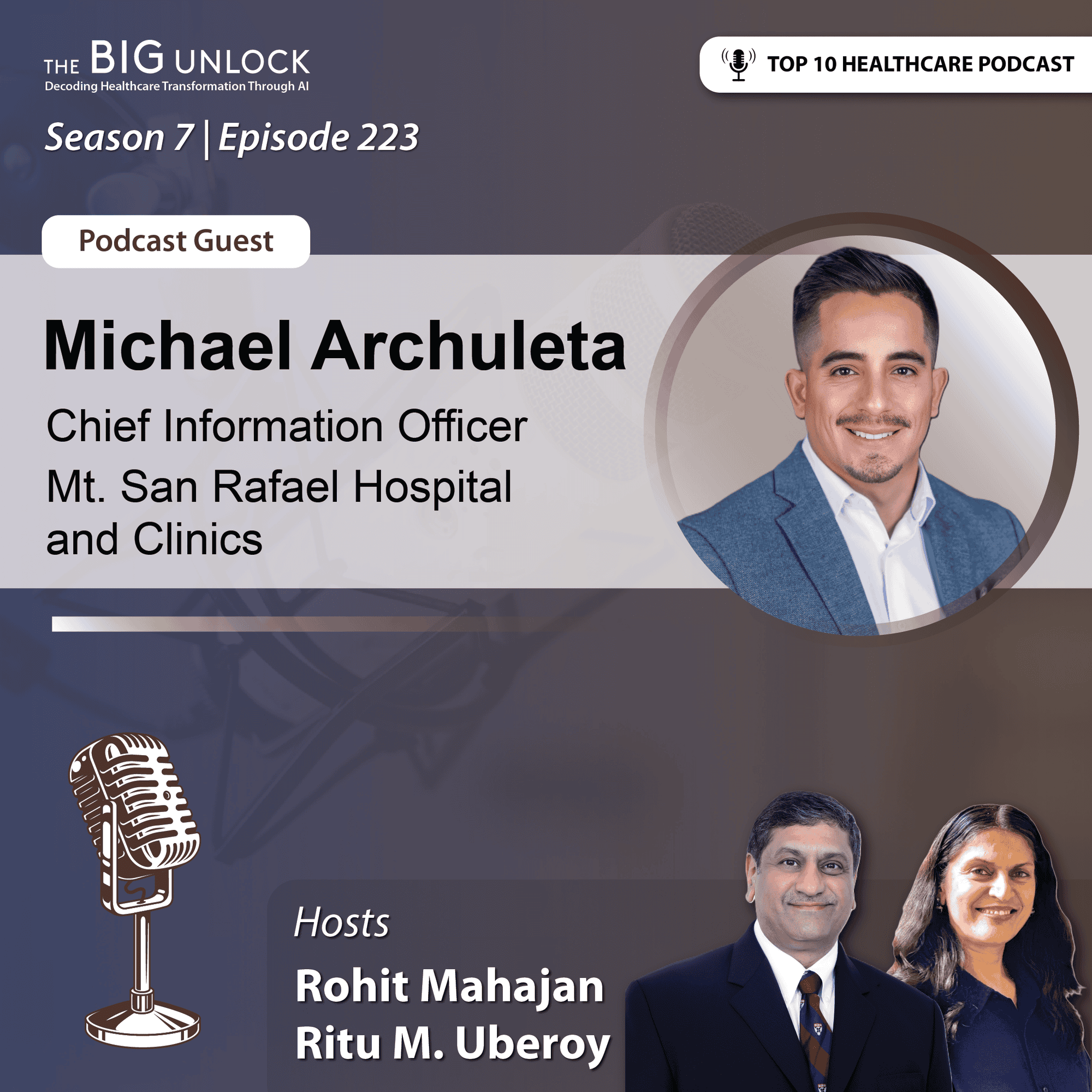
Episode 223 – From Legacy Systems to AI-Native Healthcare in Rural America

The Big Unlock · Michael Archuleta, Chief Information Officer, Mt. San Rafael Hospital and Clinics In this episode, Michael Archuleta, Chief Information Officer at Mount San Rafael Hospital, explores how technology can help rural health systems deliver high-quality, patient-centered care regardless of geography. He discusses the hospital’s transition to an AI-native Oracle Health platform and emphasizes that digital transformation should follow the patient journey, reduce clinician burden, improve interoperability, and enable better outcomes. Michael sees AI, ambient technology, remote patient monitoring, and interoperability as important tools for improving clinical outcomes, reducing administrative burden, expanding access in rural communities, and giving clinicians more time to focus on patients. He also emphasizes that cybersecurity is fundamentally a patient safety issue, requiring continuous testing, workforce awareness, strong identity management, and a “human firewall” to counter increasingly sophisticated AI-enabled threats. Michael believes rural healthcare can leapfrog legacy limitations by strategically investing in digital transformation and emerging technologies. He also sees the CIO role evolving from technology management to business and strategic leadership, with greater responsibility for automation, operational performance, workforce well-being, and patient outcomes. His message is clear: technology must matter, and it must ultimately improve care. Take a listen. This guest appearance was facilitated through conversations initiated at HIMSS .
August 20, 202630 min

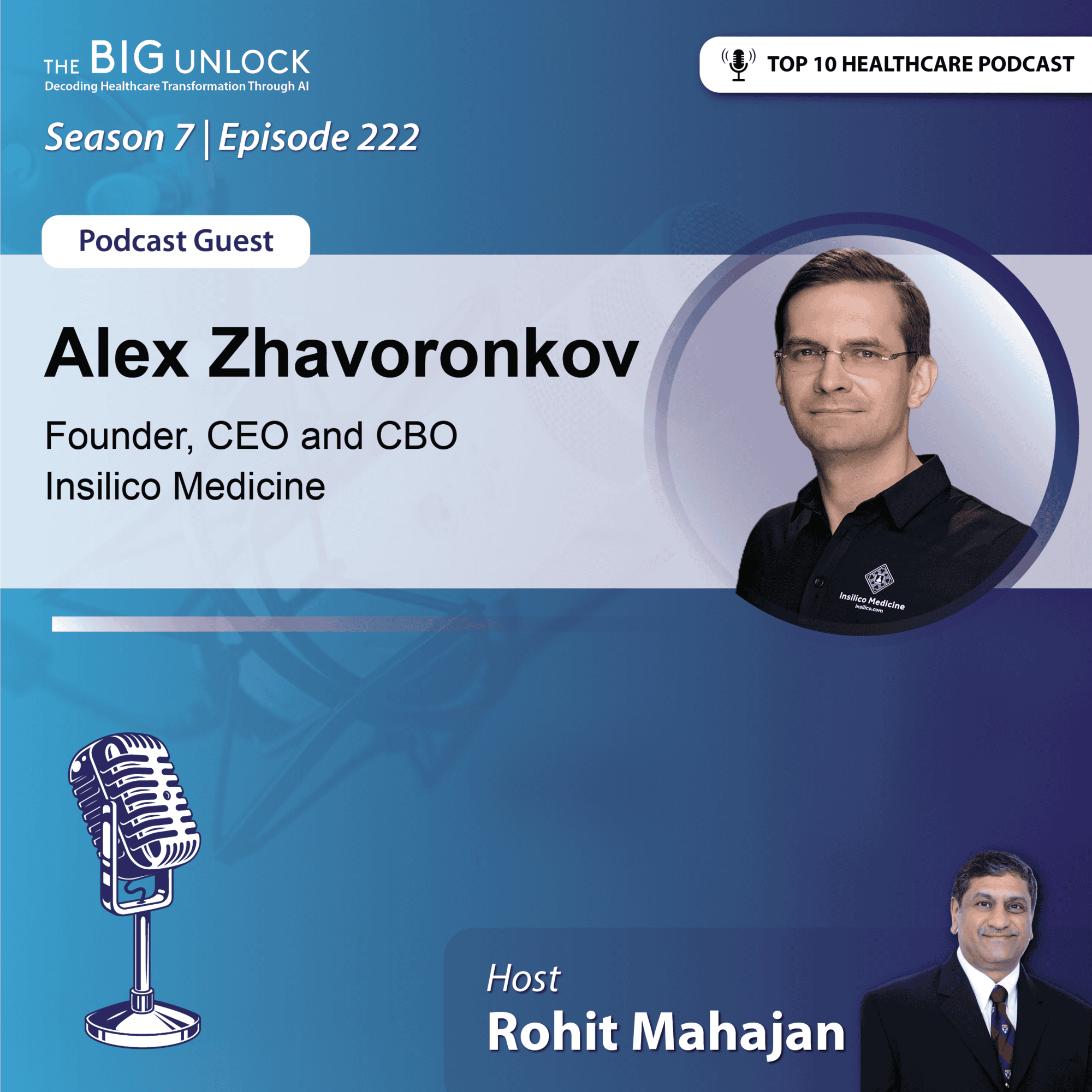
Episode 222 – AI is Moving Drug Discovery From Prediction to Generation

The Big Unlock · Alex Zhavoronkov, Founder, CEO and CBO, Insilico Medicine In this episode, Alex Zhavoronkov, Founder, CEO and CBO of Insilico Medicine, explores how generative AI is reshaping drug discovery and opening new possibilities in longevity research. He explains how AI can move pharmaceutical R&D from searching for promising molecules toward generating molecules with desired properties, while orchestrating specialized models and agents across the drug development lifecycle. Insilico combines AI models across biology, chemistry, and clinical development to move from target identification to drug candidates faster, with multiple programs now in clinical trials. Alex argues that AI can dramatically expand the number of experiments researchers can conduct, but the complexity of biology means failure remains inevitable and real-world validation is essential. He discusses the industry’s shift from predictive AI to generative and agentic systems capable of orchestrating thousands of drug discovery tasks, while emphasizing the importance of rigorous validation. Alex believes the strongest competitive advantages will come from proprietary drugs, scientific infrastructure, capital, and the ability to turn ideas into validated products. He cautions against AI hype and emphasizes benchmarking, peer-reviewed evidence, and clinical results. His ultimate ambition is to use AI-driven drug discovery to extend human lifespan and give people more years of life. Take a listen. This guest appearance was facilitated through conversations initiated at Ai4 2026 .

August 18, 202626 min

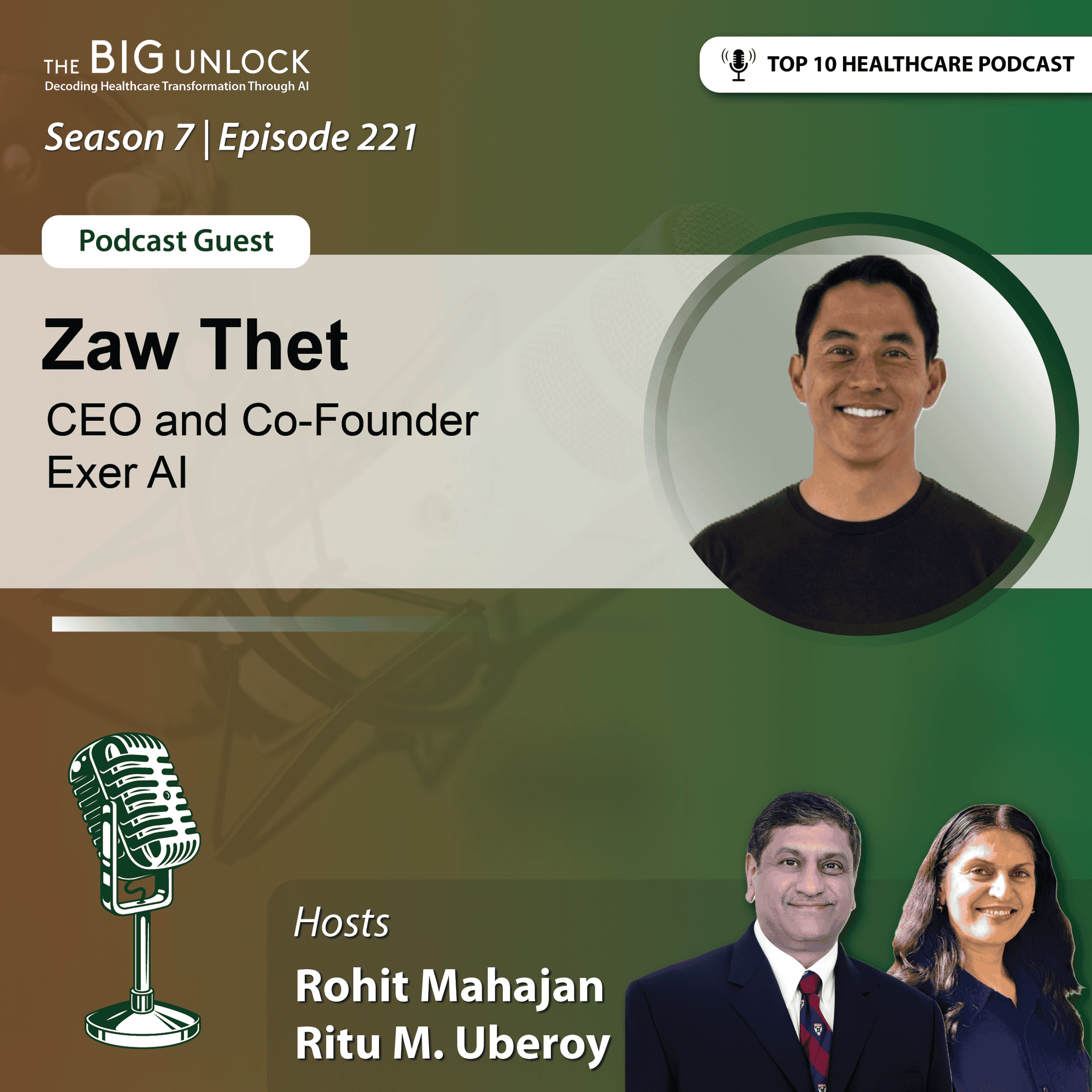
Episode 221 – Making Human Movement Measurable with AI

The Big Unlock · Zaw Thet, CEO and Co-Founder, Exer AI In this episode, Zaw Thet, CEO and Co-founder of Exer AI, explores how AI-powered computer vision can make human movement measurable and transform the delivery of musculoskeletal and movement health. He explains how Exer uses ordinary cameras and AI to assess movement across orthopedics, neurology, rehabilitation, telehealth, and at-home care, providing clinicians with objective insights while improving clinical efficiency and access. The conversation highlights how AI can improve patient outcomes and help clinicians deliver more personalized care at scale. Zaw also discusses the growing role of continuous monitoring, combining movement data with signals from wearables to identify risks earlier, particularly for older adults and fall prevention. He emphasizes that scaling healthcare AI requires clinical validation, regulatory compliance, proprietary data, and patience to move from innovation to real-world adoption. Zaw expects AI to create a more efficient healthcare system but cautions against removing humans from clinical decision-making too quickly. As generative AI expands, human oversight, accountability, and patient safety will remain essential to scaling AI responsibly. Take a listen.

August 11, 202628 min

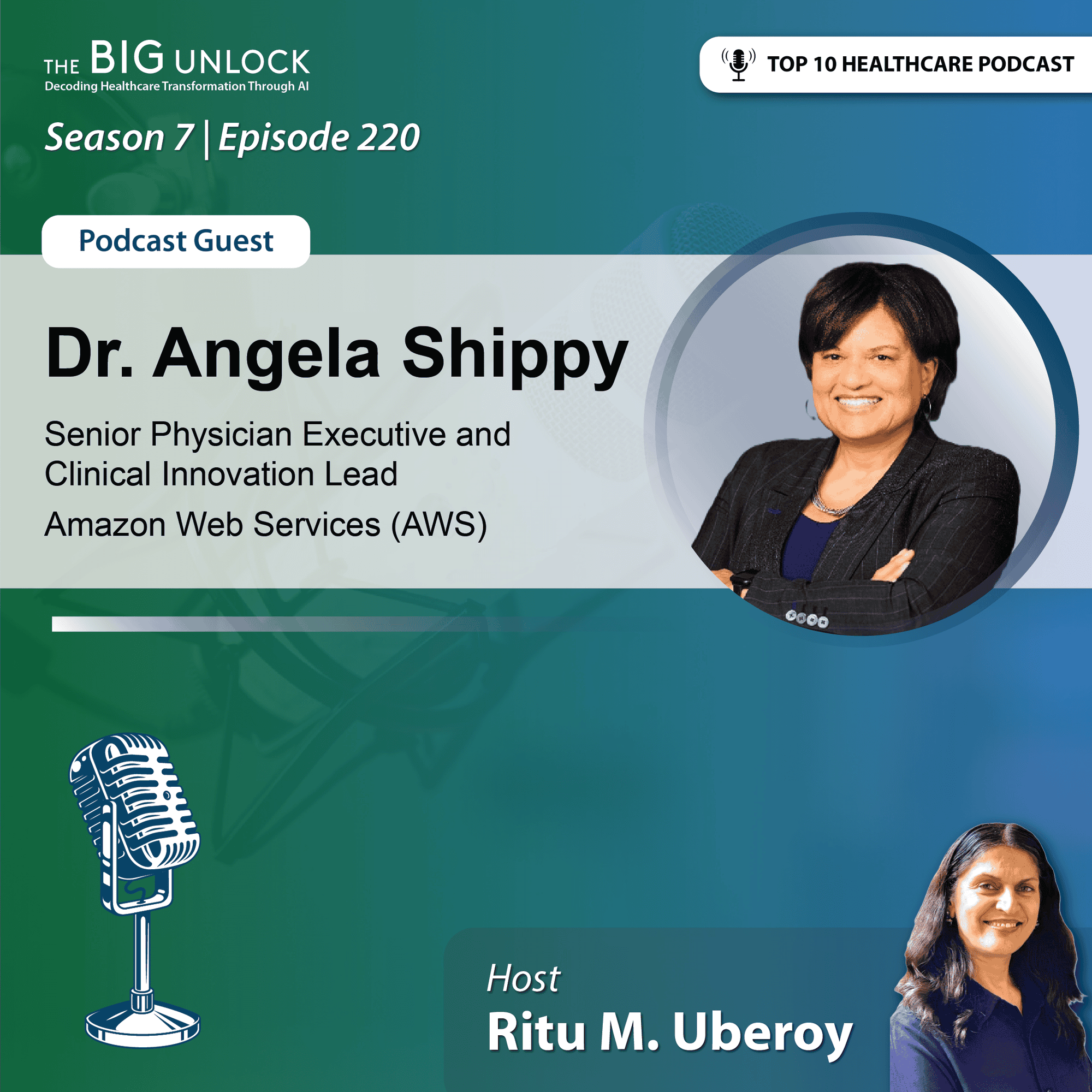
Episode 220 – Cloud and AI Are Reshaping Healthcare Transformation

The Big Unlock · Dr. Angela Shippy, Senior Physician Executive and Clinical Innovation Lead, Amazon Web Services (AWS) In this episode, Dr. Angela Shippy, Senior Physician Executive and Clinical Innovation Lead at Amazon Web Services (AWS), shares how cloud and AI are reshaping healthcare by helping organizations move from experimentation to enterprise-scale transformation. She explains that successful AI adoption requires more than powerful models – it demands secure cloud infrastructure, responsible governance, workforce upskilling, and trusted partnerships. Dr. Shippy explains how leading health systems are moving beyond isolated AI pilots by solving well-defined organizational and clinical challenges first. Through purpose-built services like Amazon Connect Health, institutions are streamlining patient engagement, reducing administrative burden, and improving access to care. From antimicrobial resistance surveillance to genomics research and health equity programs, she illustrates how cloud-based platforms are helping healthcare organizations generate insights faster and improve patient outcomes at scale. Dr. Shippy believes that scaling enterprise AI requires upskilling healthcare workforces, establishing strong security guardrails, and embracing agentic workflows. She envisions a future driven by multimodal AI, ambient listening, and automated task execution that accelerates drug discovery, reduces burnout, and enables clinicians to focus on direct patient care. Dr. Shippy encourages health systems to start small, think big, and never lose sight of improving patient and workforce experiences. She believes agentic technologies will augment clinicians, accelerate innovation, and help build a more connected, efficient, and patient-centered healthcare ecosystem. Take a listen. This guest appearance was facilitated through conversations initiated at ViVE .

August 4, 202622 min

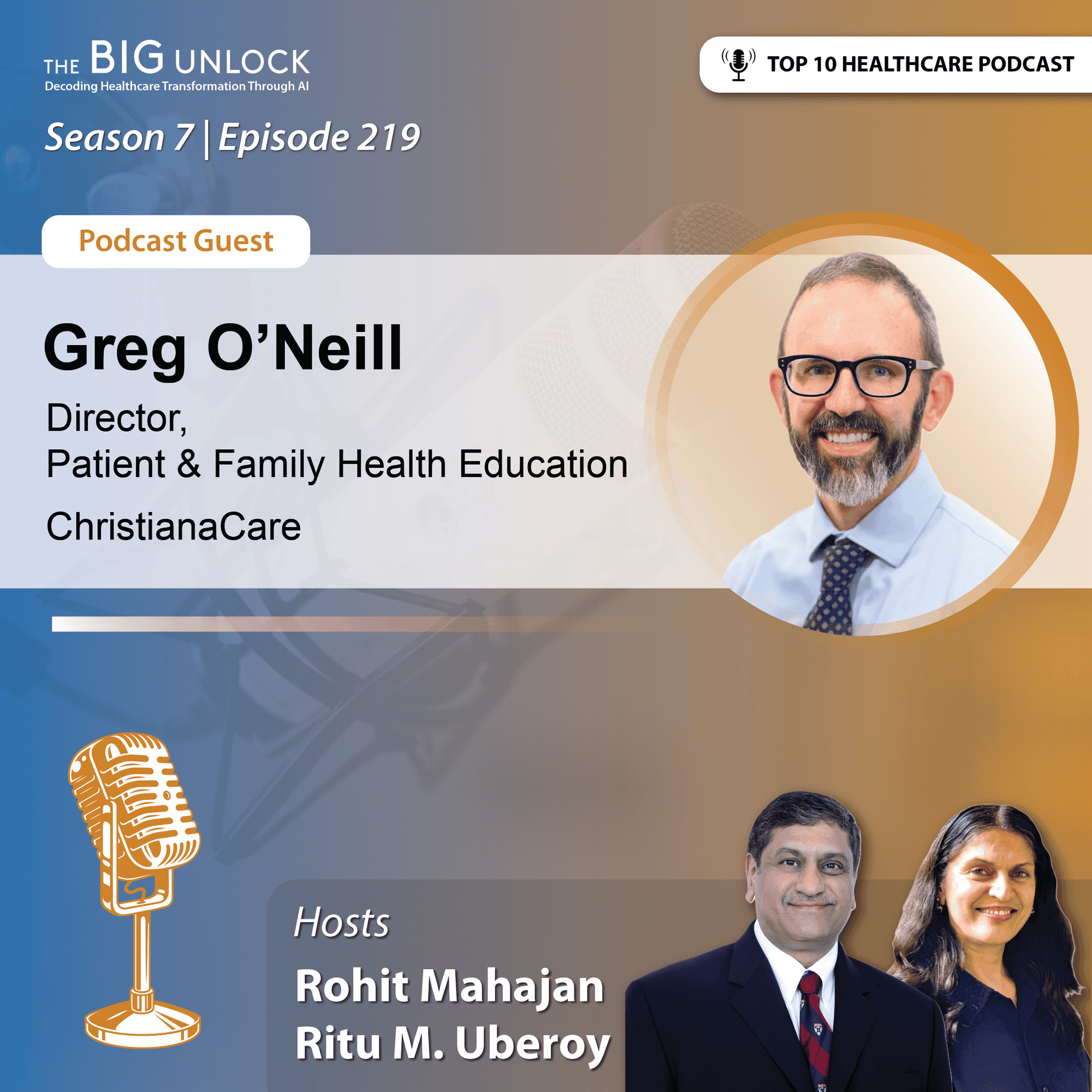
Episode 219 – Health Literacy is Key to Better Patient Outcomes

The Big Unlock · Greg O’Neill, Director, Patient & Family Health Education, ChristianaCare In this episode, Greg O’Neill, Director of Patient & Family Health Education at ChristianaCare, explores why effective communication is one of the most overlooked drivers of better healthcare outcomes. Drawing on his experience as an ICU nurse and health system leader, Greg explains that health literacy is not simply about providing information, it is about ensuring patients truly understand their care and feel confident acting on it. Greg shares how ChristianaCare is embedding health literacy into patient education, medication management, and clinical workflows by using plain language, personalized content, and technology that supports rather than disrupts caregivers. He also discusses AI’s potential to break down fragmented care by connecting information across systems, reducing cognitive burden for patients, and guiding them through increasingly complex healthcare journeys. Greg encourages healthcare leaders to adopt a health literacy lens when evaluating digital tools and transformation initiatives. He argues that the greatest value comes when technology strengthens human connection, builds trust, and helps patients achieve better outcomes through clearer communication. Take a listen. This guest appearance was facilitated through conversations initiated at HIMSS .
July 28, 202623 min

Episode 218 – Using Multimodal Foundations and Ambient AI to Scale Clinical Impact

The Big Unlock · Umesh Rustogi, General Manager, HLS Dragon & Platform, Microsoft In this episode, Umesh Rustogi, General Manager, Healthcare & Life Sciences Dragon & Platform at Microsoft, explains that meaningful AI outcomes depend on combining unified multimodal data foundations with clinician-centered design to achieve healthcare’s quadruple aim: improving care quality, patient experience, operational efficiency, and workforce well-being. Addressing the severe nursing shortage and turnover driven by administrative burnout, Umesh details how Microsoft co-innovated with nine major health systems to deploy Dragon Copilot for Nursing, a clinical assistant that works alongside nurses. By leveraging ambient AI on mobile devices, the solution helps nurses capture flow sheet documentation for their review and maintains a running cognitive memory across shifts, significantly lowering cognitive load and enabling nurses to be truly present with their patients. Umesh also emphasizes that enterprise-scale success requires far more than model selection. It demands responsible AI governance, transparent audit capabilities, deep workflow customization, and robust change management, including nurse leader sponsorship and dedicated unit champions. He envisions smart hospital rooms, multimodal AI, wearable integration, and agentic workflows transforming clinical operations by delegating non-patient-facing tasks so caregivers can focus on delivering better care. Take a listen. This guest appearance was facilitated through conversations initiated at HIMSS .
July 21, 202625 min

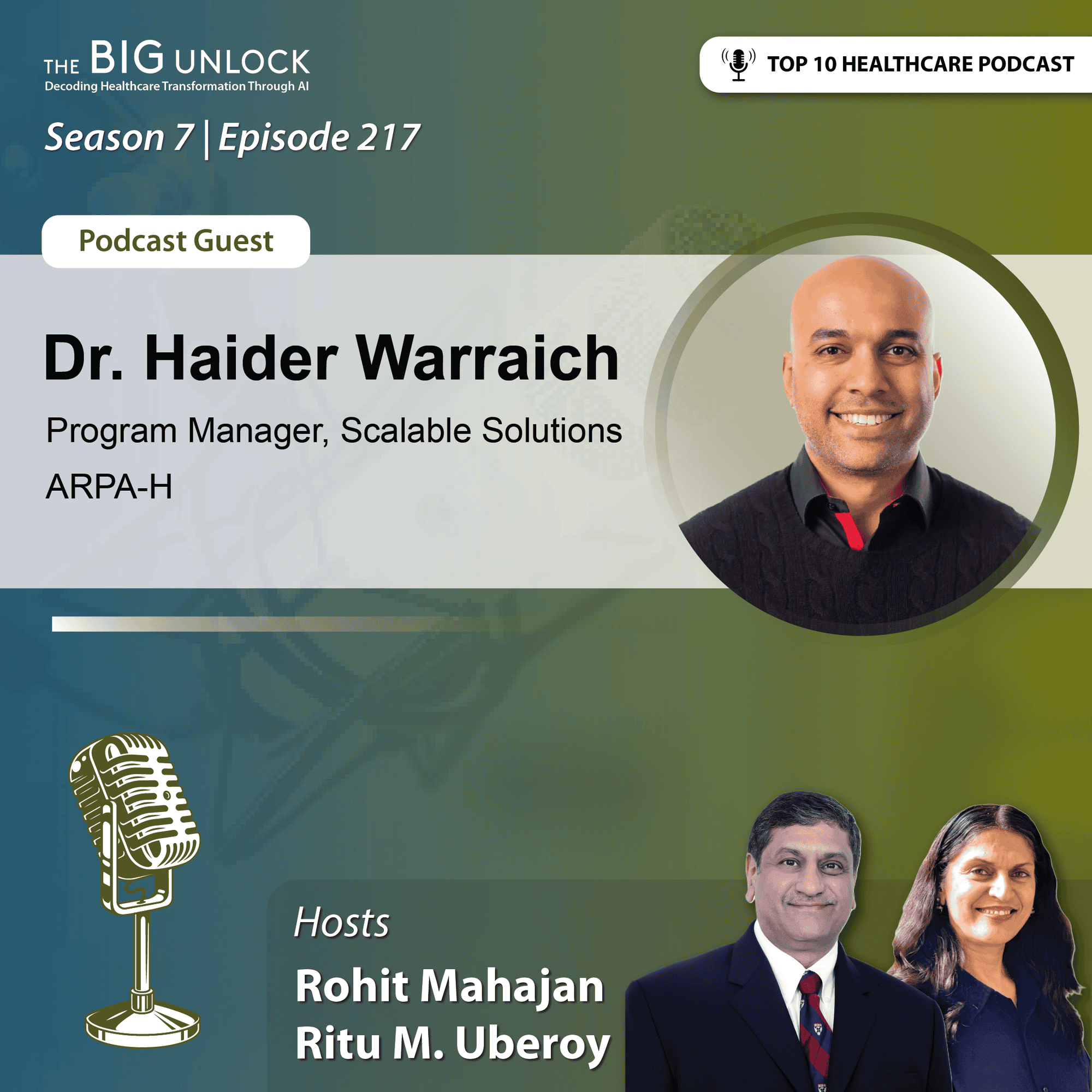
Episode 217 – Building Trust in the Next Generation of Healthcare AI

The Big Unlock · Dr. Haider Warraich, Program Manager, Scalable Solutions, ARPA-H In this episode, Dr. Haider Warraich, Program Manager, Scalable Solutions at Advanced Research Projects Agency for Health (ARPA-H), explains why building trust, not just advancing technology, is key to unlocking the next generation of healthcare AI. Leading ARPA-H’s ADVOCATE program, he shares how the agency is accelerating the development of patient-facing, agentic AI designed to improve outcomes for people living with heart failure, while simultaneously building the regulatory and evaluation infrastructure needed to safely bring these innovations into clinical practice. Dr. Warraich argues that healthcare must innovate and evaluate AI in parallel. As AI development accelerates, lasting trust will depend on rigorous clinical evidence, familiar regulatory pathways, and real-time post-market monitoring. He also encourages innovators to think boldly, noting that breakthrough ideas often seem unrealistic before they become reality. Dr. Warraich sees AI alignment, patient-centered technologies for high-need populations, and high-fidelity healthcare simulations as the next frontiers of innovation. He envisions that the future of healthcare AI will be shaped by bold ideas grounded in scientific rigor, transparent evaluation, and close collaboration between innovators, regulators, and health systems. That’s how the industry will build the trust needed to scale AI and improve patient care. Take a listen. This guest appearance was facilitated through conversations initiated at HIMSS .

July 13, 202625 min

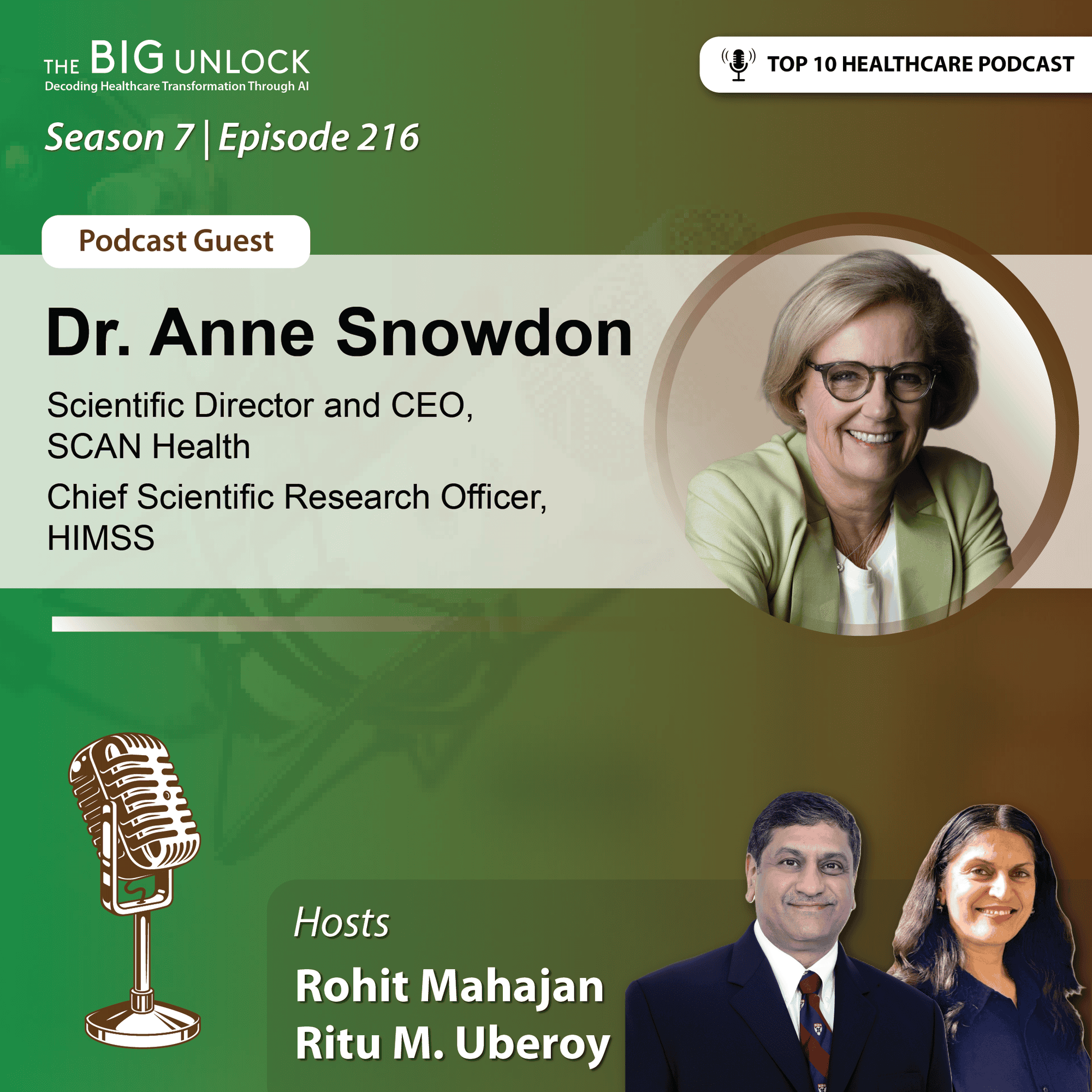
Episode 216 – The Future of Healthcare Lies in Connected, Evidence-Based Systems

The Big Unlock · Dr. Anne Snowdon, Scientific Director and CEO, SCAN Health and Chief Scientific Research Officer, HIMSS In this episode, Dr. Anne Snowdon, Scientific Director and CEO at SCAN Health and Chief Scientific Research Officer at HIMSS, explores why AI has the potential to transform healthcare, but only if health systems build the evidence, infrastructure, and workforce readiness to support it. She argues that while AI is generating tremendous excitement, most health systems are still in the early stages of adoption with many initiatives remaining in pilot phases. Dr. Snowdon explains that healthcare must shift from deterministic decision-making toward probabilistic, predictive care, while developing new approaches to continuously evaluate AI as it learns and evolves. She also highlights the need to improve AI literacy among clinicians and establish stronger evidence before scaling enterprise-wide deployments. Beyond clinical workflows, Dr. Snowdon makes a compelling case for reimagining digital health around patients rather than health systems. She envisions AI empowering individuals to better manage their health while seamlessly connecting them with trusted providers through interoperable, data-driven ecosystems. She also identifies digitally enabled supply chains as a critical but often overlooked foundation for safer, more personalized, and higher-quality care. She believes that the future of healthcare depends not just on adopting AI, but on creating connected, evidence-based systems that improve outcomes for patients, clinicians, and the broader health ecosystem. Take a listen. This guest appearance was facilitated through conversations initiated at HIMSS AI in Healthcare Forum .

July 6, 202624 min

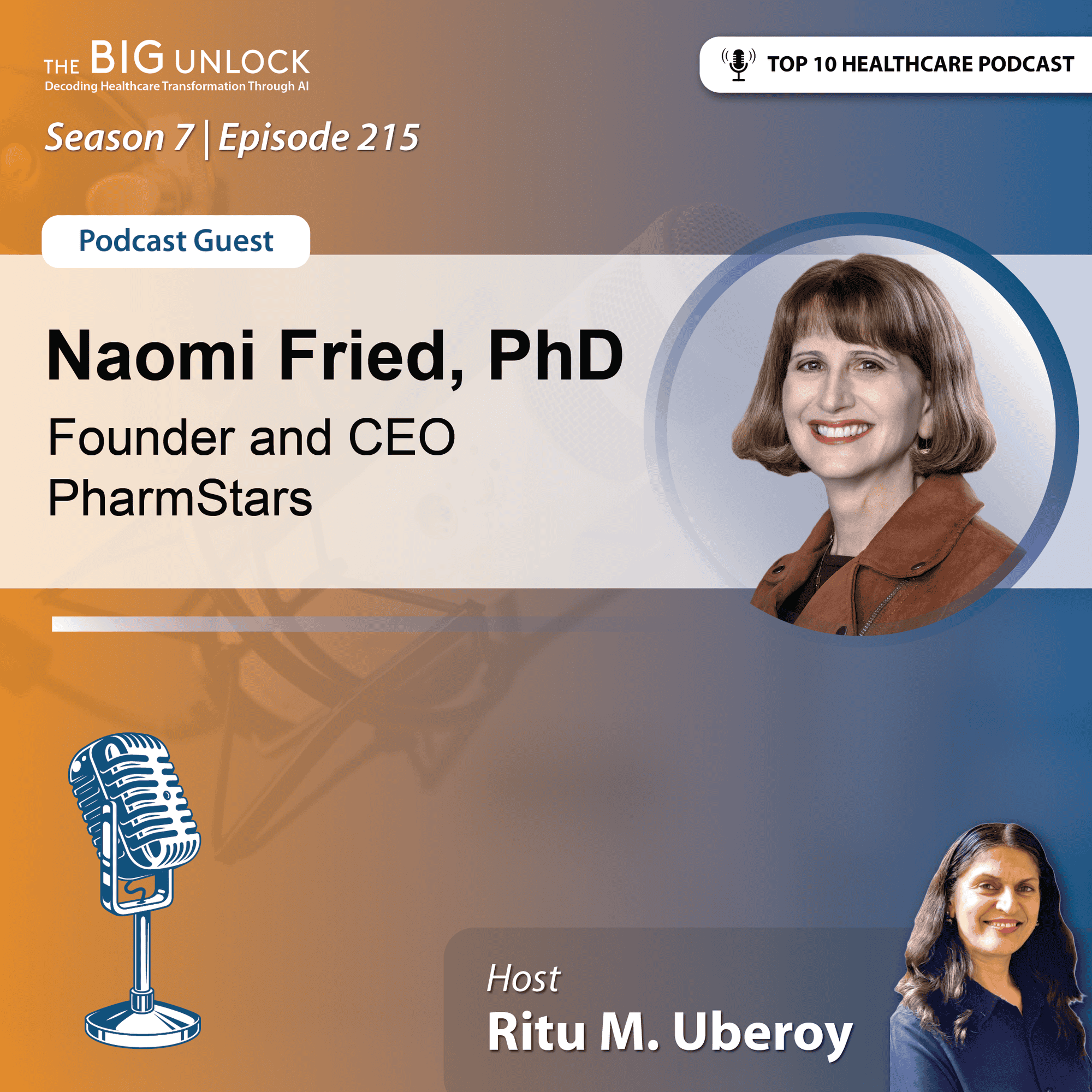
Episode 215 – Bridging Pharma and Startups to Scale Digital Health Innovation

The Big Unlock · Naomi Fried, PhD, Founder and CEO, PharmStars In this episode, Naomi Fried, PhD, Founder and CEO of PharmStars, shares how stronger collaboration between startups and pharmaceutical companies is accelerating healthcare innovation. Drawing on leadership roles at Biogen, Kaiser Permanente, Boston Children’s Hospital, consulting work with large pharma companies, and collaboration across the digital health ecosystem, she explains why the most successful innovations are built around customer needs rather than technology alone. Naomi discusses how PharmStars helps digital health startups, including those developing AI-powered solutions, understand the pharmaceutical industry, refine their value proposition, and build lasting partnerships with global pharma companies. She highlights AI as one of the most exciting areas of innovation, with the potential to improve patient care, support clinicians, and create new opportunities for life sciences organizations. However, Naomi emphasizes that technology alone is never enough. Successful innovators listen more than they pitch, understand customer pain points, and build trusted relationships. Naomi also talks about the importance of clinician workflows, internal champions, and continuous product evolution. Whether leveraging AI, software, or medical devices, her message is clear: lasting innovation comes from solving meaningful problems, adapting to customer needs, and building partnerships that create real-world impact. Take a listen.

June 29, 202622 min

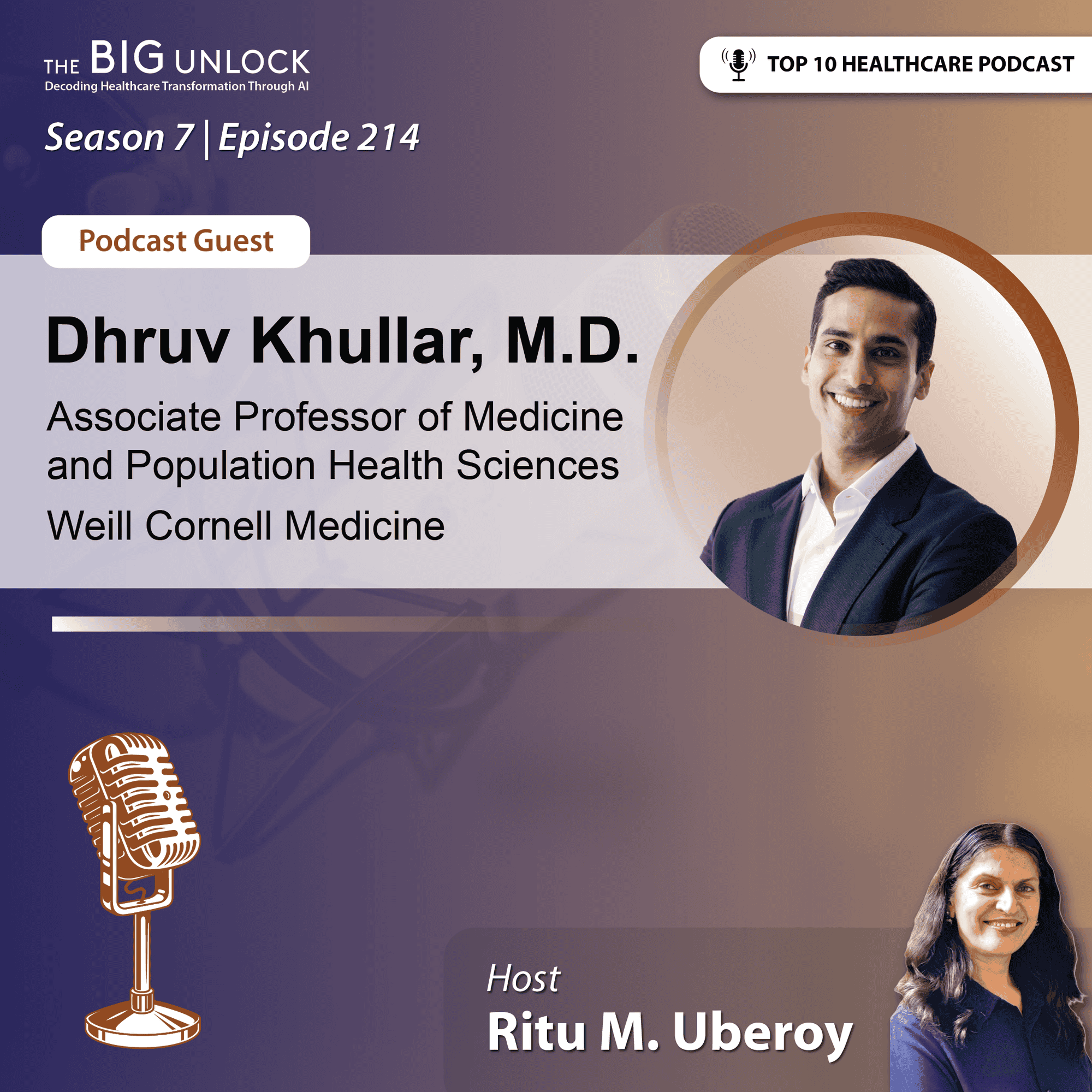
Episode 214 – The Future of Medicine Requires Trust, Technology, and Leadership

The Big Unlock · Dhruv Khullar, M.D., Associate Professor of Medicine and Population Health Sciences, Weill Cornell Medicine In this episode, Dr. Dhruv Khullar, Associate Professor of Medicine and Population Health Sciences at Weill Cornell Medicine, explores how technology, public trust, and the evolving role of physicians are reshaping healthcare. Drawing on his experience as both a practicing clinician and a leading commentator on health policy, he argues that medicine is no longer the singular authority on health. Physicians now share influence with social media, AI tools, direct-to-consumer health companies, and a growing ecosystem of digital health platforms. Dr. Khullar also discusses the promise and pitfalls of AI, emphasizing that while the technology can improve documentation, patient navigation, drug discovery, and clinical decision support, its adoption must be guided by evidence and rigorous evaluation. According to him, AI’s greatest opportunity may be helping restore the human connection in care by removing administrative burdens and creating more space for meaningful patient interactions. The conversation also explores physician education, AI literacy, value-based care, public trust, and the growing commercialization of healthcare. Dr. Khullar returns to a central theme: technology alone will not solve healthcare’s challenges. Progress will require stronger communication, thoughtful leadership, and a renewed commitment to putting patients, not profit, at the center of care. Take a listen. This guest appearance was facilitated through conversations initiated at Health Tech Summit .

Is this your show?

Claim this listing to keep it up to date, reach guests who want to pitch you, and manage bookings with Guestify.

Claim this listing

More Technology podcasts