Find partners
The Automotive Leaders Podcast

The Automotive Leaders Podcast

Hosted by Jan Griffiths

BusinessLeisureAutomotiveInterviews guestsExplicit

Episodes

191

Latest episode

Aug 2026

Language

EN

About the show

Prepare yourself, your team, and your business for the future of automotive. We are all evolving the products we make, have you thought about the leadership model to get us there? In-depth interviews with leaders, authors, and thought leaders, provide the insights you need. This podcast is brought to you by Gravitas Detroit.

Listen to episodes

60 recent
August 6, 202641 min

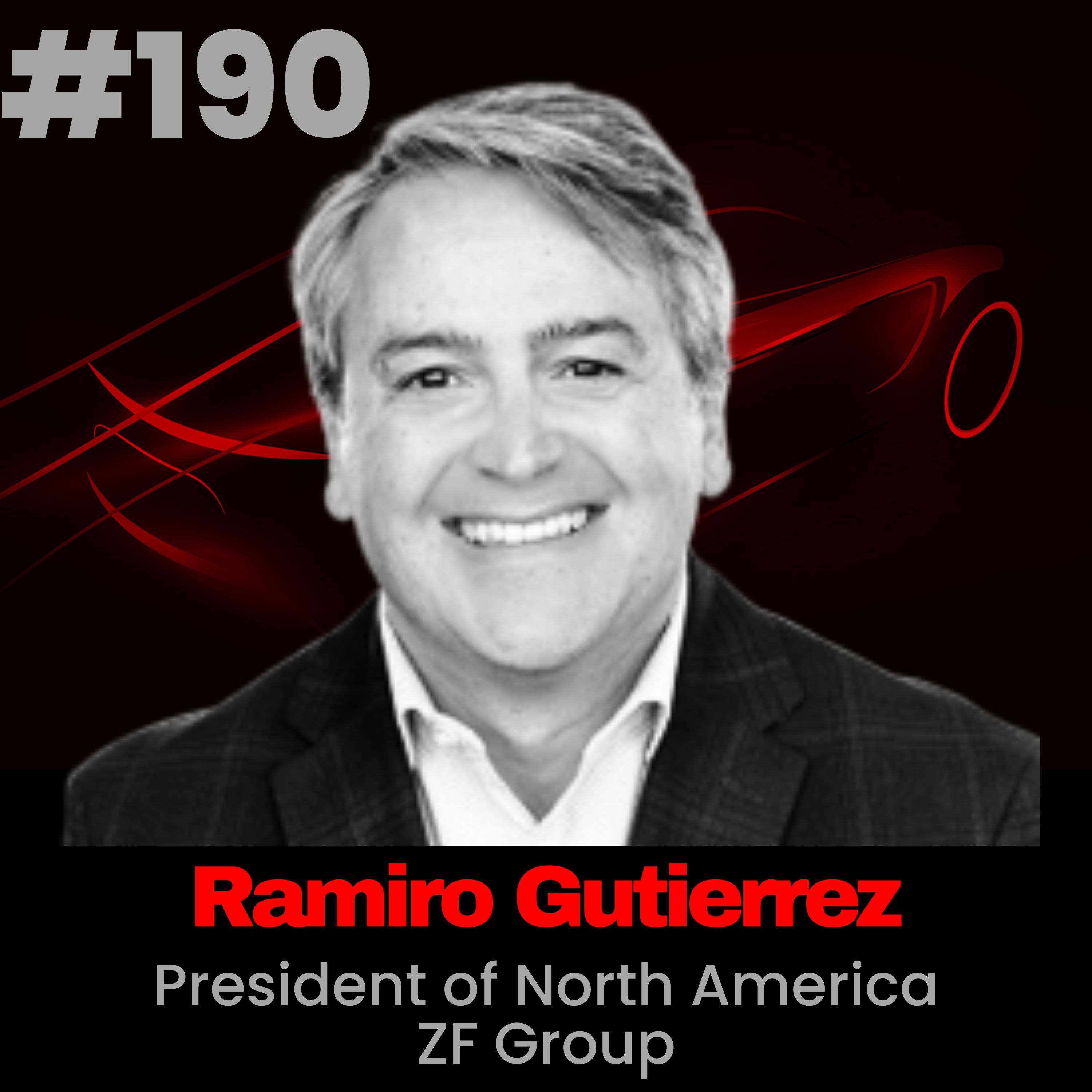
Why Chinese OEMs Move Faster: Ramiro Gutierrez on Value, Software, and Automotive Leadership

Tariffs bought this industry a window. Ramiro Gutierrez, President of North America, ZF Group, is not convinced we are using it.He has spent 30 years in the automotive industry, and he left it once. Aerospace turned out to be slower than he expected, with cycles running roughly five times longer, and he returned to ZF for engineering. What he came back to is a company spending around 8% of revenue on R&D and now under real pressure to prove that money produces a return.That pressure is where this conversation starts, and it goes somewhere most tier one interviews do not. Ramiro walks through what his Chinese customers are doing with hardware ZF has already put on the vehicle. A customer looked at ZF’s active suspension and figured out that lifting a wheel lets you change a flat tire without a jack. At CES, ZF showed a tire-noise function built from a damper and a chassis sensor, both already on the car. Same hardware, new functionality, software doing the work.Meanwhile, the Western specification book has been growing for a hundred years, page after page, all for good reasons, until it moved past anything a customer can feel. The cost is real, and the value is not.Ramiro is direct about tariffs. He calls them a tool in the sandbox, useful for buying time. He is just as direct about what happens if the industry spends that time defending the status quo instead of closing the gap.Then there is the leadership half of it. He is president of ZF North America and head of the global steering business unit, sitting between a German foundation owner under enormous pressure and a workforce spread across the US, Mexico, and Canada. His answer to that complexity is not a new org chart. It is communication treated as an investment, people sent to see other realities with their own eyes, consensus built and then closed, and accountability that sounds like “where are we” rather than “why didn’t you.”The clock is running. Ramiro believes the future is bright. He also believes we have to move.Themes Discussed in this EpisodeCreating value through software, not more hardwareWhy Chinese OEMs adopt technology fasterTariffs as a tool with an expiration dateThe hundred-year specification problemCommunication as a leadership investmentPositive accountability without micromanagementLeading a German-owned business across three countriesEngineering ambition meeting financial disciplineThis episode is sponsored by Lockton, click here to learn more🎥 Watch the full episode on YouTube:https://www.youtube.com/@jangriffithsautomotiveleadersFeatured Guest: Ramiro Gutierrez, President of North America, ZF GroupRamiro has led ZF Group's North America region since June 2024, based in Northville, Michigan, and he also heads the company's global Steering business unit, which puts him at the center of the by-wire chassis technology ZF is now putting into production.This is his second tour at ZF. He joined in 2005 as a sales director, rose to senior vice president of sales, and left in 2017 for Aptiv and then Howmet Aerospace, where he was president of Engineered Structures. Thirty years in this industry on both sides of the Atlantic gives him a read on the Chinese market that very few North American executives have.About Your Host – Jan GriffithsJan Griffiths is the champion for culture change and the host of the Automotive Leaders Podcast. A former automotive executive with a rebellious spirit, Jan is known for challenging outdated norms and inspiring leaders to ditch command and control. She brings honesty, energy, and courage to every conversation, proving that authentic, human-centered leadership is the future of the automotive industry.Mentioned in this Episode:21 Traits of Authentic LeadershipEpisode Highlights[02:14] Two tours at ZF: Ramiro left automotive for aerospace, expecting something different, found the cycles about five times longer, and came back for the engineering.[06:38] Engineering money has to earn its keep: ZF spends roughly 8% of revenue on engineering, and Ramiro explains why every euro of it now has to show a return.[08:58] The flat tire that changed the conversation: A customer took ZF’s active suspension and figured out how to lift a wheel instead of using a jack, then how to rock a car out of a sand trap. All of it through software.[13:42] Cost reduction versus value reduction: Jan asks how to get this thinking into legacy automotive. Ramiro names the trap: taking cost out by taking value out, and the customer feels it.[15:57] Steer-by-wire and video games at the charger: Decoupling the wheel from the rack opens up functionality nobody paid extra hardware for, and Ramiro names who is doing it first.[18:58] Tariffs are a tool in the sandbox: Useful for buying time to compete and change. Dangerous if that time creates an artificial bubble instead.[20:57] Send him to China: Rather than another briefing, Ramiro told his government relations lead to get on a plane, because some realities cannot be explained through words.[24:57] The engineering dream meets the P&L: As a foundation-owned company rather than a listed one, ZF has always had financials in the room. Ramiro explains why they are now the drumbeat and what that does to culture.[28:54] A hundred years of specifications: Page after page added for good reasons, until the spec book passed what a customer can perceive. Ramiro’s engineers drive a vehicle from another region and call it no good, and the answer is that people there buy it by the hundreds of thousands.[31:46] Who are you as a leader: Straightforward, sometimes too direct, consensus first, and then execution. He describes the two kinds of people you find when a commitment slips, and which one you can build an organization on.Top Quotes[27:35] Ramiro Gutierrez: “The adoption of technology that we have in front of our Chinese OEMs is exponentially higher than the adoption of technology that we have from our traditional OEMs.”[34:00] Ramiro Gutierrez: “If you have the first kind of individuals, the only option for you is to go micromanage, and then it’s going to kill you.”[35:56] Ramiro Gutierrez: “I look at communication as an investment. You invest in getting everybody aligned with what you think is the right thing to do.”If this episode resonated, share it with a fellow automotive leader and subscribe to The Automotive Leaders Podcast, where we’re shaping the future of authentic leadership in the automotive industry.This podcast episode is also available on YouTube. Check out our YouTube channel at JangriffithsautomotiveleadersSend us your feedback or questions — email Jan at Jan@Gravitasdetroit.com.

July 23, 202636 min

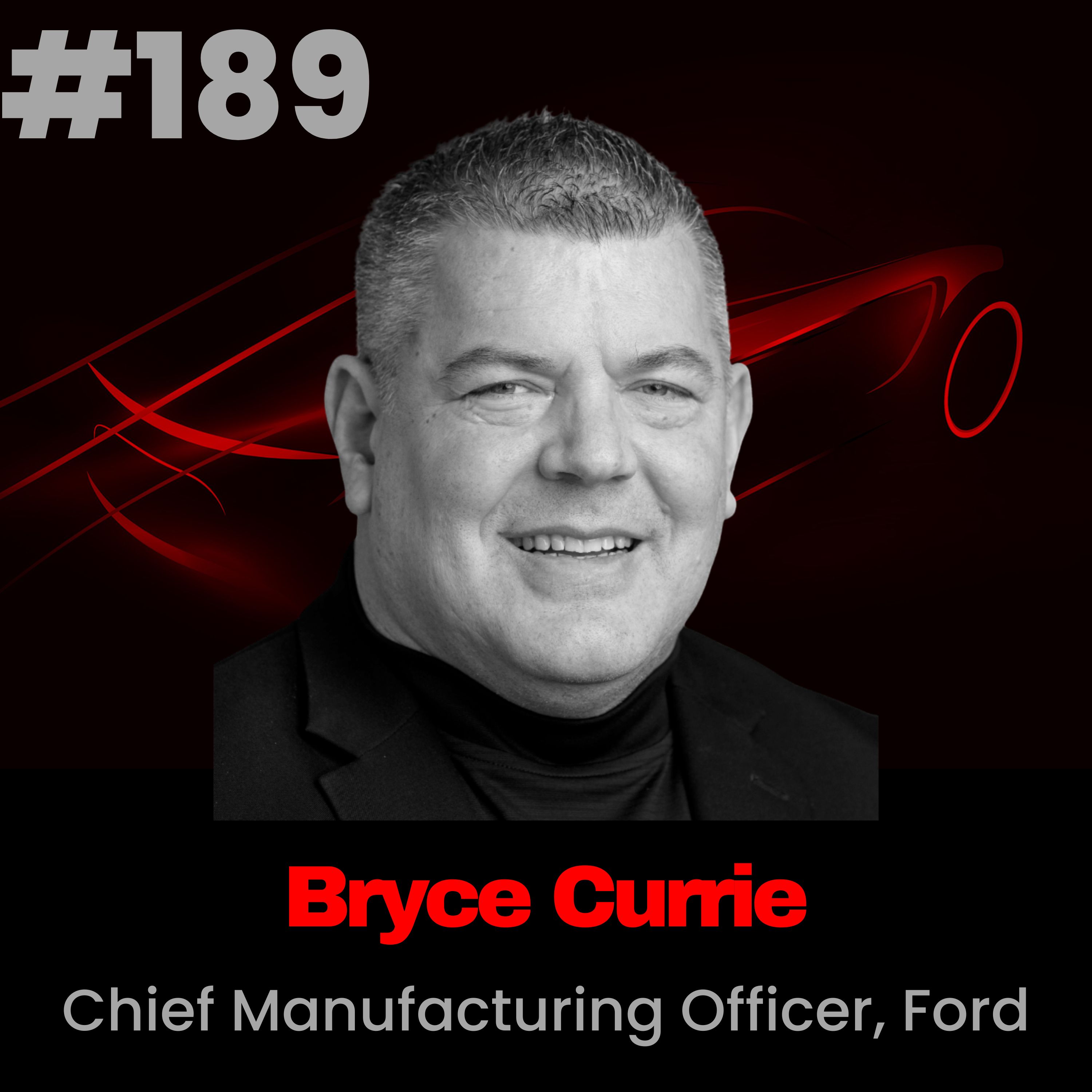
How Ford Is Breaking Command and Control on the Factory Floor

In the automotive industry, we often focus on the vehicle itself, the technology within it, the smart factories, and artificial intelligence. Ford is leading the way in all these areas, even reimagining the assembly line that Henry Ford created back in 1913. However, that is not the whole story. The hardware has never been the main focus.The real story lies in the culture; it's about how more than 100,000 individuals think, act, and make decisions, and whether they can adapt faster than the legacy companies that were built to move at a different pace.In this episode of the Automotive Leaders Podcast, Jan Griffiths interviews Bryce Currie, Ford's Chief Manufacturing Officer, who oversees more than 40 plants worldwide. Both Bryce and Jan began their careers in a command-and-control environment, where plant managers were feared, meetings featured thrown books, and no one felt comfortable offering alternative ideas because they weren’t being heard. However, Bryce opted for a different approach. He identifies as a servant leader and has dedicated 51 weeks of his life to traveling by bus to demonstrate his commitment.These bus tours form the core of their discussion. Over the course of a week, Bryce visits four plants with 50 employees from every level and function, working from 5:30 in the morning until 10:30 at night, all focused on learning to operate Ford's production system in a unified way. This initiative is how Bryce turns culture into a tangible experience for the team. He emphasizes aspects that many leaders overlook: he turns off his phone so his team can learn to operate independently, encourages two ideas from every operator, and uses Thomas Edison's 2,332 inventions as a benchmark for what his team can achieve in a single year.This conversation explores what it takes to accelerate a company with over a century of history. Trust and kindness are powerful business tools. He advocates for accountability without fear, highlighting that culture should not be viewed as a soft concept; rather, it is the backbone that drives results.If you’re a leader in this industry, Bryce will illustrate what shifts when you stop trying to control your team and start believing in them.Themes Discussed in this EpisodeWhy culture is the real transformation story at FordBreaking command and control at the manufacturing scaleServant leadership across 40-plus Ford plantsThe bus tour is a culture change engineEmpowerment over micromanagement in a legacy organizationActivating the minds of 100,000 peopleDriving innovation through frontline operator ideasThis episode is sponsored by Lockton, click here to learn more🎥 Watch the full episode on YouTube:https://www.youtube.com/@jangriffithsautomotiveleadersFeatured Guest: Bryce Currie, Chief Manufacturing Officer at FordBryce is responsible for Ford's global manufacturing operations, producing some of the industry's most dynamic vehicles. He also oversees Ford Global Manufacturing Engineering, Material Planning & Logistics, Advanced Technology & Platforms, and Safety. Currie leads with a commitment to servant leadership, empowering teams to innovate and achieve their full potential. Since joining Ford in 2023, he has applied his Lean expertise to enhance operational performance and cultivate a people-centric culture. He does it through principles of efficiency, waste reduction, collaboration, recognition, and continuous improvement.About Your Host – Jan GriffithsJan Griffiths is the champion for culture change and the host of the Automotive Leaders Podcast. A former automotive executive with a rebellious spirit, Jan is known for challenging outdated norms and inspiring leaders to ditch command and control. She brings honesty, energy, and courage to every conversation, proving that authentic, human-centered leadership is the future of the automotive industry.Mentioned in this Episode:21 Traits of Authentic LeadershipJim Voss and Tenneco's transformation (Episode 186 and Episode 187)Jim Collins, author of Good to GreatEpisode Highlights[03:25] Who Are You as a Leader? Bryce answers with servant leadership and credits his father, who rejected command-and-control back in the '70s and '80s.[04:26] Unlearning Command and Control: Bryce traces his mindset back to the Toyota Production System and its real lesson: respect for people.[05:37] Fear Culture That Died: Why the rock-star CEOs of the '90s faded while the people-first leaders lasted.[08:51] From a Relay Race to a Basketball Court: Jan and Bryce break down the mindset shift from siloed handoffs to a whole team on the floor at once.[09:19] Inside the Bus Tour: Bryce explains the immersion experience he built in 1991 and how it rewires culture plant by plant.[14:50] Why He Shuts His Phone Off: Making time with the people the priority, and trusting his team to run without him.[17:41] Empowerment or Micromanagement: How Bryce pushes real decision-making down through a company over 100 years old.[19:41] The Pushback and the Right Talent: What happened when a proud, tenured team met a new way of leading.[27:42] Thomas Edison and the 2,332 Challenge: How one number became a company-wide innovation target that operators blew past.[32:48] Culture Is Not Soft: Bryce makes the business case with statistical proof and a message for the naysayers.Top Quotes[03:45] Bryce Currie: "I believe in people, and innovation comes from people if you treat them the right way."[05:53] Bryce Currie: "The ones that have stuck around for many, many years are the ones who have believed in the fact that the people are what make the company, and they'll follow the process, but you build it off of that culture."[34:44] Bryce Currie: "The companies that last, that do it year over year over year, they have that it factor, and that it factor is through the people, and it delivers the results."If this episode resonated, share it with a fellow automotive leader and subscribe to The Automotive Leaders Podcast, where we’re shaping the future of authentic leadership in the automotive industry.This podcast episode is also available on YouTube. Check out our YouTube channel at JangriffithsautomotiveleadersSend us your feedback or questions — email Jan at Jan@Gravitasdetroit.com.

July 9, 202619 min

250th Anniversary Episode, a Personal Perspective

In 1976, an 11-year-old girl from a small farm in Wales stood before a glass case in Greenwich, England, staring at strange uniforms and a document called the Constitution. The exhibition was titled "The British Story of the American Revolution." That was all Jan Griffiths knew of America, what she could see through the glass.Decades later, she sits in the engine room of that country, in Detroit, at the heart of the auto industry.This episode marks America's 250th anniversary, and Jan tells her own story to get at something bigger. She takes us from the shop floor at BorgWarner in Kenfig, South Wales, where the smell of oil and coolant hooked her for life, to Muncie, Indiana, to the drive up I-75 when the Detroit skyline first came into view, and something rushed through her. It is the story of what this country and this industry gave a young woman who would not have had the same shot back home in the 1980s. She names the people who believed in her, and she means every one of them.Then she turns it forward. Jan draws a straight line from Frederick Taylor's work in 1911 and Henry Ford's moving assembly line in 1913 to the management playbook most legacy automakers still run today. The country is 250 years old. The industry's operating system is barely younger, and it has hardly changed. Culture is not soft, she says. Culture is how we behave and how we decide, and the industry does not have another century to sort it out, while Chinese OEMs move at speed, and relay-race handoffs slow down every decision.She points to Jim Voss and the movement building inside Tenneco as proof of what happens when people rise up for a cause. And she reminds us what Detroit already knows about getting knocked down and coming back, from bankruptcy to two of the Big Three going under and returning stronger.This is one immigrant's love for two countries and one industry, and a challenge to every leader who still talks about transformation instead of defining it.Themes Discussed in this EpisodeAn immigrant's love for two countriesFrom a Welsh farm to Detroit's engine roomWhy culture is not softThe 100-year-old automotive playbookCompeting with Chinese OEMs on speedMoving from a relay race to all players on the courtDetroit's grit and comeback storyLeaders defining transformation, not just talking about itThis episode is sponsored by Lockton, click here to learn more🎥 Watch the full episode on YouTube:https://www.youtube.com/@jangriffithsautomotiveleadersAbout Your Host – Jan GriffithsJan Griffiths is the champion for culture change and the host of the Automotive Leaders Podcast. A former automotive executive with a rebellious spirit, Jan is known for challenging outdated norms and inspiring leaders to ditch command and control. She brings honesty, energy, and courage to every conversation, proving that authentic, human-centered leadership is the future of the automotive industry.Mentioned in this episodeJim Voss and Tenneco's transformation (Episode 186 and Episode 187)21 Traits of Authentic Leadership (free PDF)Catalyst | Detroit: When AI Meets Manufacturing Reality (September 22nd 2026 | Detroit, Michigan)Episode Highlights[01:19] Through the glass in Greenwich: Jan takes us to 1976, an 11-year-old on a school trip staring at an exhibition called The British Story of the American Revolution, the first time America was more than something on TV.[03:03] Hooked on the shop floor: BorgWarner in Kenfig, South Wales, the smell of oil and coolant, and the moment a farm girl fell for automotive manufacturing.[03:58] "Don't go to Detroit": Why Jan ignored the warnings out of Muncie, took the torque converter job in Sterling Heights, and felt a rush the first time the skyline came into view on I-75.[07:30] A moment of gratitude: Jan names the people who believed in her and shaped her career, from Paul Humphreys to Lon Offenbacher.[08:40] You never fully assimilate: What a psychiatrist once told her about immigrants, and why she can love Wales and America at the same time.[10:53] Culture is not soft: Jan pushes back on the eye-roll, defining culture as how we behave and how we decide, not hierarchy and performative theater.[11:52] A playbook from 1911: Frederick Taylor's work, Henry Ford's 1913 assembly line, and why the industry's operating system has barely changed since.[14:43] From relay race to basketball: The handoffs and resistance points that slow legacy automakers, and what it looks like when everyone plays on the court.[18:09] All in: Jan's closing challenge to leaders who talk about transformation instead of defining it, and why the industry cannot wait.Top Quotes[02:44] Jan Griffiths: "Never in my wildest dreams did I think that I would go from peering through the glass at America to being firmly planted in the engine of that country in Detroit, but here we are."[10:53] Jan Griffiths: "Culture is how we behave. It's how we act. It's our framework for how we make decisions, for how we operate."[17:23] Jan Griffiths: "Detroit didn't just put America on wheels. It built the model, the system for people to share in that prosperity, and we need that back again."[18:29] Jan Griffiths: "I am all in on this country, I am all in on this industry, and I am most definitely all in on Detroit."If this episode resonated, share it with a fellow automotive leader and subscribe to The Automotive Leaders Podcast, where we’re shaping the future of authentic leadership in the automotive industry.This podcast episode is also available on YouTube. Check out our YouTube channel at JangriffithsautomotiveleadersSend us your feedback or questions — email Jan at Jan@Gravitasdetroit.com.

June 25, 202650 min

Jim Voss on Building a Culture That Wins (The Tenneco Way, Part 2)

In Part 1, Jim Voss, CEO of Tenneco, took on a company in need of a turnaround. In Part 2, he hands you the playbook behind it.This is the Tenneco Way. Not a poster on a wall. Not a slide deck someone presents once a month. It’s the operating system running a 100-year-old company with more than 60,000 people across 28 countries. And as Jim puts it, it is the company's sustainable competitive advantage.Jim sees culture as the most powerful advantage a leader can build. It's the thing that drives every result you actually care about, because people drive results, and culture shapes people.From there, it builds. Simplify, kill the bureaucracy and the silos, and go hunt for friction instead of waiting for it to find you. Organizational velocity, the differentiator Jim believes will separate the winners from everyone else. Tenacious execution, because strategy gets eaten alive without it. Accountability and ownership without a shred of micromanagement. And win, treated as a mindset, not an outcome.Then Jim gets practical. How do you roll core values out to 60,000 people in 28 countries without peanut-buttering it across the wall? The Tenneco mindset and the power of humility. Why did he grow his own talent through Tenneco University and the P3 standards that went from impossible to gold? This is not the legacy playbook. This is a transformation that actually happened, told by the leader who lived it.Themes Discussed in this EpisodeWhy culture is an operating system, not a soft HR initiativeThe six gears of the Tenneco WayRadical candor and building a company where bad news travels fastRedefining failure: we never fail, we win or we learnOrganizational velocity as the next great competitive differentiatorAccountability and ownership without micromanagementThe Tenneco mindset and the power of humilityP3 standards and the pride that drives performance🎥 Watch the full episode on YouTube:https://www.youtube.com/@jangriffithsautomotiveleadersThis episode is sponsored by Lockton, click here to learn moreFeatured Guest: Jim Voss, CEO at Tenneco Jim is the CEO of Tenneco, a global automotive supplier with operations spanning 28 countries and more than 60,000 employees. Before joining Tenneco in 2022, he spent more than a decade with Apollo Global Management as an operating advisor and portfolio CEO, leading complex business transformations across multiple industries. With nearly 30 years of leadership experience in industrial, chemical, and manufacturing sectors, Jim is known for driving operational excellence, building high-performance cultures, and leading large-scale turnarounds. He also serves as Chairman of Vacuumschmelze and sits on the boards of ABC Technologies and Kem One.About Your Host – Jan GriffithsJan Griffiths is the champion for culture change and the host of the Automotive Leaders Podcast. A former automotive executive with a rebellious spirit, Jan is known for challenging outdated norms and inspiring leaders to ditch command and control. She brings honesty, energy, and courage to every conversation, proving that authentic, human-centered leadership is the future of the automotive industry.Mentioned in this Episode:21 Traits of Authentic LeadershipExecution: The Discipline of Getting Things Done by Bossidy and Charan Episode Highlights[01:38] The Tenneco Way: Jim defines it plainly. It is the operating system and the company's sustainable competitive advantage, built on the belief that people drive every result.[04:18] The six gears: Jan and Jim walk through the framework gear by gear, starting with core values.[04:35] Radical candor: Start with the truth. Build an organization with the courage and the skills to have the tough conversations that get to the facts.[08:11] Bad news travels fast: Jim's tell for a healthy culture. In most companies, good news flies and bad news crawls. He pays attention to how fast the bad news moves.[15:14] Simplify: Reject bureaucracy, minimize layers, eliminate silos. Go find the friction instead of waiting for someone to bring you a problem.[18:10] Organizational velocity: Jim's pick for the number one differentiator going forward. It takes getting every element right, from strategy to frontline competency.[22:48] Tenacious execution: The bedrock of everything. Strategy gets eaten alive without execution, and Jim spends 95 percent of his time on it.[24:00] Accountability without micromanagement: Why control is the easy way out and the enemy of true ownership.[32:38] The Tenneco mindset: If he could keep only one gear, this is it. The power of humility, learned from the All Blacks, and refusing to be a victim of anything.[41:08] P3: People, Pride, Performance: Manufacturing standards so rigorous that plants winning OEM awards weren't yet certified bronze, developed bottom-up with plant managers.Top Quotes[01:38] Jim Voss: "The Tenneco Way is our operating system. More importantly, it's our sustainable competitive advantage. "[26:44] Jim Voss: " A winning culture is learned."[47:23] Jim Voss: " Good leadership never builds something around an individual, whether it's the CEO or anyone in the organization. "If this episode resonated, share it with a fellow automotive leader and subscribe to The Automotive Leaders Podcast, where we’re shaping the future of authentic leadership in the automotive industry.This podcast episode is also available on YouTube. Check out our YouTube channel at JangriffithsautomotiveleadersSend us your feedback or questions — email Jan at Jan@Gravitasdetroit.com.

June 11, 202621 min

The Man, The Mess, and The Moment: How Jim Voss Began Tenneco's Transformation

How do you take a 100-plus-year-old automotive company with 158 manufacturing sites, operations in 28 countries, more than 60,000 employees, and over 30 brands and transform it into a top-performing company?That’s the question at the heart of Tenneco’s remarkable turnaround story.In less than three years, under the leadership of CEO Jim Voss and his team, Tenneco doubled its EBITDA margins, becoming a leader within its peer group. But before the performance came the hard part: confronting a deeply entrenched command-and-control culture and reimagining how leadership works inside a legacy automotive company.In Part 1 of this two-part series, Jim shares his unconventional path to the automotive industry, his private equity background with Apollo, what he discovered when he arrived at Tenneco in 2022, and why culture became the foundation of the company's transformation.This is a conversation about leadership, trust, organizational velocity, and the courage required to challenge decades of legacy thinking.Themes Discussed in this EpisodeWhy Tenneco's turnaround began with culture.What Jim found when he walked into Tenneco in 2022Breaking away from command-and-control leadershipWhy organizational velocity is now a competitive advantageThe challenge of transforming legacy automotive organizationsHow leaders create cultures that drive executionHigh care and high accountability as a leadership modelWhy manufacturing plants should sit at the top of the organizational pyramid🎥 Watch the full episode on YouTube:https://www.youtube.com/@jangriffithsautomotiveleadersThis episode is sponsored by Lockton, click here to learn moreFeatured Guest: Jim Voss, CEO at Tenneco Jim is the CEO of Tenneco, a global automotive supplier with operations spanning 28 countries and more than 60,000 employees. Before joining Tenneco in 2022, he spent more than a decade with Apollo Global Management as an operating advisor and portfolio CEO, leading complex business transformations across multiple industries. With nearly 30 years of leadership experience in industrial, chemical, and manufacturing sectors, Jim is known for driving operational excellence, building high-performance cultures, and leading large-scale turnarounds. He also serves as Chairman of Vacuumschmelze and sits on the boards of ABC Technologies and Kem One.About Your Host – Jan GriffithsJan Griffiths is the champion for culture change and the host of the Automotive Leaders Podcast. A former automotive executive with a rebellious spirit, Jan is known for challenging outdated norms and inspiring leaders to ditch command and control. She brings honesty, energy, and courage to every conversation, proving that authentic, human-centered leadership is the future of the automotive industry.Mentioned in this Episode:21 Traits of Authentic LeadershipEpisode Highlights[01:08] The turnaround everyone is talking about: Jan opens the episode by laying out the scale and complexity of Tenneco’s transformation and why this may be one of the most significant leadership turnaround stories in automotive today.[03:05] From chemicals to automotive: Jim explains his unconventional journey into the automotive industry and why, despite never working directly in a Tier One supplier before Tenneco, he had spent decades working alongside the automotive ecosystem.[04:25] The Apollo influence: Jim shares what nearly fifteen years with Apollo Global Management taught him about creating value through talent, culture, and operational excellence rather than relying on short-term cost-cutting measures.[05:25] Walking into the mess: When Jim arrived at Tenneco, he saw two realities at the same time: a company filled with great people, technology, and capability, but struggling with culture and execution.[07:34] Why culture came first: Jim discusses the command-and-control environment he inherited and explains why changing leadership behavior became the first priority in transforming the business.[09:00] Turning the pyramid upside down: Jim challenges traditional organizational thinking, arguing that manufacturing plants and distribution centers should sit at the top of the organizational hierarchy because they create the value that drives the company.[12:24] Seeing automotive through fresh eyes: As an outsider to traditional automotive leadership, Jim reflects on the industry's strengths, blind spots, and the urgent need to adapt to a faster-moving competitive environment.[15:59] The power of organizational velocity: Jim introduces one of the core principles behind Tenneco's transformation: organizational velocity. He explains why strategy, structure, and leadership competencies must work together to enable faster decision-making and execution.[17:15] Leadership for a different game: The leadership skills that created success twenty years ago are not necessarily the skills required to win today. Jim explains why organizations must honestly assess whether their leaders are equipped for the future.[18:39] A student of human behavior: Drawing on his background in psychology, sociology, and organizational development, Jim explains why understanding people is every bit as important as understanding the numbers.[20:46] High care. High accountability: Jim shares the leadership philosophy driving Tenneco's culture today: caring deeply about people while maintaining world-class standards and accountability.Top Quotes[10:10] Jim Voss: "My job isn't to score touchdowns for Tenneco. I'm a blocker and a tackler for the folks out there doing the work."[17:06] Jim Voss: "You have to have leaders that are fearless, and you have to have leaders that have the ability to make decisions without 100% of the information."[20:53] Jim Voss: "You have to care about people. You cannot be a leader if you don't."If this episode resonated, share it with a fellow automotive leader and subscribe to The Automotive Leaders Podcast, where we’re shaping the future of authentic leadership in the automotive industry.This podcast episode is also available on YouTube. Check out our YouTube channel at JangriffithsautomotiveleadersSend us your feedback or questions — email Jan at Jan@Gravitasdetroit.com.

May 28, 20266 min

Closing Season 7 and Preparing for What’s Next

Season 7 of the Automotive Leaders Podcast is officially coming to a close, and Jan Griffiths is taking a moment to reflect on the journey, the lessons, and what’s ahead for the automotive industry. In this short solo episode, Jan shares why stepping back matters, how the team is preparing for an even stronger Season 8, and why listener feedback is shaping the future direction of the podcast.Jan also gives a preview of the powerful two-part season opener returning June 11th, featuring a transformational CEO who turned around a massive global automotive supplier in less than four years by focusing on leadership, culture, and organizational change.If you’ve ever struggled with bureaucracy, slow decision-making, legacy systems, or culture challenges inside automotive, this upcoming season is for you.Mentioned in this episode:M1 StudiosEmail Jan at jan@gravitasdetroit.comSubscribe to our YouTube channel for video podcasts

May 18, 202638 min

2026 Working Relations Index — The First Time in 26 Years All Six OEMs Moved Up

For the first time in 26 years of the Working Relations Index, every single North American OEM moved up the chart. Ford, Toyota, Stellantis, Honda, GM, and Nissan all scored higher than the year before. That has never happened. Not once.In this special episode, Jan sits down with Dr. Angela Johnson, principal at Plante Moran responsible for the WRI, along with Sig Huber, Chief Commercial Officer of Elm Analytics and former supplier risk leader at Toyota and Fiat Chrysler. Three sharp voices. One story the industry needs to hear.Tariffs. EV cost recovery. Permacrisis fatigue. Return-to-office mandates. Four undercurrents shaped this year's results, and they all point to the same place. When OEMs can't control the macro, they lean into what they can control. Communication. Accessibility. Buyer responsiveness. Taking the meeting. Listening. Acting. That's what moved the needle, and the suppliers noticed.Ford's 32-point jump is the second-largest gain in WRI history, and Liz Door led that charge from the top. Stellantis is showing the early signs of a real turnaround under Filosa. GM's still working through cultural inertia, but the relationship side keeps moving in the right direction. And Toyota and Honda aren't slowing down.Angela also unpacks her new 6C framework. It's the bridge between transactional and relational. Commercial fairness, consistency, clear expectations, communication, continuity, and collaboration. It's the structure the industry's been missing.But here's the harder truth. The next 18 to 24 months will test every relationship in this industry. Cost of goods sold is climbing. Supplier financial distress is creeping back. Cross-functional alignment inside the OEMs is slipping. The playbook's changing. The question isn't whether we can do this together. It's whether we will.Here's the link to the WRI 2026 StudyThemes Discussed in this EpisodeFirst-time-ever WRI result: all six OEMs scored upPermacrisis fatigue and the shift toward collaborationTariffs, EV cost recovery, and commercial fairnessThe 6C framework: bridging transactional and relationalFord's record-setting jump and Liz Door's leadershipStellantis's rebound under FilosaGM's ongoing culture changeTop 50 suppliers, organizational memory, and cultural inertiaReturn-to-office mandates and buyer performanceCross-functional decline inside the OEMsFrom cost reduction to resilience: the playbook is changing🎥 Watch the full episode on YouTube:https://www.youtube.com/@jangriffithsautomotiveleadersThis episode is sponsored by Lockton, click here to learn moreFeatured Guest: Dr. Angela Johnson – Principal, Plante MoranDr. Angela Johnson leads Plante Moran's supplier relations analytics and oversees the team that runs the annual Working Relations Index (WRI) Study. She brings more than 30 years of automotive experience at General Motors across multiple functions, paired with a doctorate in Industrial Engineering from Wayne State University.Angela helps organizations understand how trust, governance, and day-to-day commercial behaviors shape performance across large manufacturing ecosystems. She is also the architect of the 6C framework introduced in the 2026 WRI Study.Featured Guest: Sig Huber – Chief Commercial Officer, Elm AnalyticsSig is the Chief Commercial Officer of Elm Analytics, a leading source of supplier financial health and risk data. Before Elm, Sig ran supplier risk management for Toyota and global supplier risk management for Fiat Chrysler, giving him a rare view from both the top and the bottom of the WRI scale.He is a frequent voice on the show when the conversation turns to supplier resiliency, financial distress, and the operational realities of managing risk across a global supply network.About Your Host – Jan GriffithsJan Griffiths is the champion for culture change and the host of the Automotive Leaders Podcast. A former automotive executive with a rebellious spirit, Jan is known for challenging outdated norms and inspiring leaders to ditch command and control. She brings honesty, energy, and courage to every conversation, proving that authentic, human-centered leadership is the future of the automotive industry.Mentioned in this Episode:Plante Moran 2026 OEM-Supplier Working Relations Index (WRI) StudyKumar Galhotra (COO, Ford) – John McElroy interview on the Ford reorganization [Autoline AfterHours]Episode Highlights[01:21] A first in 26 years: Every single North American OEM moved up the WRI chart this year. That's never happened before. Jan sets the table for why this result matters.[03:43] 10,000 supplier comments and a real tone shift: Angela describes more than three times as many comments as in prior years, with less frustration and finger-pointing. Suppliers are putting real thought into it because they believe the OEMs are listening.[06:21] The four undercurrents: EV, tariffs, return-to-office, and permacrisis fatigue. Angela breaks down the forces driving this year's results and why suppliers are giving OEMs credit for leaning into what they can control.[09:36] The 6Cs: the bridge between transactional and relational: Angela introduces her new framework. Think of it as a Maslow's hierarchy of supplier relationships. Commercial fairness, consistency, clear expectations, communication, continuity, and collaboration.[12:00] Ford's 32-point jump and Liz Door's leadership: The biggest OEM gain this year and the second-largest in WRI history. Angela credits Liz Door for engaging the supply base, taking meetings, and driving those behaviors all the way down to the buyer level.[14:12] Stellantis's strong rebound: A 22-point jump under new leadership. Sig shares what he's seen working with Filosa in Brazil and why consistency and continuity will determine whether this turnaround sticks.[18:57] GM's culture change keeps moving: GM hit its highest-ever WRI score. The relationship side keeps trending up even as suppliers pushed back on some resiliency initiatives.[25:38] Cross-functional alignment is slipping: A fascinating data point. Across the board, suppliers reported a decline in OEM cross-functional integration. Angela and Sig dig into why uncertainty inside the OEMs may be the cause.[29:14] The 100-pound backpack: organizational memory and cultural inertia: Top 50 suppliers still rate the Detroit Three below their average and Nissan, Honda, and Toyota above. Angela's analogy lands hard. The Detroit Three are walking uphill with a 100-pound backpack, while Toyota, Honda, and Nissan cruise by on e-bikes with turbo boost.[34:13] Return-to-office is showing up in the data: Buyer accessibility, responsiveness, and issue resolution all improved. Angela makes the call: getting people back in the office is helping supplier relationships. The data backs it up.Top Quotes[01:21] Jan Griffiths: “Never, ever in 26 years have all six OEMs shown an increase, and that's hard to imagine with everything that we've had to deal with in 2025 and the early part of 2026.”[12:40] Dr. Angela Johnson: “Liz led this charge. She engaged for the supply base, took meetings with the supply base, communicated more with the supply base, and she drove those behaviors down through her organization.”[32:08] Dr. Angela Johnson: “There's a bit of Stellantis, GM, and Ford are walking up a hill carrying a 100-pound backpack. They have to put in more effort. Meanwhile, Nissan, Toyota, and Honda go cruising by them on an e-bike with a turbo boost.”[36:00] Dr. Angela Johnson: “I am convinced there are enough indicators in the data to say getting everybody back in the office more, definitely beneficial to your supplier relationships.”[32:49] Sig Huber: “What's happening with all of these disruptions that are coming one after the other after the other, you can't deal with that on a brute force basis.”If this episode resonated, share it with a fellow automotive leader and subscribe to The Automotive Leaders...

May 14, 202639 min

The CEO Whisperer: What Automotive Leaders Need Most Right Now

What does it really mean to lead at the highest level in the automotive industry today?In this episode, Jan Griffiths sits down with Phil Biggs, the man quietly trusted by more than 100 CEOs across automotive and beyond. Known as the “CEO whisperer,” Phil has spent nearly a decade creating a confidential space where leaders can speak openly about the pressure, uncertainty, and responsibility that comes with the top job.And one thing is clear: leadership has changed.The old command-and-control model is breaking under the weight of constant disruption. Tariffs. Supply chain shocks. AI. Workforce shifts. EV uncertainty. The pressure never stops. Phil shares what he’s learned from years of listening to CEOs behind closed doors and why emotional intelligence, trust, and authenticity are now non-negotiable leadership traits.This conversation goes deep into the loneliness of leadership, the tension between kindness and toughness, and why the best CEOs know how to balance both humanity and accountability. Jan and Phil also unpack the dangerous automotive habit of glorifying leaders who stay buried in the weeds instead of empowering their teams to lead.At its core, this episode is about the future of leadership in automotive and the cultural shift required to survive what’s coming next.Because today’s leaders don’t need more control.They need courage, trust, and the ability to lead humans through uncertainty.Themes Discussed in this EpisodeWhy leadership at the top is often deeply lonelyThe role trust plays in high-level CEO conversationsWhy command-and-control leadership no longer worksThe balance between kindness and toughness in leadershipEmotional intelligence as a critical CEO competencyWhy automotive leaders must stop glorifying micromanagementEmpowering teams is more important than controlling themHow disruption is reshaping leadership expectations across automotive🎥 Watch the full episode on YouTube:https://www.youtube.com/@jangriffithsautomotiveleadersThis episode is sponsored by Lockton, click here to learn moreFeatured Guest: Phil Biggs, Director, US Automotive Team, PwCPhil is the Client Relationship Executive for PwC Private in Greater Michigan and a member of PwC’s U.S. Automotive team. With more than 25 years of automotive experience, Phil has worked across consulting, business development, and executive leadership roles in both multinational corporations and early-stage technology companies. His client portfolio has included leading organizations such as Amway, Penske, Rivian, Denso, Meijer, and Gordon Food Service.About Your Host – Jan GriffithsJan Griffiths is the champion for culture change and the host of the Automotive Leaders Podcast. A former automotive executive with a rebellious spirit, Jan is known for challenging outdated norms and inspiring leaders to ditch command and control. She brings honesty, energy, and courage to every conversation, proving that authentic, human-centered leadership is the future of the automotive industry.Mentioned in this Episode:Meet Doug Conant, former CEO of Campbell Soup CompanyAutoLine After Hours with John McElroy Episode Highlights[01:57] The CEO Council begins: Phil shares how a small dinner of five leaders evolved into one of the most trusted CEO peer groups in automotive.[04:21] No PowerPoints allowed: Why Phil banned slide decks and created a space for real conversation instead.[05:30] The loneliness at the top: Jan and Phil unpack why CEOs desperately need trusted peer conversations.[07:29] The DNA of a modern CEO: Phil explains why uncertainty and disruption are now permanent leadership conditions.[09:48] Kindness and toughness: Phil reflects on Jan’s AutoCulture 2.0 chapter and the leadership balance exemplified by Alan Mulally and Doug Conant.[11:01] High EQ matters: Why emotional intelligence has become a critical trait for CEOs navigating transformation.[14:10] The danger of living in the weeds: Jan challenges automotive’s obsession with detail-heavy leadership and micromanagement.[16:35] Empowerment over control: Why future-ready CEOs must trust their teams and stop owning every decision.[17:44] Breaking the silo mentality: Jan and Phil compare legacy automotive structures to modern, fast-moving team dynamics.[18:36] Mentorship and the missing middle: Phil explains why leadership development and coaching are now essential.[20:55] Authentic leadership vs. command and control: A candid discussion about what leadership must become in today’s automotive industry.[21:44] Building a CEO brand: Why authenticity matters more than self-promotion and how leaders earn credibility.[27:40] Workforce challenges keep CEOs up at night: Why talent, culture, and leadership pipelines dominate executive conversations.[28:18] How CEOs should think about AI: Phil outlines four priorities leaders should focus on right now, including data readiness and security.[31:21] Phil’s final message to CEOs: “Be the best Maytag repairman you can be.”[36:24] Life after PwC: Phil opens up about retirement, cancer survival, music, charity work, and what comes next.[38:17] Defining Phil Biggs’ personal brand: Jan shares the feedback she heard repeatedly from industry leaders: “He’s an all-around good human.”Top Quotes[11:09] Phil Biggs: “ You've got to care enough to be kind. You've got to be tough and have that mentality.”[11:12] Phil Biggs: “The CEO has to think about how I am reinventing the future while I’m managing the very tough issues of today.”[16:36] Jan Griffiths: “You have to trust and empower your people.”[21:17] Jan Griffiths: “Authentic leadership is leadership that really comes from the heart.”If this episode resonated, share it with a fellow automotive leader and subscribe to The Automotive Leaders Podcast, where we’re shaping the future of authentic leadership in the automotive industry.This podcast episode is also available on YouTube. Check out our YouTube channel at JangriffithsautomotiveleadersSend us your feedback or questions — email Jan at Jan@Gravitasdetroit.com.

April 30, 202637 min

Lincoln’s Reinvention: Joaquin Nuño-Whelan on Leadership, Luxury, and Legacy Transformation

What happens when a 100-year-old luxury brand decides to think like a startup?In this episode, Jan Griffiths sits down with Joaquin Nuño-Whelan, President of Lincoln, live from Newlab at Michigan Central. This is not a conversation about cars. This is about leadership, culture, and what it really takes to transform a legacy brand from the inside out.Joaquin shares how he’s doing exactly that. Building a team-first culture rooted in trust. Reframing Lincoln’s identity around “quiet luxury” and Gravitas. And leading in a way that rejects the old command-and-control model in favor of authenticity, clarity, and ownership.But this conversation goes beyond the brand. Joaquin opens up about something deeper, his commitment to developing people. From empowering his teams inside Lincoln to investing his time in education and nonprofit work, he is actively shaping the next generation of talent entering the industry.That belief becomes real when you hear from Diego Vargas, a student at Detroit Cristo Rey. His voice brings a grounded, honest perspective on opportunity, growth, and what young people need from today’s leaders. It’s a powerful reminder that the future of this industry will be defined by the leaders we develop now.This episode hits at the core of AutoCulture 2.0: leadership, trust, and the courage to do things differently.Themes Discussed in this EpisodeWhy momentum is the most underrated leadership force inside legacy organizationsThe connection between leadership DNA and brand identityWhat “quiet luxury” really means and why it matters nowHow to lead authentically inside a command-and-control cultureThe power of trusting teams to unlock ownership and performanceWhy legacy OEMs must think like startups to stay relevantThe role of education and early talent in shaping the future workforceBridging industry leadership with student opportunity through programs like FIRST🎥 Watch the full episode on YouTube:https://www.youtube.com/@jangriffithsautomotiveleadersThis episode is sponsored by Lockton, click here to learn moreFeatured Guest: Joaquin Nuño-Whelan, President, Lincoln Joaquin is the president of Lincoln, effective May 1, 2025, where he leads the brand’s global operations and drives its continued evolution as a world-class luxury brand, advancing its global product portfolio and delivering differentiated, connected customer experiences worldwide; he reports to Lisa Materazzo, Ford’s CMO, with dual reporting to Andrew Frick, president of Ford Blue and Model e and interim head of Ford Pro, and brings more than 25 years of global experience in vehicle and technology development with a strong focus on luxury and premium vehicles, having joined Ford in 2024 as Vehicle Program Director for full-size utilities after serving as senior vehicle line director for new programs at Rivian and holding multiple leadership roles over a 20-plus-year career at General Motors, and he holds a bachelor’s degree in mechanical engineering from the University of Detroit Mercy and a Master of Science degree from Rensselaer Polytechnic Institute.Featured Guest: Diego Vargas, Student, Detroit Cristo ReyDiego represents the next generation of automotive talent. As a student at Detroit Cristo Rey, he brings a fresh, grounded perspective on opportunity, education, and what young people need from today’s leaders and organizations.About Your Host – Jan GriffithsJan Griffiths is the champion for culture change and the host of the Automotive Leaders Podcast. A former automotive executive with a rebellious spirit, Jan is known for challenging outdated norms and inspiring leaders to ditch command and control. She brings honesty, energy, and courage to every conversation, proving that authentic, human-centered leadership is the future of the automotive industry.Episode Highlights[02:30] Who are you as a leader?: Joaquin defines his leadership through one word: momentum, built by trusting people, removing friction, and creating ownership so teams can move with purpose and pride.[03:55] Leading inside a legacy OEM: Jan challenges the reality of driving change inside a legacy system, and Joaquin explains how aligning leadership, culture, and timing created the conditions for transformation at Ford and Lincoln.[06:45] The inflection point: Why Lincoln, why now: Joaquin shares how Lincoln sits at a rare moment of strength, where industry shifts, brand heritage, and leadership freedom collide to create a bold opportunity.[08:05] Thinking like a 100-year-old startup: Lincoln’s mission becomes clear: operate with startup energy inside a legacy structure, moving fast while honoring a century of brand equity.[09:45] Rediscovering Lincoln’s DNA: A visit to the Lincoln Motor Heritage Museum sparks a deeper understanding of the brand’s roots, reshaping how the team thinks about its future.[11:20] What “quiet luxury” really means: Joaquin reframes quiet luxury as gravitas, a confident, grounded presence that doesn’t need to shout but commands attention through authenticity.[13:00] Evolving the brand with emotion and edge: Lincoln isn’t staying still; the strategy is to layer emotional connection and subtle fierceness onto its foundation of elegance and restraint.[15:10] Leadership DNA meets brand DNA: Joaquin connects his personal leadership style to the Lincoln brand, grounded, intentional, and built on listening before acting.[17:00] Rejecting the loud, disruptive leader stereotype: Instead of flipping tables, Joaquin leads by learning first, then acting decisively, reinforcing a culture of respect and trust.[19:00] The shift to authentic leadership: A candid discussion on moving away from command-and-control toward leading from the heart, where vulnerability and clarity drive better outcomes.[21:30] Letting go of the leadership “mold”: Joaquin reflects on the moment he stopped trying to fit expectations and started leading with conviction, unlocking freedom and mental clarity.[24:00] Confidence, vulnerability, and risk: Authentic leadership requires all three, and Joaquin shares how embracing them creates stronger teams and better decisions.[27:00] Advice for the next generation: From students to future leaders, the message is clear: believe in something, go after it, and don’t wait for permission to lead.[30:30] Final reflections on leadership and legacy: As the conversation closes, the focus returns to impact, building teams, shaping culture, and creating something that lasts beyond the individual.Top Quotes[02:35] Joaquin Nuño-Whelan: “ What I try to do as a leader is create positive momentum and you'll see it in the way I work with the team, in the way I report things out, in the way I drive the culture of the team.”[10:48] Joaquin Nuño-Whelan: “When a Lincoln pulls up, it should have this sense of Gravitas So, what that means for us as a brand is we're doubling down on all of that goodness from the past, but we're going to add some more emotion, more emotional connection, more a little bit of underlying fierceness that is 'when you need it, it's there' kind of thing.”[14:30] Joaquin Nuño-Whelan: “Believe in something and go after it. When I stopped worrying about what everyone thought so much, and I think everyone kind of goes through that journey as they're getting older. And then, it is a risk because you have to be vulnerable, you have to speak from the heart, but it's actually the most liberating feeling.”About Detroit Cristo ReyDetroit Cristo Rey is a coed Catholic high school for those of all faiths. Our students receive a high-quality, college preparatory education and professional work experience – all at an affordable cost. Grounded in faith, morals and service, our curriculum provides students with the building blocks to make a difference in their families, the community and the world.If this episode resonated, share it with a fellow automotive leader and subscribe to The Automotive Leaders Podcast, where we’re shaping the future of authentic leadership in the automotive industry.This podcast episode is also available on YouTube. Check out our YouTube channel at JangriffithsautomotiveleadersSend us your feedback or questions — email Jan at <a href="mailto:Jan@Gravitasdetroit.com" rel="noopener...

April 16, 202634 min

Is USMCA at Risk? Colin Bird Breaks Down What Happens Next

The USMCA review is fast approaching, uncertainty is building across the automotive industry, and leaders are asking a critical question: Is the agreement that binds North America together at risk?Colin Bird, the Consul General of Canada in Detroit, United States, brings clarity. This is not a collapse or a dramatic reset. It is a built-in review designed to test whether the agreement still works in a world that has fundamentally changed. The environment that shaped USMCA no longer exists. Supply chains are strained, global competition is intensifying, and China has accelerated ahead in the EV space.The real issue is not whether the agreement survives. The issue is whether North America can operate effectively under pressure. July 1 is not a breaking point. It’s part of a process meant to ensure the agreement stays relevant while the industry evolves at speed.Colin makes it clear that the real danger comes when North America starts putting up barriers within its own system. The automotive supply chain has been built over decades to operate seamlessly across borders. When tariffs or policy decisions disrupt that flow, it does not just impact one country. It makes the entire region less competitive at a time when global players are moving fast.This episode is about what matters now: certainty, coordination, and competitiveness. The industry doesn’t need more noise or political posturing. It needs alignment. Because if North America wants to win, it must act as one integrated system, not three separate countries.Themes Discussed in this EpisodeWhat the USMCA “review” really meansWhy July 1 is not a cliff, but a checkpointThe risk of disrupting a deeply integrated supply chainHow tariffs and policy decisions can backfire on North AmericaWhy China’s EV acceleration changes everythingThe critical role of certainty and predictability for investmentWhat leaders must focus on to stay competitive globally🎥 Watch the full episode on YouTube:https://www.youtube.com/@jangriffithsautomotiveleadersThis episode is sponsored by Lockton, click here to learn moreFeatured Guest: Colin BirdColin is the Consul General of Canada in Detroit, United States, brings deep, real-world expertise in international trade at a moment when it matters most to the automotive industry. With a background in government studies from Harvard and a law degree from the University of Ottawa, he has worked across the full spectrum of North American and global trade, from serving as counsel to the NAFTA Secretariat to leading trade law and policy on complex issues like aerospace and softwood lumber. He played a central role in the U.S.-Canada trade relationship while based in Washington, D.C., including during the transformation of NAFTA into USMCA. Colin has also represented Canada at the World Trade Organization and at the highest global forums, including the OECD, G7, and G20. Today, in Detroit, he operates at the heart of the North American automotive ecosystem, where trade policy directly impacts manufacturing, investment, and competitiveness across the region.About Your Host – Jan GriffithsJan Griffiths is the champion for culture change and the host of the Automotive Leaders Podcast. A former automotive executive with a rebellious spirit, Jan is known for challenging outdated norms and inspiring leaders to ditch command and control. She brings honesty, energy, and courage to every conversation, proving that authentic, human-centered leadership is the future of the automotive industry.Episode Highlights[02:43] Inside the Deal: Colin takes us back to the renegotiation of NAFTA into USMCA and why Detroit sits at the center of a deeply integrated, cross-border manufacturing system.[03:37] From Tension to Alignment: What began as a tough negotiation shifted toward shared goals: higher wages, stronger labor standards, and rebuilding North American manufacturing.[06:29] Review, Not Renegotiation: July 1 is not a breaking point. It is a structured review to ensure the agreement keeps pace with change.[08:11] The Need for Certainty: In a volatile environment, the industry is asking for predictability to support investment and long-term planning.[10:49] Reading the Political Noise: Colin explains how to interpret strong political language and separate negotiation tactics from real risk.[13:08] Industry Is Driving the Agenda: Automotive leaders across all three countries are aligned. Protect the agreement. Improve it. Do not disrupt it.[14:00] The Cost of Disruption: Breaking supply chains that took decades to build weakens North America and opens the door for global competitors.[16:30] Competing with China: The real competitive pressure is external. China’s acceleration in EVs raises the stakes for North America to act as one system.[18:45] Avoiding Self-Inflicted Damage: Tariffs and internal barriers do not strengthen local economies. They reduce overall competitiveness across the region.[21:10] A Fragile Global System: Colin reflects on how global trade systems are becoming less stable, forcing countries to rethink resilience and strategy.[24:00] Securing the Supply Chain: Critical minerals, energy, and manufacturing inputs are now strategic priorities, not just operational concerns.[27:15] What Leaders Must Focus On Now: The path forward is clear: reduce friction, strengthen coordination, and move faster as a unified region.Top Quotes[08:11] Colin Bird: “What is required at a moment of great challenge to our industry is predictability, some certainty, some coordination in how we address challenges from offshore.”[03:37] Colin Bird: “We wanted to make sure that there were advantages to being located here, bringing back investment and manufacturing to the heartland of both of our countries.”[10:49] Colin Bird: “There’s a win-win outcome that can preserve what we have created here in North America in terms of reducing barriers to effectively building vehicles together.”If this episode resonated, share it with a fellow automotive leader and subscribe to The Automotive Leaders Podcast, where we’re shaping the future of authentic leadership in the automotive industry.This podcast episode is also available on YouTube. Check out our YouTube channel at JangriffithsautomotiveleadersSend us your feedback or questions — email Jan at Jan@Gravitasdetroit.com.

Is this your show?

Claim this listing to keep it up to date, reach guests who want to pitch you, and manage bookings with Guestify.

Claim this listing

More Business podcasts