
Find partners
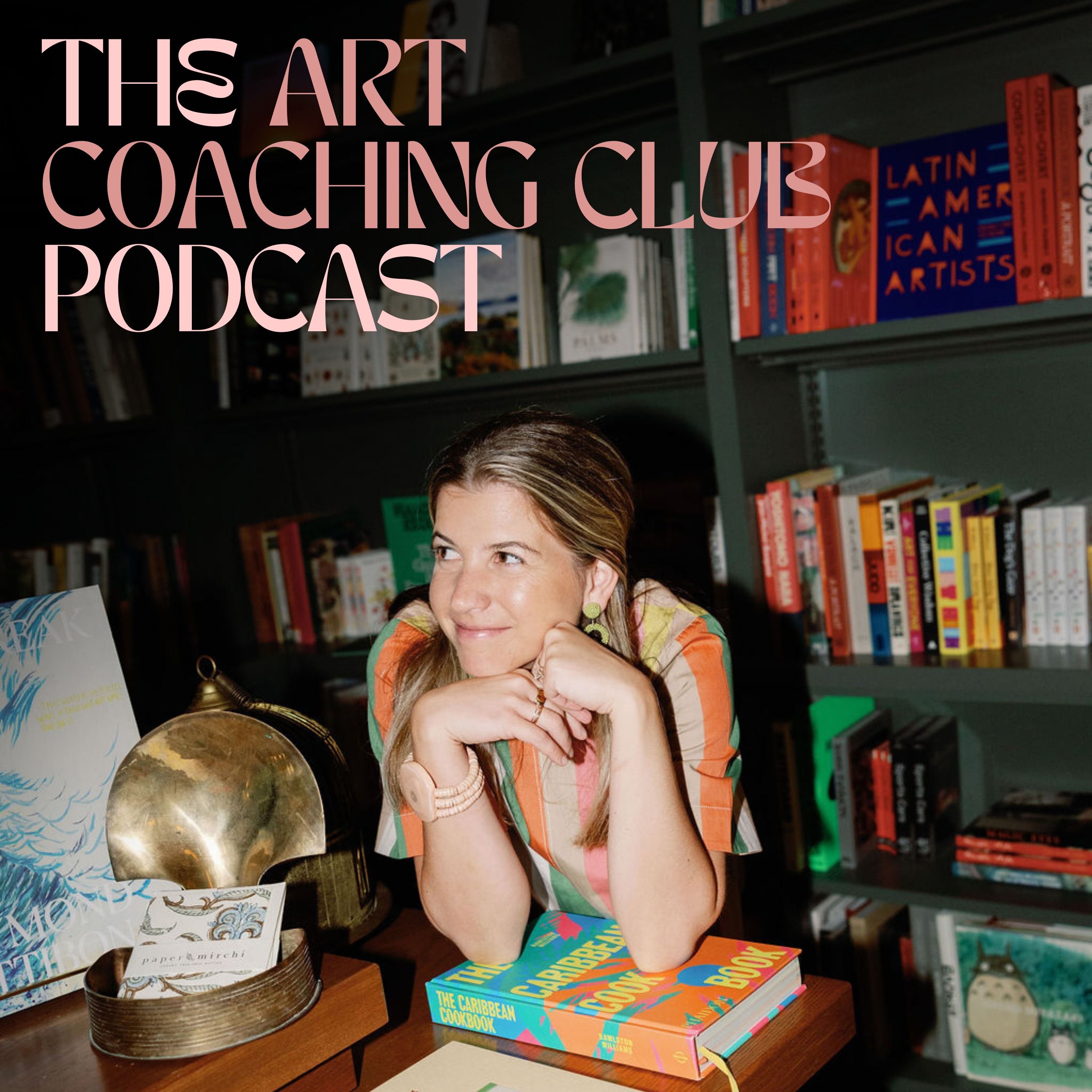
The Art Coaching Club Podcast

The Art Coaching Club Podcast

Hosted by The Art Coaching Club

Episodes

263

Latest episode

Aug 2026

Language

EN-US

About the show

Being an artist can be one of the most fulfilling careers, but can also be one of the most frustrating. The time and effort that goes into creating, often leaves little time for other tasks such as marketing, networking, website development, and financials. The Art Coaching Club Podcast is here to help!Hayley Price is the creator behind The Art Coaching Club and now The Art Coaching Club Podcast. As an artist, owner of the online art gallery, The Scouted Studio, and as an international business coach for creatives, Hayley understands the art world inside and out. Each episode, she breaks down the challenges that come with scaling a creative business and develops strategies to help artists get organized and get back in the studio doing what they love. You can expect to hear from artists at all levels of their careers discussing their career journeys, their biggest challenges, and how they got to where they are now. Subscribe to listen every Tuesday .

Listen to episodes

60 recent
September 8, 202615 min

Working With Interior Designers, Part 2: How to Become Their Go-To Artist

Welcome back to part two of my three-part series on working with interior designers. This one picks up after the designer has already said yes, and it's all about what happens next. I start with a story from my time at Fritz Porter, the to-the-trade studio in Charleston, and what it taught me about why the same designers kept coming back again and again: because we were easy to work with. That's the whole episode. I get into why being easy to work with matters more than almost anything else once you've got your foot in the door, why a simple contract actually builds trust instead of scaring people off, why you should always give yourself and your client more time than you think you need, and how a real invoicing and inventory system makes you look like the professional you already are. If you haven't heard part one, start there. I cover how to research designers and build the portfolio you'll actually send them. And if you want the extended version of everything in this episode, subscribe to my Substack. It's free, with bonus content if you want to go deeper. Next week I'm sharing an interview with an artist, and in two weeks I'll be back with part three, where we talk about what happens after the piece is delivered: follow-up, photography, and turning one sale into the next one. Your homework this week: get your systems in place. A way to track inventory, a real invoice, a commission contract, a policy on deposits. Do it now, even if you're not working with a designer yet, so you're ready the second someone says yes. Hosted by Simplecast, an AdsWizz company. See pcm.adswizz.com for information about our collection and use of personal data for advertising.


September 4, 202647 min

Eden Flora on Licensing, Collections, and Reinvesting in Your Art Business (FFF)

This Friday's replay is my conversation with Eden Flora, an artist and registered art therapist in Oxford, Mississippi, whose collection-based approach to art has grown into a business built on teaching, licensing, and a lot of hard-won reinvestment. Eden walks through how her fabric design degree and her master's in art therapy from Pratt both shaped how she works today, how she builds a collection around an idea she's personally sitting with, and how art licensing, something she says almost nobody talks about, has quietly become a steady source of income. We also cover why she's shifted energy away from Instagram and into her email newsletter, Studio Scoop, why she hired a marketing consultant this year, and the M&M story from a high school science class that still guides how she reinvests in her business. Find Eden at edenwflora.com and on Instagram @edenwflora. Hosted by Simplecast, an AdsWizz company. See pcm.adswizz.com for information about our collection and use of personal data for advertising.

September 1, 202618 min

Working with Interior Designers Part 1: Before — How to Find Them, Build Your Trade Portfolio, and Land That First Project

This is part one of a three-part series on working with interior designers. If you have been wondering how to get your art in front of designers, where to find them, how to reach out, and what to send, this episode is your starting point. Hayley shares the memory from working with interior designer Courtney Agosti that changed how she thinks about being memorable as a vendor, why a PDF portfolio is non-negotiable, and the outreach approach that actually gets a response. Subscribe to Paper Trail on Substack for the full written breakdown including the four sources for finding designers, the outreach template, and everything that goes in the PDF. Part two drops next Tuesday. Hosted by Simplecast, an AdsWizz company. See pcm.adswizz.com for information about our collection and use of personal data for advertising.

August 28, 202645 min

Money Q&A for Artists: Bookkeeping, Taxes, and Write-Offs with Ashley Ford (FFF)

This is a fan favorite replay, and if you missed it the first time, now's your chance. I sat down with Ashley Ford of Pretty Penny Accounting, who works specifically with women-owned and creative businesses, and this conversation answers nearly every financial question I had when I started my art business. We walk through the difference between a bookkeeper and an accountant, when it's actually time to hire one, what artists can legitimately write off, why you need a separate business bank account sooner than you think, and how to make sense of sales tax, 1099s, and quarterly estimated payments without losing your mind. Ashley also reframes budgeting as a spending plan instead of a restriction, which might change how you think about your own money. We close out with listener questions, covering how much cash to keep on hand, what to do when your revenue grows but your profit doesn't, and the easiest way to stay on top of your books if bookkeeping is your least favorite task. Find Ashley at heyprettypenny.com and on Instagram @prettypennyaccounting. Hosted by Simplecast, an AdsWizz company. See pcm.adswizz.com for information about our collection and use of personal data for advertising.

August 25, 20261 hr 0 min

Artist Brynn Casey on Fear, Fun, and Staying in Your Lane

Season two starts with one of my favorite conversations yet, with Brynn Casey, a Georgia-based artist known for her coastal and water-inspired paintings. We talk about her years apprenticing under Brit Bass Turner, why trying oil paint after a decade in her signature style feels almost forbidden, and the marriage metaphor she uses for the seasons of a creative career, some fireworks, some grind, all worth it. We also get practical: why Instagram doesn't convert the way it used to and what Brynn's doing about it, including a Pinterest strategy pulling 40 percent of her web traffic, how to cold-pitch interior designers, why photography should come before your website, and how she built a product ladder, from journals and calendars to prints and commissions, so there's an entry point at every budget. Her closing advice stuck with me: stay in your lane, keep your eyes forward, and stop checking what everyone else is doing. It's the perfect way to kick off this season. Find Brynn at brynncasey.com and on Instagram @brynnwcasey.art. Hosted by Simplecast, an AdsWizz company. See pcm.adswizz.com for information about our collection and use of personal data for advertising.

August 21, 202659 min

Everything You Need to Know About Prints, with Studio Giclée (Fan Favorite Friday))

It's a Friday fan favorite, so today I'm resurfacing one of the episodes y'all keep coming back to: my interview with Chad and Daisy of Studio Giclée in Wilmington, North Carolina. These two are the real deal — Daisy's a painter who studied art and interior design, and Chad grew up working in his family's print shop in Nebraska before spending over a decade doing color correction in LA, including for TV and film. Put those two together and you get a print shop that only works with artists, which changes everything about how they approach a print. We get into all of it: paper versus canvas, the difference between a standard border and an excess border (a distinction that will save you from ordering the wrong frame), aspect ratios and why they make everyone's brain hurt, what DPI actually means for your file, and how to photograph your own work at home if you're not local to them. We also talk about limited editions, whether you should sign your prints, and the smartest way to decide which sizes to even offer when you're just starting out. If you've ever felt overwhelmed trying to turn your art into prints, or you already sell prints and want to tighten up your process, this one's worth the replay. Come find me elsewhere too. I'm on Instagram at @theartcoachingclub and @hayleypricewhite, on TikTok at @hayleypricewhite, and if you want the deeper stuff — the essays, the behind-the-scenes of running this business, all of it — subscribe to my Substack, Paper Trail. Hosted by Simplecast, an AdsWizz company. See pcm.adswizz.com for information about our collection and use of personal data for advertising.

August 18, 202621 min

Seeds vs. Money Makers: Your Holiday Selling Plan Starts in August

Yes, it's August. Yes, we're talking about Christmas. Stick with me, because the artists who do holiday well aren't the ones scrambling in November, they're the ones who planned in the summer. Today I'm walking through the framework I use with my coaching clients to think about holiday sales: seeds versus money makers. Money makers are your originals, commissions, and bigger bespoke pieces. Seeds are the giftable stuff, ornaments, calendars, small prints, cards, and their real return isn't the sale price, it's the marketing. A seed sits in a stranger's home for years, doing the kind of word-of-mouth work no ad campaign can touch. I share the story of the ornaments my grandmother gave my sister and me every year growing up, why I still think of her every time I decorate my tree, and what that kind of loyalty could mean for an artist's business. We also dig into pricing psychology (the holiday-party-wine-bottle test), why underpricing gift items can actually lose you sales, and how to reverse-engineer your whole season from your ship dates. Want the deeper breakdown, with case studies? Subscribe to my Substack, Paper Trail, for Thursday's issue. And if you want to build out your own holiday plan with me directly, the waitlist for the Art Coaching Club is here: https://www.theartcoachingclub.com/about-1 Hosted by Simplecast, an AdsWizz company. See pcm.adswizz.com for information about our collection and use of personal data for advertising.

August 13, 202631 min

Pricing Without Flinching: How to Price Your Artwork (and Stop Underselling Yourself)

Pricing is probably the question I get asked more than anything else — right behind shipping tips. So to close out this three-day series and kick off season two, we're talking about how to actually price your art. I'm walking through the pricing mistakes I see most often — giving work away "for exposure," panic-discounting during a slow month, pricing off materials alone, copying someone else's price sheet, underpricing commissions just to land the client — and what those mistakes really cost you over time: a hole that's brutal to climb out of, galleries and shows that pass you over, and the burnout that pushes so many talented artists to quit. Then we get into the fix: the three pricing models I actually use (square inch, hourly, and market comparison), how to price commissions so you stop resenting them, and the mindset shift that matters more than any formula — your dream client respects the number, raising your prices can grow demand instead of killing it, and a sustainable business beats a busy one every time. If you've ever wondered whether you're charging enough or you're ready to raise your prices without scaring off clients, start here. Homework this week: audit your own pricing and see where you land. Loved this one? A quick rating and review helps this show reach more artists who need it — and subscribing means you never miss an episode. Read my recent Substacks on Pricing: https://hayleypricewhite.substack.com/p/tips-for-pricing-art https://hayleypricewhite.substack.com/p/the-year-i-sold-a-painting-for-20?r=3ehfyc https://hayleypricewhite.substack.com/p/the-truth-about-raising-your-prices?r=3ehfyc Hosted by Simplecast, an AdsWizz company. See pcm.adswizz.com for information about our collection and use of personal data for advertising.

August 12, 202623 min

What Actually Makes a Collector Buy Your Artwork

Most artists think their ideal buyer is some hyper-rich woman sitting in a castle, waiting to click purchase. She's not. Your real buyer is closer to you than you think — she's the person who splurged on something last month she didn't need, saved all year for a piece she loved, or bought herself a gift she didn't feel like explaining to anyone. Art isn't a commodity only the wealthy buy. It's belief, desire, and a luxury people find a way toward even when the math doesn't quite work. In this episode I'm breaking down what's actually happening in a collector's head in the moment they decide to buy: the role of story, why real scarcity works and manufactured urgency backfires, how trust gets built long before anyone sees your prices, and why the way you tier your work can make or break a sale. I'm pulling real examples from my own Reading Girls collection and from what running The Scouted Studio gallery has taught me about which artists build collectors and which ones don't. If you've ever made something beautiful and still couldn't figure out why it wasn't selling, this one's for you. Hosted by Simplecast, an AdsWizz company. See pcm.adswizz.com for information about our collection and use of personal data for advertising.

August 11, 202616 min

Just Start: Killing the Starving Artist Myth

Season two is here, and yes, I know season one somehow ran 250-something episodes and this is still "season two." We're not overthinking it. I took the spring and summer off, and I'm back with a shift: fewer interviews, more solo episodes built around one thing — growing a real, sustainable art business. The interviews aren't gone, and there are 200-plus of them in the archive if you want another artist's story to pair with these. But the weekly focus now is practical, walk-away-and-do-it advice, not just inspiration. This episode is part story, part reckoning. I tell you about the semester I nearly didn't double major in art, the professor who talked me into it, and the day I stood up in front of my class, flipped my notes over mid-presentation, and asked them to vote on whether I should take a "safe" internship or go all in on my art. I also tell you what happened after — the magazine job that didn't turn into a job, the arts management gig that turned into a gallery I ran out of a bedroom, then a closet with curtains hung around a painting so I'd feel like I had a window, then an actual studio, then King Street, then back online because, well, 2020. From there we get into the starving artist myth itself — where it actually comes from, what it costs you the longer you believe it, and why I think it's increasingly just not true. My take: money and art aren't enemies, collectors respect work priced with confidence, and building a sustainable business doesn't mean turning into a machine or giving up your mornings with your coffee and your dog. Your homework this week isn't a five-step framework. It's two words: just start. The email you've been drafting, the video you've been avoiding, the collaboration you keep talking yourself out of — that's the thing to do today. If this is useful, subscribe so you don't miss an episode, and send it to another artist who needs to hear it. Come find me on Instagram at The Art Coaching Club and tell me what you're starting this week. Hosted by Simplecast, an AdsWizz company. See pcm.adswizz.com for information about our collection and use of personal data for advertising.

Is this your show?

Claim this listing to keep it up to date, reach guests who want to pitch you, and manage bookings with Guestify.

Claim this listing

More Entrepreneurship podcasts