The Voice of Tea Lands | Tea Journey Magazine , founded in 2015, and the Tea Biz Blog | Podcast are favorites of tea enthusiasts and professionals worldwide. Content is authentic, timely, and exclusive, a collaborative effort that enlists 40 voices skilled in 12 languages to tell the story of tea. Coverage spans tea discovery and preparation to tea tourism, lifestyles, health and wellness, meditation, culinary tea with recipes, and terroir. Our business coverage offers insights for commercial producers supported by rich market data and scientifically backed research. Transparency is rooted in authentic storytelling, featuring nuanced articles about the places and people who passionately live a life in tea. As a niche publication, Tea Journey relies on reader contributions for most of its income. Please consider donating to support the writers and staff who bring you our unique tea content from around the globe. We appreciate your support. In 2025, we teamed up with our good friends at OverSubscribe, a platform that lets our fans make real financial investments in our future. By contributing as little as $25 to Tea Journey , you’re not just supporting our publication—you’re joining a lively global community and earning a return on your investment. | https://teajourney.oversub.me/
Listen to episodes
60 recent
11 min
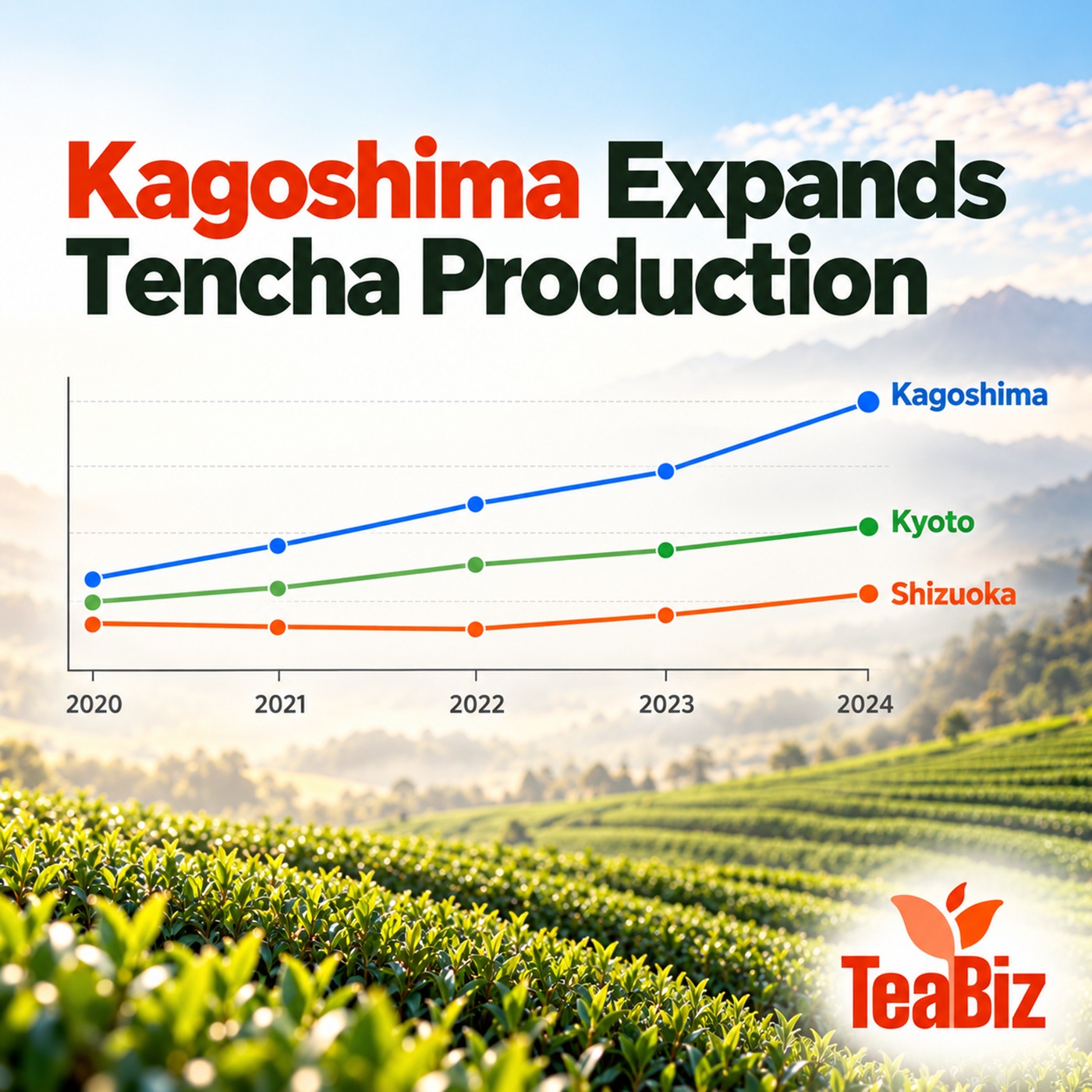
Tea News Recap | Kagoshima Expands Matcha | PG Tips Adds More Tea | Kenya Accelerates Specialty Tea
Kagoshima Expands Matcha Processing | PG Tips Puts More Tea in the Bag to Win Back Britain | Kenya Accelerates Specialty Tea Diversification | Podlink signup: https://pod.link/1549975153 Advertising Inquiries: https://redcircle.com/brands Privacy & Opt-Out: https://redcircle.com/privacy
Selective Quality Support Meets Uneven Benchmarks | The evidence from ISO Week 41 points to selective support across grades. Colombo’s better Western teas attracted interest despite a lower overall average. North India showed quality selection, but its official aggregate remains lagging. Mombasa combined a steady aggregate with mixed grade movements. Indonesia faced limited main broken availability after cancellations. Colombo’s average fell six cents to $3.82 per kilo. North India’s latest available average rose about one cent to $2.11 per kilo. Mombasa’s average stayed the same at $2.22 per kilo. | Podlink signup: https://pod.link/1549975153 Advertising Inquiries: https://redcircle.com/brands Privacy & Opt-Out: https://redcircle.com/privacy
11 min
Spotlight | The Next Chapter of Ready-to-Drink Tea
Tetra Pak’s Global Category Leader discusses how innovation, functionality, and carton packaging are reshaping one of the world's most versatile beverage categories. Ready-to-drink tea is a category in constant reinvention. Rooted in tradition yet remarkably adaptable, it continues to evolve alongside changing consumer needs. According to Tetra Pak Category Leader Vanessa Neo, growing interest in wellness, hydration, premium experiences, and new flavor exploration is creating opportunities for tea brands to reach new consumers and occasions. In this SPOTLIGHT conversation, Neo explores why functionality and premiumization are driving growth, how Asian markets continue to influence global innovation, and how formats ranging from milk teas to concentrates are expanding the category's potential. She also discusses the role of aseptic carton packaging in product protection, sustainability, distribution, and brand storytelling. The opportunity for brands is clear: unlock tea's versatility and elevate it into an everyday beverage experience.| BIO: Vanessa Neo is a Global Category Leader at Tetra Pak, leading the ready-to-drink tea and juice categories globally. Based in Singapore, she joined the company in 2019, held regional marketing roles across Asia Pacific, and moved into the global category management team in 2023. | Podlink signup: https://pod.link/1549975153 Advertising Inquiries: https://redcircle.com/brands Privacy & Opt-Out: https://redcircle.com/privacy
29 min
Japan Matcha Grows | PG Tips Adds Tea | Kenya Specialty Tea
Kagoshima Expands Matcha Processing | PG Tips Puts More Tea in the Bag to Win Back Britain | Kenya Accelerates Specialty Tea Diversification NEWSMAKER – Vanessa Neo, Global Category Leader, Tetra Pak, Singapore PLUS | The Next Chapter of Ready-to-Drink Tea | Tetra Pak Global Category Leader Vanessa Neo discusses how innovation, functionality, and carton packaging are reshaping ready-to-drink tea. Rooted in tradition but highly adaptable, the category is evolving as consumer interest in wellness, hydration, premium experiences, and new flavors creates opportunities to reach new consumers and occasions. In this SPOTLIGHT conversation, Neo discusses how functionality, premiumization, Asian-inspired innovation, and formats from milk teas to concentrates drive category growth. She also explains how aseptic cartons protect products, advance sustainability and distribution, and tell brand stories—making tea's versatility an everyday experience. | Podlink signup: https://pod.link/1549975153 Advertising Inquiries: https://redcircle.com/brands Privacy & Opt-Out: https://redcircle.com/privacy
24 min
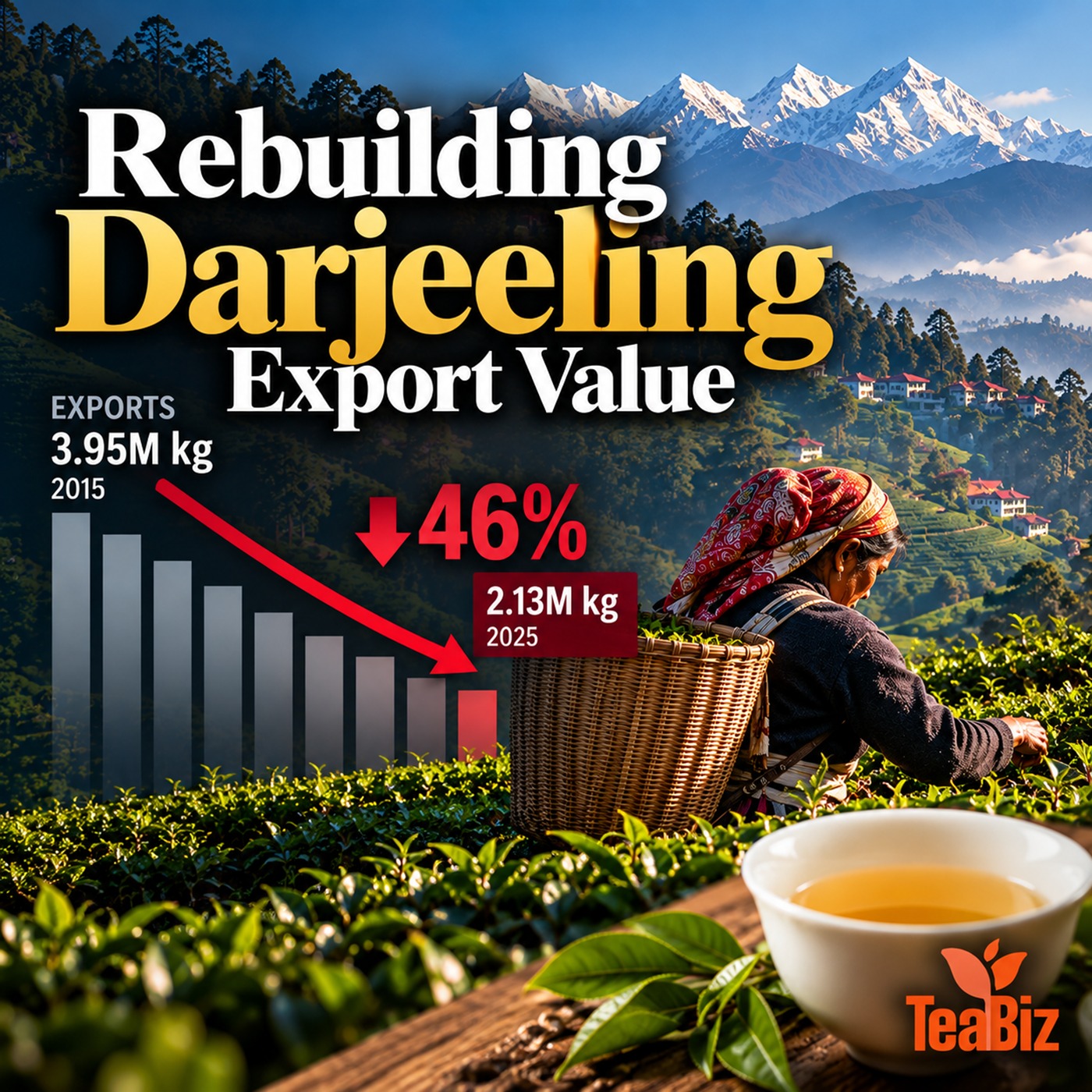
Ep 247 | Darjeeling Exports | Kenya Tea Bonuses | India Bans Paraquat
Rebuilding Darjeeling Export Value | Rising Costs Squeeze Kenya Tea Bonuses | India Removes Paraquat from Tea Protection Code NEWSMAKER – Vale Farms CEO and Founder Luke Larson PLUS | American Matcha | Can the Pacific Northwest grow exceptional matcha at commercial scale? Seattle-based Vale is putting that question to the test. Founder and CEO Luke Larson says Vale Farms has planted twelve thousand tea plants on three acres on Whidbey Island, Washington. Plans include a greenhouse and a thirty-thousand-square-foot processing facility in nearby Oak Harbor. The first harvest is still about five years away. In the meantime, Vale will continue sourcing tea from Japan while developing its growing and processing operations. But Larson’s ambition extends beyond one farm. Inspired by Napa Valley and Oregon’s Willamette wine region, he hopes other growers will help build a regional tea industry. Tea Biz correspondent Jessica Natale Woollard explores the plans—and the patience required—in this week’s SPOTLIGHT | Podlink signup: https://pod.link/1549975153 Advertising Inquiries: https://redcircle.com/brands Privacy & Opt-Out: https://redcircle.com/privacy
2 min
Tea Price Report | Week 39 | Ending 25 September
Tea markets closed ISO Week 39 with good demand in Kenya and Sri Lanka, and fair demand in North and South India and Indonesia. Colombo offered about 4.8 million kilograms, its smallest catalog since April 2024. Reduced availability supported competition for better teas. North India’s latest official CTC average was almost unchanged in rupee terms, showing a stable headline market even as buyers remained selective by quality. Mombasa maintained good general demand, while Indonesia remained fair but thinly documented. Here are this week’s price benchmarks. In Colombo, prices averaged approximately $3.80 per kilogram this week, up ↑ $0.04 per kilogram versus the prior indicative benchmark. In North India, prices averaged approximately $2.20 per kilogram, → broadly unchanged. Tea Board India reported ₹203.84/kg for North India CTC for the week ending 19 September versus ₹203.43/kg previously. In Mombasa, prices averaged approximately $2.24 per kilogram, up ↑ $0.05 per kilogram versus Week37. In Indonesia, prices averaged approximately $1.14 per kilogram, up ↑ $0.02 per kilogram versus the Week35 benchmark. The interplay of quality and availability continues. Smaller offerings can strengthen seller resistance, but buyers still won't lift secondary teas indiscriminately. Costs reinforce that discipline. Freight, energy, packaging, and finance remain embedded in delivered values, especially for inexpensive bulk teas. The Week 39 takeaway is that catalog size, clearance, and quality spreads matter as much as the headline average. Better teas continue to capture competition; secondary descriptions still depend on accurate pricing and buyer need. | Podlink signup: https://pod.link/1549975153 Advertising Inquiries: https://redcircle.com/brands Privacy & Opt-Out: https://redcircle.com/privacy
8 min
Tea News Recap | Rebuilding Darjeeling Exports | Kenya Tea Bonuses Squeezed | India Removes Paraquat
Rebuilding Darjeeling Export Value | Rising Costs Squeeze Kenya Tea Bonuses | India Removes Paraquat from Tea Protection Code | Podlink signup: https://pod.link/1549975153 Advertising Inquiries: https://redcircle.com/brands Privacy & Opt-Out: https://redcircle.com/privacy
8 min
Spotlight | American Matcha
Can the Pacific Northwest grow exceptional matcha at commercial scale? Seattle-based Vale is putting that question to the test. Founder and CEO Luke Larson says Vale Farms has planted twelve thousand tea plants on what will eventually grow to two hundred acres on Whidbey Island, Washington. Plans include a greenhouse and a thirty-thousand-square-foot processing facility in nearby Oak Harbor. The first harvest is still about five years away. In the meantime, Vale will continue sourcing tea from Japan while developing its growing and processing operations. But Larson’s ambition extends beyond one farm. Inspired by Napa Valley and Oregon’s Willamette wine region, he hopes other growers will help build a regional tea industry. Tea Biz correspondent Jessica Natale Woollard explores the plans—and the patience required—in this week’s SPOTLIGHT. BIO: Our guest is Luke Larson, founder and CEO of Vale, the Seattle-based matcha business developing Vale Farms on Whidbey Island, Washington. Larson grew up on a farm on the Olympic Peninsula. His interest in matcha became a business venture with Chef Jeffrey Hayden, Vale’s head of Craft. Working with agricultural specialists and tea-growing partners, Larson is pursuing commercial tea cultivation, matcha production, and a hospitality experience centered on tea education. | Podlink signup: https://pod.link/1549975153 Advertising Inquiries: https://redcircle.com/brands Privacy & Opt-Out: https://redcircle.com/privacy
Quality Widens the Price Gap | Tea markets ended ISO Week 37 with prices increasingly determined by quality rather than broad market direction. Across the major auction centers, buyers remained active but selective. Colombo recorded fair general demand, but stronger teas separated from weaker Western and Orthodox descriptions. North India remained under pressure relative to earlier-season highs, even as production constraints provided some underlying support. Mombasa showed one of the clearest quality signals, with better Kenyan manufacture attracting substantially stronger competition. Indonesia remained broadly stable, although limited public weekly data make it the least transparent of the four benchmarks. | Podlink signup: https://pod.link/1549975153 Advertising Inquiries: https://redcircle.com/brands Privacy & Opt-Out: https://redcircle.com/privacy
13 min
Spotlight | How Recognition Adds Value to Tea
Tea producers seeking higher returns are often advised to add value through improved processing, certification, packaging, or branding. Independent recognition of the finished tea’s quality is another part of that conversation. AVPA, the Paris-based organization behind the international Teas of the World competition, evaluates entries through blind sensory assessment. For producers moving beyond bulk sales, that recognition can help convey what makes a particular tea distinctive. In this SPOTLIGHT, we explore how producers can connect quality to the market, what French consumers value, and where recognition fits alongside the commercial work of building a brand. Our guest today is Ksenia Hleap, Chief Operating Officer of AVPA — Agence pour la Valorization des Produits Agricoles, the Paris-based organization that conducts international competitions recognizing the gastronomic quality of agricultural products. Ksenia joined AVPA in October 2017 as Director of Communications and Business Development and was named Chief Operating Officer in July 2026. She is closely involved in AVPA’s international Teas of the World competition, which welcomes producers from established and emerging tea origins and evaluates entries through blind sensory assessment. She earned a master's degree in business development from UPEC Université Paris. Her work at AVPA focuses on producer recognition, product quality, and market development—particularly helping agricultural producers communicate their products' identity, quality, and added value. | Podlink sign-up: https://pod.link/1549975153 Advertising Inquiries: https://redcircle.com/brands Privacy & Opt-Out: https://redcircle.com/privacy
Is this your show?
Claim this listing to keep it up to date, reach guests who want to pitch you, and manage bookings with Guestify.