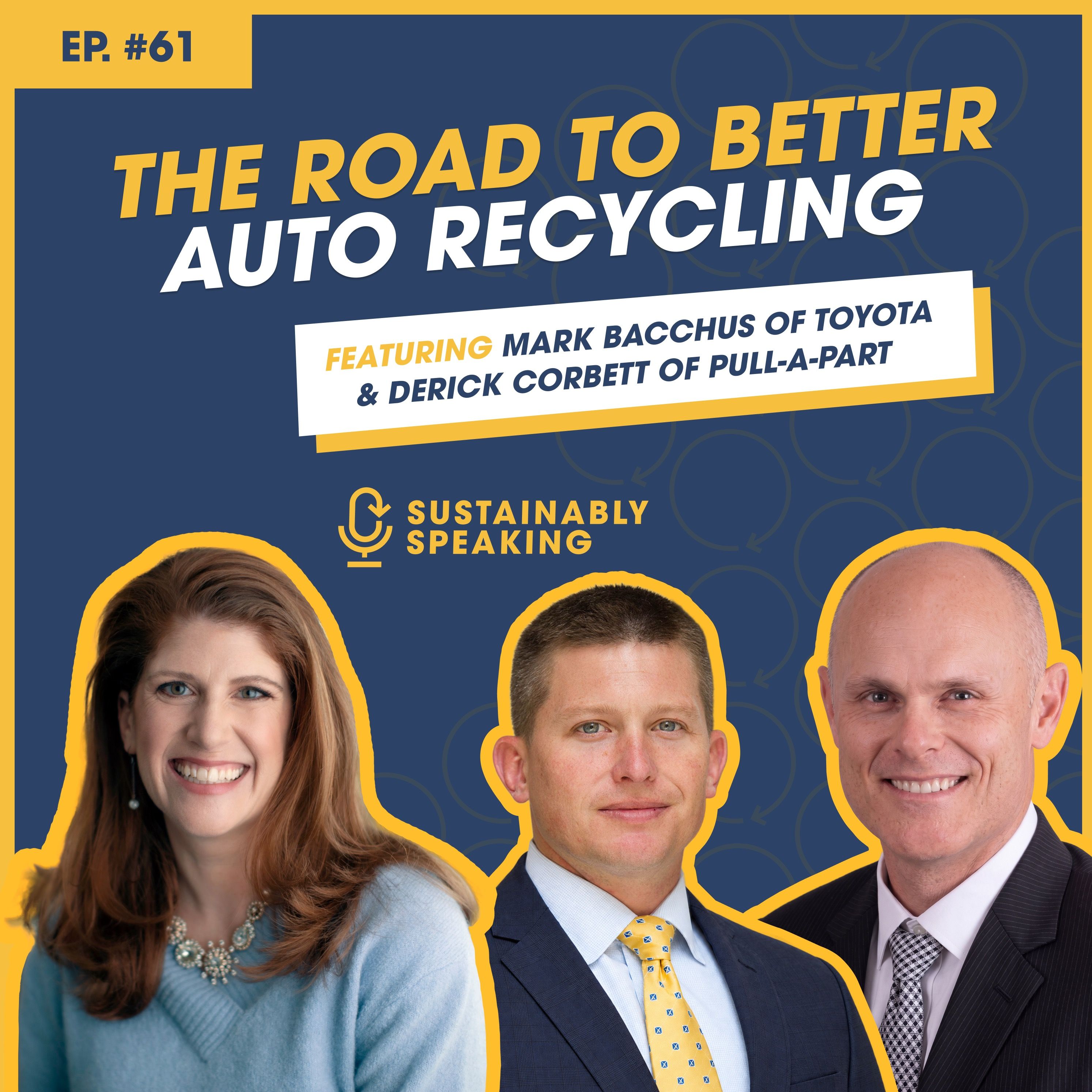
The Road to Better Auto Recycling
What happens to your car when it reaches the end of the road? A lot more than you might think. In this episode of Sustainably Speaking, host Mia Quinn sits down with Mark Bacchus of Toyota Motor North America and Derick Corbett of Pull-A-Part to follow a vehicle through the automotive recycling process—from removing fluids and reusing parts to recovering more plastics. Today, about 98% of a vehicle is recyclable—but that doesn’t mean 98% actually gets recycled. Making that happen requires automakers, dismantlers, recyclers and others across the value chain to work together in new ways. What You’ll Learn From Special Guests, Mark and Derick: What really happens to an end-of-life vehicle, from depollution and parts reuse to crushing and shredding. Why automotive plastics can be difficult to recover. A single component can contain multiple different plastics, each chosen for a specific job. How automakers are designing with recycling in mind, including simplifying materials and making components easier to separate at the end of a vehicle’s life. Why economics matter as much as technology. Recycling more material ultimately depends on creating enough value for each participant in the recycling chain to recover it. You’ll also discover just how complicated a seemingly simple car part can be: one exterior mirror can contain 15 different plastics, with each material delivering a different function. The takeaway? Building a more circular future for vehicles won’t come from one breakthrough. It will take thousands of better decisions—from how cars are designed to how their materials are recovered and reused at the end of the road. Press play for a behind-the-scenes look at what it will take to keep more automotive materials in use.