Welcome to Sparx, the show that empowers you with the latest research, strategies and tools to help you achieve exponential impact in every aspect of your life. Whether you're looking to advance your career, improve your relationships, leave a mark on the world or simply become the best version of yourself, this is where you need to start.
Listen to episodes
60 recent
October 2, 2026Episode 13947 min
Nobel Prize Winner: Quantum Is The Next Big Advance After AI
AI is getting better at answering questions. But what happens when it starts asking and solving the questions scientists haven’t answered yet?In this episode of SparX, Mukesh Bansal sits down with Paras Chopra, founder of Wingify and Lossfunk, to explore AI research, scientific discovery, consciousness, and India’s place in the global AI race.
October 2, 2026Episode 13852 min
India's Top AI Researcher: Can Indian IT Services Survive AI?
AI is getting better at answering questions. But what happens when it starts asking and solving the questions scientists haven’t answered yet?In this episode of SparX, Mukesh Bansal sits down with Paras Chopra, founder of Wingify and Lossfunk, to explore AI research, scientific discovery, consciousness, and India’s place in the global AI race.
September 4, 202656 min
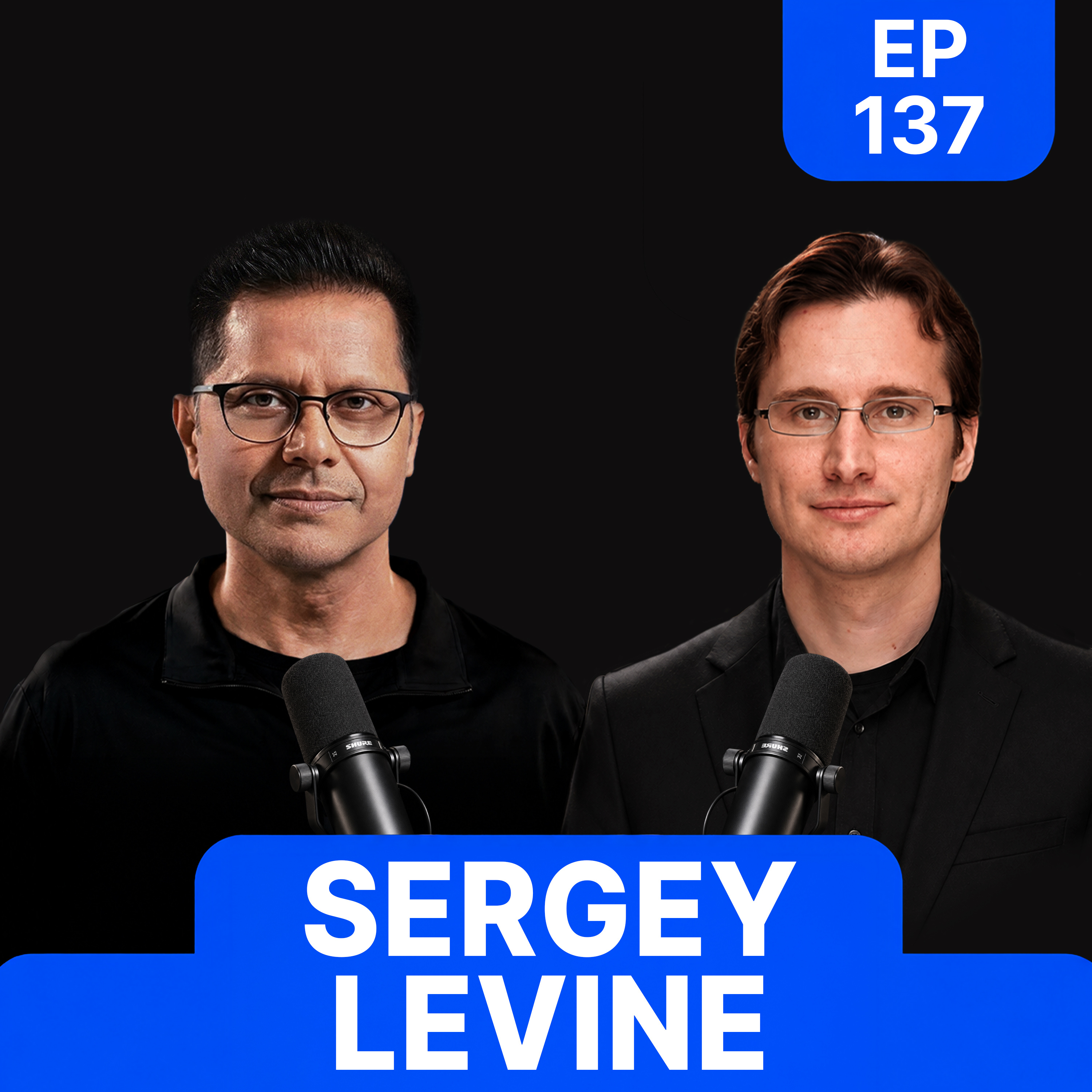
Can One AI Model Control Every Robot? | Sergey Levine
What will it take to build robots that can truly operate in the real world? 🤖 In this episode of SparX, Mukesh Bansal is joined by Sergey Levine, computer scientist and co-founder of Physical Intelligence, to explore the future of AI and robotics and why giving machines physical intelligence is one of the hardest problems in AI. From Moravec’s Paradox and imitation learning to general-purpose robots and robot learning, we explore why AI that can write, reason and talk still struggles with the physical world, and what it will take to build robots that can learn, adapt, and perform a wide range of tasks. Whether you’re an AI enthusiast, robotics researcher, builder, or simply curious about where AI is headed, this conversation offers a glimpse into the next frontier of artificial intelligence. In this episode, we discuss: * Why physical intelligence is so difficult * Moravec’s Paradox and what it tells us about AI * How robots learn from human demonstrations * The race toward general-purpose robots * Why robots struggle to generalize to new environments * What the future of AI-powered robotics could look like The next breakthrough in AI will be physical.
August 24, 2026Episode 1361 hr 2 min
India’s ₹1 Lakh Crore Deep Tech Innovation Mission: A Game Changer
What does the roadmap to a "Viksit Bharat 2047" look like from the very top? 🇮🇳In this special episode of SparX, Mukesh Bansal is joined by Professor Ajay Sood, the Principal Scientific Adviser to the Prime Minister of India. As a key architect of India’s scientific policy and a Padmashri awardee, Professor Sood offers an exclusive look into the government’s strategic vision for technology as the ultimate pillar of national sovereignty and economic growth.From the explosion of space-tech startups like Skyroot to the revolutionary ₹1 Lakh Crore R\&D fund, we dive deep into the missions that are positioning India as a global leader. We explore the critical convergence of AI and Quantum Computing, the strategic importance of Semiconductor Mission 2.0, and how India is navigating complex geopolitical supply chains.Whether you are a deep-tech entrepreneur, a student of science, or curious about India's technological future, this conversation provides a masterclass on the "Golden Age of Indian Science."In this episode, we discuss:The Vision for 2047: How Science & Tech are the primary engines for a developed India.Deep Tech Sovereignty: Why India must choose its global partners carefully while building indigenous strength.The Quantum Leap: India’s proactive National Quantum Mission and its synergy with AI.Semiconductors & Nuclear Energy: Building a full-fledged ecosystem and the future of Fusion energy.Democratizing Science: The "One Nation One Subscription" initiative and creating a culture that celebrates science like a festival.
August 8, 2026Episode 13442 min
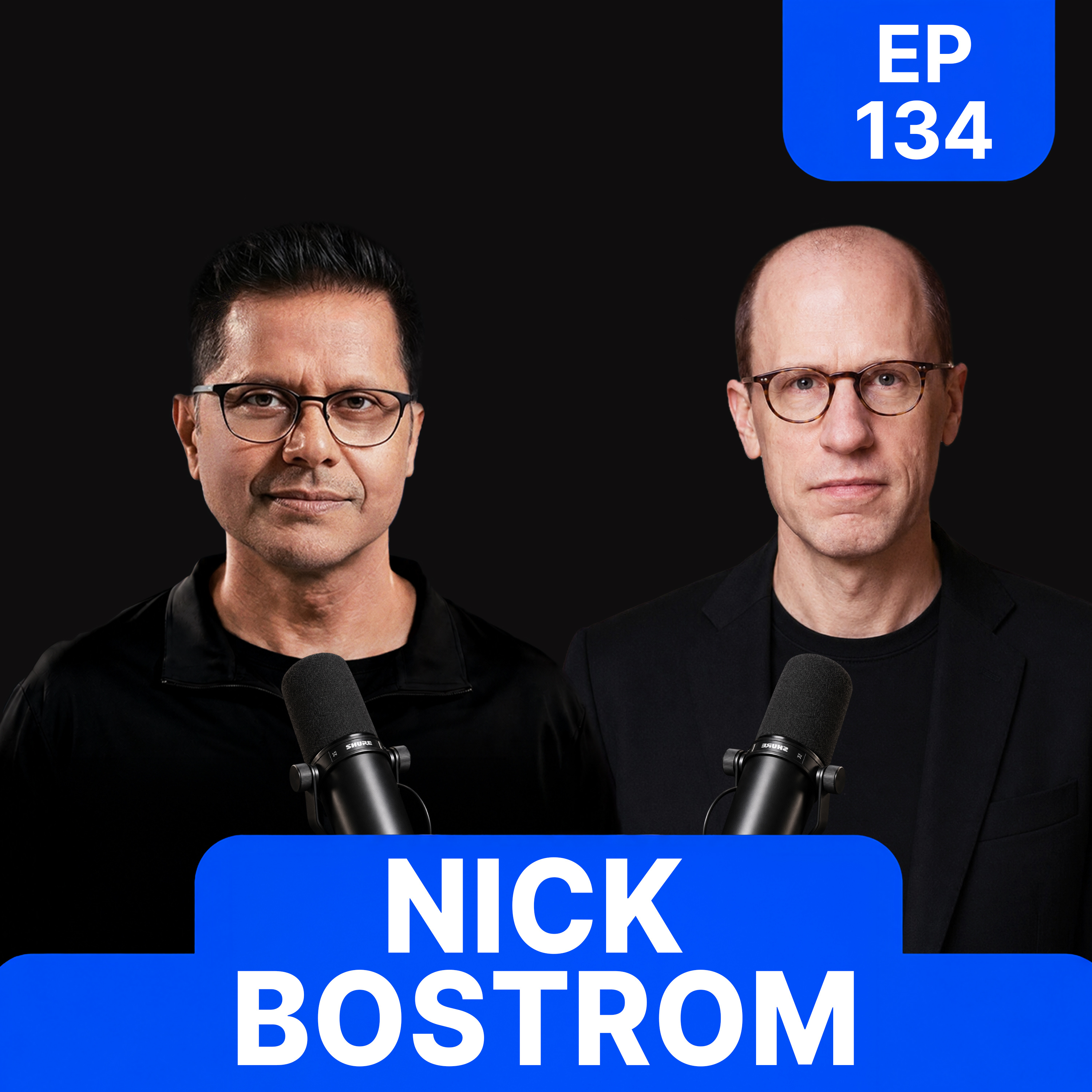
Nick Bostrom on Sycophantic AI and Who It Really Serves | Sparx
Description- Is superintelligence a few years away, and would we even notice if the systems we built started to matter morally?- Nick Bostrom is the philosopher who put superintelligence on the map. His 2014 book defined the field, and his recent Deep Utopia asks the harder question: what is life for once machines can do everything better than us?- In this episode of Sparks, he tells [Host] that we don't have superintelligence yet but are seeing limited forms of AGI, that frontier labs using AI to accelerate their own research could trigger recursive self-improvement, and that he can no longer rule out timelines of just a few years. He argues the outcome is likely to be either very good or very bad, walks through the three ways it fails, and explains why he now works on problems that only matter over the next 6 to 18 months — philosophy, as he puts it, with a deadline.-We also get into full unemployment as a destination rather than a disaster, what an education system looks like when it isn't producing workers, why suppressing deception in a model makes it more likely to claim consciousness, and why building trust with AI systems now may be a safety measure rather than sentiment.
July 31, 20261 hr 18 min
Inside the $1.1 Billion Rocket Company That Just Beat SpaceX
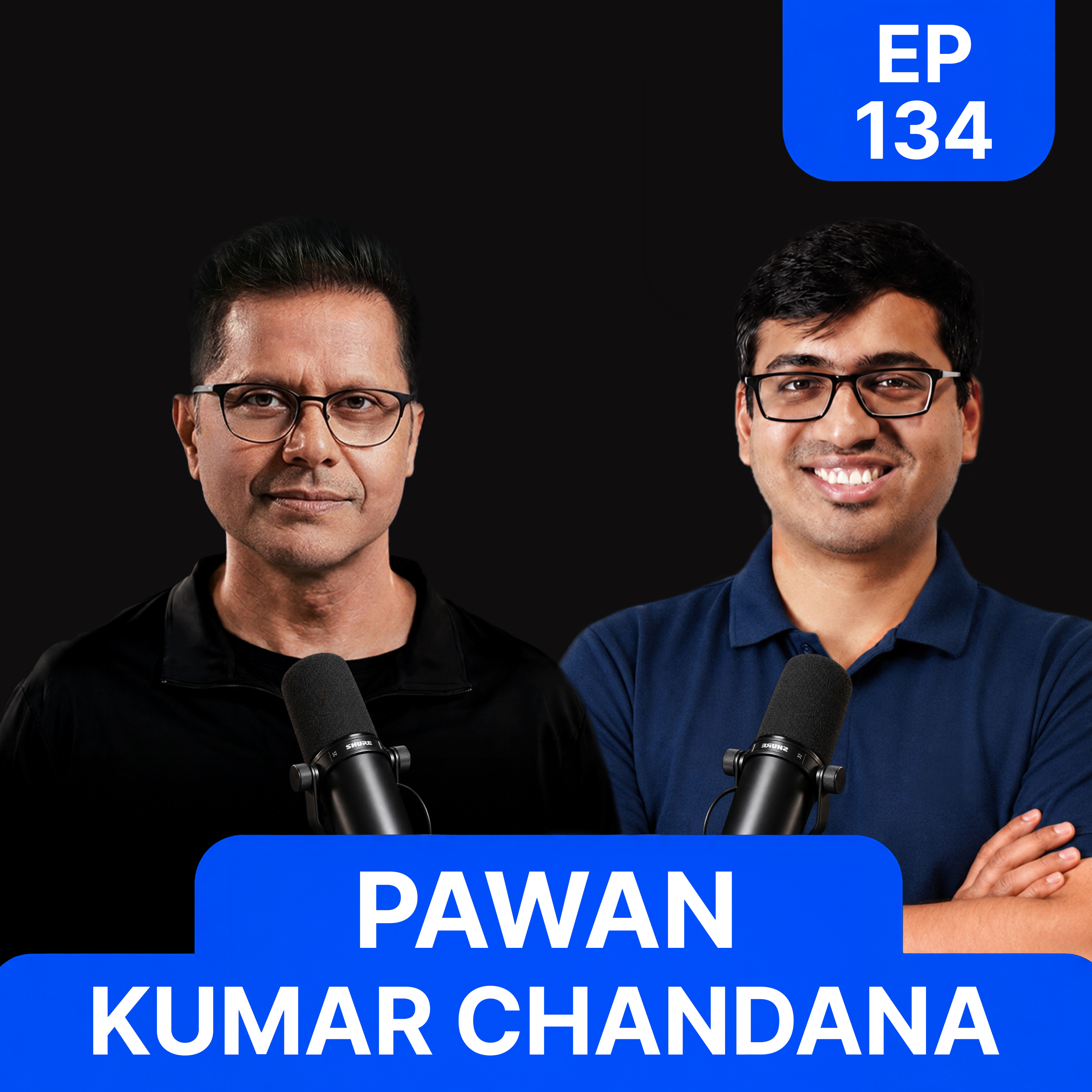
India just carved its name into the history of space.In this episode of SparX by Mukesh Bansal, we sit down with Pawan Chandana, Co-founder & CEO of Skyroot Aerospace, just days after the company achieved a historic milestone - becoming the first private Indian company to successfully launch a satellite into orbit on its very first attempt.Chapters0:00 - Introduction 0:59 – History, Made in India06:14 – The Cold Message That Started It All 09:34 – The Lowest Point: COVID and the Investors Who Believed 12:38 – Building Rockets Was Illegal? 15:10 – The 20-Something Team launching rockets in space17:44 – Advice for Deep Tech Founders & India's New Funding Ecosystem20:01 – Inside Mission Control: Pre-Launch Checks to the 5-Minute Hold 24:53 – Stage-by-Stage: Liftoff Through the 15-Minute Journey to Orbit 29:32 – The Self-Destruct System, and Everything That Could Go Wrong33:56 – Stage Separations Explained: The Riskiest Moments of the Flight 47:30 – The Failure That Almost Derailed Everything52:20 – What's Next for Skyroot? 59:15 – Lessons From ISRO's Failures 1:02:20 – Skyroot's Ripple Effect on Startups1:04:56 – India's Next Deep Tech Bets & Opportunities1:09:06 – "This Is India's Skyroot Moment" Pawan shares the untold story behind Skyroot's remarkable journey—from a LinkedIn message that led to Mukesh Bansal becoming one of Skyroot's earliest believers, to raising capital during the toughest days of the pandemic, building one of the world's most advanced private rocket programs, and the emotional moments inside mission control during launch. There was no revenue, no roadmap, no guarantee — just conviction that these founders wouldn't quit. That was enough for Mukesh Bansal to back them back in 2018, and today that conviction has made history. The conversation goes deep into entrepreneurship, deep-tech investing, India's emerging innovation ecosystem, and the future of private space exploration.Whether you're a founder, engineer, investor, student, or simply fascinated by rockets and innovation, this episode offers a rare behind-the-scenes look at one of the most important milestones in India's startup history.If you enjoyed this conversation, don't forget to Like, Subscribe, and share the episode with someone passionate about entrepreneurship, science, innovation, or space technology.
July 11, 2026Episode 13334 min
India’s Space Revolution Starts Here | Sanjay Nekkanti
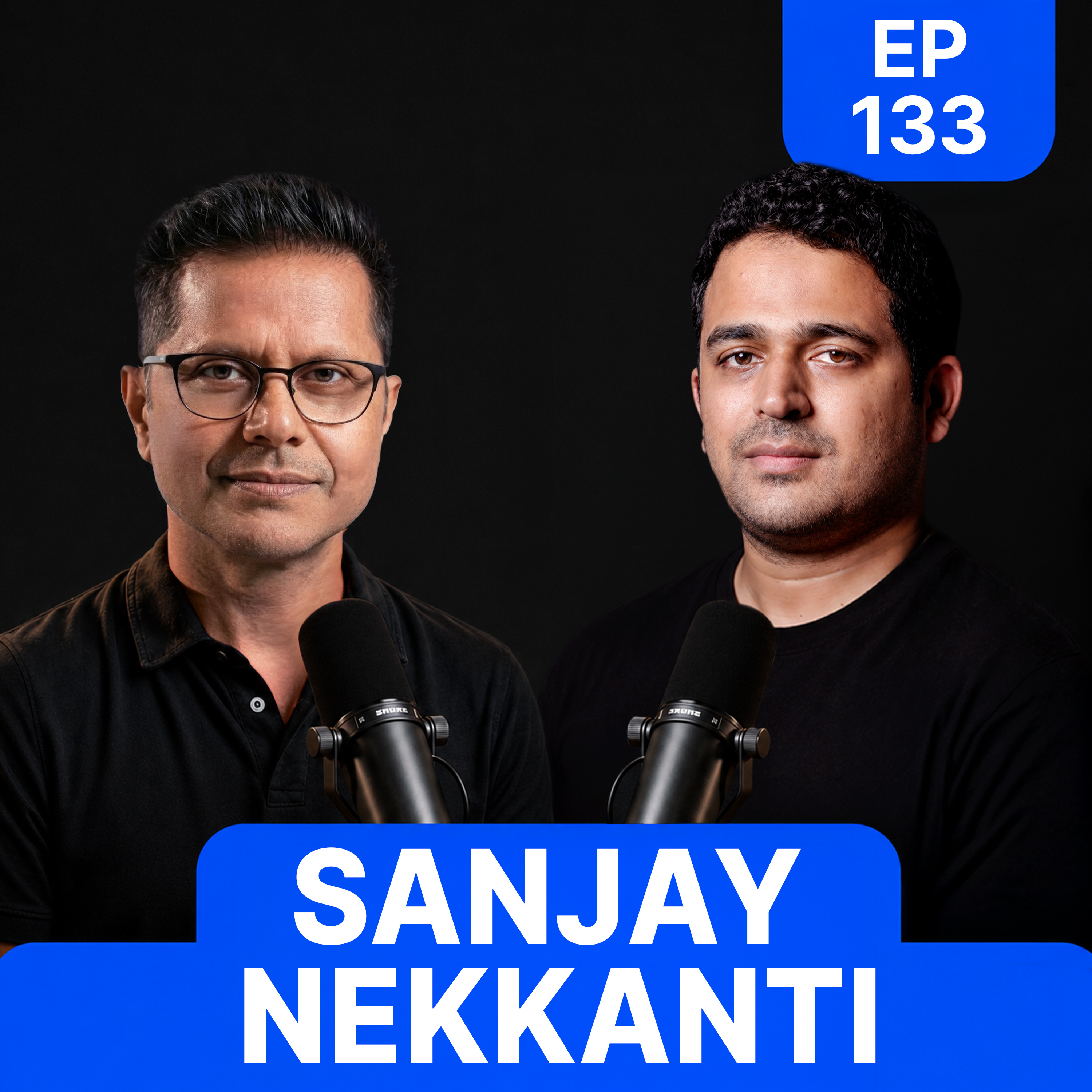
Can India build the next SpaceX? From building satellites at just 19 years old to founding Dhruva Space , one of India's pioneering private space companies, Sanjay Nekkanti shares the incredible journey behind India's emerging space revolution. In this episode of SparX , we explore how India's decades of investment through ISRO laid the foundation for a new generation of private space startups that are now building world-class technology designed, engineered, and manufactured in India. In this episode you'll learn: How Sanjay built satellites while still a student Why India's Chandrayaan mission inspired a new generation The story behind founding Dhruva Space The challenges of building deep-tech startups in India Why manufacturing is India's biggest opportunity The evolution of India's private space ecosystem Lessons on perseverance, innovation, and long-term thinking What the future of the global space economy looks like If you enjoyed this conversation, Like, Subscribe, and hit the notification bell for more conversations with India's most inspiring founders, innovators, scientists, and business leaders.
June 27, 2026Episode 13252 min
How Wispr Flow Beat OpenAI
Tanay built a 72% habit-forming product that changed how millions compute. In 12 months, Wispr Flow went from side project to 40% MoM growth, beating OpenAI's model, while staying obsessively focused on one thing. Inside: how to build products people can't live without, why focus kills you if you lose it, and what happens when a 28-year-old founder thinks from first principles instead of copying Silicon Valley playbooks.
June 13, 2026Episode 13151 min
Vinod Khosla on AI, India’s IT Future & the Next Trillion-Dollar Opportunity
Legendary venture capitalist Vinod Khosla joins Mukesh Bansal on SparX, for one of the most wide-ranging and provocative conversations on the future of technology, investing, and humanity. Vinod makes bold claims: AI will replace doctors within 5 years, colleges as we know them are obsolete, space-based data centers don't make sense, India's IT and BPO industry faces an existential threat - and yet, AI may be the greatest opportunity India has ever seen. And ultimately, AI will free humanity from servitude to survival. In this episode, Vinod shares his contrarian investment philosophy, including why he wrote a $50M check to OpenAI in 2019 when it had no product, no revenue, and no business plan — and why he sent an apology letter to his LPs along with it.
May 30, 2026Episode 13048 min
Gary Marcus: The AI Bubble, OpenAI's Burn Rate, and Why the Hype Will End Badly
Is AI the biggest scam of our generation — or the most misunderstood technology in history? Cognitive scientist Gary Marcus has been studying artificial intelligence for over 30 years, and what he has to say will make you question everything you thought you knew about ChatGPT, AGI, and the trillion dollar AI gold rush. In this episode of SparX, we are talking with Gary Marcus – professor, author, and one of the most respected and fiercely independent voices in AI research – about why the promises being made by Sam Altman, Dario Amodei, and Elon Musk may be leading the global economy toward a catastrophic miscalculation. 🔗 Resources mentioned in this episode: Gary Marcus's essay: https://garymarcus.substack.com/p/dear-elon-musk-here-are-five-things Gary Marcus's 2014 New Yorker article: After the Turing Test : https://www.newyorker.com/tech/annals-of-technology/what-comes-after-the-turing-test Gary Marcus's talk at the Royal Society on the Turing Test : Paper on AI intelligence dimensions: Bengio, Hendrycks et al. What you will learn in this episode: We go deep on why Large Language Models are fundamentally statistical next-word predictors and not the thinking machines they are marketed as. Gary explains the Eliza Effect — the 60-year-old psychological phenomenon that explains why millions of people are falling in love with chatbots that feel nothing back. We unpack what AGI actually means, why no one defining it agrees on a definition, and why Gary's Movie Test is a far better benchmark than the century-old Turing Test that everyone keeps getting wrong. We also get into the neurosymbolic AI revolution that is quietly winning the AI race while billion dollar companies keep talking about scaling — and why tools like Claude Code are already proof that the future of AI is not what OpenAI wants you to believe. The big questions we tackle: Is the $1 trillion bet on AGI the greatest misallocation of capital in human history? Why did Geoffrey Hinton, a Nobel Prize winner, get radiology completely wrong — and why does nobody talk about it? Why are 90% of companies seeing zero return on their AI investments? Will AI actually take your job — or is the task vs job distinction the most important thing nobody is explaining to you? Why are driverless cars still not here, 14 years after Sergey Brin promised they would be everywhere by 2017? What is the alignment problem and why does Gary believe we must slow down before it is too late? Why this conversation matters right now: The world is spending more money every single month on AI than the United States spent on the entire Manhattan Project. That money is flowing based on a scientific hypothesis — that scaling up LLMs will produce AGI — that Gary argues has overwhelming evidence against it. If he is right, the economic consequences will be severe. This is not a conversation about being anti-technology. This is a conversation about getting the science right before the bill comes due. Gary Marcus is the author of Rebooting AI, The Algebraic Mind, and Guitar Zero. He has written for The New Yorker, The New York Times, and The Wall Street Journal. He testified at the US Senate alongside Sam Altman and spoke at the Royal Society on the 75th anniversary of the Turing Test. He is one of the few people in the world with the depth of background to challenge the AI industry's biggest claims — and the track record to back it up. If you have ever asked yourself whether AI is really as powerful as everyone says, whether your job is actually at risk, or whether the companies promising you an AI-powered utopia actually know what they are building — this episode is essential viewing.
Is this your show?
Claim this listing to keep it up to date, reach guests who want to pitch you, and manage bookings with Guestify.