Find partners
Solve for X: Innovations to Change the World

Solve for X: Innovations to Change the World

Hosted by MaRS Discovery District

Episodes

41

Latest episode

May 2026

Language

EN

About the show

Solve for X uncovers what’s next. Join journalist Manjula Selvarajah as she dives into the latest tech innovations shaping our world. How are satellites revolutionizing the fight against climate change? Could music be the medicine we need? What will it take for Canada to lead the global tech scene and achieve a zero-emission future? Discover the answers to these questions and more in the next season of Solve for X.

Listen to episodes

41 recent
May 26, 202641 min

Home remedy: Understanding housing as a medical intervention could transform the homelessness crisis

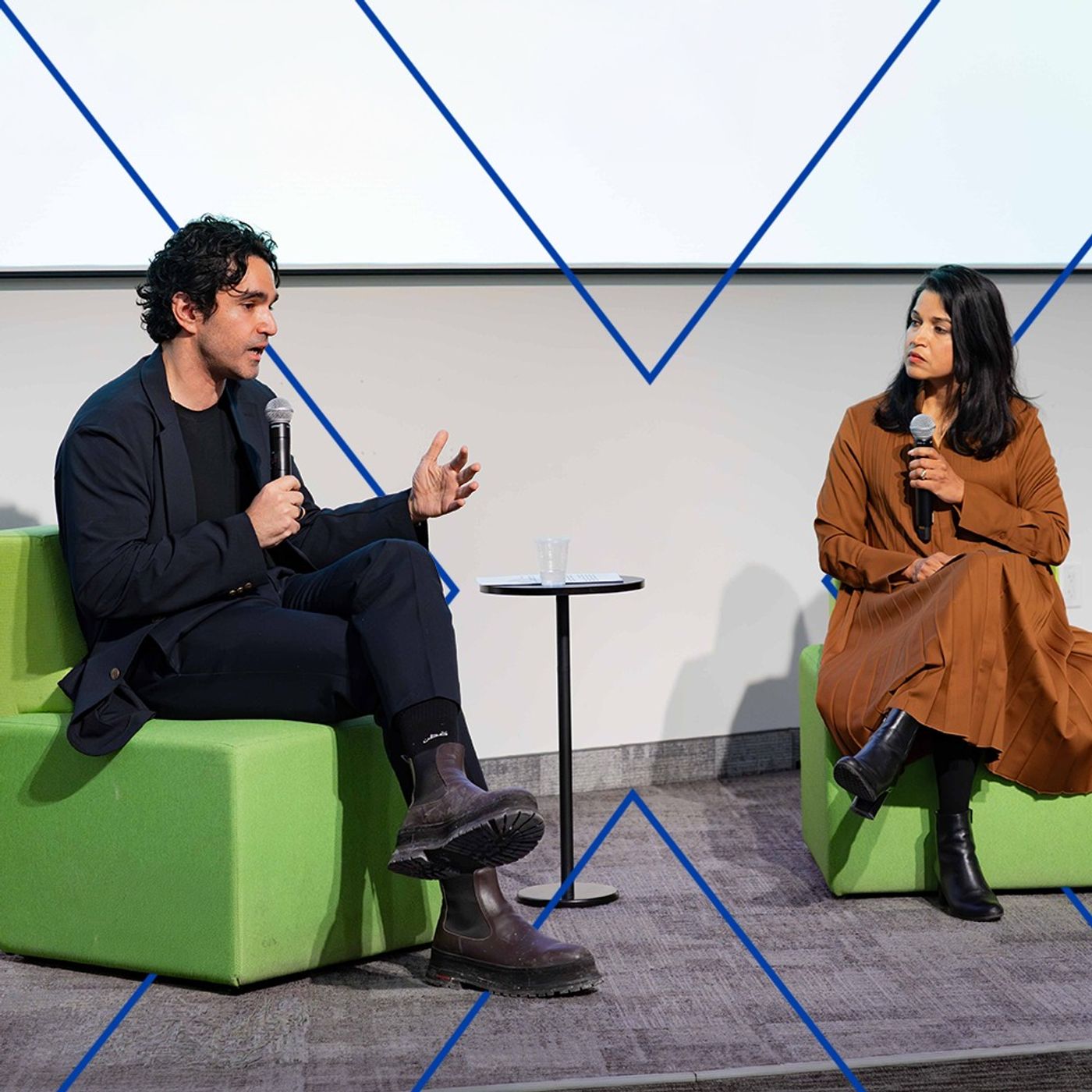
The housing crisis is fundamentally a health problem. Decades of research show that people experiencing homelessness spend twice as long in the hospital, cost the healthcare system double and have a life expectancy half that of the average Canadian. In this special episode of Solve for X: Innovations to Change the World, recorded live at a MaRS Morning event, host Manjula Selvarajah sits down with primary care physician Dr. Andrew Boozary to discuss a radical shift in Canadian medicine: treating housing not just as a social service, but as a critical medical intervention. As founding executive director of UHN’s Gattuso Centre for Social Medicine, Boozary shares data-driven insights from his initiatives there: prescribing nutritious food boxes, the launch of Ontario’s first hospital-based homelessness and eviction program and, most famously, the establishment of Dunn House, a permanent supportive housing model that’s proven to be both effective and scalable. Together, Selvarajah and Boozary explore what it takes to dismantle bureaucratic sludge, cut through systematic fragmentation and build a healthcare system rooted in human dignity. Dr. Andrew Boozary is a primary care physician and the founding executive director of the Gattuso Centre for Social Medicine at University of Health Network (UHN). At the forefront of health equity and public policy, his work focuses on integrating social determinants of health — such as housing, income and food security — directly into patient care. Boozary has spearheaded pioneering social medicine models including Toronto’s modular permanent supportive housing project, Dunn House, establishing crucial healthcare interventions that drastically improve health outcomes while reducing healthcare costs. In 2026, he received a Governor General’s Innovation Award for developing Dunn House. Further reading Dr. Andrew Boozary on expanding social medicine housing model Dunn HousePathologies of poverty: The need for housing Dunn House gave homeless ER patients a home and saved Toronto hospitals millions. Now they’re building another oneHow did social medicine evolve, and where is it heading? Subscribe to Solve for X: Innovations to Change the World here.    Solve for X is brought to you by MaRS, North America’s largest urban innovation hub and a registered charity. MaRS supports startups and accelerates the adoption of high-impact solutions to some of the world’s biggest challenges. For more information, visit marsdd.com. 

April 23, 202628 min

Gene genie: New therapeutics are unlocking our biological blueprint to help the body heal itself

There are few neurodegenerative diseases as devastating as Huntington’s. It’s sometimes likened to having Parkinson’s, ALS and Alzheimer’s all at the same time, with symptoms that include progressive motor dysfunction, cognitive decline and behavioural change. It’s also hereditary — if a person has the faulty gene that causes the disease, there’s a 50 percent chance their children will have it, too. In the fall of 2025, however, scientists announced that, for the first time, they could reduce the progression of Huntington symptoms using a new gene therapy. While that clinical breakthrough came with several caveats, it also heralded a possible new paradigm for drug discovery. In this episode, we explore how this innovative therapy works and what it could mean for the treatment of other rare diseases.  Featured in this episode: Rachel Harding is an assistant professor in the department of pharmacology and toxicology at the University of Toronto and a principal investigator at the Structural Genomics Consortium. Her work on Huntington’s disease has been recognized with major early-career awards, highlighting both scientific excellence and the potential patient impact of her research program. Further reading: Research is unravelling the mystery of what causes Huntington’s disease, a devastating brain disease In a first, a gene therapy seems to slow Huntington disease “Best news” for Huntington’s disease community comes with unanswered questions The Huntington’s disease research pipeline World’s first patient treated with personalized CRISPR gene editing therapy at Children’s Hospital of Philadelphia Solve for X is brought to you by MaRS, North America’s largest urban innovation hub and a registered charity. MaRS supports startups and accelerates the adoption of high-impact solutions to some of the world’s biggest challenges. For more information, visit marsdd.com. 

March 26, 202638 min

Mind over matter: Could brain-computer interfaces lead to a new era of innovation and healing?

Brain-computer interfaces (BCIs) have been allowing humans to control objects with their minds for nearly half a century. But in recent years, thanks partly to advances in AI, the technology has evolved dramatically; wearable and implantable devices are now being used to restore speech and movement to stroke survivors, alleviate depression and treat pain. While companies like Elon Musk’s Neuralink grab headlines, a somewhat quieter revolution is happening in Canada, where researchers are using BCI to help a historically underserved population: disabled children. In this episode, we explore BCI’s potential to transform medicine, the knotty ethical questions at its core and how the tech might just bring us closer together. Featured in this episode: Dr. Adam Kirton is a professor of pediatrics, radiology and clinical neurosciences at the University of Calgary, where he’s also the director of the BCI4Kids program. He is also the director of the Calgary Pediatric Stroke Program and is a practicing pediatric neurologist at the Alberta Children’s Hospital. He co-founded, and is the CMO, of Possibility Neurotechnologies Anne Vanhoestenberghe is a professor of active implantable medical devices at King’s College London and director of MAISi, a facility for the manufacture of active implants and surgical instruments, housed at St. Thomas’ Hospital in London, England. Dion Kelly is a clinical neuroscientist and the co-founder and CEO of Possibility Technologies. Dion and Adam launched the company in 2022 to commercialize their brain-controlled technology, which transforms thoughts into actions.  Stephanie Sonnenberg and her daughter, Claire, live outside of Calgary, Alberta. Claire was one of the first users of Possibility Technologies’ BCI device, Think2Switch. Further reading: The past, present and future of brain-computer interfaces We’ve been connecting brains to computers longer than you’d expect. These three companies are leading the way Adam Kirton’s Lindenlauer lecture, Columbia University, November, 2024 Altman’s Merge raises $252 million to link brains and computers What it’s like to have a brain implant for five years Solve for X is brought to you by MaRS, North America’s largest urban innovation hub and a registered charity. MaRS supports startups and accelerates the adoption of high-impact solutions to some of the world’s biggest challenges. For more information, visit marsdd.com. 

February 26, 202628 min

Colour block: When it comes to water, can the textile industry clean up its act?

The fashion industry has its fair share of dirty secrets, but one of the lesser-known is how much it pollutes our waterways. Every year, garment factories use as much as 2 trillion gallons of water to dye clothes, and most of that water, now filled with harmful chemicals, flows untreated into rivers, streams and lakes. Those pollutants can turn rivers black, harm marine life and cause cancer. Macarena Cataldo, a chemical engineer based in Vancouver, has come up with an ingenious way to remove these contaminants before they even reach the water. In this episode, Cataldo talks to Manjula Selvarajah about the global water crisis, how her technology works and efforts to get major fashion brands to change their ways. Featured in this episode:  Macarena Cataldo is the CEO and CTO of Viridis Research, which she co-founded in 2019 to solve various global water challenges by eliminating pollutants from water sources. She has a PhD in chemical engineering, and has spent more than 15 years applying electrochemistry to drinking and wastewater treatment working with the European Space Agency, the Metropolitan Water Company of Turin and others. Further reading: Asian rivers are turning black. And our colourful closets are to blame Why colouring clothes has a big environmental impact World enters era of “global water bankruptcy” Water crisis in Chile: Are we close to day zero?  Subscribe to Solve for X: Innovations to Change the World here. And below, find a transcript to “Colour block.” Solve for X is brought to you by MaRS, North America’s largest urban innovation hub and a registered charity. MaRS supports startups and accelerates the adoption of high-impact solutions to some of the world’s biggest challenges. For more information, visit marsdd.com. 

January 29, 202643 min

Infinity quest: Is the hubris of tech billionaires endangering the planet?

There’s no denying that technology plays — and will continue to play — a critical role in addressing the climate crisis. But could super-intelligent AI actually solve the problem for us, as several tech billionaires claim? Or is this over-reliance on speculative technology simply a way to distract us from tackling big, real-world problems. Manjula Selvarajah sits down with astrophysicist and author Adam Becker to separate the hype from reality. Featured in this episode: Adam Becker is an astrophysicist, journalist and the author of More Everything Forever, a book that examines the futuristic ideologies of Silicon Valley’s tech titans. He is a former science journalism fellow at the Santa Fe Institute and was also a science communicator in residence at the Simons Institute for the Theory of Computing at UC Berkeley.Marcius Extavour is a scientist, creative technologist and communicator who develops solutions for climate change and clean energy. As a partner at Ode, a technology and creative design firm specializing in geospatial AI. He previously built the energy, climate and carbon removal practice at XPRIZE.Further reading: Silicon Valley is at an inflection pointTech oligarchs are gambling our future on a fantasy Travelling to Mars and beating death: The futurist creed of tech’s apostles  More Everything Forever Subscribe to Solve for X: Innovations to Change the World here. And below, find a transcript to “Infinity quest.” Solve for X is brought to you by MaRS, North America’s largest urban innovation hub and a registered charity. MaRS supports startups and accelerates the adoption of high-impact solutions to some of the world’s biggest challenges. For more information, visit marsdd.com. 

December 18, 202528 min

The grid: Is it time to rethink our power systems? (Replay)

Our energy grid is something most of us only think about when it isn’t working. But growing demand for electricity is placing an even greater strain on a system that’s already facing increased pressure from extreme weather events. Can we build a more sustainable and dependable grid? In this episode, which originally aired September 2022, we explore how when it comes to climate change the challenge of greening the grid is as much an issue of complex engineering as it is about policy and equity. Featured in this episode:Josh Wong is the former CEO of Opus One Solutions, which was acquired by General Electric. In 2024, Josh founded a new company called ThinkLabsAI and is developing software that will help utilities to integrate renewable sources of energy and improve grid resilience.Destenie Nock is an assistant professor at Carnegie Mellon University who specializes in public policy, civil and environmental engineering. She’s an expert on how our changing climate is impacting the grid, and what that means for the future. Focusing on energy equity, Destenie explains what’s important to consider in our transition to clean energy.Dana Tizya-Tramm is the former chief of the Vuntut Gwitchin First Nation in Old Crow, Yukon. Dana helped establish the Old Crow Solar Project — shifting the northern remote community off diesel to renewables. Through his efforts, Old Crow is making inroads toward energy sovereignty. He is now the director of Nadlii and is working on developing a framework for Indigenous data sovereignty and ethical AI.Further reading: 2021 placed exceptional demands on electricity markets around the worldRenewable Energy Is Great—but the Grid Can Slow It DownGlobal heat waves are so bad that utilities are paying their customers to use less energy“Nation-building” investments in electricity grid needed to reach net-zero, experts sayHow Old Crow’s solar farm is changing green energy projects in Yukon | CBC NewsSubscribe to Solve for X: Innovations to Change the World here Solve for X is brought to you by MaRS, North America’s largest urban innovation hub and a registered charity. MaRS supports startups and accelerates the adoption of high-impact solutions to some of the world’s biggest challenges. For more information, visit marsdd.com. 

November 27, 202548 min

Power to the people: How solar energy — cheap, plentiful and available everywhere — is poised to change the world

As you may have heard, solar energy is having a moment. Thanks to several technological breakthroughs, it’s now the cheapest form of energy generation in most places on Earth. This past summer, for the first time ever, it became the EU’s main source of electricity, and many other parts of the world — Pakistan, Nigeria and most famously, China — are likewise in the midst of a solar boom of astonishing speed and scale. In this episode, experts weigh in on the social, political and economic implications of this revolutionary energy shift — and the complicated way that Canada fits into it all.Featured in this episode:Sara Hastings-Simon is an associate professor in the department of Earth, Energy and Environment and an assistant professor in the School of Public Policy. Her work focuses on understanding how low-carbon energy transitions happen within different sectors of the economy, constrained by existing infrastructure and business models, and how policy response can improve outcomes. She also hosts, alongside David Keith and Ed Whittingham, the live webinar and podcast Energy vs Climate.Mike Andrade is the chairman and CEO of Morgan Solar, a Toronto company whose products improve the performance of solar projects and the energy efficiency of buildings. A former executive at IBM and a founding member of Celestica, he’s also an investor and advisor to several other companies, a member of the Council of Canadian Innovators and a board member of the Next Generation Manufacturing Supercluster.Chris Caners is general manager at SolarShare, a renewable energy co-op in Ontario. He’s also a consultant who advises organizations on climate, energy efficiency and sustainability.Thomas Timmins leads the Canadian energy sector practice at Gowling WLG in Toronto. He specializes in helping clients navigate opportunities in the global energy transition.Deb Chachra is a professor of engineering at Olin College and the author of How Infrastructure Works: Inside the Systems That Shape our World. Further reading:• Seizing the moment of opportunity• Free electricity. Like, at no cost. For everyone. Now.• Pakistan’s solar boom• There’s a race to power the future. China is pulling away• What if Canada invested in solar energy?• The solar rushSubscribe to Solve for X: Innovations to Change the World here. And below, find a transcript to “Power to the People.”  Solve for X is brought to you by MaRS, North America’s largest urban innovation hub and a registered charity. MaRS supports startups and accelerates the adoption of high-impact solutions to some of the world’s biggest challenges. For more information, visit marsdd.com. 

November 20, 20251 min

Solve for X S4 Trailer

Get ready for Solve for X season four! Join journalist Manjula Selvarajah as she goes behind the hype and headlines to make sense of how new technologies are reshaping our world. This season we learn about the solar revolution, robot dexterity, a device that zaps forever chemicals and more. Subscribe and listen beginning November 27. Solve for X is brought to you by MaRS, North America’s largest urban innovation hub and a registered charity. MaRS supports startups and accelerates the adoption of high-impact solutions to some of the world’s biggest challenges. For more information, visit marsdd.com.

September 18, 202520 min

It’s different all over: Embracing the complexity of human biology

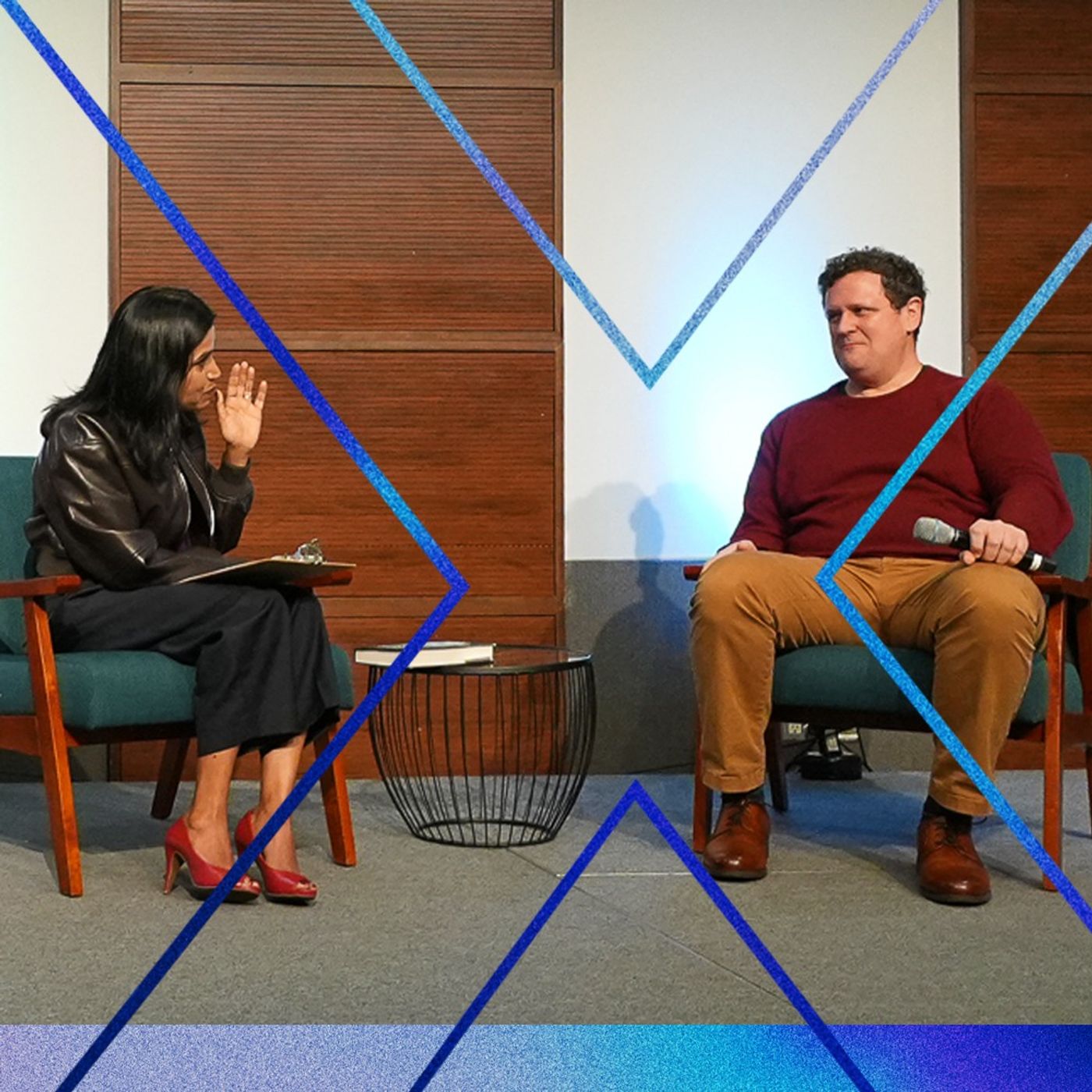
By uncovering critical sex-based differences related to brain and metabolic health, researchers Gillian Einstein and Minna Woo are making the case that tailored interventions are key to improving health outcomes for women — and everyone else. Through their work exploring how conditions from Alzheimer’s to kidney disease can have varied effects depending on a patient’s sex, they underscore what the medical community as a whole can learn from experts in women’s health: Things aren’t as simple as we want to believe. In this bonus episode, recorded live on May 8, 2025, at the MaRS Impact Health Conference, Einstein and Woo discuss the complexity of biology, the challenges of funding and why they’re optimistic that things are changing.Featured in this episode:Gillian Einstein is the Wilfred and Joyce Posluns Chair in Women’s Brain Health and Aging and a psychology professor of psychology at the University of Toronto. She’s also an adjunct scientist at Baycrest and Women’s College Hospitals, and an honorary doctor of medicine at Linköping University, Sweden. Her lab’s current focus is on estradiol loss as well as how stigma and immigration affect memory and cognition in diverse populations of women.Minna Woo is currently the director of the Banting and Best Diabetes Centre at the University of Toronto and recently completed a 10-year term as division director of endocrinology and metabolism at the Toronto General Hospital, University Health Network (UHN). She now holds the Ajmera Chair in Molecular Diabetes Research at the Toronto General Hospital Research Institute and is a clinician scientist and a staff endocrinologist providing diabetes and endocrine care at UHN. Her laboratory focuses on molecular mechanisms that determine the pathogenesis of insulin resistance and related diseases. She has published more than 100 research articles and her research is internationally recognized as a member elect of the American Society of Clinical Investigation.Katherine Ward is an award-winning journalist currently working with Global News in Toronto. She joined the team in 2018 and has covered a wide range of stories taking her all over Ontario. This year, Ward was also part of an investigative team that exposed the prevalence of lead contamination in drinking water. “Tainted Water” went on to win a national award with Canada’s Radio Television Digital News Association.Further reading: • From body to brain: Understanding how sex and gender contribute to brain health as we age• More women get Alzheimer’s than men. It may not just be because they live longer• Sleep quality and the menstrual cycle• Breaking down sex and gender barriers in search of precision medicine• Canada accelerates diabetes researchSubscribe to Solve for X: Innovations to Change the World here.  Solve for X is brought to you by MaRS, North America’s largest urban innovation hub and a registered charity. MaRS supports startups and accelerates the adoption of high-impact solutions to some of the world’s biggest challenges. For more information, visit marsdd.com. 

July 17, 202527 min

Cold comfort: How to keep cool without destroying the planet

The hotter it gets outside, the more we use air conditioning, and the more we use air conditioning, the hotter it gets. AC units and refrigeration combined adds up to 10 percent of global greenhouse gas emissions. But how can we solve this cooling paradox? Building on last episode’s conversation with the UN’s global chief heat officer, host Manjula Selvarajah meets the experts harnessing novel innovations to keep cities and people cool — from massive infrastructure projects using ice-cold lake water to microscopic solutions to get rid of that sticky, sweltering humidity. David MacMillan is a manager in the City of Toronto’s Environment, Climate and Forestry division. He and his team are focused on planning for low-carbon development and energy systems, which includes implementing the Toronto Green Standard, which aims for net-zero new buildings by 2028, and renewable energy programs such as SolarTO and Wastewater Energy.  Cameron Leitch is the director of solutions and innovations at Enwave Energy Corporation, which oversees the largest deep lake water cooling (DLWC) project in the world. Pulling near-freezing water from the depths of Lake Ontario, this massive infrastructure system provides alternative cooling to more than 100 buildings in downtown Toronto, including arenas, condos, offices, data centres and hospitals — a clean energy initiative that has been recognized by the United Nations. Evelyn Allen is the co-founder of Evercloak, a Waterloo-based company that has developed graphene oxide membranes that helps to dehumidify air before it reaches AC and HVAC units, significantly reducing the energy and refrigerants needed to cool a space. The company is currently part of the Mission from MaRS: Better Buildings Adoption Accelerator program. Daniel A. Barber is a professor of architecture and the environment at Eindhoven University of Technology in the Netherlands. Barber’s research and work focuses on how changing temperatures have altered our built environment, and how architects can help adapt to the climate crisis. At architecture symposium Biennale Venice, his interactive installation, “Terms and Conditions,” allowed participants to experience the stifling effects of the waste heat that air conditioning units produce. Further reading: Air conditioning poses a climate conundrumToronto company using lake water to cool buildings expands systemToronto is home to the world’s largest lake-powered cooling system. Here’s how it works.Air conditioners fuel the climate crisis. Can nature help?How to build an AC that will get the world through hotter summersA rebuke to Modernism: the Venice Architecture Biennale imagines new ways of building to cope with climate changeSubscribe to Solve for X: Innovations to Change the World here.. Solve for X is brought to you by MaRS, North America’s largest urban innovation hub and a registered charity. MaRS supports startups and accelerates the adoption of high-impact solutions to some of the world’s biggest challenges. For more information, visit marsdd.com. 

Is this your show?

Claim this listing to keep it up to date, reach guests who want to pitch you, and manage bookings with Guestify.

Claim this listing

More Technology podcasts