Find partners
Snafu w/ Robin Zander

Snafu w/ Robin Zander

Hosted by Robin P. Zander

BusinessInterviews guestsExplicit

Episodes

100

Latest episode

Jun 2026

Language

EN

About the show

Welcome to Snafu, a podcast about sales, persuasion, and work. Amidst all the change going on in the world today, "durable" skills are often the most resilient. Snafu is a podcast for entrepreneurs, freelancers, and ambitious professionals who need to sell – but aren't quite comfortable yet. Robin Zander has spent more than 20 years tackling things he doesn't know how to do. From starting a restaurant in three weeks without any prior restaurant experience to performing as a self-taught acrobat with the San Francisco Opera, Robin has built his life and career around learning new things. But growth isn't all upside. Trying new things comes with lots of failures. On Snafu, Robin sits down with authors and entrepreneurs to talk about a more human approach to sales, persuasion, and work.

Listen to episodes

60 recent
June 3, 202659 min

The Art of Human Connection featuring Adam Rosendahl

In this episode, I'm joined by Adam Rosendahl – facilitator, artist, and founder of Late Nite Art – for a conversation about creativity, trust, belonging, and why deeply human experiences may matter more than ever in an increasingly AI-driven world. Adam's work uses collaborative art, storytelling, music, and facilitation to help people lower their defenses and reconnect with one another in ways that traditional meetings, networking, and workplace culture often fail to create. We explore how creativity can function as a kind of social technology — building trust, emotional openness, empathy, and shared experience across strangers, teams, and organizations. We talk about the origins of Late Nite Art, the leadership camps and formative experiences that shaped Adam's philosophy, and why so many people today feel disconnected despite being constantly online. Along the way, we explore relationship-centered leadership, workplace trust, emotional safety, political polarization, experiential learning, and why organizations increasingly need spaces for genuine human connection. Toward the second half of the conversation, we discuss AI, automation, digital overwhelm, and the growing tension between technological acceleration and preserving humanity, creativity, and embodied experience. Adam also reflects on friendship, handwritten art, illuminated notes, and why imperfect human-made experiences may become even more valuable in a world saturated with AI-generated content. If you're thinking about creativity, leadership, belonging, trust, or how to stay emotionally grounded in rapidly changing times, this conversation is for you.

May 22, 202648 min

Why Human Experience Still Matters In The Age Of AI featuring Sara Loncka

In this episode, I'm joined by Sara Loncka – experiential learning designer, leadership strategist, and CEO of Experience Institute – for a conversation about why human experience may matter more than ever in an increasingly AI-driven world. Sara's work focuses on leadership development, experiential learning, and organizational transformation, but this conversation goes far beyond workplace training. It's about what happens when people become disconnected from themselves, each other, and the environments shaping their lives – and why intentional experiences can interrupt the routines, assumptions, and identity patterns we often move through unconsciously. At the center is Sara's distinction between "little e" experiences and "Big E" Experiences. Little e experiences are the stories, habits, and assumptions people accumulate over time. Big E Experiences are intentionally disruptive moments that create reflection, discomfort, curiosity, and transformation. We talk about why growth often requires stepping outside familiar environments, embracing beginner mindsets, and placing ourselves in situations where certainty and competence disappear. We also explore the origins of Experience Institute, why traditional corporate training often fails, how experiential learning creates lasting behavioral change, and the challenge of building organizations that remain deeply human as technology accelerates. Along the way, Sara reflects on founder transitions, reinvention, identity, discomfort, and how even small experiences can quietly reshape the direction of a person's life. Toward the end, the conversation becomes more personal as Sara shares how pregnancy and motherhood have challenged her relationship with control, embodiment, and uncertainty – becoming a different kind of transformational experience entirely. If you're thinking about leadership, personal growth, reinvention, or how to stay connected to what feels deeply human in rapidly changing times, this conversation is for you.

May 6, 202654 min

Incorruptible: How Great Companies Stay Great featuring Eric Ries

In this episode, I'm joined by Eric Ries – entrepreneur, founder of the Lean Startup movement, and author of The Lean Startup and Incorruptible – for a conversation about what it actually takes to build companies that last. Eric's work has shaped how startups and large organizations approach innovation, but this conversation goes deeper than experimentation. It's about what happens after you succeed and why so many good companies slowly lose their way. At the center is a concept he calls financial gravity: the invisible force that pushes organizations toward short-term decisions, often at the expense of customers, employees, and long-term value. We talk about how this pressure shows up everywhere – from venture-backed startups to public companies – and why even well-intentioned leaders struggle to resist it. We dig into real examples, from Costco and Patagonia to lesser-known companies that have built what Eric calls "incorruptible" systems – organizations designed to hold their values under pressure. That means not just strong culture, but governance, ownership, and structures that reinforce the mission over time. We explore: Where things break.  Why founders lose control.  Why incentives drift.  Why "best practices" often lead to worse outcomes.  And why resisting that pull requires more than good intentions. Along the way, we touch on AI, alternative ownership models, and the growing tension between innovation and accountability, especially as new technologies are being built inside increasingly concentrated power structures. If you're building a company, thinking about long-term value, or trying to create something that doesn't fall apart as it scales, this podcast is for you.

April 22, 20261 hr 17 min

How Cults Work with Ellen Huet

In this episode, I'm joined by Ellen Huet – journalist at Bloomberg and author of Empire of Orgasm – for a conversation about power, belonging, and the sometimes blurry line between influence and manipulation. Ellen has spent over a decade covering Silicon Valley – from AI startups to the personalities shaping the industry. Empire of Orgasm explores OneTaste, the sexual wellness company and alleged sex cult. Throughout the book, Ellen also explores the broader question of how high-demand groups actually work. At the center of this book is the uncomfortable idea that cults aren't a binary; they exist on a spectrum. And, as we discuss in depth, many of the dynamics we associate with extreme groups – belonging, shared language, mission-driven work, charismatic leadership – show up in everyday organizations more than we'd like to admit. We talk about what she learned reporting on OneTaste, from the power of social pressure and status to the subtle ways people are influenced without ever being explicitly told what to do. Ellen breaks down how "consent" gets distorted in these environments, and why the ability to freely say "no" is the clearest line between healthy influence and coercion. We also explore the overlap between cult dynamics and modern business – especially in tech. From grand mission statements to founder mythology, there's often an emotional pull that goes beyond logic. Ellen shares how these forces show up in AI companies today, and why the belief that you're "part of something world-changing" can be both motivating and dangerous. Along the way, we get into sales, persuasion, and the tension between helping someone and overriding their agency. Where is the line between influence and manipulation?

April 15, 202647 min

Building Community that Drives Business with Joshua Zerkel

In this episode, I'm joined by Joshua Zerkel – community strategist, former Evernote ambassador turned community leader, and author of The Community Code – for a conversation about what it really takes to build community that drives business outcomes. Joshua's path is anything but typical. He started as a power user and advocate, writing productivity books about Evernote before eventually joining the company and helping scale its community as it grew from 100M to 200M users. From there, he went on to build and lead community at Asana, turning it into a global program spanning forums, ambassadors, experts, and hundreds of events – all tied to real pipeline impact. His work centers on a simple but often misunderstood idea: community is just relationships at scale. We talk about why community is so often undervalued inside organizations, how to translate its impact to business leaders, and the constant tradeoffs between depth and reach. We dig into the messy realities of building community inside companies – from navigating trust during Evernote's privacy-policy crisis to responding to backlash and actually listening when your users push back. Joshua shares what breaks when companies stop listening, why "personas" often miss the point, and how to design community programs around real people instead. We also explore the role of events as a community engine – how to think about formats, why in-person still matters, and what separates meaningful engagement from surface-level activity. Along the way, we touch on the fine line between community and cult dynamics, and what companies like Peloton get right when it comes to creating real connection. If you're building community, trying to prove its value, or thinking about how relationships translate into growth, this conversation is for you.

April 8, 202650 min

How to Move People with Lindsey Caplan

.In this episode, I'm joined by Lindsey Caplan — organizational psychologist, former Hollywood screenwriter, and upcoming author — for a conversation about creativity, communication, and how people and groups are actually moved. Lindsey's path is anything but linear. She started her career on TV and film sets in Los Angeles, working on shows like Malcolm in the Middle, Curb Your Enthusiasm, and The Amazing Race. From there, she transitioned into learning and development at companies like DreamWorks Animation, Zendesk, and Credit Karma, eventually stepping fully into organizational design and change work at The Gathering Effect. Her new book, Moved — coming March 2027 — explores the forces that shape human behavior: what moves us, how we can move others, and why pull, not push, is the most sustainable path to influence. We talk about why the book took nine years to write, what she learned about the psychology of groups, and why "being seen and heard" is at the heart of all meaningful change. We dig into the creative process, including the messy parts: identity shifts, losing and regaining a creative voice, and what it takes to translate an idea that lives in your head into something that lands with other people. Lindsey shares how her storytelling roots shape her work today — from understanding stakes and motivation to designing experiences that create real engagement, not just compliance. We also explore the gap between knowing and doing, why so many best-practice books fail to stick inside organizations, and how leaders can communicate in ways that create ownership instead of resistance. If you're curious about influence, the craft of writing, or how to move people without pressure, this conversation is for you.

April 4, 202659 min

Founder-Led Sales with Gagan Biyani - Snafu Conference 2026

This conversation between Robin Zander and Gagan Biyani, founder of Maven and early contributor to Udemy, Lyft, and Spread, explores the intersection of growth, education, and entrepreneurship. The session begins with a brief mindfulness exercise for the audience before diving into Biyani's career and his perspective on growth. He distinguishes growth from traditional marketing by emphasizing that growth is a systematic approach that integrates product, analytics, and user behavior to drive scalable results, rather than solely focusing on branding or messaging. Biyani also addresses the ethics of growth, noting that while manipulation is unavoidable in communication, respecting users' agency and providing genuine value is key. Fear or guilt about "manipulating" others often hinders action, whereas ethical influence fosters trust and long-term engagement. Drawing from his own experiences, he underscores the importance of providing optimism and clarity, rather than relying on fear-based tactics, in both marketing and education. Education remains a central theme of Biyani's work. At Udemy, he helped pioneer live, video-based courses to make learning more accessible online, though he notes systemic barriers prevented it from fully replacing traditional college education. Maven continues this mission with cohort-based programs led by industry experts, helping professionals rapidly gain practical skills. Biyani highlights the transformative potential of AI in upskilling, explaining that while AI won't replace human teachers, it significantly expands access and efficiency for learners across industries. Reflecting on his broader entrepreneurial journey, Biyani shares lessons from Lyft and Spread. Lyft demonstrated the power of timing and product-market fit, while Spread taught him that execution alone is not enough – understanding the market and being "right" about demand is essential. Across all ventures, he emphasizes pattern recognition, balancing exploration with focused execution, and learning from successes and failures alike. Ultimately, Biyani's philosophy is to tackle challenging problems that align with personal strengths, respect users' agency, and leverage insight and experimentation to create meaningful impact.

February 25, 20261 hr 0 min

How to Sell Yourself – A Workshop

Robin Zander hosted a Snafu webinar for the Sidebar community on non-sales selling—think self-promotion for career transitions, freelancers, entrepreneurs, and product people. The goal: learn to "sell yourself" without the ick factor.   Participants shared fears: follow-ups feel intimidating, sales feels slimy, and success seems like a numbers game. Robin reframed it: selling is really about enrollment—being a chief evangelist for your work, not begging for attention.   Drawing on stories from his childhood pumpkin patch, his time as a personal trainer (where desperation lost him clients), and opening Robin's Cafe in San Francisco (raising $40k, serving multiple stakeholders, training staff with Danny Meyer's principles), he showed the difference between selling from need vs. service. Long-term success comes from genuine connection, curiosity, optimism, and passion.   Attendees explored their "authentic attitude" and reflected on times self-promotion felt good versus slimy. Exercises included mapping all the people who benefit from your work—employees, customers, managers, mentees, community—and practicing generosity in selling (a "Miracle on 34th Street" mindset: help customers even if it means sending them elsewhere).   In Q&A, Robin tackled: Asking for promotions as modeling for others, especially women and minorities Persistence in follow-ups (yes, emailing Mark Benioff 53 times counts) Relationship-based enterprise selling Avoiding fear-based AI marketing by knowing who you serve and what problem you solve Recommended reading: Setting the Table (Danny Meyer), Unreasonable Hospitality (Will Guidara), The New Strategic Selling.   Robin also shared upcoming Snafu conference details (March 5, Oakland Museum of California) and reminded everyone: Snafu = situation normal; all fucked up. 00:00 Start 01:06 Audience Fears About Selling Robin Zander welcomes 93 participants to the webinar Notes the session is interactive with exercises planned Encourages participants to drop questions in chat or interrupt him Last 15–20 minutes reserved for questions Robin introduces himself briefly Focuses on storytelling as a tool for self-promotion Shares experience as a community builder Runs a conference called Responsive since 2016 (not Snafu) Tools, structures, and company cultures for resilient organizations Two-day event each September on the future of work Focus on building resilience in organizations Observations on rapid change Technology and work-life changes happening at a fast pace Questions about resilience in individuals Traits needed in careers, personal relationships, professional relationships Ability to stay resilient through change Robin frames his expertise Emphasizes his strength in asking questions and fostering honest conversations Labels himself a reluctant salesperson Not the world's leading expert on self-promotion or selling Key lessons from research and interviews Two buckets matter in business and life: Example: Sidebar community forming coalitions for learning and action Operational excellence: being competent and at least as good as others Promotion/enrollment/sales: standing up, saying what you want, building coalitions Started interviewing people about influence and persuasion Started a weekly newsletter called Snafu Written by hand, not AI Shares lessons from his life and others about self-promotion and resilience Focus on courage to take action: raising hand, offering something valuable Core characteristics of self-promotion and selling yourself Connecting with others: art of connection Courage to ask: inspired by Amanda Palmer's TED Talk and book The Art of Asking Opposes traditional "always be closing" sales mentality Advocates for simply asking for what you want Current work mostly involves storytelling for large companies Clients include Supersonic, Airbnb, Zappos, and others 12:25 Service as the Core Principle Robin introduces the concept of storytelling for self-promotion Stories used to: Get promotions Build coalitions Propel career or organizational growth Emphasizes turning personal, career, or company stories into "commercials" Focus of today's talk: self-promotion with impact Core principle: service Showing up from a place of helping others Through helping others, also helping oneself Distinguishes between sleazy salespeople and effective self-promoters Childhood anecdote: Robin's pumpkin patch Tended plants all summer, learned responsibility and care Harvested pumpkins and sold them using a small red tin box labeled "money" Ran "Robin's Pumpkin Patch" for five to seven years At age five, father had him plant pumpkin seeds Engaged neighborhood kids for fun, collaborative promotion Explained product (pumpkins) enthusiastically to potential buyers Used scarecrow costumes and creative gestures to attract attention Lessons learned from pumpkin patch: Authentic enthusiasm creates value Helping people do what they were already inclined to do Early experience of earning and serving simultaneously Self-promotion is most effective when it's service-driven, not manipulative Applying childhood lesson to career and business Asking for a raise Persuading companies to choose one service over another Promoting oneself or others (e.g., Evan, web developer) Key principle: approach self-promotion from delight and service, not need or fear Authentic enthusiasm as foundation for: Interactive exercise for participants Not influenced by sleep deprivation or stress Could be inspired by childhood or adult experiences Opposite of fear; personal and unique for each participant Question posed: what is your authentic attitude when self-promoting? Examples shared from participants: Curiosity Passion Inspiration Service to others Observation Possibility Insight Value Helping others Creativity Belief in serendipity Optimism Key takeaway from exercise and story Promoting from delight, enthusiasm, and service Promoting from need or fear Two versions of self-promotion: Effective self-promotion aligns with authenticity and enthusiasm, creating value for others while advancing oneself 18:36 Gym Job and Needy Selling Robin shares the next story and sets up the next exercise Gym culture is sales-heavy Initial motivation: love of fitness, desire to help people Quickly realizes environment incentivizes personal trainers to sell aggressively Timeframe: ~20 years later, at age 20, moved to San Francisco First post-college job: personal trainer in gyms Early experience at gyms Key lesson from early failure Selling from need feels gross Promoting oneself from fear or desperation leads to poor results Recognizes similarity to unwanted sales calls received personally First authentic success in self-promotion Worked at Petro and World's Gym in San Francisco, Pilates instructor Owner confronted Robin after two weeks: no clients, potential clients being lost to others Threatened termination by Friday if no clients acquired Robin froze under pressure, approached clients but with needy, desperate energy Outcome: fired by Friday, left gym Encounters man in pain on Valencia Street, offers help as personal trainer Approach comes from genuine care, desire to serve Leads to three-year working relationship, consistent sessions, good income Next client: world-famous photographer Michael Light at UCSF swimming pool Client comes from natural connection, not pushy salesmanship Dichotomy observed: Pushy, need-based self-promotion → freeze, poor results Service-oriented self-promotion → natural connections, sustained relationships Exercise for participants Prompt: identify two moments: One time self-promoting felt slimy → what were you doing? One time self-promoting felt good → what were you doing differently? Two-minute reflection / chat participation Participant reflections/examples Slimy examples: Interviewing for a job during layoffs, giving desperate energy Selling P&L at a hyperscaler Selling computers and printers in UK post-college Sales emails getting ghosted Feeling inauthentic or performative, taking advantage of someone Good examples: Offering services out of care and love rather than ROI Showing impact of work to junior child Knowing services add real value and solve a challenge Being clear on what the other person needs Key takeaway Self-promotion feels different depending on intent and knowledge Slimy → desperate, inauthentic, unclear value to recipient Authentic → service-driven, clear value, connection-focused Effective self-promotion combines knowing your value and serving others, not just pushing for personal gain 25:35 Miracle on 34th Street Lesson Feeling good in self-promotion comes from genuinely helping, solving problems, and sharing information Santa Claus hired at Macy's to hold kids and give candy canes, but real goal: persuade parents to buy from Macy's Santa instead sends parents to competitor to truly serve them Macy's manager initially furious Outcome: customers feel genuinely served, return praising Macy's, become loyal fans Robin references Miracle on 34th Street (original version) Key insight: providing real value, even if it benefits someone else, eventually returns value to you "Put enough bread across the water, eventually good things come back" Participant reflections Slimy: knowing audience expects judgment, catering to them for approval Good: giving the gift of knowledge, providing service freely Takeaway: authentic self-promotion is rooted in service, generosity, and sharing expertise, not manipulating for immediate gain 27:45 Starting Robin's Cafe Through Service Robin shares a major professional turning point: opening Robin's Cafe in 2016 No restaurant experience beyond college busing tables Opened in three weeks, eventually grew to 15 employees by 2018 Worked in multiple industries: Pumpkin patch, personal trainer, circus performer Opened a café/restaurant in Mission District, San Francisco Courage and conviction came from clear focus on service to others Employees: create a great workplace, go-giver culture Investors: $40k raised from friends/family, provided value and potential return Landlords (ODC, nonprofit dance center): wanted success of business to support community Customers: diverse—tech workers, kids in dance classes, local community Robin himself: financial sustainability, learning, personal growth Key audiences served by Robin's Cafe Approach to challenges Used Danny Meyer's Setting the Table as a service-focused framework for employees Philosophy: "giving in order to get paid" Examples: spouse, kids, dog, manager, peers, mentees, clients, community, customers, extended family, mentors Served multiple stakeholders during crises: break-ins, flooding, city permitting, neighborhood issues Exercise: identify all the people who benefit from your work or success Key idea: the more stakeholders served, the easier self-promotion becomes, because it comes from service, not need or pressure Show up thinking: does this serve the person I'm talking to? Principle: selling yourself from a place of service Consider multiple stakeholders simultaneously Audience question: elaborate on applying this service mindset specifically to asking for a promotion Tying service to self-promotion in career advancement Result: asking for a raise, applying for jobs, pitching clients—all easier and more authentic 38:11 Promotion As Service Asking for a promotion from a place of service Example: doing the role already, deserving recognition, asking for what you believe you've earned. Personal perspective: advocating for yourself is a form of service to yourself Recognize other stakeholders in the process: Modeling courage and advocacy for the next generation Authority enables ideas to be taken more seriously Stories gained from new responsibilities enhance value to clients or teams People you mentor, especially women or underrepresented groups The organization: your promotion can make it stronger Your family or children: showing them what it looks like to advocate Concrete examples Outcome: trajectory of career positively influenced, demonstrated courage, modeled behavior Asking first time for a manager role Later asking for VP title as a director Courage and small steps Courage = acting despite fear, not absence of fear Practice by taking incremental steps toward what scares you Avoid masking or hesitation; direct action builds confidence and results Persistence and follow-up Busy people require patience and multiple nudges Example: Mark Stubbings emailing Mark Benioff 53 times before a yes Persistence = respectful, consistent follow-ups Role modeling for women and minorities Demonstrates that asking is a normal, expected, and service-oriented act Many don't ask for promotions or raises due to upbringing or cultural norms Modeling advocacy teaches the next generation, including children, to speak up Service mindset in practice Approach self-promotion by asking: is this good for the other person? Keep intention aligned with service, not desperation Books for guidance: Setting the Table – Danny Meyer: service-driven sales and employee culture Unreasonable Hospitality – Will Guidara: lessons from the restaurant world on giving value and delight Key takeaways for promotion and asking Serve yourself, your mentees, your organization, and your broader audience Take small, courageous steps to ask for what you deserve Follow up respectfully and consistently; don't assume silence = no Self-promotion becomes easier and authentic when rooted in service, not fear or need Snafu Newsletter Weekly newsletter written by Robin Covers influence, persuasion, and modern workplace dynamics A resource for ongoing learning and practical insights 56:55 Where to Find Robin Robin's newsletter covers influence, persuasion, and modern work. Snafu Conference Responsive Conference Robin Zander on social medias

February 18, 20264 hr 1 min

Your Best Meeting Ever with Rebecca Hinds, PhD

In this episode, I'm joined by Rebecca Hinds — organizational behavior expert and founder of the Work AI Institute at Glean — for a practical conversation about why meetings deteriorate over time and how to redesign them. Rebecca argues that bad meetings aren't a people problem — they're a systems problem. Without intentional design, meetings default to ego, status signaling, conflict avoidance, and performative participation. Over time, low-value meetings become normalized instead of fixed. Drawing on her research at Stanford University and her leadership of the Work Innovation Lab at Asana, she shares frameworks from her new book, Your Best Meeting Ever, including: The four legitimate purposes of a meeting: decide, discuss, debate, or develop The CEO test for when synchronous time is truly required How to codify shared meeting standards Why leaders must explicitly give permission to leave low-value meetings We also explore leadership, motivation, and the myth that kindness and high standards are opposites. Rebecca explains why effective leaders diagnose what drives each individual — encouragement for some, direct challenge for others — and design environments that support both performance and belonging. Finally, we talk about AI and the future of work. Tools amplify existing culture: strong systems improve, broken systems break faster. Organizations that redesign how work happens — not just what tools they use — will have the advantage. If you want to run better meetings, lead with more clarity, and rethink how collaboration actually happens, this episode is for you. You can find Your Best Meeting Ever at major bookstores and learn more at rebeccahinds.com.  00:00 Start 00:27 Why Meetings Get Worse Over Time Robin references Good Omens and the character Crowley, who designs the M25 freeway to intentionally create frustration and misery. They use this metaphor to illustrate how systems can be designed in ways that amplify dysfunction, whether intentionally or accidentally. The idea is that once dysfunctional systems become normalized, people stop questioning them. They also discuss Cory Doctorow's concept of enshittification, where platforms and systems gradually decline as organizational priorities override user experience. Rebecca connects this pattern directly to meetings, arguing that without intentional design, meetings default to chaos and energy drain. Over time, poorly designed meetings become accepted as inevitable rather than treated as solvable design problems. Rebecca references the Simple Sabotage Field Manual created by the Office of Strategic Services during World War II. The manual advised citizens in occupied territories on how to subtly undermine organizations from within. Many of the suggested tactics involved meetings, including encouraging long speeches, focusing on irrelevant details, and sending decisions to unnecessary committees. The irony is that these sabotage techniques closely resemble common behaviors in modern corporate meetings. Rebecca argues that if meetings were designed from scratch today, without legacy habits and inherited norms, they would likely look radically different. She explains that meetings persist in their dysfunctional form because they amplify deeply human tendencies like ego, status signaling, and conflict avoidance. Rebecca traces her interest in teamwork back to her experience as a competitive swimmer in Toronto. Although swimming appears to be an individual sport, she explains that success is heavily dependent on team structure and shared preparation. Being recruited to swim at Stanford exposed her to an elite, team-first environment that reshaped how she thought about performance. She became fascinated by how a group can become greater than the sum of its parts when the right cultural conditions are present. This experience sparked her long-term curiosity about why organizations struggle to replicate the kind of cohesion often seen in sports. At Stanford, Coach Lee Mauer emphasized that emotional wellbeing and performance were deeply connected. The team included world record holders and Olympians, and the performance standards were extremely high. Despite the intensity, the culture prioritized connection and belonging. Rituals like informal story time around the hot tub helped teammates build relationships beyond performance metrics. Rebecca internalized the lesson that elite performance and strong culture are not opposing forces. She saw firsthand that intensity and warmth can coexist, and that psychological safety can actually reinforce high standards rather than weaken them. Later in her career at Asana, Rebecca encountered the company value of rejecting false trade-offs. This reinforced a lesson she had first learned in swimming, which is that many perceived either-or tensions are not actually unavoidable. She argues that organizations often assume they must choose between performance and happiness, or between kindness and accountability. In her experience, these are false binaries that can be resolved through better design and clearer expectations. She emphasizes that motivated and engaged employees tend to produce higher quality work, making culture a strategic advantage rather than a distraction. Kindness versus ruthlessness in leadership Robin raises the contrast between harsh, fear-based leadership styles and more relational, positive leadership approaches. Both styles have produced winning teams, which raises the question of whether success comes because of the leadership style or despite it. Rebecca argues that resilience and accountability are essential, regardless of tone. She stresses that kindness alone is not sufficient for high performance, but neither is harshness inherently superior. Effective leadership requires understanding what motivates each individual, since some people thrive on encouragement while others crave direct challenge. Rebecca personally identifies with wanting to be pushed and appreciates clarity when her work falls short of expectations. She concludes that the most effective leaders diagnose motivation carefully and design environments that maximize both growth and performance. 08:51 Building the Book-Launch Team: Mentors, Agents, and Choosing the Right Publisher Robin asks Rebecca about the size and structure of the team she assembled to execute the launch successfully. He is especially curious about what the team actually looked like in practice and how coordinated the effort needed to be. He also asks about the meeting cadence and work cadence required to bring a book launch to life at that level. The framing highlights that writing the book is only one phase, while launching it is an entirely different operational challenge. Rebecca explains that the process felt much more organic than it might appear from the outside. She admits that at the beginning, she underestimated the full scope of what a book launch entails. Her original motivation was simple: she believed she had a valuable perspective, wanted to help people, and loved writing. As she progressed deeper into the publishing process, she realized that writing the manuscript was only one piece of a much larger system. The operational and promotional dimensions gradually revealed themselves as a second job layered on top of authorship. Robin emphasizes that writing a book and publishing a book are fundamentally different jobs. Rebecca agrees and acknowledges that the publishing side requires a completely different skill set and infrastructure. The conversation underscores that authorship is creative work, while publishing and launching require strategy, coordination, and business acumen. Rebecca credits her Stanford mentor, Bob Sutton, as a life changing influence throughout the process. He guided her step by step, including decisions around selecting a publisher and choosing an agent. She initially did not plan to work with an agent, but through guidance and reflection, she shifted her perspective. His mentorship helped her ask better questions and approach the process more strategically rather than reactively. Rebecca reflects on an important mindset shift in her career. Earlier in life, she was comfortable being the big fish in a small pond. Over time, she came to believe that she performs better when surrounded by people who are smarter and more experienced than she is. She describes her superpower as working extremely hard and having confidence in that effort. Because of that, she prefers environments where others elevate her thinking and push her further. This philosophy became central to how she built her book launch team. As Rebecca learned more about the moving pieces required for a successful campaign, she became more intentional about who she wanted involved. She sought the best not in terms of prestige alone, but in terms of belief and commitment. She wanted people who would go to bat for her and advocate for the book with genuine enthusiasm. She noticed that some organizations that looked impressive on paper were not necessarily the right fit for her specific campaign. This led her to have extensive conversations with potential editors and publicists before making decisions. Rebecca developed a personal benchmark for evaluating partners. She paid attention to whether they were willing to apply the book's ideas within their own organizations. For her, that signaled authentic belief rather than surface level marketing support. When Simon and Schuster demonstrated early interest in implementing the book's learnings internally, it stood out as meaningful alignment. That commitment suggested they cared about the substance of the work, not just the promotional campaign. As the process unfolded, Rebecca realized that part of her job was learning what questions to ask. Each conversation with potential partners refined her understanding of what she needed. She became more deliberate about building the right bench of people around her. The team was not assembled all at once, but rather shaped through iterative learning and discernment. The launch ultimately reflected both her evolving standards and her commitment to surrounding herself with people who elevated the work. 12:12 Asking Better Questions & Going Asynchronous Robin highlights the tension between the voice of the book and the posture of a first time author entering a major publishing house. He notes that Best Meeting Ever encourages people to assert authority in meetings by asking about agendas, ownership, and structure. At the same time, Rebecca was entering conversations with an established publisher as a new author seeking partnership. The question becomes how to balance clarity and conviction with humility and openness. Robin frames it as showing up with operational authority while still saying you publish books and I want to work with you. Rebecca calls the question insightful and explains that tactically she relied heavily on asking questions. She describes herself as intentionally curious and even nosy because she did not yet know what she did not know. Rather than pretending to have answers, she used inquiry as a way to build authority through understanding. She asked questions asynchronously almost daily, emailing her agent and editor with anything that came to mind. This allowed her to learn the system while also signaling engagement and seriousness. Rebecca explains that most of the heavy lifting happened outside of meetings. By asking questions over email, she clarified information before stepping into synchronous time. Meetings were then reserved for ambiguity, decision making, and issues that required real time collaboration. As a result, the campaign involved very few meetings overall. She had a biweekly meeting with her core team and roughly monthly conversations with her editor. The rest of the coordination happened asynchronously, which aligned with her philosophy about effective meeting design. Rebecca jokes that one hidden benefit of writing a book on meetings is that everyone shows up more prepared and on time. She also felt internal pressure to model the behaviors she was advocating. The campaign therefore became a real world test of her ideas. She emphasizes that she is glad the launch was not meeting heavy and that it reflected the principles in the book. Robin shares a story about their initial connection through David Shackleford. During a short introductory call, he casually offered to spend time discussing book marketing strategies. Rebecca followed up, scheduled time, and took extensive notes during their conversation. After thanking him, she did not continue unnecessary follow up or prolonged discussion. Instead, she quietly implemented many of the practical strategies discussed. Robin later observed bulk sales, bundled speaking engagements, and structured purchase incentives that reflected disciplined execution. Robin emphasizes that generating ideas is relatively easy compared to implementing them. He connects this to Seth Godin's praise that the book is for people willing to do the work. The real difficulty lies not in brainstorming strategies but in consistently executing them. He describes watching Rebecca implement the plan as evidence that she practices what she preaches. Her hard work and disciplined follow through reinforced his confidence in the book before even reading it. Rebecca responds with gratitude and acknowledges that she took his advice seriously. She affirms that several actions she implemented were directly inspired by their conversation. At the same time, the tone remains grounded and collaborative rather than performative. The exchange illustrates her pattern of seeking input, synthesizing it, and then executing independently. Robin transitions toward the theme of self knowledge and its role in leadership and meetings. He connects Rebecca's disciplined execution to her awareness of her own strengths. The earlier theme resurfaces that she sees hard work and follow through as her superpower. The implication is that effective meetings and effective leadership both begin with understanding how you operate best. 17:48 Self-Knowledge at Work Robin shares that he knows he is motivated by carrots rather than sticks. He explains that praise energizes him and improves his performance more than criticism ever could. As a performer and athlete, he appreciates detailed notes and feedback, but encouragement is what unlocks his best work. He contrasts that with experiences like old school ballet training, where harsh discipline did not bring out his strengths. His point is that understanding how you are wired takes experience and reflection. Rebecca agrees that self knowledge is essential and ties it directly to motivation. She argues that the better you understand yourself, the more clearly you can articulate what drives you. Many people, especially early in their careers, do not pause to examine what truly motivates them. She notes that motivation is often intangible and not primarily monetary. For some people it is praise, for others criticism, learning, mastery, collaboration, or autonomy. She also emphasizes that motivation changes over time and shifts depending on organizational context. One of Rebecca's biggest lessons as a manager and contributor is the importance of codifying self knowledge. Writing down what motivates you and how you work best makes it easier to communicate those needs to others. She believes this explicitness is especially critical during times of change. When work is evolving quickly, assumptions about motivation can lead to disengagement. Making preferences visible reduces friction and prevents misalignment. Rebecca references a recent presentation she gave on the dangers of automating the soul of work. She and her mentor Bob Sutton have discussed how organizations risk stripping meaning from roles if they automate without discernment. She points to research showing that many AI startups are automating tasks people would prefer to keep human. The warning is that just because something can be automated does not mean it should be. Without understanding what makes work meaningful for employees, leaders can unintentionally remove the very elements that motivate people. Rebecca believes managers should create explicit user manuals for their team members. These documents outline how individuals prefer to communicate, what motivates them, and what their career aspirations are. She sees this as a practical leadership tool rather than a symbolic exercise. Referring back to these documents helps leaders guide their teams through uncertainty and change. When asked directly, she confirms that she has implemented this practice in previous roles and intends to do so again. When asked about the future of AI, Rebecca avoids making long term predictions. She observes that the most confident forecasters are often those with something to sell. Her shorter term view is that AI amplifies whatever already exists inside an organization. Strong workflows and cultures may improve, while broken systems may become more efficiently broken. She sees organizations over investing in technology while under investing in people and change management. As a result, productivity gains are appearing at the individual level but not consistently at the team or organizational level. Rebecca acknowledges that there is a possible future where AI creates abundance and healthier work life balance. However, she does not believe current evidence strongly supports that outcome in the near term. She does see promising examples of organizations using AI to amplify collaboration and cross functional work. These examples remain rare but signal that a more human centered future is possible. She is cautiously hopeful but not convinced that the most optimistic scenario will unfold automatically. Robin notes that time horizons for prediction have shortened dramatically. Rebecca agrees and says that six months feels like a reasonable forecasting window in the current environment. She observes that the best leaders are setting thresholds for experimentation and failure. Pilots and proofs of concept should fail at a meaningful rate if organizations are truly exploring. Shorter feedback loops allow organizations to learn quickly rather than over commit to fragile long term assumptions. Robin shares a formative story from growing up in his father's small engineering firm, where he was exposed early to office systems and processes. Later, studying in a Quaker community in Costa Rica, he experienced full consensus decision making. He recalls sitting through extended debates, including one about single versus double ply toilet paper. As a fourteen year old who would rather have been climbing trees in the rainforest, the meeting felt painfully misaligned with his energy. That experience contributed to his lifelong desire to make work and collaboration feel less draining and more intentional. The story reinforces the broader theme that poorly designed meetings can disconnect people from purpose and engagement. 28:31 Leadership vs. Tribal Instincts Rebecca explains that much of dysfunctional meeting behavior is rooted in tribal human instincts. People feel loyalty to the group and show up to meetings simply to signal belonging, even when the meeting is not meaningful. This instinct to attend regardless of value reinforces bloated calendars and performative participation. She argues that effective meeting design must actively counteract these deeply human tendencies. Without intentional structure, meetings default to social signaling rather than productive collaboration. Rebecca emphasizes that leadership plays a critical role in changing meeting culture Leaders must explicitly give employees permission to leave meetings when they are not contributing. They must also normalize asynchronous work as a legitimate and often superior alternative. Without that top down permission, employees will continue attending out of fear or habit. Meeting reform requires visible endorsement from those with authority. Power dynamics and pushing back without positional authority Robin reflects on the power of writing a book on meetings while still operating within a hierarchy. He asks how individuals without formal authority can challenge broken systems. Rebecca responds that there is no universal solution because outcomes depend heavily on psychological safety. In organizations with high trust, there is often broad recognition that meetings are ineffective and a desire to fix them. In lower trust environments, change must be approached more strategically and indirectly. Rebecca advises employees to lead with curiosity rather than confrontation. Instead of calling out a bad meeting, one might ask whether their presence is truly necessary. Framing the question around contribution rather than judgment reduces defensiveness. This approach lowers the emotional temperature and keeps the conversation constructive. Curiosity shifts the tone from personal critique to shared problem solving. In psychologically unsafe environments, Rebecca suggests shifting enforcement to systems rather than individuals. Automated rules such as canceling meetings without agendas or without sufficient confirmations can reduce personal friction. When technology enforces standards, it feels less like a personal attack. Codified rules provide employees with shared language and objective criteria. This reduces the perception that opting out is a rejection of the person rather than a rejection of the structure. Rebecca argues that every organization should have a clear and shared definition of what deserves to be a meeting. If five employees are asked what qualifies as a meeting, they should give the same answer. Without explicit criteria, decisions default to habit and hierarchy. Clear rules give employees confidence to push back constructively. Shared standards transform meeting participation from a personal negotiation into a procedural one. Rebecca outlines a two part test to determine whether a meeting should exist. First, the meeting must serve one of four purposes which are to decide, discuss, debate, or develop people. If it does not satisfy one of those four categories, it likely should not be a meeting. Even if it passes that test, it must also satisfy one of the CEO criteria. C refers to complexity and whether the issue contains enough ambiguity to require synchronous dialogue. E refers to emotional intensity and whether reading emotions or managing reactions is important. O refers to one way door decisions, meaning choices that are difficult or costly to reverse. Many organizational decisions are reversible and therefore do not justify synchronous time. Robin asks how small teams without advanced tech stacks can automate meeting discipline. Rebecca explains that many safeguards can be implemented with existing tools such as Google Calendar or simple scripts. Basic rules like requiring an agenda or minimum confirmations can be enforced through standard workflows. Not all solutions require advanced AI tools. The key is introducing friction intentionally to prevent low value meetings from forming. Rebecca notes that more advanced AI tools can measure engagement, multitasking, or participation. Some platforms now provide indicators of attention or involvement during meetings. While these tools are promising, they are not required to implement foundational meeting discipline. She cautions against over investing in shiny tools without first clarifying principles. Metrics are useful when they reinforce intentional design rather than replace it. Rebecca highlights a subtle risk of automation, particularly in scheduling. Tools can be optimized for the sender while increasing friction for recipients. Leaders should consider the system level impact rather than only individual efficiency. Productivity gains at the individual level can create hidden coordination costs for the team. Meeting automation should be evaluated through a collective lens. Rebecca distinguishes between intrusive AI bots that join meetings and simple transcription tools. She is cautious about bots that visibly attend meetings and distract participants. However, she supports consensual transcription when it enhances asynchronous follow up. Effective transcription can reduce cognitive load and free participants to engage more deeply. Used thoughtfully, these tools can strengthen collaboration rather than dilute it. 41:35 Maker vs. Manager: Balancing a Day Job with a Book Launch Robin shares an example from a webinar where attendees were asked for feedback via a short Bitly link before the session closed. He contrasts this with the ineffectiveness of "smiley face/frowny face" buttons in hotel bathrooms—easy to ignore and lacking context.\ The key is embedding feedback into the process in a way that's natural, timely, and comfortable for participants. Feedback mechanisms should be integrated, low-friction, and provide enough context for meaningful responses. Rebecca recommends a method inspired by Elise Keith called Roti—rating meetings on a zero-to-five scale based on whether they were worth attendees' time. She suggests asking this for roughly 10% of meetings to gather actionable insight. Follow-up question: "What could the organizer do to increase the rating by one point?" This approach removes bias, focuses on attendee experience, and identifies meetings that need restructuring. Splits in ratings reveal misaligned agendas or attendee lists and guide optimization. Robin imagines automating feedback requests via email or tools like Superhuman for convenience. Rebecca agrees and adds that simple forms (Google Forms, paper, or other methods) are effective, especially when anonymous. The goal is simplicity and consistency—given how costly meetings are, there's no excuse to skip feedback. Robin references Paul Graham's essay on maker vs. manager schedules and asks about Rebecca's approach to balancing writing, team coordination, and book marketing. Rebecca shares that 95% of her effort on the book launch was "making"—writing and outreach—thanks to a strong team handling management. She devoted time to writing, scrappy outreach, and building relationships, emphasizing giving without expecting reciprocation. The main coordination challenge was balancing her book work with her full-time job at Asana, requiring careful prioritization. Rebecca created a strict writing schedule inspired by her swimming discipline: early mornings, evenings, and weekends dedicated to writing. She prioritized her book and full-time work while maintaining family commitments. Discipline and clear prioritization were essential to manage competing but synergistic priorities. Robin asks about written vs. spoken communication, referencing Amazon's six-page memos and Zandr Media's phone-friendly quick syncs. Rebecca emphasizes that the answer depends on context but a strong written communication culture is essential in all organizations. Written communication supports clarity, asynchronous work, and complements verbal communication. It's especially important for distributed teams or virtual work. With AI, clear documentation allows better insights, reduces unnecessary content generation, and reinforces disciplined communication. 48:29 AI and the Craft of Writing Rebecca highlights that employees have varying learning preferences—introverted vs. extroverted, verbal vs. written. Effective communication systems should support both verbal and written channels to accommodate these differences. Rebecca's philosophy: writing is a deeply human craft. AI was not used for drafting or creative writing. AI supported research, coordination, tracking trends, and other auxiliary tasks—areas where efficiency is key. Human-led drafting, revising, and word choice remained central to the book. Robin praises Rebecca's use of language, noting it feels human and vivid—something AI cannot replicate in nuance or delight. Rebecca emphasizes that crafting every word, experimenting with phrasing, and tinkering with language is uniquely human. This joy and precision in writing is not replicable by AI and is part of what makes written communication stand out. Rebecca hopes human creativity in writing and oral communication remains valued despite AI advances. Strong written communication is increasingly differentiating for executive communicators and storytellers in organizations. AI can polish or mass-produce text, but human insight, nuance, and storytelling remain essential and career-relevant. Robin emphasizes the importance of reading, writing, and physical activities (like swimming) to reclaim attention from screens. These practices support deep human thinking and creativity, which are harder to replace with AI. Rebecca uses standard tools strategically: email (chunked and batched), Google Docs, Asana, Doodle, and Zoom. Writing is enhanced by switching platforms, fonts, colors, and physical locations—stimulating creativity and perspective. Physical context (plane, café, city) is strongly linked to breakthroughs and memory during writing. Emphasis is on how tools are enacted rather than which tools are used—behavior and discipline matter more than tech. Rebecca primarily recommends business books with personal relevance: Adam Grant's Give and Take – for relational insights beyond work. Bob Sutton's books – for broader lessons on organizational and personal effectiveness. Robert Cialdini's Influence – for understanding human behavior in both professional and personal contexts. Her selections highlight that business literature often offers universal lessons applicable beyond work. 59:48 Where to Find Rebecca The book is available at all major bookstores. Website: rebeccahinds.com LinkedIn: Rebecca Hinds

February 11, 20262 hr 46 min

Corporating: Navigating Career and Life with Mandy Mooney

In this episode, I'm joined by Mandy Mooney — author, corporate communicator, and performer — for a wide-ranging conversation about mentorship, career growth, and how to show up authentically in both work and life.   We talk about her path from performing arts to corporate communications, and how those early experiences shaped the way she approaches relationships, leadership, and personal authenticity. That foundation carries through to her current role as VP of Internal Communications, where she focuses on building connections and fostering resilience across teams.   We explore the three pillars of career success Mandy highlights in her book Corporating: Three Ways to Win at Work — relationships, reputation, and resilience — and how they guide her approach to scaling mentorship and helping others grow. Mandy shares practical strategies for balancing professional responsibilities with personal passions, and why embracing technology thoughtfully can enhance, not replace, human connection.   The conversation also touches on parenting, building independence in children, and the lessons she's learned about optimism, preparation, and persistence — both in the workplace and at home.   If you're interested in scaling mentorship, developing your career with intention, or navigating work with authenticity, this episode is for you. And if you want to hear more on these topics, catch Mandy speaking at Snafu Conference 2026 on March 5th. 00:00 Start 02:26 Teaching Self-Belief and Independence Robin notes Mandy has young kids and a diverse career (performing arts → VP of a name-brand company → writing books). Robin asks: "What are the skills that you want your children to develop, to stay resilient in the world and the world of work that they're gonna grow up in?" Emphasis on meta-skills. Mandy's response: Core skills She loves the question, didn't expect it, finds it a "thrilling ride." Observes Robin tends to "put things out there before they exist" (e.g., talking about having children before actually having them). Skill 1: Envisioning possibilities "Envision the end, believe that it will happen and it is much more likely to happen." Teaching children to see limitless possibilities if they believe in them. Skill 2: Independence Examples: brushing their own hair, putting on clothes, asking strangers questions. One daughter in Girl Scouts: learning sales skills by approaching strangers to sell cookies. Independence builds confidence and problem-solving abilities for small and big life challenges. Skill 3: Self-belief / Self-worth Tied to independence. Helps children navigate life and career successfully. Robin asks about teaching self-belief Context: Mandy's kids are 6 and 9 years old (two girls). Mandy's approach to teaching self-belief Combination of: Words Mandy uses when speaking to them. Words encouraged for the children to use about themselves. Example of shifting praise from appearance to effort/creativity: Instead of "You look so pretty today" → "Wow, I love the creativity that you put into your outfit." Reason: "The voice that I use, the words that I choose, they're gonna receive that and internalize it." Corrective, supportive language when children doubt themselves: Example: Child says, "I'm so stupid, I can't figure out this math problem." Mandy responds: "Oh wow. That's something that we can figure out together. And the good news is I know that you are so smart and that you can figure this out, so let's work together to figure it out." Asking reflective questions to understand their inner thoughts: Example: "What's it like to be you? What's it like to be inside your head?" Child's response: "Well, you worry a lot," which Mandy found telling and insightful. Emphasizes coming from a place of curiosity to check in on a child's self-worth and self-identity journey. 04:30 Professional Journey and Role of VP of Internal Comms Robin sets up the question about professional development Notes Mandy has mentored lots of people. Wants to understand: Mandy's role as VP of Internal Communications (what that means). How she supports others professionally. How her own professional growth has been supported. Context: Robin just finished a workshop for professionals on selling themselves, asking for promotions, and stepping forward in their careers. Emphasizes that she doesn't consider herself an expert but learns from conversations with experienced people like Mandy. Mandy explains her role and path Career path has been "a winding road." Did not study internal communications; discovered it later. Finds her job fun, though sometimes stressful: "I often think I might have the most fun job in the world. I mean, it, it can be stressful and it can't, you know, there are days where you wanna bang your head against the wall, but by and large, I love my job. It is so fun." Internal communications responsibility: Translate company strategy into something employees understand and are excited about. Example: Translate business plan for 2026 to 2,800 employees. Team's work includes: Internal emails. PowerPoints for global town halls. Speaking points for leaders. Infusing fun into company culture via intranet stories (culture, customers, innovation). Quick turnaround on timely stories (example: employee running seven marathons on seven continents; story created within 24 hours). Storytelling and theater skills are key: Coaching leaders for presentations: hand gestures, voice projection, camera presence. Mandy notes shared theater background with Robin: "You and I are both thespian, so we come from theater backgrounds." Robin summarizes role Sounds like a mix of HR and sales: supporting employee development while "selling" them on the company. Mandy elaborates on impact and mentorship Loves making a difference in employees' lives by giving information and support. Works closely with HR (Human Resources) to: Provide learning and development opportunities. Give feedback. Help managers improve. Wrote a book to guide navigating internal careers and relationships. Mentorship importance: Mentors help accelerate careers in any organization. Mandy's career journey Started studying apparel merchandising at Indiana University (with Kelley School of Business minor). Shifted from pre-med → theater → journalism → apparel merchandising. Took full advantage of career fairs and recruiter networking at Kelley School of Business. "The way that I've gotten jobs is not through applying online, it's through knowing somebody, through having a relationship." First role at Gap Inc.: rotational Retail Management Training Program (RMP). Some roles enjoyable, some less so; realized she loved the company even if some jobs weren't ideal. Mentor influence: Met Bobby Stillton, president of Gap Foundation, who inspired her with work empowering women and girls. Took a 15-minute conversation with Bobby and got an entry-level communications role. Career growth happened through mentorship, internal networking, and alignment with company she loved. Advice for her daughters (Robin's question) Flash-forward perspective: post-college or early career. How to start a career in corporate / large organizations: Increase "luck surface area" (exposure to opportunities). Network in a savvy way. Ask at the right times. Build influence to get ahead. Mentorship and internal relationships are key, not just applying for jobs online. 12:15 Career Advice and Building Relationships Initial advice: "Well first I would say always call your mom. Ask for advice. I'm right here, honey, anytime." Three keys to success: Relationships Expand your network. "You say yes to everything, especially early in your career." Examples: sit in on meetings, observe special projects, help behind the scenes. Benefits: Increases credibility. Shows people you can do anything. Reputation Build a reputation as confident, qualified, and capable. Online presence: Example: LinkedIn profile—professional, up-to-date, connected to network. Be a sponsor/advocate for your company (school, office, etc.). Monthly posts suggested: team photos, events, showing responsibility and trust. Offline reputation: Deliver results better than expected. "Deliver on the things that you said you were gonna do and do a better job than people expected of you." Resilience Not taught from books—learned through experience. Build resilience through preparation, not "fake it till you make it." Preparation includes: practicing presentations, thinking through narratives, blocking time before/after to collect thoughts and connect with people. "Preparation is my headline … that's part of what creates resilience." Mandy turns the question to Robin: "I wanna ask you too, I mean, Robin, you, you live and breathe this every day too. What do you think are the keys to success?" Robin agrees with preparation as key. Value of service work: Suggests working in service (food, hospitality) teaches humility. "I've never met somebody I think even ever in my life who is super entitled and profoundly ungrateful, who has worked a service job for any length of time." Robin's personal experience with service work: First business: selling pumpkins at Robin's Pumpkin Patch (age 5). Key formative experience: running Robin's Cafe (2016, opened with no restaurant experience, on three weeks' notice). Ran the cafe for 3 years, sold it on Craigslist. Served multiple stakeholders: nonprofit, staff (~15 employees), investors ($40,000 raised from family/friends). Trial by fire: unprepared first days—no full menu, no recipes, huge rush events. Concept of MI Plus: "Everything in its place" as preparation principle. Connecting service experience to corporate storytelling: Current business: Zandr Media (videos, corporate storytelling). Preparation is critical: Know who's where, what will be captured, and what the final asset looks like. Limited fixes in post-production, even with AI tools. Reinforces importance of preparation through repeated experience. Advice for future children / young people: Robin would encourage service jobs for kids for months or a year. Teaches: Sleep management, personal presentation, confidence, energy. "Deciding that I'm going to show up professionally … well … energetically." Emphasizes relentless optimism: positivity is a superpower. Experience shows contrast between being prepared and unprepared—learning from both is crucial. 16:36 The Importance of Service Jobs and Resilience Service jobs as formative experience: Worked as a waitress early in her career (teenager). Describes it as "the hardest job of my life". Challenges included: Remembering orders (memory). Constant multitasking. Dealing with different personalities and attitudes. Maintaining positivity and optimism through long shifts (e.g., nine-hour shifts). Fully agrees with Robin: service jobs teach humility and preparation. Optimism as a superpower: "I totally agree too that optimism is a superpower. I think optimism is my superpower." Writes about this concept in her book. Believes everyone has at least one superpower, and successful careers involve identifying and leaning into that superpower. Robin asks about the book Why did Mandy write the book? Inspiration behind the book? Also wants a deep dive into the writing process for her own interest. Mandy's inspiration and purpose of the book Title: "Corporating: Three Ways to Win At Work" Primary goal: Scale mentorship. Realized as she reached VP level, people wanted career advice. Increased visibility through: Position as VP. Connection with alma mater (Indiana University). Active presence on LinkedIn. Result: Many young professionals seeking mentorship. Challenge: Not sustainable to mentor individually. Solution: Writing a book allows her to scale mentorship without minimizing impact. Secondary goals / personal motivations: Acts as a form of "corporate therapy": Reflects on first 10 years of her career. Acknowledges both successes and stumbles. Helps process trials and tribulations. Provides perspective and gratitude for lessons learned. Fun aspect: as a writer, enjoyed formatting and condensing experiences into a digestible form for readers. Legacy and contribution: "I had something that I could contribute meaningfully to the world … as part of my own legacy … I do wanna leave this world feeling like I contributed something positive. So this is one of my marks."   21:37 Writing a Book and Creative Pursuits Robin asks Mandy about the writing process: "What's writing been like for you? Just the, the process of distilling your thinking into something permanent." Mandy: Writing process and finding the "25th hour" Loves writing: "I love writing, so the writing has been first and foremost fun." Where she wrote the book: Mostly from the passenger seat of her car. She's a working mom and didn't have traditional writing time. Advice from mentor Gary Magenta: "Mandy, you're gonna have to find the 25th hour." She found that "25th hour" in her car. Practical examples: During birthday party drop-offs: "Oh good. It's a drop off party. Bye. Bye, honey. See you in two hours. I'll be in the driveway. In my car. If you need anything, please don't need anything." Would write for 1.5–2 hours. During Girl Scouts, swim, any activity. On airplanes: Finished the book on an eight-hour flight back from Germany. It was her 40th birthday (June 28). "Okay, I did it." Realization moment: "You chip away at it enough that you realize, oh, I have a book." Robin: On parents and prioritization Parents told him: "When you have kids, you just find a way." Children create: Stricter prioritization. A necessary forcing function. Mandy's self-reflection: "I believe that I am an inherently lazy person, to be totally honest with you." But she's driven by deadlines and deliverables. Kids eliminate "lazy days": No more slow Saturdays watching Netflix. "They get up. You get up, you have to feed these people like there's a human relying on you." Motherhood forces motivation: "My inherent laziness has been completely wiped away the past nine years." Writing happened in small windows of time. Importance of creative outlet: Having something for yourself fuels the rest of life. Examples: writing, crocheting, quilting, music. Creativity energizes other areas of life. Robin mentions The 4-Hour Workweek by Tim Ferriss. Advice from that book: Have something outside your day job that fuels you. For Robin: Physical practice (gym, handstands, gymnastics, ballet, capoeira, surfing). It's a place to: Celebrate. Feel progress. Win, even if work is struggling. Example: If tickets aren't selling. If newsletter flops. If client relationships are hard. Physical training becomes the "anchor win." Mandy's writing took over two years. Why? She got distracted writing a musical version of the book. There is now: "Corporating: The Book" "Corporating: The Musical" Three songs produced online. Collaboration with composer Eric Chaney. Inspiration from book: Time, Talent, Energy (recommended by former boss Sarah Miran). Concept: we have limited time, talent, and energy. Advice: Follow your energy when possible. If you're flowing creatively, go with it (unless there's an urgent deadline). You'll produce better work. She believes: The book is better because she created the musical. Musical helps during speaking engagements. Sometimes she sings during talks. Why music? Attention spans are short. Not just Gen Z — everyone is distracted. Music keeps people engaged. "I'm not just gonna tell you about the three ways to win at work. I'm gonna sing it for you too." Robin on capturing attention If you can hold attention of: Five-year-olds. Thirteen-year-olds. You can hold anyone's attention. Shares story: In Alabama filming for Department of Education. Interviewed Alabama Teacher of the Year (Katie). She has taught for 20 years (kindergarten through older students). Observed: High enthusiasm. High energy. Willingness to be ridiculous to capture attention. Key insight: Engagement requires energy and presence. 28:37 The Power of Music in Capturing Attention Mandy's part of a group called Mic Drop Workshop. Led by Lindsay (last name unclear in transcript) and Jess Tro. They meet once a month. Each session focuses on improving a different performance skill. The session she describes focused on facial expressions. Exercise they did: Tell a story with monotone voice and no facial expressions. Tell the story "over the top clown like, go really big, something that feels so ridiculous." Tell it the way you normally would. Result: Her group had four people. "Every single one of us liked number two better than one or three." Why version two worked best: When people are emotive and expressive: It's more fun to watch. It's more entertaining. It's more engaging. Connection to kids and storytelling: Think of how you tell stories to five-year-olds: Whisper. Get loud. Get soft. Use dynamic shifts. The same applies on stage. Musical integration: Music is another tool for keeping attention. Helps maintain engagement in a distracted world. Robin: Hiring for energy and presence Talks about hiring his colleague Zach Fish. Technical producer for: Responsive Conference. Snafu Conference. Freelancer Robin works with often. Why Robin hires Zach: Yes, he's technically excellent. But more importantly: "He's a ball of positive energy and delight and super capable and confident, but also just pleasant to be with." Robin's hiring insight: If he has a choice, he chooses Zach. Why? "I feel better." Energy and presence influence hiring decisions. Zach's background: Teaches weekly acrobatics classes for kids in Berkeley. He's used to engaging audiences. That translates into professional presence. Robin: Energy is learnable When thinking about: Who to hire. Who to promote. Who to give opportunities to. Traits that matter: Enthusiasm. Positivity. Big energy. Being "over the top" when needed. Important insight: This isn't necessarily a God-given gift. It can be learned. Like music or performance. Like anything else. 31:00 The Importance of Positive Work Relationships Mandy reflects on: The tension between loud voices and quiet voices. "Oftentimes the person who is the loudest is the one who gets to talk the most, but the person who's the quietest is the one who maybe has the best ideas." Core question: How do you exist in a world where both of those things are true? Parenting lens: One daughter is quieter than the other. Important to: Encourage authenticity. Teach the skill of using your voice loudly when needed. It's not about changing personality. It's about equipping someone to advocate for themselves when necessary Book is targeted at: Students about to enter the corporate world. Early-career professionals. Intentional writing decision: Exactly 100 pages. Purpose: "To the point, practical advice." Holds attention. Digestible. Designed for distracted readers. Emotional honesty: Excited but nervous to reconnect with students. Acknowledges: The world has changed. It's been a while since she was in college. Advice she's trying to live: Know your audience Core principle: "Get to know your audience. Like really get in there and figure out who they are." Pre-book launch tour purpose: Visiting universities (including her alma mater). Observing students. Understanding: Their learning environment. Their day-to-day experiences. The world they're stepping into. Communication principle: Knowing your audience is essential in communications. Also essential in career-building. If you have a vision of where you want to go: "Try to find a way to get there before you're there." Tactics: Meet people in those roles. Shake their hands. Have coffee. Sit in those seats. Walk those halls. See how it feels. Idea: Test the future before committing to it. Reduce uncertainty through proximity. What if you don't have a vision? Robin pushes back thoughtfully: What about people who: Don't know what they want to do? Aren't sure about staying at a company? Aren't sure about career vs. business vs. stay-at-home parent? Acknowledges: There's abundance in the world. Attention is fragmented. Implied tension: How do you move forward without clarity? 35:13 Mentorship and Career Guidance How to help someone figure out what's next Start with questions, not answers A mentor's primary job: ask questions from a place of curiosity Especially when someone is struggling with what they want to do or their career direction Key questions: What brings you joy? What gives you energy? What's the dream? Imagine retirement — what does that look like? Example: A financial advisor made Mandy and her husband define retirement vision; then work backwards (condo in New Zealand, annual family vacations) Clarify what actually matters Distinguish life priorities: Security → corporate job; Teamwork → corporate environment; Variety and daily interaction → specific roles Mentoring becomes a checklist: Joy, strengths, lifestyle, financial expectations, work environment preferences Then make connections: Introduce them to people in relevant environments, encourage informational interviews You don't know what you don't know Trial and error is inevitable Build network intentionally: Shadow people, observe, talk to parents' friends, friends of friends Even experienced professionals have untapped opportunities Stay curious and do the legwork Mixing personal and professional identity Confidence to bring personal interests into corporate work comes from strategy plus luck Example: Prologis 2021, senior leaders joked about forming a band; Mandy spoke up, became lead singer CEO took interest after first performance, supported book launch She didn't always feel this way Early corporate years: Feel like a "corporate robot," worrying about jargon, meetings, email etiquette, blending in Book explores blending in while standing out Advice for bringing full self to work Don't hide it, but don't force it; weave into casual conversation Find advocates: Amazing bosses vs terrible ones, learn from both Mentorship shaped her framework: Relationships, reputation, and resilience Resilience and rejection Theater as rejection bootcamp: Auditions, constant rejection Foundations of resilience: Surround yourself with supportive people, develop intrinsic self-worth, know you are worthy Creating conditions for success Age 11 audition story: Last-minute opportunity, director asked her to sing, she sang and got the part Why it worked: Connections (aunt in play), parent support, director willing to take a chance, she showed up Resilience is not just toughing it out: Have support systems, build self-worth, seek opportunity, create favorable conditions, step forward when luck opens a door 44:18 Overcoming Rejection and Building Resilience First show experiences Robin's first stage production is uncertain; she had to think carefully At 17, walked into a gymnastics gym after being a cross country runner for ten years, burnt out from running Cold-called gyms from the Yellow Pages; most rejected her for adult classes, one offered adult classes twice a week That led to juggling, circus, fencing, capa, rock climbing — a "Cambrian explosion" of movement opportunities About a year and a half later, walked into a ballet studio in corduroy and a button-up, no ballet shoes; first ballet teacher was Eric Skinner at Reed College, surrounded by former professional ballerinas First internal college production was his first show; ten years later performed as an acrobat with the San Francisco Opera in 2013, six acrobats among 200 people on stage, four-hour shows with multiple costume changes and backflips Relationship to AI and the evolving world of work Mandy never asks her daughters "What do you want to be?" because jobs today may not exist in the future Focus on interests: plants, how things are built, areas of curiosity for future generations Coaching her team: Highly capable, competent, invested in tools and technology for digital signage, webinars, emails, data-driven insights, videos Approach AI with cautious optimism: Adopt early, embrace technology, use it to enhance work rather than replace it Example: Uses a bot for scheduling efficiency, brainstorming; enhances job performance by integrating AI from day one Advice: Approach AI with curiosity, not fear; embrace tools to be smarter and more efficient, stay ahead in careers 53:05 Where to Find Mandy Mandy will be speaking at Snafu Conference on March 5, discussing rejection and overcoming it. Author and speaking information: mandymooney.com LinkedIn: Mandy Mooney Music available under her real name, Mandy Mooney, on streaming platforms.

Is this your show?

Claim this listing to keep it up to date, reach guests who want to pitch you, and manage bookings with Guestify.

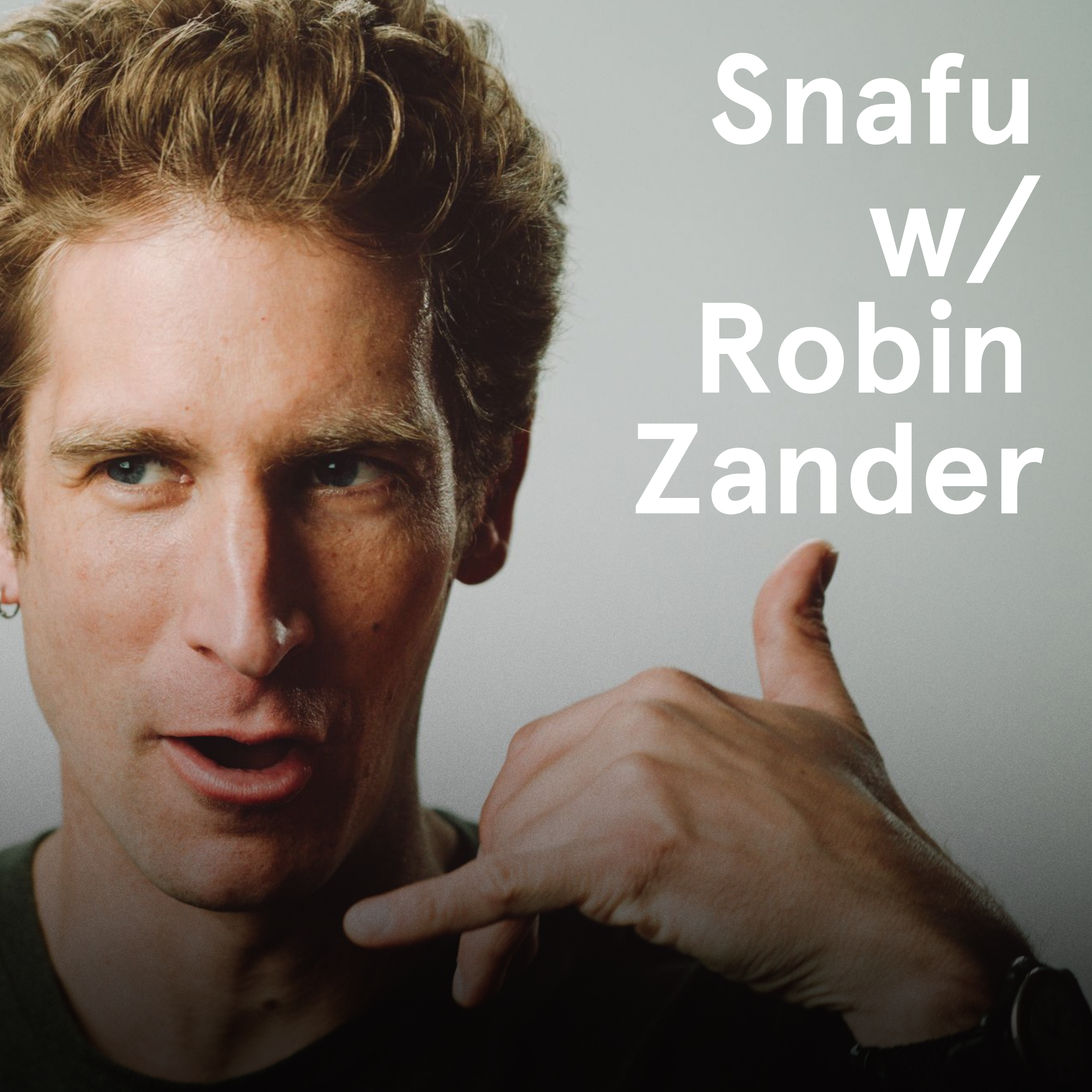
Claim this listing

More Business podcasts