Honest conversations on leadership, building teams, shipping real products, and creating a mission worth following. blog.adrianstanek.dev
Listen to episodes
60 recent
August 25, 2026Episode 54 min
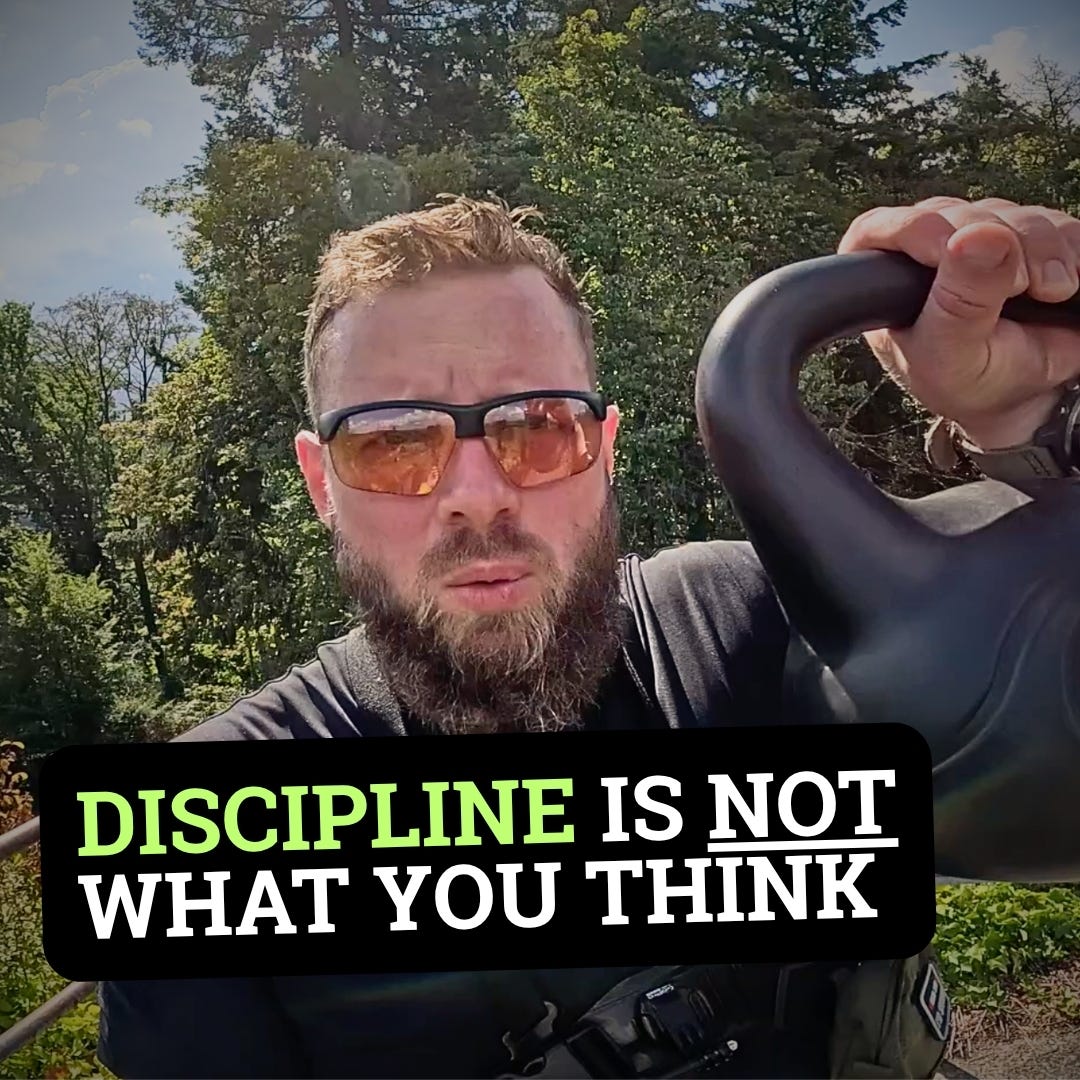
Identity Shapes Character (Disciplina) | S02E05
Most discipline advice is hustle in disguise: "do it even if you don't want to."If you constantly need willpower to overcome "I don't want to," you haven't built the identity yet.In this episode — recorded on the trail with an 8kg kettlebell — I break down disciplina as baseline, not grind: why cognitive resistance beats motivational hacks, and how to become the person for whom discipline is identity, not effort.00:00 Why bring a kettlebell on a trail run?00:29 The hustle trap: willpower vs identity01:05 Cognitive resistance & disciplina02:10 Eternal learner & mountain endurance as identity03:30 How to make discipline your baselineThis is Public Mentoring for tech leaders, founders, and developers who want to lead themselves without hype. Stoicism is the operating system, leadership is the work. https://adrianstoic.pagebar.site/?utm_campaign=sociamedia&utm_source=youtube&utm_medium=video_description #SelfDiscipline #StoicDiscipline #Leadership This is a public episode. If you'd like to discuss this with other subscribers or get access to bonus episodes, visit blog.adrianstanek.dev/subscribe
August 21, 2026Episode 412 min
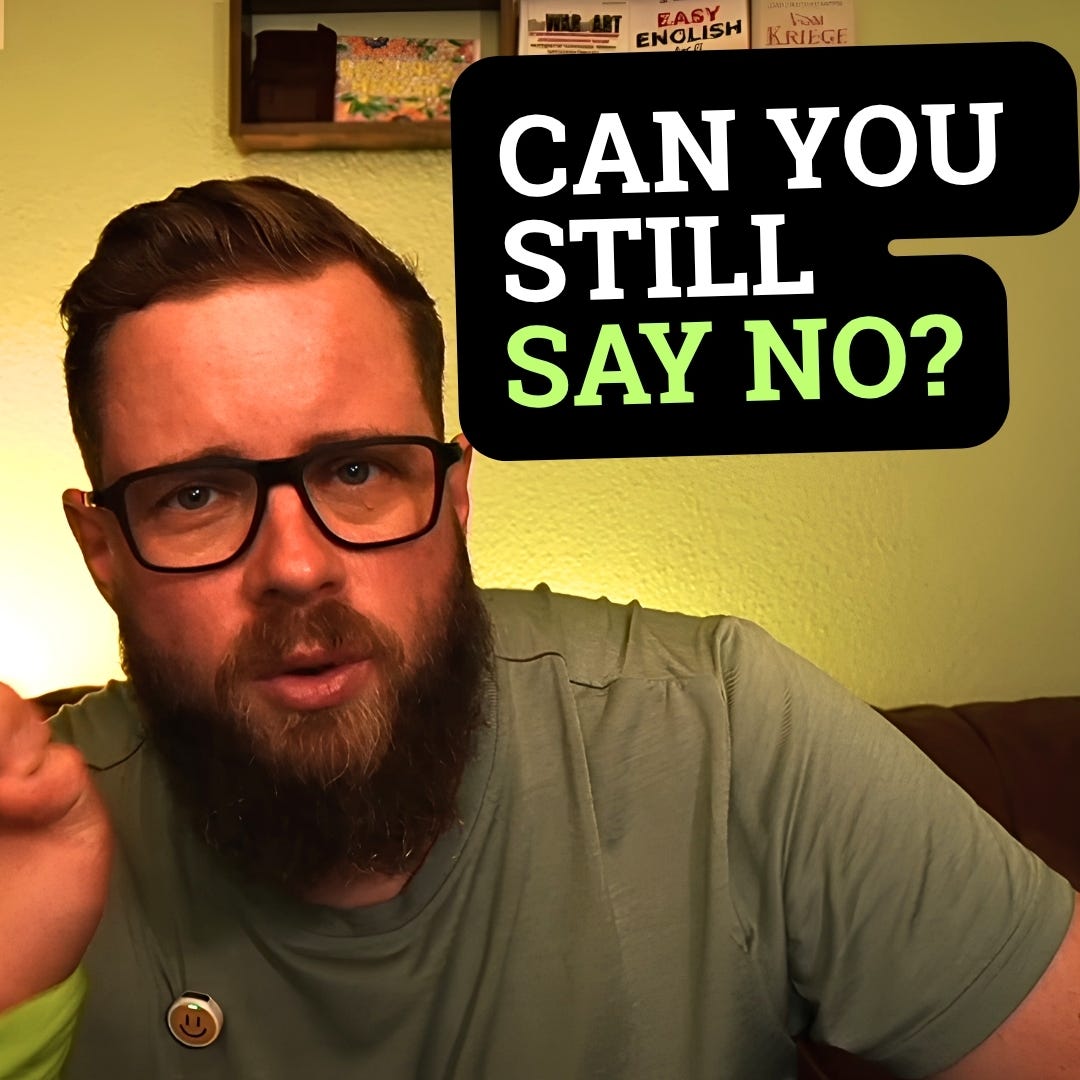
Stop Living on Everyone Else’s Agenda | S02E04
We live with more demands, decisions, expectations and future problems competing for our attention than we usually realize. And somewhere in that noise, we slowly lose the ability to say no. In this episode, I talk about the Stoic practice I use to stay in charge of my own mind: morning intention, deliberate boundaries, metacognitive intervention during the day, and reflection in the evening. Not to eliminate stress. Not to become emotionless. But to recognize the difference between an emotional reaction and a conscious decision. Because if you cannot say no, your yes is not entirely yours either. This is a public episode. If you'd like to discuss this with other subscribers or get access to bonus episodes, visit blog.adrianstanek.dev/subscribe
August 9, 2026Episode 26 min
Name It Before It Owns You | S2E02
You Are Not Your Thoughts – I really mean that. When I say you are not your thoughts, nor your emotions, people directly respond with something like, “If you think like that, you don’t act responsibly.” I think that it’s actually the opposite: You need to differentiate between your self (conscious) and Subconsciousness. If you don’t, you will simply accept emotions and projections like it’s your intention, and that should not be the case. This is not how we take control over our own mind. So, we aren’t our thoughts; but we can see them as a signal, and then we can act upon that deliberately. —Adrian There is a reason why the worst thoughts often arrive at two in the morning. Your world becomes quiet, your conscious mind grows tired, and suddenly one thought appears. A mistake you made. A conversation you regret. A fear about tomorrow. Within minutes, that single thought has taken over your entire attention. Nothing outside has changed, yet your body reacts as if the danger were real. The mistake most people make is believing that the thought itself is the problem. It isn’t. Thoughts arise on their own. Emotions arise on their own. What determines whether they become anxiety is the relationship you build with them. As soon as you believe, “This is me. This is what I truly think,” you stop questioning it. Your mind begins defending the story because it now feels like part of your identity. The Stoics understood this long before psychology gave it modern language. Epictetus reminds us that we are disturbed not by events themselves but by our judgments about them. The same principle applies inside your own mind. The first thought may arrive without permission, but the second thought—your judgment about the first—is where your freedom begins. “It’s not things themselves that disturb us, but our judgments about them.” — Epictetus, Enchiridion 5 Reality vs. Story Journaling technique One practice I recommend to almost everyone is surprisingly simple. Take a piece of paper and divide it into two columns. On the left, write Reality . On the right, write Story . Under Reality, write only what can be objectively verified. Under Story, write everything your mind has added. “I haven’t received a reply yet” belongs in Reality. “They must be angry with me, I’ve ruined everything, tomorrow will be a disaster” belongs in Story. The moment you write both down, you begin separating observation from interpretation. You stop living inside the thought and start observing it. That is the real purpose of journaling. It is not about recording your feelings. It is about creating enough distance to see that a thought is something happening within you, not something that defines you. Once you can name it, you can recognize it. Once you recognize it, you can decide whether it deserves your attention. Without that separation, every intrusive thought feels like truth. This is not a skill you master overnight. Even after years of practice, there are evenings when I still catch myself following a story much further than I should. The difference is that I usually notice it sooner. The spiral becomes shorter because the observer becomes stronger. Every time you catch yourself before the story takes over, you strengthen the part of your mind that chooses rather than reacts. You are not trying to eliminate difficult thoughts. You are training yourself to stop mistaking them for reality. That may be one of the most valuable disciplines Stoicism has to offer. This is a public episode. If you'd like to discuss this with other subscribers or get access to bonus episodes, visit blog.adrianstanek.dev/subscribe
August 9, 2026Episode 310 min
Volunatry Discomfort – Prepare yourself for the day | S2E03
Voluntary Discomfort Is a Daily Decision Yep, most people wait for life to challenge them – Externally driven, like a deadline, the boss, the spouse etc. Stoicism suggests the opposite: challenge yourself first. Voluntary discomfort isn’t about suffering for its own sake. It’s about deliberately choosing a small discomfort every day so your mind learns to respon d based on your choices, not your emotions. For me, that often means running mountain trails with a weighted backpack. For someone else, it might be taking the difficult conversation, skipping a comfort, or doing the task they’ve been avoiding. The specific challenge matters less than the fact that you chose it. Over time, these small choices change your baseline. Difficult situations stop feeling like emergencies because your nervous system has already practiced staying calm under controlled stress. One practice that reinforces this is the Mirror Book . Every morning, define your intention, your key signals for the day, and one voluntary discomfort. Every evening, review what happened, collect evidence of your actions, and identify the next step. It turns discipline into something observable instead of something you merely hope to have. As Epictetus wrote: “Difficulties show what men are.” You don’t become resilient when life is easy. You become resilient by repeatedly choosing the harder path while you still have the freedom to choose it. That choice compounds over months and years until it becomes your character. This is a public episode. If you'd like to discuss this with other subscribers or get access to bonus episodes, visit blog.adrianstanek.dev/subscribe
August 26, 20265 min
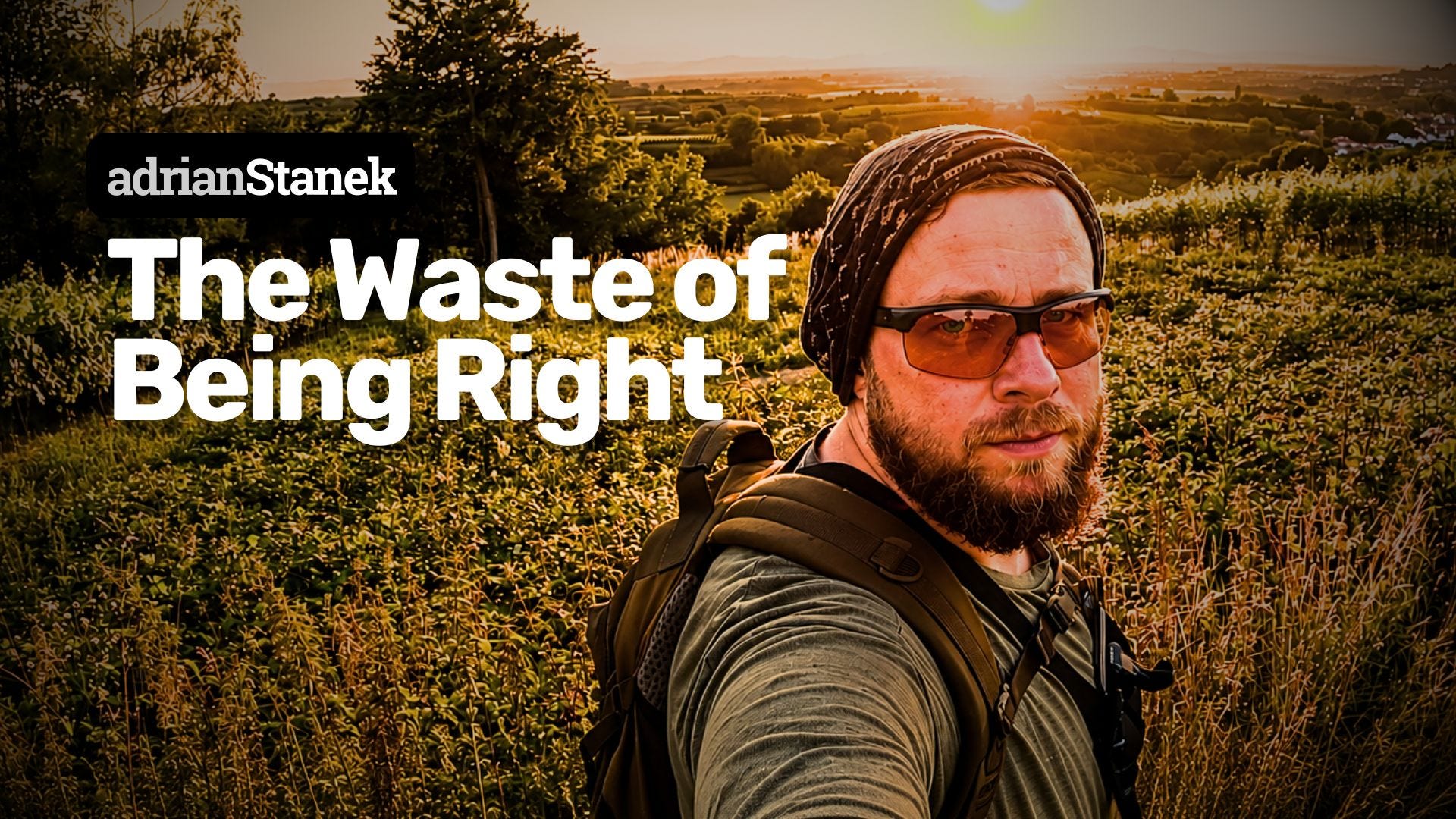
The Waste of Being Right
Being right is useful when correctness changes the outcome. It matters when we are designing a system, diagnosing a failure, calculating a risk, or making a decision with real consequences. Yet many of the situations in which we fight hardest to be right are not really about truth. They are about identity. A discussion begins with a disagreement, but somewhere along the way the subject changes. We are no longer examining an idea. We are defending our competence, status, judgment, or self-image. The argument becomes personal even when neither person openly admits it. At that point, the desire to understand is gradually replaced by the desire to win. This is where being right becomes wasteful. You may win the argument while losing trust. You may prove the technical point while making future cooperation more difficult. You may force another person to concede without helping them understand anything. Correctness alone does not guarantee progress. For leaders, mentors, founders, and engineers, that distinction matters. Your responsibility is not merely to possess the better answer. Your responsibility is to create the conditions under which better thinking, better decisions, and better behavior become possible. The argument beneath the argument When a person resists an idea, we often assume that the idea has not been explained clearly enough. We repeat it, sharpen it, add evidence, or increase the pressure. Sometimes this is appropriate. More often, however, the resistance is not caused by missing information. The resistance may protect something. Perhaps accepting the idea would mean admitting a mistake. Perhaps it would undermine the person’s sense of competence. Perhaps the proposed change threatens a role, routine, belief, or identity that has been stable for years. The visible argument concerns the facts, but the underlying conflict concerns what those facts would require the person to change. This also applies to ourselves. We rarely experience our own resistance as ego. It usually appears to us as logic. We construct reasonable explanations for why the other person is wrong, why the timing is bad, why the proposal cannot work, or why our behavior was justified. The reasoning may even be partially correct. That is what makes the pattern difficult to recognize. Ego does not need to invent a complete lie. It only needs to select the facts that allow us to remain unchanged. From statement to question One of the most effective ways to interrupt this pattern is to replace the next statement with a genuine question. Statements tend to establish positions. Questions can create movement. A statement gives the other person something to defend themselves against. A good question invites them to examine the structure of their own thinking. This does not mean turning questions into concealed accusations. “Do you not understand the problem?” is not a question in any meaningful mentoring sense. It is a judgment with a question mark attached. A useful question must contain real openness. It should be asked with the willingness to hear an answer you did not expect. Questions such as these can change the direction of a conversation: * What makes this point especially important to you? * What would accepting the alternative mean? * Which part of the proposal are you actually resisting? * What evidence would cause you to reconsider your position? * Are we trying to establish who is right, or decide what should happen next? The final question is particularly important in leadership. Many discussions continue long after the decision-relevant information has been discovered. The remaining conversation serves only the emotional need for one side to receive recognition. Applying SOS-TL to conflict SOS-TL stands for Stoic Operating System for Tech Leads . I use it in coaching as a practical decision and behavior system that helps leaders create clarity, reduce drama, strengthen ownership, and act effectively under pressure. The SOS-TL framework can be used not only to communicate an insight, but also to diagnose a conflict while it is happening. This is a public episode. If you'd like to discuss this with other subscribers or get access to bonus episodes, visit blog.adrianstanek.dev/subscribe
June 28, 2026Episode 19 min
When Focus Becomes the Problem | S2E01
Intentional focus takes discipline, but focus isn't the default state. The real practice is being intentional across every mode: work, recreation, and deep rest. Most developers and founders grind through mental exhaustion without treating rest as a skill. That gap between knowing you need rest and actually taking it is where burnout takes root.Avoid the procrastination trap. Avoid the burnout cycle. When work, play, and rest become distinct intentional states, not a single blur — you stop mistaking exhaustion for progress.00:00 Defocus Director's Cut YouTube00:28 Part 1: Defocus04:52 End-of-Day Defocus07:26 The Practise---Stoic leadership for developers & founders. No hype.→ How to stay calm when everything's on fire→ How to think clearly when the noise gets loud → How to lead yourself — so you can lead others→ Practical Stoicism for tech, startups, and real life→ The Mirror Book — audit your own mind nightlyNew episode every Sunday. 15:00 CEST.Deeper thinking: https://blog.adrianstanek.dev LinkedIn: https://www.linkedin.com/in/adrianstanek #Clarity #Discipline #Ownership #Reflection #Stoicism This is a public episode. If you'd like to discuss this with other subscribers or get access to bonus episodes, visit blog.adrianstanek.dev/subscribe
June 7, 20268 min
Why Do I Keep Quitting?
Is your journey worth starting? Well, that would be a question in the rubbish category. Your journey is always worth starting; your journey literally represents your life. In that sense, we have already started it. The point is, more, that if we actually walk this journey with intention, and not driven by externals we have no control over. We don’t really quit our lives if we talk about quitting as an issue. We talk about failing to pursue our own intention, and by that, we don’t really create any potential reality, nor are we in any sort of progress. The result is a life that was not meant for us, far from who we could be, but exactly where our own Ego wants us to be. Ego is my declared enemy, not only my personal one. This is the reason why I embarked on the journey to understand the human condition, and its patterns deeply, in order to help others as well as myself, to recognize it and eventually get into control of one's own mind. What is success? When we talk about a journey, we assume we must be successful. At best, it’s defined in a goal or desired state. But is this success? We aren’t a business, so we cannot be measured by the same standards. Success is something you need to define for yourself. But it should never, ever depend on your emotions, or the confirmation of others, or worldly goods, which would be a dependency. If you ask me, you need to look into yourself. Beneath the habits and thoughts, into your deeper, inner Self. By honest introspection and reflection in discipline. There, you actually can control everything; no one can stop you from becoming successful on this level – no one, no matter your circumstances. The question is, are you willing to? If these reflections help you think more clearly about leadership, discipline, identity, and the human condition, consider subscribing. Free subscribers receive new essays, while paid subscribers support the continued development of this work. ❤️ Discipline Is Intent Put Into Practice If you do something every day because you promised it to someone, or because someone is in some way expecting it, it’s not discipline. At best, it’s a form of commitment, but moreover ends up being obedience and dependency. Your intentional act of repeating the daily practice to become better and learn is what we would call disciplina – the original meaning of what we call today discipline. Yet, we have culturally defined it as an “I-must” obligation. Not our own intention, but that of society or the people around us. The most famous example is if we commit ourselves to something in front of other people, like a gym membership as a New Year’s resolution. We keep the “discipline” up, since we obligated ourselves to. It wasn’t really our intention to actually become the changed person; it was a much lower intent driven by our own Ego. 👉 Discipline is your intention in action. * Discipline is not obedience. * Discipline is not external motivation. * Without discipline, potential remains unrealized. Personal Growth Has No Definition of Done Did you define goals for yourself? How many personal goals do you define, in which periods? Because that is what you would need to do in order to keep improving. There is no done, there will never be a state like this. You will never be in a specific state and stay there. Forget about goals, that is an I-must hustle mentality, but without actual substance. Who do I want to be today?Who am I today?What do I want to change tomorrow? And what is my potential? These questions and this loop lead you towards your potential, show you the signals you need to follow, and make you aware of the distractions. Without that pattern recognition, you will stay an unfinished project, a process never really started, and not shaped in your own intention. 👉 You aren’t a project, you're a process. * Projects have finish lines. * Teams need goals and definitions of done. * Human development is a practice. * Character is never finished. Identity Drives Behavior Who are you? You know you should go and practice today. What does the inner voice tell you? Are you happy to skip today? Or do you hate skipping it?Do you feel positive or negative about it? Well, you can shape this as well. If you don’t know yet who you are, I rephrase the question: Who do you want to become? Reflection Creates Self-Knowledge Learn the patterns of yourself and the people around you. It’s possible and less complicated than you might think. Study the nature of humans and things; it’s in its core very similar and comparable, in that it’s recognizable. You can sense other humans trying to trigger you. And you can spot specific habitual behavior in yourself that you might want to intervene in. * Reflection reveals patterns. * Patterns reveal strengths and weaknesses. * Awareness creates intervention points. * Journaling accelerates self-understanding. How can you actually navigate your own life and actions if you don’t know these patterns well? You Are Both the Marble and the Sculptor And the last set for today. If you aren’t willing to hit yourself to change something, you don’t seek transformation. It’s just decoration. Exactly what your Ego wants. You know the other name that people call Ego? Resistance to Change – your most personal enemy, you might not know, yet. Steven Pressfield put it well: Resistance is so smart, it lets you think it was your idea. * You shape yourself every day. * Growth requires discomfort. * Small improvements compound. * Character is built intentionally. —Adrian This is a public episode. If you'd like to discuss this with other subscribers or get access to bonus episodes, visit blog.adrianstanek.dev/subscribe
May 24, 20263 min
Know Yourself, or You Become the Problem
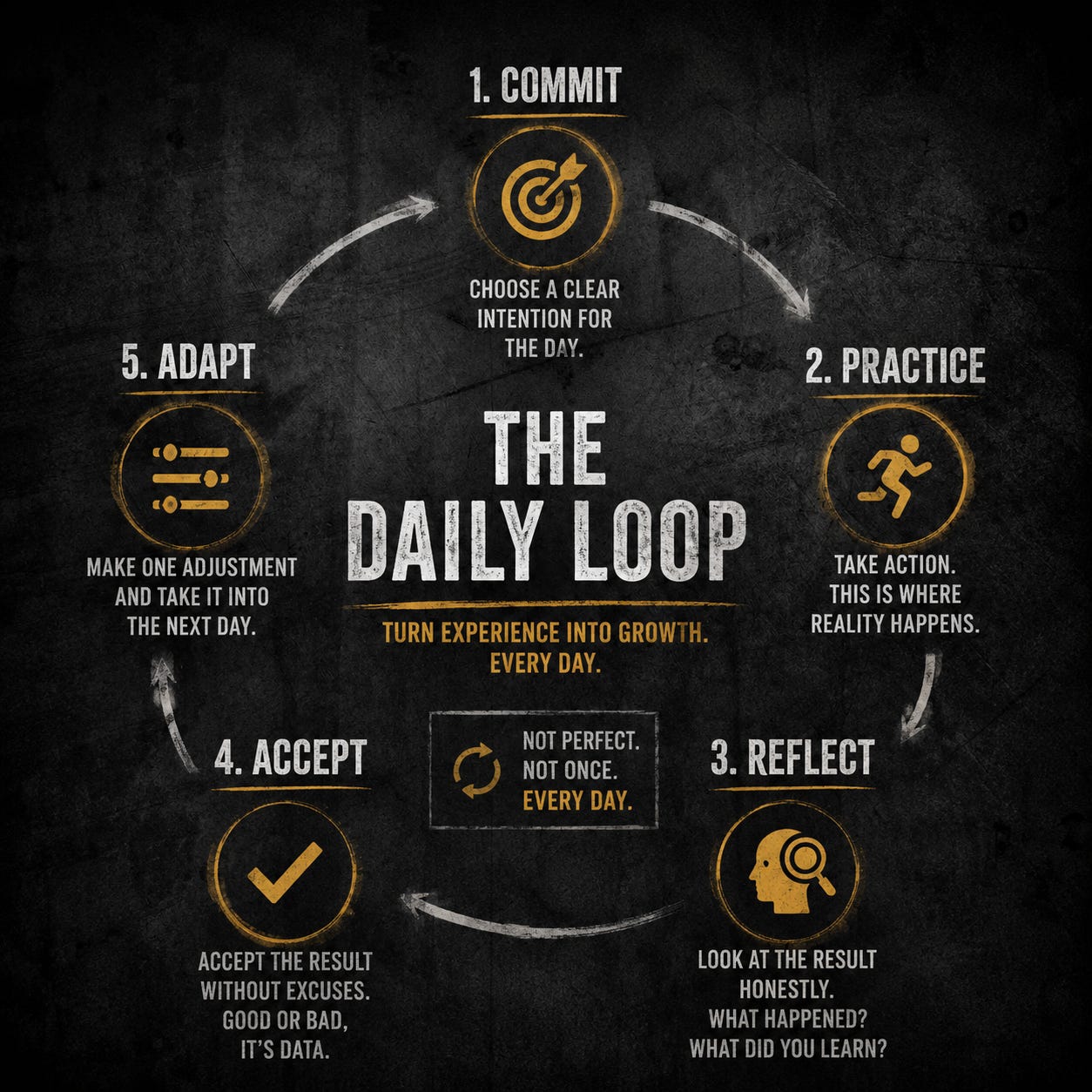
There is a simple loop that teaches you who you are: commit to something, practice it, reflect on the result, accept what happened, and adapt for the next day. It sounds almost too simple, but that is usually where the useful things hide. You do not understand yourself by thinking about yourself in theory. You understand yourself by watching what happens when you act. A commitment reveals intention. Practice reveals character. Reflection reveals truth. And here we can learn to become honest with ourselves. Even today, I realize how easily I get tricked by my own mind sometimes. The difficult part is not the commitment itself. Many people can decide something in the morning. The difficult part is looking honestly at the result in the evening. Did I do what I said I would do? Did I act the way I wanted to? Did I become more useful to the people around me, or did I create more noise, more pressure, more confusion? If the result was good, you have evidence. You learned something about yourself that is worth repeating. If the result was bad, you have a signal. Not a reason for shame, not a reason for self-hate, but a reason to change something. In both cases, the day gives you material for the next day. That is why this cannot be a once-in-a-while exercise. It has to become daily. Not because every day needs to be dramatic, disciplined, optimized, or heroic. You do not need to run every morning, take cold showers, or copy someone else’s routine. But you do need some form of honest contact with yourself. Without that, you slowly lose the ability to see your own patterns. And when you cannot see your patterns, other people have to live with them. That is where self-reflection becomes more than personal development. It becomes a moral responsibility. If you do not know how your actions affect your mind, your emotions, your decisions, and the people around you, then you are moving through life half-blind. You may still be productive. You may still be intelligent. You may still be successful from the outside. But you are not necessarily becoming someone worth following. That question matters to me: am I a person worth following? Not in the cheap social media sense. In the human sense. Am I someone who makes the room clearer? Am I someone who contributes? Am I someone who can be trusted under pressure? Or am I someone others need to manage, tolerate, or recover from? This is why I use my Mirror-Book. It is a simple journaling technique I use in the morning and in the evening. Sometimes I use it outside, after running or walking, because movement often brings thoughts to the surface. But the important part is not where I write. The important part is that I write honestly. The book is only for me, and because of that, I can be brutally honest in it. I can write down where I acted badly. I can write down where I was unfair, reactive, arrogant, avoidant, or weak. Not to punish myself, but to recognize the pattern. Once the pattern is visible, it becomes possible to intervene earlier the next time. That is the real value of reflection. It turns vague discomfort into language. It turns language into recognition. It turns recognition into a different action. Digital tools can help with this. I have built apps for this myself. But writing by hand still has a different weight for me. A 2024 EEG study published in Frontiers in Psychology found that handwriting produces stronger brain connectivity than typing, particularly within networks associated with learning and memory. That does not make handwriting magic, but it supports something practical: when we write by hand, we process differently. The thought slows down. The body is involved. The sentence becomes harder to escape. And that is what good reflection does. It removes the hiding places. “Know thyself” is an ancient phrase, but it is not decorative. It is not something to put on a wall and admire. It is a practice. You know yourself by committing, practicing, reflecting, accepting, and adapting. Again and again. Because if you do not understand yourself, you will never truly understand others. And if you never look at what you are becoming, you may become the problem without noticing it. —Adrian This is a public episode. If you'd like to discuss this with other subscribers or get access to bonus episodes, visit blog.adrianstanek.dev/subscribe
April 29, 20265 min
Clarity Is a Practice, Not a Feeling
There are mornings when you wake up, and your mind is already full before the day has even started. Messages, expectations, open loops, unfinished ideas, half-made decisions, things you should do, things you want to do, things you are afraid you are avoiding. And somewhere inside all of that noise, you ask yourself: “What am I actually supposed to do today?” That is the moment where people often say they need clarity. But I think clarity is often misunderstood. Clarity is not a permanent mental state. It is not the absence of uncertainty. It is not the magical moment where your whole future becomes visible and every next step feels safe. That version of clarity is mostly fantasy. For me, clarity is more operational. It is the point where you can see the next right action clearly enough to commit to it. Not forever. Not perfectly. Just enough to move. That distinction matters. Because if you expect clarity to remove uncertainty, you will wait too long. You will keep thinking, planning, consuming, asking, comparing, and preparing. But life does not become clear before you act. Often, it becomes clearer because you act. The Stoics understood this very well. Epictetus said: “First say to yourself what you would be; and then do what you have to do.” Simple, yet challenging... That is a very easy sentence, but it contains a whole operating system . Identity first. Action second. Not mood first. Not certain first. Not external permission first. This work is reader-supported. If these reflections help you think, act, and lead with more clarity, consider becoming a free or paid subscriber. ❤️ Your energy is limited; use it wisely This is why I bring mentoring back to the day so often. Your mission matters. Your vision matters. Your potential matters. But none of these things are completed today. They are direction, not a daily workload. Today you only have today’s energy, today’s attention, today’s discipline, today’s resistance, and today’s opportunity to act. So the better question is not: “Where will I be in the future?” The better question is: “Who must I be today, and what is the next action that proves it?” That is where the Mirror-Book idea comes in for me. The page becomes a mirror. Not a place to perform, not a place to write endless thoughts, not a place to drown in emotion. A mirror. * What is true? * What is in my control? * What is in my influence? * What is not mine at all? * What is the signal for today? * What will I not do, so that the important thing has room to happen? This is not productivity theater. It is baseline work. Because clarity without a baseline does not hold. You can have one inspired evening, one strong conversation, one great insight, and by Wednesday, the old pattern returns. That is homeostasis . The system pulls you back to what is normal. Your old habits, old avoidance, old distractions, old emotional reactions, and old level of self-trust. So the work is not to chase peak clarity. The work is to raise the baseline. In the morning, you define the signal. In the day, you practice. In the evening, you review. What did I actually do? Where did I drift? What was a fact, and what was only a story? What did I learn from today’s action? What is the smallest next action for tomorrow? That loop is where clarity is rebuilt. Not once. Daily. And this is also why clarity is connected to courage. A vague day is easy to escape from. A clear signal creates responsibility. When you write down what you commit to, you remove some of your own hiding places. You can no longer pretend that the problem was only confusion. Sometimes the problem was that you saw the next step, but did not want to take it. That is not a moral failure. That is resistance. And resistance loses power when it is made concrete. So clarity is not knowing everything. Clarity is reducing the day to something you can actually own. One signal. One boundary. One next action. One honest evening review. Before you demand clarity for your whole life, get it clear today. Because today is where your character is practiced. And tomorrow will not become clearer by avoiding today. —Adrian This is a public episode. If you'd like to discuss this with other subscribers or get access to bonus episodes, visit blog.adrianstanek.dev/subscribe
April 26, 20264 min
Maybe Your Potential Did Not Disappear
Show Notes: Maybe Your Potential Did Not Disappear Many of us already know enough to take the next step, but still wait for more clarity, confidence, proof, or better timing. This reflection is about potential, resistance, and the quiet ways we hide behind preparation. Sometimes strategy is useful. Sometimes it is fear wearing better clothes. Core question: What is still in my control today, and where am I already capable but still acting like I need permission? Also includes a short note on the Mirror-Book technique and how daily reflection can turn potential into evidence. This is a public episode. If you'd like to discuss this with other subscribers or get access to bonus episodes, visit blog.adrianstanek.dev/subscribe
Is this your show?
Claim this listing to keep it up to date, reach guests who want to pitch you, and manage bookings with Guestify.