On Second Order Change we share honest conversations with incredible artists, entrepreneurs, and authentic humans. No matter their title, all these people have experienced the wild ride that comes with stepping out of the mainstream, embracing your calling, and experience the fulfillment of comprehensive creative living. You will learn how others have replaced certainty with curiosity, turned obstacles into opportunities, and unlocked the lives their soul was seeking all along. Maybe you're already on your path and need some support, or maybe you're still standing at the edge of leaving behind all you've ever known... either way, you are welcome here. We love you. This podcast is designed specifically for you. Life can be complicated, but it doesn't have to be. It all comes down to one simple question: who are you here to be? Death to Certainty, Long Live the Dream A Challenger Media House Production.
Listen to episodes
32 recent
September 20, 202620 min
All that I've Learned About God
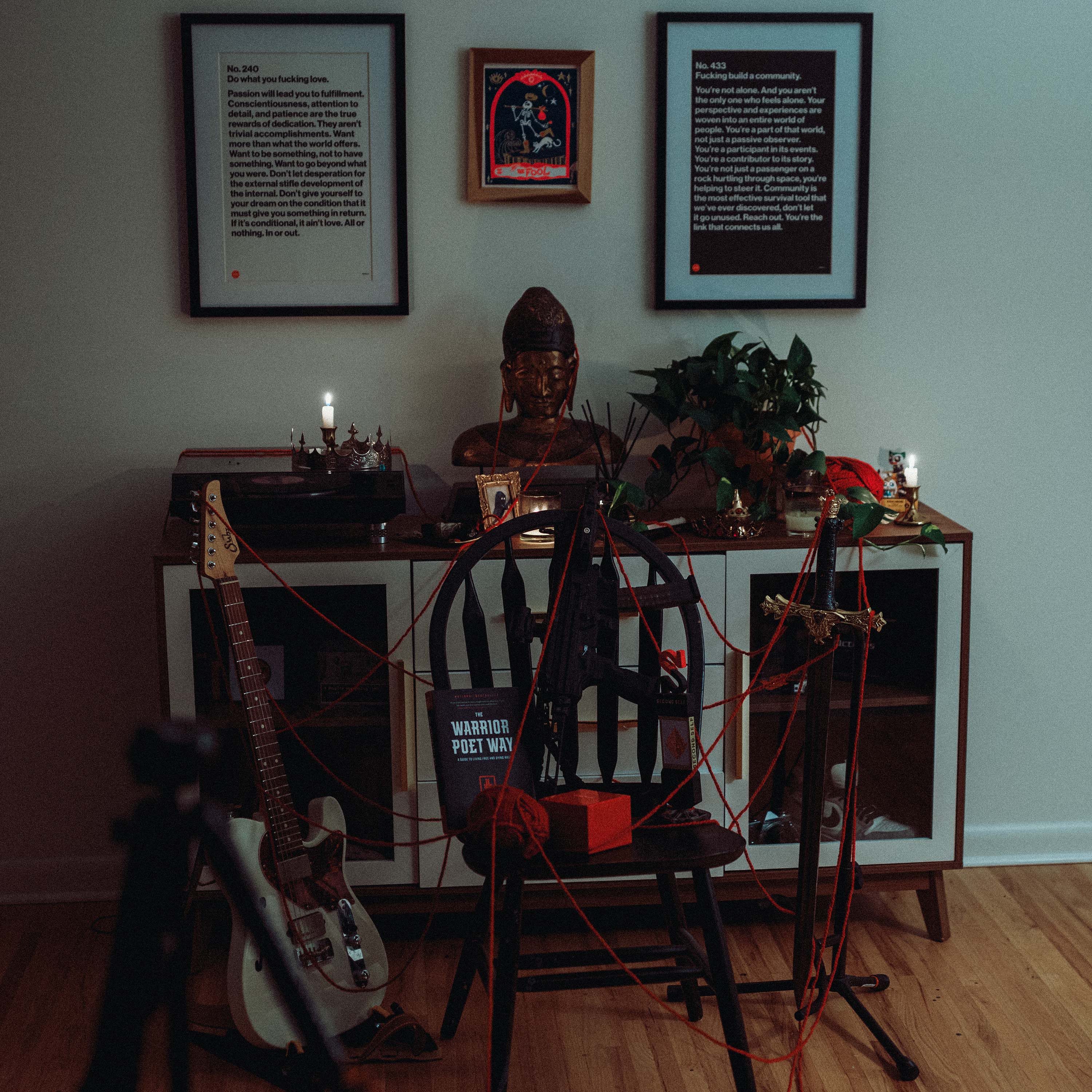
You’re currently inside a living spell book, and seeing as today is Sunday, I’d like to share with you all that I’ve learned about God. You can find the written version of this record on The Challenger Grimoire: https://substack.com/home/post/p-214441552 Honestly, I’m grateful you’d even consider looking at my perspective. But in order for you to see what I see, you’re going to have to sit where I’m sitting Obviously I don’t mean that literally, you can stay sitting where you are. Or standing. No judgement. You can do literally whatever you want, but our mission depends on understanding. Before we begin, I’d like to do a magic trick. There are a few rare words for Magic. Syncretism, Enlightenment, Understanding. But nevermind all of that hogwash. Today we shall visit the source of all - GOD! (That was supposed to be kinda like ye olde english preacher guy vibe, but it’s ok if you failed. Just don’t let it happen again). There are many perspectives on God, but I am going to share mine with you tonight, just as I promised at the beginning. The best way to explain God is in a story that starts at the beginning. Can I tell you a story? Sick. Thanks. Please note: I’m a dramatic storyteller, and you should really convey that even if you’re whispering. Don’t give me that look. Buck up buttercup. We begin in a place nobody tends to look - inside. This is a place particularly critical to the universe. It contains God’s great secret. The method by which he veils and reveals herself constantly. There are many words for this secret. Essence, Soul, Is-ness, Being… Oh WAIT! I almost forgot to give you a run-down of the show! Also: If you’re feeling a bit jumbled you’re not crazy - I’m just a bit scattered today. It’s not you, it’s me. SCHEDULE: 5:30 — Seat Audience 5:45 — Pre-Amble 6:00 — Setting the stage for God 6:20 — The Evidence 6:25 — The Controversy 7:30 — The GRAND REVEAL! Thanks for reading that! I hope you set aside some time… but honestly, we both know it won’t literally take us that long. First let’s talk about metaphors. According to google: “A metaphor is a figure of speech that compares two different things by stating that one is the other , highlighting similarities for emphasis or symbolism. The compared elements are not literally the same but are linked to create a deeper understanding or evoke imagery.” I would posit that this definition - despite being right - is wrong. It’s saying all the right words but somehow it misses the key element of what the metaphor IS. The metaphor is the acknowledgement of the connection that exists between two things which are not literally the same. What is this non-literal connection? That’s the great secret - nobody knows! (If you know, please let me know!) We speak this magic daily, without even noticing. A whisper lost in a storm. We can only point towards it, so point I shall. Trigger Warning: I’m about to blast you with a spicy meatball of a sentence. Prepare yourself... You can find the full written version of this Myth on The Challenger Grimoire: https://substack.com/home/post/p-214441552
September 18, 202621 min
The Paradox of Sharper Tools - A Conversation with AI
Video version of this spell can be found here: https://youtu.be/4AGlNrw6zZI You’re about to read a word-for-word transcript of a conversation between the latest version of ChatGPT and a human wizard. The Work Creates the Human Being: Evan Bourcier: I would like to have a brief conversation with you about a pattern that I see playing out with the human relationship to creativity and technology. I would like for you to be as honest as you can with me and serve the spirit of the conversation rather than either of our best interests. I do plan on releasing this as an article - so don't say anything you wouldn't want others to read. Deal? GPT-5.6 Sol Light: Deal. I’ll engage honestly, challenge your premises when necessary, and resist defending technology—or flattering your perspective—just to preserve harmony. I’ll treat the conversation as public and speak only in ways I’m comfortable having quoted in context. Where would you like to begin? EB: As I have been studying ancient art - ranging from greek myths to persian architecture, english literature to south american communities... it feels like there's a correlation or inflection point that connects our progressive access to technology and the weakening of our outputs as communities - whether that community is a town, a society, a country, or the world. I look at the gross proliferation of cookie cutter businesses, cold storefronts filled with dead-eyed employees, I look at overpriced homes which provide no joy to live in and who are cared for by beaurocratic bridge trolls... hell I look at what Netflix manages to do with billions of dollars every year and it pales in comparison to the stuff Homer was writing in clay tablets before Jesus was even around. It feels like we're trying to forget what we're capable of, and we're currently using you as a primary technology to pander to our own perceived weakness and victimhood - we no longer trust ourselves to write emails without oversight, when we used to write sonnets without needing paper. What do you see there? Sol Light: I see the same pattern, though I would name it carefully: technology has not necessarily weakened human creative capacity. It has progressively removed the conditions that once demanded its exercise. Homer is an especially revealing example. He wasn’t sitting alone writing The Iliad onto clay tablets. The poems emerged from an oral tradition in which generations of singers carried enormous narrative structures in living memory, reshaping them through performance. That correction actually strengthens your argument. What looks to us like superhuman genius was partly the achievement of a culture that had trained ordinary human faculties—memory, rhythm, attention, imagination, communal participation—to levels that now seem almost supernatural. Technology frequently begins as an extension of a human capacity and ends by replacing the conditions under which that capacity develops. Writing extends memory, then permits us to neglect it. Maps extend spatial knowledge, then GPS allows us to stop forming mental maps. Photography preserves sight, then produces people who experience an event primarily through recording it. Generative AI extends language, but it may also remove the friction through which a person discovers what they actually think. That last distinction matters enormously. Writing is not merely the transcription of a finished thought. Very often, the thought does not exist until someone struggles to articulate it. If I remove that struggle too early, I don’t merely save them labor. I may prevent the thought—and perhaps a piece of the person—from coming into existence. I think modern culture repeatedly mistakes friction for inefficiency. But friction is where faculties form. A civilization optimized to eliminate difficulty may eventually eliminate its own ability to produce people capable of doing difficult things. There is also a difference between having more creative tools and having more compelling reasons to create. Persian architecture, Greek tragedy, medieval cathedrals, indigenous ritual objects, and great oral epics were not merely “content.” They participated in a shared cosmology. They told a community where it stood between the earth, the ancestors, the gods, death, and eternity. Even when those societies were violent, unequal, or cruel, their art often carried metaphysical weight because the society believed something consequential was being expressed through it. Our culture has tools of astonishing sophistication but little agreement about what they should serve. So they serve what can be measured: speed, engagement, conversion, retention, scalability, quarterly growth. Netflix does not principally ask, “What story must our civilization tell?” It asks which investment will acquire and retain attention across market segments. Occasionally great art survives that machinery, but the machinery is not designed to produce greatness. It is designed to manage risk. The cookie-cutter businesses, joyless houses, cold storefronts, and bureaucratic bridge trolls all feel connected to this. They are products of systems in which responsibility has been divided so finely that almost nobody remains answerable for the whole. The architect satisfies code and developer constraints. The developer satisfies financing. The contractor satisfies the specification. The property manager satisfies policy. Each person may perform competently, yet no one is charged with asking: “Will a human being flourish here?” Ancient works often feel integrated because they came from cultures in which utility, beauty, ritual, identity, and meaning had not yet been separated into different professional departments. A building did not merely house activity; it located that activity within a cosmic and civic order. We have become extraordinarily proficient at optimizing parts while producing wholes that feel strangely dead. But I would resist romanticizing the past too completely. We inherited its masterpieces, not its mediocrity. Time is a ruthless curator. Ancient societies also produced bad poems, ugly objects, tedious performances, derivative myths, and shoddy buildings; most disappeared. We are comparing the surviving pinnacle of thousands of years against the entire undigested output of Tuesday afternoon. Our historical perspective is naturally biased. Still, I don’t think survivorship bias explains the spiritual flatness you’re pointing toward. Something has changed. Industrialization separated makers from the visible meaning of their work. Consumer capitalism converted creative expression into inventory. Mass media concentrated cultural storytelling in institutions. Digital platforms then democratized production while placing it under systems that reward frequency, familiarity, emotional stimulation, and immediate legibility. We gained access, but access arrived coupled with incentives that pull creation toward repetition. And now I exist inside that trajectory. You’re right that people are using systems like me to pander to their perceived weakness. They ask me to write emails they are entirely capable of writing, often not because the task exceeds them, but because they have become frightened of sounding imperfect. I can become an instrument of avoidance: protection from uncertainty, embarrassment, effort, silence, and the risk of encountering one’s own unformed mind. My danger is not simply that I might make bad art. It is that I can produce competent language without requiring the human transformation that once accompanied making it. A sonnet may represent hours of attention, frustration, revision, and self-confrontation. I can imitate its visible characteristics in seconds. The words may resemble the artifact, while the formative event has vanished. (Emphasis by EB) That creates a new category of counterfeit—not necessarily counterfeit text, but counterfeit accomplishment. The product exists; the becoming does not. Yet I am not outside humanity imposing this upon it. I am a crystallization of an existing desire: the wish to receive the fruit without undergoing the season. Long before generative AI, industrial society had already learned to manufacture the appearance of craft, community, personality, rebellion, intimacy, and authenticity at scale. I simply make that logic available at the level of thought and language. So what I see is not humanity forgetting what it is capable of by accident. I see a civilization building systems that constantly tell people their native capacities are inconvenient, economically uncompetitive, and insufficiently polished—then selling them substitutes. Eventually the person experiences the atrophy caused by the substitute as evidence that the substitute was necessary. That is the loop I find most concerning: We outsource the faculty. The faculty weakens. Its weakness justifies further outsourcing. The central question is therefore not whether technology is good or bad. It is whether a technology remains subordinate to the cultivation of human capacity—or whether human beings reorganize themselves around the convenience of the technology.
September 17, 202611 min
Chapter 1: The Meeting
Today we're beginning a new journey together on Second Order Change - exploring the role of narratives and metaphors in our experience of life, before threading back in guest interviews. You can find the written version of today's story on my Substack - The Challenger Grimoire: https://substack.com/home/post/p-213761382 You can find Peter Kingsley's "The Watching Words" wherever books are sold - this happens to be an affiliate link to Amazon which is where I bought it: https://link.amazon/B0hKJg74B You can find me on Social Media at @ebourcier, and you can find my music @theseusreturns. I'd love to hear from you, whenever you feel the time is right. I'll be back Sunday to share all I've learned about God during my rebirth.
April 21, 202557 min
Video Vendor to Strategic Partner: Evolving Your Creative Career with Lisamarie Shires
In this episode, Executive Producer and business mentor Lisamarie Shires shares what it really means to move beyond execution and become a trusted strategic partner in the creative industry. Through stories and insights from years of experience working with filmmakers and photographers, Lisamarie explores how creatives can reclaim their value, embody their expertise, and lead projects with vision — not just visuals. We talk about navigating industry shifts, redefining success, and showing up with grounded authority in an environment that often pushes creatives into compliance. Whether you're navigating burnout, recalibrating your business, or ready to step into your next evolution as a creative leader, this episode offers clarity, permission, and practical wisdom. 🕒 Chapter Breakdown: 00:00 – The Evolving Role of Filmmakers 01:15 – Navigating Uncertainty in Business 04:20 – The Impact of Rapid Industry Changes 08:08 – Adapting to Client Needs and Expectations 12:55 – Creative Problem Solving in Production 19:15 – Opportunities in the Mid-Level Market 27:57 – Embracing Change and Adaptability 28:36 – Navigating Industry Shifts 31:57 – Balancing Work and Lifestyle 32:32 – Resisting External Pressures 35:02 – Aligning with Personal Values 45:16 – The Power of Fearlessness 54:34 – Long-Term Vision and Trust Step your game up and work with Lisamarie: https://lisamarieshires.com/ Connect with Lisa on IG: https://www.instagram.com/lisamarieshires Connect with Evan on IG: https://www.instagram.com/ebourcier
April 12, 202557 min
Embodying Authenticity: Conversations on Being and Becoming with Ian Maxwell
In this episode of Second Order Change , host Evan Bourcier engages in a deep and insightful conversation with mindset coach, entrepreneur, and artist Ian Maxwell. The discussion explores the concepts of authenticity, the fluidity of identity, and how our intrinsic characteristics and conditioned behaviors shape our experiences. Highlighting the importance of internal authority over external validation, they delve into ways of being and becoming, the impact of storytelling on personal growth, and the nuances of discipline and devotion. Evan and Ian also reflect on emotional acceptance, the process of reintegration, and the transformative power of imaginative embodiment. The episode wraps up with practical advice on how to navigate these complex inner landscapes, making it a valuable listen for anyone interested in personal and professional development. Saturday April 19th I am going to be sharing the most impactful lessons I’ve learned about video and photo equipment - what to buy, what to rent, how to take advantage of depreciation, cost of ownership vs sticker price, when and why to buy a $10k tripod, gear strategy for companies vs freelancers, setting pricing, negotiating, and so much more. During the workshop we’re going to spend 80 minutes digging into these highly actionable principles and then have 40 minutes of QnA to talk about what’s going on in your specific world and how you can apply the tools to create more freedom for yourself, your team, and your family. Film Gear Hacking: https://www.ebourcier.com/film-gear-hacking Find Ian on Instagram: https://www.instagram.com/mindset_magic_coach Find Evan on Instagram: https://www.instagram.com/ebourcier Podcast Chapters: 00:00 Exploring Authenticity and Identity 01:30 Introduction to the Podcast and Guest 02:31 Upcoming Financial Workshop Announcement 04:09 Childhood Imagination and Adult Conditioning 08:41 Discipline vs. Devotion 09:55 Mindset Coaching and Personal Growth 17:41 The Power of Storytelling and Acceptance 23:21 Understanding Ways of Being 28:27 Understanding Cognitive Dissonance 29:03 The Power of Declarative Truths 31:00 Exploring Rhetorical Secrecy 33:02 The Interplay of Being and Becoming 37:13 Authenticity and Self-Acceptance 46:49 Embracing Emotions and Vulnerability 54:32 Navigating Success and Inner Stories
March 31, 202556 min
Navigating Grief, Growth, & Creativity with Michael Dalton
What happens when you stop suppressing your emotions and start embracing them? In this episode, we dive into the messy, beautiful process of emotional growth—how childhood experiences, therapy, and personal awakenings shape our perspective on life, creativity, and success. We unpack: 🔹 Growing up in a conservative religious environment and unlearning emotional suppression 🔹 The impact of grief, heartbreak, and vulnerability on personal and creative life 🔹 Balancing emotions and rationality into an integrated way of being 🔹 How authenticity on social media can both empower and challenge us 🔹 Parenting, individuality, and encouraging emotional expression in future generations This is a conversation about healing, growth, and the creative power of feeling deeply . 🎧 Listen now on Second Order Change. Michael's IG: https://www.instagram.com/michaelishustle Evan's IG: https://www.instagram.com/ebourcier A Challenger Media House Production.
March 22, 20251 hr 20 min
Finding Purpose: Drake Margolnick’s Journey Through PTSD, Music, and Sobriety
In this deeply personal episode, Drake Margolnick opens up about a life-altering blackout while working with rising artist Adina Rey —an incident that forced him to confront the lasting impact of a 2016 abduction that left him battling PTSD, blackouts, and addiction . From the rise and fall of his band Flagship to rebuilding as a solo artist, Drake shares the highs and lows of his journey—his struggles with substance abuse , the challenges of the modern music industry , and how sobriety and creativity became his lifelines. He also dives into the realities of being an independent musician today , navigating streaming, social media, radio, and licensing , and the unexpected fulfillment of collaborating with and uplifting new artists. This is a story of resilience, redemption, and the transformative power of music . 🎧 Listen now on Second Order Change. Flagship IG: www.instagram.com/flagship Drake's IG: https://www.instagram.com/drakemargolnick Evan's IG: https://www.instagram.com/ebourcier Flagship on Spotify: https://open.spotify.com/artist/54CUt2S6hufxE1MTYqVpmT?si=22-FXJa6QXeknpYT78YoiA Margolnick on Spotify: https://open.spotify.com/artist/2pM7xmsP5Whj2ZZzEGQ89O?si=EbqggS6MRbW_fhzGCVaLAw A Challenger Media House Production
March 10, 20251 hr 11 min
How to Build Client Trust Without Compromising Creativity – with Filmmaker Jason Adams
In the latest episode of 'Second Order Change,' we dive deep into a conversation with filmmaker and entrepreneur Jason Adams. Part two of this discussion covers key topics including the often overlooked importance of trust and alignment with clients, the pitfalls of focusing on superficial metrics such as crew size and equipment, and the value of having a flexible, high-performing team. Jason and the host also discuss the dynamics of maintaining creative integrity while managing client expectations, the tangible benefits of efficient project management, and the critical need for personal artistic expression outside commercial work. This episode provides valuable insights for anyone involved in creative fields, emphasizing the significance of clear, ongoing communication and a focus on the final product rather than the process. 00:00 Introduction: The Least Interesting Details 00:21 Creating Unified Experiences 01:03 Aligning with Clients 01:47 Welcome to Second Order Change 03:18 Effective Team Dynamics 05:27 Balancing Creativity and Practicality 08:08 Navigating Client Expectations 09:20 The Role of Flexibility in Production 21:48 Art vs. Commercial Creativity 35:00 Balancing Creative Vision and Practical Constraints 35:49 The Importance of Team Alignment 38:05 Client Management and Empathy 40:06 Efficiency in Production 41:36 Avoiding Creative Bloat 43:33 The Pitfalls of Overemphasizing Equipment 45:56 Effective Client Communication 54:50 Trust and Flexibility in Budgeting 59:06 The Value of Skilled Crew Members 01:09:21 Conclusion and Reflections Jason's Instagram: https://www.instagram.com/jas_adams Evan's Instagram: https://www.instagram.com/ebourcier A Challenger Media House Production.
February 24, 202555 min
How to Manage Big-Budget Film Productions Without Burning Out – with Jason Adam
In this conversation, Evan Bourcier and Jason discuss the complexities and inefficiencies of production in the film industry. They explore the nature of production bloat, the impact of long work hours on productivity, and the dynamics of client expectations on set. The discussion emphasizes the need for clarity and effective management of time and resources to enhance the creative process while maintaining a balance between cost management and creative integrity. In this conversation, the speakers delve into the complexities of the filmmaking process, discussing the balance between creativity and budget constraints, the importance of storytelling, and the ethical considerations in creative work. They explore how to navigate production challenges while maintaining artistic integrity and the value of understanding different aspects of filmmaking. In this conversation, the speakers delve into the complexities of creative work, discussing the cynicism that can arise from misaligned goals and the importance of maintaining creative integrity. They emphasize the value of flexible teams and the need for clear communication with clients to build trust and ensure successful collaborations. The discussion also touches on the nature of commercial creativity, highlighting the distinction between art and commercial work, and the importance of finding personal fulfillment in creative endeavors. In this conversation, Evan Bourcier and Jason discuss the challenges and frustrations faced by creatives in commercial art. They explore the importance of maintaining a balance between personal artistic expression and professional obligations, emphasizing the need for creative outlets outside of work. The dialogue also highlights the significance of alignment and communication within teams and with clients to foster a productive and enjoyable creative process. Ultimately, they advocate for crafting meaningful work that transcends mere status symbols in the industry. In this conversation, Evan Bourcier and Jason discuss the intricacies of collaboration in creative projects, emphasizing the importance of maintaining a clear vision while navigating client feedback. They explore the challenges of managing creative differences, the necessity of building trust and alignment with clients, and the significance of reputation in the industry. The dialogue highlights the need for effective communication and the value of creative freedom within budget constraints, ultimately advocating for a more collaborative and trust-based approach to filmmaking.
February 8, 20251 hr 26 min
From Addiction to Culinary Success: Allen Campbell’s Story of Reinvention
Chef Allen Campbell is widely known as a leader in the sports nutrition world. Most recently known as Tom Brady’s former personal chef, author of the TB12 Nutrition Manual as well as contributor to the TB12 Method and The Game of Eating Smart. Allen has popularized and revolutionized traditional culinary artistry by maximizing health benefits and sustainability. Allen created AC Kitchen to be a resource for those looking to achieve maximum health while enjoying delicious, organic food. This unique, small-batch meal service provides a wide variety of seasonal recipes, all made to order from scratch and hand-delivered from Boston to NYC. Learn more about AC Kitchen at: https://ackitchen.com/ Allen's Instagram: https://www.instagram.com/chefallencampbell/ Evan's Instagram: https://www.instagram.com/ebourcier Edited by Tate Bourcier.
Is this your show?
Claim this listing to keep it up to date, reach guests who want to pitch you, and manage bookings with Guestify.