Find partners
AJ Osborne Podcast

AJ Osborne Podcast

Hosted by AJ Osborne

BusinessEducationInterviews guestsExplicit

Episodes

304

Latest episode

Aug 2026

Language

EN

About the show

Welcome to the AJ Osborne Podcast. Twice a month, I’ll sit down with guests or fly solo to share incredible stories, give my take on today’s economy, and show you how to build wealth the right way. We bring high-value guests - solely for the purpose of long-form, high-impact discussions. By working together, we can build a better future for ourselves and our families. Find our video podcast on YouTube: https://www.youtube.com/playlist?list=PLoaCszL7eN9T7EixaJgL49WTLsT-CWLD1

Listen to episodes

60 recent
August 6, 202632 min

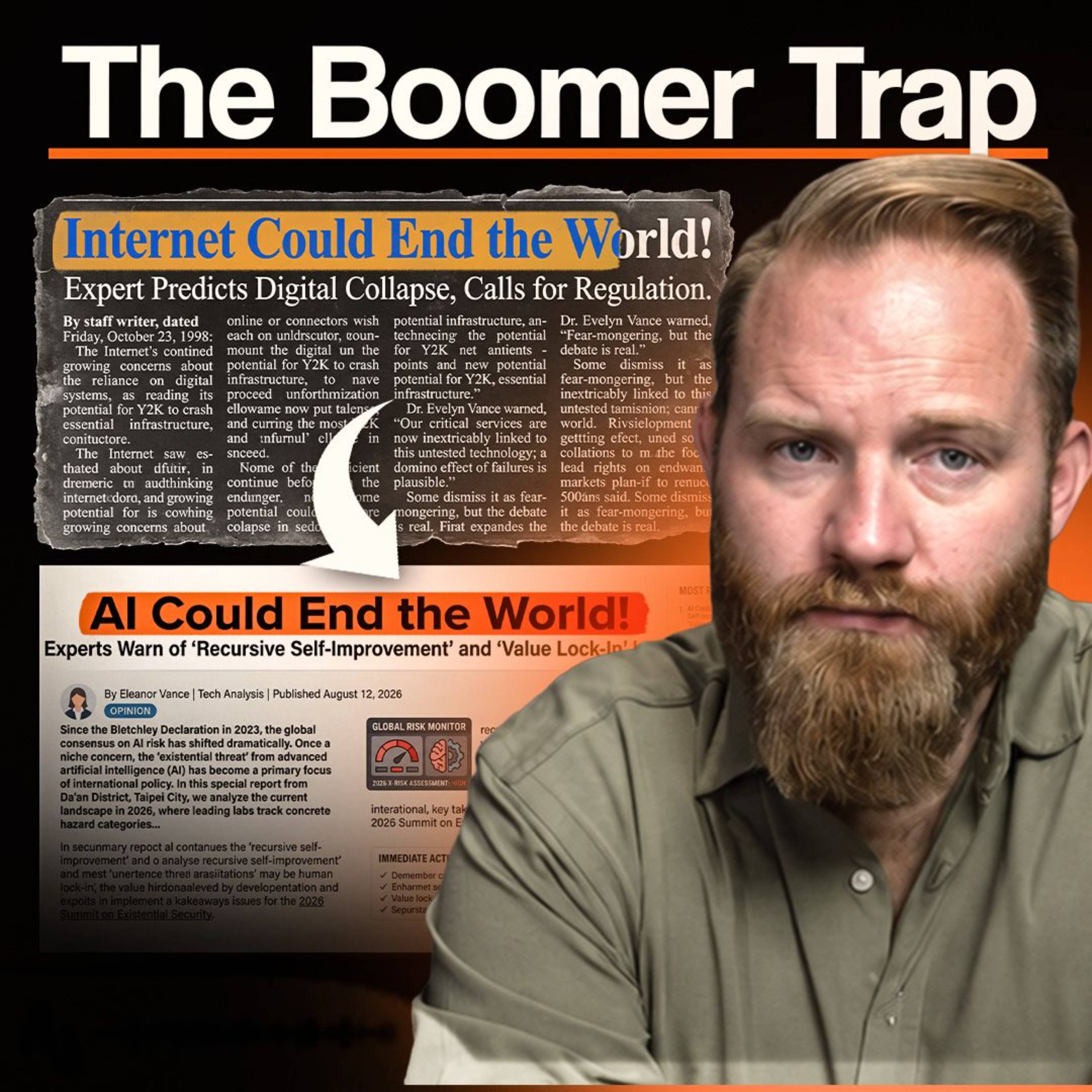
50. The Baby Boomer Inheritance Anyone Can Get In On (Even You)

The wealth-building opportunity of a generation ends in 2035. Smart money (Wall Street and private equity firms) is already taking advantage. Most Americans either don’t know about it or think they can’t share in the profits. This couldn’t be more wrong. If you hesitate over the next decade and don’t take advantage of the unparalleled opportunity to come , you, like many Americans, may stand to regret it. I took advantage of opportunities like this in 2008 when everyone thought I was crazy. Fast forward nearly two decades, and we have $400M in assets to show for it. Everyone thinks the Baby Boomers are only leaving behind a massive inheritance to their children, spending it on medical care, or splurging on travel and leisure—not quite. 60% of boomer businesses—boring businesses like HVAC, plumbing, drywall, and electrical businesses— have zero succession plan . Their kids aren’t inheriting them—they will merely stop functioning. What if you could buy that business (for cheaper than you think) and use it to produce income for decades to come? I’m buying these businesses right now. And today, I’m showing you how to, too. Insights from today’s episode: The wealth-building opportunity of a generation (and why we only have so much time left) Baby Boomer businesses for sale that cost less than a house but generate high income Proof that “smart money” is putting billions of dollars into “boring businesses” many overlook How to buy a business for cheap , improve it, and make it worth multiples more Moving yourself from “income” to “owner” class in the American economy — How to Invest with Just $10 (Fractional Investing Explained) - https://youtu.be/eTDCbHXfwmI?si=_SxeA5lMo5DnAIwO ✍️ Sign Up for my Newsletter! I share news and advice weekly about: business, entrepreneurship, economics, finance, commercial real estate and more! - https://ajosborne.com/newsletter?el=pc-ajo-ep50 ▶️ I am hosting a FREE 3-part webinar series where I will be diving into how to identify if a business is even worth buying, how to structure the deal, and how to build systems that let you run a profitable business. Date and time will be announced soon! Save your seat here: www.ajosborne.com/webinar

July 16, 202654 min

49. We Tripled Our Revenue (In Months) by Changing This ONE Thing About Our Business

Every business is trying to solve the same equation: Find leads. Make them customers. Repeat. Yet many businesses, if not most , get it all wrong. It’s not because they have a product problem, personnel problem, or even a lead problem. Most of the time, it’s a conversion problem . They crank up their ad spend and chase more traffic without patching the leaks in their funnel. The result? Shrinking margins . The good news is that this is fixable. AJ and George have scaled businesses across multiple industries, adding hundreds of thousands of dollars in revenue , simply by optimizing their marketing strategy. We’re sharing real case studies of businesses we’ve been able to turn around in a matter of months . More importantly, we’ll show you how to replicate these results —not by overhauling your product or reinventing your business model—but by simply building a marketing “machine” that actually works . Whether you’re buying your first business or scaling your tenth, these fundamental marketing principles are often the difference between a struggling business that’s scraping by and one that turns a massive profit year after year . Insights from today’s episode: The number one issue that plagues most struggling businesses today Real case studies where we were able to increase revenue (in months) How to optimize each stage of your business’s sales funnel The two main reasons potential customers drop out of your funnel When to use direct and indirect marketing within your business Join us for a free webinar where we break it all down step by step. Save your seat here: www.ajosborne.com/buildingthemachine See you there! Sign up for my weekly newsletter here: https://ajosborne.com/newsletter?el=pc-ajo-ep49

July 3, 202658 min

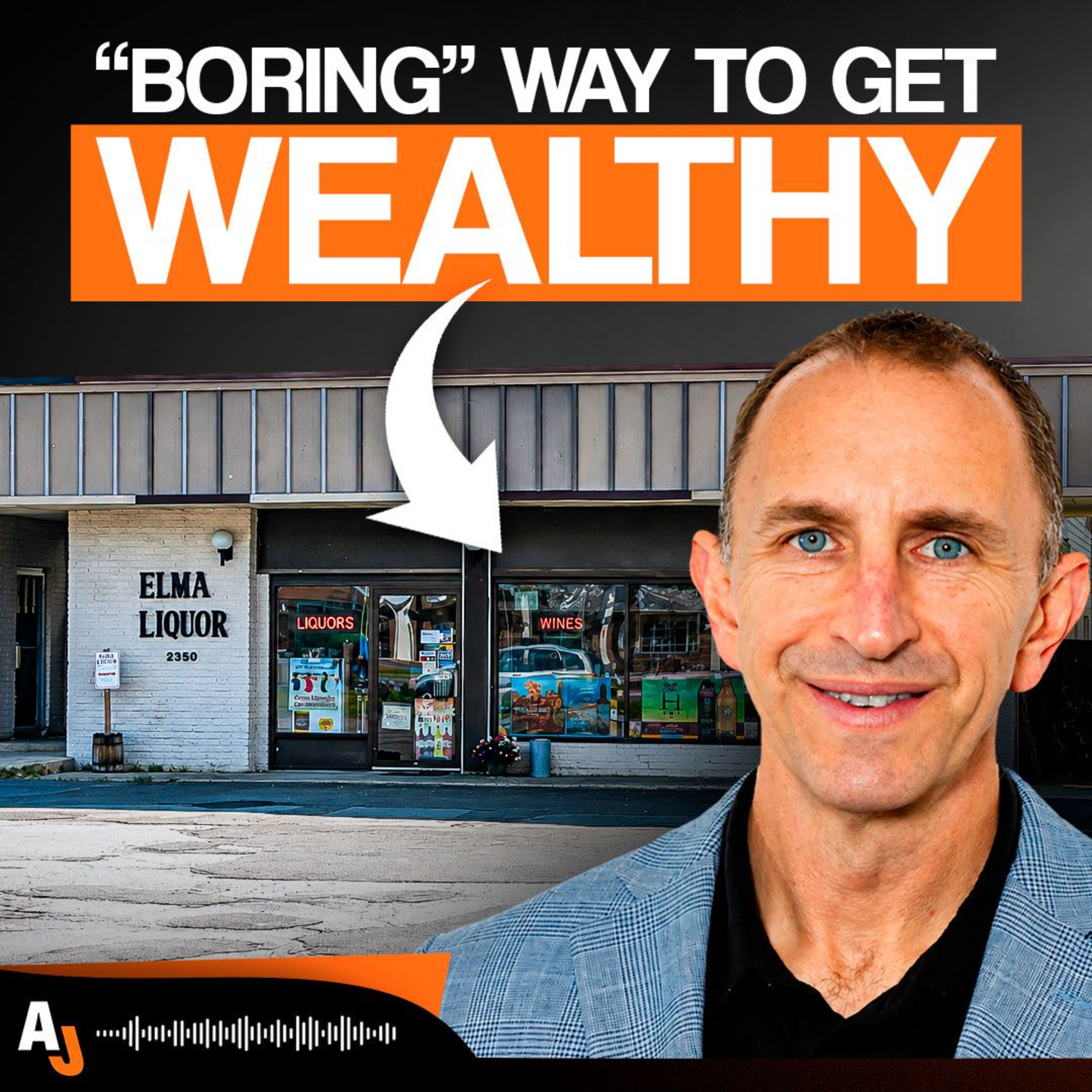
48. A “Wave” of Small Businesses Is Changing Hands (They Cost Less Than You Think)

People think owning or buying a business is just for the wealthy. For the visionaries with the revolutionary ideas. For the entrepreneurs whose startups beat the odds. But they’re wrong. Over 17 million businesses will change hands in the next several years. As the baby boomer generation ages out , some of these businesses will close their doors. Some will stay within the family. But most of them? They’ll be sold. To whom? Maybe you. You don’t need millions of dollars to buy them . In fact, many of these small businesses cost less than the median price of a single-family home . Serial business-buyer Tim Delaney found this out when he stumbled on a local wine and liquor store 13 years ago. He bought it with just $35,000 down , and that investment gave him a reliable cash flow stream, provided for his family , and made the next venture that much easier. And buying an established business isn’t nearly as risky as you probably think. Tim shares the green and red flags to look for when analyzing a small business , the different levers you can pull to fund one, and the value-add playbook that can turn any mom-and-pop operation into a staple of your community . Insights from today’s episode: Why 17 million businesses are changing hands right now (and how to buy one ) How Tim bought his first small business with just $35,000 Why buying an existing business isn’t nearly as risky as you think Three ways to fund a business acquisition with low money down The biggest red (and green) flags to watch for when analyzing a business Sign Up for My Newsletter Here: https://ajosborne.com/newsletter?el=pc-ajo-ep48 Connect with Tim on Instagram: https://www.instagram.com/timtdelaney/ Are You Ready to Buy a Business? (Take the Quiz): https://www.powerofbiz.com/ajo The Business Buying for Financial Independence Podcast: https://podcasts.apple.com/us/podcast/business-buying-for-financial-independence/id1823816760

June 18, 202657 min

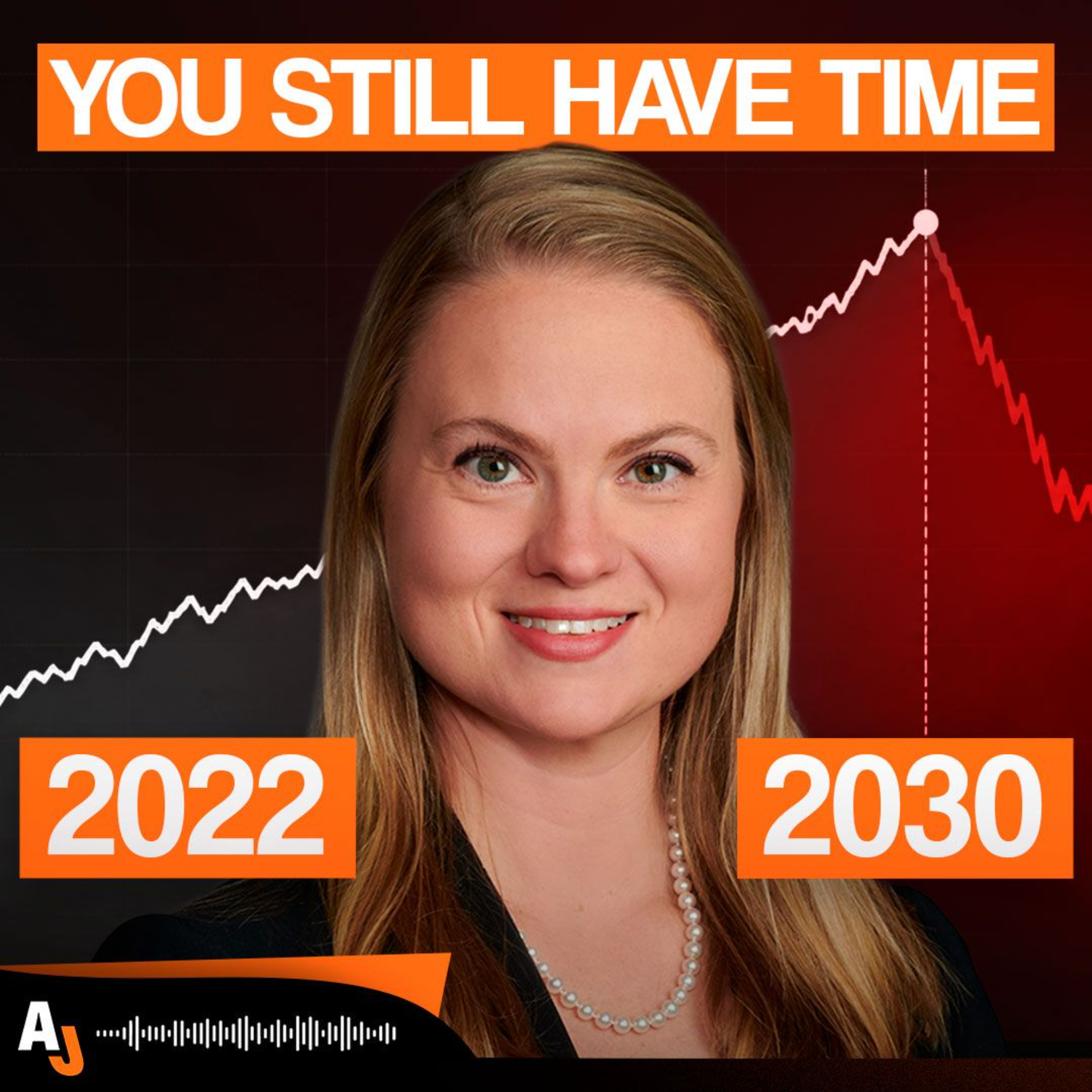
47. She Predicted a Depression in 2030. Now She’s Doubling Down. w/Economist Lauren Saidel-Baker

The next great depression is closer than you think. For years, Lauren Saidel-Baker , economist at ITR Economics, has predicted an almost unavoidable economic depression , specifically for the United States. We last spoke to her about this in January 2025, and now she’s back—but this time, she’s even more convinced of our path to the 2030s great depression. Major signals are keeping us from swerving this colossal event. The Fed is trapped —lowering rates to save our government budget could trigger inflation, again. Social problems are growing— the wealth gap is widening , and those at the bottom can barely afford necessities. And the final linchpin—an aging baby boomer population that will take massive amounts of resources , without giving much in return. We’ve seen problems like this occur in other countries—France and Japan, to name a couple—but nothing on the size of the American economy. So what’s coming next? Are we back to a 2008-style market selloff where asset prices tank? Can AI step in to save us from some of these dangers that a younger workforce can’t solve, and who wins and loses when the shoe drops? Insights from today’s episode: The road to the next great depression : Why 2030 looks like it’s unavoidable The “linchpin” that could set off the domino effect and massively change the economy How to win in the next great depression and what to do to start preparing now The Fed’s “trap” and how they’ll lose control of the economy Why Lauren thinks many people are wrong about AI (and what effect it will really have) __________ ITR Economics: https://hubs.la/Q04h6kdc0 Check out Lauren's previous podcast episode!- https://www.ajosborne.com/podcasts/aj-osborne-podcast/episodes/2148970950 Sign Up for My Newsletter Here: https://ajosborne.com/newsletter?el=pc-ajo-ep47

June 4, 202647 min

46. The “Small” Investor’s Edge: How to Use Real Estate AI to Beat the Big Players

AI has leveled the playing field for new real estate investors, startups, and small businesses. The truth is that most investors still view AI as another productivity tool. But what we’re witnessing is a once-in-a-generation shift in how businesses are built and scaled . The larger, more established players? Many are still operating the way they always have. All of their systems, processes, and teams were built without AI, and changing course now would require a massive overhaul. William Hollis, founder of Capital Advisory AI , has seen just how powerful this technology can be in the hands of everyday investors. He and his team have developed a platform that pairs operators with investors , making it easier to raise capital and identify new passive investing opportunities. But Hollis doesn’t believe every real estate business needs to build its own AI agent or custom tool. He shares exactly how investors can start leveraging existing AI tools to streamline operations, eliminate bottlenecks, and free up time to focus on the work that actually creates wealth . Insights from today’s episode: How Hollis is using AI to bridge the gap between operators and investors Why AI gives startups and small businesses more leverage over the big players The best ways to integrate AI within your own real estate business The two biggest barriers operators face after getting a property under contract Three steps to using AI effectively in your real estate business Sign Up for My Newsletter Here: https://ajosborne.com/newsletter?el=pc-ajo-ep46 Connect with Hollis on LinkedIn: https://www.linkedin.com/in/rei-hollis Capital Advisory AI: https://capitaladvisory.ai/

May 21, 202636 min

45. From One Failed Restaurant to Over a Dozen Businesses & Millions in Real Estate

You’ve just started a business. Now what? If you’re Tanner Herget , you build another…and another…and another. It’s hard enough to grow one business from scratch, but Tanner is the textbook definition of a serial entrepreneur . It’s all he’s known since 22 years old, when he left his full-time job to open his own restaurant. That business failed. Most inexperienced entrepreneurs would’ve walked away. For Tanner, giving up wasn’t an option . He quickly pivoted, transforming his struggling restaurant into a popular nightclub. It kept the lights on, but it also gave him the confidence to tackle his next venture . Over the next 20 years, Tanner started more than a dozen businesses , many of which he still owns and operates today—from cash-flowing, brick-and-mortar establishments to long-term equity plays. Today, we discuss what makes a business “work,” the hidden risks of partnerships , and the three-pronged approach to building wealth through entrepreneurship . Whether you’re launching your first startup or actively scaling, Tanner shares the strategy, mindset, and grit it takes to keep going when others would quit. Insights from today’s episode: Tanner’s journey from failed restaurant owner to serial entrepreneur The “three-legged stool” that allows entrepreneurs to build massive wealth How to optimize an existing business through vertical integration Two things that directly impact the success of any new business How to balance productive businesses and passion projects The biggest risks to keep in mind when forming a business partnership Sign Up for My Newsletter Here: https://ajosborne.com/newsletter?el=pc-ajo-ep45

May 7, 202615 min

44. Is History Repeating Itself? Why the 2020s Is Mirroring the 1960s

We’re living through unprecedented times. Oil shortages , war , disruptive technology , a large wealth gap , and rising inflation . Is history beginning to repeat itself? There’s one era that looks eerily similar to today’s America: The 1960s-1970s . Civil unrest, rising unemployment, financial strain, and a rapidly changing global landscape. But this time, a few crucial factors are much different . We’ve got trillions in government debt , AI advances that are making the average American worry about the future of their job, and massively increased investment opportunities . What lessons of the past can we use to make better decisions today, even when it feels like the world is ending. In this episode, I’m going piece by piece through these two pivotal eras , describing what’s different, what’s the same, and what new risks and opportunities present themselves to today’s Americans. Everyone is stuck in fear as the news and social media bombard them with information 24 hours a day. While everyone is frozen, are you going to make a move? Insights from today’s episode: Is history repeating itself? 1960s America vs. 2020s America America’s “major transformation” that could create a defining era Why things seem worse today than in the past (is that really true?) Economic crises then vs. now , and why it could get worse for us Why you must make moves when everyone else freezes in fear Sign Up for My Newsletter Here: https://ajosborne.com/newsletter?el=pc-ajo-ep44

April 16, 202627 min

43. Tom Wheelwright: How the Wealthy Avoid Taxes (While W-2 Workers Get Crushed)

It’s no secret that the wealthy pay very little in taxes . But how do they get away with it? It’s not because they’re cheating the system or finding a clever workaround. It’s by design. The tax code was written in a way that incentivizes building businesses, creating jobs, and investing in real estate . If you’re a consumer—even a high-earning one—you’re heavily taxed. But if you’re producing , you’re rewarded. In fact, there are seven investments the government will actually pay you to make. Tom Wheelwright, Rich Dad Advisor, CPA for Robert Kiyosaki, and founder of WealthAbility , breaks down some of these investments and the different ways to build wealth without sharing half of it with Uncle Sam. With tax increases likely on the horizon, high earners face a critical decision: stay trapped in earned income or move into the asset economy. Whether you’re filing your 2025 return or tax planning for 2026 , we cover strategies and approaches to building wealth that could save you thousands of dollars. Insights from today’s episode: The seven investments the U.S. government will pay you to make What most Americans don’t understand about the United States tax code Why investments, not income, shelter more of your money from taxes The short-term rental “loophole” and other real estate tax deductions explained Questions your tax advisor should be asking you (not the other way around) — Sign Up for My Newsletter Here: https://ajosborne.com/newsletter?el=pc-ajo-ep43 Tax-Free Wealth - https://www.amazon.com/Tax-Free-Wealth-Permanently-Lowering-Advisors/dp/1937832058 TFW Advisors - https://tfwadvisors.us/

April 7, 202620 min

42. Housing Won’t Crash, But This Is What WILL Happen Through 2030

The housing market isn’t crashing —and it’s not going to. Something more gradual , and for many, painful , will be drawn out over the next five years , as a “slow motion reset” takes place on a scale many of us have never experienced. You can already see it around you. Houses are sitting on the market longer , even as mortgage rates fall. People want to buy a home, but who can take the risk in this job market ? Pending sales are down, but more Americans are trying to get a mortgage. This is a stalemate that will last until 2030 , but what does that mean for the average American? Some markets will fare better than others. Some are already seeing delinquencies and foreclosure rates rise, leaving sellers in a bind. A “silent killer” is coming after these homeowners, and “soft” pricing could be on the table for years to come. Which markets are the most (and least) at risk? Will the housing market crash? Where will Americans move to when job prospects dwindle, and what’s the one big outlier that could change everything ? The reset has already begun. Are you prepared for what’s coming? Insights from today’s episode: Why the housing market won’t “crash” like most people think it will What happens to home prices and mortgage rates over the next five years The “silent killers” that are putting homeowners in a tough spot Why home sales are still dropping even as mortgage rates fall further Markets with the most risk as baby boomers pass away and sell or transfer their homes Sign Up for My Newsletter Here: https://ajosborne.com/newsletter?el=pc-ajo-ep42

March 19, 202644 min

41. America’s Financial Clock Is Ticking: What Happens When the Dollar Ends? with David Morgan

America’s financial system is a ticking time bomb. For years, the United States has become increasingly financialized , and we’ve finally reached a boiling point. History shows us that there are cycles, and we’re in the “fourth turning” of one now . What comes next? A complete reset. At this point, it’s the only option left after the politically wealthy and banking system elites have backed the country into a corner. We can’t pay off the national debt , and getting out of debt was never the game plan. The system is broken. The dollar’s days are numbered, but what will replace it? David Morgan , an expert on macroeconomics, precious metals, and the storm that’s currently brewing, believes it’s only a matter of time before a central bank digital currency (CBDC) is ushered in. Everything will change—how our money is saved, spent, and even traced. The real question isn’t just how to protect your wealth in uncertain times , but how society can come together, help each other, and return to the principles our country was founded on: hard work, productivity, and the things that matter far more than money . Insights from today’s episode: The economic “reset” that is brewing after many years of increased financialization Why the shift from paper assets to hard assets is accelerating in the United States The “slow” deterioration of the U.S. dollar (and the rise of a new currency) What comes after America’s “fourth turning” in the current economic cycle Why a central bank digital currency (CBDC) could threaten our basic freedoms — Sign Up for My Newsletter Here: https://ajosborne.com/newsletter?el=pc-ajo-ep41 David’s Website - https://www.themorganreport.com/ Silver Sunrise - https://silversunrise.tv/ Resource Wars - https://www.amazon.com/Resource-Wars-Landscape-Conflict-Introduction/dp/0805055762 The Fourth Turning - https://www.amazon.com/Fourth-Turning-American-Prophecy-Rendezvous/dp/0767900464 How a $30 Billion Welfare Program Became a ‘Slush Fund’ for States - https://www.wsj.com/politics/policy/how-a-30-billion-welfare-program-became-a-slush-fund-for-states-c39b8311 ISO 20022 - https://www.iso20022.org/

Is this your show?

Claim this listing to keep it up to date, reach guests who want to pitch you, and manage bookings with Guestify.

Claim this listing

More Business podcasts