Find partners
GTM Uncensored™

GTM Uncensored™

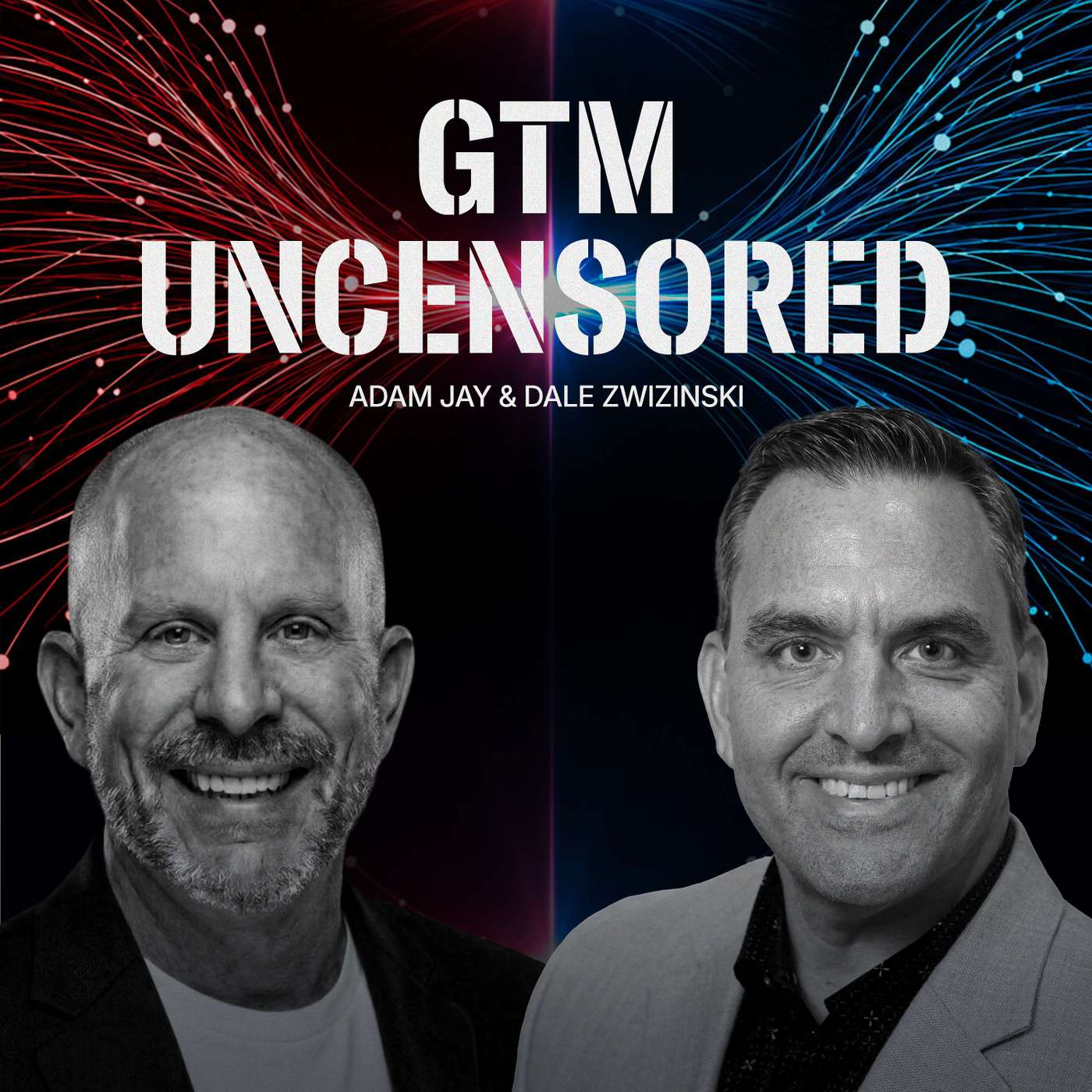
Hosted by Adam Jay & Dale Zwizinski

BusinessInterviews guests

Episodes

155

Latest episode

Aug 2026

Language

EN-US

About the show

Most GTM content covers the same ground. GTM Uncensored finds the operators actually in the seat and digs into what's true in today's GTM, not what sounds good. Every guest is currently building a company, leading a revenue team, or running a GTM function inside a real business. During the show, Adam and Dale push the envelope until the real story comes out. The show goes where most content won't: The motions that determine whether a company stays in business, or goes under. GTM Uncensored is built for B2B revenue leaders at $5M–$100M ARR who are accountable to a number and need a real-world playbook, not philosophy. Every episode ends with a Monday Morning Move. One specific action you can take this week, and a series of Uncensored Questions where listeners get unfiltered answers from people who've actually been there. What we cover: Pipeline & GTM motion, post-sale architecture, CS & retention, NRR/GRR mechanics, RevOps, AI in the revenue org, executive branding, and more. Your hosts: Adam Jay and Dale Zwizinski are co-founders of Revenue Reimagined. They didn't build a consulting firm. They flipped the fractional CRO model because strategy without execution doesn't move the needle. The questions they ask on air are the same ones they're solving inside real companies right now. GTM Uncensored is the GTM conversations nobody else is having.

Listen to episodes

60 recent
August 26, 2026Episode 144 min

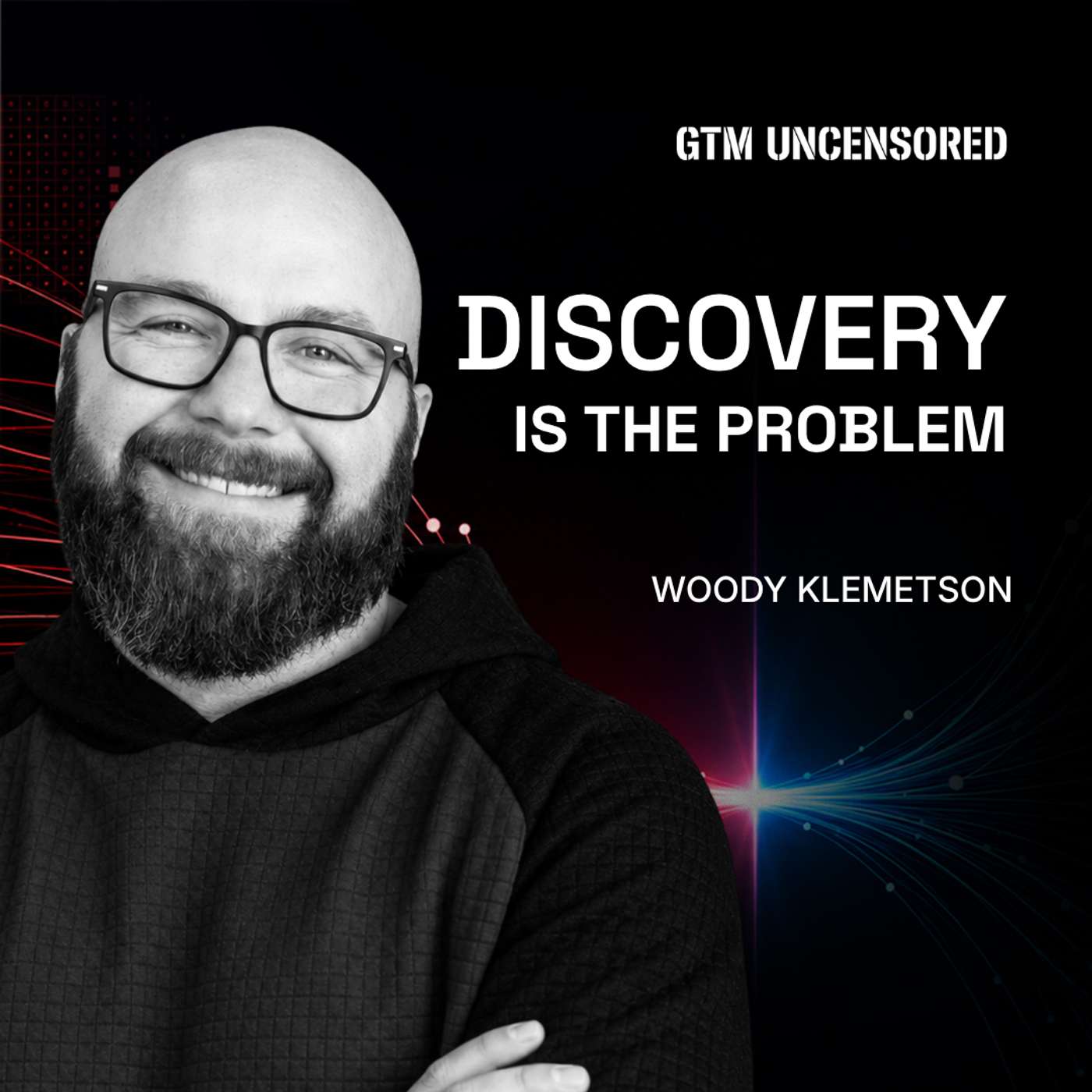
What AskElephant's Founder Learned Building AI for Revenue Teams

A deal slips, the VP pulls the call recordings, and the postmortem always ends the same way: "take better notes." Woody Klemetson says that's never once fixed anything. Woody Klemetson , Founder and CEO of AskElephant , ran sales teams for over a decade before building the AI layer he wished he'd had. Adam and Dale put him in the hot seat with a real deal-slippage scenario, and Woody breaks down why the actual failure point is almost always shitty discovery, not bad notes. They get into BANT versus DICTATE, why reps stay quiet instead of asking leadership for help, the line every revenue team building with AI needs to hear, and why most companies buy tools for themselves instead of their reps. We discuss: Why postmortems and "take better notes" never fix a slipping deal The real difference between engagement signals and BANT checkboxes Why reps stay quiet instead of asking leadership for help How AskElephant's memory graph rethinks CRM data and AI forecasting The Monday Morning Move for running a deal review that actually works Chapters: (00:00) Introduction (02:03) Why "take better notes" never fixes anything (03:46) 99% of deals die from bad discovery (05:21) Why BANT is dead (07:58) The cost of reps not asking for help (11:00) The 8x8 morning huddle system (15:43) Standing out when every AI pitch sounds the same (18:38) Is AI making sales reps think less (28:23) The telephone game killing million-dollar decisions (34:21) Why AskElephant built a memory graph instead of a data table (36:24) Monday Morning Move: rebuild your deal reviews around why (40:14) Uncensored Questions We are proudly supported by Nooks - One unified workspace for outbound! Learn more about Nooks today at https://www.nooks.ai/gtmuncensored

August 19, 2026Episode 15644 min

The Real Reason Your Best Rep Outperforms Everyone Else

Your top rep is closing 3x quota. Your median rep isn't. The dashboards, the KPIs, the coaching sessions: none of it explains why. Jack Siney is a 7x entrepreneur with 5 exits and co-founder of FrontRace , an activity intelligence platform built to answer a question most sales leaders can't: why do two reps with the same training, same territory, and same tools produce completely different results? Jack joins Adam and Dale to break down the "20 small things" framework: the order, timing, and tone behind every deal that CRMs were never built to capture, and why he's telling companies to slow down on AI until their data and process are actually in order. We discuss: Why CRM dashboards and activity data can't explain performance variance between reps The "20 small things": the micro-behaviors in order, timing, and tone that separate top and bottom performers Why coaching fails when the documented sales process doesn't match what top reps actually do How activity intelligence surfaces what to stop doing before it surfaces what to start doing Why AI implementations fail on bad data, and what "getting your house in order" actually means first Chapters: (00:00) Introduction: the magic is in your company data (03:19) The 20 small things nobody measures (06:09) Manager vs. leader: leading people, not numbers (10:09) Order and timing: why "when" matters more than "what" (15:30) Common sense isn't common: the data behind the instinct (21:42) Why FrontRace: a layer on top, not a rip-and-replace (23:29) AI hallucination, drift, and the metric engine (26:07) Normalizing messy data across HubSpot, Airtable, and more (28:33) Why the same behavior wins for one rep and loses for another (30:36) The Monday Morning Move: find the unexplained gap (32:30) Uncensored Questions (43:56) Dream vacation destination We are proudly supported by Nooks - One unified workspace for outbound! Learn more about Nooks today at https://www.nooks.ai/gtmuncensored
August 12, 2026Episode 15548 min

We Built a Conference Where No One's Allowed to Pitch

Sixty-five GTM leaders. Tents in the Montana wilderness. No pitches, no name tags, no one asking what anyone does for a living. This is Arcadia, the leadership gathering Jason Yarborough built with his wife and co-founder Sam after years of watching partnerships get treated as an afterthought everywhere he worked. Three years in, they finally let us behind the curtain. Jason walks us through why the whole event is built around trust instead of transactions, how the programming has quietly flipped from almost all go-to-market content to nearly all personal development, and the four blunt questions he asks every partner when a channel stalls out. We also get into where AI is genuinely earning its keep in partnerships (it's not where you'd guess), why he thinks imposter syndrome is really just self-sabotage wearing a different name, and what it takes to run a company with your spouse without ever fighting about it. Sam joins near the end to talk about what three years of watching leaders show up and disconnect has taught her about trust. If your partner team only hears from sales when there's a lead to hand off, you'll want to hear how Jason fixed that. We discuss: Why partnerships still isn't treated as a native GTM function The four questions that turn around a stalled partner channel Where AI actually helps in partner identification and enablement, and where it doesn't Building a trust-first community instead of a pitch-first conference Chapters (00:00) Introduction (12:50) The anti-conference conference (13:36) The community before the content (17:22) Three years of programming: from all-GTM to all-personal (21:27) Vetting who gets into a 65-person room (26:12) Imposter syndrome is just self-sabotage (27:32) Why partnerships still isn't a native GTM function (28:30) Where AI actually helps in the partner channel (30:18) Running Arcadia (and a family) with his wife (35:21) The science behind why this actually works (35:50) Uncensored questions: dream vacations and decompressing after Arcadia (39:59) Monday morning move: the four questions that reinvigorate a partner channel (41:27) Sam on trust, and what's next for Arcadia We are proudly supported by Nooks - One unified workspace for outbound! Learn more about Nooks today at https://www.nooks.ai/gtmuncensored

August 5, 2026Episode 15439 min

Vulnerability Is the Negotiating Tactic No One Teaches

We put Dawn Stallwood in the hot seat with a real crisis: a $1.8M contract that fell apart 11 days after signing because the sales deck promised things the paperwork didn't back up. Almost three decades as in-house counsel, a law partner, and a notary taught her how to spot the gap between what gets said and what gets signed, and she's built an entire career around closing it. We get into why she calls herself a Chief Integrity Officer, how to apologize without admitting fault, and why vulnerability might be the most underused negotiating tactic in sales. We also press her on AI in the sales funnel, and on the founder dependency trap that quietly tanks a business right before an exit. If your org treats integrity as a value on the wall instead of an operating principle, this one's for you. We discuss: Crisis management and the art of apologizing without admitting fault Vulnerability as a trust-building and negotiating tool AI's role and risk in authentic sales outreach Founder dependency and succession planning before an exit Chapters (00:00) Introduction (01:56) The Art of the Apology in a Crisis (05:09) What a Chief Integrity Officer Actually Does (08:30) Vulnerability as a Negotiating Tactic (13:15) Building a Culture Brave Enough for Hard Conversations (18:27) AI, Authenticity, and the Sales Funnel (21:12) Succession Planning and the Founder Dependency Trap (25:47) Navigating Equity, Earnouts, and Exit Conversations (27:29) Monday Morning Move: The Contract Gap Analysis (32:46) Uncensored Questions: Hard Truths and Lessons Learned

July 29, 2026Episode 15344 min

Cold Outbound Isn't Dead, It's Just Brutal

Every rep on the team is running the same sequences, hitting the same ICPs, sending the same messages as every other company in the category. Response rates are down 40% year over year, and nobody agrees on why. Jared Robin, founder of RevGenius — a free community of 65,000+ revenue professionals — joins hosts Adam Jay and Dale Zwizinski to make the case that the real problem isn't the market. It's calling it a "market" at all. Jared breaks down why he's retired the phrase "go-to-market" from his own vocabulary, what building a community actually costs before it returns anything, and why he's betting on owned audiences over cold outbound even as it gets harder every year. They discuss: Why "go-to-market" might be the wrong phrase for your company's entire strategy The real, dollar-figure cost of building a community (the grind behind RevGenius's first 5,000 members) Why cold outbound isn't dead, but 80–90% of the cold calls Jared gets are already flagged as spam The difference between an audience (demand gen) and a community (retention) — and why HubSpot spent $20M building one The one personal-branding mistake hundreds of sales reps keep making Timestamps (00:00) Introduction: why "go-to-market" is the wrong word (00:31) On the clock: the $25 million SaaS company scenario (04:15) Why last year's winners are this year's mediocre teams (08:12) Context engines and the human layer AI can't replace yet (11:54) What separates a community that drives pipeline from one that just drives engagement (17:02) Owned vs rented audience and building real demand gen channels (22:13) What building a real community actually costs (27:53) Keeping community conversations human as AI takes over content (33:33) Is outbound dead? Rethinking cold outreach and audience-first selling (38:33) Monday Morning Move: turn your feed into a real network (43:03) Dream vacation and closing remarks

July 22, 2026Episode 15246 min

Sequencers Are Obsolete in 2026

Most GTM teams are still optimizing a sales stack that's already obsolete. Anis Bennaceur , co-founder of Attention , joins Adam Jay and Dale Zwizinski to make the case that sequencers - and maybe even the CRM itself - won't survive the next few years of AI-native selling. In this episode of GTM Uncensored, Anis explains why he told Outreach's own CEO that sequencers are obsolete in 2026 (and got agreement, not pushback), why most "pipeline problems" are actually visibility problems, and how bad lead routing is quietly costing revenue teams 20%+ in missed ARR. Adam, Dale, and Anis discuss: Why no one responds to a 14-email sequence anymore The real difference between a pipeline problem and a visibility problem Whether the CRM survives the next decade of AI-native GTM How to turn a manual workflow into an agent instead of a top-down mandate Why copying your top sales performer's playbook can backfire Chapters: (00:00) Introduction: CRMs are gonna go away (00:31) The Ventura Ops scenario: fixing a 14-tool sales stack (02:26) Why sequencers are obsolete: the Outreach CEO story (05:29) Attention as a "revenue operating system": redefining the category (09:01) Turning manual workflows into agents, not top-down mandates (22:48) Does the CRM survive the next decade of AI-native GTM? (28:43) From investment banking to sales tech: Anis's unusual path into GTM (31:47) The hidden cost of bad lead routing: 20%+ missed ARR (36:56) Monday Morning Move: pipeline problem vs. visibility problem (44:08 ) Why copying your top performer's playbook backfires (45:36) Wrap up: dream vacations and thank yous

July 15, 2026Episode 15131 min

Stop Selling What Isn't Real

Before Revenue Reimagined existed, there was chaos: fake ARR, a startup selling Figma mockups as a finished product, and two revenue leaders who each hit their own breaking point. In this founder episode of GTM Uncensored, Dale and Adam get uncensored about the moments that pushed them to stop fixing other people's broken go-to-market engines and build their own company instead; including when Dale first realized sales was broken, and the 54 text messages in one night that finally pushed Adam to walk away for good. Adam and Dale discuss: The fake-ARR scheme that finally broke Adam as a CRO The customer success blind spot quietly costing founders the most Why sales engineers get trusted more than the salespeople in the room Whether SDRs still make sense in an AI-driven pipeline What it actually takes to fire a client (00:00) Introduction (01:23) The moment go-to-market broke: Dale's 1999 story (03:16) Adam's shelfware realization (05:10) Why they built for multiple clients at once (06:59) Before RR: Adam's CRO nightmare. Fake ARR, ghost customers (10:30) From coding to sales engineering to sales (15:21) How Dale and Adam actually found each other (19:41) Adam's breaking point: Figma mockups and 54 texts in one night (21:50) Scaling chaos vs. scaling systems, revisited (23:46) The customer success blind spot founders miss (25:55) Monday Morning Move: find the customer you lost (26:56) Uncensored round: SDRs, founder blind spots, firing a client (30:36) Dream vacations and a wrap Note Relevant Keywords: GTM Uncensored, Revenue Reimagined, go-to-market strategy, revenue leadership, CRO (Chief Revenue Officer), founder story, customer success strategy, sales leadership, B2B SaaS, RevOps, sales process, AI in sales

July 8, 2026Episode 15032 min

How Great Revenue Leaders Fix Broken Systems

Most revenue problems aren't growth problems. They're foundation problems. In this episode of GTM Uncensored, Adam Jay sits down with Revenue Reimagined co-founder Dale Zwizinski to unpack what broken revenue organizations actually feel like from the inside. From messy CRM data and unrealistic board expectations to broken customer handoffs and misaligned teams, Dale explains why growth can't fix weak foundations. They also discuss why customer success should be treated as a revenue function, how leaders can identify root causes, and why slowing down often leads to better decisions. Adam and Dale discuss: Why more SDRs won't fix a broken pipeline Resetting a bad forecast in week one as CRO Turning the sales-to-CS "handoff" into a "handshake" What the NRR vs. GRR gap really tells you How shaky foundations and yes-people sink companies Chapters: (00:00) Introduction (00:27) Handling bad CRM data and unrealistic forecasts (05:29) What coding taught Dale about go-to-market (08:56) Why data needs to be digestible (10:12) Why RevOps matters after $5M ARR (11:46) What broken revenue organizations feel like (14:00) The real cost of a broken CS motion (16:44) Why handoffs should become handshakes (19:23) Customer success metrics that matter (21:41) Are your CS reps really just schedulers? (23:05) Telling founders what they don't want to hear (25:18) Why most companies are building on shaky foundations (26:51) Dale's most expensive mistake (28:16) Why great leaders pause before reacting (31:41) Closing

July 1, 2026Episode 14936 min

The Revenue Mistake Founders Keep Repeating

After 18 months of stalled growth, most companies do the same thing: hire more salespeople. Adam Jay says that's exactly the wrong move. In this episode of GTM Uncensored, Adam breaks down why pipeline volume means nothing without quality, why most leaders confuse activity with progress, and why the answer to slowing growth usually isn't more headcount. Adam and Dale discuss: Why "healthy pipeline" matters more than pipeline size The dangerous instinct to throw people at the problem Why strategy-only leaders are failing How AI should reshape hiring decisions The biggest mistake companies make with revenue leadership Chapters: (00:00) Introduction (04:20) Why honesty with the board matters (06:45) What got you here won't get you there (10:10) Why smart leaders keep hiring more people (13:12) Healthy pipeline vs big pipeline (16:04) AI slop and bad GTM advice (22:37) Why embedded leadership works (25:26) When founders aren't ready for change (28:21) What great organizations feel like (30:56) Monday Morning Move (31:55) AI before headcount (32:24) Uncensored questions

June 24, 20261 min

Your GTM Is Broken. Here's How to Fix It. | GTM Uncensored

Most go-to-market advice sounds great until you're the one responsible for the number. GTM Uncensored is the podcast for founders, CEOs, CROs, revenue leaders, and B2B operators who need practical answers to real growth challenges. No recycled frameworks. No LinkedIn guru advice. No AI-generated theories. Every episode features operators who have actually built, scaled, broken, and rebuilt revenue engines inside growing companies. We'll cover: • Customer Success as a revenue engine • Revenue Operations (RevOps) architecture • Sales and marketing alignment • GTM strategy and execution • Pipeline generation and forecasting • LinkedIn authority and executive branding • Scaling B2B SaaS and service businesses • Revenue growth from $5M–$100M+ Every conversation ends with actionable takeaways you can put to work immediately through our Monday Morning Move framework. Subscribe for weekly episodes and learn what the best operators are doing to drive predictable growth. #GTM #RevOps #B2BSaaS #SalesLeadership #CustomerSuccess #DemandGeneration #RevGrowth #CRO

Is this your show?

Claim this listing to keep it up to date, reach guests who want to pitch you, and manage bookings with Guestify.

Claim this listing

More Business podcasts