The brutal truth about digital performance engineering and operations. Andreas (aka Andi) Grabner and Brian Wilson are veterans of the digital performance world. Combined they have seen too many applications not scaling and performing up to expectations. With more rapid deployment models made possible through continuous delivery and a mentality shift sparked by DevOps they feel it’s time to share their stories. In each episode, they and their guests discuss different topics concerning performance, ranging from common performance problems for specific technology platforms to best practices in development, testing, deploying and monitoring software performance and user experience. Be prepared to learn a lot about metrics. Andi & Brian both work at Dynatrace, where they get to witness more real world customer performance issues than they can TPS report at.
Listen to episodes
60 recent
June 8, 2026Episode 26134 min
Beyond the Hype: Open Source, Observability, and Finding Your AI Breakthrough
Its rare - but it happens: A guest-free episode of PurePerformance, allowing Andi Grabner and Brian Wilson reconnect to share real-world insights from recent months in the cloud-native and observability space. From KubeCon Amsterdam experiences and the strength of open-source collaboration to emerging challenges like AI-generated contributions, they explore how the industry is evolving beyond the hype.Your co-hosts of PurePerformance discuss the changing role of observability in the AI-native era—both as a foundation for understanding complex systems and as a tool to monitor AI itself. Brian shares his personal shift from AI skepticism to practical adoption, highlighting how AI can significantly improve productivity when used thoughtfully.Hope you all enjoy this episode!
May 25, 2026Episode 26034 min
8 Factor Producers to Scale Platform Engineering in an AI-First world with Abby Bangser
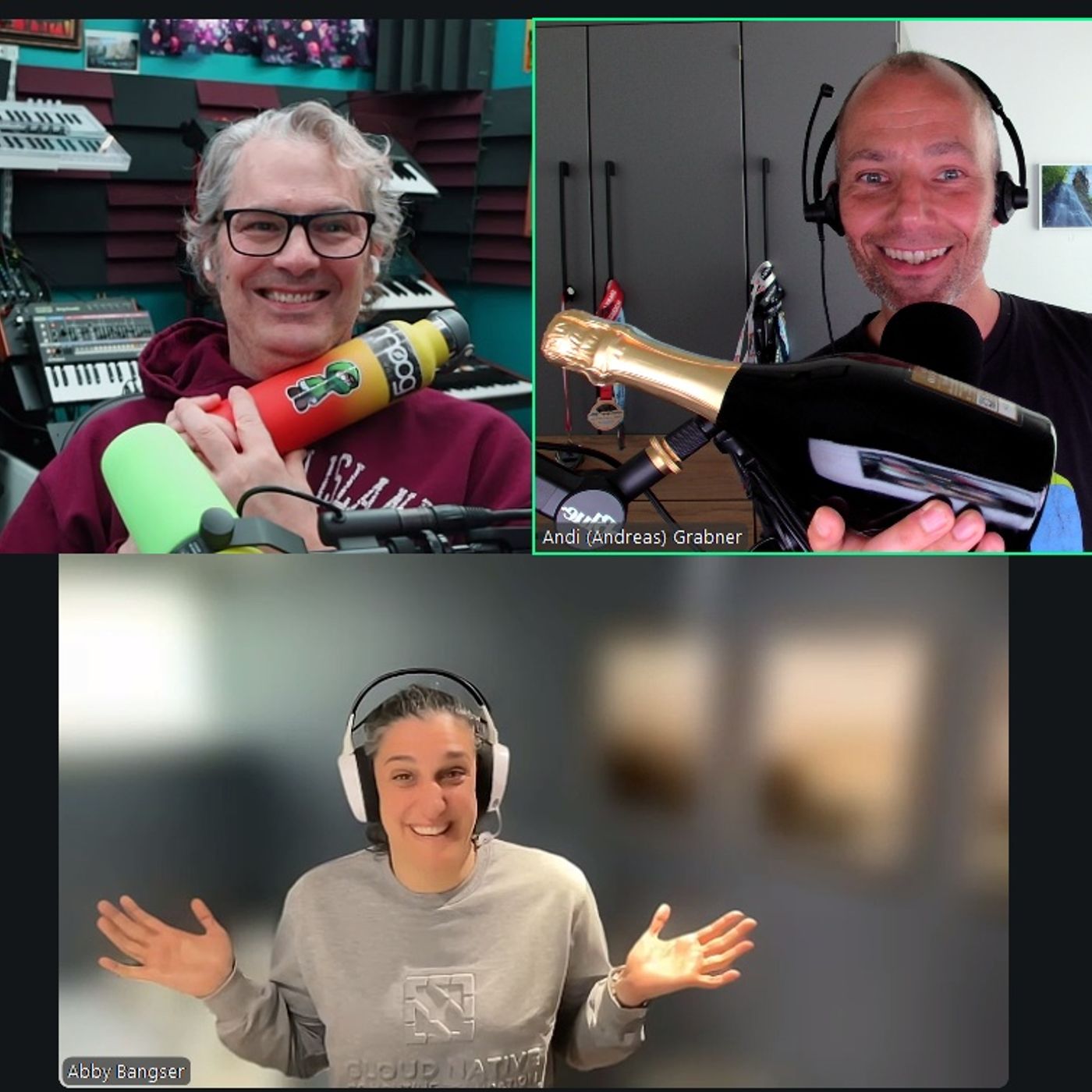
In 2011 Heroku defined the 12 factor app to remove emerging bottlenecks as developers tried to scale their output when they moved from building monoliths to microservices. In Platform Engineer we see a repeating pattern called the "8 Factor Platform Producers". AI allows engineering teams to speed up but they face bottlenecks as platform capabilities are not scaling with that demand as they are often depending on a central platform engineering team to be built and maintained.To learn more about 8 Factor Platform Producers we invited Abby Bangser, Founding Principal Engineer at Syntasso and CNCF Ambassador. She gave an amazing talk at KubeCon in Amsterdam and today walks us through the need of defining both consumers and producers for platforms to eliminate any emerging bottlenecks in Platform Engineering and allow an organization to reap the benefit of speeding up with AILinks we discussed:Abby's LinkedIn: https://www.linkedin.com/in/abbybangser/Abby's Kubecon Keynote: https://www.youtube.com/watch?v=8t0-5cvvMGM&list=PLj6h78yzYM2MXCOWSN9CqqID6OOvF7wxL&index=3012 Factor Apps: https://12factor.net/CNCF Whitepaper: https://cloudnativeplatforms.com/whitepapers/platforms/
May 11, 2026Episode 25951 min
Observability in the AI‑Native Era with Hilliary Lipsig and Rob Rati
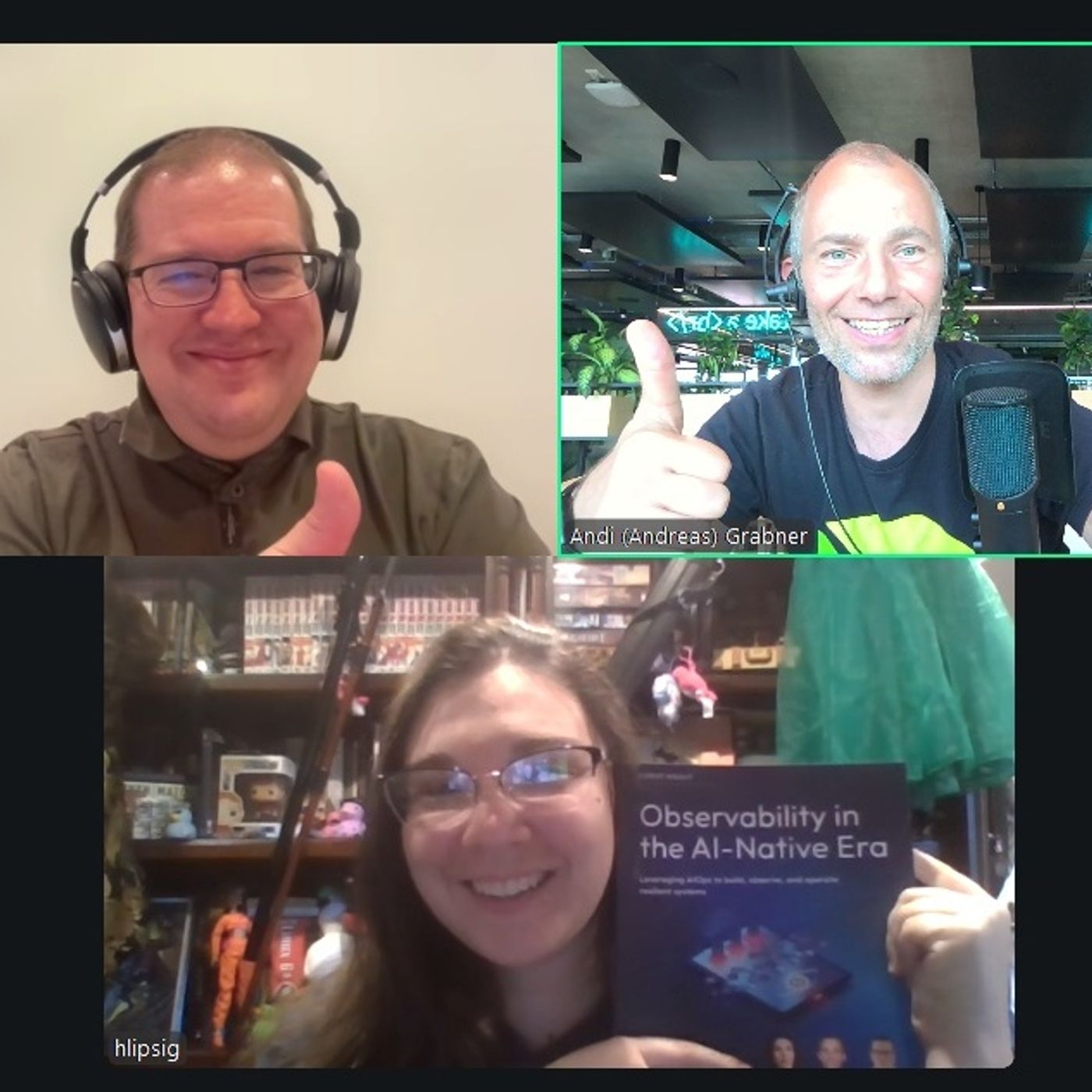
As the software world is transforming from cloud native to AI-native, observability must transform with it. But how exactly? How do we apply this in an existing enterprise with established processes and practices?In this PurePerformance episode, Andi Grabner hosts Hilliary Lipsig and Rob Rati to discuss their new book, Observability in the AI‑Native Era. The conversation explores how AIOps, automation, and modern observability must evolve as systems become cloud‑native, data‑heavy, and AI‑driven.We talk about why old alerting and SLO models no longer scale, how to balance AI with automation and human judgment, and why trust, security, and compliance matter more than ever when machines start making operational decisions. A must‑listen for SREs, platform engineers, and engineering leaders navigating the AI‑native future.Links we discussedBook on Amazon: https://www.amazon.com/Observability-AI-Native-Era-Artificial-Intelligence-ebook/dp/B0GHZH1YFLHilliary LinkedIn: https://www.linkedin.com/in/hilliary-lipsig-a5935245/Rob LinkedIn: https://www.linkedin.com/in/roberthrati/Andi LinkedIn: https://www.linkedin.com/in/grabnerandi/
April 27, 2026Episode 25838 min
Don't babysit your AI Agents to keep them on track with Lukas Holzer
AI coding agents are fast—but speed alone doesn’t guarantee quality. In this episode, Andi Grabner talks with Lukas Holzer (Straion) about why large context files and “almost right” AI code create new risks for engineering teams. You will learn about the "Lost in the Middle Syndrom" and why many organizations are not getting the promised 10x engineering boost right now!Andi and Lukas also explore rule adherence, dynamic context generation, enterprise readiness for AI-first development, and how software engineering roles are evolving in the age of AI.Tune in to learn more ...Links we discussedLinkedIn Profile: https://www.linkedin.com/in/lukas-holzer/Straion Website: https://straion.com/90 Percent Rule Blog: https://straion.com/blog/90-percent-rule-adherence-straion-coding-agents/1million tokens Blog: https://straion.com/blog/1m-tokens-wont-save-your-engineering-standards/
April 13, 2026Episode 25754 min
From Bowling Lanes to AI Lanes: Chris LaBrado on MDCD and the AI Interface Era
In this episode of the PurePerformance Podcast, Andi and Brian sit down with Chris LaBrado—Solutions Architect for AI Enablement, FSO, SRE, and ITSM at HSN/QVC, where he has spent an incredible 27 years shaping operational excellence. Their conversation dives deep into how AI is transforming software creation, enterprise workflows, and even the very role of developers.Chris shares how the barrier to entry for building tools and automation has dropped overnight thanks to natural‑language-based development: “Everyone can now create automation or tools without having to worry about the syntax.” He explains why AI is rapidly becoming the primary interface into the enterprise—capable of navigating presentations, emails, and complex back‑office systems—and why the future of engineering may shift from human‑oriented coding to AI-driven development models such as MDCD (MarkDown Continuous Development).The discussion also takes unexpected but fascinating detours into Chris’s background as a former bowling‑industry podcaster, his recent work with generative agents like DynaClaude, his Vibe Coded Root Cause Agent, and a philosophical exploration of AI, creativity, and the concept of singularity.Amidst all the change, Chris remains optimistic: “AI opens up a lot of new opportunity for everyone willing to adapt. It will result in us creating more things that ultimately help us as humans.” This episode is a thoughtful, energizing look at where software engineering is headed—and why the future might be brighter than we think.Links we discussedChris LaBrado on LinkedIn: https://www.linkedin.com/in/chrislabrado/Mo Gawdat, former Google Executive on the Singularity "moment of truth": https://x.com/vitrupo/status/2008824930646057380?s=20CEO of NVIDIA had an interesting excerpt from interview: https://x.com/MinusWells/status/2031974516155695414?s=20Elon Musk on speed of AI: https://x.com/r0ck3t23/status/2031639621465931903?s=20AI brain emulation of a fly (e.g. "a sign of the times"): https://x.com/alexwg/status/2030217301929132323?s=20Elon on fiat currency transforming based on AI manufacturing loop: https://x.com/elonmusk/status/2020202496547844312?s=20Fiat currency moves to model based on thermodynamics: https://x.com/r0ck3t23/status/2033371028202602547?s=20
March 30, 2026Episode 25652 min
AI-Ready Codebases: Engineering Discipline for Agentic AI with Adam Tornhill
In this episode, Andi and Brian welcome back Adam Tornhill—founder of CodeScene and author of Your Code as a Crime Scene—to explore how agentic AI is reshaping software engineering. Adam shares his personal journey from 40 years of hands-on coding to orchestrating AI-generated code, and what this shift really means for development teams.Together, they dive into new research on the hidden risks of AI-assisted coding, why low-quality or legacy code slows AI down, and how to measure the “AI-readiness” of a codebase. Adam breaks down practical strategies from his latest work on Agentic AI Coding, including guardrails, refactoring patterns, enforced processes, and why test coverage has become a surprising cornerstone for safe, fast AI iteration.Whether you're experimenting with AI coding tools or planning enterprise-scale adoption, this episode delivers actionable guidance rooted in data, engineering discipline, and real-world experience.Linkshttps://codescene.com/blog/agentic-ai-coding-best-practice-patterns-for-speed-with-qualityhttps://codescene.com/blog/strengthening-the-inner-developer-loop-turn-ai-into-a-reliable-engineering-partner
March 16, 2026Episode 25543 min
AI‑Native: Building Faster Than We Can Spec with Wolfgang Heider & Benedict Evert
AI is transforming software engineering—faster than many teams can adapt. In this episode, Andi talks with Wolfgang Heider and Benedict Evert about what it really means to build “AI‑native” software, where prototypes turn into production apps in minutes.We explore why good engineering fundamentals still matter, how multi‑agent workflows mirror traditional roles, and why testing, governance, and clarity of intent become more important—not less.We also discuss the future of junior engineers, the risk of everyone reinventing the same solution, and why value—not code generation—is becoming the real differentiator.Links we discussedhttps://www.linkedin.com/posts/wolfgangheider_productmanagement-softwareengineering-ai-activity-7425746505883607042-D1OZhttps://www.linkedin.com/pulse/machines-making-wolfgang-heider-5mvsfhttps://www.linkedin.com/pulse/i-built-app-between-final-stranger-things-episodes-wolfgang-heider-5penf/https://futurelab.studio/ora/ https://futurelab.studio/htmlctl/
March 2, 2026Episode 25451 min
Resilience in the Age of AI and Why we Still Suck at it with Adrian Hornsby
Why do we still struggle with resilience in 2026? Is it the growing complexity of systems, the pressure to ship fast, or a lack of education around resilient design? In this episode we welcome Adrian Hornsby from Resilium Labs to explore these questions and learn about chaos, complexity, and the importance of continuous learning!Adrian has learned his chaos engineering skills while working at AWS for many years. He shares insights from his upcoming book and his experience helping organizations embrace resilience as a continuous learning practice. We discuss:Why traditional chaos engineering assumptions break down when AI starts writing your code.The rise of AI-powered SRE agents—are they a blessing or a missed learning opportunity?Organizational challenges and the importance of tracking near misses.Links we discussedAdrians LinkedIn: https://www.linkedin.com/in/adhorn/Resilium Labs: https://www.resiliumlabs.com/Upcoming Book: https://leanpub.com/whywestillsuckatresilience
February 16, 2026Episode 25347 min
From Zero to Open Source Contributor with Diana Todea
Contributing to Open Source is easier than ever - especially because contributions are needed for documentation, demos, tutorials and code. But how to get started? Where to look for "first good issues"? Is everyone welcome? What are the prerequisites?Tune in and hear from Diana Todea, Developer Experience Engineer at Victoria Metrics, on how within a year she made it from Zero to Developer and receiving the Contributor Award for OpenTelemetry 2025 at KubeCon Atlanta. Diana shares her journey, how she started, how she found the right topic and how she keeps herself motivated. Diana is also the Co-lead of the Neurodiversity CNCF Working Group and gives us insights into the Merge Forward community. And don't forget: Call for Papers for Cloud Native Days Romania and Austria are open and both Diana and Andi would be glad to see your proposals!So - what are you waiting for?Links we discussed:Diana's LinkedIn: https://www.linkedin.com/in/diana-todea-b2a79968/ From Zero to Developer Talk: https://www.youtube.com/watch?v=nPrxpEE5GpY Contributor Award: https://siliconangle.com/2025/11/13/accessibility-meets-open-source-collaboration-kubeconna/ Her latest CNCF Blog Post: https://www.cncf.io/blog/2025/12/04/my-first-kubecon-cloudnativecon-a-journey-through-community-inclusivity-and-neurodiversity/Start contributing to Open Source: https://contribute.cncf.io/contributors/getting-started/ Diana's Conference Talks: https://github.com/didiViking/Conferences_Talks Diana on Medium: https://medium.com/@dianatodea/ Articles on OpenTelemetry for beginners: https://medium.com/@dianatodea/the-unofficial-guide-to-contributing-to-opentelemetry-where-to-look-and-who-to-talk-to-9de04ae75fe0 CNCF Merge-Forward: https://community.cncf.io/merge-forwardCNCF Neurodiversity initiative: https://community.cncf.io/neurodiversity Cloud Native Days Romania: https://cloudnativedays.ro/Cloud Native Days Austria: https://cloudnativedays.at/
February 2, 2026Episode 25248 min
The many facets of an SRE with Alexandra Franz
From Systems Engineer in Aeronautics via many clouds to becoming an SRE in Observability! That's the path from our guest, Alexandra Franz who is a Lead Product Engineer in SRE at Dynatrace. Tune in and learn how their team plans ahead for expected high traffic around Black Friday, Cyber Monday or the Super Bowl. We discuss how regional traffic patterns and differences in available hardware get factored in for capacity management and cost control. We also learn why global cloud outages are stressful - but - how those incidents can also be the reward for a good SRE.Make sure to connect with Alexandra on LinkedIn: https://www.linkedin.com/in/alexandrafranz/
Is this your show?
Claim this listing to keep it up to date, reach guests who want to pitch you, and manage bookings with Guestify.