
Find partners
Product for Product Management

Product for Product Management

Hosted by Matt Green & Moshe Mikanovsky

TechnologyEducationInterviews guests

Episodes

157

Latest episode

Jun 2026

Language

EN

About the show

Product for Product is a show hosted by Matt Green and Moshe Mikanovsky aimed at helping listeners navigate the growing depth of product management tools while also providing our insights into the categories that make up the PM role. We will take listeners with us on a journey of discovery through areas of product analytics, road mapping, productivity and many others. If you want to keep up with the latest in product management come along for the ride! Connect with us on LinkedIn: https://linkedin.com/in/mattgreenproduct https://linkedin.com/in/mikanovsky Connect with us on Youtube: https://www.youtube.com/@productforproduct

Listen to episodes

60 recent
June 10, 202652 min

EP 156 - Stop Wasting Research with Jake Burghardt

This time we’re diving into a problem almost every product team has felt but rarely names: all the customer research you’ve already done… and then quietly forgotten. In this episode, Jacob Burghardt joins Matt and Moshe to talk about his new book Stop Wasting Research: Maximize the Product Impact of Your Organization's Customer Insights and how to turn research from a one‑off activity into a real product asset.Drawing on his path from early dot‑com research and UX work through consulting and a principal PM role at Amazon, Jacob shares why teams keep re‑running the same studies, ignoring past insights, and treating “research” as a meeting on the calendar instead of an input into every major decision. His book offers a big‑tent definition of research, which includes UX, market, data science, CS insights, and more, and a practical playbook for making all of it usable, visible, and integrated into product work.Join Matt and Moshe as they explore with Jacob:How he moved from hands‑on research and design into product management, and why he stayed obsessed with the problem spaceWhat “research” really includes today (far beyond user interviews or dashboards)Why so much research gets wasted and the three root causes behind it:Research isn’t prepared for future useStakeholders aren’t motivated to careInsights aren’t integrated into planning, processes, or leadership ritualsA step‑by‑step structure from the book:Taking inventory of the research you already haveDiagnosing root causes in your orgChoosing from a “menu” of tactics that fit your contextWhat good looks like: strong operating models, clear places for research to plug in, and researchers treated as builders of internal productsHow smaller orgs without Product Ops can get started: simple visibility, mapping who’s doing what research, and basic communication channelsThe link between org mindset (feature factory vs. empowered teams) and how seriously research is usedPractical ideas for connecting research to go‑to‑market, pricing, packaging, CS, and sales enablementHow AI is changing the research landscape, where it helps and where human judgment is still essentialAnd much more!Want to learn more or get the book?Book: https://rosenfeldmedia.com/books/stop-wasting-researchIntegrated Research: https://www.integratingresearch.com Medium: https://medium.com/@jakeburghardt LinkedIn: https://www.linkedin.com/in/jakeburghardt You can also connect with us and find more episodes:Product for Product Podcast: http://linkedin.com/company/product-for-product-podcastMatt Green: https://www.linkedin.com/in/mattgreenproductMoshe Mikanovsky: http://www.linkedin.com/in/mikanovskyNote: Any views mentioned in the podcast are the sole views of our hosts and guests, and do not represent the products mentioned in any way.Please leave us a review and feedback ⭐️⭐️⭐️⭐️⭐️

May 27, 202651 min

EP 155 - Reshaping product development for AI’s impact with Gil Broza

This conversation with Gil Broza goes straight at a question many product leaders are quietly wrestling with: how do you bring AI into product development without breaking everything that already works? Gil, author, coach, and long-time agility expert, returns to talk with Matt and Moshe about “reshaping product development for AI’s impact,” focusing not on building AI features, but on how AI is changing the way product and engineering teams work day to day. He argues that while AI massively increases speed and output, it doesn’t change the fundamentals of good product development: clear direction, evidence-based judgment, solid technical foundations, and healthy teams. Join Matt and Moshe as they explore with Gil: - Why AI is a “turbo engine in a car with old brakes” if you drop it into a system designed for human speed. - How leaders confuse more output with more value, and why faster code can just mean “legacy code years ahead of schedule”. - The difference between real agility and “performative Agile” (ceremonies, Jira theater) when AI tools are doing more of the work. - How to think in systems: what you’re actually optimizing for (predictability, innovation, time-to-value) and how AI changes the constraints and feedback loops in your org. - Practical blind spots leaders miss with AI adoption: - Treating AI as an implementation, not a transformation - Ignoring cognitive load and burnout when people work all day with agents - Shrinking teams for “efficiency” and accidentally increasing isolation - The three main ways to use AI in product development, and why you should be explicit about each: - As a pairing partner (thinking, coding, design) - As an autonomous agent - As “just” automation (summaries, note-taking, etc.) - Why skipping prototyping and experiments is now “less excusable” when AI can create testable prototypes in hours instead of weeks. - What changes (and doesn’t) in roles like PM, engineer, and scrum master when AI becomes a real team member. - Concrete steps leaders can take: apply systems thinking, revisit mindset and values, redesign ways of working for AI-speed conditions, and invest in continuous improvement again. - How Gil’s new courses (“Reshaping Product Development for AI’s Impact” and “Leading AI-Enabled Product Teams”) help product and engineering leaders do this work intentionally. Want to go deeper or work with Gil? - Website & courses: https://3pvantage.com/  - Newsletter & articles: https://3pvantage.com/subscrib.../  - LinkedIn: https://www.linkedin.com/in/gi.../  You can also connect with us and find more episodes: - Product for Product Podcast: http://linkedin.com/company/pr...-podcast  - Matt Green: https://www.linkedin.com/in/ma... - Moshe Mikanovsky: http://www.linkedin.com/in/mikanovsky  Note: Any views mentioned in the podcast are the sole views of our hosts and guests, and do not represent the products mentioned in any way. Please leave us a review and feedback ⭐️⭐️⭐️⭐️⭐️
May 13, 202648 min

EP 154 - Product Ashtangi with Bhavesh Ratanpal

We’re joined by Bhavesh Ratanpal. product leader, author, and long‑time practitioner of yoga philosophy, for a unique conversation about his book Product Ashtangi and how ancient Vedic wisdom can change the way we build products and lead teams.Bhavesh shares his journey from growing up in a family of priests in India, to a career in software development and product management at places like TD Bank, Citibank, and TELUS, and now to founding human‑centric AI startups in Canada. Along the way, he kept returning to one insight: a calm, clear mind makes better product decisions. Product Ashtangi is his attempt to codify that, combining the eight limbs of Ashtanga yoga with modern product practice.Join Matt and Moshe as they explore with Bhavesh:What “Product Ashtangi” means and why the first product you work on is yourselfHow the eight limbs of yoga (starting with Yama - truthfulness, ethics, ego‑awareness) translate into everyday product decisionsThe difference between building from ego and cosmetics vs. focusing on real user pain and social welfareHow to shift between observer and experiencer modes so you can see problems clearly instead of reacting emotionallyStories of applying these principles in practice, from enterprise migrations and platform decisions to Bhavesh’s current AI products (pet adoption and strata governance)Treating your life like a product: personal sprints, self‑retros every two weeks, and continuously “shipping” a better version of yourselfHow karma yoga and product management align when you see products as vehicles for societal good, not just business metricsThe structure of the book:Part 1 – theory connecting yoga sutras, Bhagavad Gita, and product thinkingPart 2 – practical ways to adopt the eight limbs in your product workWhere to start if you’re curious: books, practices, and small mindset shifts you can apply this weekAnd much more!Want to learn more or get the book?Website: http://bhaveshratanpal.caLinkedIn: https://www.linkedin.com/in/bhaveshratanpalYou can also connect with us and find more episodes:Product for Product Podcast: http://linkedin.com/company/product-for-product-podcastMatt Green: https://www.linkedin.com/in/mattgreenproduct/Moshe Mikanovsky: http://www.linkedin.com/in/mikanovskyNote: Any views mentioned in the podcast are the sole views of our hosts and guests, and do not represent the products mentioned in any way.Please leave us a review and feedback ⭐️⭐️⭐️⭐️⭐️
April 29, 202649 min

EP 153 - Competitive Research Tools with Ran Erez

On this episode of the Product for Product Podcast, we’re joined by Ran Erez, product leader, podcaster, and founder of Re.focus, for a highly practical episode on competitive intelligence tools and tactics for product managers.With over a decade in B2B, B2C, and cyber (including three years on the mobile pod at monday.com), Ran has seen the same pattern repeat: teams either copy competitors blindly or ignore them entirely. He argues there’s a better way, treating competitors as a massive time‑saver for validation and strategy, without letting them drive your roadmap.Join Matt and Moshe as they explore with Ran:How Ran went from QA manager in cyber to owning product and driving millions in salesThe biggest mistakes PMs make with competition: copying feature lists, believing marketing at face value, and doing “one‑and‑done” competitive intelligence Why focusing only on direct “budget competitors” misses the real job‑to‑be‑doneThe Competitive Intelligence Pyramid:Feature level – how others solve the same problemProduct capabilities – pros/cons at whole‑product levelMessaging – how value is communicated and evolvesProduct strategy – what bets they’re makingCompany strategy – where the business is actually headingConcrete methods and tools at each level, including:Finding real users of competitors through screeners, communities, and support/KB pagesRunning “SUSHI” competitive user research: side‑by‑side tests of your product vs. theirs over timeTalking to integration partners and freelancers who implement multiple competing toolsUsing Wayback Machine, screenshots + Gemini, and Perplexity to track how sites, pricing, and positioning changeMining public earnings calls for strategic signals in the language leaders useHow to systematically identify your true competitors (and what it means if you can’t find any)Treating CI as a muscle: what “small start” looks like and how to keep learning over timeUsing competitors to validate your ideas by putting their products in front of your usersAnd much more!Want to connect with Ran or learn more?LinkedIn: https://www.linkedin.com/in/ran-erezYou can also connect with us and find more episodes:Product for Product Podcast: http://linkedin.com/company/product-for-product-podcastMatt Green: https://www.linkedin.com/in/mattgreenproductMoshe Mikanovsky: http://www.linkedin.com/in/mikanovskyNote: Any views mentioned in the podcast are the sole views of our hosts and guests, and do not represent the products mentioned in any way.Please leave us a review and feedback ⭐️⭐️⭐️⭐️⭐️
April 15, 202658 min

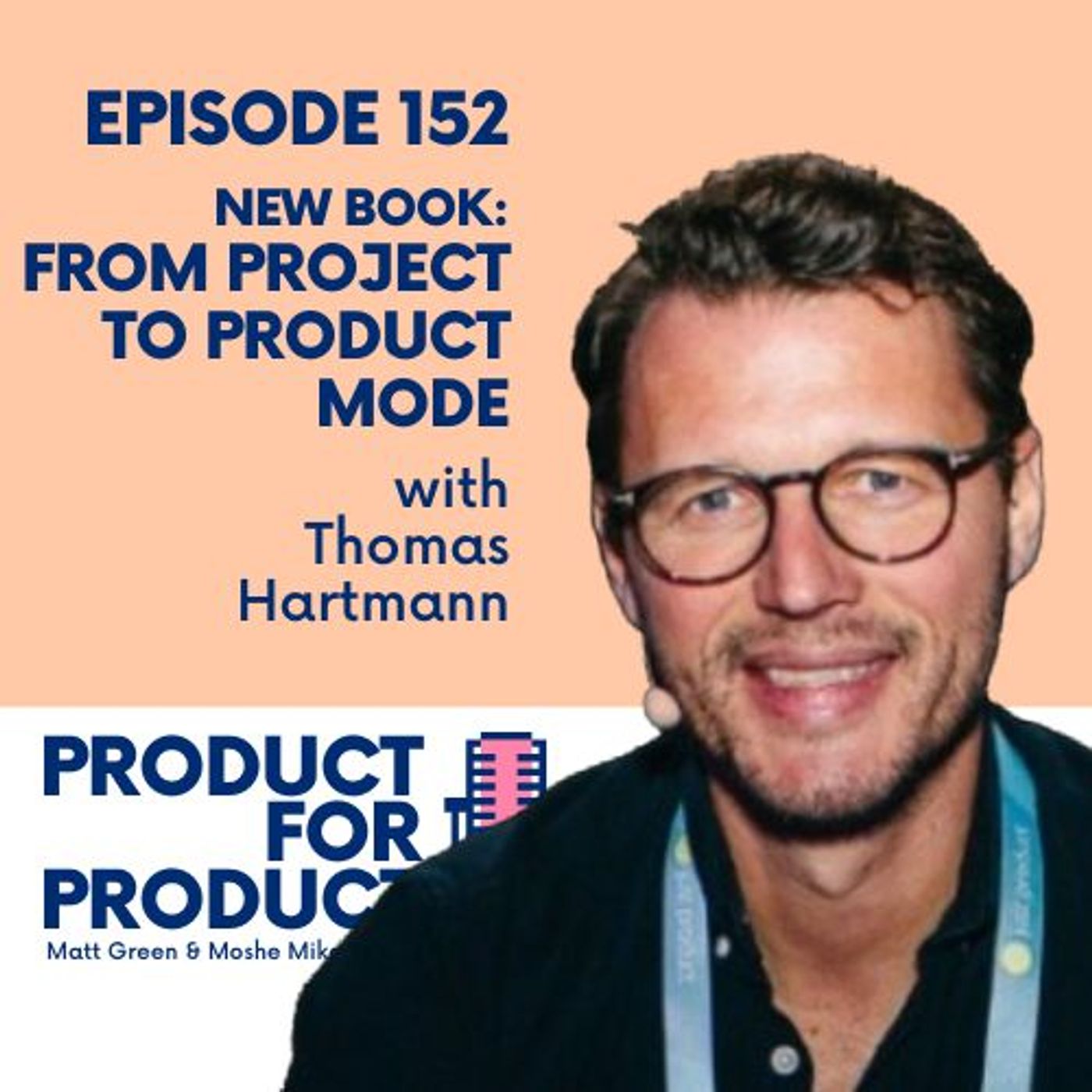
EP 152 - From Project to Product Mode with Thomas Hartmann

We’re joined by Thomas Hartmann, co‑founder of Product Masterclass and co-author of From Project to Product Mode: A Game Plan to Unlock Scalability for B2B Software Products, for a candid look at why so many B2B software companies get stuck in “project mode” and what it really takes to become product‑led.Thomas shares his journey from entrepreneurship and lean startup experiments in San Francisco and Munich and to working with large organizations trying (and often failing) to scale. Over years of coaching and transformation work, he and his co‑founder and co-author, Sebastian Borggrewe, saw the same pattern: teams with a strong product mindset trapped inside companies that still behave like project shops, where sales and single big clients dictate the roadmap and success is measured by project delivery, not product outcomes.Join Matt and Moshe as they explore with Thomas:- How to recognize whether your company is truly in project mode or product mode- Why B2B software behaves very differently from B2C when making this shift- The “egg” analogy: product teams as the yolk, surrounded by an environment (the egg white) that often doesn’t care how things get built, only that they ship- The seven areas that fundamentally differ between project and product companies: segmentation, pricing, discovery, prioritization, engineering, configuration, and product management structures- Concrete signs of project mode: sales defining what to build, time‑and‑materials pricing, no real discovery, prioritization driven by the loudest customer, and PMs blocked from end users- Why not every company needs to become a product company, and why it’s a strategic choice, not dogma- A step‑by‑step path to move from project to product mode:- Step 1: Align leadership and name the current state (you are a project org)- Step 2: Find alignment among all product leaders on what to change- Step 3: Prioritize which of the seven areas to tackle first (you can’t fix everything at once)- Step 4: Enable the workforce and shift the surrounding “egg white,” not just product team skills- How AI fits differently in project vs. product organizations: as a delivery accelerator in one, and as a strategic validation and discovery tool in the other- Why tools like Claude Code can help PMs brainstorm, validate, and visualize, but won’t fix a broken mindset or culture- And much more!Want to learn more or work with Thomas?- Product Masterclass: https://www.product-masterclas...- From Project to Product Mode book: https://www.product-masterclass.com/book-project-to-product- LinkedIn: https://www.linkedin.com/in/th... You can also connect with us and find more episodes:- Product for Product Podcast:http://linkedin.com/company/pr...- Matt Green:https://www.linkedin.com/in/ma...- Moshe Mikanovsky:http://www.linkedin.com/in/mik...Note: Any views mentioned in the podcast are the sole views of our hosts and guests, and do not represent the products mentioned in any way.Please leave us a review and feedback ⭐️⭐️⭐️⭐️⭐️
April 1, 202649 min

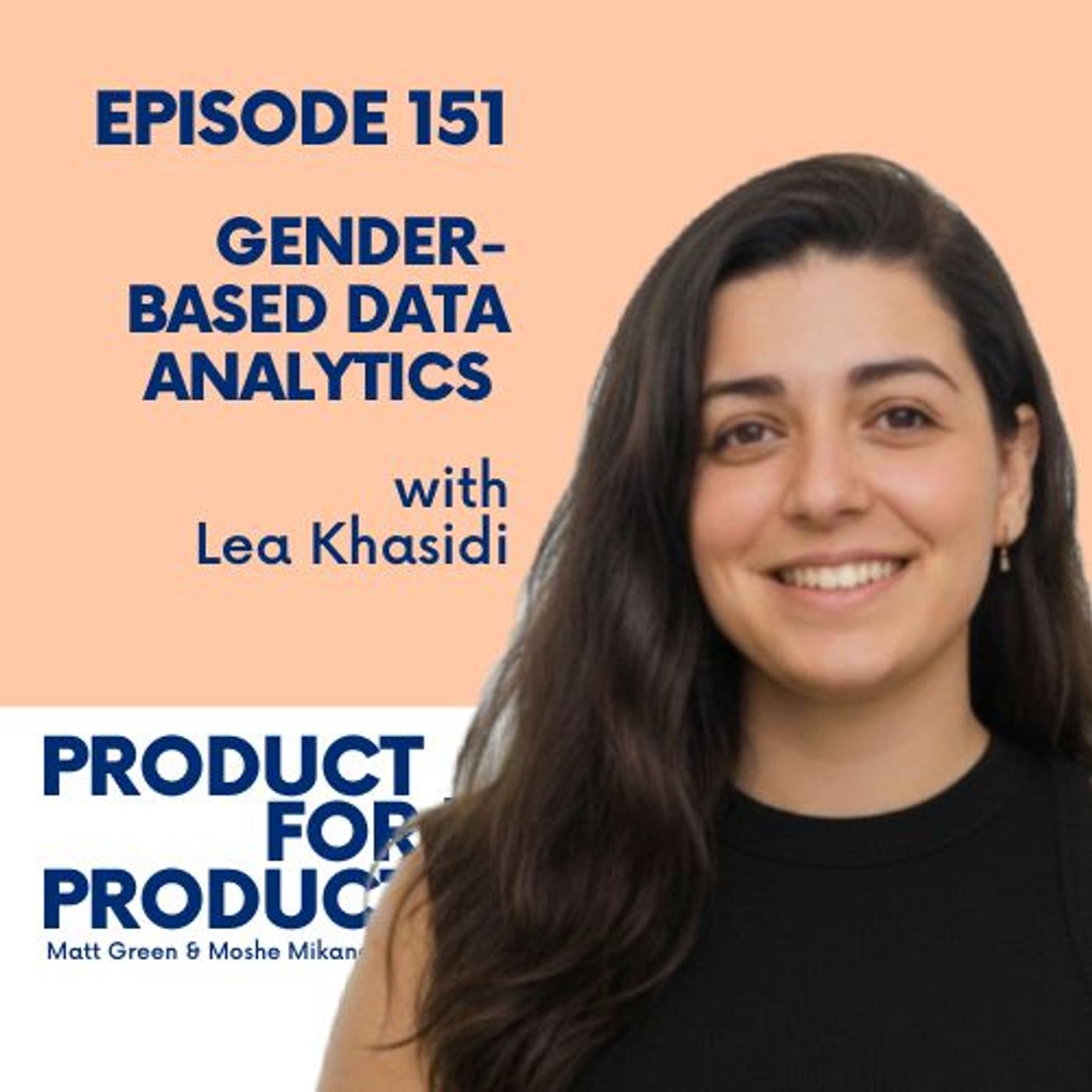
EP 151 - Gender Based Data Analytics with Lea Khasidi

We’re excited to welcome Lea Khasidi, product management freelancer, founder and CEO of MaPott, and soon‑to‑be author, for a powerful conversation on gender-based data analytics for product managers.Lea shares her journey from intelligence work in the IDF, through product roles in EdTech, cybersecurity, and beyond, to founding a health management app for women with chronic conditions. Along the way, one pivotal discovery while consolidating four cybersecurity platforms, seeing men and women use the same filtering feature in completely different ways, sparked her deep focus on how gender shapes behavior in our products, especially in B2B contexts where it’s often ignored.Join Matt and Moshe as they explore with Lea:How a real-world analytics puzzle revealed stark gender differences in workflow, and changed how she thinks about usage dataThe three pillars of context we can’t change (who users are, how they act, where they work) and the one we can: what we give them in the productHow “hacks” and workarounds used by different genders can hint at your next featuresA practical system for existing products: using analytics to segment by gender, spotting behavioral differences, then following up with observation and interviewsHow to approach gender representation when validating new products, and why balanced samples matter even for seemingly “neutral” toolsWays to lean on existing research about gender patterns in your domain (health, education, finance, etc.) instead of guessing from scratchWhy early-stage startups should ship faster and learn from usage, while mature products might rely more on A/B tests and targeted outreachThe risk of building solely from our own biases and assumptions, and why gender should be on the PM checklist, even if it’s not always the first lensLea’s upcoming book on gender-based analytics for PMsOne piece of advice she has for founders learning to trust their insight while staying open to the dataAnd much more!Want to connect with Lea or learn more?LinkedIn: https://www.linkedin.com/in/lea-khasidi/ Website: https://leakhasidi.comMaPott: https://www.ma-pott.com/ You can also connect with us and find more episodes:Product for Product Podcast: http://linkedin.com/company/product-for-product-podcastMatt Green: https://www.linkedin.com/in/mattgreenproduct/Moshe Mikanovsky: http://www.linkedin.com/in/mikanovskyNote: Any views mentioned in the podcast are the sole views of our hosts and guests, and do not represent the products mentioned in any way.Please leave us a review and feedback ⭐️⭐️⭐️⭐️⭐️
March 18, 202653 min

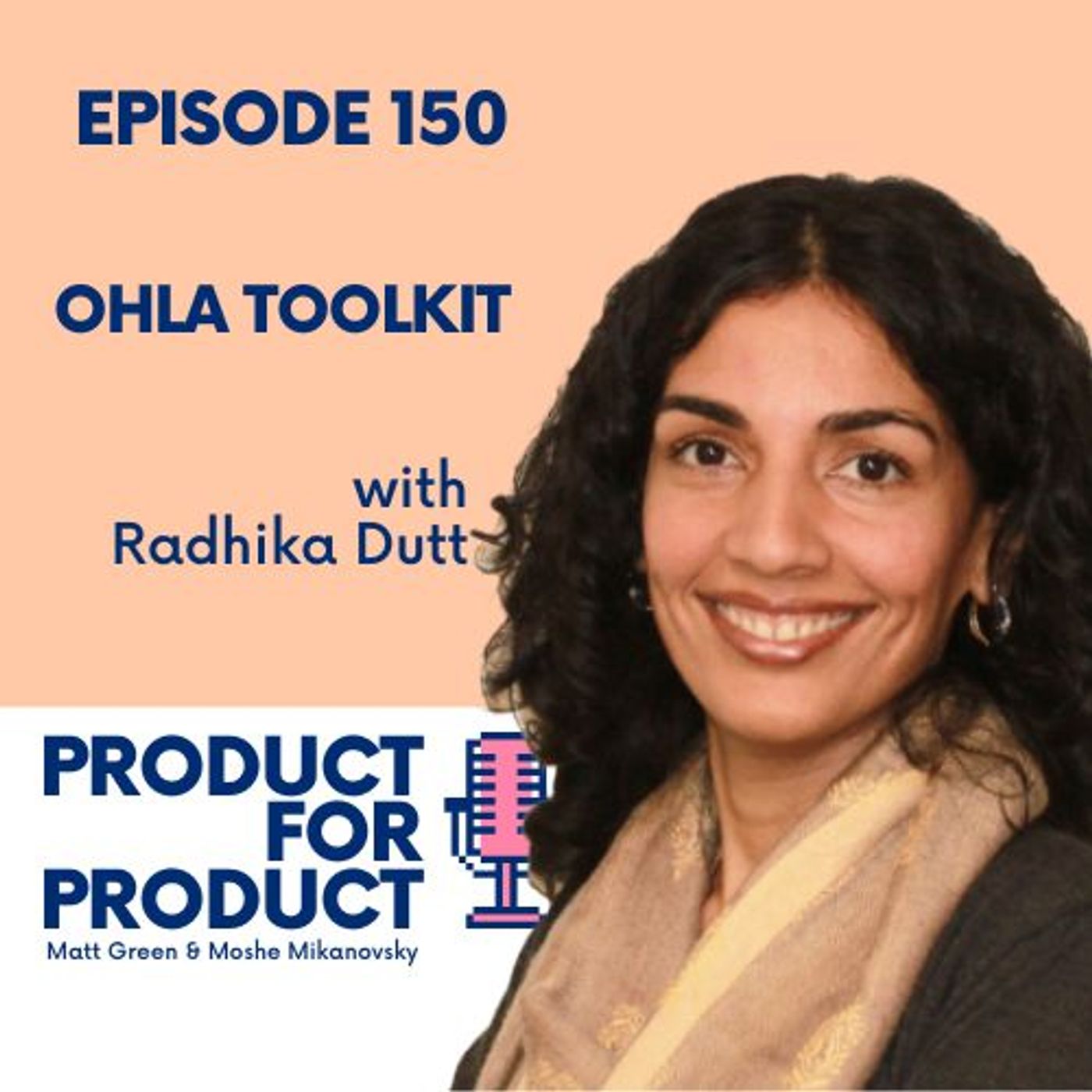
EP 150 - OHLA Framework with Radhika Dutt

We’re delighted to welcome Radhika Dutt, product leader, founder, and author of Radical Product Thinking, for a deep dive into her newest work: the OHLA (formerly OHL) Toolkit. In this episode, Radhika joins Matt and Moshe to challenge how product teams set goals, measure progress, and use frameworks, proposing a puzzle‑driven alternative to traditional OKRs and “framework-following” culture.Drawing from her journey from electrical engineering and startups at MIT, through painful “product diseases” like Hero Syndrome and Obsessive Sales Disorder, Radhika shares why recipes and templates alone don’t create real progress. Instead, she introduces OHLA as a lightweight but powerful way to cultivate a Jedi mindset, one that keeps teams grounded in first principles, context, and learning rather than chasing vanity metrics and rigid targets.Join Matt, Moshe, and Radhika as they explore:Radhika’s path from engineering and founding to Radical Product Thinking and now the OHLA ToolkitWhy classic goal‑setting and OKRs often backfire, creating “alibi progress,” outdated goals, and incentives to hide bad newsOHLA in practice:Observe – what’s really happening in your product, team, or marketHypothesize – what might explain it and how you’ll test those ideasLearn – what the results actually tell youAdapt – how you’ll change course based on evidence“Puzzle setting” vs goal setting: defining puzzles with Observation, Open Questions, and an Objective summary to stay longer in the problem spaceHow OHLA complements design thinking by forcing teams to remain curious and uncomfortable before jumping into solutionsPractical stories, from maritime platforms to enterprise teams, where puzzle thinking led to very different solutions than OKR‑driven targetsHow managers can shift conversations from “Did we hit the number?” to “How well did it work? What did we learn? What will we try next?”A realistic path to transition: starting with your own puzzle, then introducing OHLA within your immediate sphere of influenceAnd much more!Want to explore the OHLA Toolkit or connect with Radhika?OHLA Toolkit: https://www.radicalproduct.com/toolkit/#OHLToolkitRadical Product site: https://www.radicalproduct.com/LinkedIn: https://www.linkedin.com/in/radhikadutt/You can also connect with us and find more episodes:Product for Product Podcast: http://linkedin.com/company/product-for-product-podcastMatt Green: https://www.linkedin.com/in/mattgreenproduct/Moshe Mikanovsky: http://www.linkedin.com/in/mikanovskyNote: Any views mentioned in the podcast are the sole views of our hosts and guests, and do not represent the products mentioned in any way.Please leave us a review and feedback ⭐️⭐️⭐️⭐️⭐️
March 4, 202640 min

EP 149 - AI Tools: Summary with Matt & Moshe

We’re wrapping up our AI Tools series with a special episode featuring just the two of us—Matt and Moshe—looking back at what we really learned (and where we’re still confused) about AI in product management.Across this conversation, we revisit the core themes that emerged with our guests and in our own experiments: from “vibe coding” and no‑code builders, to LLM assistants, enterprise privacy, agentic workflows, and the evolving role of the product manager. We share candid stories of using tools like Google Stitch, Figma/Figma Make, FlutterFlow, Base44, and others to design and prototype a real mobile app; what worked, what broke, and why credits, pricing, and model limits matter far more than the glossy demos suggest.Join Matt and Moshe as they explore:How our AI Tools series evolved, from “let’s review tools” to “AI is not one thing, it’s many different problem spaces”Why “vibe coding” is a misleading umbrella term, and how it means something different to devs, PMs, and designersLessons from using AI for design and prototyping: inconsistent outputs, beta‑stage rough edges, and the pain of credit-based modelsBuild vs. buy for AI: integrating foundation models vs. building your own, and what that means for pricing, UX, and reliabilityEnterprise realities: privacy, security, and why tools like Copilot/Gemini have such an advantage where data and IT policies matterHow conversations with our guests (Sani, Eva, Elena, Stav, Yaron, Marcos and Adir) shifted our thinking about workflows, orchestration, and agentsThe future of agent-to-agent interactions: what happens when AIs negotiate purchases and workflows with minimal human promptsWhy first principles and business outcomes still matter more than any single AI toolHow the PM role is changing: less tool‑chasing, more orchestration, strategy, and clarity about what problem we’re actually solvingWhat topics we’d tackle next, like pricing, packaging, and credit models for AI products, and how this series is shaping our own careersAnd much more!You can connect with us and keep following what comes after this AI Tools series:Product for Product Podcast: http://linkedin.com/company/product-for-product-podcastMatt Green: https://www.linkedin.com/in/mattgreenproduct/Moshe Mikanovsky: http://www.linkedin.com/in/mikanovskyNote: Any views mentioned in the podcast are the sole views of our hosts and guests, and do not represent the products mentioned in any way.Please leave us a review and feedback ⭐️⭐️⭐️⭐️⭐️
February 18, 202659 min

EP 148 - AI Tools: V0, Replit and more with Adir Traitel

We’re keeping the AI Tools series rolling with Adir Traitel, entrepreneur, product leader, and early adopter of just about every vibe coding tool out there. Adir joins Matt and Moshe to share hard‑won lessons from building real apps with v0, Bolt, Replit, Figma Make, and more, all while running his own startup and consulting on product builds across industries.From his early days in project management and mobile app startups, through work with companies like Moovit and across FinTech, AgTech, and credit scoring, Adir has consistently been the “try it first” person for new build tools. In this episode, he breaks down what these platforms actually do well, where they fall short, and how product managers can use them responsibly for experiments, prototypes, and beyond.Join Matt, Moshe, and Adir as they explore:Adir’s journey from PM and founder to heavy user of vibe coding tools in his current startupHis 3-layer view of the ecosystem: AI dev assistants (Cursor, Antigravity, Claude Code), front-end mockup tools (v0, Figma Make), and full‑product builders (Lovable, Base44, Bolt, Replit)V0: where it shines for quickly building functional UIs (like his electricity consumption app) and where it starts to crackLovable: great for sites and simple flows, but not ideal for complex SaaS or CRM‑like productsBolt: fun and fast for concepts, but why it never got him close to productionReplit: stronger agents and capabilities, but weaker UI output and surprising backend defaults that can get very expensive very quicklyFigma Make and Google Stitch: when design quality trumps everything else, especially for SaaS interfacesThe real costs of vibe coding: AI token spend, hosting/pricing traps, and why production economics matter as much as build speedWhat his “dream product” would look like, including multi‑agent environments, better security/privacy, and built‑in QA and CI/CDHow all this is reshaping the product management role, and why curiosity and tool fluency are becoming must‑have skillsAnd much more!Want to connect with Adir or learn more?LinkedIn: https://www.linkedin.com/in/adirtraitel/ Website: https://adirtraitel.com/You can also connect with us and find more episodes:Product for Product Podcast: http://linkedin.com/company/product-for-product-podcastMatt Green: https://www.linkedin.com/in/mattgreenproduct/Moshe Mikanovsky: http://www.linkedin.com/in/mikanovskyNote: Any views mentioned in the podcast are the sole views of our hosts and guests, and do not represent the products mentioned in any way.Please leave us a review and feedback ⭐️⭐️⭐️⭐️⭐️
February 4, 202651 min

EP 147 - AI Tools: CLEAR with Marcos Polanco

We’re continuing our AI Tools series with Marcos Polanco, engineering leader, founder, and ecosystem builder from the Bay Area, who joins Matt and Moshe to introduce CLEAR, his method for using AI to build real software, not just demos. Drawing on decades in software development and his recent research into how AI is reshaping the way teams ship products, Marcos shares how CLEAR gives both technical and non‑technical builders a production‑oriented way to work with vibe coding tools.Instead of treating AI like a magical black box, Marcos frames it as an “idiot savant”: incredibly capable and eager, but with no judgment. CLEAR wraps that raw power in structure, guardrails, and engineering discipline, so founders and PMs can go from prototype to production while keeping humans in control of the last, hardest 20%.Join Matt, Moshe, and Marcos as they explore:Marcos’s journey through engineering, founding, and AI research, and why he created CLEARWhy AI tools like Bolt, Cursor, Claude, and Gemini are fabulous for prototypes but risky for production without a methodCLEAR in detail:C – Context: onboarding AI like a new hire, using stories and behavior‑driven design (BDD) to articulate requirementsL – Layout: breaking work into focused, scoped pieces and choosing a tech stack so AI isn’t overwhelmedE – Execute: applying test‑driven development (TDD), writing tests first, then having AI write code to pass themA – Assess: using a second, independent LLM as a QA agent, plus a human‑run 5 Whys to fix root causes upstreamR – Run: shipping to users, gathering new data, and feeding it back into the next iteration of contextHow CLEAR lowers cognitive load for both humans and AIs and reduces regressions and hallucinationsWhy Markdown (with diagrams like Mermaid) is becoming Marcos’s standard format for shared human–AI documentationHow CLEAR changes the coordination layer of software development while keeping engineers central to quality and judgmentPractical advice for PMs and founders who want to move from “just vibes” to predictable, production‑grade AI developmentAnd much more!Want to go deeper on CLEAR or connect with Marcos?CLEAR on GitHub: https://github.com/marcospolanco/ai-native-organizations/blob/main/CLEAR.mdCLEAR slides: https://docs.google.com/presentation/d/1mwwDtr7cCP5jLUyNVgGR5Aj-MBq8xsMlhSc0pvSQDks/edit?usp=sharingLinkedIn: https://www.linkedin.com/in/marcospolancoYou can also connect with us and find more episodes:Product for Product Podcast: http://linkedin.com/company/product-for-product-podcastMatt Green: https://www.linkedin.com/in/mattgreenproduct/Moshe Mikanovsky: http://www.linkedin.com/in/mikanovskyNote: Any views mentioned in the podcast are the sole views of our hosts and guests, and do not represent the products mentioned in any way.Please leave us a review and feedback ⭐️⭐️⭐️⭐️⭐️

Is this your show?

Claim this listing to keep it up to date, reach guests who want to pitch you, and manage bookings with Guestify.

Claim this listing

More Technology podcasts