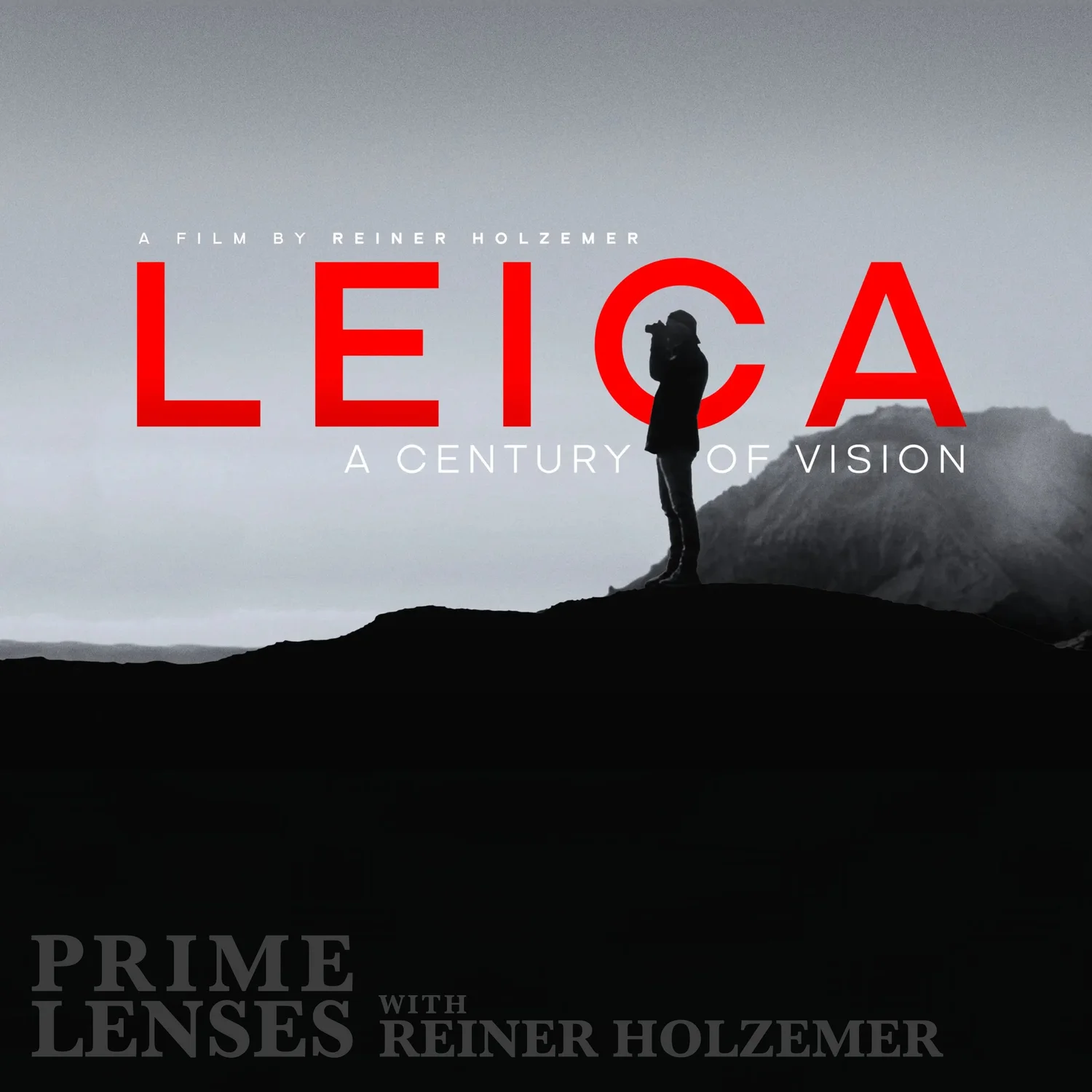
Leica - A Century of Vision with Reiner Holzemer
Today, my guest is Reiner Holzemer, the director of Leica A Century of Vision , a documentary made last year to celebrate the 100th anniversary of the production of the first serialised Leica 35 mm camera. The film is not, as you might expect, just a film about Leica the brand, but rather a celebration of photography and recognition of the momentous impact that the invention of 35 mm cameras, the industry that it spawned, and the capability that it gave photographers. Reiner is fortunate enough to speak with some great photographers in this documentary, previous guests of the show that you may recognise, like Joel Meyerwitz, like Sarah M. Lee, and like Misan Harriman, but also people like Sir Johnny Ive, who worked with Marc Newson to design a one of one M camera, as well as legends in the field like Evelyn Jane Atwood, Ralph Gibson, Steve McCurry, and of course the late great Sebastião Salgado. I was lucky enough to see the film last year at a screening as part of the 100th anniversary event held in Wetzlar in Germany, and it's fair to say that a room full of people who’d just had dinner and were looking forward to Jamie Cullum coming on stage did not particularly want to watch a movie for 90 minutes. However, within minutes you could hear a pin drop in that room and the early appearance of Salgado on screen in a room filled with people who had known and worked with him was a very big moment that I won't forget. Leica: A Century of Vision, with Reiner Holzemer The director on making a documentary about 100 years of 35mm photography, and why it isn’t a film about a brand. Guest: Reiner Holzemer, director of Leica – A Century of Vision In this episode A short, special episode. Reiner Holzemer made Leica – A Century of Vision to mark 100 years since the first series-produced Leica, but it is a celebration of photography far more than it is a brand film. I saw it last year at the centenary screening and the room went quiet within minutes. Reiner tells me how it started with a friend who ran Leica, why he insisted on making it as an independent documentary, and how the photographers came on board once they knew his earlier films. We talk about the Wetzlar archive footage, the books Ragnar Axelsson sent him, how Andy Summers ended up co-writing the score, and the film’s opening in German cinemas on 12 November. Highlights Early: Reiner explains how a friendship with Leica’s then CEO led to a meeting with the owning family, and permission to make the film. Early: He had no interest in a commercial piece. He wanted a homage to 35mm photography, made the way he makes all his documentaries. About a third in: Why the photographers said yes. Several told him they already knew his earlier films, so he never had to introduce himself. About a third in: Ragnar Axelsson sent ten of his books straight after their first call. Reiner admits he hadn’t known the work. Around the middle: The Berlin screening at Kino International, a near-sold-out Sunday morning, and Leica employees who didn’t know how important the company’s invention was. Around the middle: Asked in Berlin why the film omits Leica’s history during the Third Reich, Reiner says he has no knowledge of it, that it’s an important subject, and that his film focuses on photography. Two thirds in: Fear of failing as a motivator, with a nod to a Thom Yorke interview, and why Reiner prefers humble perfectionists. Late: How Andy Summers came to write six or seven pieces for the score, with composer Ben Brunema writing the rest. Close: The release plan: Germany from 12 November on 100 copies, Austria in December, and the rest hoped for next year. Chapters (approximate positions, no timestamps in the source) Start Intro, and a clip from the trailer ~11% How it began: a friend at Leica, and the Kaufmann family ~22% A film about photography, not a brand film ~26% Choosing the photographers, and Ragnar Axelsson’s books ~34% Working independently, and the archive footage ~39% Wetzlar, and what the film adds to the museum ~52% German release and plans for other countries ~56% Did it turn out as planned? Audience reactions ~81% Andy Summers and the score ~97% Release dates and wrap-up Mentioned in this episode The film Leica – A Century of Vision — official page | leica-camera.com Reiner Holzemer Film — director’s page for the film | reinerholzemer.com German cinema listing — release 12 November 2026 | city-kinos.de People in the film Andy Summers — guitarist, photographer and co-composer of the score | andysummers.com Ragnar Axelsson (RAX) — Icelandic photographer | rax.is Sarah M. Lee — Guardian and Observer photographer | sarahmlee.com Joel Meyerowitz — photographer | joelmeyerowitz.com Ralph Gibson — photographer and guitar player | ralphgibson.com Steve McCurry — photographer | stevemccurry.com Sebastião Salgado (1944–2025) — photographer | contactpressimages.com Jane Evelyn Atwood — photographer | agencevu.com Quotes “I’m only interested in good photography.” — Reiner Holzemer, Early “This was done like a real documentary.” — Reiner Holzemer, About a third in Mentioned but not linked • Jony Ive and Marc Newson’s one-of-one Leica camera (intro) • Greg Williams, and the Leica contact Stefan Keil • Oscar Barnack and the original Leica I • Reiner’s earlier portrait films on Henri Cartier-Bresson, René Burri, William Eggleston, Anton Corbijn, Jürgen Teller and August Sander • The Ernst Leitz Museum and archive in Wetzlar • Kino International, Berlin • Composer Ben Brunema • Reiner’s new fashion documentary, released in Belgium this week • The earlier Prime Lenses episode with the makers of the Joel and Maggie film Credits Host: Iain Farrell. Guest: Reiner Holzemer. Subscribe to Prime Lenses wherever you get podcasts, including Apple Podcasts . Sign up for emails at primelensespodcast.com .