Find partners
PerchPeek Pods - Global Mobility Pros

PerchPeek Pods - Global Mobility Pros

Hosted by Paul Bennett

BusinessInterviews guests

Episodes

118

Latest episode

Oct 2026

Language

EN

About the show

PerchPeek Pods is the only place to be getting the full inside scoop of the stories, successes and strategies of the best minds in Global Mobility. PerchPeek CEO Paul Bennett will sit down each week to discuss Mobility with an awesome GM leader guest. They'll be diving deep into their personal experiences and careers in the Global Mobility space, sharing valuable insights and advice that will benefit all levels of GM professionals. Paul will be asking these pros about how they've achieved success for themselves and their companies in the relocation world. From navigating challenges to seizing opportunities, this is an amazing chance to tap into this wealth of knowledge and inspiration, that others can take into their own careers and organisations. Our guests will also be sharing their thoughts on the future of the industry- get ready to gain some insider perspectives on where Global Mobility is headed and how you can stay ahead of the curve. So, if you're eager to learn from the best in the business and get a sneak peek into the minds of some cracking GM leaders, listen in each week for the new PerchPeek Pods episode!

Listen to episodes

60 recent
November 2, 202637 min

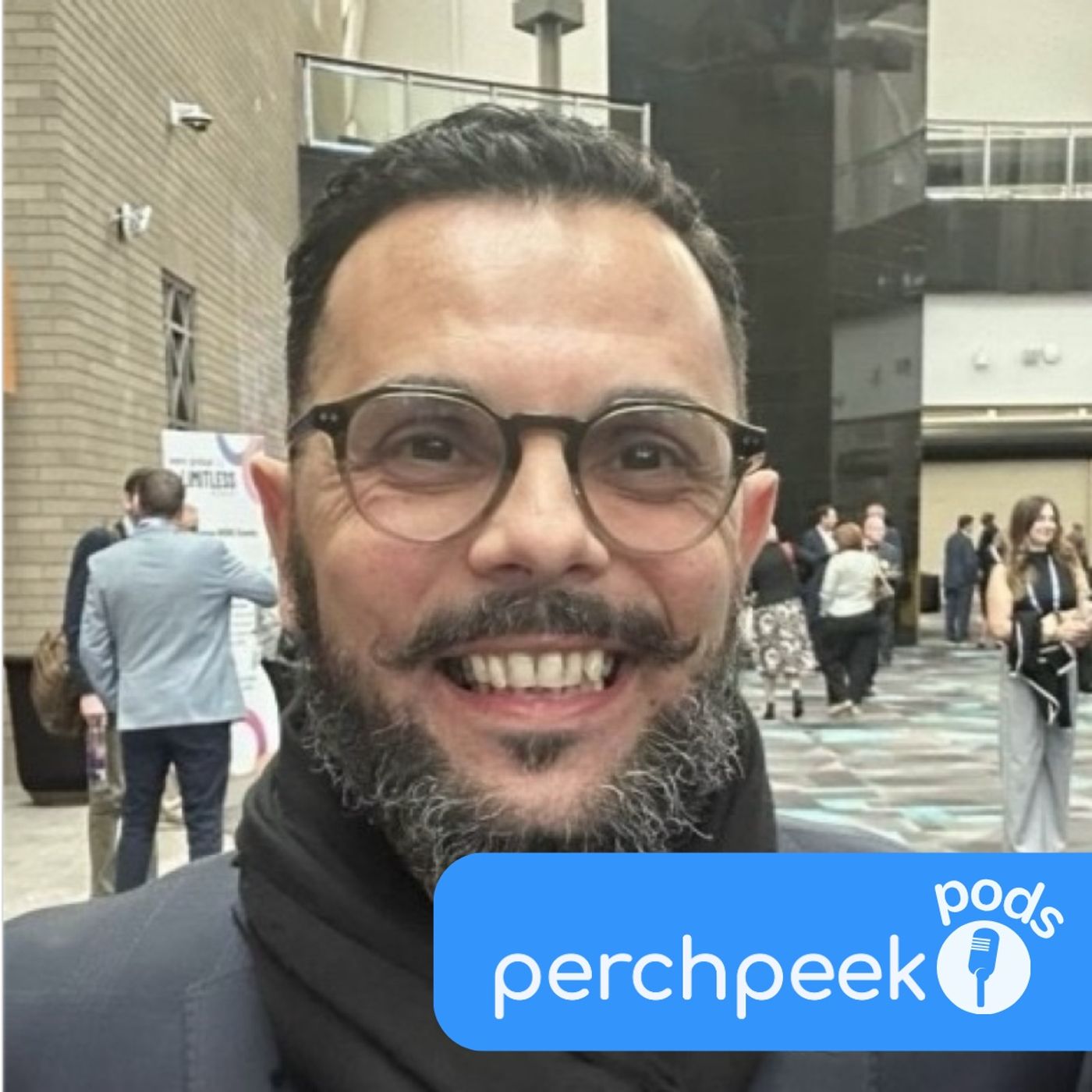
Episode #119 - What You Learn Doing Your Own Treaty Filings and Shadow Payroll | Alicia Browne, Boskalis Offshore Energy

In this episode, Paul sits down with Alicia Browne, Global Mobility Manager at Boskalis Offshore Energy. They get into the parts of the job that almost always sit with a provider, and what happens when they don't. Alicia has 20 years in Global Mobility. She joined Boskalis expecting to manage international tax the way she always had, with a provider handling the technical work. Instead she found a project company building offshore wind farms, roughly a thousand crew a year to account for, and very little of that work going out of the door. So, she learned it. Which countries are treaty eligible and where the thresholds sit. What still has to be filed when a treaty means no tax is due. And a shadow payroll she set up herself, after ringing round providers who could not understand why she wanted to report earnings without paying anybody. She says she went into it kicking and screaming, and that she is quicker to spot an issue and better at planning because of it. We discuss: What does treaty eligibility actually oblige you to file when no tax is due? What is involved in setting up a shadow payroll yourself? What do you learn by doing the work a provider normally does for you? Why did Boskalis price Mobility tax in before it had won the project? How do you count taxable days for crew on a vessel that keeps moving? Who do you work with when Mobility sits in finance rather than HR? We hope you enjoy!
October 26, 202636 min

Episode #118 - Your Process Map Only Works When Everyone Can See It | Reda Belabed, MiniMed

In this episode, Paul sits down with Reda Belabed, Senior Manager, Global Mobility and Immigration at MiniMed. They get into how you rebuild a Mobility programme when you've inherited one that isn't working, and where most teams start in the wrong place. Reda has spent 17 or 18 years in Mobility and immigration, in-house and on the supply side, at GE, Honeywell and now MiniMed. He's also relocated across Africa, the Middle East, Europe and the US himself, first as the son of a retired diplomat and later as the one signing the paperwork. His framework is people, process, system, in that order. Spend the first 30 days asking open questions and letting your stakeholders talk. Then map the process - and share the map. Keep it to yourself, he says, and all it does is give you a detailed record of who to be annoyed at. Put your RMC, tax and immigration partners in the room with your internal teams and the duplication shows up fast. We discuss: Where do you start when you've inherited a Mobility programme that isn't working? What should the first 30 days look like, and why do open questions beat a specific list? Which processes are worth mapping when every case type is different? What happens when your RMC, tax and immigration partners read the map in the same room? How do you build the business case for technology when most of the benefit isn't a dollar figure? What do you look for in a Mobility hire who isn't an immigration expert? We hope you enjoy!

October 13, 202633 min

Episode #117 - Moving Someone Isn't the Same as Settling Them In | Kat Osborn, Global Mobility Coach

In this episode, Paul sits down with Kat Osborn, Global Mobility Coach & Consultant, to talk about the people on both sides of a move: the Mobility professionals who do the moving, and the employees and families who relocate. Kat has 19+ years in Global Mobility as an expat, a consultant and a transformation leader, including Head of Global Mobility at FIS and APAC Mobility Transformation Lead at Deloitte. She now coaches and consults for Global Mobility professionals and expat leaders. Kat expects much of Mobility's operational work to be automated, leaving the human skills as the job. She thinks Mobility people already have more of those than they give themselves credit for, from stakeholder management to project and change management, but rarely make time to step back and see it. She also asks what "hit the ground running" really takes for someone who's just uprooted their whole life. We often measure the success of the relocation, not the success of the person in their new role, and support for settling in is too often an afterthought, made optional or cut. We discuss: How can Mobility professionals future-proof their careers as AI takes on operational work? Which transferable skills do Mobility people undersell? Why should Mobility teams stop and celebrate what they've achieved? What small, specific first steps actually stick? What does "hit the ground running" really mean for someone who's just uprooted their life? Why does settling-in support get cut, or come too late? We hope you enjoy.

October 13, 202635 min

Episode #116 - They Want to Move. What Do You Still Have to Own? | Jaya Gangwani, Zalando

In this episode, Paul sits down with Jaya Gangwani, Global Mobility Leader at Zalando. They talk about what Mobility still owes employees who are eager to relocate. Based in Berlin, Jaya has nearly two decades of experience across Mobility and HR, and has relocated six times herself, across four countries. She's run Mobility in very different businesses: sending software engineers to client sites around the world at Infosys, and supporting moves decided through a bid, months before anyone moved, at Alstom and Bombardier. Her view is that immigration stays core, the flex is where a package adapts to the person, and every flex decision needs thinking through for the precedent it sets. We discuss: When an employee is keen to move, what does the company still have to own? How do you flex a relocation package without setting a precedent you'll regret? What happens in the EU when the first question is "do I really have to move?" In bid-led businesses, why does Mobility need to sit close to the bid managers? How did one Workday field show a previous employer who was ready to move, and where? How do you support a generation for whom the move itself is the easy part? We hope you enjoy.

October 5, 202636 min

Episode #115 - Why Mobility Should Own Right to Work Checks | Cassie Ramos, Biogen

In this episode, Paul sits down with Cassie Ramos, Lead Global Mobility Partner at Biogen. They talk about why Mobility, not HR Ops, should own right to work checks. Cassie started out as an immigration paralegal and spent about six years as an immigration attorney. At Biogen, she leads global immigration and right to work, a remit she put her hand up for. Her argument is simple. Mobility already handles the hardest right to work cases, so it understands the standard better than anyone. Owning the process doesn't mean checking every passport. It means building the process, being the escalation point and training the people who do the checks. We discuss: Why should Mobility own right to work when its population is a small slice of the company? What did a new facility in Switzerland reveal about every other country? How do you take on every new hire without checking every passport yourself? How do you decide which countries to focus on first? Why are the US, UK and Poland the hardest countries to get right? Why is right to work a business continuity issue, not just a compliance one? We hope you enjoy!

September 22, 202641 min

Episode #114 - 18 Countries. One Global Mobility Model: Thoughtworks’ Centralisation Story | Nati Silveira, Thoughtworks

• How do you centralise Global Mobility across 18 countries without forcing every market into the same way of working? • Why should you design the organisation first, before designing roles around the people already there? • How do you get local teams comfortable moving away from long-standing vendors and processes? • What skills matter most when building a centralised Global Mobility function? In this episode, Paul sits down with Nati Silveira, Head of Global Mobility at Thoughtworks.Nati is British-Brazilian, a proud mum, and has more than 18 years of experience in Global Mobility. At Thoughtworks, she has built a high-efficiency Global Mobility CoE supporting a 10,000+ person tech organisation, covering the full journey from talent supply strategy through to settling in and thriving. When Nati stepped into the global role, Mobility was highly decentralised across 18 countries, with different teams, vendors, processes and local ways of working.Over the following six years, Thoughtworks moved towards one global Mobility model, with a central CoE working alongside Mobility Operations. Together, Paul and Nati explore what that transformation actually took — from organisational design and vendor consolidation to stakeholder management, local resistance and the changing skills needed within a global Mobility team. We hope you enjoy :)

September 16, 202631 min

Episode #113 - When Immigration Rules Change Without Warning | Johanna Lennartson, Nimmersion AB

• What happens when immigration rules haven’t changed, but the way they’re being applied suddenly has? • How can Mobility teams capture knowledge that isn’t written down anywhere? • Why does Sweden’s housing market create such a challenge for relocating families? • How has Sweden’s international talent population changed over the past 20 years? In this episode, Paul sits down with Johanna Lennartson, owner and Managing Director of Nimmersion and President of EuRA. With nearly 20 years in Global Mobility, Johanna has worked across immigration, relocation, operations and management, giving her a front-row view of how both the industry and the Swedish mobility landscape have changed. Together, Paul and Johanna discuss one of the hardest parts of immigration today: not necessarily changes in legislation, but changes in how existing rules are interpreted and applied, sometimes with very little warning. They also explore how Mobility teams can retain knowledge from unusual cases, the realities of Sweden’s housing market, and what relocating employees actually need in order to build a new everyday life. We hope you enjoy :)

September 8, 202636 min

Episode #112 - Five Exceptions in Six Years - How to Build a Mobility Policy That Actually Works | Dianne Couto Foutz, Pegasystems

How do you build a Mobility policy employees don’t constantly need exceptions from? What can historic assignment data tell you about whether your programme is actually working? When does a policy exception stop being an exception and become something the policy? should address? How can AI dramatically reduce the work involved in analysing Mobility programmes? In this episode, Paul sits down with Dianne Couto Foutz, Global Mobility Leader at Pegasystems. Dianne is passionate about helping employees and organisations navigate global talent mobility.With expertise spanning immigration, relocation and policy development, Dianne combines strategic thinking, compliance excellence, technology and empathy to create impactful workforce mobility solutions. Dianne shares how she rebuilt a Mobility programme by going back through years of historic assignment data, looking at what employees had received, whether assignments had worked as intended and what happened to those employees afterwards.That work helped create a far more structured and equitable programme - one that has since supported close to 200 moves with only around five exceptions. Paul and Dianne also discuss her “rule of three” for policy exceptions, using Maslow’s hierarchy of needs to think about Mobility benefits, structuring lump sums more effectively, and how AI could transform work that previously took months into something far more achievable for Mobility teams today. We hope you enjoy :)

September 3, 202632 min

Episode #111 - H-1B Planning When the Rules Keep Changing | Steven Williams, Silberman Law

How is the new H-1B selection system changing outcomes for different wage levels? Why are location and compensation becoming part of immigration strategy? What could the proposed $103,625 fee mean for graduate and early-career hiring? How should employers assess their H-1B exposure and plan for multiple scenarios before the next cycle? In this episode, Paul sits down with Steven Williams, Principal Attorney at Silberman Law. Steven leads Silberman Law’s workplace immigration practice, helping employers strengthen U.S. visa sponsorship programmes, I-9 compliance, immigration policies and enforcement response. His approach is informed by experience across government, in-house teams, law firms and consulting. Together, Paul and Steven unpack one of the most fast-moving periods for U.S. workplace immigration in recent years — from the changing H-1B lottery and the impact of wage levels, to location strategy, early-career talent, international “parking” options and the proposed $103,625 fee. They also discuss why employers shouldn’t be planning for just one version of next year’s H-1B cycle, and how Mobility and Immigration teams can start building scenarios now while the final rules remain uncertain. We hope you enjoy :)

August 24, 202631 min

Episode #110 - 70-Person Startup vs 50-Year-Old Global Business: Making Mobility Work at Scale | Zinnia Brasa, Arthrex

How do you stop employees choosing the wrong relocation benefits? What does it take to convince the business to invest in services over cash? How much flexibility can you offer without losing control of costs? What gets recruiters on board with a new relocation approach? When relocation practices differ across locations, how can you create consistency? In this episode, Paul sits down with Zinnia Brasa, Global Mobility Manager at Arthrex. Zinnia Brasa has spent her career helping people cross borders, build international careers, and navigate the sometimes surprisingly complex world of global mobility. Having designed and managed mobility programs for organizations ranging from agile start-ups to global corporations, she brings a unique perspective on what works and what doesn't. Today, at Arthrex, she leads relocation, immigration, and global workforce initiatives, always striving to balance compliance, business needs, and employee experience. She firmly believes that behind every international assignment there is a personal story, and that's what makes this profession so fascinating. We hope you enjoy :)

Is this your show?

Claim this listing to keep it up to date, reach guests who want to pitch you, and manage bookings with Guestify.

Claim this listing

More Business podcasts