Find partners
People Inspired By Purpose - Purposely Podcast

People Inspired By Purpose - Purposely Podcast

Hosted by Mark Longbottom

BusinessInterviews guests

Episodes

412

Latest episode

Oct 2026

Language

EN

About the show

Speaking with people of purpose, those making the world a better place People Inspired By Purpose - Purposely Podcast amplifies the stories of inspirational people from across the Globe, philanthropy leaders, founders and CEO's of nonprofits, charities, for purpose business leaders as well social entrepreneurs. They are often inspired by their own experiences. Join the Purposely team www.purposelypodcast.com

Listen to episodes

60 recent
November 1, 2026Episode 30837 min

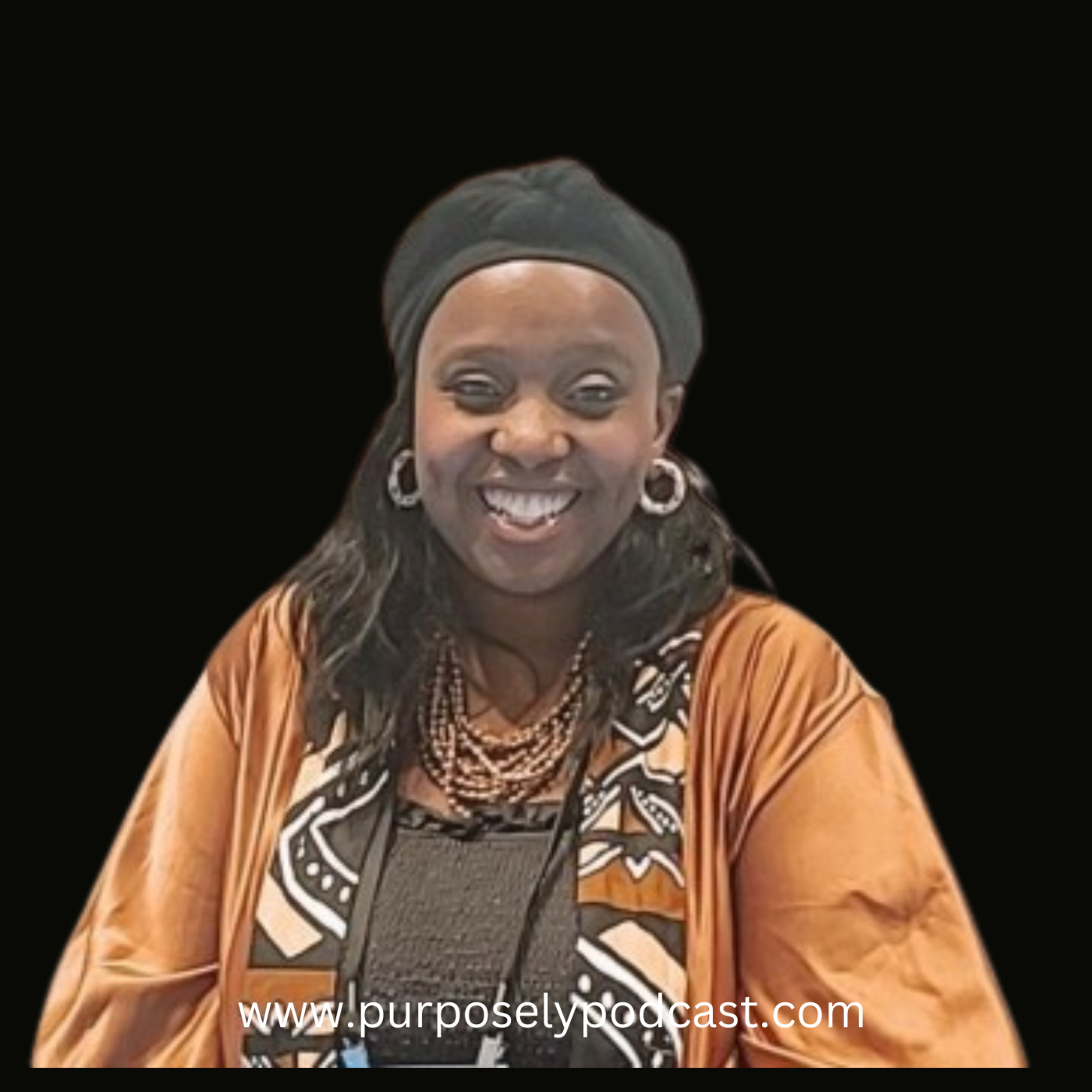
#308 ‘This Work Changes You’, Mpho Hansjee, Founder and CEO, Women Enabled Enterprises

Welcoming Mpho Hansjee, founder and CEO of Women Enabled Enterprises and its online marketplace Shop Consciously, to Purposely Podcast. Women Enabled Enterprises, known as WE, works with low-income women artisans across Africa to help them move from the informal economy into formal markets. It does thisthrough two kinds of access. The first is a 12-week retail entrepreneurship course that helps makers start to think like business owners. The second, and the real game changer, is access to markets through Shop Consciously, whichwholesales from the women and connects them with customers they would never otherwise reach. Mpho's personal mission is to see extreme poverty ended in her lifetime. She explains why the work is focused on Africa, where a quarter of the world's population is expected to live by 2050, and why it is focused on women. Research from the UN shows that women put around 90% of what they earn back into their families and communities, through school fees, uniforms, nutrition and care for the elderly. Born and raised in South Africa, Mpho shares a story she had not told Mark before. Her mother, a social worker, was killed by Mpho's father when Mpho was three. She and herbrother were raised by their aunt, a dentist and entrepreneur, who became their mum. Mpho talks about learning the facts at a very young age, grieving as she grew up, and watching other families from her boarding school window atweekends. She asks herself what might have been different had her mother felt able to support herself and her children. That question sits at the heart of WE. Mpho wants no woman to feel she can't leave an unsafe relationship becauseshe can't provide for her family. More than drive, she says, it gave her empathy. Before starting WE, Mpho spent more than 15 years in corporate retail and e-commerce, working as a buyer and analyst for companies including Target, Gap and Ross. She helped Fortune 500 companies sell more product, but the work stopped feeling fulfilling. She funded the early days through a side hustle, using the exchange rate to turn a modest sum in US dollars into real startup funds in SouthAfrica. The first virtual programme launched in 2019 and nobody joined, even with data stipends on offer. Then the pandemic hit, and the next cohort went from zero to a hundred. Growth since has come from word of mouth, with makers telling eachother about the course at festivals. Cohorts have grown from 15 women to around 130 to 140 across South Africa, Kenya and Uganda. More than 1,500 women have been trained. Over 80% report higher profits, over half have doubled theirrevenue, and a third now employ three or more people. Mpho is candid about how hard it is to fund a free programme right now, with many foundations closing their doors to new grantees. She talks about the days she wants to packit all in, and why she took on triathlons to prove to herself she can do hard things. Her mantra is that she finishes what she starts. She describes hugging an artisan in Kenya who has lost her sight and the use of her hands, and why that moment keeps her going. We also talk about burnout and the self-care that now keeps her steady. Looking ahead, Mpho wants to build long-term pipelines of income by connecting the women with companies that already spend on gifts, events and supplies. Her biggest hope is that the artisans grow so much that they become too busy to supply Shop Consciously at all.

October 25, 2026Episode 3071 hr 1 min

#307 ‘You Have a Choice to Be Part of the Change’, Matthew Jackson, Co-Founder, Alimentary Systems

Welcoming Matthew Jackson, co-founder of Alimentary Systems, to Purposely Podcast. Alimentary Systems takes sewage sludge and organic waste that would otherwise go to landfill and turns it into renewable energy, fertiliser and verified carbon. The process is modelled on the multiple chambers of a cow's stomach, which makes it more stable than large single systems and allows plants to be smaller, faster to build and quicker to pay back. Matthew is also an Edmund HillaryFellow, and has spent his career building high-growth technology companies across Asia and the Pacific. This one is a little different. We broke from the usual Purposely structure, hit record and let the conversation run. It starts with whakapapa. Matthew grew up in Blenheim, where his father was the Baptist pastor, and recently went back to knock on the door of his childhood home. He talks about the imposter syndrome he felt speaking at his first UN conference about the blue economy, knowing he was heading back to his birthplace to do work on water. From his mother, alifelong educator, he got his curiosity. From his father, a community-first way of seeing the world. Matthew moved to the United States as a boy when his mother took up postgraduate study, went to 17 schools, and never finished high school. He got on the internet in 1992and went into tech while his friends became accountants. His father was diagnosed with cancer the day the family returned to New Zealand and died a year later, when Matthew was 15. He is open about the anger and the walls that followed, and how long it took to see them. The turning point in his workinglife came as a solo dad, when he was told he couldn't attend his daughter's last day at kindergarten. He realised he couldn't be the father he wanted to be inside a traditional job. We get into what it means to be a disruptor. Matthew describes his skill set as disrupting industries, including an earlier venture that helped bring Netflix to NewZealand early and saw him sued by a media company. In the United States, he says, that is a rite of passage. In New Zealand it is seen as a risk. Matthew met his co-founder Harmaan Madon at an Edmund Hillary Fellowship unconference during the 2020 border closures. Harmaan had tried to solve the sewage problem inIndia and been stopped by a change of government. Matthew offered to help him find his way around New Zealand, spent nine months understanding the system, then went all in. He explains why mixing waste streams works, using a homecompost as the example, and why the process is built on technology that is a hundred years old. What is new is the way it is put together. The conversation covers the founder journey: raising capital from angels and family offices, why it took around 17 conversations to secure land in Nelson for the first plant, and why a pilot has to be built here because New Zealand thinksits waste is special. Matthew also explains how Alimentary has written its commitment to soil, water and air into its constitution rather than a mission statement, so it guides every board decision. We close on a challenge to everyone listening. Disruption is happening around you whether you like it or not, and you have a choice about whether to be part of the change. That comes down to making a different decision, having a different conversation, or being open to an idea you hadn't considered. This episode of Purposely is brought to you by Benevity and Trust Investments. Key Themes

October 18, 2026Episode 3061 hr 0 min

#306 'A Solution To Wealth Inequality', Chris Kelly Entrepreneur & Author

Welcoming Chris Kelly, author of A Solution to Wealth Inequality and founder of AboveWealth.org, to Purposely Podcast. Chris starts from a simple observation: the current debate about wealth inequality is not going anywhere. One side denies there is a problem, the other pushes for higher taxes, and the gap keeps growing. His book makes a different argument. If you want to solve this problem, you have to get wealthy people to want to solve it. That meanspersuasion, not a fight, and it is not about vilifying the wealthy. Chris is not against tax, and he explains why. In his view, the current approach puts the cart before the horse, and taxreform becomes far easier once wealthy people have accepted that they do not need endless wealth. At the heart of the book is the idea of a number: thepoint at which more money stops making life better. Chris shares his own number, and why he sees it as a way to set limits without asking anyone to live like a monk. His own path starts with an accounting degree and a very short stint in investment banking, which he left quickly butwhich taught him an attention to detail he still uses. He then spent years at Google, learning how online advertising works, before starting his own online advertising business and, in 2014, NextGen Leads. He grew up in a middle-classfamily where money was a concern, and wanted to become wealthy. The for-purpose world is new to him, and he describes learning about it quickly since writing thebook. Mark pushes on the harder questions. Has philanthropy really been an inequality buster, and can giving sometimes do moreharm than good? Chris agrees these are real problems, and says his book focuses on the very top of the funnel: getting wealthy people to care in the first place. He wrote a short book by design, aimed at ordinary readers rather thanbillionaires, in the hope the conversation spreads until it reaches the people who can act. They also explore the role of ego and recognition in giving, and why Chris thinks the norm of giving in secret lets those who give nothing off thehook. For fundraisers, there is plenty to take away. Chris describes what a successful entrepreneur looks for when asked togive: evidence of progress, data and a real sense of accomplishment, rather than mission statements and virtue signalling. Mark and Chris discuss venturephilanthropy and what it means to speak the language of the donor, and Chris shares his view on impact investing. Chris is open about the pushback the bookhas received, including the response that it is naive to think rich people would ever give more. His answer is that culture keeps evolving, and that there is no reason endless wealth accumulation could not one day be something peoplelook back on and question. He closes with a message of hope: wealth inequality is a difficult problem, but it is not an impossible one. Key Themes · Why the current debate onwealth inequality is stuck · Persuasion over force: gettingwealthy people to want to solve the problem · Why Chris is not against tax,and why he thinks culture has to shift first · What your number is, and whenmore money stops making life better · Ego, recognition and why givingin secret may hold giving back · What fundraisers can learn fromhow an entrepreneur wants to be asked to give · Venture philanthropy, impactinvesting and speaking the donor's language · Culture evolves: why endlesswealth accumulation may one day be questioned This episode of Purposely is brought to you by Benevity and Trust Investments.

October 11, 202656 min

#305 ‘We Have Everything Except Price’, Michelle Blau, General Manager at Fair Food

Welcoming Michelle Blau, General Manager at Fair Food, to Purposely Podcast. Fair Food is a West Auckland food rescue charity that describes itself as the food bank to the food banks. It collects good, healthy food before it becomes waste and gets itto people who would otherwise go without, around 15 tonnes every week, all for free. That is roughly 5,000 loaves of bread, 4,000 meat packs and 40,000 pieces of produce passing through each week. Started 15 years ago by community groups as a social supermarket, it moved to supplying community organisations directly, so people in crisis can get their needs met in as few stops as possible. Michelle makes a striking case. Aotearoa loses around 10% of the food it produces and exportsmost of the rest, yet she sees more hunger here than she saw working in places affected by conflict, drought and famine. The difference is that here, the cause is price. She talks about schools where children do not eat between Friday lunch and Monday breakfast, working families who now need food support, and how one unexpected bill can push a household to a food parcel. We also get into the environmental side. Fair Food sits where hunger and climate meet, saving more than 2,000 tonnes of greenhouse gas emissions a year by keeping good kai out of landfill. Michelle explains why retailers are some of theirbest partners, the confusion between best before and use by dates, and the surprising things that come through the doors, from 26 pallets of oats to 60,000 almond croissants. Then Michelle takes us back to Kentucky, where she was raised by a single mum who worked as a school social worker. She is open about a childhood shaped by hardship, and bythe neighbours, family and friends whose generosity meant poverty never limited her potential. A strong sense of justice led her to a fellowship through the Civil Rights Project at Harvard, then eight years in the trade union movement,the Peace Corps in Kazakhstan, and communications leadership in international development, before she and her family chose Aotearoa as home. We talk about her leadership style, including holding corporate volunteers and elected leaders to Fair Food's values, and why she believes hunger is a solvableproblem in a country of five million people. Michelle closes with three things we can all do: know your neighbours and notice who is doingit tough, give if you can, and take the time to understand why so many peopleare struggling by getting out into communities beyond your own. • Fair Food's role as the food bank to the food banks • Why hunger exists in a country that produces so muchfood • Food insecurity among children and working families • Where food rescue, hunger and climate meet • Working with retailers and the truth about best beforedates • Michelle's journey from Kentucky to Aotearoa • Trade unions, collective action and internationaldevelopment • Leading with curiosity and holding people to account • Three practical ways to help turn the dial on hunger Find out more about Fair Food: https://www.fairfood.org.nz This episode of Purposely isbrought to you by Benevity and Trust Investments.

October 4, 2026Episode 3041 hr 1 min

#304 'You're All Fundraisers' Emily Trevail & Emily Murdoch Empower Fundraising

Welcoming Emily Trevail and Emily Murdoch, the duo behind Empower Fundraising, to Purposely Podcast. Empower Fundraising is a Christchurch-based consultancy helping charities make fundraising clear, achievable and built to last. It started with a podcast. Emily and Emily launched Dear Donors to fill a gap they saw in the sector: plenty of polished campaign case studies, but not enough real stories from the people doing the work. A few months in, working together was going so well that they turned it into a business. Their clients now range across health, social services and sport, from national organisations to local Christchurch groups. The problem they set out to solve will be familiar to many listeners. Organisations know they need to fundraise more strategically but lack the time, people or outside perspective to do it. Others hire their first fundraiser with no database, nostewardship history and an expectation that the new role will cover its own salary and then some within months. Empower offers a lower-risk step in between: strategy alongside hands-on delivery and mentoring, so the organisation can carry it forward itself. For smaller groups not ready for thatlevel of support, they run peer workshops in Christchurch and on Banks Peninsula. We get into why fundraising is not sales. Sales is transactional, while fundraising connects people to impact they could not create on their own. But it is not begging either. The organisations doing it well think long term, know their donors as people rather than lists, and pick up the phone instead of sending another email. On face-to-face fundraising, the advice is to stay the course. A pool of regular givers is also the future pipeline for major gifts and bequests, and some of those donors give more each month than they pay for their streaming subscriptions. We also revisit the fundraising pyramid, including a newer view that the top is widening while middle-income giving is being squeezed. The Emilys make the case for focusingon people already connected to your cause before chasing cold audiences, and Emily T shares how the British Heart Foundation built a major research fund by working closely with forward-thinking philanthropists and corporates. Emily Trevail grew up in the UK, studied science at Bath and spent time on conservation work in the Scottish moorlands before volunteering in Nepal, helping rebuild schools after the 2015 earthquake. She cancelled herflights home to finish the school she had started. That experience set her direction, leading to roles at Shelterbox and the British Heart Foundation, where time in the bequest team showed her fundraising could be a real career. Emily Murdoch was nicknamed “little mother” as a child for looking after the other kids. After a year in Ireland she moved to New Zealand, studied health science at the University of Canterbury and joined the Cancer Society in health promotion, where she ended up splitting her time with fundraising. A great manager, Jane Sheriff, showed her what the career could be. Later, at Ronald McDonald House,the work became too close to home as a parent of young children, and she moved into consulting. The conversation closes with practical advice. Do not assume direct mail is dead. Capture good data. Use AI to help with analysis, but never to replace the human connection. Lean on the Fundraising Institute of Australasia and the widerfundraising community. And for board members, a simple challenge: give to your own charity, consider a bequest yourself, and keep the people you serve at thecentre of every decision. Find out more about EmpowerFundraising: https://www.empowerfundraising.co.nz/about-us This episode of Purposely isbrought to you by Benevity and Trust Investments. Key Themes

September 27, 20266 min

SHORT 'Business, Travel and Climate' Darrell Wade Founder of Intrepid Travel

In this SHORT episode of Purposely, Intrepid Travelco-founder Darrell Wade joins us on why he sees everyone from staff to travellers as stakeholders in the business, why climate became impossible to look away from, and why corporate giving works best when it's good for thebusiness too. Darrell traces it back to how Intrepid was built. Whatstarted as two shareholders quickly became a business where travellers, staff, suppliers, hoteliers and transport partners were all treated as stakeholders in the company's success. Once you see the business that way, he says, climatechange stops being someone else's problem – every stakeholder you care about is affected, and the ripple goes further still. That's not just a responsibility, in his view, but an opportunity: to start conversations, find solutions andactually change behaviour, even if no single business can solve it alone. He's wary of framing corporate giving as an obligationcompanies should feel guilty for not meeting. Instead, he argues structured philanthropy can genuinely benefit a business, and points to three reasons it works at Intrepid. It's aligned with the company's mission and values, sogiving back to destinations is simply logical. It deepens the traveller experience – pairing a trip with a local NGO working on an issue like human rights or the environment, matching donations dollar for dollar, and sending travellershome understanding the destination, not just its beaches. And it engages staff, many of whom fundraise, volunteer or give through payroll via the Intrepid Foundation – something Darrell believes makes them more engaged employees whostay longer. Key themes Seeing staff, travellers and suppliers as stakeholders inyour success Climate change as a responsibility that ripples out to everystakeholder Moving past guilt-based framing toward philanthropy thatbenefits the business Matching traveller donations to local NGOs to deepen thetravel experience Staff engagement through the Intrepid Foundation -fundraising, volunteering, payroll giving Corporate giving as a loyalty and retention tool, not justgenerosity This episode of Purposely is brought to you by Benevity and Trust Investment.

September 20, 2026Episode 3011 hr 9 min

#303 'Representing & Enabling Charity Leaders' Jane Ide, CEO at ACEVO

Welcoming Jane Ide OBE, CEO of ACEVO, to Purposely Podcast. ACEVO is the membership body for civil society leaders in England and Wales, with nearly 1,700 members. Jane explains its purpose: helping those leaders be as effective as they can, on the belief that this ripples out to their organisations and the people those organisations serve. She has led ACEVO for four and a half years, and she looks back at how it began in 1987, when a small group of chief executives who found the job lonely got together to support each other. ACEVO turns 40 next year, and Jane thinks it is now closer to those founding aims than it has been for a long time. Peer support is what Jane calls the beating heart of ACEVO. Alongside leadership development and one to one support from former chief executives who are qualified coaches, members share advice through an active online community, from writing an AI policy to handling a difficult senior team issue. Jane describes a recent networking event where she spent the evening introducing chief executives facing near identical problems who had never met. She is open about how tough the job is. Money, people and governance have always been the worry, and since the pandemic, Brexit and now AI, there are more layers on top. Many leaders, especially in smaller charities, end up as chief executive almost by accident, as Jane did, and she talks about learning in her first role that she had a part to play in shaping what her board thought. Jane's route into the sector was not a planned one. She grew up with a family principle that if you can help, you help, and she remembers raising hundreds of pounds as a child with a music box collection tin in her parents' shop in Somerset. She found her vocation in communications in her early 30s, worked in the NHS and the civil service, and was director of communications at an ambulance service, where she learned that a blame culture helps nobody. After time out caring for her mother, she joined NAVCA as head of member engagement, then became its chief executive when the board was giving it one last try. She talks about turning it round with a clear focus on what its members needed, and about a funder who rang unprompted at the start of the pandemic and asked how much they needed to survive. Her approach to leading is simple: be clear on purpose, have the right people, explain what you are trying to achieve and trust them. Mark asks about ACEVO's public voice. Jane says the organisation now talks about influencing rather than lobbying, because its members hold very different political views. She describes how the membership bodies came together during the pandemic and have kept working together since, including on the National Insurance increase, and how ACEVO decides where its small influencing team can add value, using procurement as an example. Mark notes that New Zealand has no equivalent body, and Jane offers to share what has worked and what has not with any group there who want to start one. Looking ahead, Jane's main concern is what sector infrastructure should look like in ten years, as membership bodies depend on fees their members find harder to pay. She is more hopeful about leaders themselves. Eighteen months ago she was hearing people say the job was not doable, and now they are coming forward with solutions like co-chief executive and deputy roles. She is excited about AI, while keeping its risks and its missed opportunities both on ACEVO's risk register, and about ACEVO's programme for aspiring chief executives, which sold out its second cohort the morning of the interview and is now onto a third. Thank you to our sponsors, Benevity and Trust Investments.

September 13, 20263 min

SHORT 'Imperfect Action, Coaching and Learning to Back Yourself' Shruthi Vijayakumar

In this SHORT episode of Purposely, coach and facilitatorShruthi Vijayakumar joins us on why perfect is the enemy of good, what coaching really looks like in practice, and the moment she had to learn to back herself. Shruthi's first big lesson came early and came hard: don'tlet perfection be the enemy of good. Drafting curriculum as a young, startup market employee, she felt the full weight of imposter syndrome, chasing a version of "right" that didn't need to exist. The shift came through what she now calls design thinking and agile practice – get something out,iterate, trust your collaborators to correct you, and be humble enough to be corrected. It was, she says, a reprogramming compared to how she'd operated in university or consulting, and it made the work faster, better, and far more impactful. That same instinct carried her into coaching. In its trueform, she says, coaching isn't about telling people what to do – it's holding space and asking questions that bring out someone's own wisdom. She saw this play out in classrooms, where teachers asked children questions that surfacedtheir assumptions, prejudices and hopes, with striking effect. It was this – paired with her own interest in personal and spiritual development – that drew her into a field where she could do exactly that, full time. Shruthi started training as a coach at 24, and admits theself-doubt was real. Her own first coach set her a challenge she was sure she'd nail: find three clients by the next call. She did it anyway, stretched and held accountable by someone who was willing to push her growth. That experienceof being walked through the discomfort by someone further along the path is one she still draws on, in different forms, today. Key themes Letting go of perfectionism in early career work Design thinking and iteration over getting it right thefirst time What coaching actually looks like: holding space, not givinganswers Teaching kids to ask questions that surface their ownassumptions and hopes Learning to back yourself through the discomfort of beingstretched The value of having your own coach walk the journey with you This episode of Purposely is brought to you by Benevity and Trust Investments

September 6, 2026Episode 30245 min

#302 'Building Community By Design', Simone Woodland, Co-founder, Circle Living

Welcoming Simone Woodland, Co-founder of Circle Living, toPurposely Podcast. Simone is an architect and the co-founder of Circle Living,a people-first property development company building intergenerational, community-led neighbourhoods across New Zealand, with developments underway inWellington, Christchurch and Nelson. The idea is simple but not common in mainstream housing: design homes so people have their own privacy, while making it easy to connect with the people living around them. Originally from Bristol in the UK, Simone traces herinterest in community back to childhood, when her father ran street parties on their cul-de-sac to bring disconnected neighbours together. At 15 she helped build a house in a co-housing development in Bristol's St Werburgh's, an early,hands-on introduction to what community-built housing could look like. She studied architecture in Brighton and completed a mastersin urban design and planning at Bristol University, but found the traditional architecture industry limiting. Her early career as a social entrepreneur started with Paper Arts, a platform she built for students to showcase their work, which grew into a gallery, studios and a printing service, and eventually into a training facility teaching enterprise skills to young people. A trip around New Zealand's South Island in 2013 convincedSimone this was where she wanted to live. She moved through the Edmund Hillary Fellowship, joining its first cohort of global entrepreneurs focused on people and planet. That move led to Elemental Design and Build, a natural buildingcompany in the Tasman region working with materials like hemp, straw and earth, and eventually to the Takaka co-housing neighbourhood in Golden Bay. Simonetalks through how that first development came together: a 14 hectare piece of land secured with a 10 percent deposit, nine months to find the rest of the funding, and a model built on loans from future residents rather than a traditional developer structure. Circle Living builds on that experience with a differentfinancing model, allowing residents to buy off the plans with a deposit rather than putting large sums at risk upfront. The communities run on Sociocracy, a decentralised decision-making approach where smaller groups hold responsibilityfor specific areas rather than requiring full consensus on every decision. Simone talks candidly about what it takes to build trust within a community, why shared resources like community solar and car share schemes help keep ongoing costs down, and her long-term goal of seeing co-housing become a mainstream choice in New Zealand, in the way it already is in Denmark, where five percent of new homes are built as some form of collective housing. The conversation also gets into what community actuallydelivers day to day, including a moment when a neighbour drove ninety minutes each way to collect Simone's children after she was unable to drive, and what that kind of reciprocity means for the people who choose to live this way.

August 30, 202653 min

#301 'Building A Travel Company Around Purpose', Darrell Wade, Co-founder, Intrepid Travel & Chair, Philanthropy Australia

Welcoming Darrell Wade to Purposely Podcast. Darrell co-founded Intrepid Travel, one of the largestadventure travel companies in the world and a certified B Corp, built on the idea that travel should give something back to the places it touches. He is also Chair of Philanthropy Australia, the peak body working to build a strongerculture of giving across the country. The idea for Intrepid came together in 1988, on a nine monthoverland trip across Africa in a converted truck with a group of friends, including his now wife Anna and university mate Geoff “Manch” Manchester. Back in Australia, a good job with a strong salary was on offer. Darrell was ready to take it and put the travel company idea aside, until Anna told him he would be a pain in the ass unless he started the business. He did, expecting a 90 percent chance of failure. The company was bootstrapped on 20,000 dollars between the two founders, and the first five years were lean. Darrell talks candidly about the slow build, the early days running the entire business from a single desk while Manch led trips in Thailand, and the gradual shift from a lifestyle choice into a genuine company with a plan. A significant turning point came in 2011, when Intrepid solda 60 percent stake to Tui Group. Darrell describes the decision and the four years that followed as oil and water. The cultures were fundamentally incompatible, growth stalled, and in 2015 the founders unwound the deal. Within a month of separating, the business was growing again. He is direct about whathe took from it: financial logic is not enough if the culture does not hold together. Darrell also talks about the moment his thinking on climatechanged. Reading Tim Flannery's The Weather Makers on a family safari in Botswana, not long after Intrepid had won an award for responsible tourism, he realised the company was not the environmental good guy he thought it was. Hedescribes it plainly: they were part of the problem. That reckoning shaped Intrepid's climate work from there on, including taking the entire office and a thousand travellers to see An Inconvenient Truth. The conversation covers the depth of the COVID crash too.Intrepid went from operating in 120 countries to zero almost overnight, and the company had to make significant redundancies to survive. Darrell shares a moment from that day that has stayed with him: a staff member he had just maderedundant stopped him in the office and asked if he was okay. The episode closes on giving. Darrell sets out why Intrepidbuilt structured philanthropy into the business through The Intrepid Foundation, the case for corporate giving as something that benefits customers, staff and the business itself rather than a purely altruistic add-on, and his view on doing philanthropy thoughtfully rather than assuming good intentions are enough. He also speaks to his role as Chair of Philanthropy Australia, and what it means to govern a peak body trying to build a stronger, broader culture of giving across the country rather than leaving it concentrated among high net worth donors. This episode of Purposely is brought to you by Benevityand Trust Investments. Key Themes

Is this your show?

Claim this listing to keep it up to date, reach guests who want to pitch you, and manage bookings with Guestify.

Claim this listing

More Business podcasts