No other level of government impacts us as much in our daily lives as local government. For the last 40 years I have been talking to managers as an organization consultant and am as fascinated by their work today as when I began. The professional municipal manager is entrusted with a ship that often runs over rough waters even as it delivers vital services to communities. This show is about the ideas and innovation that will drive the future of the profession of municipal management. If you are interested in learning more about the Pioneering Change Community, sign up for the Friday newsletter and get access to more in-depth episode information. Check for a link in the show notes. [Intro and exit music by Joseph Hess. Cover art by Nancy Hess]
Listen to episodes
60 recent
August 7, 202652 min
The Glue that Binds Better Together: A Conversation with Pennsylvania's Councils of Government
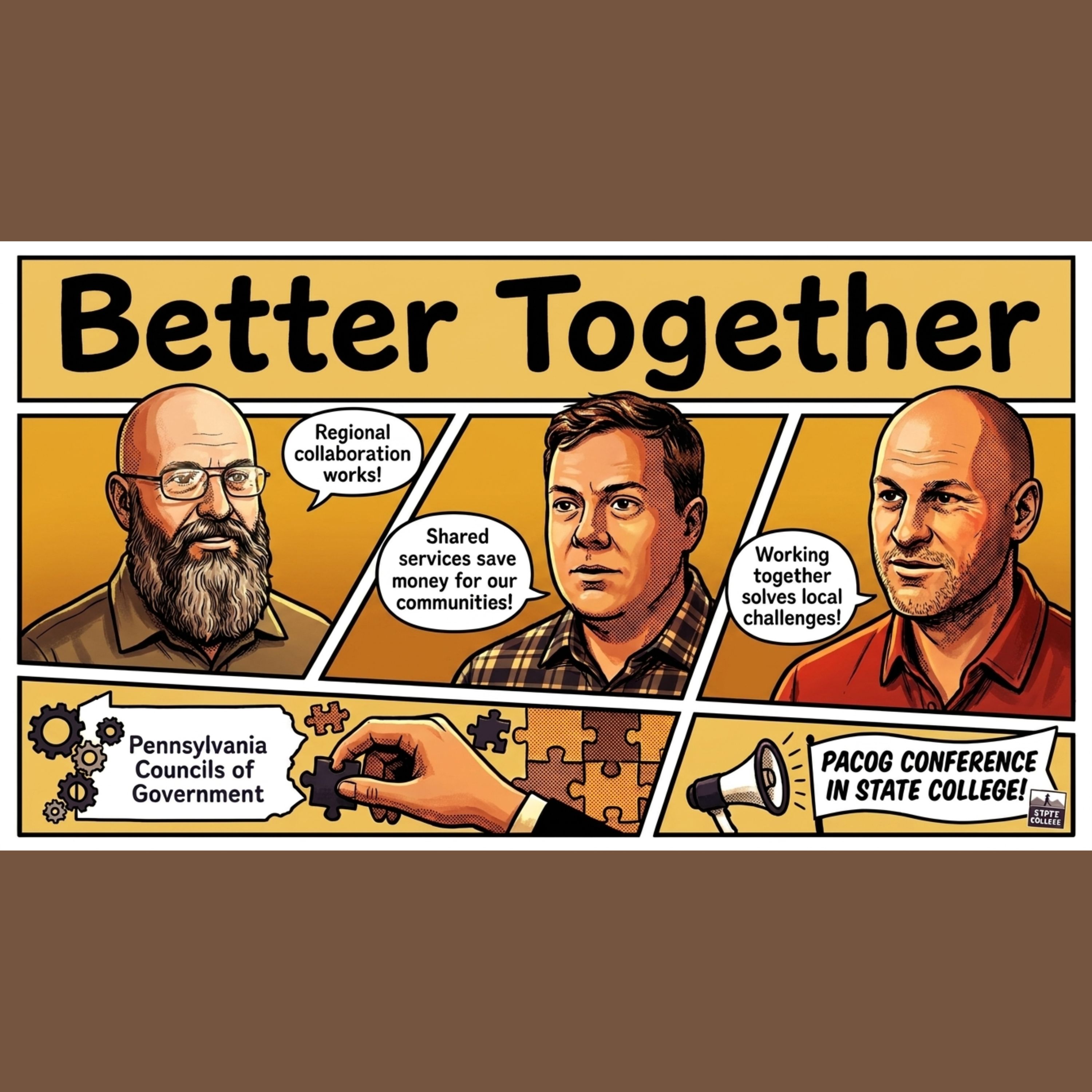
What happens when municipalities stop trying to solve every problem alone? In this episode, members of the Pennsylvania Councils of Government explore how intermunicipal cooperation creates capacity, improves services and helps communities learn from one another. Patrick Conners of South Hills COG, Ben Estell of Centre Region COG, Lance Prator of Slate Belt COG, and Deborah Grass of PACOG share examples ranging from joint purchasing and shared equipment to regional parks, bike networks, planning and public safety. The conversation also looks at why COGs remain poorly understood, how cooperation can preserve local identity while expanding capacity, and why PACOG hopes to strengthen the statewide voice of councils of government. The episode previews PACOG’s September 1-2 conference in State College, themed “Better Together.” CHAPTERS: 00:00 — Introduction 02:36 — What Is a Council of Government? 05:45 — Centre Region: Consistency Across Municipal Borders 09:56 — Small Communities, Shared Capacity 13:39 — What Municipalities Gain from Working Together 16:54 — Sharing Ideas and Not Reinventing the Wheel 18:36 — Building Networks Across Municipal Borders 20:47 — Cooperation, Consistency and Fairness 23:31 — Creating Places to Solve Problems Together 25:47 — Think Globally, Act Locally 27:12 — What PACOG Brings to the Table 31:28 — Learning From Other COGs 32:58 — Who Should Be Paying Attention to COGs? 34:34 — Building a Statewide Voice 37:34 — Why Some Municipalities Hold Back 43:00 — Making COGs More Visible 44:53 — PACOG Conference Preview: Better Together 48:13 — What Everyone Is Looking Forward To
July 10, 202651 min
APMM Series: Sandra Zadell and John Ernst: Affordable for Whom? Managers on the Front Lines of the Housing Crisis
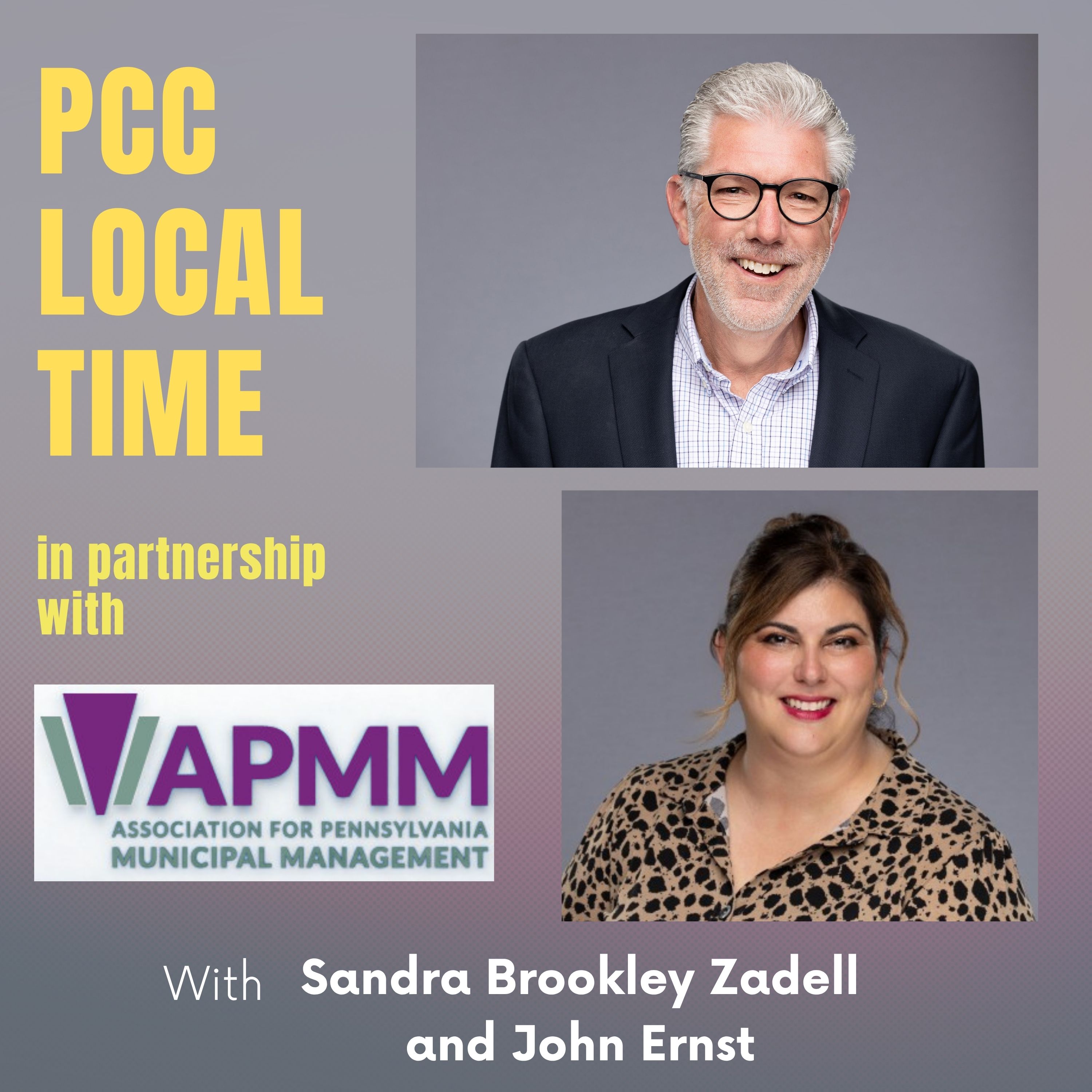
When the Housing Crisis Comes to Town Hall In this APMM series episode, Nancy Hess speaks with John Ernst, Borough Manager of Lansdale, and Sandra Zadell, Township Manager of Upper Gwynedd, about what the housing crisis looks like from the municipal manager’s desk. The conversation begins with an encampment near the border of their two municipalities and moves into workforce housing, shelter, zoning, public opposition, state legislation, and the limits of what local government can do alone. John and Sandra offer a candid look at how housing pressure shows up in parks, public meetings, police calls, comprehensive plans, and the lives of people trying to stay housed. Guests John Ernst Borough Manager, Lansdale Borough, Montgomery County, Pennsylvania Sandra Brookley Zadell Township Manager, Upper Gwynedd Township, Montgomery County, Pennsylvania For more content like this, subscribe to MuniSquare APMM An advocate for municipal management and professional assistance in the Commonwealth of Pennsylvania The Association for Pennsylvania Municipal Management (APMM) is an organization of professional township, borough, city, home-rule and county managers, administrators and COG directors. APMM is dedicated to the promotion of professional and effective local government management of Pennsylvania. Quotes “It might be more affordable — but affordable to who?” - John Ernst “As a municipal manager, I would never advocate for any state legislation that takes away local control... I strongly believe that towns should be able to govern. That's what our Commonwealth was founded upon." - Sandra Zadell “These are the small things that make a culture. This is what makes a community. It’s a way to show up for humanity, not a political leaning. That is just a human desire.” - Nancy Hess Mentioned in the Episode: Evicted: Poverty and Profit in the American City, by Matthew Desmond Recommended by Sandra. The book won the 2017 Pulitzer Prize for General Nonfiction and examines eviction as both a consequence and a cause of poverty. Upper Gwynedd Planning Commission presentation Background resource on the township’s planning work and the Pennbrook Parkway affordable housing development. Low-Income Housing Tax Credit Program (LIHCP) The federal tax credit program discussed by Sandra in connection with the Walters Group workforce housing development. Walters Group The New Jersey-based developer working with Upper Gwynedd on the proposed workforce housing development. Nomadland The film Nancy was trying to recall during the conversation. It is a narrative feature film starring Frances McDormand, not a documentary. It won Best Picture at the 2021 Academy Awards and was inspired by Jessica Bruder’s nonfiction book, Nomadland: Surviving America in the Twenty-First Century. Kayleigh Silver, LSW Administrator for Montgomery County’s Office of Housing and Community Development. Nancy spoke with Kayleigh as part of her background preparation for this episode. Pennsylvania zoning and permitting context The episode refers to recent reporting on how zoning, permitting, local regulation, and construction costs affect homebuilding in Pennsylvania. Pennsylvania House Bill 2186: Accessory Dwelling Units HB 2186 passed the Pennsylvania House on June 1, 2026, by a vote of 139–62. As of July 10, 2026, it had been referred to the Senate Urban Affairs & Housing Committee. The bill would require municipalities to allow accessory dwelling units by right in areas where single-family detached homes are permitted, while allowing some local standards related to safety and neighborhood compatibility. New Jersey affordable housing model Sandra references the New Jersey framework shaped by the Mount Laurel doctrine and the Fair Housing Act, which creates municipal fair-share obligations for affordable housing. The guests compare that approach with Pennsylvania’s stronger tradition of local control.
May 14, 202627 min
So this is goodbye....Closing a chapter on Generation on the Rise
As producer and publisher here at MuniSquare on Substack, today’s post is hard to write… we have decided to bring the Generation on the Rise podcast to a close, at least for now. Dave, Brandon and Nancy start off with a little light bantor today before making their way to the core message which concerns the absence of Eden. This will not affect PCC Local Time podcast recordings or our MuniSquare podcast stream. Please subscribe to receive full content from our site that focuses on local government and public service! TIMESTAMPS 00:00 Opening banter and music talk 03:00 Brandon on ICMA, APMM and the conference season 03:53 Nancy introduces the final episode 04:20 Decision to close this chapter of Generation on the Rise 05:05 Eden’s departure and what is publicly known 06:15 Why the public testimony required a response 07:10 What we know, what we do not know 07:50 Employee voice, risk and organizational recovery 08:20 Building in public and closing this chapter 08:54 Brandon reflects on the purpose of the podcast 09:35 Conversations people need but do not get formal training for 10:30 The value of candid professional dialogue 11:20 Continuing the conversation beyond the podcast 12:01 Dave reflects on Eden, Middletown and next chapters 13:00 Dave’s leadership lesson: people need to want to follow you 14:15 Authenticity, social intelligence and emotional intelligence 15:40 The danger of trying to be someone you are not 16:50 Mistakes, public judgment and professional recovery 18:10 Learning, growth and second chances in leadership 19:10 Investing in employees, boards and communities 19:45 Looking back on the podcast’s purpose and tone 21:00 Appreciation for listeners and future collaborations 21:47 Nancy reflects on Dave and Brandon’s growth 22:45 Gratitude, community and what comes next 23:40 Final goodbye and “take care of each other” 24:05 Closing banter and authenticity of the show 25:11 Nancy’s final words 25:37 Dave and Brandon close the episode
May 13, 202641 min
APMM Series: The Role of Emergency Management: From a Title on Paper to a Mature Agency
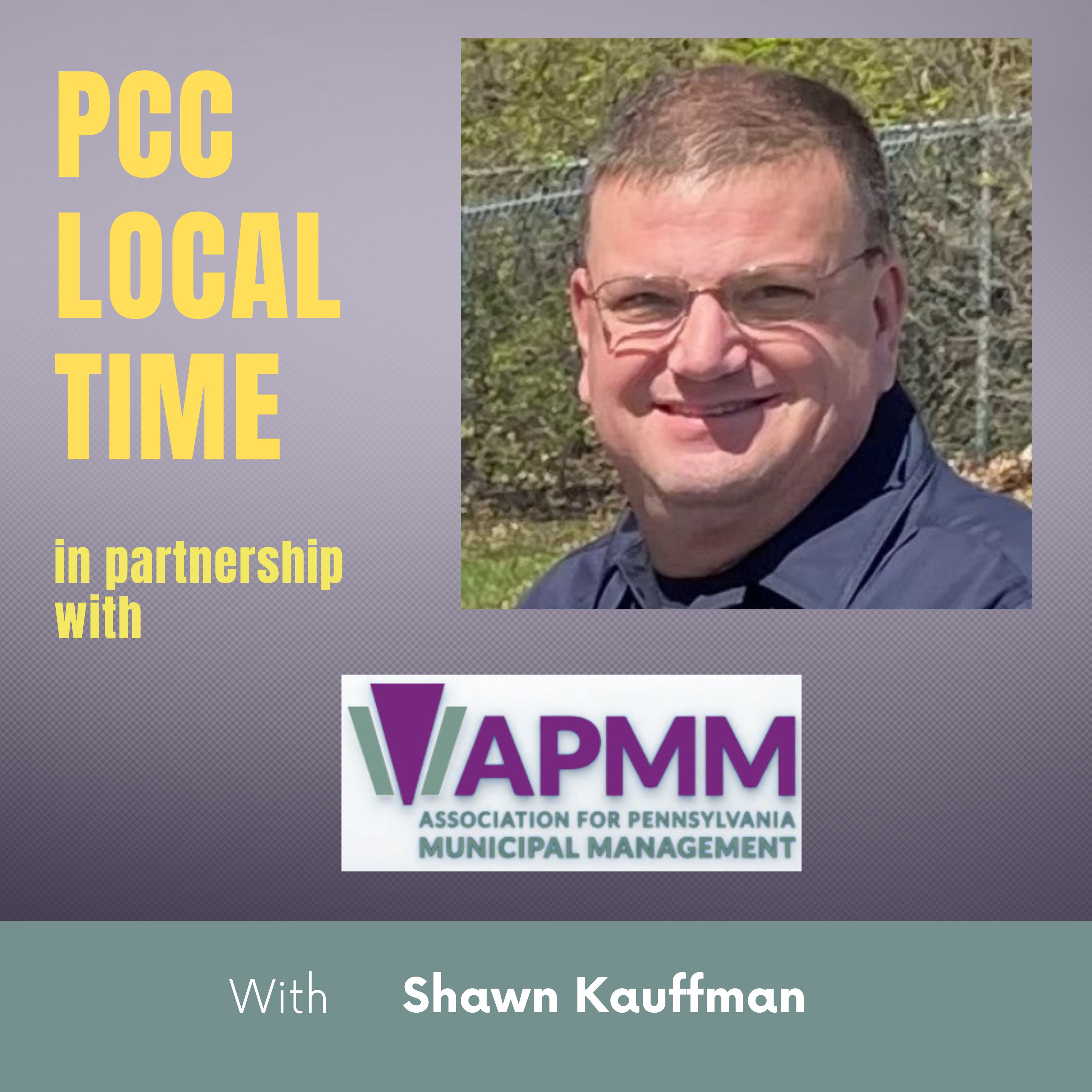
What does a mature emergency management program look like before a community is tested? In this 2026 APMM series episode of PCC Local Time , Nancy Hess talks with Shawn Kauffman , Fire Director for the Centre Region Council of Governments and former Emergency Management Coordinator, about the human infrastructure behind effective emergency response. Shawn shares what he has learned over 40 years in emergency services. The conversation explores the importance of local knowledge, technical skill, regional coordination, relationships with county and state partners, and the ability to bring people together across silos before a crisis occurs. It is a practical and hopeful conversation for local government managers, elected officials, emergency service leaders, and volunteers who want to understand where this field is headed Be sure to check out and subscribe ro MuniSquare for more content on local government. TIMESTAMPS 00:00 — Introducing Shawn Kauffman and the Centre Region model 01:40 — What mature emergency management looks like 02:30 — From silos to coordination 04:00 — Building relationships before the emergency 05:20 — Local knowledge versus technical training 07:00 — Why county relationships matter in Pennsylvania 08:40 — Regionalization as a practical solution 11:00 — Volunteer capacity and looking beyond municipal borders 12:20 — No-notice events and what keeps emergency managers up at night 15:00 — The infrastructure of relationships 16:00 — What silos look like in real life 18:00 — Who makes a good emergency management coordinator? 19:30 — Falling in love with emergency management 20:20 — Who needs to be at the table? 22:10 — Lessons from major events 23:50 — Creating a “community within a community” 25:00 — Leadership, ego, and resistance 26:40 — COVID and the loss of in-person cohesion 29:00 — Working with state police and large institutions 30:30 — Large employers, institutions, and local emergency planning 32:20 — The future of emergency management 33:40 — The next emergency manager 34:40 — AI, forecasting, and the human factor 36:00 — Emergency management as a career path 37:20 — Shawn’s own path into the work 38:00 — Closing reflections
April 29, 202651 min
A 25-Year Relationship, Expressed in Three Words: How safety culture rests on wellness and connection.
"I need help." There are conversations in local government that change how you think about leadership. This is one of them. In this episode of PCC Local Time, I sit down with Chief David Lash of Northern York County Regional Police and Chief Dave Steffen , retired chief of Northern Lancaster County Regional Police, to talk about how the idea of wellness actually converts to meaningful outcomes inside a police agency. Link to an earlier episode with Chief David Steffen on Regional Policing Be sure to check out MuniSquare on Substack and our YouTube Channel TIMESTAMPS: 00:00 Opening: why wellness and policing are difficult to connect 02:00 A 25-year relationship: how it began 05:30 The shift in policing culture around wellness 10:00 February 2025: the UPMC shooting 13:30 Immediate response and the role of support systems 17:30 Continuity of care and leadership perspective 19:30 September 2025: the second critical incident 22:30 “Two minutes of hell”: what happened and what followed 24:30 Leadership under pressure and the role of relationships 26:30 The three-word call: “I need help” 28:30 Reframing wellness as culture, not program 29:30 Reducing stigma and normalizing support 31:00 Moving from reactive to proactive wellness 32:30 Total wellness: beyond mental health 34:00 Building access: systems, providers, and trust 36:30 Wellness and use of force: a possible connection 38:00 Mindfulness and officer buy-in 39:00 Feeling valued as a core metric 40:30 Resistance, generational differences, and adaptation 44:30 Extending wellness into the community 46:30 Budgeting for wellness as essential, not optional 48:00 Culture shift: from external image to internal strength 49:30 Closing reflections: what can be carried forward
April 24, 202643 min
APMM SERIES: What Does a Four-Star Restaurant Have to Do With Local Government? Unreasonable Hospitality in Public Service
Two municipal managers introduced host Nancy to the same book: Unreasonable Hospitality by Will Guidara. Chris Garges and Joe Hogarth (also Chief of Police) join her to unpack what a four-star Manhattan restaurant can teach local government. Through a municipal lens, they talk about the front of the house and the back of the house, how "toiling in obscurity" is part of our success, why imitating others is a bad idea, and what Joe calls the nobility of the work. This PCC Local Time podcast episode has been created in partnership with APMM - the Association of Pennsylvania Municipal Management . 🎧 Full show notes and quotes at MuniSquare. Subscribe and get more content like this. TIMESTAMPS: 00:00 Opening: what can a restaurant teach local government? 00:02 How Joe and Chris found the book 00:05 Nancy’s restaurant story and the customer experience lens 00:07 Silos, roles, and balancing departments 00:09 Real teamwork across public works, police, and codes 00:11 Volunteer work and building connection across staff 00:13 Why stories matter in shaping culture 00:16 Purpose, community, and significance in public service 00:20 Chris on marathon mindset and mental toughness 00:22 Why collaboration meets resistance 00:23 Vulnerability and the myth of the all-knowing leader 00:26 Humility, learning, and asking better questions 00:27 Learn from others, but do not imitate blindly 00:29 Hierarchy, feedback, and speaking honestly 00:31 Hospitality as a daily dialogue 00:33 Younger employees and visible community impact 00:34 What leaders do with resistant employees 00:36 Encouraging people when the work never feels finished 00:38 One takeaway for managers 00:39 Nobility, purpose, and the meaning of service 00:41 Final story: when someone thanks an officer for arresting them
April 17, 202649 min
The Stories We Carry: On James C. Scott and the Art of Not Being Governed
Why would anyone choose to evade governance, and what do contemporary versions of that choice look like in the communities we serve? What familial stories do we carry forward that are, at root, an attempt to evade government? The late James C. Scott, Yale political scientist, agrarian studies scholar, and, as he put it himself, an anarchist willing to raise only two cheers (as he titled one of his beloved books, Two Cheers for Anarchism ), spent a career asking that question. Today we explore Scott’s book The Art of Not Being Governed , which outlines an arc of our history that is, for the most part, about people who have lived outside the reach of government systems. That we have fled, adapted, and re-integrated elsewhere, partly or fully, is fundamental to our human story. These stories reveal our diversity and resilience, but also our reluctance to be made “legible” to governments. Here with me are Dr. Mike Rowe (University of Liverpool), Dr. Tom Bryer (University of Central Florida, soon to be founding director of the Center for CivicLands and Democratic Stewardship at Old Dominion University), and Dr. Mandie Cantlin (township manager and lecturer at West Chester University). Together we take up Scott’s larger question: why do people stay within systems of governance, and why do they leave? Drawing on examples that range from Southeast Asia to contemporary communities, the conversation moves through themes of resistance, mobility, sustainability, and public trust. Our conversation offers many jumping-off points for deeper inquiry into how people navigate the edges of being governed. For those of us working in and around local government, Scott’s work asks us to look more closely at how people experience governance, and what it means to belong to a place. Check out MuniSquare.Substack.com and subscribe for more content on local government's role in our lives today. Timestamps 00:00 — Molokai and the choice to say no 05:30 — Why people stay or leave a place 06:30 — Scott’s work and challenging linear progress 09:30 — Rethinking prosperity and subsistence 12:00 — Why people choose not to be governed 13:30 — Modern examples: homeschooling and personal autonomy 16:30 — Diversity, identity, and “legibility” 18:00 — The push and pull of government in everyday life 20:00 — Contemporary forms of resistance 21:30 — Subsistence thinking in modern economies 23:00 — Development, sustainability, and local choice 24:30 — The role of government when people resist 26:00 — Participation, “state picking,” and civic voice 29:00 — Public trust and agency 30:00 — Ecological systems and unintended consequences 33:00 — Climate, risk, and the role of the state 37:30 — Hill people, mobility, and “flight” 40:00 — No single path forward 41:30 — Civilization, exclusion, and who belongs 45:30 — Living with tension in governance 47:30 — Closing reflections
April 8, 202649 min
Generation on the Rise: Marbles in the Pocket
Brandon Ford rejoins Dave Pribulka and Eden Ratliff and wastes no time stepping back into the role of host. He deftly guides the conversation from how have expectations changed for managers to something much deeper that touches on what it means to be apolitical in this new reality and how compartmentalization may or may not serve the profession going forward. Check our MuniSquare for more content like this and be sure to subscribe! Chapters 00:00 Sports and Local Engagement 03:56 International City Management Association Insights 09:30 Expectations of Local Government 18:44 The Role of Technology in Local Governance 23:13 Navigating Civic Engagement and Emotional Appeals 25:13 The Complexity of Local Governance 28:35 Engaging the Next Generation of Managers 30:26 The Balance of Politics and Management 32:34 Compartmentalizing Personal Beliefs in Governance 36:34 The Future of Political Neutrality in Local Government 40:18 Maintaining Professional Standards Amidst Political Pressures
April 8, 202657 min
Who Decides What a Place is Worth? Guests Christa Breum Amhøj, and John Diamond
Who gets to decide the value of a place? In other words, who gets to decide the metric? I brought that question to Christa Breum Amhøj , a Danish practitioner, researcher, and what I can only describe as a social architect because she reads a place the way a building architect reads a site. And to John Diamond , who sits in Manchester and has been watching the same tensions play out in the UK across decades of academic research, consultation, and engagement with emerging local government challenges. What follows is my attempt to trace the arc of what the three of us discovered together. Be sure to check out the full video on MuniSquare or our YouTube Channel and subscribe to get more content like this! Chapters 01:39 — Opening: Who Creates Value in a Community? 02:23 — Competing Definitions of Public Value 03:38 — Rethinking Value: The Aging Society Example 06:22 — Tourism, Resistance, and Local Control (Scotland Case) 08:51 — Visible vs. Invisible Value 11:11 — Micro-Experiments vs. Traditional Innovation 14:53 — Professional Expertise vs. Local Knowledge 19:43 — A Place Has Agency 21:00 — Learning to Observe and Map a Place 23:27 — From Problem-Solving to System-Based Thinking 24:42 — Case Study: Faxe Municipality (Denmark) 27:00 — Redesigning the Festival Through Community Input 28:30 — Outcomes: Relationships, Access, and New Pathways 32:49 — Why Process Matters More Than Outputs 34:00 — Access and Infrastructure: The Transport Example 37:45 — The COMPASS Model Overview 42:30 — Managing Tension and Conflict in Co-Creation 44:00 — Expanding the Definition of Prosperity 46:30 — The Role of the Facilitator in Place-Based Work 53:34 — Closing Reflections: Practice Over Theory
March 31, 202659 min
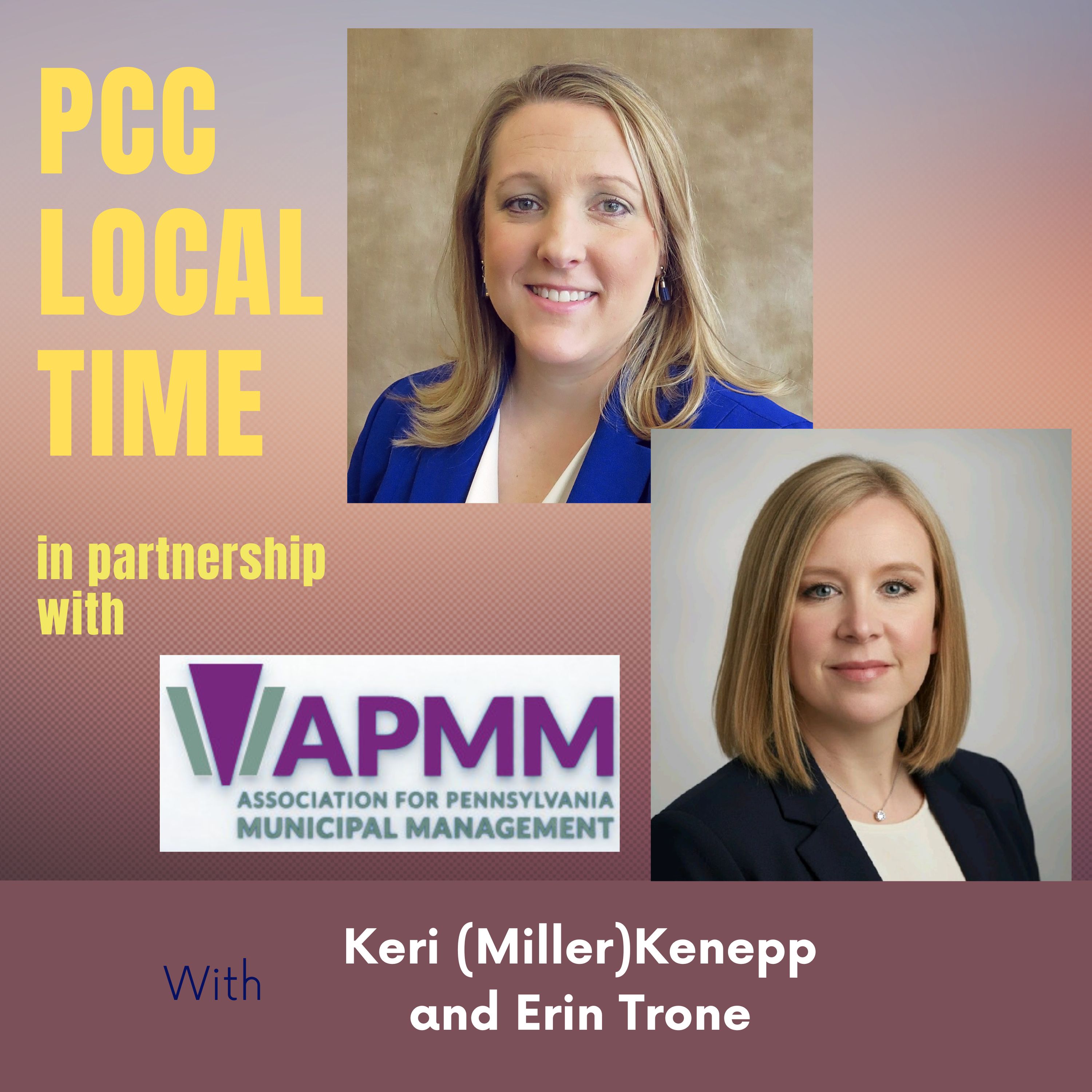
APMM Series: Who Really Shapes the Future of a Place? with Erin Trone and Keri (MIller) Kenepp
Economic development isn’t just about buildings and business, sidewalks and parking, blighted malls and dying downtowns, housing shortages and shrinking workforces, casino controversies and data center ordinances. It’s actually about facilitating conversations with the people invested in the outcomes. Keri (Miller) Kenepp , Director of Community and Economic Development for College Township, Pennsylvania, and Erin (Genest) Trone, Project Manager for BusinessPA at the Pennsylvania Department of Community & Economic Development, walk us through a maze of issues facing local governments today and grant us invaluable insights into how we can think about a future together. This episode is made possible by a partnership with APMM , the Association for Pennsylvania Municipal Management. Be sure to subscribe to MuniSquare to get full content that includes all episodes of PCC Local Time and much, much more. Chapters 00:00 – Who Shapes the Future of a Place? (Episode Setup) 02:00 – Keri’s Non-Traditional Path into Economic Development 05:00 – The Expansive Nature of Local Government Roles 07:00 – “Creating the Conditions” for Development 08:30 – The Long Game vs. Election Cycles 10:30 – What Elected Officials Want (and Need to Say in Public) 12:30 – Casinos: Public Resistance vs. Legal Reality 15:00 – Data Centers: Misunderstanding and Zoning Constraints 17:00 – “We Have to Allow for All Uses” (Policy Reality) 20:00 – The Power of Community Resistance (Nestlé Case) 22:00 – The Blighted Mall and Risk-Taking in Development 23:00 – Understanding the Private Sector (Erin’s State Role) 25:00 – Matchmaking: Communities and Companies 29:00 – The Facilitator Role Defined 31:00 – Advising Elected Officials (Pros, Cons, and Decisions) 33:00 – Tension: Standards vs. Development (Affordable Housing) 36:00 – Sidewalks as a Case Study in Equity and Safety 38:00 – Developer Perspective: Why Projects Don’t Pencil Out 40:00 – Blighted Properties and “Highest and Best Use” 43:00 – Redeveloping the Mall (Zoning Shifts and Density) 45:30 – Parking: Outdated Assumptions and New Thinking 49:00 – Changing Mindsets About Walkability 50:30 – What Keri Had to Unlearn About Economic Development 53:00 – Erin on Labor Shortages, AI, and Shifting Metrics
Is this your show?
Claim this listing to keep it up to date, reach guests who want to pitch you, and manage bookings with Guestify.