Find partners
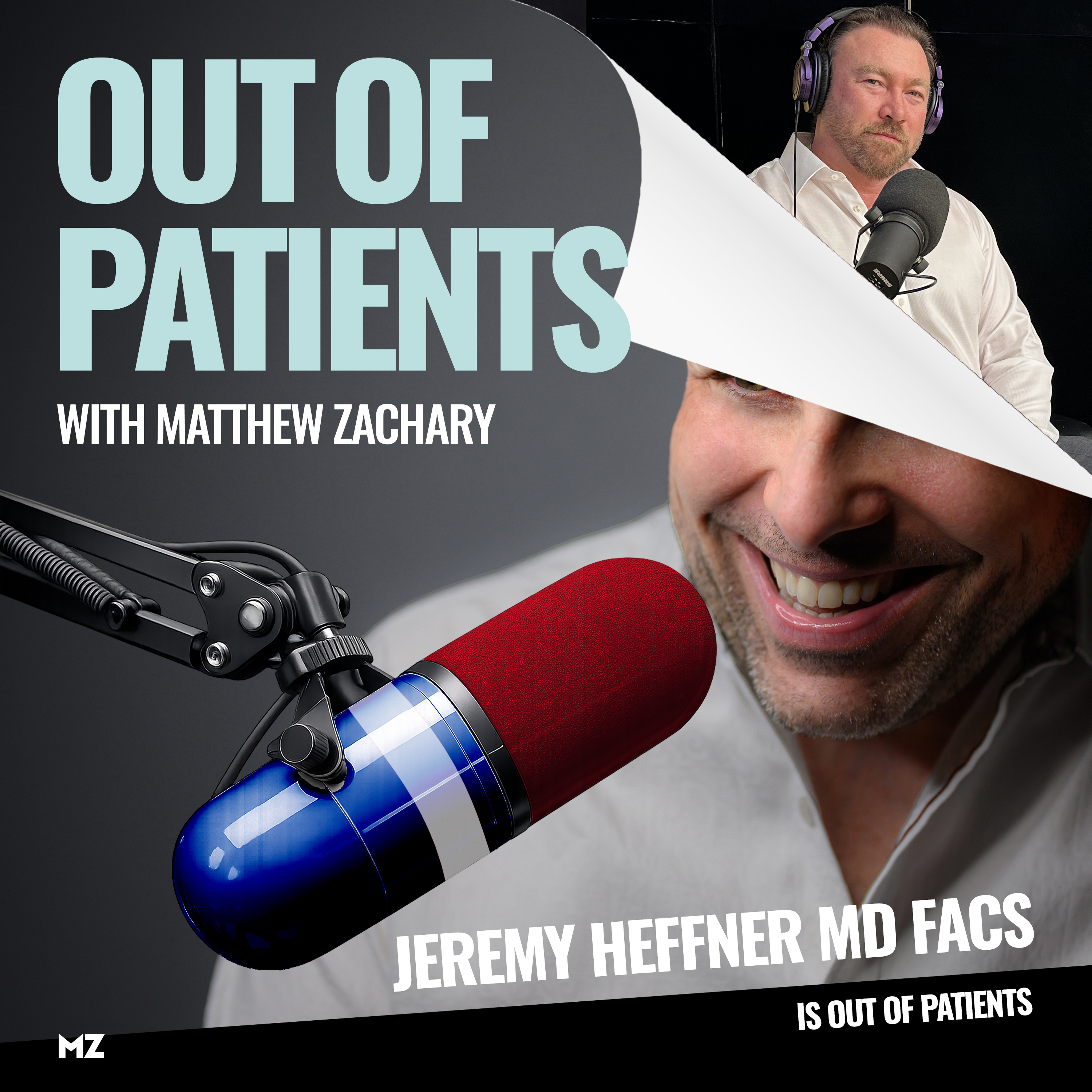
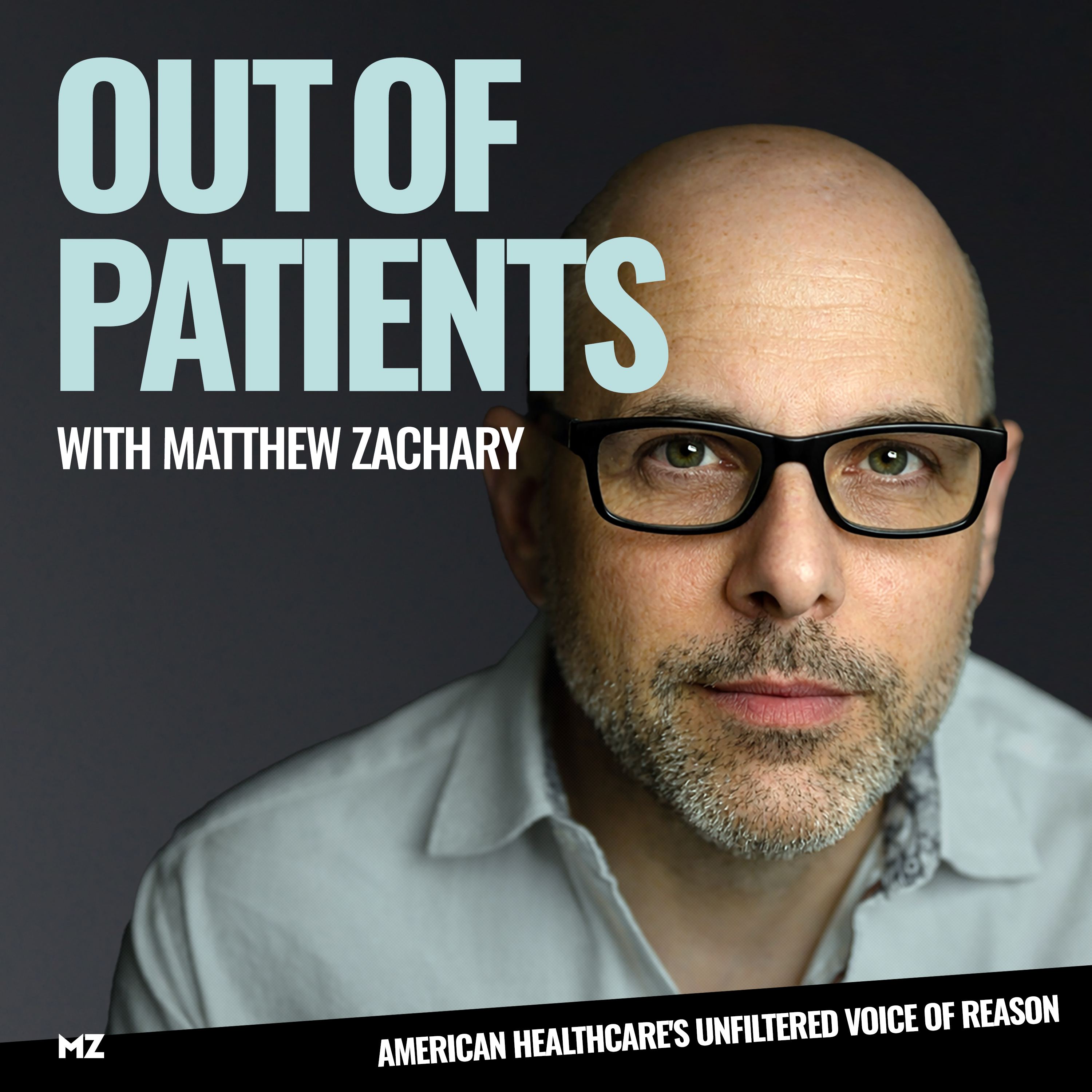
Out of Patients with Matthew Zachary

Out of Patients with Matthew Zachary

Hosted by Matthew Zachary Worldwide

Episodes

498

Latest episode

Jun 2026

Language

EN

About the show

The longest-running independent healthcare podcast, Out of Patients with Matthew Zachary has supplied 17 years of unfiltered truth about American healthcare. A 30-year brain cancer survivor, Matthew built the young adult cancer movement from scratch. Now he channels patient rage into political power, featuring on the air battle-scarred survivors, exhausted caregivers, and the rare insider brave enough to name what's killing us. It’s real stories from real people who refuse to accept that healthcare has to hurt this much. New listeners come for the truth. They stay because finally someone's saying what they've been screaming. ]]>

Listen to episodes

60 recent
June 16, 202654 min

Jace Beats Cancer

At 25, Jace Yawnick was building a career in health and wellness sales, chasing growth, status, and the usual young adult fantasy of getting somewhere fast. Then his body stopped cooperating. Fatigue turned into chemotherapy. The diagnosis was primary mediastinal B cell non Hodgkin lymphoma, and the rest of his life split into before and after.   Now in remission, he talks about cancer the way people actually live it, not the way nonprofits package it. He gets into survivorship, mental health, young adult isolation, and the deadening absurdity of prior authorization. One of the sharpest parts of the conversation lands on a simple American insult disguised as policy: treatment innovation means very little when insurance can still deny the scan, the drug, or the next step. Jace has seen that firsthand, including during routine monitoring after active treatment.   This episode tracks what happens when a young cancer patient becomes a public voice and refuses to play mascot. It covers oncology, insurance, remission, advocacy, and the long mental hangover that follows survival. It also names the part too many institutions dodge: the system works great right up until it doesn’t, and when it fails, patients get handed the bill, the panic, and a camera if they want anyone to care.   RELATED LINKSJace Beats CancerJace Yawnick on LinkedImConquer Cancer ArticleCURE Today ArticlePyure BrandsFEEDBACKLike this episode? Rate and review Out of Patients on your favorite podcast platform. For guest suggestions or sponsorship email podcasts@matthewzachary.comSee Privacy Policy at https://art19.com/privacy and California Privacy Notice at https://art19.com/privacy#do-not-sell-my-info.

June 11, 20269 min

Standard Deviation S2 E4: The Invisible Load

At 20 years old, newly arrived from Puerto Rico and trying to build a future in science, Benjamin Suarez Jimenez found himself sitting in front of two senior faculty members accused of plagiarism. He knew the material. He had done the work. His mistake came from failing to cite class notes during an exam because nobody had told him that was expected. In a matter of minutes, he watched what felt like his entire career flash before him.On this episode of Standard Deviation, host Oliver Bogler examines the hidden architecture of academic science through the experiences of Dr. Benjamin Suarez Jimenez, Assistant Professor at the University of Rochester and a neuroscientist studying PTSD, anxiety, trauma, and spatial cognition through virtual reality and video game environments.Benjamin traces his path from Puerto Rico to the mainland United States, through the NIH, Columbia University, and eventually to leading his own laboratory. Along the way, he encountered a series of barriers that had little to do with scientific ability and everything to do with access to unwritten rules. From academic gatekeeping to grant writing expectations, he learned that success in biomedical research often depends on knowledge that never appears in a textbook.Oliver explores how those invisible obstacles shape careers, influence research funding, and determine who gains access to opportunity. The conversation also examines the Justice, Equity, Diversity, and Inclusion Program at the Life Science Editors Foundation, which pairs scientists from underrepresented backgrounds with experienced scientific editors. Through that mentorship, Benjamin transformed a critical grant proposal into a successful pilot award that helped launch an NIH R01 application.The discussion extends beyond one scientist’s experience. Benjamin describes helping a former mentee navigate dissertation roadblocks that threatened her graduation, illustrating how institutional bureaucracy can delay careers and discourage talented researchers. Together, they explore the hidden administrative burden, cultural barriers, and bias that many scientists carry alongside their research, and what happens when someone who receives support turns around and opens the door for others.RELATED LINKSLife Science Editors FoundationBenjamin Suarez Jimenez LabDr. Benjamin Suarez JimenezBenjamin Suarez JimenezFEEDBACKLike this episode? Rate and review Out of Patients on your favorite podcast platform. For guest suggestions or sponsorship email podcasts@matthewzachary.comSee Privacy Policy at https://art19.com/privacy and California Privacy Notice at https://art19.com/privacy#do-not-sell-my-info.

June 9, 202642 min

Taco Thursday Meets Broken Healthcare: Dr. Sarah Matt

Dr. Sarah Matt trained as a burn surgeon, working in a field where patients arrive with catastrophic injuries and survival depends on speed, skill, and resources. She left the bedside after confronting a limit that medicine does not like to admit. One physician can only see so many people in a day. The system surrounding those patients decides the rest. She moved into health technology, held leadership roles in startups, and built global infrastructure at Oracle to scale care across populations. Then she watched billions of dollars in digital health and AI initiatives stall out when they hit real clinical environments.This episode follows that pivot from surgeon to strategist and back into direct patient care in rural New York, where she now treats uninsured patients, migrant workers, and communities pushed to the margins. The conversation centers on a persistent failure across healthcare systems. Products get built for regulators, executives, and investors instead of the people who use them. The result shows up in failed adoption, broken workflows, prior authorization delays, and rising physician burnout.The discussion cuts through health policy language and lands on lived consequence. The system rewards speed over usability, scale over trust, and compliance over care. Patients absorb the fallout. Physicians carry the liability. The incentives remain intact.RELATED LINKSDr. Sarah MattThe Borderless Healthcare RevolutionThe Clinical RealistJessica FedererSovatoFEEDBACKLike this episode? Rate and review Out of Patients on your favorite podcast platform. For guest suggestions or sponsorship email podcasts@matthewzachary.comSee Privacy Policy at https://art19.com/privacy and California Privacy Notice at https://art19.com/privacy#do-not-sell-my-info.

June 2, 202642 min

The Chernobyl Kid in a White Coat: Dr. Yan Leyfman

In the late 1980s, a child exposed to fallout from the Chernobyl disaster lay in a hospital bed while doctors told his family there were no clear answers and no reliable path forward. Decades later, that same child, Yan Leyfman, walks into exam rooms as a hematology oncology fellow, expected to deliver clarity inside a system that still runs on delay, uncertainty, and institutional self preservation.This episode traces the throughline from early life shaped by radiation exposure and hospice level uncertainty to a career inside academic medicine, translational research, and oncology media. Yan built his identity around survival and usefulness, moving from patient to physician while carrying the memory of what it feels like to sit on the other side of the table. He helped launch MedNews Week during the COVID crisis to push back on misinformation and expand access to medical knowledge, stepping into a public role while still in training.The conversation stays grounded in the friction between personal narrative and system reality. Clinical training demands efficiency, hierarchy, and emotional distance. Cancer care demands time, clarity, and human connection. Those forces collide in real patient encounters where prior authorization delays, insurance barriers, and fragmented care pathways shape outcomes as much as any treatment protocol.Yan speaks openly about mentorship, belonging, and the drive to make meaning out of survival. The discussion pushes further into what the healthcare system actually rewards, what it quietly strips away, and how quickly empathy can erode under institutional pressure. The episode also examines the role of medical media, where education, industry influence, and narrative control often blur together.This is a conversation about identity under construction, about what happens when someone who remembers powerlessness steps into a role that carries authority, and about whether that memory can survive long enough to change anything.RELATED LINKSYan Leyfman on LinkedInYan Leyfman on InstagramSurviving ChernobylFEEDBACKLike this episode? Rate and review Out of Patients on your favorite podcast platform. For guest suggestions or sponsorship email podcasts@matthewzachary.comSee Privacy Policy at https://art19.com/privacy and California Privacy Notice at https://art19.com/privacy#do-not-sell-my-info.

May 29, 20261 hr 47 min

MZ LIVE at Merkin Concert Hall: 30 Years After Cancer

Matthew Zachary is a brain cancer survivor, healthcare advocate, founder of Stupid Cancer and We the Patients, and host of Out of Patients. In April 2026, he returned to the stage at Merkin Hall near Lincoln Center for his first solo public piano concert in almost 22 years while launching his debut book, We the Patients: Understanding, Navigating, and Surviving America’s Healthcare Nightmare.What unfolded became far larger than a concert.Over 2 hours, survivors, clinicians, advocates, nonprofit founders, journalists, pharmaceutical sponsors, and healthcare insiders gathered in one room to reflect on 30 years of survivorship, institutional failure, accidental advocacy, and the emotional afterlife of cancer. The evening moved through original piano performances, live chapter readings, and deeply personal conversations about infertility, disability, financial toxicity, insurance denials, grief, burnout, and what happens when patients spend decades navigating systems designed around transactions instead of continuity.Guests including Wendell Potter, Maimah Karmo, Craig Lustig, Shelly Fuld Nasso, Tamika Felder, and others reflected on how the modern cancer advocacy movement emerged largely because patients built parallel systems where healthcare infrastructure failed to meet human needs. The conversation explored how prior authorization, reimbursement incentives, administrative fragmentation, and institutional distrust continue shaping the patient experience across oncology and survivorship.The performance also marked a deeply personal milestone. After brain cancer compromised his left hand at age 21, Zachary spent 6 months rehabilitating both hands to return to public performance for the first time in over 2 decades. The result became part concert, part civic gathering, and part historical record of a generation of survivors who refused to disappear quietly.RELATED LINKSMZLIVE Official WebsiteMZLIVE YouTube VideoFEEDBACKLike this episode? Rate and review Out of Patients on your favorite podcast platform. For guest suggestions or sponsorship email podcasts@matthewzachary.comSee Privacy Policy at https://art19.com/privacy and California Privacy Notice at https://art19.com/privacy#do-not-sell-my-info.

May 26, 202649 min

Fatal to Relentless: Kathy Giusti

In December 1996, a 37 year old pharmaceutical executive sat in a Borders bookstore reading medical textbooks on the floor, trying to understand a disease she had never heard of. Multiple myeloma carried a three year prognosis. Her daughter was 18 months old. Her father had just died of cancer. Within weeks, she pushed her doctors to say the quiet part clearly. This would likely end her life before her child entered kindergarten.Kathy Giusti refused to accept passive survival. She built a plan while the system offered fragments. She interviewed oncologists and fertility specialists at the same time. She pursued IVF to have a second child while preparing for treatment. She stayed employed to keep insurance coverage. Every decision carried financial, medical, and emotional risk.That same urgency exposed a deeper failure. Cancer research moved slowly. Academic centers guarded data. Clinical trials lacked coordination. Patients entered a system that demanded compliance without providing clarity. Giusti responded by building the Multiple Myeloma Research Foundation, not as a support group, but as an operating engine to accelerate drug development, fund research, and force collaboration across institutions.This episode tracks the tension between individual agency and systemic failure. Giusti describes how patients navigate diagnosis, insurance barriers, and fragmented care in real time. She explains how data, genomics, and clinical trials reshape cancer treatment while still leaving patients responsible for decisions they are not trained to make. She addresses disparities in access, the limits of early detection, and the reality that progress in oncology often depends on speed, funding, and alignment of incentives.The conversation moves between lived experience and structural critique. It names the cost of delay, the burden placed on patients to act as their own advocate, and the tradeoffs required to push a system forward that still protects itself first.⸻RELATED LINKSKathy GiustiMultiple Myeloma Research FoundationFatal to FearlessAmerican Society of Hematology⸻FEEDBACKLike this episode? Rate and review Out of Patients on your favorite podcast platform. For guest suggestions or sponsorship email podcasts@matthewzachary.comSee Privacy Policy at https://art19.com/privacy and California Privacy Notice at https://art19.com/privacy#do-not-sell-my-info.

May 19, 202644 min

Discharge Instructions Not Included: Shlomit Liberty

At 19, Shlomit woke up unable to speak. The right side of her body went numb. An emergency room sent her home and called it stress.  That moment did not end in a diagnosis that changed policy or triggered reform. It sent her into a decade long pursuit of understanding how the brain fails language and how the healthcare system fails patients who cannot advocate for themselves.Shlomit trained as a speech language pathologist and spent years inside acute care hospitals and ICUs, performing endoscopies and treating patients with brain injury, stroke, and dysphagia. She watched medical teams rotate in and out, deliver dense updates, and leave families nodding without comprehension. She stayed behind and translated. Every day, patients told her she was the only one who explained what was happening.  That gap is not an accident. Hospital systems optimize for throughput, not understanding. Patients move through beds based on cost, not readiness. Discharge planning becomes a financial decision wrapped in clinical language. A stay under 48 hours can shift the insurance burden dramatically, leaving patients exposed to higher out of pocket costs.  Shlomit left the system and built Patient Path NYC, a private patient advocacy service. She now spends 15 to 20 hours a week per client reading charts, coordinating care teams, and translating medical decisions into plain language.  Her work sits in the uncomfortable space between healthcare policy and lived experience. Families pay out of pocket to understand their own care. Hospitals benefit from the clarity she provides while maintaining the same structural incentives that created the confusion.This conversation tracks the human cost of fragmented care, the economics behind discharge decisions, and the quiet reality that patients who cannot communicate clearly often lose control of their own outcomes.RELATED LINKSShlomit LibertyShlomit Liberty on LinkedInPatient Path NYCBoard Certified Patient AdvocateFEEDBACKLike this episode? Rate and review Out of Patients on your favorite podcast platform. For guest suggestions or sponsorship email podcasts@matthewzachary.comSee Privacy Policy at https://art19.com/privacy and California Privacy Notice at https://art19.com/privacy#do-not-sell-my-info.

May 14, 202611 min

Standard Deviation S2 E3: The Hidden Curriculum

In 2020, developmental biologist Dr. Crystal Rogers drove the country roads outside Davis, California crying between grant rejections, wondering whether she was about to lose her lab, her career, and the scientific future she had spent years building. She had already done what academia tells young scientists to do. She earned the credentials. She landed a faculty position at UC Davis. She built a lab. Then the real test began.On this episode of Standard Deviation, Dr. Oliver Bogler examines the unspoken rules that determine which scientists survive academic research and which quietly disappear from it. The conversation follows Crystal Rogers and cancer biologist Dr. Michelle Mendoza as they collide with the “Hidden Curriculum” of biomedical science: the unwritten rhetoric, institutional signaling, and grant writing strategies that often decide who receives funding, tenure, and long term stability.Michelle Mendoza entered a tenure track position at the Huntsman Cancer Institute while raising 3 children, navigating a divorce, and trying to secure major NIH funding during COVID. What looked like objective scientific review turned out to depend heavily on persuasion, presentation, and insider fluency. Established researchers could promise massive research agendas based on reputation alone. Junior investigators faced a completely different standard.Oliver traces how the Life Science Editors Foundation and its JEDI program intervened by pairing scientists with former editors from journals including Cell and Nature. The work had little to do with commas or grammar. Editors challenged logic, structure, and scientific framing before grant reviewers could destroy an application in public.Both researchers eventually secured career defining grants. One realized she would keep her job and not have to move her family. The other celebrated by ordering a personalized “DEV BIO” license plate and driving through Davis blasting nineties hip hop and Beyoncé.The episode exposes how biomedical research funding rewards institutional fluency as much as scientific talent, and how hidden systems inside academic medicine continue shaping who gets to stay in science long enough to make discoveries.RELATED LINKSDr. Crystal Rogers LinkedInDr. Crystal Rogers Faculty PageDr. Crystal Rogers LabDr. Michelle Mendoza LinkedInDr. Michelle Mendoza Faculty PageHuntsman Cancer Institute Mendoza LabLife Science Editors FoundationFEEDBACKLike this episode? Rate and review Out of Patients on your favorite podcast platform. For guest suggestions or sponsorship email podcasts@matthewzachary.comSee Privacy Policy at https://art19.com/privacy and California Privacy Notice at https://art19.com/privacy#do-not-sell-my-info.

May 12, 202645 min

Nun, Done, and Uninsured: Katy Talento

In 2008, Katy Talento walked away from Capitol Hill and into a Catholic convent. Within a year, she walked out. Within another decade, she sat inside the White House shaping health policy. Somewhere in between, she got labeled “infertile” after a single cycle of testing and spent years believing it.That label stuck. The pain that came before it never got investigated. Doctors offered birth control and moved on. No one asked why her body was struggling. No one followed the thread.Talento built her career inside the very systems she now critiques. She worked on federal health policy, global disease programs, and later advised the Trump administration on healthcare reform. She helped advance price transparency rules in a system where hospitals can still list 457 different prices for the same service.Then she left.Now she builds employer health plans that bypass insurers, PBMs, and traditional networks. Her approach replaces insurance contracts with direct payment, nurse navigators, and cost sharing models that promise simplicity but raise hard questions about risk and protection.This conversation sits in that tension.Talento describes a healthcare system shaped by layered incentives, where insurers, hospitals, and intermediaries profit from complexity. She argues that employers hold the leverage to disrupt it. The host pushes on what happens when patients fall outside those structures, when contracts disappear, and when community based models fail.The episode moves through infertility, misdiagnosis, insurance design, and the mechanics of employer sponsored care. It tracks how policy decisions made in Washington ripple into exam rooms, billing departments, and family lives.It also confronts a harder truth.Even insiders who understand the system can still get caught in it.RELATED LINKSAllBetter HealthKaty TalentoThem Before UsAn Arm and a LegRelentless Health ValueFEEDBACKLike this episode? Rate and review Out of Patients on your favorite podcast platform. For guest suggestions or sponsorship email podcasts@matthewzachary.comSee Privacy Policy at https://art19.com/privacy and California Privacy Notice at https://art19.com/privacy#do-not-sell-my-info.

May 5, 202652 min

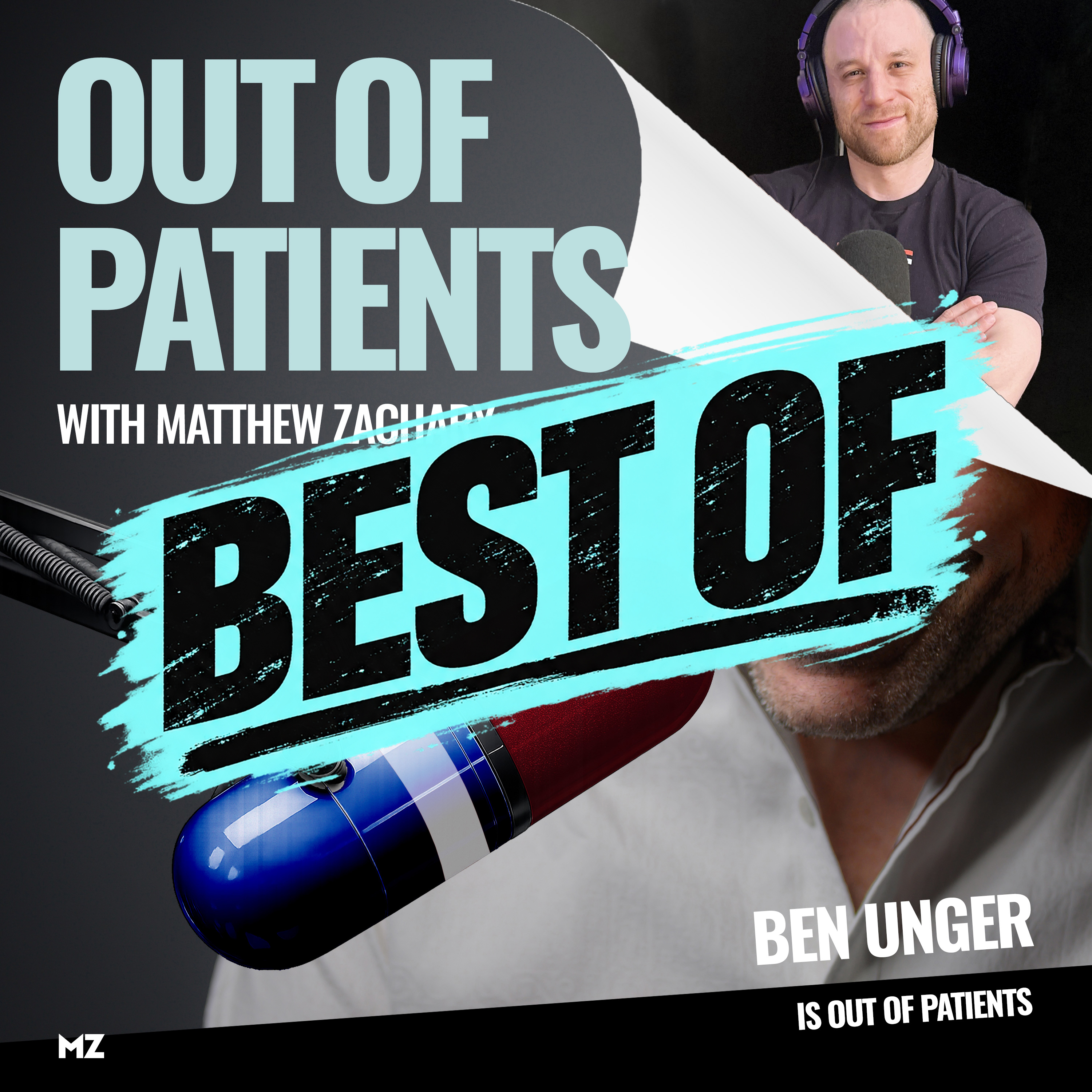
Faith, Fraud, and Finding Himself: Ben Unger

In a wooded campground cabin in the early 2000s, 19 year old Ben Unger stood in the doorway and watched 20 naked men form a circle around a crying teenager. A counselor held up two tangerines and shouted, “These are your balls.” The exercise claimed to cure same sex attraction by forcing young men to “reclaim” their masculinity from overbearing mothers. Phones had been confiscated. Parents had paid thousands of dollars. Religion supplied the script. Pseudoscience supplied the props.Ben had grown up in an Orthodox Jewish community in Brooklyn and later studied in Israel to become a rabbi. When he admitted he felt attracted to men, rabbis told him to eat 7 figs a day, immerse in a ritual bath 5 times daily, or marry a woman and trust that “if there’s friction, it works.” At 19, he entered conversion therapy through an organization called Jews Offering New Alternatives to Homosexuality, known as JONAH. He left with depression, religious trauma, and 6 months of silence toward the mother he had been taught to blame.Years later, represented by the Southern Poverty Law Center, Ben helped sue JONAH for consumer fraud in a landmark New Jersey case. The argument centered on evidence, not theology. Sexual orientation cannot be changed. The jury deliberated for 3 hours and ruled against the organization. The verdict helped reshape how states regulate conversion therapy and protect minors from psychological harm disguised as treatment.Today, Ben runs Buff Personal Training in New York City, a gym built on autonomy, mental health, and self respect. His story traces the arc from institutional control to self authorship. The conversation examines religion, LGBTQ rights, conversion therapy, consumer protection law, and the lasting cost of being told your identity is a disorder.RELATED LINKSBen Unger on LinkedInBen Unger on InstagramBUF Personal TrainingSouthern Poverty Law CenterJONAHFEEDBACKLike this episode? Rate and review Out of Patients on your favorite podcast platform. For guest suggestions or sponsorship email podcasts@matthewzachary.comSee Privacy Policy at https://art19.com/privacy and California Privacy Notice at https://art19.com/privacy#do-not-sell-my-info.

Is this your show?

Claim this listing to keep it up to date, reach guests who want to pitch you, and manage bookings with Guestify.

Claim this listing

More Entrepreneurship podcasts