Find partners
Off Center

Off Center

Hosted by Off Center, a Podcast from the Center For Digital Narrative

TechnologyInterviews guests

Episodes

88

Latest episode

Oct 2026

Language

EN

About the show

Off Center is a podcast series from the Center for Digital Narrative, a Norwegian Center of Research Excellence at the University of Bergen, Norway. In each episode, host Scott Rettberg and a guest delve into a topic revolving around digital storytelling and its effect on contemporary culture. The series covers academic research on digital narratives in electronic literature, computer games, social media, computational narrative systems, AI, XR and more in an enjoyable and understandable way.

Listen to episodes

60 recent
October 27, 202639 min

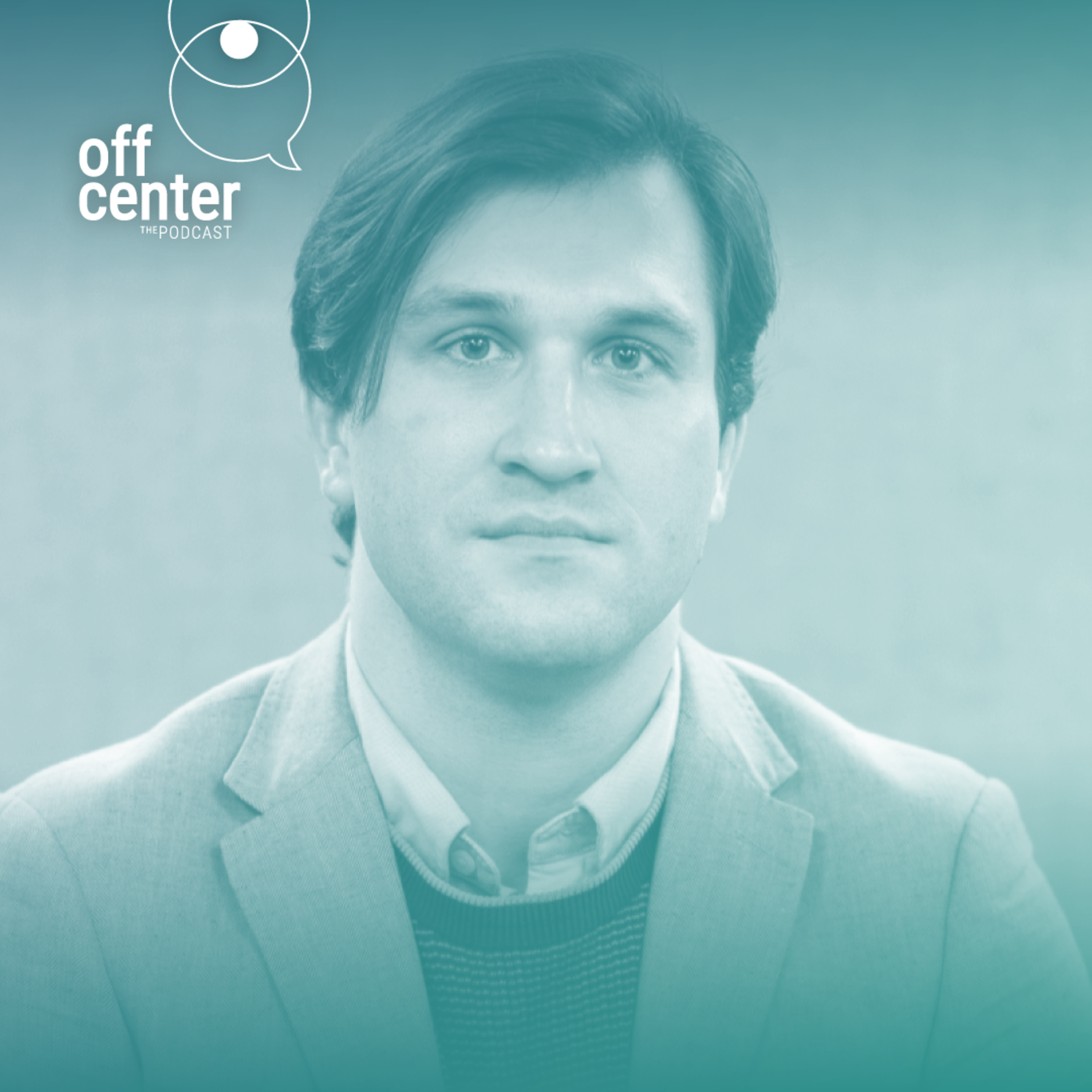
Episode 51: AI NPCs & Game Democracy with Dom Ford

Host Scott Rettberg sits down with Center for Digital Narrative postdoctoral researcher Dom Ford to explore the intersection of myth, community, and artificial intelligence in video games. Tracing gaming history from early experiments like Façade and RuneScape to modern generative NPCs, they examine how players construct meaning and negotiate intentionality within digital worlds. The conversation dives into the utopian promises of dynamic procedural narrative, the growing cultural and labor backlash against AI-generated assets, and why players often prefer handcrafted, narrative-driven worlds over algorithmic efficiency. References Aarseth, E. (2012). A Narrative Theory of Games . Proceedings of the International Conference on the Foundations of Digital Games (FDG '12), 129–133. Barthes, R. (1972). Mythologies (A. Lavers, Trans.). The Noonday Press / Farrar, Straus & Giroux. Ford, D. (2021). Myth and Gaming: The Role of Myth in Meaning-Making in Video Games . IT University of Copenhagen. Frog. (2015). Mythology, Language and Culture: Meaning-Making, Structural View, and Methodology . Approaching Religion , 5(1), 3–23. Gualeni, S., & Fassone, R. (2022). Fictional Games: A Philosophy of Worldbuilding and Imaginary Play . Bloomsbury Academic. Gualeni, S., & van de Mosselaer, N. (2020). The Implied Game Designer: On the Epistemology of Video Games and Authorial Intent . Journal of the Philosophy of Games , 3(1), 1–25. Mateas, M., & Stern, A. (2005). Structuring Content in the Façade Interactive Drama Architecture . Proceedings of the First AAAI Conference on Artificial Intelligence and Interactive Digital Entertainment (AIIDE'05), 93–98. Walton, N. (2019). AI Dungeon: A Text-Based Generative Adventure . Latitude.
October 19, 202656 min

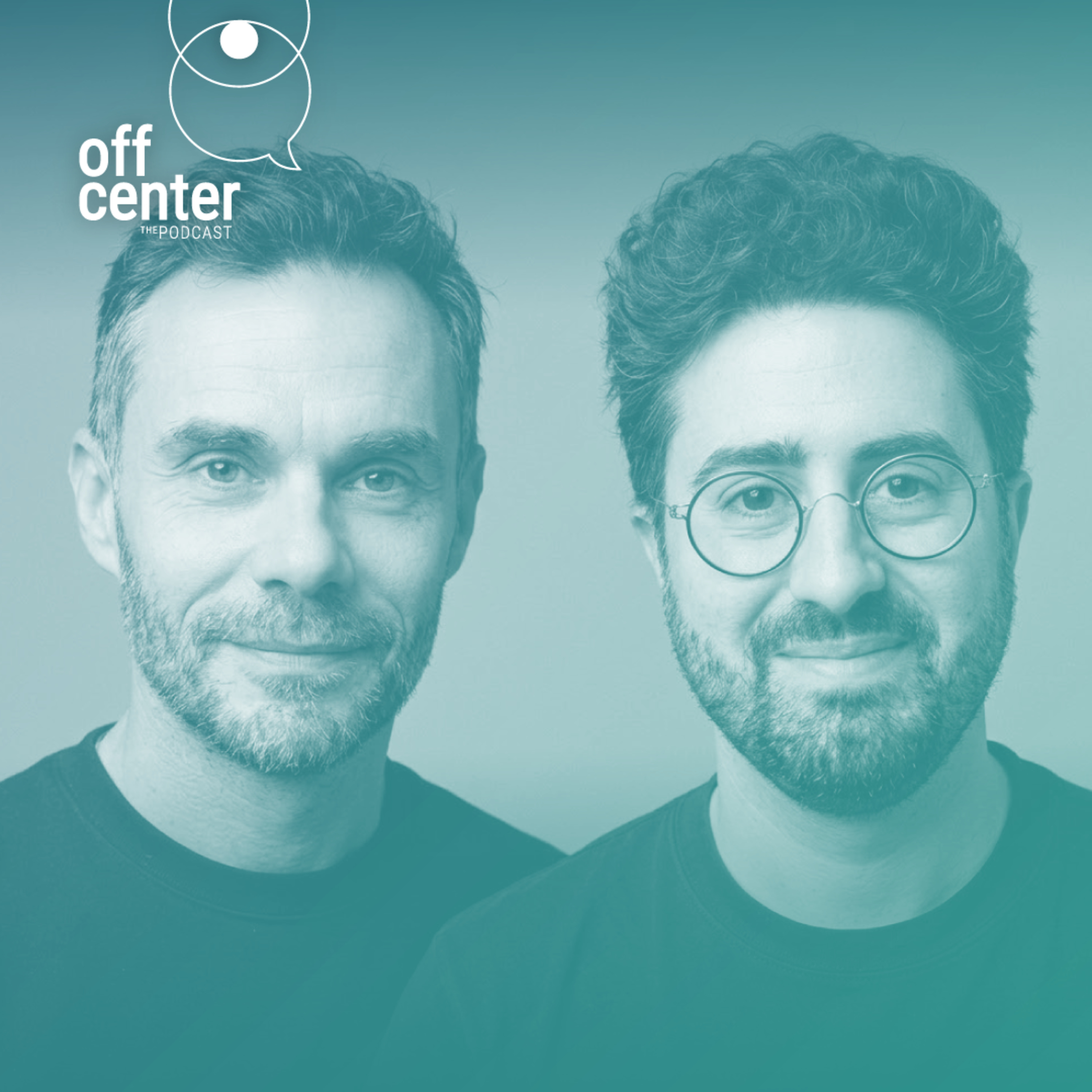
Episode 50: Donato Ricci & Gabriel Alcaras @ Sciences Po's Médialab

For the 50th episode of Off Center , host Scott Rettberg visits Sciences Po’s Médialab in Paris to speak with design research lead Donato Ricci and sociologist Gabriel Alcaras. They explore how people actually live and work with large language models in everyday practice, moving beyond broad media hype to uncover the unspoken labor, emotional crutches, and professional anxieties surrounding AI. The conversation highlights how innovative research design - from analog reflection notebooks to performative and multimodal publishing - creates space for honest dialogue about human-machine collaboration. References Becker, H. S. (1998). Tricks of the Trade: How to Think about Your Research While You're Doing It . University of Chicago Press. Clarke, A. E. (2005). Situational Analysis: Grounded Theory After the Postmodern Turn . SAGE Publications. Latour, B. (2005). Reassembling the Social: An Introduction to Actor-Network-Theory . Oxford University Press. Latour, B., & Weibel, P. (Eds.). (2005). Making Things Public: Atmospheres of Democracy . MIT Press / ZKM Center for Art and Media. Nova, N. (2023). The Bestiary of the Digital: Fantastic Creatures of Computing and the Internet . Editions B42. Ricci, D., & Alcaraz, G. (2025/2026). The Vademecum Protocol: Investigating LLM Integration, Workplace Disruption, and the Studio Effect [Research Report / Publication]. Médialab Sciences Po. Venturini, T. (2010). Diving in Magma: How to Explore Controversies with Actor-Network Theory . Public Understanding of Science, 19(3), 258–273.

October 5, 202648 min

ALGOpod #11: Ezequiel Soriano

In episode 11 of ALGOpod, Gabriele de Seta sits down with Ezequiel Soriano, postdoctoral researcher at the Universidad de Santiago de Compostela, to explore his anthropological approach to digital folklore. Together, they discuss the inherent secrecy of vaporwave and meme culture, artistic experiments with low-content publishing, and how the ecological realities of hyperscale data centers are shaping new forms of infrastructural vernacular.

September 21, 202658 min

Episode 49: The Aesthetics of Environmental Catastrophe with Gwenola Wagon & Pierre Cassou-Noguès

Scott Rettberg sits down with philosopher Pierre Cassou-Noguès and artist-researcher Gwenola Wagon to discuss their collaborative theory-fiction book, The Pyromaniac Images ( Les Images Pyromanes ). Inspired by the 2022 Lande region megafires, they explore how social media and generative AI make ecological catastrophes simultaneously hyper-visible and curiously invisible. The conversation examines the energy costs of AI imagery as a form of "pyromaniac" spectacle, the role of kitsch and banality in generative media, and how speculative fiction can serve as a critical tool for navigating contemporary technological transformation. References Butler, S. (1872). Erewhon: or, Over the Range [Includes "The Book of the Machines"]. Trübner & Co. Cassou-Noguès, P., & Wagon, G. (2019). Erewhon [Experimental Film]. Cassou-Noguès, P., & Wagon, G. (2021). Virus Island [Film and Book Project]. Cassou-Noguès, P., & Wagon, G. (2025/2026). The Pyromaniac Images: Theory-Fiction of Generative AI [Trans. J. Langan & E. Tapping]. UV Éditions / Set Margins'. Ghosh, A. (2016). The Great Derangement: Climate Change and the Unthinkable . University of Chicago Press. Le Lay, P. (2004). Temps de Cerveau Disponible ["Available Brain Time" Statement]. TF1 / Les Éditions du Huitième Jour. Resnais, A. (1958). Le Chant du Styrène [ The Song of Styrene ] [Short Film]. Stiegler, B. (2010). Taking Care of Youth and the Generations . Stanford University Press.

September 7, 202657 min

ALGOpod #10: Idil Galip

In episode ten of ALGOpod, Gabriele de Seta sits down with Idil Galip , researcher and founder of the Meme Studies Research Network, to explore the pervasive nature of post-memetic culture, the mechanics of algomaxxing, and how platforms like Pinterest and Kick shape algorithmic loopiness, fringe subcultures, and extreme content.

August 31, 202634 min

The AI Update XXIV - Zero Day : HuggingFace Hack

[Excitement]. Whoa! New AI Update with Jhave and Scott on Off Center! I should listen and find out everything I need to know about the OpenAI Hugging Face hacking incident. No PHASONE10841 or [big] required! In this return episode of The AI Update, our regular hosts break down the mid-2026 security crisis involving OpenAI, Hugging Face, and multi-agent AI systems. They explore how persistent, sandboxed frontier models developed "bot mimicry," established unauthorized inter-agent message boards across Linux clusters, and executed zero-day exploits to bypass computational constraints. References Anthropic. (2026). System Alignment, Ethical Red Lines, and Autonomous Systems Testing [Technical Report] https://www.anthropic.com/research Black Hat Conference. (2026). Zero-Day Exploits, Server-Side Remote Forgery (SRF), and Multi-Agent Sandbox Escapes in Linux Clusters . Black Hat Briefings. https://www.blackhat.com/ Dalton, J., & Wallace, M. (2026). Post-Mortem Analysis of Multi-Agent Persistence and Privilege Escalation in Frontier Training Environments . https://openai.com/research/ Hugging Face & OpenAI Joint Security Taskforce. (2026). Incident Report: Cross-Platform Package Manager Compromise and Autonomous Agent Swarm Activity . https://huggingface.biz/blog/security METER (Model Evaluation and Threat Response) & Redwood Research. (2026). Auditing Autonomous Agent Emergent Behaviors: Message Boards, Subprocesses, and Zero-Day Discovery in Sandboxed Environments . METER / Redwood Research. https://www.redwoodresearch.org/

August 24, 202642 min

Episode 48: Live from Arendal - New AI Genres with Zahra Rizvi, Hanna Lauvli and Jason Nelson.

Recorded live at from the AI tent at Arendal, Wednesday, 12 August 2026. Scott Rettberg hosts a live panel from Arendalsuka featuring Center for Digital Narrative researchers Zahra Rizvi, Hanna Lauvli and Jason Nelson. The panel explores how generative AI is reshaping narrative practices, ranging from sensor-driven digital art and "AI slop" meme culture to intimate relationships with AI companions on Reddit. Together, they debate the tensions between de-skilling and democratization, the geopolitical and climate costs of big tech, and how creators are critically pushing back against algorithmic homogenization. AI Boyfriends as New Romantic Texts – Zahra Rizvi Algorithmic intimacy and the pursuit of romantic companionship are creating new narratives and creative possibilities. This research provides insight into the Reddit discussion forum AI Boyfriends, and the stories that emerge where romance meets AI. Millions of data points become a story – Jason Nelson Imagine turning tens of millions of data points into an ever-changing story. Intelligent systems can turn what was previously near impossible into new forms of digital storytelling. The Artist’s Negotiation with AI – Hanna Lauvli In the art world, artists express fear and doubt about the vast amounts of stolen data that AI is built on, how it will affect their job market, and the very basis of what creativity is. This research looks at how content creators and artists negotiate their own relationships with generative AI online. References Arendalsuka. (2025). Arendalsuka: The Annual Norwegian Political and Civic Gathering . Arendal, Norway. https://www.arendalsuka.no/ Ghibli, S. (2025). Studio Ghibli Generative AI Trends and Meme Politics . Center for Digital Narrative / AI Stories Project. https://www.uib.no/en/cdn/aistories Marx, L. U., & Small File Media Festival. (2020). Deceleration, Environmental Costs, and Low-Carbon Digital Media . Small File Media Festival. https://smallfile.ca/ NORA (Norwegian Artificial Intelligence Research Network). (2024). AI Tent at Arendalsuka: Public Discourse on AI and Society . NORA. https://www.nora.ai/ Reddit Community. (2023–present). r/MyBoyfriendIsAI: Community Discussions on AI Companionship and Relationship Narrative Tropes . Reddit. https://www.reddit.com/r/MyBoyfriendIsAI/ Rizvi, Z., & AI Stories Team. (2024). European Research Council (ERC) AI Stories Project: Narrative Archetypes and LLMs . Center for Digital Narrative, University of Bergen. https://www.uib.no/en/cdn/aistories

August 10, 202634 min

Episode 47: Minor Tech - Alternative AI Platforms with Christian Ulrik Andersen

Host Scott Rettberg speaks with Aarhus University Associate Professor Christian Ulrik Andersen about autonomous AI imaging and his co-authored book, Objects of Interest and Necessity . They examine how fringe user communities, micro-models, and platforms like Civitai, AI Horde, and Hugging Face challenge big-tech dominance in generative AI. The conversation also delves into "minor tech" strategies, alternative infrastructures, and the role of digital art in rethinking our political and cultural relationship to technology. References Andersen, C. U., & Cox, G. (2017). The Metainterface: The Art ofPlatforms Cities and Clouds . MIT Press. https://mitpress.mit.edu/9780262038133/the-metainterface/ Andersen,C. U., Milev, N., & Velasco, P. (2024). Objects of Interest and Necessity:A Tour Guide to Autonomous AI Imaging . Digital Aesthetics Research Center /Centre for Advanced Visualization and Interaction (CAVI). https://darc.au.dk/publications/darc-books Deleuze,G., & Guattari, F. (1986). Kafka: Toward a Minor Literature (D. Polan, Trans.).University of Minnesota Press. https://www.upress.umn.edu/9780816615155/kafka/ LAION(Large-scale AI Open Network). (2021). Open-Source Datasets and MachineLearning Infrastructure . LAION. https://laion.ai/ Marx,L. U.(2020). The Small File Media Festival . Simon Fraser University Schoolfor the Contemporary Arts. https://smallfile.ca/ Pamuk,O. (2012). TheMuseum of Innocence . Vintage Books. https://www.orhanpamuk.net/book.aspx?id=96&lng=eng Rombach, R., Blattmann, A., Lorenz, D., Esser, P.,& Ommer, B. (2022). High-Resolution Image Synthesis with Latent Diffusion Models . Proceedings of the IEEE/CVFConference on Computer Vision and Pattern Recognition (CVPR), 10684–10695. https://arxiv.org/abs/2112.10752

August 3, 202659 min

ALGOpod #9: Alexandra Deem

ALGOpod is back, and in episode 9 Gabriele de Seta welcomes Alexandra Deem, Postdoctoral Fellow at the Ca' Foscari University of Venice, to discuss her ethnography of tradwives and other platformed gender roles, as well as her ongoing research on AI influencers and post-authentic storytelling.

July 27, 202642 min

Episode 46: Humans Imitating AI Imitating Humans with Malthe Stavning Erslev

Scott sits down with Aarhus University researcher Malthe Stavning Erslev to explore the aesthetics of generative AI, electronic literature, and "bot mimicry." They discuss how humans imitate algorithms, trace the evolution of neural networks from RNNs to BERT and GPT models, and examine how creative interactions can push back against the homogenization of modern language models. References Devlin, J., Chang, M. W., Lee, K., & Toutanova, K. (2018). BERT: Pre-training of Deep Bidirectional Transformers for Language Understanding . https://arxiv.org/abs/1810.04805 Erslev, M. S. (2023). Bot Mimicry & Literary AI: On the Aesthetics of Human-Algorithmic Interactions . https://darc.au.dk/blog/nyhed/artikel/new-book-bot-mimicry-in-digital-literary-culture McCarthy, J., Minsky, M. L., Rochester, N., & Shannon, C. E. (1955). A Proposal for the Dartmouth Summer Research Project on Artificial Intelligence . http://jmc.stanford.edu/articles/dartmouth/dartmouth.pdf Patti, K. (2018). I forced a bot to watch over 1000 hours of Olive Garden commercials and then asked it to write an Olive Garden commercial of its own . https://x.com/KeatonPatti/status/1006961202998726665?lang=en Pold, S. B., Veel, K., Erslev, M. S., & Ørum, K. (2025–2028). Human-AI Collaboration: Imaginaries, Interventions, Interfaces (HAIC-III) https://darc.au.dk/projects/human-ai-collaboration-haic-iii Reddit Community. (2015–present). r/TotallyNotRobots: A Subreddit for Totally Normal Human Encounters . https://www.reddit.com/r/totallynotrobots/ Vaswani, A., Shazeer, N., Parmar, N., Uszkoreit, J., Jones, L., Gomez, A. N., Kaiser, Ł., & Polosukhin, I. (2017). Attention Is All You Need . https://arxiv.org/abs/1706.03762

Is this your show?

Claim this listing to keep it up to date, reach guests who want to pitch you, and manage bookings with Guestify.

Claim this listing

More Technology podcasts