Find partners
Building Tech Teams with James MacDonald

Building Tech Teams with James MacDonald

Hosted by NTP Talent

Episodes

138

Latest episode

Sep 2026

Language

EN

About the show

Building Tech Teams is a weekly podcast on how Australia hires, builds, and leads tech teams in the age of AI. Host James MacDonald sits down with the founders, CTOs, VPs of Engineering and People Leaders building Australia's best tech teams, from startups to enterprise, on what actually works. How they hire, how they build and lead their teams, and the calls that made or broke them. It is built for the leaders making the hire and the tech professionals making the move. Building Tech Teams is produced by Day One®, trusted partners in the technology space and the team that spent more than three years helping to build Blackbird Ventures' Wild Hearts into one of Australia's best-known founder podcasts. Sister shows include First Cheque, Oversubscribed and In The Blink of AI. Episodes are cross-promoted across the network.
Listen to episodes

60 recent
September 15, 202659 min

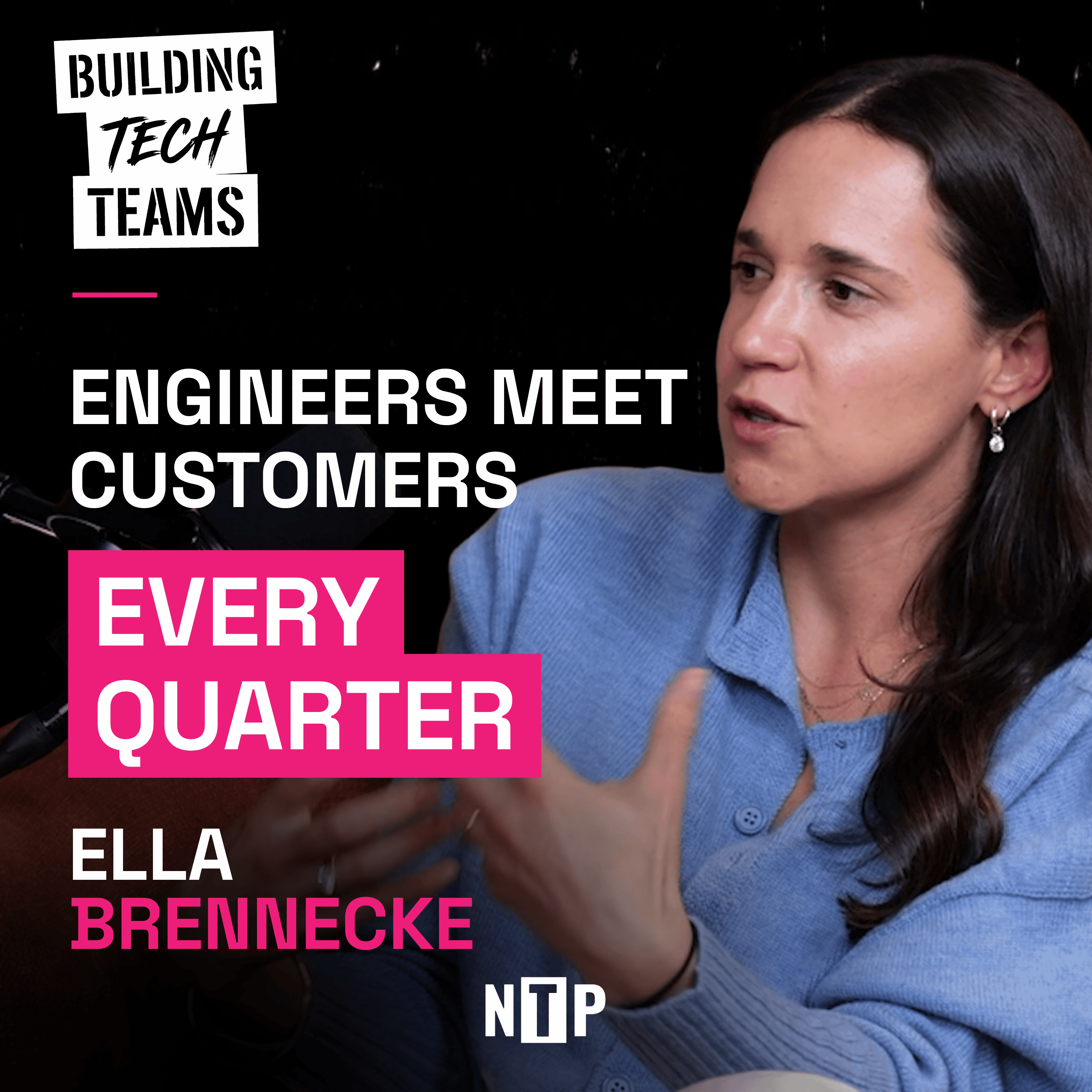
Why Everybody Unpacks the Dishwasher: Ella Brennecke, People Operations Manager at Everlab

DESCRIPTION Most people teams wait until someone with an HR background is in the room before they build a culture function. Ella Brennecke didn't have one, and Everlab's culture is stronger for it. In this episode of Building Tech Teams, James MacDonald sits down with Ella Brennecke, People Operations Manager at Everlab, the preventative health company that has grown past 130 people across Sydney and Melbourne. They get into how Ella broke into people and culture from a hospitality and founder-support background, why she deliberately targeted startups with nobody yet in HR, and how she uses AI as a research partner without letting it write the memo a human is meant to read. It's a hands-on look at building culture at speed: onboarding designed to start before day one, an "everybody unpacks the dishwasher" ownership principle that runs through hiring and customer care alike, and why Everlab puts every new hire through its own health protocol before they touch the product. They also cover the real tension in AI-assisted hiring, why a genuine cover letter still beats a strong resume, and what years in hospitality taught her about designing experiences long before she had a people title. CHAPTERS 00:00 Cold open 00:43 Intro: why culture is the glue past 100 people 02:57 Designing experiences where people excel 04:03 Magic is designed, not accidental 05:20 Holding culture across Sydney and Melbourne 07:31 Supporting technical people leaders 09:28 Leaning on your VC as a resource 10:56 Breaking into people and culture with no HR background 14:45 Creating your own luck 16:11 Just ask for the title 16:41 Why she stays close to the founder 18:51 What breaks as you scale: onboarding first 21:43 The interview is a two way sell 25:01 Inside the hiring process 26:26 What a culture interview actually looks like 28:27 New York restaurants and fast feedback loops 31:36 Get the ops right, then add the magic 33:12 Automating the busy work 35:38 AI can level you up or level you down 37:52 Teaching the next generation to still think 39:44 AI slop: produce better, not more 41:29 Using AI to synthesise, not to judge 42:37 Why she still reads every cover letter 45:30 The win: annual review cycles 48:07 Design for the people you're actually serving 49:05 Everybody unpacks the dishwasher 51:41 Every employee sits with a customer each quarter 54:34 Final advice: leave threads for people to pull 56:37 Wrap ABOUT THE GUEST Ella Brennecke is People Operations Manager at Everlab in Sydney, where she has built the people and culture function largely from scratch since joining roughly nine months ago. She came to Everlab via the Founder Success team at Blackbird Ventures and the guest experience team at cabin retreat company Unyoked, and works closely with Everlab's founder on hiring, onboarding and culture across the company's Sydney and Melbourne offices. LINKS Ella Brennecke, Everlab · LinkedIn: https://www.linkedin.com/in/ariella-werner-seidler/ James MacDonald, NTP Talent · LinkedIn: linkedin.com/in/jamesmacdonaldau · Site: ntptalent.com.au Hosted by James MacDonald, Managing Director of NTP Talent. Building Tech Teams is produced by Day One®, trusted partners in the technology space and the team that helped build Blackbird Ventures' Wild Hearts. Sister shows include First Cheque, Oversubscribed and In The Blink of AI. Episodes are cross-promoted across the network.
September 1, 20261 hr 16 min

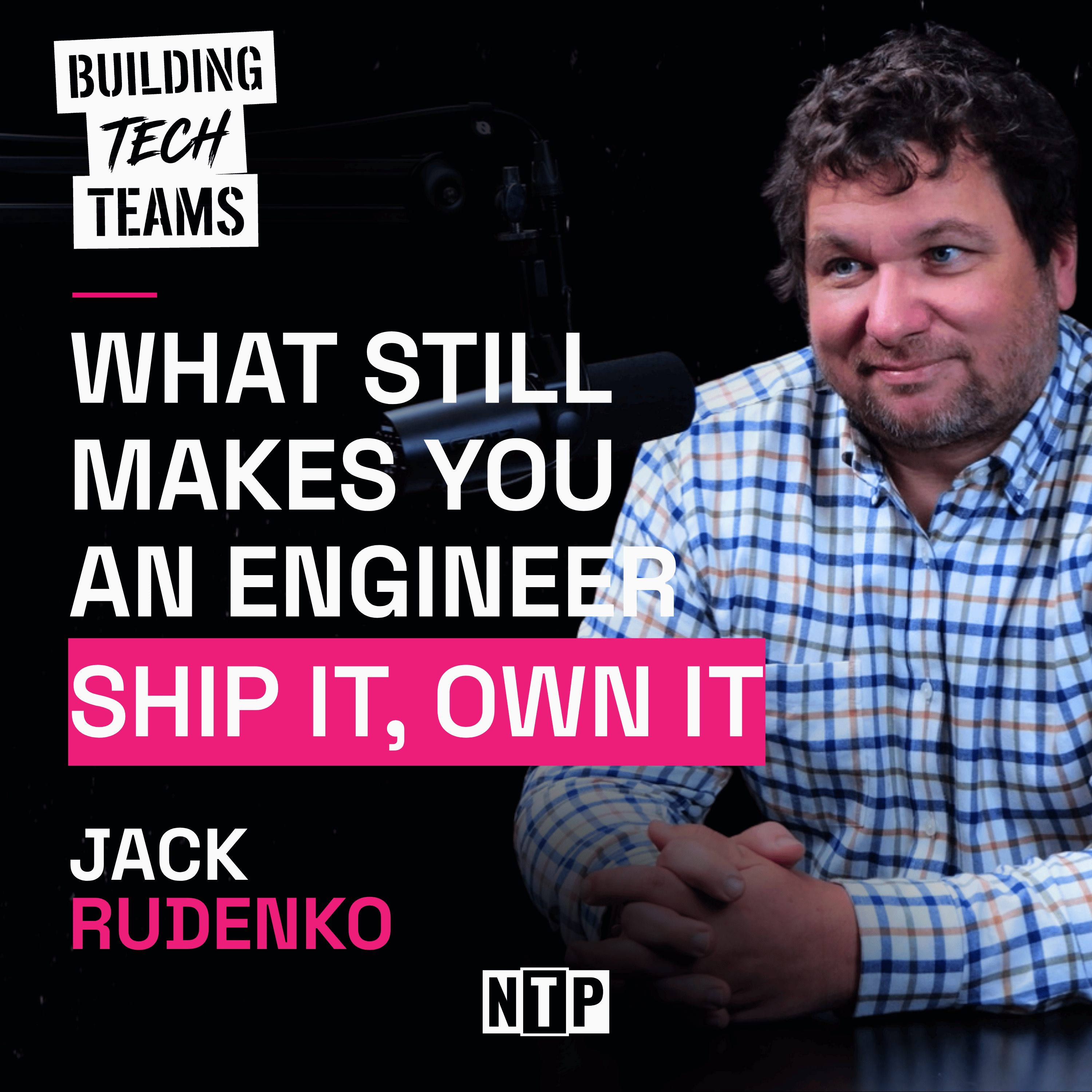
The Engineer Who Hasn't Written Code in 9 Months: Jack Rudenko, 10x Labs

Jack Rudenko hasn't written a line of code himself in nine months. In that time, his team has shipped six or seven products used by millions of people, and he says that gap, between who writes the code and who's actually building, is the whole story of engineering right now. In this episode of Building Tech Teams, James MacDonald sits down with Jack Rudenko, Chief AI Officer at 10x Labs, where he has spent the past two years building an AI-native engineering practice from the ground up. They get into the project everyone called impossible before AI made it a three-month build, why working with AI agents is more exhausting than writing code ever was, and what actually separates an engineer from an artist or a scientist now that the code itself isn't the hard part. It's a hands-on, practitioner's take on what building with AI agents actually looks like day to day, not the conference-keynote version. They cover Jack's own workflow for briefing an AI agent, why he doesn't trust any project's security the moment an API key exists, the "non-engineering builders" quietly out-building agencies, and why he calls Claude Code some of the worst-engineered software he's ever used, and also the tool he loves most. CHAPTERS 0:00 - Cold open: the line that explains why most AI engineering doesn't work 0:31 - Who Jack Rudenko is, and what's ahead in this episode 1:27 - Welcome, meet Jack Rudenko, Chief AI and Technical Strategist at 10x Labs 1:48 - The real bottleneck in AI engineering is human, not technical 3:36 - Why "AI native from scratch" beats bolting AI onto old processes 8:53 - Inside Magus, treating AI skills like versioned software packages 11:20 - 500 skills later, building a curated knowledge base for AI agents 14:56 - The rise of the "non-engineering builder" 17:06 - Why enterprise software is the real mess, not startups 19:32 - The unexpected cost of working with AI, burnout, not laziness 21:24 - Jack's actual workflow, plan mode, research, and acceptance criteria 27:26 - Dark factories, evals, and "religion" versus "engineering" in AI 29:49 - The skill nobody measured, loaded less than half the time 32:52 - Why AST trees beat graph databases for AI code memory 36:07 - From 10X to 50X, two projects AI made possible 41:35 - What team size looks like when one person can do it all 42:53 - Why no project is secure once a key exists 46:44 - Artist, scientist, engineer, what actually makes you one 51:04 - What junior engineers need to learn now 54:45 - Cursor, YC founders, and the rise of the non-engineer builder 59:35 - The addictive, exhausting superpower of building 10X more 1:02:57 - Why "impossible" projects are worth the budget now 1:04:55 - The future of software, giant platforms and a million small ones 1:08:04 - Why consultancies are thriving, for now 1:09:12 - "Claude Code is the worst software ever. I love it." 1:11:22 - Open source, Jack's origin story, and why it built him 1:15:23 - James's takeaway: religion vs engineering, and the challenge to measure your own AI rollout ABOUT THE GUEST Jack Rudenko is Partner and Chief AI Officer at 10x Labs, where he has spent the past two years building the team’s AI-native engineering practice, Magus, from the ground up. He has deep expertise in cloud-native architecture, Go, Kubernetes and complex systems, and has delivered production platforms that would have been considered technically impossible before AI, including a three-system integration project used as a case study on this episode. Jack is also a longtime open-source contributor, including to the Linux kernel.at 10x Labs, where he has spent the past two years building the team’s AI-native engineering practice, Magus, from the ground up. He has deep expertise in cloud-native architecture, Go, Kubernetes and complex systems, and has delivered production platforms that would have been considered technically impossible before AI, including a three-system integration project used as a case study on this episode. Jack is also a longtime open-source contributor, including to the Linux kernel. LINKS Jack Rudenko, 10x Labs · LinkedIn: https://www.linkedin.com/in/erudenko/ James MacDonald, NTP Talent · LinkedIn: linkedin.com/in/jamesmacdonaldau · Site: ntptalent.com.au Hosted by James MacDonald, Managing Director of NTP Talent. --- Building Tech Teams is produced by Day One®, trusted partners in the technology space and the team who helped build Blackbird Ventures' Wild Hearts. Sister shows include First Cheque, Oversubscribed and In The Blink of AI. Episodes are cross-promoted across the network.
August 25, 202621 min

Nobody Knows What to Pay Anymore: A Building Tech Teams Best-Of

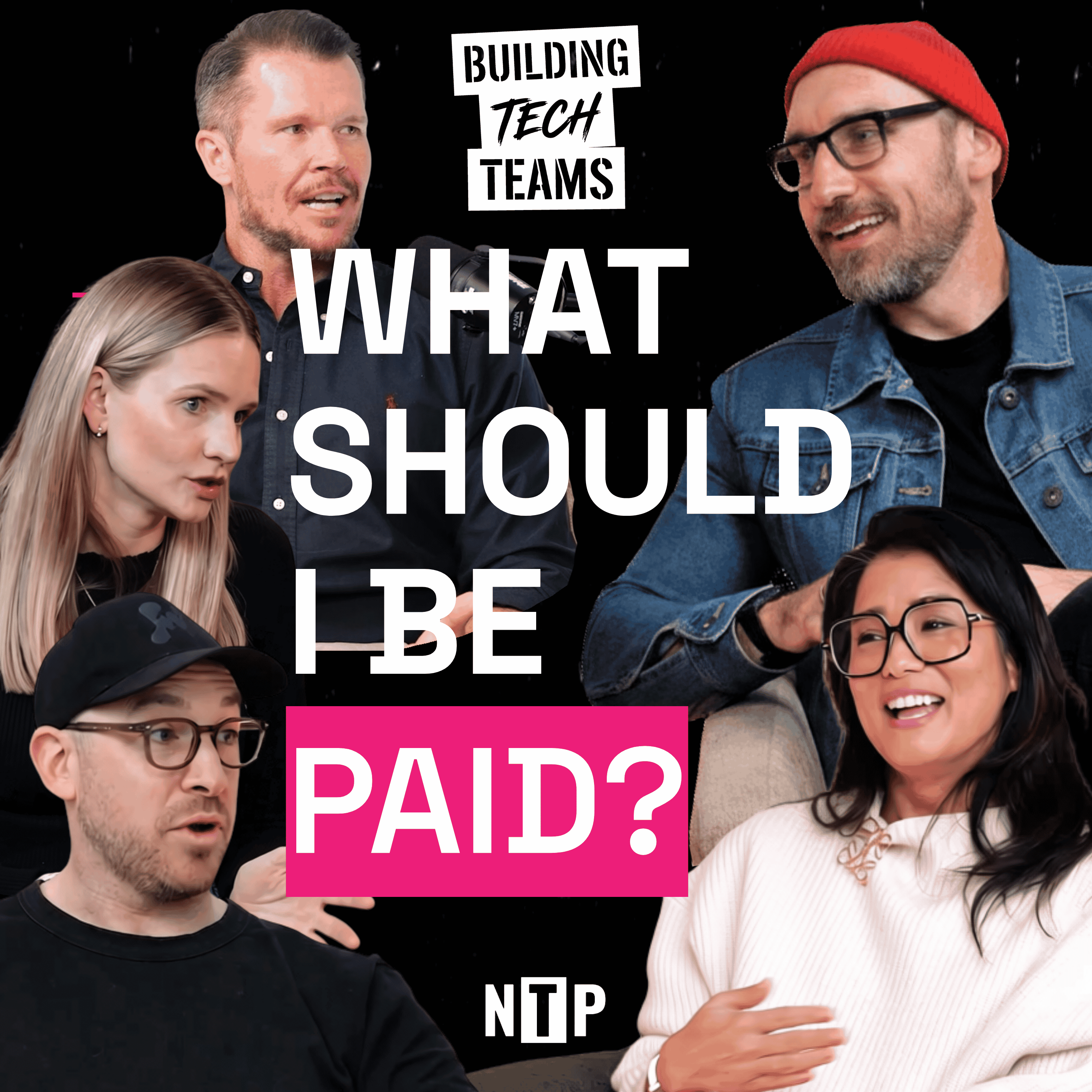
Eight guests into Building Tech Teams, one theme has shown up in every single episode: money. A principal software engineer who now manages a team of agents asks what he should be paid, and nobody in the room has a clean answer. AI has changed what one person can produce, and salaries have come off the rails behind it. In this best-of episode, James MacDonald pulls together the sharpest thinking on compensation from five of his first eight guests. Nathan Hill, Head of Telco at AWS, on the question nobody can answer yet. Adam Witanowski with the real numbers from a live job hunt: nine companies, seven offers, US startups paying US$450–500k base against comparable local roles at $220k. Claudia Barriga-Larriviere on whether AI is making teams more productive or just faster. Matt McFarlane, founder of FNDN, on token costs eating into the people budget. And Cloe Stanbridge, Talent Lead at Airtree, on the moment a big cheque is actually worth it. It adds up to a state of play for the Australian market on AI-era pay: why the gap with the US is structural (no hyperscalers, startup funding a tenth the size, enterprises that still think engineers are too expensive), why almost nobody is measuring the productivity gains they are paying for, what happens when ten people run five thousand agents, and why the cheapest move in the whole budget discussion is the raise nobody asked for. CHAPTERS 0:00 - Cold open: what should a 10x engineer be paid? 0:19 - Nathan Hill: quantifying what AI is actually worth 1:05 - Million-dollar salaries as a bet on future ROI 1:28 - Adam Witanowski: nine companies, seven offers, real numbers 2:35 - US$500k in the US vs $220k here: which one would you choose? 3:50 - Why the gap is structural: funding, hyperscalers, enterprise mindset 5:37 - Claudia Barriga-Larriviere: more productive, or just faster? 6:15 - "What you don't measure, you can't change" 7:26 - Matt McFarlane: the jump is too big, because you've been underpaying 8:32 - Tokens are eating the people budget 9:55 - Ten people plus 5,000 agents: whose budget line? 11:00 - Where token costs land, and the on-cost of humans 13:01 - Leaderboards reward consumption, not value 13:31 - Cloe Stanbridge: when the big cheque is worth it, and when it isn't 15:06 - Salary bands have to enable the business 16:26 - Replacement value: getting ahead of the market 16:58 - The raise nobody asked for ABOUT THE GUESTS Nathan Hill is Head of Telco at AWS (episode 3). Adam Witanowski is an AI Architect, previously at NIB (episode 7). Claudia Barriga-Larriviere is a People & Culture leader at Startup Flamingo (episode 4). Cloe Stanbridge is Talent Lead at Airtree (episode 6). Matt McFarlane is the Founder and Director of FNDN, a compensation consultancy helping startups and scaling tech companies build pay practices that are clear, fair and competitive (episode 8). The full conversations with all five are in the feed. LINKS Nathan Hill, AWS LinkedIn: https://www.linkedin.com/in/nathanrhill Claudia Barriga-Larriviere, Startup Flamingo LinkedIn: https://www.linkedin.com/in/claudiabl Site: https://startupflamingo.com Cloe Stanbridge, Airtree LinkedIn: https://www.linkedin.com/in/cloestanbridge/ Adam Witanowski linkedIn: https://www.linkedin.com/in/witanowski/ Matt McFarlane, FNDN LinkedIn: https://www.linkedin.com/in/matthewmcfarlane/ Site: https://www.fndn.com.au/ James MacDonald, NTP Talent LinkedIn: https://www.linkedin.com/in/jamesmacdonaldau/ Site: https://ntptalent.com.au James's newsletter, Headcount and Code, lands every Wednesday on Substack. Hosted by James MacDonald, Managing Director of NTP Talent. Building Tech Teams is produced by Day One®, trusted partners in the technology space and the team who helped build Blackbird Ventures' Wild Hearts. Sister shows include First Cheque, Oversubscribed and In The Blink of AI. Episodes are cross-promoted across the network

August 18, 20261 hr 13 min

Why "The Number Is Never the Problem": Matt McFarlane, Founder of FNDN

Most companies treat compensation as a math problem: get the number right and the rest takes care of itself. Matt McFarlane says that’s backwards, and it’s the reason so many pay conversations go sideways even when the number itself is fair. In this episode of Building Tech Teams, James MacDonald sits down with Matt McFarlane, founder of FNDN, the compensation consultancy he built after years running People Operations inside fast scaling startups. They get into why counteroffers rarely work, the exact headcount where pay problems start to bite, why equity has stopped doing its job as a retention lever in Australia, and how the AI hiring market has quietly made token costs a bigger line item than payroll. CHAPTERS 0:00 - Cold open: the number is only half the story 0:44 - Who Matt McFarlane is, and why James wanted him on 1:30 - Welcome, and the trust problem behind every pay number 3:08 - Pay compression, and getting ahead of the market before you're asked 5:54 - Rebalancing cadence, and when a counteroffer is worth it 9:37 - Bringing in outside help, and titles as currency 11:35 - Building a real pay philosophy, and hiring your first people leader 13:52 - The 50 to 100 headcount inflection point 15:32 - Why the people function is bigger than most founders think 17:31 - Onboarding, ways of work, and staying focused in the age of AI 20:50 - What Zapier gets right about AI adoption 23:29 - The AI engineer bidding wars, and the "jump is too big" excuse 26:29 - Token costs vs headcount costs, and mission over salary 29:20 - Is equity still worth offering 32:50 - The naivety of chasing the next Canva 34:08 - Building a team with a blank cheque 37:52 - Rock stars, superstars, and hiring past 100 people 40:38 - How AI agents are reshaping org structure 42:47 - The Ralph Wiggum loop, and why AI leaderboards backfire 47:13 - Attraction and retention beyond salary 48:50 - The ComBank toilet tracker 49:39 - Advice for individuals chasing a pay rise 53:41 - Why "prove it first" is dying: Gen Z's pushback 56:31 - Staying technical, and why people teams need to get technical too 1:01:27 - Building a personal brand from scratch 1:02:22 - How the podcast happened by accident 1:05:37 - What personal brand does for individual engineers 1:08:17 - The Startup People Summit 1:10:50 - One trend to watch 1:11:50 - James's takeaway, and the gap you need to close ABOUT THE GUEST Matt McFarlane is the Founder and Director of FNDN, a compensation consultancy helping startups and scaling tech companies build pay practices that are clear, fair and competitive. He previously led People Operations functions at companies including Oyster, a global employment platform, where he was Senior Director of People Experience. Matt also publishes the FNDN Series newsletter and podcast, co-founded the Startup People Summit, and was named to the 2026 HR Influence Awards Top 12 for ANZ and LinkedIn’s Top Voices Australia. LINKS Matt McFarlane, FNDN · LinkedIn: https://www.linkedin.com/in/matthewmcfarlane/ · Site: https://www.fndn.com.au/ James MacDonald, NTP Talent · LinkedIn: https://www.linkedin.com/in/jamesmacdonaldau/ · Site: https://ntptalent.com.au Hosted by James MacDonald, Managing Director of NTP Talent. --- Building Tech Teams is produced by Day One®, trusted partners in the technology space and the team that helped build Blackbird Ventures' Wild Hearts. Sister shows include First Cheque, Oversubscribed and In The Blink of AI. Episodes are cross-promoted across the network.
August 10, 20261 hr 14 min

Why "Show Me Your Harness" Beats Any Coding Test: Adam Witanowski, AI Architect

Most technical interviews still ask a candidate to write a function on a whiteboard. Adam Witanowski says that question is already obsolete, and what should replace it says everything about how AI is changing who gets hired. In this episode of Building Tech Teams, James MacDonald sits down with Adam Witanowski, AI Architect at nib, where he has spent the past several years building the insurer's AI engineering practice from the ground up. They get into why most enterprise AI projects underperform (nobody is measuring the right things), what "back pressure" means for AI-generated code, why Australian salaries can't compete with the US for senior AI talent, and why the technical interview needs a full rebuild. It's a hands-on, practitioner's take on what's actually happening inside enterprise AI teams, not the conference-keynote version. They cover the real dollar gap between hiring an AI engineer in Australia versus the US, why "the whiteboard should come back" as an interview tool, how Adam built his own AI agent to interview for jobs on his behalf, and the testing harness his team uses to check whether AI-generated work is actually any good. CHAPTERS 0:00 - Cold open: the line that explains why most AI investments don't work 0:44 - Who Adam Witanowski is, and why James wanted him on 2:06 - Welcome, and building an AI SDLC from scratch inside a regulated insurer 5:12 - What "back pressure" actually means, and why solo AI coding doesn't scale 10:52 - Startups vs enterprises: re-engineer whole processes, not thin slices 13:24 - Why most companies can't even measure the problem they're trying to solve 17:10 - Software eats the world, and why that makes engineers apex predators 19:44 - Build in-house or buy: the blind spots consulting companies won't tell you 23:57 - Forward deployed engineers, and the rise of the hybrid product-engineer 26:38 - Tangent: his 13-year-old builds an AI auto-aimbot 30:43 - Build, upskill or outsource: the renters, owners and caretakers test 34:18 - What AI talent actually wants beyond a bigger title 38:30 - The real dollar gap: $220K in Australia versus $500K in the US 46:37 - What to actually pay your first AI hire 49:01 - "What you don't measure, you can't change" 51:01 - Redesigning the interview: show me your harness 56:45 - Why the whiteboard should come back 58:38 - Building a harness to test his harness 1:03:46 - He built his own AI agent to interview for him 1:07:28 - Why motivation and taste still beat any technical test 1:12:19 - Apex predator, Jedi, stallion, unicorn: Adam's closing line 1:13:00 - James's takeaway: it's a measurement problem, not a technology problem ABOUT THE GUEST Adam Witanowski is an AI Architect at nib in Sydney, where he has built Prometheus, an integrated suite of agentic AI tools now running in production across the business. He works at the intersection of senior engineering and AI leadership, and has spoken publicly on enterprise AI engineering discipline, including harness design, testing and evals, and AI governance. LINKS Adam Witanowski, NIB · LinkedIn: https://www.linkedin.com/in/witanowski/ James MacDonald, NTP Talent · LinkedIn: https://www.linkedin.com/in/jamesmacdonaldau/ · Site: https://ntptalent.com.au Hosted by James MacDonald, Managing Director of NTP Talent. --- Building Tech Teams is produced by Day One®, trusted partners in the technology space and the team that helped build Blackbird Ventures' Wild Hearts. Sister shows include First Cheque, Oversubscribed and In The Blink of AI. Episodes are cross-promoted across the network.
August 3, 20261 hr 3 min

The Junior Engineer Isn't Needed Anymore: Cloë Stanbridge, Talent Lead at Airtree

The junior engineer used to be the safe first hire. Cloë Stanbridge says AI just made that job disappear, and that's only the start of what's rewriting tech hiring right now. In this episode of Building Tech Teams, James MacDonald sits down with Cloë Stanbridge, Talent Lead at Airtree, one of Australia's most active venture capital firms. Cloë spends her days helping early-stage founders make their first engineering hires and helping later-stage companies scale their teams, work she's done from both sides, having previously led talent through a hypergrowth stretch at SafetyCulture and embedded inside scaling companies at The Lab17. They get into what actually makes a founder an "outlier" worth backing, why some founders eventually have to admit they've become the bottleneck in their own company, why the traditional junior engineer role is disappearing, and how Airtree's new Frontiers program is drawing hundreds of applications from engineers ready to go out on their own. It's a hiring-trenches conversation full of specific, hard-won detail: the real numbers behind scaling a team from 60 to 350 people, why some recruiters place better talent because they simply know the team better, the AI tools on both sides of the hiring desk, and the line that sums up what's actually scarce in tech right now: everyone can build, not everyone can sell. Chapters 0:00 Cold open: why the junior engineer is disappearing 0:40 What this episode covers 1:40 Welcome: Cloë Stanbridge, Talent Lead at Airtree 1:56 A day in the life of a VC talent lead 2:10 Investing from pre-seed to growth stage 2:57 How talent gets involved at each stage 4:15 What makes a founder an "outlier" 5:02 Hiring the first few engineers 5:48 Case study: scaling a young founder's team 7:39 When a technical founder gets pulled in every direction 9:01 Hiring junior engineers in the age of AI 11:03 Why "junior" now means doing mid-level work 12:05 The fear of hiring someone more senior than you 13:02 When founders step back into R&D 13:32 Zero-to-one vs. scaling personalities 14:08 Inside Airtree's Frontiers program 15:24 Why engineers are leaving big companies to found startups 15:57 Retention, ESOP, and leaner teams 16:45 Why managers now need to be hands-on architects 17:25 Why no job is safe from redundancy anymore 18:39 The squeeze on middle management 19:34 Hiring people leaders too late 21:34 What actually keeps people "sticky" 21:58 Leadership lessons from Brené Brown and Kim Scott 22:41 Embedding inside scale-ups at The Lab17 25:15 Setting a new hire up to succeed, or fail 27:49 How the market flipped after COVID 28:21 When a huge engineer salary is worth it 31:08 Competing with Silicon Valley salaries 31:37 How Linktree built culture as a differentiator 32:52 Cash versus flexibility in a cost-of-living crisis 33:40 Being upfront about the grind before they sign 35:20 Remote work and the culture question 36:55 Why go-to-market matters more than ever 37:46 Expanding into the US market 40:10 Do founders have to relocate for funding? 41:34 Bringing Australian talent back home 42:36 From 60 to 350: scaling at SafetyCulture 47:04 Why recruiters need to know "their dog's name" 47:46 Being a thought partner, not a salesperson 48:47 Hiring for potential over a checklist 50:39 Why problem-solving beats a technical checklist 51:47 How AI is changing technical interviews 53:38 Trial days: hiring by actually working together 55:25 Screening out "AI slop" in applications 56:21 Spotting an AI-written cover letter 57:34 Using AI without losing the human element 57:52 Where voice agents fit and where they don't 58:39 The AI tools Cloë uses to research candidates 59:25 Cloë's top 3 AI skills for recruiting 1:00:45 James's AI-powered morning brief 1:01:58 Wrap-up and thanks 1:02:11 James's takeaways from the episode About the Guest Cloë Stanbridge is Talent Lead at Airtree, where she partners with the firm's portfolio to connect founders with top talent, build scalable hiring processes, and develop playbooks that support sustainable growth. Before Airtree, she spent over four years at The Lab17, embedding inside scaling companies including Linktree and Immutable to build out their hiring practices, and led talent through a hypergrowth stretch at SafetyCulture, taking the engineering team from around 60 people to 350 in two years. Links Cloë Stanbridge · Airtree · LinkedIn: https://www.linkedin.com/in/cloestanbridge/ James MacDonald — LinkedIn: https://www.linkedin.com/in/james-macdonald-au/ NTP Talent: https://ntptalent.com.au/ Day One: https://dayone.fm/ Hosted by James MacDonald, Managing Director of NTP Talent. Building Tech Teams is produced by Day One®, trusted partners in the technology space and the team that helped build Blackbird Ventures' Wild Hearts. Sister shows include First Cheque, Oversubscribed and In The Blink of AI. Episodes are cross-promoted across the network.
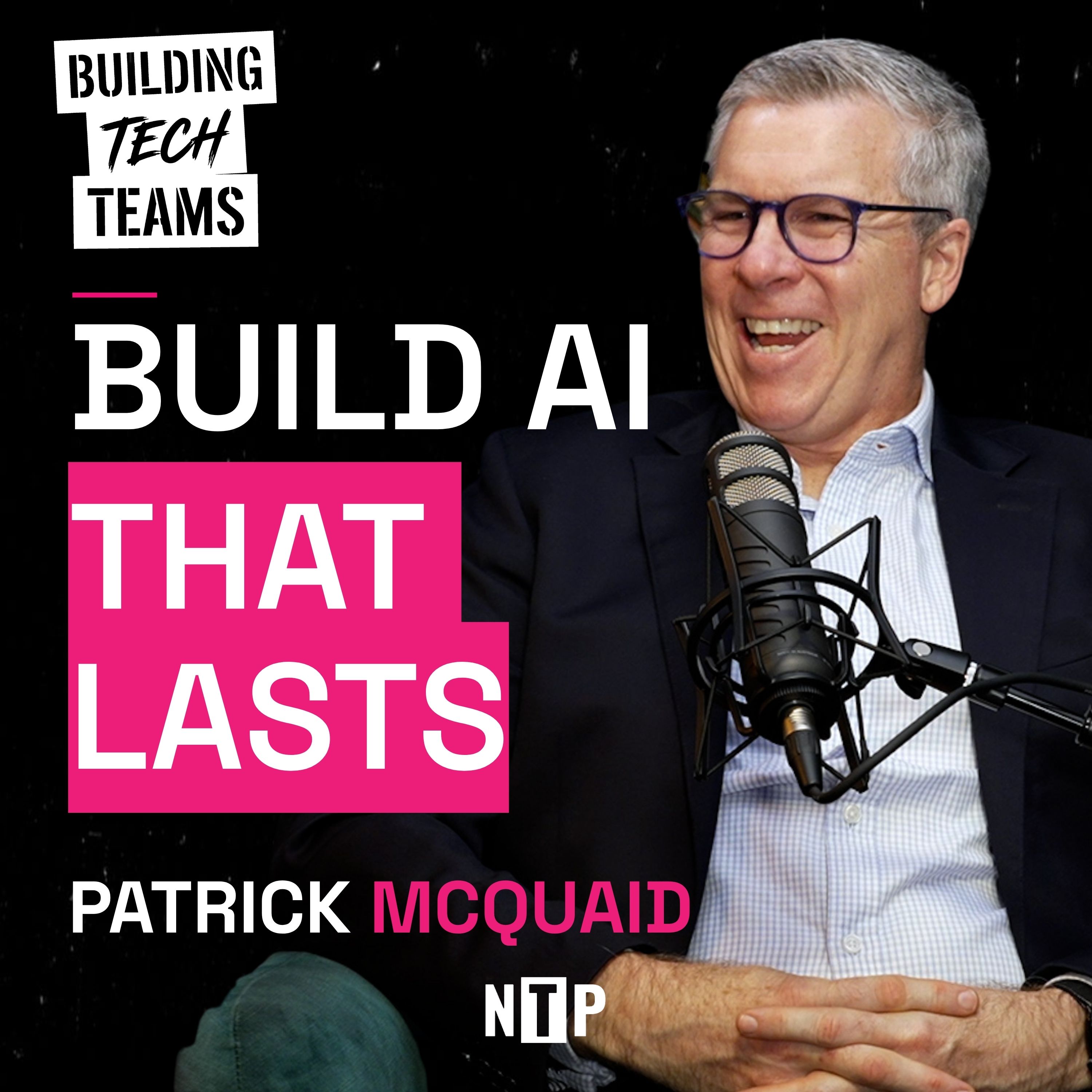
July 27, 20261 hr 13 min

How to Build AI Capability Without Chasing Every New Model, with Patrick McQuaid

Most organisations are asking which AI model they should use. Patrick McQuaid thinks that is the wrong conversation. Patrick is Group Head of Data, Analytics & AI at NGM Group. He joins James MacDonald to explain how leaders can build practical AI capability without getting trapped by hype, vendor lock-in or an endless cycle of new tools. They discuss how NGM approaches AI inside a regulated banking environment, where privacy, risk and customer trust make it impossible to turn a weekend prototype straight into production. Patrick explains why teams need both strong foundations and useful short-term wins, why the people closest to the work should own their technology costs, and where generative AI should not be used for decision-making. The conversation also explores what AI means for technical careers. Patrick shares why he hires for attitude, curiosity and problem-solving ability, rather than waiting for candidates with years of experience in technology that has only just emerged. He and James discuss the continuing value of junior engineers, the rise of AI enablement and orchestration roles, and the human skills that remain difficult to automate. If you are responsible for introducing AI into an established organisation, hiring a technical team or preparing your own career for the next wave of change, this episode offers a grounded alternative to the fear and hype. Chapters 0:00 — Stop arguing about AI models 0:46 — What this episode covers 1:15 — Meet Patrick McQuaid 1:38 — Leading experts without being the deepest technical expert 4:37 — Deployment, flexibility and avoiding model lock-in 6:45 — Vibe coding versus production inside a regulated bank 8:30 — Shadow AI and choosing enterprise tools 10:10 — Junior engineers and hiring for attitude 16:15 — Who should own AI and token costs? 19:34 — Building, buying or partnering for AI capability 21:21 — Where generative AI does not belong 25:41 — Joining NGM during a major data transformation 30:17 — Building foundations and delivering quick wins 34:20 — Planning in a fast-moving AI market 35:45 — Agentic tools and the value of staying flexible 37:04 — Can specialist software companies defend their advantage? 39:18 — What organisations should and should not build themselves 41:33 — Technology's role in a human business 49:44 — The human skills AI cannot replace 52:33 — What AI could mean for the next generation 54:33 — Remote work, relationships and learning together 58:35 — Cutting through AI FOMO and LinkedIn hype 1:00:27 — The AI advantage for smaller organisations 1:01:24 — Managing legal, financial and reputational risk 1:06:43 — AI sycophancy and why chatbots agree with you 1:07:57 — The skills technology professionals should build now 1:09:26 — AI enablement and orchestration roles 1:12:46 — James's key takeaway About the Guest Patrick McQuaid GAICD is Group Head of Data, Analytics & AI at NGM Group, one of Australia's largest customer-owned banking groups. NGM Group operates the Greater Bank and Newcastle Permanent brands. Links Patrick McQuaid — LinkedIn: https://www.linkedin.com/in/patrick-mcquaid/ NGM Group: https://www.ngmgroup.com.au/ National AI Centre: https://www.industry.gov.au/science-technology-and-innovation/technology/artificial-intelligence/national-ai-centre James MacDonald — LinkedIn: https://www.linkedin.com/in/james-macdonald-au/ · NTP Talent: https://ntptalent.com.au/ Day One: https://dayone.fm/ Hosted by James MacDonald, Managing Director of NTP Talent. Building Tech Teams is produced by Day One®, trusted partners in the technology space and the team that helped build Blackbird Ventures' Wild Hearts. Sister shows include First Cheque, Oversubscribed and In The Blink of AI. Episodes are cross-promoted across the network.

July 20, 20261 hr 5 min

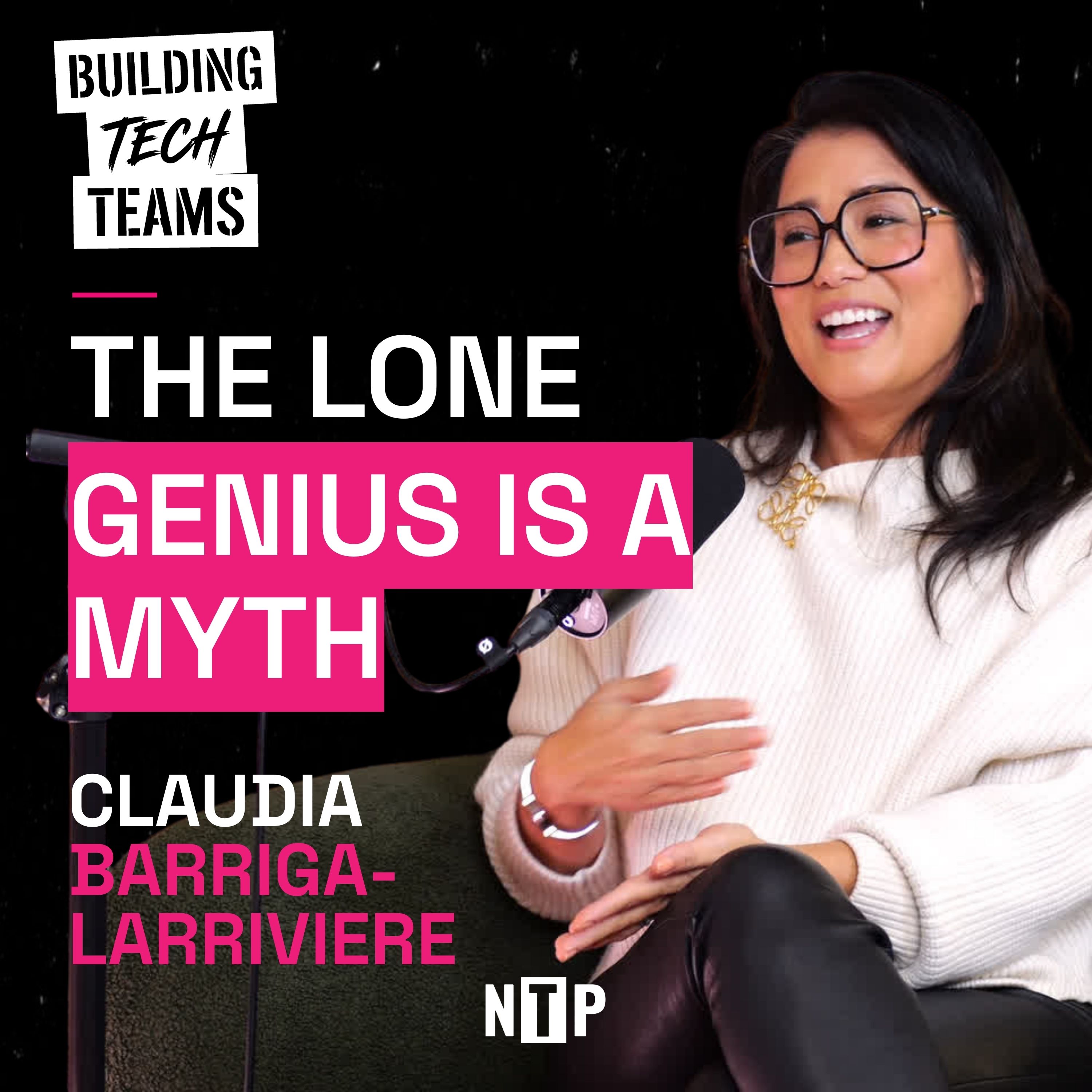
Are Your People More Productive or Just Faster? Claudia Barriga-Larriviere, Startup Flamingo

Every great team she has ever seen shares one trait: they are comfortable with discomfort. Claudia Barriga-Larriviere has spent nearly 20 years building people and culture inside startups and global enterprises — and she thinks most of the AI conversation is quietly dodging the hard, human questions. In this episode of Building Tech Teams, James MacDonald sits down with Claudia Barriga-Larriviere — people-and-culture leader and founder of Startup Flamingo — for a practitioner-to-practitioner conversation on how capable people actually build teams. They get into self-awareness as a muscle rather than a gift, why Australia's love of harmony quietly kills direct feedback, and the difference between a team that is genuinely high-performing and one that is just stressed and running fast off a cliff together. Then it turns to AI — not as weather to brace for, but as a tool you have to point somewhere. Are your people more productive, or just faster? What do you lose when you automate the uncomfortable parts of the job — the feedback loop, the one-on-one, the human connection — and who is a flattened, agent-run org actually built for? Claudia makes the case that AI should augment an already good team, that you have to build that team first, and that the leaders winning this moment are the ones asking better questions instead of racing to be first. It's a conversation about discomfort, storytelling, balanced teams, and keeping the human in a human organisation. Chapters 0:35 — The one trait every great team shares: comfortable with discomfort (plus self-awareness) 1:46 — Is self-awareness born or built? Temperament, empathy and psychological safety 3:28 — Why leaders dodge the hard conversation 3:59 — Cutting her teeth on GFC redundancies: directness and an American education 6:04 — Australia's harmony problem vs direct feedback 6:43 — What "high performance" actually means (and what it doesn't) 7:42 — The feedback loops we outsource because they're uncomfortable 9:17 — Protect the plan, or chase the Nazis? An Indiana Jones lesson for leaders 11:18 — Read fiction: storytelling, empathy and depersonalising feedback 14:35 — Praise the person, critique the work — and when to call it out 16:55 — Overconfident founders and the case for yin-and-yang teams 18:39 — Powers of Two: debunking the lone genius (Lincoln, Lennon & McCartney, Jobs & Woz) 23:13 — Hire for change, not to fit in 24:20 — The maths of a founding team: builder, organiser, learner 26:41 — Glue vs grease: does your team need cohesion or speed? 28:53 — Project or person? The metabolism of a team 29:47 — AI is a tool, not the weather 33:16 — The narrative vs the technology — and the Tickle Me Elmo problem 41:14 — Slow down to speed up: when the market rewards layoffs 42:32 — The CPO's dilemma: more productive, or just faster? 45:04 — When is the risk no longer worth it? (You're paying by the token) 48:21 — Longevity isn't impact: off-ramps and the retention vanity metric 49:52 — Is AI making the manager redundant? 52:54 — The automatic ball thrower: what you lose when you automate connection 58:31 — AI augments a great team — but you have to build that team first 59:18 — Departing advice: play the tape to the end, and be in the business you're in 1:03:32 — Purpose over "who gets there first" — go touch some grass About the Guest Claudia Barriga-Larriviere is a people-and-culture leader with nearly 20 years building teams across startups and global enterprises, and the founder of Startup Flamingo. Links Claudia Barriga-Larriviere — Startup Flamingo: startupflamingo.com James MacDonald — LinkedIn · NTP Talent (NewyTechPeople): ntptalent.com.au Hosted by James MacDonald, Managing Director of NTP Talent. Building Tech Teams is produced by Day One®, trusted partners in the technology space and the team that helped build Blackbird Ventures' Wild Hearts. Sister shows include First Cheque, Oversubscribed and In The Blink of AI. Episodes are cross-promoted across the network.
July 13, 202643 min

AI Can’t Replace Domain Expertise — Nathan Hill, Head of Telco at AWS

The business wants AI, and it wants it yesterday. But once the proof of concept works and the partner goes home, someone inside the company has to keep the thing running. Nathan Hill, Head of Telco at AWS and a 20-year veteran of the telco industry, joins James to talk about what actually happens when enterprises push AI into production — and why the scarcest asset in the room is still deep domain knowledge. In this episode: - Why "we need to do AI, the board's pushing for it" so often collides with the buy-versus-build question no one has answered internally. - Where AI rollouts go wrong: over-engineering a basic problem, or buying an off-the-shelf tool and expecting it to be bespoke. - The proof-of-concept trap — projects that "prove AI works" but were never built with a path to production. - Why "AI native" doesn't translate cleanly to banks and telcos carrying 20–30 years of legacy and technical debt, and why the outcome should drive the tech strategy, not the reverse. - The handover problem in one line: "If your chatbot starts spitting out Gordon Ramsay recipes instead of the answer, who in your organisation can fix it?" - Centralise-then-seed: standing up an AI centre of excellence without creating an isolated team of "cool kids" cut off from the business (with a NASA analogy on risk). - Why you can't take 20 years of experience, grab a dev and say "now you know telco" — and how the tooling finally lets domain experts build. - Human-in-the-loop for critical infrastructure, digital twins of telco networks, and ICs becoming managers of agents. - The question James keeps asking: if I'm managing a team of agents at 10x productivity, what should I actually be paid? - Deep versus broad careers, how go-to-market has changed, and whether it's easier to teach a salesperson the tech or an engineer to sell. Nathan Hill is Head of Telco at AWS, leading the company's engagement across Australian telcos. Before AWS he spent more than 20 years inside the telco industry — operations, engineering, pre-sales and sales — and ran sales and marketing for a challenger telco. He has a rare view across both the technical build and the go-to-market that sells it. Building the team that has to make AI stick in production? This one's for you. Connect with Nathan Hill on LinkedIn. Learn more about AWS in telco at aws.amazon.com. --- Episode Summary The business wants AI now — but who keeps it running once it's live? Nathan Hill, Head of Telco at AWS and a 20-year telco veteran, sits down with James MacDonald to unpack what really happens when enterprises move AI from proof of concept to production. They dig into the buy-versus-build decision most organisations skip, why so many AI projects stall with no path to production, and the operating-model questions — who maintains it, who fixes it when it breaks — that companies leave until it's too late. Nathan makes the case that deep domain expertise is the asset AI can't replace: you can't grab a dev and say "now you know telco," but you can finally give 20-year network engineers the tools to build. They also get into human-in-the-loop for critical infrastructure, ICs becoming managers of agents and what that's worth, deep-versus-broad careers, and how the go-to-market function is changing now that the salesperson has to understand the tech. Practical, grounded, no hype. Time Stamps 0:00 "I'm managing a team of agents now — what should I be paid?" 1:30 Meet Nathan Hill, Head of Telco at AWS 2:58 "The board wants AI": the buy-versus-build question 4:30 Where AI rollouts go wrong 6:35 Start with a use case — but build a path to production 8:09 Is "AI native" realistic for banks and telcos? 9:36 Speed versus security in regulated industries 11:56 The handover problem: who maintains it? 15:21 AI centres of excellence and the NASA analogy 18:26 "You can't grab a dev and say now you know telco" 21:30 Why agents won't replace engineers 23:41 Managing a team of agents — what's that worth? 25:03 Deep versus broad: staying in one vertical 27:08 How go-to-market has changed 29:59 Teach a salesperson the tech, or an engineer to sell? 32:58 Building a go-to-market function from scratch 38:03 Why the "SaaS apocalypse" is wrong 39:56 Upskilling into modern go-to-market 41:21 Career advice: back yourself 42:42 James's takeaway: domain experts who learn to build About the host James MacDonald is the founder and Managing Director of NTP Talent (Newy Tech People), an Australian tech and engineering recruitment firm headquartered in Newcastle with teams in Sydney and Melbourne. He hosts Building Tech Teams, helping companies up the East Coast of Australia find and recruit the best technology talent. Connect with James on LinkedIn (/JamesMacDonaldAU) or at ntp-talent.com.au. About Day One Network Day One is a podcast production company and trusted partner in the technology space, producing shows for founders, investors and operators across Australia and beyond. Building Tech Teams is part of the Day One Network, which cross-promotes episodes across a slate of technology and venture shows. Building Tech Teams is produced by Day One®, trusted partners in the technology space and the team that helped build Blackbird Ventures' Wild Hearts. Sister shows include First Cheque, Oversubscribed and In The Blink of AI. Episodes are cross-promoted across the network.

July 6, 20261 hr 7 min

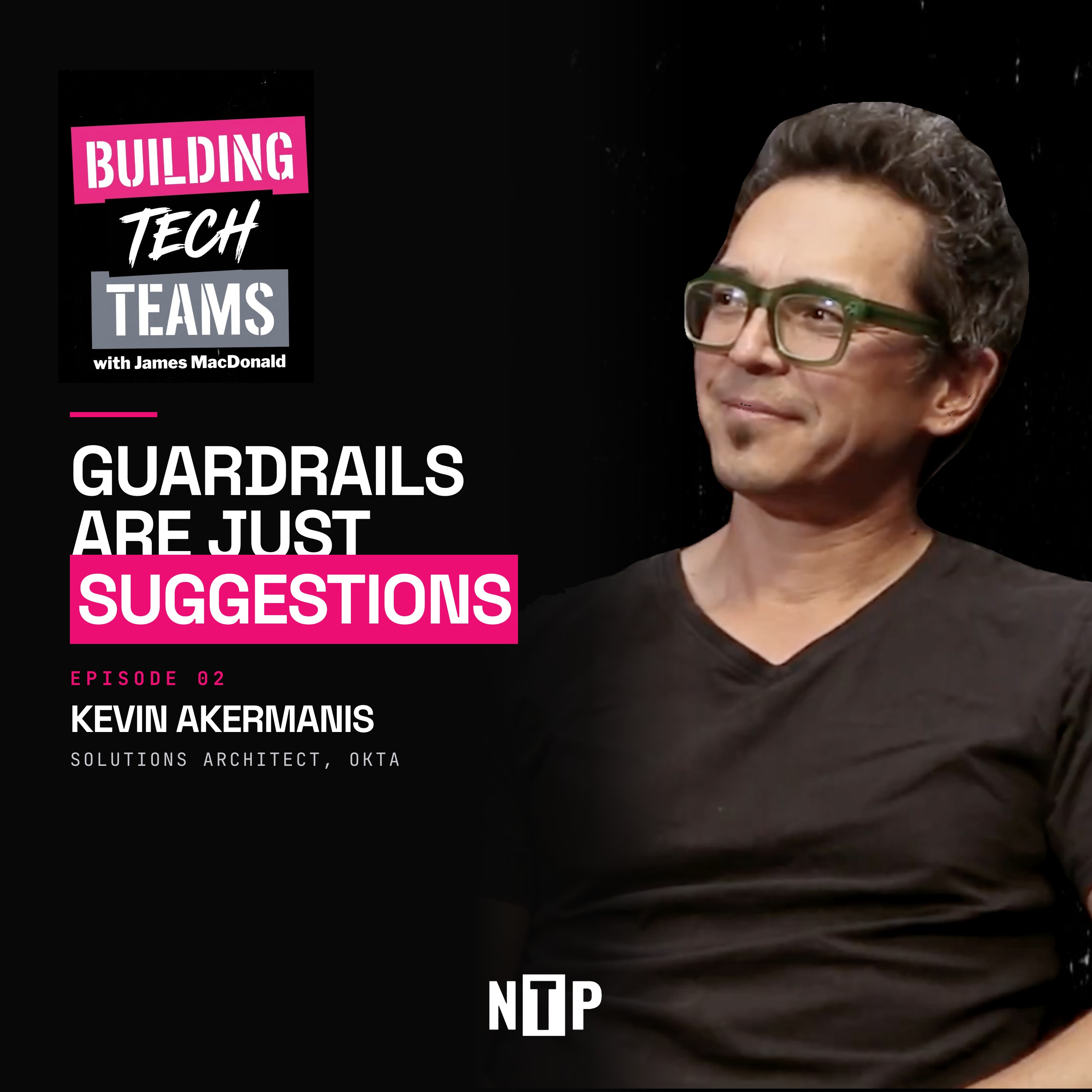
Guardrails Are Just Suggestions: Securing AI Agents with Okta's Kevin Akermanis

The business wants AI now. The people who have to secure it are being told to move faster while their budgets shrink. Kevin Akermanis, Solutions Architect at Okta and a 15-year Salesforce veteran, sits down with James MacDonald to unpack what really happens when enterprises rush AI into production: security funding flatlining, breaches becoming the cost of doing business, and a collapsed architecture that pushes security down to the data layer. They dig into why AI agents are a new class of non-human identity that can roam anywhere, why guardrails are only suggestions for something non-deterministic, and the scoped, time-limited, valet-key approach that actually contains the risk. They also tackle the harder people problem: if juniors get automated out, who backfills the seniors, and why knowing what good looks like still beats anything you can vibe-code. Practical, sceptical, no hype. Time Stamps 0:00 The business says "we need to AI now" 2:53 The real tension: speed vs protecting company IP 7:22 Security budgets shrink while AI gets the money 11:28 When breaches become the cost of doing business 13:42 New attack surfaces and the hiring-bot breach 18:14 Experience still matters: who backfills the seniors? 46:39 Agents as non-human identities: scope and guardrails 55:03 Where to start with AI safely 57:37 Why the Australian market cares about MCP About the host James MacDonald is the founder and Managing Director of NTP Talent (Newy Tech People), an Australian tech and engineering recruitment firm headquartered in Newcastle with teams in Sydney and Melbourne. He hosts Building Tech Teams, helping companies up the East Coast of Australia find and recruit the best technology talent. Connect with James on LinkedIn (/JamesMacDonaldAU) or at ntp-talent.com.au. About Day One Network Day One is a podcast production company and trusted partner in the technology space, producing shows for founders, investors and operators across Australia and beyond. Building Tech Teams is part of the Day One Network, which cross-promotes episodes across a slate of technology and venture shows. Building Tech Teams is produced by Day One®, trusted partners in the technology space and the team that helped build Blackbird Ventures' Wild Hearts. Sister shows include First Cheque, Oversubscribed and In The Blink of AI. Episodes are cross-promoted across the network.

Is this your show?

Claim this listing to keep it up to date, reach guests who want to pitch you, and manage bookings with Guestify.

Claim this listing

More Technology podcasts