Find partners
No Priors: Artificial Intelligence | Technology | Startups

No Priors: Artificial Intelligence | Technology | Startups

Hosted by Conviction

TechnologyBusinessScienceInterviews guests

Episodes

176

Latest episode

Aug 2026

Language

EN

About the show

At this moment of inflection in technology, co-hosts Elad Gil and Sarah Guo talk to the world's leading AI engineers, researchers and founders about the biggest questions: How far away is AGI? What markets are at risk for disruption? How will commerce, culture, and society change? What’s happening in state-of-the-art in research? “No Priors” is your guide to the AI revolution. Email feedback to show@no-priors.com. Sarah Guo is a startup investor and the founder of Conviction, an investment firm purpose-built to serve intelligent software, or "Software 3.0" companies. She spent nearly a decade incubating and investing at venture firm Greylock Partners. Elad Gil is a serial entrepreneur and a startup investor. He was co-founder of Color Health, Mixer Labs (which was acquired by Twitter). He has invested in over 40 companies now worth $1B or more each, and is also author of the High Growth Handbook.

Listen to episodes

60 recent
October 2, 202635 min

Frontier Chips for Frontier AI Labs, with Walter Goodwin, Founder/CEO of Fractile

Founder and CEO of full-stack AI chip company Fractile, Walter Goodwin, joins Sarah Guo to discuss the bets he’s made on the future of the chip market as other major players like Broadcom, NVIDIA, and AMD try to accelerate their workloads. They discuss the difference in Fractile’s newer approach on model architecture with a full-stack team in the current chip landscape and the technical bets they’re making in that direction. Walter also talks about compressing the gap between the chip design cycle and its payoff period, and making a generational leap in AI inference to realize the bet in volume against the value to be captured.  Sign up for new podcasts every week. Email feedback to show@no-priors.com Follow us on Twitter: @NoPriorsPod | @Saranormous | @EladGil | @goodwin_ml | @fractile_ai Chapters: 00:46 – Walter Goodwin and Fractile Introduction  02:29 – The Chip Landscape Now 04:56 – Common Handoffs From Architecture-Focused Players 07:18 – Full Stack Approach and Team Setup 09:49 – Fractile’s Most Important Technical Bets  15:32 – Workload Predictions and Compressing the Chip Design Cycle 23:03 – Architect Intent to Output Bottlenecks and Accelerating Trials 28:16 – Workload Bets on Model Architectural Shifts 31:20 – The Future of AI Chip Players and Market Structure   35:14 – Conclusion
September 24, 202642 min

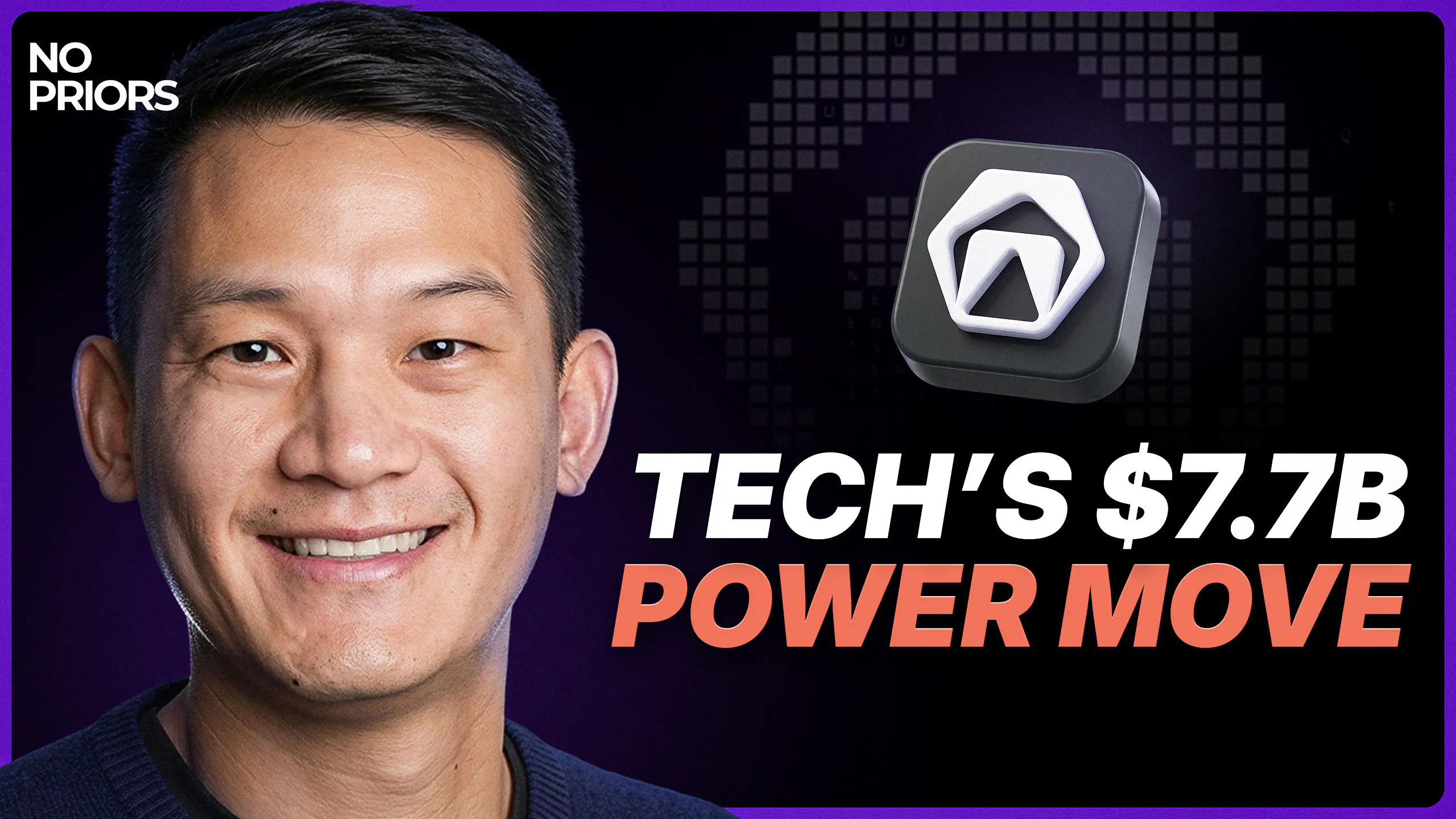
Re-Founding Incumbents for the AI Era with Sequence Holdings Co-Founder and CEO Michael Lee

Can AI transform legacy incumbents rather than replacing them? Sequence Holdings co-founder and CEO Michael Lee joins Sarah Guo to discuss how holding company structures and engineering integrations are reshaping market leaders from the inside out. Michael details Sequence’s $7.7 billion take-private transaction of Baldwin alongside Dell Family Office (DFO), and shares his thesis on why traditional consulting models and software sales fall short for real enterprise AI transformations. They also talk about why permanent holding company structures are good for long-term compounding, real-world results from applying frontier engineering to BankSouth, and Michael’s lessons from his time in public investing, private equity, and operating at the intersection of market incumbents and AI. Sign up for new podcasts every week. Email feedback to show@no-priors.com Follow us on Twitter: @NoPriorsPod | @Saranormous | @EladGil | @mjlee_2014 | @seqholdings Chapters: 00:34 – Michael Lee Introduction 01:03 – Sequence Holdings and Baldwin 01:54 – Idea for Sequence 04:36 – Incumbents in the AI Era 06:32 – Why a Holding Company 11:21 – Recruiting Top Engineers 13:08 – Investing in BankSouth 17:46 – Why an Insurance Brokerage 20:17 – Atlas Platform Explained 23:53 – Traditional Private Equity Limitations 27:23 – What Sequence Looks For in Management Teams 31:04 – Accomplishments at BankSouth 34:45 – Founder Lessons 36:08 – Story of Dell Partnership 37:10 – Career and Investment Approach 40:00 – Value of Exceptional People 42:23 – Conclusion

September 18, 202638 min

Why Diffusion Will Win AI Inference with Inception Co-Founder and CEO Stefano Ermon

As generative AI hits hardware and latency bottlenecks, Stanford professor, diffusion pioneer, and Inception co-founder and CEO Stefano Ermon is betting on a radical new architecture. Stefano joins Sarah Guo to talk about Inception, and how his team is applying diffusion architecture beyond images and video into discrete text and code generation. Stefano explains the limitations of autoregressive LLMs, as well as why parallel token generation in diffusion models offers superior inference scaling and hardware utilization on standard GPUs. He also shares details about Inception’s Mercury models, real-world voice agent applications, the software stack required to serve diffusion-based models at scale, academia’s role at the frontier of AI innovations, and why the next era of AI competition will be defined by efficiency.  Sign up for new podcasts every week. Email feedback to show@no-priors.com Follow us on Twitter: @NoPriorsPod | @Saranormous | @EladGil | @StefanoErmon | @_inception_ai Chapters: 00:00 – Stefano Ermon Introduction 00:35 – Research Background 02:54 – Starting Inception 05:59 – Why Diffusion Beats Autoregressive 11:10 – Discrete vs. Continuous Modalities 13:19 – Inception Today 16:45 – Where Speed Wins 17:31 – Inception Customer Base 18:49 – Interaction with Hardware Landscape 19:34 – Inception and the Broader Industry 21:41 – Data Compression and Structure 24:45 – Controllability of Diffusion Modeles 27:25 – Emergent Capabilities at Scale 29:02 – Future Workload Split Between Diffusion vs. Traditional 30:03 – Adoption Challenges 31:44 – Hiring and Team Organization 32:50 – Recursive Self Improvement 34:02 – Resource Allocation 35:10 – Impact of Academia 38:13 – Conclusion

September 10, 202645 min

Coinbase’s Everything Exchange: Agentic Finance, Stablecoins, and Tokenization with CEO Brian Armstrong

From the tokenization of real-world assets to funding research on anti-aging therapeutics, Coinbase co-founder and CEO Brian Armstrong is focused on solving meta-problems for the benefit of society. Brian joins Elad Gil this episode to discuss the intersections of artificial intelligence, crypto rails, and biotechnology. He details Coinbase’s vision for agentic finance, as well as how Coinbase is becoming the ‘Everything Exchange’, which includes tokenized real-world stocks, stablecoin payment adoption, and prediction markets. Brian also introduces his new venture, New Limit, a company founded to tackle longevity through epigenetic reprogramming, and outlines initial therapeutic programs and the roadmap toward clinical trials.   Sign up for new podcasts every week. Email feedback to show@no-priors.com Follow us on Twitter: @NoPriorsPod | @Saranormous | @EladGil | @brian_armstrong | @Coinbase Chapters: 00:00 – Cold Open Trailer 00:45 – Brian Armstrong Introduction 01:13 – Coinbase and the Everything Exchange 05:52 – Agentic Commerce 10:00 – AI and Crypto 10:49 – AI Inside Coinbase 15:39 – Productivity and Company Size 17:26 – The Everything Exchange and Tokenization 20:53 – Prediction Markets 23:15 – Introducing New Limit 34:17 – Looking Forward Five Years 40:24 – Special Economic Zones 44:26 – Conclusion

September 3, 202637 min

Redefining Chip Architecture with Arm CEO Rene Haas

From data center orchestrators to AGI and robotics, CPUs remain the heart of modern computing. Arm CEO Rene Haas joins Elad Gil and Sarah Guo to explore how Arm is positioned at the epicenter of AI-driven demands for compute. Rene explains Arm’s position in the chip supply chain, and how Arm transitioned from an IP licensing model to producing physical chips like the Arm AGI CPU for Meta. He also discusses bottlenecks in hardware supply chains, SoftBank’s ecosystem and capital strategy, why US semiconductor manufacturing independence is critical, the future of robotics, and why CPUs remain crucial for executing AI workloads. Sign up for new podcasts every week. Email feedback to show@no-priors.com Follow us on Twitter: @NoPriorsPod | @Saranormous | @EladGil | @renehaas237 | @Arm Chapters: 00:00 – Cold Open Trailer 00:49 – Rene Haas Introduction 01:14 – Arm and Chip Supply Chain 02:37 – Shift from IP to Manufacturing CPUs 04:23 – CPU IP and Customers 06:55 – AI Adoption at Arm 10:15 – Changes in Chip Time to Market 13:27 – Data Center Buildout Bottleneck 15:13 – Softbank Leverage and Capital Strategy 17:43 – Softbank Portfolio Overview 20:13 – Robotics Opportunities for Arm 24:49 – US Manufacturing Protectionism 28:59 – Data Center Backlash 32:30 – Arm Outlook 33:31 – CPU Opportunity 37:06 – Conclusion

August 27, 202634 min

Rethinking Legacy Data Infrastructure with Eon Co-Founders Ofir Ehrlich and Gonen Stein

Google’s purchase of Spirit Airlines’ data out of bankruptcy signaled a shift in how the tech world values real-world datasets. Although compute and models get much of the attention, in this landscape, it’s data that is a company’s protective moat. Eon CEO / Co-Founder Ofir Ehrlich and President / Co-Founder Gonen Stein join Elad Gil to talk about how Eon is redefining cloud backup into a secure data foundation designed to power and protect enterprise AI. Ofir and Gonen discuss why historical enterprise data is in demand by AI labs, and how Eon facilitates access to scattered and locked data across business units through providing the mapping, classification, and access controls needed to connect it into AI workflows. They also explore how traditional ransomware defenses must now protect against rogue AI agents with legitimate system permissions, concerns around the influx of autonomous agents and non-human identities, and the implications for the breakneck speed of AI adoption compared to the slowness of the cloud era.  Sign up for new podcasts every week. Email feedback to show@no-priors.com Follow us on Twitter: @NoPriorsPod | @Saranormous | @EladGil | @Eon_io_ | @OfirEhrlich Chapters: 00:00 – Cold Open Trailer 00:59 – Ofir Ehrlich and Gonen Stein Introduction 01:27 – What Eon Does 02:41 – Data as Moat 06:43 – Training Agents with Good Data 09:39 – Data is the New Oil  15:00 – Autonomous Security Threats 18:15 – How Agents Change the Enterprise Stack 22:11 – Re-imagining Data Infrastructure 27:52 – Cloud vs. AI Era Shift 30:26 – How AI is Changing Companies 34:31 – Conclusion

August 20, 202631 min

From Restoring Sight to Reimagining the Brain, with Max Hodak

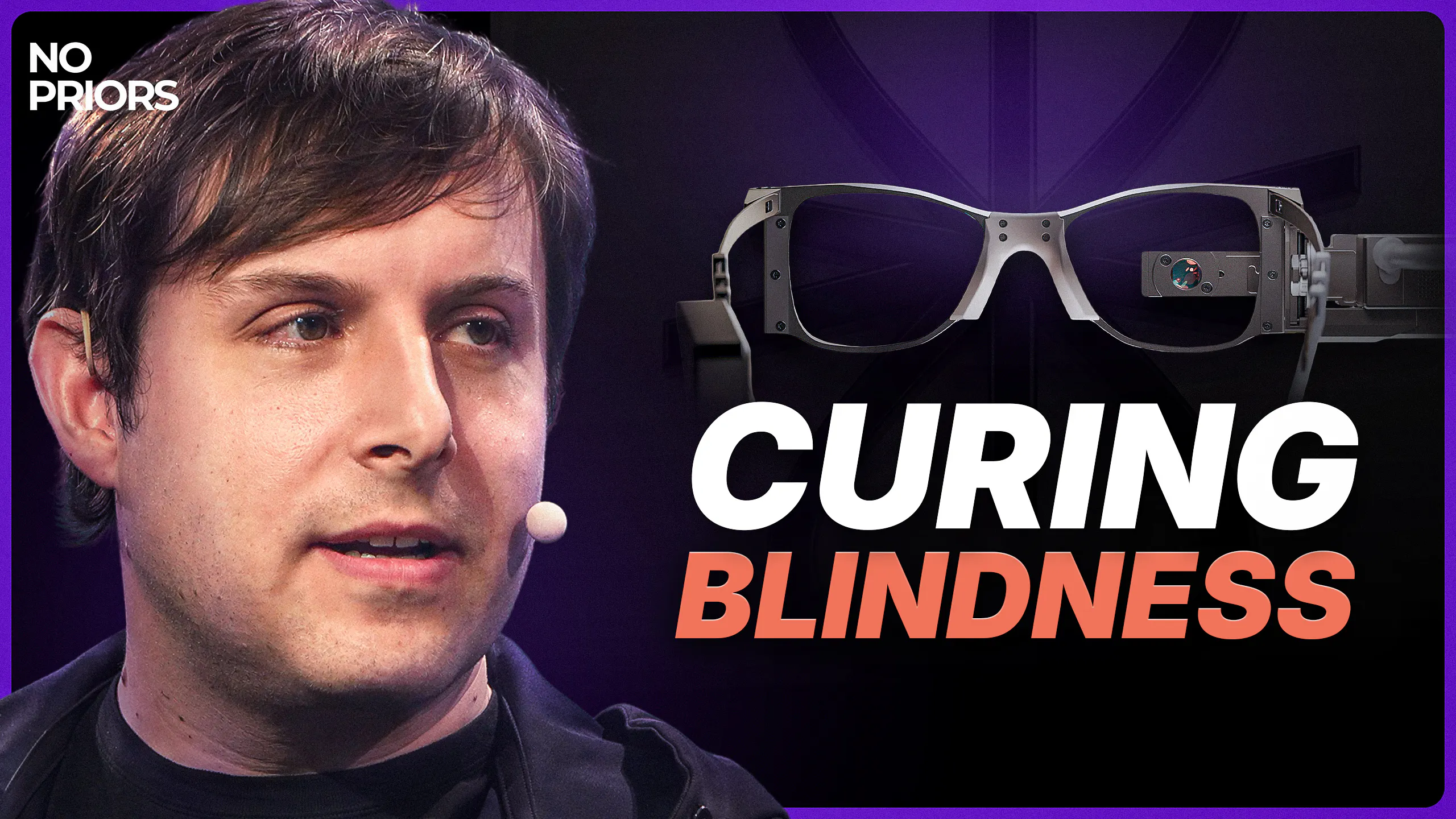
Max Hodak, co-founder and CEO of Science Corporation, joins Sarah Guo to discuss the future of vision, brain-computer interfaces, and the human experience. Max explains how Science’s PRIMA retinal implant could restore functional vision for people who have lost their sight, and why treating the brain as a computational system could unlock new approaches to medicine. They explore the broader potential of neural devices, from restoring lost capabilities to expanding human potential, as well as deeper questions around identity, consciousness, and whether the human experience can persist as our biological hardware changes. Max also shares Science’s long-term vision for reducing the fragility of the human condition by repairing, replacing, and ultimately upgrading parts of ourselves. Finally, he discusses the surprising parallels between AI models and biological brains, and why AI may offer a powerful new lens for understanding intelligence. Chapters: 00:00 – Cold Open Trailer 01:40 – Max Hodak Introduction 02:00 – Science Corporation Overview and Origin 02:53 – A Revolutionary Solve for Blindness  06:32 – Scope of Timeline and Engineer Cost 09:10 – Clinic Trial Process 09:45 - The Response from Clinicians 12:21 – Broader Biotech Landscape 14:59 – Brain’s Relationship to Senses 17:35 – The Study of Consciousness  19:50 – Investments in Brain Computer Interface 22:10 – Fertile Ways to Study Neuroscience 24:46 – Biotech Expansion for Science Corporation 27:50 – What Success Looks Like in Neuroscience and Tech 29:06 - Goals Within Human Preservation vs. Adaptation  30:25 – Conclusion

August 13, 202646 min

What Chess.com Teaches US About Superhuman Capabilities, with CEO Erik Allebest

In a world of infinite gaming and entertainment possibilities, how does a centuries-old game stay so popular? Chess.com co-founder and CEO Erik Allebest joins Sarah Guo to explain how the evolution of technology has kept people coming back to chess, even when machines can beat us at the game. Erik talks about how the desire to build a MySpace-like community for chess led to the purchase of a domain name from a bankruptcy sale back in 2005, and scaled into a community with 10 million daily active users and 250 million total registered members. He also discusses the growth of the cultural relevance of chess, how investments from private equity firms General Atlantic and CVC helped grow and strengthen their platform, and how Chess.com is leveraging AI both within the business itself and to make a better product for its community. Sign up for new podcasts every week. Email feedback to show@no-priors.com Follow us on Twitter: @NoPriorsPod | @Saranormous | @EladGil | @chesscom | @erikallebest Chapters: 00:00 – Cold Open Trailer 01:05 – Erik Allebest Introduction 01:48 – Chess.com Today 02:57 – Buying and Scaling Chess.com  06:29 – Competition and Growth 11:52 – Chess and Cultural Relevance 14:32 – Private Equity Investment 19:31 – Playing Games Amid Evolving Tech 25:09 – Tech, Skill Distribution, and Expertise 28:40 – Chess and Cheating 31:20 – What Makes Chess Special 33:17 – Chess.com Future Vision 34:54 – Founder Advice 36:48 – AGI/ASI Predictions 40:02 – AI Investments at Chess.com  42:13 – How AI May Change Product at Chess.com 43:27 – Poker Rating Algorithms 46:07 – Conclusion

August 6, 202639 min

Chasing Trillion-Dollar Companies, Founder Ambition, Token Budgets, and Regulatory Capture with Sarah & Elad

Is the tech industry moving too quickly, or are founders letting fear of AI labs stunt their ambitions? Sarah and Elad explore the current landscape of artificial intelligence, venture capital, and startup dynamics. They discuss the realities of building multi-trillion-dollar companies, shifting market sizes and outcome-based pricing models, and how founders are reacting to the rise of major AI labs. They also talk about what the framework for startup exits should look like, the potential for researcher burnouts in the next eighteen months as ASI looms on the horizon, bottlenecks for compute, and the impact of regulatory capture and shifting ecosystems from California to Texas. Apply for Embed - Conviction’s Catalyst for AI-Native Startups Sign up for new podcasts every week. Email feedback to show@no-priors.com Follow us on Twitter: @NoPriorsPod | @Saranormous | @EladGil  Chapters: 00:00 – Cold Open Trailer 00:31 – Episode Introduction 01:44 – The Next Trillion-Dollar Company 03:12 – Tech Waves as Punctuated Equilibria  04:42 – TAM vs. Revenue Reality 07:14 – Market Size vs. Speed 10:32 – When Founders Should Sell 14:04 – Financing and Time Cost 17:57 – RSI and the Looming Promise of ASI 21:49 – Compute Power Laws 28:12 – Regulations and Disruption 33:06 – Beyond Transformers 34:26 – Tradeoffs - Safety vs. Progress 39:11 – Conclusion

July 31, 202634 min

Building an Autonomous Enterprise for Real-World Services with Netic Founder Melisa Tokmak

When your AC fails in a heatwave, you don’t want a busy signal; you need a solution. Netic founder and CEO Melisa Tokmak joins host Elad Gil to explain how Netic’s autonomous AI platform acts as an intermediary between companies and customers, deploying agents to instantly handle essential services, from emergency home repairs to hospitality to pet care. Melisa describes the complexity of these real-world workloads, which have traditionally relied on large human support teams, and how over 70% of Netic’s customers interact first with AI. She also talks about the reasoning behind building a scalable product company rather than an AI roll-up, why she believes robotics will not catch up in these industries in the near future, why she doesn’t view large frontier labs as competitive threats, and how private equity’s playbook has shifted toward measurable ROI in the AI-era. Plus, why Melisa is optimistic about the impact AI will have on education. Sign up for new podcasts every week. Email feedback to show@no-priors.com Follow us on Twitter: @NoPriorsPod | @Saranormous | @EladGil | @netic_AI | @melisatokmak Chapters: 00:00 – Melisa Tokmak Introduction 00:32 – What Netic Builds 03:53 – Automating Workflows for Essential Services 06:26 – Building a Service vs. AI Roll-Up 10:38 – AI for the Real World Timeline 12:56 – Can Big Labs Compete? 15:35 – Modern Founder Mindset 19:09 – Screening for Agency 22:25 – Five Year Vision 23:53 – Selling to Slow Industries 27:23 – How Private Equity Approached AI 31:14 – What Excites Melisa About the Future of AI 34:27 – Conclusion

Is this your show?

Claim this listing to keep it up to date, reach guests who want to pitch you, and manage bookings with Guestify.

Claim this listing

More Technology podcasts