Find partners
Z47 Moments

Z47 Moments

Hosted by Z47

BusinessInterviews guestsExplicit

Episodes

267

Latest episode

Aug 2026

Language

EN

About the show

Zero to Infinity, by Z47, is a podcast series dedicated to the founders, startups, and all within the ecosystem through candid conversations on what we think it really takes to survive in this wild startup world. In a world where we are endlessly engulfed with information in all its forms and sizes, this is our attempt to create, curate, and bring to you the insights and reflections that we have had the luxury of having learned the hard way through all the years spent in truly understanding what it takes to build and nurture a startup from ground zero.

Listen to episodes

60 recent
September 10, 2026Episode 26251 min

262: He Saved ₹50 Lakh in College - Then Sold His Startup at 25 | Aman Goel, Grey Labs AI

Aman Goel, founder of Greylabs.ai , joins Avnish on Unstarted for one of the most relatable founder journeys yet — a middle-class kid from Kanpur who was hustling for money from his first year of college and never stopped. Aman is refreshingly honest that his motivation was simply to make money. He earned his first ₹4,000 solving JEE papers, built a content-writing business with his now-wife and co-founder Harshita, and had saved close to ₹50 lakh before he even graduated. He went on to build Cogno AI - an AI chatbot and voice company for banks - in 2017, before generative AI existed, bootstrapped it to a million-dollar revenue run rate, and sold it to Exotel at 25. Now with Greylabs.ai , he's building voice AI for India's banks and financial institutions. In this episode he breaks down finding customers in an industry you have no network in, the "student not salesperson" playbook that got him into SBI and HDFC, why he and Harshita split the company cleanly into "she builds, I sell," how to part ways with a co-founder without a fight, picking a razor-sharp ICP, and why in a world of weekly AI launches trust is still the only thing that sells. Chapters 00:00 Intro — a genuinely relatable founder story 01:00 Growing up middle-class in Kanpur 02:50 "My motivation was money" — where ambition came from 04:00 The internet, Silicon Valley, and deciding not to settle in the US 05:50 Earning in college: ₹4,000 to ₹50 lakh before graduating 08:20 How to create your own opportunity in college 11:50 Starting Cogno AI — and the RED vs REL framework 15:40 Building AI in 2017, before ChatGPT 17:20 Getting into banks: the "student, not salesperson" playbook 21:40 Negotiating with SBI as two 20-year-olds 24:40 The first customer, and the referrals that followed 25:30 The co-founder exit: quick decision, generous separation 27:20 Harshita joins: "she builds, I sell" 30:40 The exit to Exotel — doubling the ask in 10 minutes 34:40 Finding the market first: why he stayed in India 37:50 Founder-market fit and picking a razor-sharp ICP 40:40 Can AI disrupt his AI business? Why trust wins 42:50 Eating your own dog food: building internal tools on Replit 44:40 AI adoption in banks — from pilots to 50 lakh calls a month 46:14 The coming pricing pressure, and how service is the moat 49:20 Closing advice: persistence is the one thing that can't be replicated

September 3, 2026Episode 26147 min

261: Why PhonePe bet on UPI when everyone chose wallets | Sameer Nigam | Unstarted

Sameer Nigam, founder and CEO of PhonePe, joins Unstarted for a candid conversation on building a company that now serves over 700 million users. From a middle-class naval family to a failed music startup (Mind360), an acquisition by Flipkart, and the founding of PhonePe, Sameer breaks down the thinking behind his "asymmetric bets," why he chose UPI when the entire market was chasing wallets, and how the Big Billion Day payments collapse revealed the problem he'd spend the next decade solving. He also opens up on his 31-year partnership with co-founder Rahul Chari, why he embraces regulators instead of fighting them, what PhonePe's data reveals about how India really spends, and the story behind the IPO that was pulled at the last minute. A must-watch for founders thinking about co-founders, market timing, building for population scale, and knowing when to cut your losses. Unstarted is a show about founders, for founders hosted by Avnish Bajaj. Chapters 0:00 Intro: meet Sameer Nigam & the "celebrity founder" tag 2:15 Family background: a Navy dad and an entrepreneur mom at early TCS 10:45 Why tech fundamentals still win (and the Google "75% AI code" point) 17:40 First venture: Mind360, the "iTunes for India" 22:10 Why it failed: wrong market sizing and the piracy era 26:00 Acquired by Flipkart and the B2B pivot 34:15 Big Billion Day: when India's payment infra collapsed 38:00 Why wallets were never the answer 41:20 The asymmetric bet on UPI 44:30 Ghar Wapsi: merging back into Flipkart to buy time 47:10 Demonetization: luck, timing, and near-zero competition 50:00 Obsessing over infrastructure and the right foundation 52:30 ICP, population scale, and the "painkiller in the hinterland" 55:40 Incumbents push back: ICICI blocking and the RBI visit 59:00 What PhonePe's data reveals about how India spends 1:05:00 The most anticipated IPO that didn't happen 1:08:30 Final advice: don't be an entrepreneur by FOMO

August 20, 2026Episode 26055 min

260: Shiprocket's Saahil Goel on their IPO, PMF & Building AI for Bharat | Unstarted

Saahil Goel, co-founder and CEO of Shiprocket, joins us for a candid deep-dive into how a self-taught coder from Delhi built the logistics and enablement backbone powering a huge chunk of India's direct-to-consumer commerce. Sahil takes us all the way back selling his dot matrix printer on Baazee as a kid, teaching himself HTML by hacking "view source," and building websites for cash in college. Along the way he shares the hard-won lessons behind every pivot: why Indian SMEs won't pay upfront, why you should never fall in love with your product, and how obsession with the merchant's problem kept the company alive through years when every investor said the market didn't exist. We also get into co-founder dynamics and trust, what actually changed scaling from 25 to 1,500 people, why culture is the "uncodified personality" of a company set by the founder's actions, and being a "microsurgeon, not a micromanager." Finally, Saahil lays out his conviction on AI - from writing 70%+ of code with AI, to Shiprocket's in-house voice model built for India's 22 languages, to the "AI for Bharat" mission of reaching the next 58 million merchants. A rich, practical episode for anyone still unstarted. What they talk about: 1. From selling a printer on Baazee and self-taught coding to building Shiprocket into India's commerce shipping backbone 2. The real story behind the pivots KartRocket to Kraftly to Shiprocket and why you stay stubborn with the problem, not the product 3. What PMF actually feels like, plus co-founders, trust, and scaling culture from 25 to 1,500 people 4. His bet on AI: writing most of the code with AI, an in-house voice model for India's 22 languages, and the mission to reach 60M MSMEs 00:00 Intro - Saahil Goel and Shiprocket 02:30 Delhi boy, self-taught coder & selling a printer on Baazee 07:00 Business family & knowing early he'd be a founder 12:00 Meeting Gautam & the start of Bigfoot Retail Solutions 17:00 Co-founders: trust, complementary skills & full commitment 23:00 PMF is a journey, not a destination 29:00 Stubborn with the problem, not the product 35:00 CartRocket to Craftly: the pivots and hard lessons 42:00 Building Shiprocket & why B2B behaved like consumer 48:00 Scaling 25 to 1,500: culture, micro-surgery & builder mindset 55:00 Bias to action vs bias for excellence 60:00 AI at Shiprocket: 70% of code, voice for Bharat & 60M MSMEs 70:00 The IPO ahead & advice for the still-unstarted

August 13, 2026Episode 25936 min

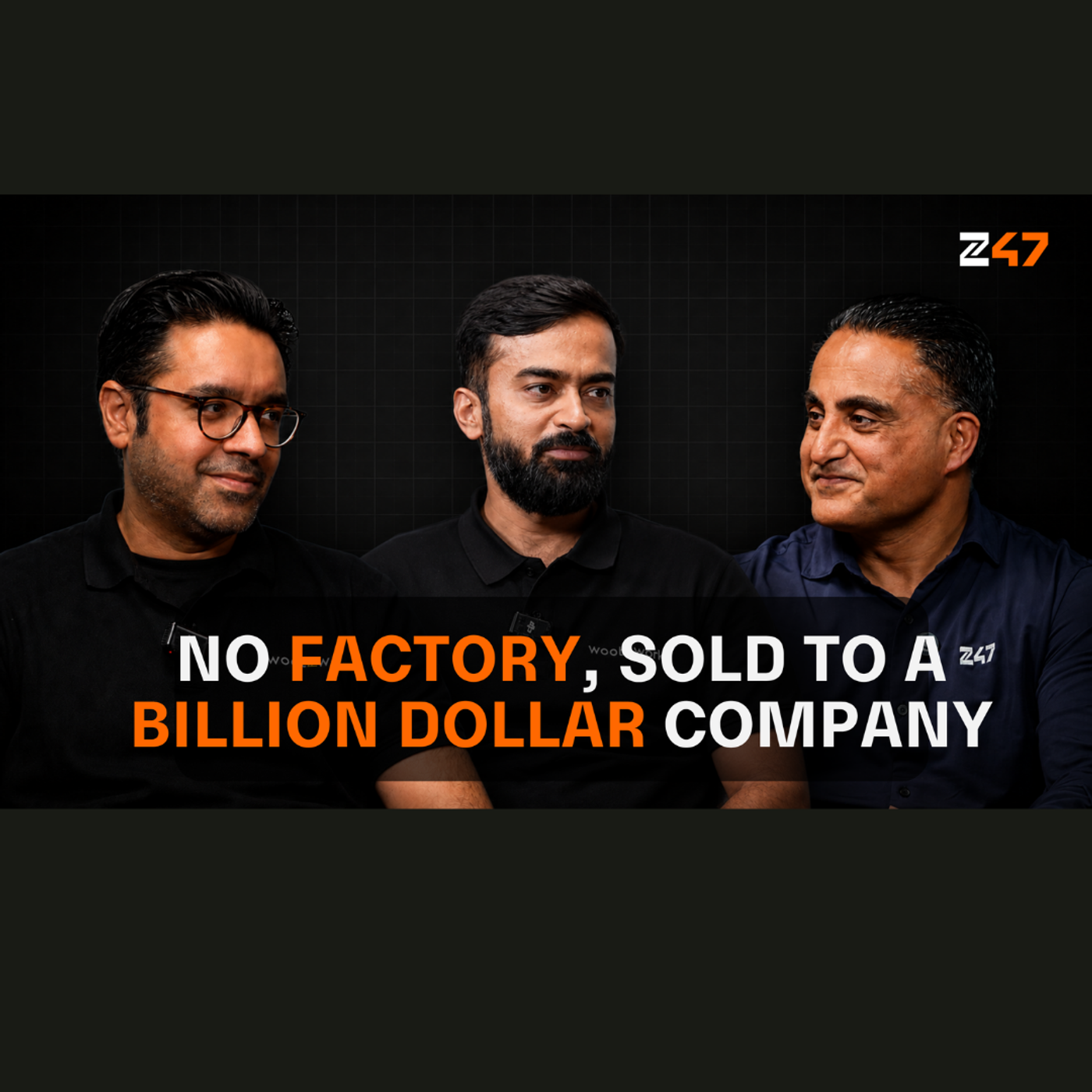
259: How two founders sold to a billion-dollar company with no factory | Wootz Work | Unstarted

Our first-ever episode with co-founders. Karan and Himanshu of WootzWork join Avnish to talk about building a hardware and manufacturing exports company out of India — and why they leaned into a market everyone told them wouldn't work. From an investment banking and Stanford GSB background (Karan) and IIT Kharagpur mechanical engineering (Himanshu), the two met at a previous company where one interviewed the other as head of engineering a one-hour conversation that ran three hours. In this episode they unpack how a single insult ("we don't talk to Indian engineers, we work with Germans") lit the fire, how they closed their first order from India with no factory of their own, and why the naysayers became their strongest signal to go ahead. What you'll learn in this episode: 1. Why starting in a market everyone doubts can be an advantage — and how to tell real naysaying from noise 2. How to win your first customer with no factory, no brand, and no track record 3. The co-founder decision that actually matters: why the answer is never "the middle" 4. How to choose a co-founder — honesty and complementary skills over everything else 5. Why customer obsession beats worrying about network or capital early on 6. Manufacturing as a system: how fragmentation held India back and how to fix it 7. Scaling global sales by hiring domain experts in their 40s–50s who are local to the market Chapters 00:00 Intro 02:00 Karan's path: banking, AirAsia India, Stanford GSB 04:30 Himanshu's path: IIT Kharagpur, ITC, and the machines 05:15 "We don't talk to Indian engineers" — the moment that lit the fire 06:30 The China vs India buying experience: what's actually broken 08:00 Why the market was ripe — and betting on exports 11:45 Customer obsession: getting the first customer in 13:15 The co-founder dynamic: why the answer is never in the middle 20:25 Turning the naysaying into conviction 22:30 The first order: won with no factory 23:12 Why the customer still needs them: engineering vs manufacturing 28:30 Managing people with 40–50 years of experience 30:30 AI and robotics in the manufacturing story 33:40 Closing: why 2.3 is the right number of co-founders

August 6, 2026Episode 25842 min

258: Started with ₹8 Lakhs and built a Billion Dollar Company | Abhishek Bansal, Shadowfax

What happens if you fail with everyone's money? Abhishek Bansal never let himself ask and he thinks that's the only reason Shadowfax exists. He's the first public-company CEO on Unstarted: a middle-class kid from Meerut who quit his job without telling his parents, asked a VC for $5 million with zero orders, and was the only one still standing after the year every competitor died. In this conversation with Avnish Bajaj, they attempt to answer: 1. Should you have a co-founder and how do you actually pick one? 2. What should founders look for in a VC when there are multiple offers? 3. How do you tell your team you're failing? 4. Sustainable growth, or aggressive scaling? By the end, you understand his test: accept the failure, name the core problem, tell your team. Because teams don't break on failure — they break on how you behave in it. Chapters 0:00 Intro: our first public company CEO 1:19 Meerut, a middle-class home, and IIT Delhi 4:04 Parents didn't know he had quit his job 7:50 Q: How do you choose between VC offers? 8:47 Why he wanted a co-founder, not a skills match 11:03 Why not bootstrap? 11:28 Asking for $5 million with no product 12:23 The ₹8 lakh phone call 13:28 The angels who never sold: 1000x and counting 14:31 Three offers: $2M, $5M, $9M 17:19 Q: How do founders bounce back from failure? 17:46 The 2015 crash: five funded, one survivor 23:07 Knowing the core problem is the hardest problem 28:07 The offsite: profitable in three months 28:32 The retention numbers behind the culture 29:20 Q: Aggressive scaling or sustainable growth? 29:56 "In India, no idea is unique" 32:14 The guardrails: unit economics and 50-30-20 37:26 The CAPEX model that ran 100 iterations 39:07 When the HR team built its own hiring tool 40:20 Closing: teams compound, individuals don't

August 4, 2026Episode 25743 min

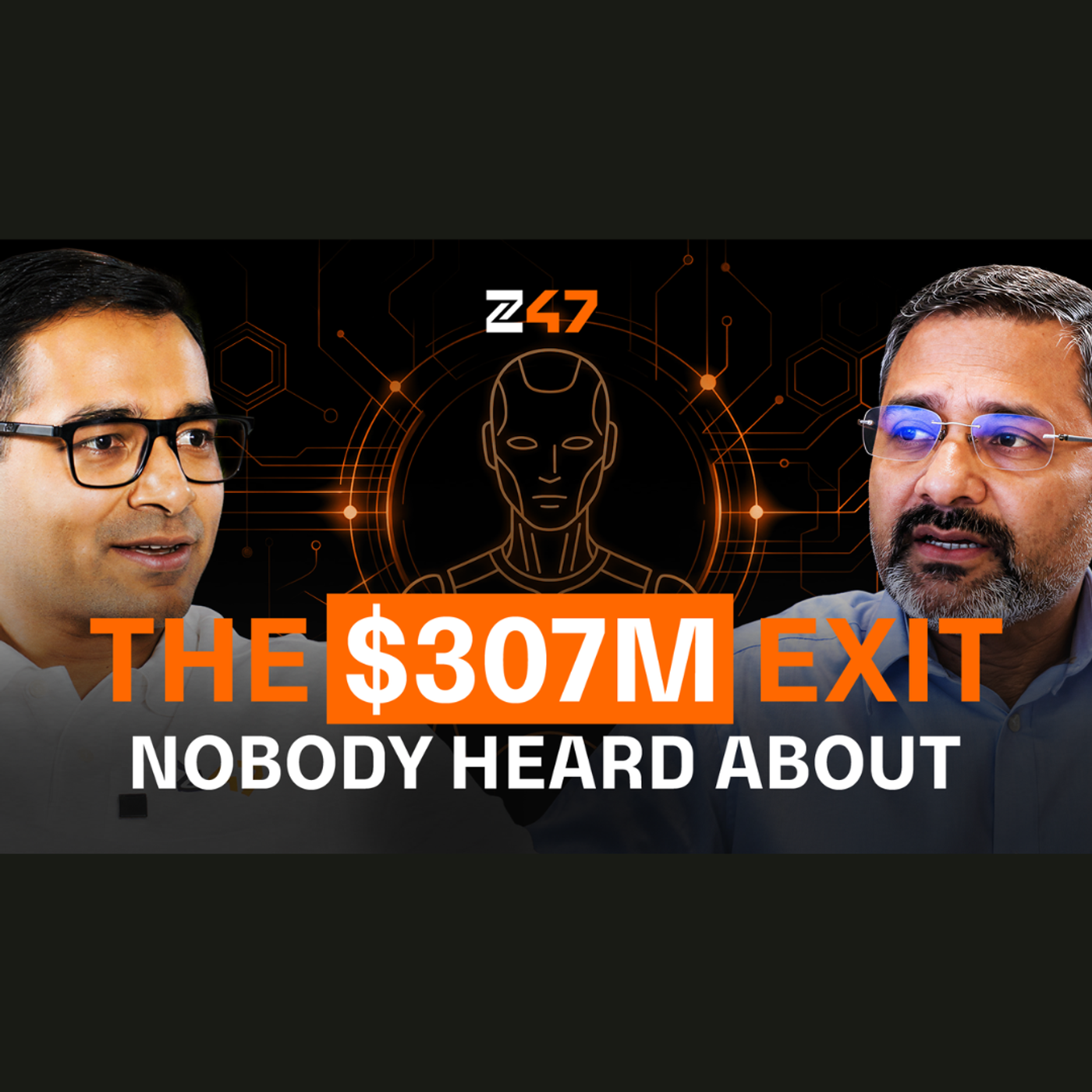
257: India's biggest deep-tech exit that nobody knew of | Ravi Annavajjhala | Nxp

Most people assume serious AI silicon can only be built by a giant, in the cloud, burning hundreds of millions of dollars. Ravi Annavajhala did the opposite. Kinara built two AI chips for under $50M, 90% of it out of Hyderabad, and sold to NXP, one of the world's largest semiconductor companies for $307M, all cash. It's one of the largest deep tech exits India has seen, and one of the least talked about. In this episode, Vikram Vaidyanathan sits down with Ravi to take apart how it actually happened, and what it says about where AI is heading next. You'll hear: 1. Why the disruption playbook that minted the NAND-flash exits is the same one that explains Kinara's sale to NXP 2. The clearest plain-language explanation of training vs. inference you'll find, and why inference is moving off the cloud and onto the edge 3. The four reasons edge beats cloud: cost, latency, privacy, reliability 4. How you actually shrink a frontier model to run on a chip: distillation, compression, purpose-built retraining 5. Why India's real AI edge isn't talent or capital, but the industrial data sitting in its factories — and why it can't afford to become a "data colony" 6. Ravi's distinction between frugal and cheap, and why low cost has stopped meaning low capability ▶ If you're building, investing in, or just tracking India's deep tech story, this is the episode to watch. About Intelligent Indians Intelligent Indians is Z47's thesis podcast on the people building India's technology future, for builders, operators, and investors who want the operator's view, not the press-release version. 🔔 Subscribe for new episodes. Chapters 0:00 A $307M deep-tech exit you didn't hear about 0:45 Meet Ravi Annavajhala & the Kinara story 3:10 The NAND flash lesson: how startups cash in on disruption 5:45 2015: betting on edge AI while everyone chased the data center 7:00 CoreViz → Deep Vision → Kinara: the naming journey 9:15 Why 90% was built in Hyderabad — a talent bet, not a cost cut 11:30 Two chips under $50M: engineering for capital efficiency 15:20 What "the edge" actually is: training vs inference 18:00 Why edge beats cloud: latency, cost, privacy & reliability 22:45 Physical AI: robots, self-driving & the real bottlenecks 28:30 Advice to VCs: conviction, local demand & the infra gap 31:20 Frugal vs cheap: why low cost ≠ low capability 33:30 Closing: India on the cusp of the edge-AI wave

July 30, 2026Episode 25638 min

256: How the Ex-Unacademy COO built an edtech solving India's healthcare skills gap | Vivek Sinha

How much money is enough to make starting up safe? Vivek Sinha thought he knew: ₹50 lakh in the bank. The day he hit it, he quit. Vivek is the founder of Emversity, which trains people for the jobs India actually has in healthcare, hospitality, EPC and manufacturing. Homeschooled till eight in a Bihar village surrounded by three rivers, he built Buildzar, lost ₹50 lakh, and spent nine years compounding skills at Mobikwik, OYO and Unacademy before starting again in a sector everyone had written off. In this episode, Avnish and Vivek take on, 1. Where did you get the confidence to do this? 2. Why didn't it work? What did you think going in that didn't play out? 3. Should I drop out and work full time on my startup?" 4. How do I find the right co-founder? 5. How can we secure investment in a stigmatized sector despite proven traction?" 6. What stays with you: build it for the right reasons Chapters 00:00 Introduction 02:00 Flood village to NIT: growing up in Bihar 06:00 First startup & why it failed: market timing 11:00 MobiKwik: 0 to 20 lakh merchants in 6 months 16:00 OYO & Unacademy: the lessons that compounded 22:00 The 9-year gap: how he killed bad ideas early 28:00 Should you drop out of college? 34:00 How many co-founders — and going solo 40:00 Building in a stigmatised, out-of-favour sector 48:00 What Mversity does + closing advice

July 23, 2026Episode 25535 min

255: From PhD to 26 FDA Clearances: Building AI in Healthcare | Prashant Warrier

What do you do when you've built the technology first and the first customer who tries it tells you it's not working at all? Prashant Warrier is the first PhD and the first scientist on Unstarted. A steel-town kid from Bhilai who went from IIT Delhi to a PhD in AI, he came back to India because of a stolen passport — and built Qure.ai , whose AI reads chest X-rays for TB and lung cancer across the world. In this episode, Avnish and Prashant attempt to answer: 1. How do you identify a unique problem is it about passion or market cap? 2. How do you know the technology is actually working? 3. How can founders assess whether they're early, late, or correctly timed for a market? 4. Will frontier AI kill vertical businesses or is there domain-specific stuff left to build? 5. Why build a cutting-edge AI company from Mumbai? This episode is in partnership with TEAM — Tech Entrepreneurs Association of Mumbai. Chapters 00:00 Introduction 1:41 Steel town to IIT to a PhD in AI 3:20 SAP, and the stolen passport that sent him home 6:32 Freedom over the US visa rat race 8:17 The 2012 breakthrough that started the company 11:43 A research lab with no business plan 13:33 "A solution looking for a problem" 16:52 The reality check & the real bottleneck 19:20 TB screening: 4 weeks to 30 seconds 21:43 Detecting lung cancer early with AI 24:23 Moats, ChatGPT & the future of AI in healthcare 32:04 Why Mumbai, and advice to founders

July 16, 2026Episode 25452 min

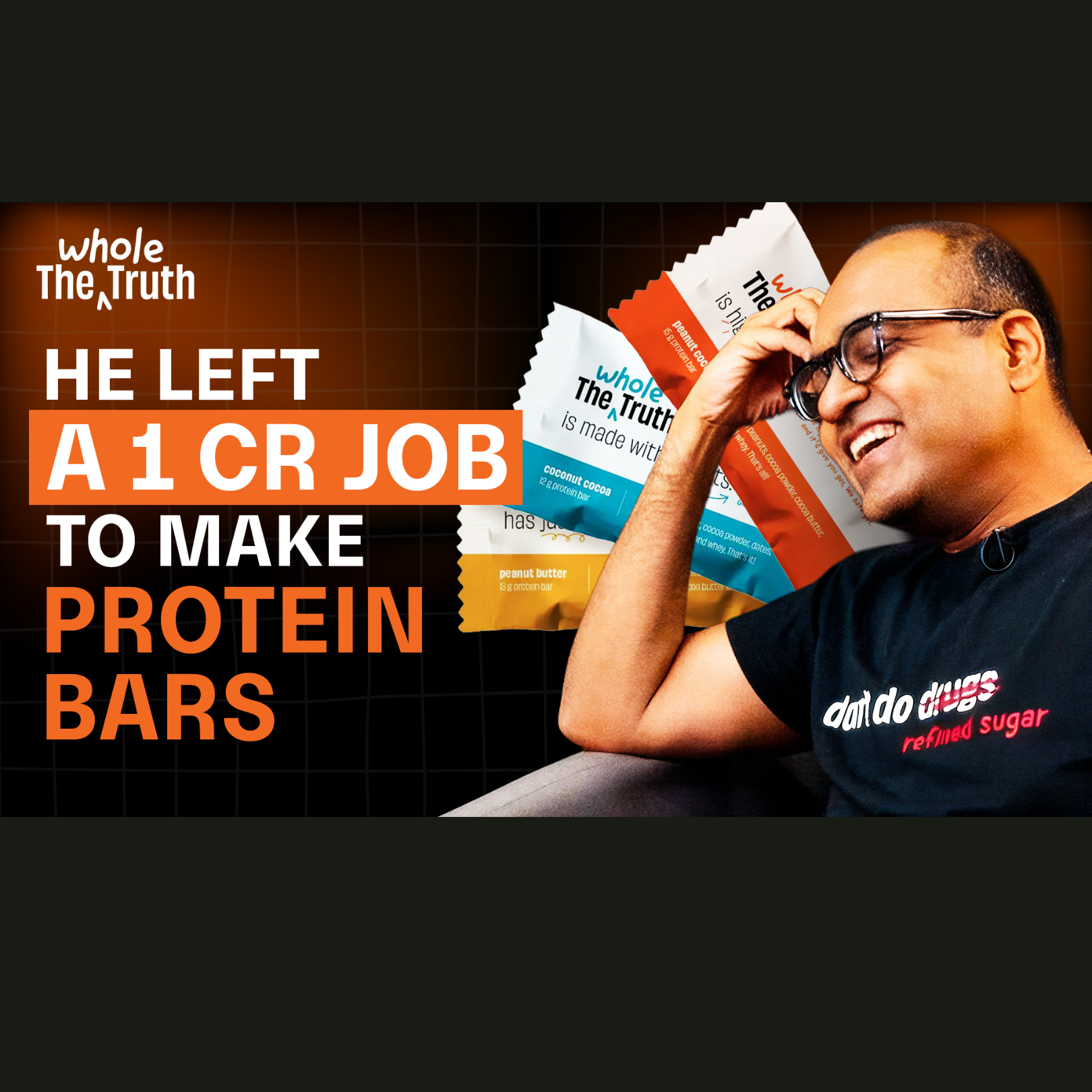
254: Secrets of building The Whole Truth | Shashank Mehta, Founder and CEO | Unstarted

He built a ₹100 crore brand from scratch in two years. His company rated him 2 on 5. So the question stopped being am I good at this? and became am I even the right kind of person for it? Shashank Mehta is the founder of The Whole Truth, one of the best consumer brands built in India in the last decade. We backed him early, off the strength of a blog whose readers became the company's first customers. In this conversation: 1. What do you do when you build something from zero and still get rated below the person who grew an existing brand by 5%? 2. How do you tell the difference between being bad at a job and being the wrong category of human for it? 3. Is it risk that stops you from leaving — or is it fear wearing risk's clothes? 4. Why does writing your worst fear down on paper shrink it? 5. Can a single founder build a company that outlasts the founders who have co-founders? A conversation about self-knowledge as the real moat — and why the fear that freezes you is almost always smaller on paper than the life on the other side of it. Chapters 0:00 Welcome & introducing Shashank Mehta 3:00 Middle class Delhi, mom's tears and the pressure to study 8:00 HUL, the startup bug & discovering he's a creator 14:00 First leap — joining Fasos, failing and coming back 20:00 The blog, the rage and the protein bar made at home 27:00 Risk vs fear — writing down what actually scared him 33:00 The 2/5 rating that built a ₹100 crore brand 38:00 Co-founders — why chemistry beats skill every time 43:00 Brand first vs revenue first — the 20 year argument 47:00 Building culture on trust and inspiration not fear and greed

July 9, 2026Episode 25333 min

253: The Harvard Grad who quit her job to build a deodorant for women | CEO, Laani | Unstarted

Nirja Bhatt looks intimidating on paper: Columbia, Harvard Business School, strategy consulting. But she calls herself "a duck in water” i.e you never see what’s moving beneath the surface. It took her two years of analysis paralysis, ten abandoned ideas, and learning to normalize embarrassment before she could finally start. Nirja is the founder of Laani, a pre-launch personal care brand for women, built around the categories nobody talks about. In this episode, she and Avnish go back to the very beginning. They get into: 1. How do you start when you have ideas but no capital? 2. Why validate a problem, not an idea? 3. How do you make peace with betting your own savings on yourself? 4. Should you raise money before you have a product? 5. And what actually separates the founders who make it? 6. An honest conversation about the part of the founder journey nobody photographs. Chapters 00:00 Intro: Meet Neerja Bhatt, founder of Laani 01:30 Growing up in Baroda, raised by grandparents 03:00 Rejected by every dream school: the USC detour 04:30 How a professor's letter got her into Columbia 07:30 Q1: How do I start with no capital and too many ideas? 08:30 Analysis paralysis: 10 ideas and the HBS trap 11:00 Moving back to India: the waste management chapter 16:30 Q2: Passion vs. market gap — how to pick your problem 19:00 Talking to 200 women: customer validation done right 21:00 Q3 (Gubbachi founders): Hero products vs. commodity staples 26:30 To raise or not to raise: funding pre-launch 29:00 Final advice: persistence and eating a lot of shit 30:00 Outro

Is this your show?

Claim this listing to keep it up to date, reach guests who want to pitch you, and manage bookings with Guestify.

Claim this listing

More Business podcasts