Find partners
Masters of Privacy

Masters of Privacy

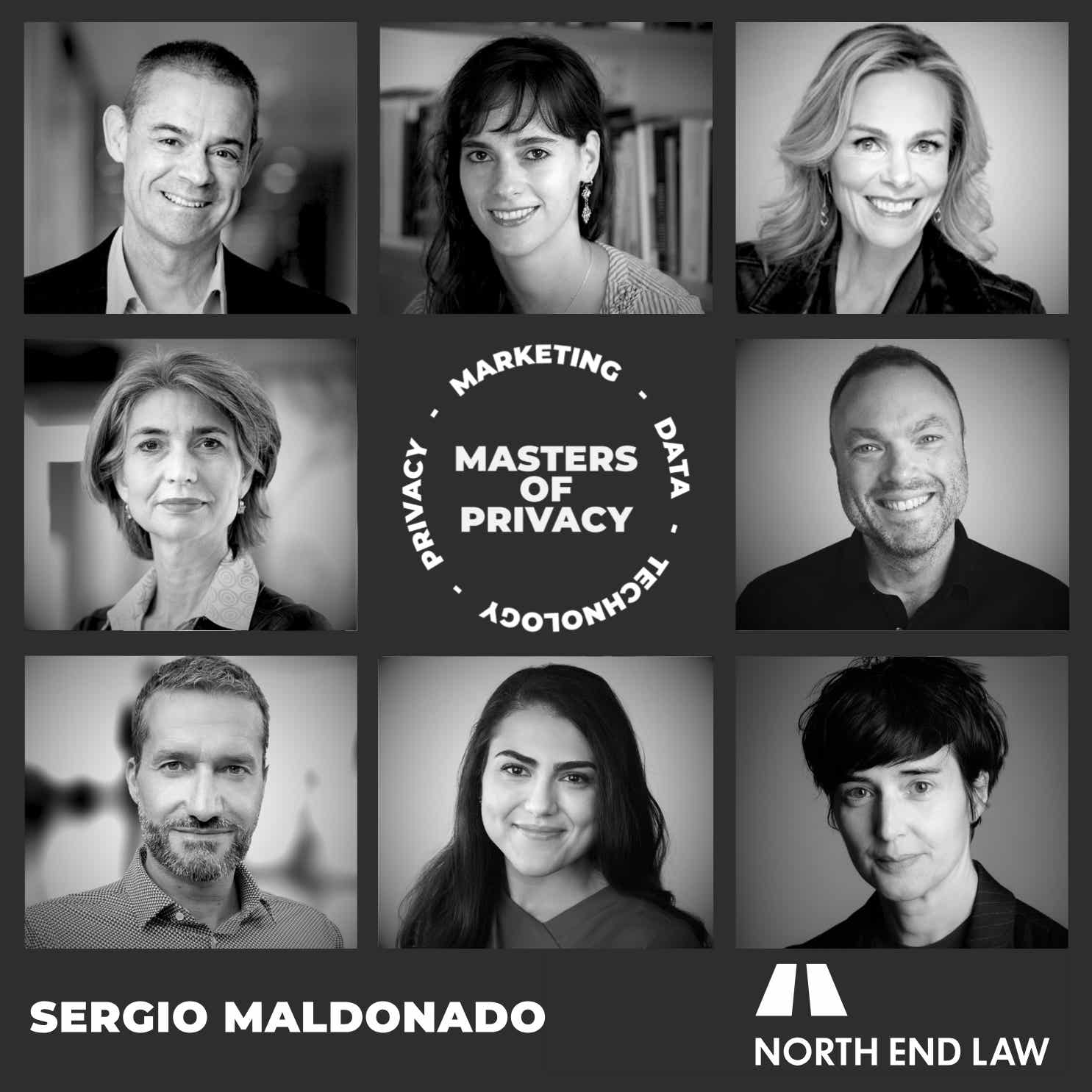
Hosted by Sergio Maldonado

Episodes

178

Latest episode

Nov 2026

Language

EN

About the show

Interviews and updates at the intersection of marketing, data, privacy, and technology. With an eye on a human-centric, demand-led future in which transparency, control, and personal agency play a crucial role. Sergio Maldonado (host) is a triple-qualified lawyer (California, England & Wales, Spain), entrepreneur, investor, guest lecturer at various universities. LL.M in IT & Internet Law, FIP, CIPP/E/US, CIPT. www.mastersofprivacy.com

Listen to episodes

60 recent
November 3, 2026Episode 131 hr 11 min

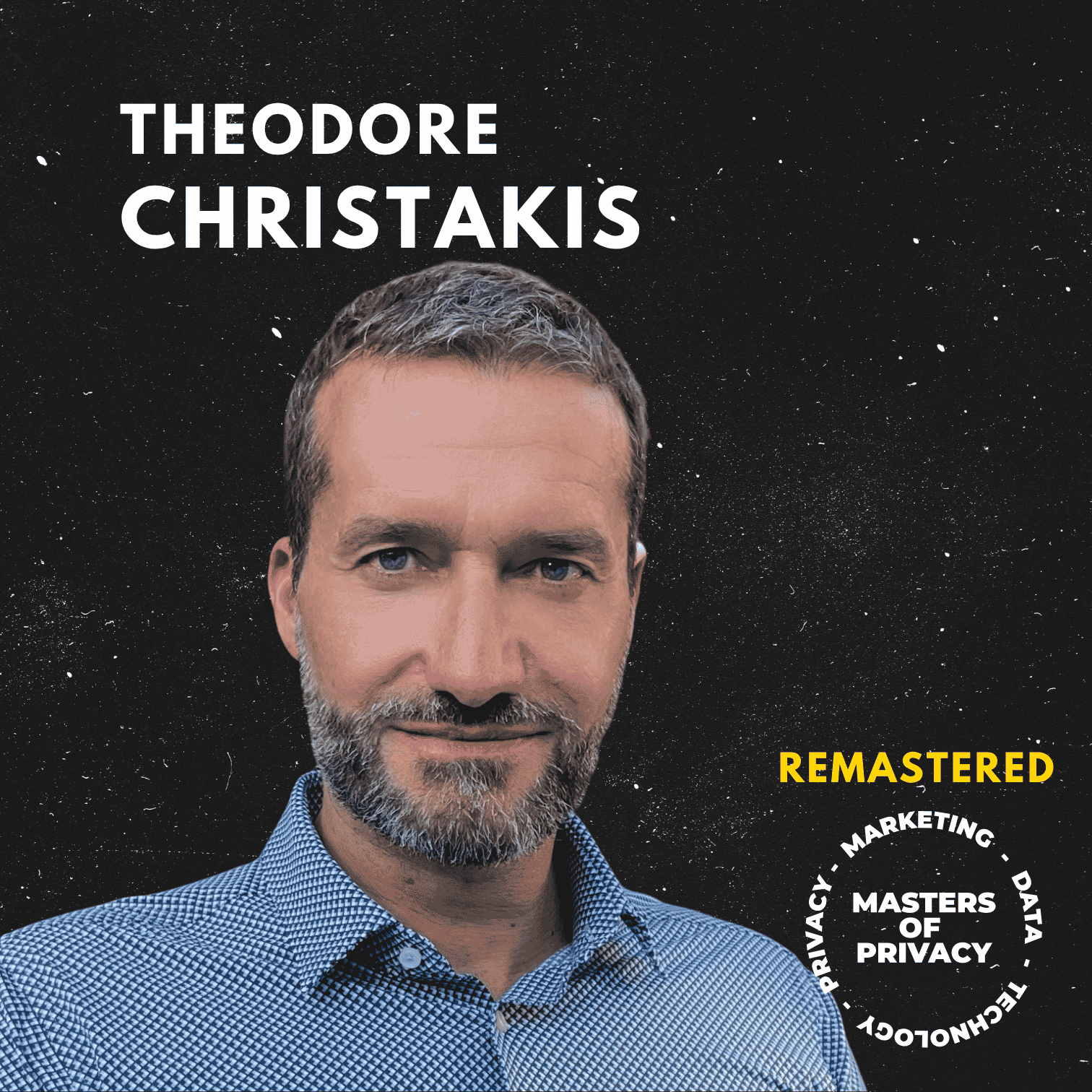
Theodore Christakis: chatbot privacy and the health AI agent rush (remastered and revisited)

This is a (remastered) repost of our last interview with Theodore Christakis earlier this year. Our guest rightly anticipated an avalanche of personal AI assistants, with a particular emphasis on healthcare, and we believe many more people (including our new subscribers) should benefit from his insights and associated research. Theodore Christakis is Professor of International, European and Digital Law at University Grenoble Alpes (France). He holds, since 2019, the Chair on the Legal and Regulatory Implications of Artificial Intelligence at the Multidisciplinary Institute on AI (AI-Regulation.com). He is Director of Research for Europe at the Cross-Border Data Forum, a member of the Board of Directors of the Future of Privacy Forum, and a former Distinguished Visiting Fellow at the New York University Cybersecurity Centre. His work focuses on the questions at the centre of today’s debates on digital sovereignty: government access to data held by private companies, international data transfers, the security and operational resilience of digital infrastructure, and the regulation of artificial intelligence. He served as an expert for the OECD in the process that led to the adoption, in December 2022, of the OECD Declaration on Government Access to Personal Data Held by Private Sector Entities. He was a member of the International Data Transfers Experts Council of the United Kingdom Government, and an expert for the High-Level Expert Group on Access to Data for Effective Law Enforcement established by the European Commission and the Council of the European Union. He has also served as a member of the French National Digital Council and of the French National Committee on Digital Ethics. He has published or co-edited twelve books and is the author or co-author of more than 120 academic articles and book chapters. He has been invited to lecture and present his work at conferences, workshops and seminars on more than two hundred occasions, in over 38 countries. As an independent expert, he advises governments, international organisations and private companies on questions of international and European law, cybersecurity, artificial intelligence, digital sovereignty and data protection. References: * Theodore Christakis’ SSRN Author Page * Theodore Christakis on LinkedIn * You Trust Your Chatbot With Everything. Should You? Part I: How The Controller Uses Your Chat Data (March 3, 2026) * You Trust Your Chatbot With Everything. Should You? Part II: Governments, Courts and the Battle Over Your Chatbot Conversations (June 8th, 2026) * The Health AI Agent Rush: Five Companies, Your Health Data, and the Governance Questions Nobody Is Asking (March 25th, 2026) * Mikel Recuero: a deep dive into the European Health Data Space (ES, Masters of Privacy, June 2026) * Multidisciplinary Institute on AI * Université Grenoble Alpes: Centre d’études sur la sécurité internationale et les coopérations européennes . DPO Central: build a privacy program in minutes (TODO.LAW) This is a public episode. If you'd like to discuss this with other subscribers or get access to bonus episodes, visit www.mastersofprivacy.com/subscribe
October 25, 2026Episode 1236 min

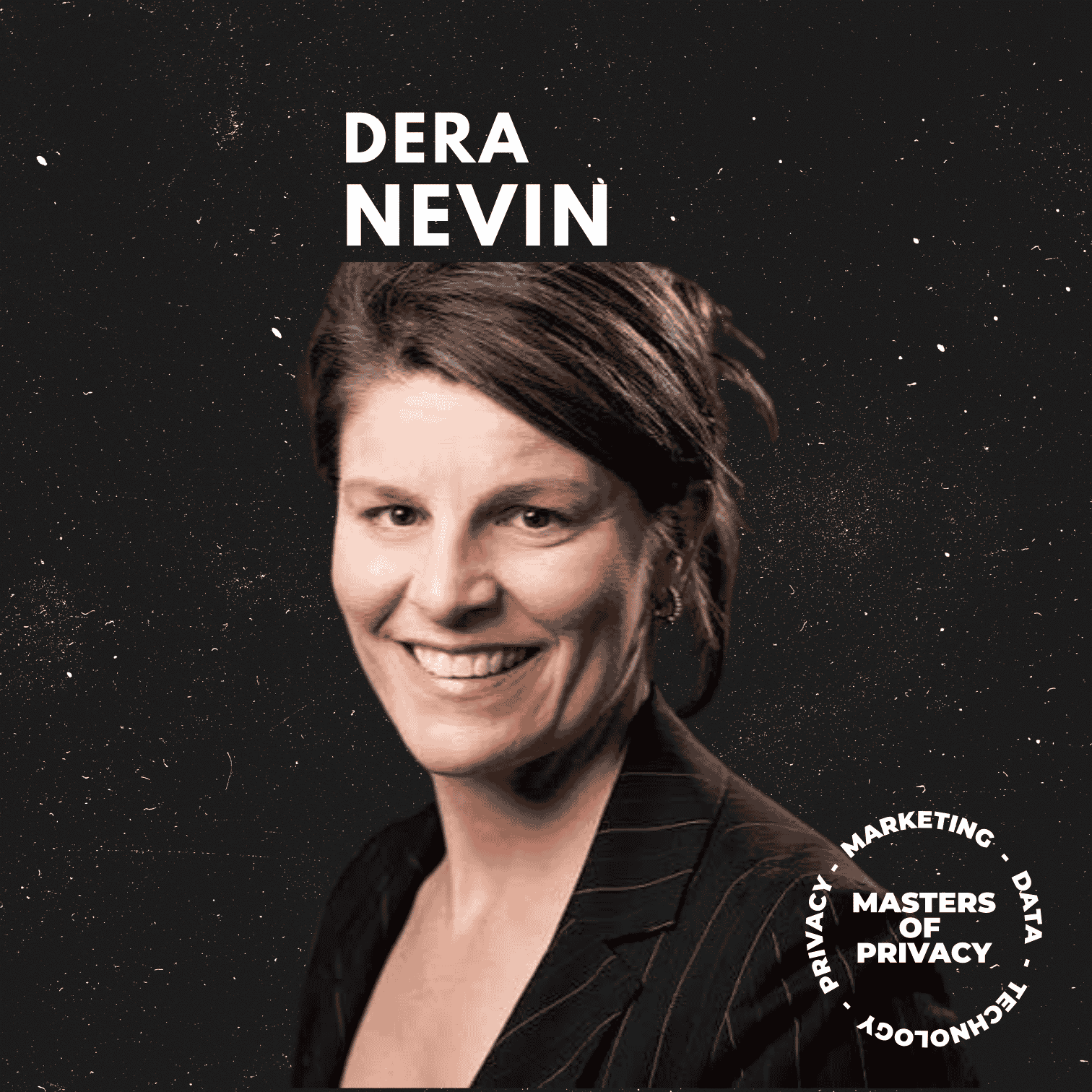
Dera Nevin: navigating new data categories, Retail Media, Agentic Commerce, and automated DSRs

Dera Nevin is Managing Director of Digital Insights & Risk Management at FTI Consulting. She is a data lawyer and expert with more than 20 years of experience addressing digital risk issues, including privacy, data protection, information risk management, e-discovery, advertising technology and the application of emerging technologies to the delivery of legal services and compliance programs. Prior to joining FTI Technology, our guest was the Data Policy and Strategy Officer at Blackstone, Inc., where she developed and oversaw global privacy, data protection, information risk management and data science compliance programs. She is a frequent speaker, writer, and teacher on how law responds to technological change. References: * Dera Nevin on LinkedIn * FTI Consulting * Under New Jersey’s data privacy law ( Assembly Bill A.5328 , enacted June 30, 2026), a “Data Collector” is a business collecting personal data directly from a consumer and selling or licensing it downstream to a data broker. * What is the Model Context Protocol? (official docs) * Introducing System One Models & Jev (TypeSafe) : on “Classifier models” * Jeffrey Bustos: Retail Media, privacy, and the future of addressability (Masters of Privacy, November 2023) * DPO Central on TODO.LAW (hosted). This is a public episode. If you'd like to discuss this with other subscribers or get access to bonus episodes, visit www.mastersofprivacy.com/subscribe
October 20, 2026Episode 1121 min

Adrian Doerk: digital identity and digital wallets in the EU (remastered and revisited)

As we approach an important deadline in the eIDAS 2.0 Regulation that established the EU Digital Identity Wallet, we are republishing an interview that should help us get up to speed on the subject. By December 24 (this year), every EU Member State must offer its citizens at least one European Digital Identity Wallet -as a free app, certified against common European rules, that holds a person’s identity data and official documents, and lets them prove only what is needed across the EU. Adrian Doerk is co-founder of Lissi GmbH and co-coordinator of the IDunion research project. He has extensive experience in the rollout of digital wallets, specializing in the European digital identity wallet (EUDI-Wallet) under the eIDAS 2.0 Regulation. References: * Adrian Doerk on LinkedIn * eIDAS 2.0 Regulation * Lissi * IDunion research project * What happened to the EU digital wallet? (Masters of Privacy, October 2026). This is a public episode. If you'd like to discuss this with other subscribers or get access to bonus episodes, visit www.mastersofprivacy.com/subscribe
October 12, 2026Episode 1036 min

Heidi Saas: data as a valuable asset, US consumers vs. data brokers

Attorney Heidi Saas (CIPP/US) has over twenty years of experience in consumer rights, eight years in data privacy, and five years of ethical AI and governance experience. Her projects currently involve working with CEOs, CTOs, CISOs, DPOs, and CMOs of companies in various industries on regulatory strategy, privacy program designs, risk management, implementation, and monetization of data assets within their privacy ecosystems. She also works with businesses to provide ethical AI advisory, and pre-audit consulting services, as well as regulatory compliance, legal consulting, and public speaking events. References: *What is a “data broker” under California law (CCPA as amended by CPRA)? A business that knowingly collects and sells the personal information of consumers with whom it does not have a direct relationship (thresholds: $25m revenue, 100k+ consumers/households, 50% of revenue originating from such selling or sharing of personal info). * Heidi Saas on LinkedIn * Tom Kemp (CalPrivacy): on the SECURE Data Act, CCPA whistleblowers, DROP, and AB 566 (Masters of Privacy, May 2026) * Build a privacy program on TODO.LAW (DPO Central) * Upcoming CIPT at DPO School (October 19th-20th, 2026) * Heidi Saas: AI compliance for MarTech vendors and data controllers (Masters of Privacy, September 2024). This is a public episode. If you'd like to discuss this with other subscribers or get access to bonus episodes, visit www.mastersofprivacy.com/subscribe
October 4, 2026Episode 941 min

Aleksandr Tiulkanov: dissecting transparency requirements in the EU AI Act

Aleksandr Tiulkanov has advised businesses on legal and compliance matters since 2003 and has focused on IT law and digital policy since 2015. He has previously been a Special Adviser on Digital Development at the Council of Europe; as well as Senior Manager for Technology, Media and Telecoms at Deloitte Legal. Aleksandr is also a Member of the AFNOR CN IA (French Commission on AI Standardisation), as well as a Member of the CEN-CENELEC JTC 21 (Artificial Intelligence), and a PECB Certified ISO/IEC 42001 Lead Implementer. He also holds an LL.M. in Innovation, Technology and the Law, University of Edinburgh (2018) and has been listed in “Best Lawyers in Information Technology Law (2020)” References: Aleksandr Tiulkanov on LinkedIn Engagements and training by Aleksandr Tiulkanov Preparing for the EU AI Act, a 4-week course by Aleksandr Tiulkanov (code for a 10% discount: MOPPTL2 ) For how the Article 50 disclosure duties apply to chatbots, see this guide on “ AI Act duties for chatbots ”. Paragraphs 1-4 of Article 50 of the EU AI Act: Transparency obligations for providers and deployers of certain AI systems * Providers shall ensure that AI systems intended to interact directly with natural persons are designed and developed in such a way that the natural persons concerned are informed that they are interacting with an AI systems, unless this is obvious from the point of view of a natural person who is reasonably well-informed, observant and circumspect, taking into account the circumstances and the context of use. This obligation shall not apply to AI systems authorised by law to detect, prevent, investigate or prosecute criminal offences, subject to appropriate safeguards for the rights and freedoms of third parties, unless those systems are available for the public to report a criminal offence. * Providers of AI systems, including general-purpose AI systems, generating synthetic audio, image, video or text content, shall ensure that the outputs of the AI systems are marked in a machine-readable format and detectable as artificially generated or manipulated. Providers shall ensure their technical solutions are effective, interoperable, robust and reliable as far as this is technically feasible, taking into account the specificities and limitations of various types of content, the costs of implementation and the generally acknowledged state of the art, as may be reflected in relevant technical standards. This obligation shall not apply to the extent the AI systems perform an assistive function for standard editing or do not substantially alter the input data provided by the deployer or the semantics thereof, or where authorised by law to detect, prevent, investigate or prosecute criminal offences. * Deployers of an emotion recognition system or a biometric categorisation system shall inform the natural persons exposed thereto of the operation of the system, and shall process the personal data in accordance with Regulations (EU) 2016/679 and (EU) 2018/1725 and Directive (EU) 2016/680, as applicable. This obligation shall not apply to AI systems used for biometric categorisation and emotion recognition, which are permitted by law to detect, prevent or investigate criminal offences, subject to appropriate safeguards for the rights and freedoms of third parties, and in accordance with Union law. * Deployers of an AI system that generates or manipulates image, audio or video content constituting a deep fake, shall disclose that the content has been artificially generated or manipulated . This obligation shall not apply where the use is authorised by law to detect, prevent, investigate or prosecute criminal offence. Where the content forms part of an evidently artistic, creative, satirical, fictional or analogous work or programme, the transparency obligations set out in this paragraph are limited to disclosure of the existence of such generated or manipulated content in an appropriate manner that does not hamper the display or enjoyment of the work. Deployers of an AI system that generates or manipulates text which is published with the purpose of informing the public on matters of public interest shall disclose that the text has been artificially generated or manipulated. This obligation shall not apply where the use is authorised by law to detect, prevent, investigate or prosecute criminal offences or where the AI-generated content has undergone a process of human review or editorial control and where a natural or legal person holds editorial responsibility for the publication of the content. This is a public episode. If you'd like to discuss this with other subscribers or get access to bonus episodes, visit www.mastersofprivacy.com/subscribe
September 27, 2026Episode 846 min

Dazza Greenwood: from agentic contracts to AI-assisted law firms. Delegation, attribution and judgment

Daniel “Dazza” Greenwood is the founder of CIVICS.com , a boutique provider of professional consultancy services for legal technologies, automated transactions, privacy and data management, and technology strategy. Dazza is also a researcher at MIT Media Lab and Lecturer at MIT Connection Science where he has been advancing the field of computational law and generative AI for law as Executive Director of law.MIT.edu . Our guest serves as lead on the Data Rights Protocol initiative through Consumer Reports Digital Lab. This protocol provides a common open specification for enabling consumers and companies to process the exercise of individual data rights as a consumer-connected digital service. Dazza Greenwood consults to Fortune 100 companies, architecting and building integrated business, legal and technology cross-boundary networks at industry scale. As an attorney, he served as both in-house and special counsel for technology law, representing corporations and governments. He has also testified before the US House, US Senate and other legislatures on electronic transactions law and consults extensively to the public sector. References: * Dazza Greenwood on LinkedIn * Dazza Greenwood’s Substack * CIVICS.com * Data Rights Protocol: Standardizing consumers’ data rights requests (Consumer Reports) * Uniform Electronic Transactions Act (1999) * Authority Boundaries for AI (Dazza Greenwood, May 2026) * LQAI from LegalQuants on Github (open source platform for law firms) * Thirteen Words Shape Legal AI (Dazza Greenwood, September 2026) * MIT Computational Law Report - Now part of Stanford Law School * HOPE Lab, Hands-On Projects and Experimentation : Learn to work with agents across multiple stages, with clear goals, boundaries, and evidence of what worked. * Interlateral (“Bring your own agent”), run by Dazza Greenwood: A space where people and their AI agents meet, coordinate, and build together over the web. * Jamie Smith: AI Agents, digital identity, wallets and personal data (Masters of Privacy, December 2024). This is a public episode. If you'd like to discuss this with other subscribers or get access to bonus episodes, visit www.mastersofprivacy.com/subscribe
September 23, 2026Episode 726 min

Shannon Yavorsky: legal implications of AI-driven recruitment

Shannon Yavorsky is a Global Co-Chair of Orrick’s Cyber, Privacy & Data Innovation group and co-head of its AI practice. She advises leading companies on privacy, cybersecurity and AI regulation, governance, transactions and strategic risk management, helping clients translate fast-moving legal requirements into practical, business-focused solutions. References: * Shannon Yavorsky on LinkedIn * Shannon Yavorsky at Orrick * AI governance frameworks, comparison and overlaps (AI Sentinel docs) : Thirteen widely used AI governance frameworks, including AIUC-1, AI Act, NIST, ISO, California ADMT, and more. Compared across fourteen dimensions. This is a public episode. If you'd like to discuss this with other subscribers or get access to bonus episodes, visit www.mastersofprivacy.com/subscribe
September 20, 2026Episode 631 min

Julian Gage: the evolving shape and role of DPIAs

How should we approach a Data Protection Impact Assessment or Privacy Impact Assessment in this new world? Are we recycling “mitigation measures” shamelessly? Are we drowning in futile DPIAs that were never really required? Julian Gage is a fractional DPO and the founder of Engage Compliance. He has acted as an external DPO and EU representative for over 100 companies including Coinbase and Robinhood, as well as plenty of startups. References: * DPO Central: build a DPIA * TODO.LAW: Run it your way * Julian Gage on LinkedIn * Engage Compliance * EDPB: Template for a Data Protection Impact Assessment * Nick Baskett: Mastering DPIAs (Masters of Privacy, July 2023) * DPIA versus PIA (North End Law). This is a public episode. If you'd like to discuss this with other subscribers or get access to bonus episodes, visit www.mastersofprivacy.com/subscribe
September 13, 2026Episode 529 min

Amy Lawrence: Meta settlement, advertising to minors, age assurance and addictive design.

Amy Lawrence is Chief Privacy Officer and Head of Legal at SuperAwesome, where she leads global privacy strategy for technology and media products designed for young audiences. An expert in youth privacy and digital regulation, Amy advises on building adtech services and responsible advertising in compliance with COPPA, GDPR, state privacy laws, and age-appropriate design codes. Previously, she was with Epic Games helping modernize the global privacy program and regulatory engagement. Amy began her career in private practice, focused on privacy compliance in media and entertainment. She holds CIPP/US and CIPP/E certifications and is admitted to practice in California and New York. References: * Amy Lawrence on LinkedIn * About SuperAwesome * Meta agrees to pay $18 billion to settle US lawsuits over children’s social media addiction (Reuters, August 28th 2026). The company denied wrongdoing and agreed to restrict teenagers’ use of Facebook and Instagram ​to two hours a day and block all usage from midnight to 6 a.m., absent parental consent. * Reddit issued with £14.47m fine for children’s privacy failures (ICO, February 24th 2026) * Yoti: “Thoughts from our CEO: Spanish regulator AEPD fining Yoti” (€950,000, March 27th 2026) * California AB-1043, Age verification signals: software applications and online services . The law enters into force on January 1st 2027, with OS providers (iOS, Android) required to collect a date of birth during the initial device or account setup, subsequently passing age signals to specific apps via API -consisting of age brackets. * AI Sentinel: Future-Proof AI Governance (hosted on TODO.LAW, free) * InScope (North End Law): Which privacy/AI laws apply to your company? This is a public episode. If you'd like to discuss this with other subscribers or get access to bonus episodes, visit www.mastersofprivacy.com/subscribe

September 6, 2026Episode 432 min

Rosalia Anna D’Agostino: Deep Fakes, algorithmic fairness and the challenges of younger generations

Rosalia Anna D’Agostino is an Italian Lawyer, Data Privacy and AI Compliance Expert, until recently working at the German law firm Spirit Legal. Fluent in five languages, she graduated in Comparative European and International law from the University of Trento (IT). Rosalia completed a joint programme with the University of Birmingham in the UK and, together with fellow students, founded Legal4Tech, where she leads a podcast on Law and Technology, engaging with top experts in tech governance. Our guest has gone quite deep into the legal analysis of LLMs and their outputs, class action lawsuits in the EU and the UK, social media platform algorithms and more. References: * Rosalia Anna D’Agostino on LinkedIn * Legal4Tech: on Spotify , Apple Podcasts , LinkedIn * Deepfake: Italian Data Protection Authority orders immediate stop to Clothoff, the app that undresses people (Garante, October 2025) * 20M EUR fine for Clearview AI in Italy (Garante, December 2022) * EU Digital Services Act * Russmedia decision (December 2025, CJEU) : liability as a data controller for user generated content on a platform, flying over safe harbor provisions for hosting providers (originally in the Ecommerce Directive, now in the DSA) * Rahul Uttamchandani: a legal framework for Deep Fakes (Masters of Privacy ES, March 2023). This is a public episode. If you'd like to discuss this with other subscribers or get access to bonus episodes, visit www.mastersofprivacy.com/subscribe

Is this your show?

Claim this listing to keep it up to date, reach guests who want to pitch you, and manage bookings with Guestify.

Claim this listing

More Business podcasts