🎙️ Introducing PodMation : Discover, Promote, Connect & Grow Your Podcast!
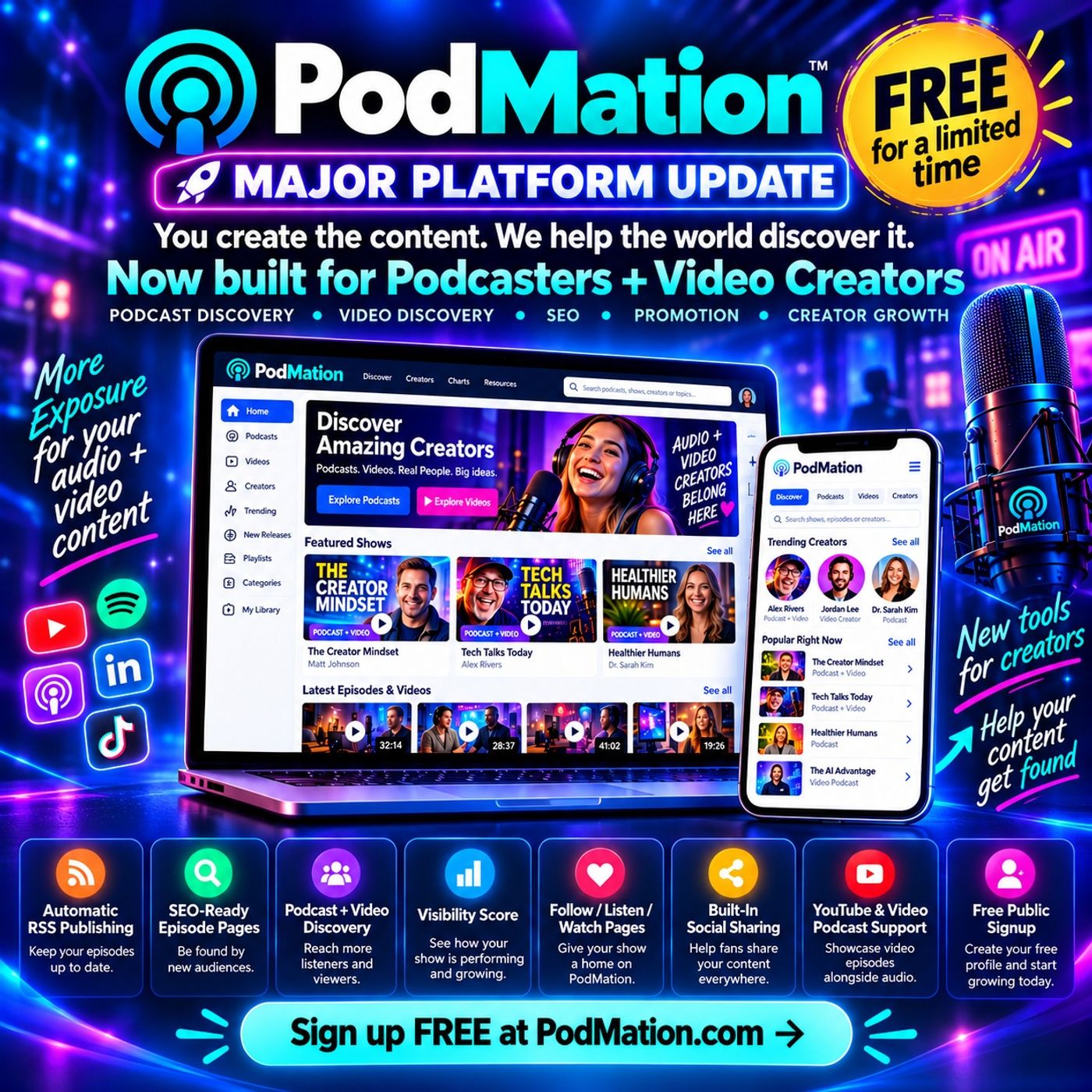
🎙️ Episode DescriptionWhat if your podcast could do more than simply exist online? What if it had more opportunities to be discovered, promoted, and shared?Welcome to PodMation™, an innovative podcast discovery and creator-growth platform designed to help independent podcasters expand their reach, promote their content, and connect with other creators.In this exciting episode, we introduce the latest PodMation features and explain how we're building something much bigger than a traditional podcast directory. 🚀 Discover What's New With PodMation: 🔎 Topic Discovery — Help listeners discover relevant episodes by searching for subjects, not just podcast names. 🎨 Promotion Studio — Create professional promotional graphics using 24 customizable templates and three image formats, offering 72 design-and-format combinations! 🤝 Creator Growth Center — Discover cross-promotion opportunities, recommend other podcasters, and invite creators to join the community. 📊 Referral Analytics — Explore 30-day engagement and referral activity to better understand your promotional efforts. 📄 Professional Media Kits — Create branded materials to introduce your podcast to potential guests, collaborators, and sponsors. 📱 Creator Companion — Enjoy a mobile-friendly experience, image optimization, and installable web-app functionality on supported devices. 📡 RSS Integration & Creator Dashboard — Connect your existing podcast, manage episodes, and access powerful promotional tools without changing your hosting provider. ⭐ Creator Visibility Score — Gain insight into how your podcast is presented and discoverable.And that's just the beginning!PodMation is bringing podcast discovery, creative promotion, and creator collaboration together in one growing platform. Whether you're launching your first podcast or managing hundreds of episodes, discover how PodMation can help you get more value from the content you've already created.🎧 Listen now and discover what makes PodMation different. 🌐 Explore PodMation: https://podmation.com PodMation™ — Discover. Promote. Connect. Grow. #PodMation #Podcasting #PodcastGrowth #PodcastDiscovery #PodcastMarketing #ContentCreators #CreatorEconomy Become a supporter of this podcast: https://www.spreaker.com/podcast/master-the-nec-podcast--1083733/support . Struggling with the National Electrical Code? Discover the real difference at Electrical Code Academy, Inc. —where you’ll learn from the nation’s most down-to-earth NEC expert who genuinely cares about your success. No fluff. No gimmicks. Just the best NEC training you’ll actually remember. Visit https://FastTraxSystem.com to learn more.