Aging Together: Why Age-Friendly Care Is Everyone's Future
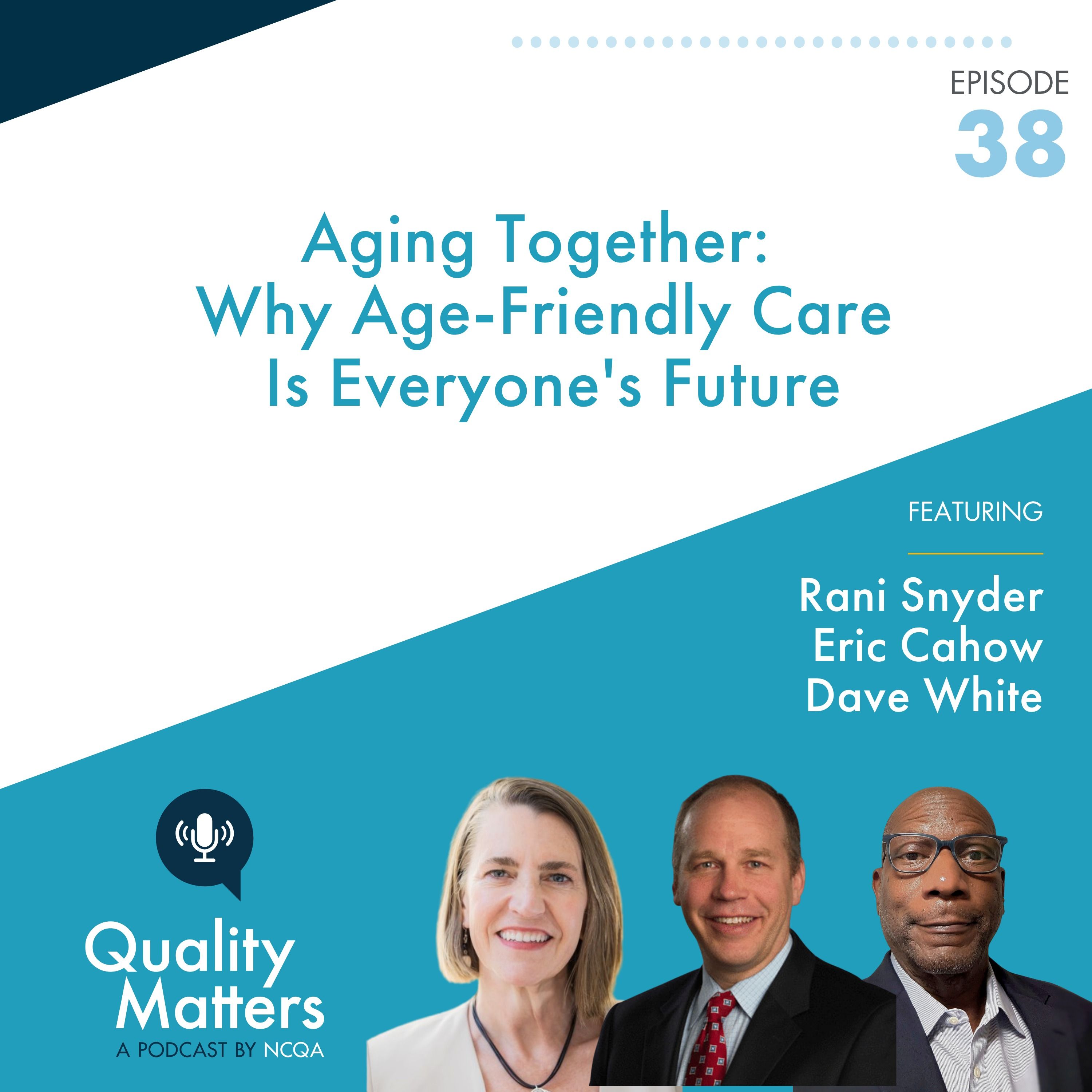
Aging Together: Why Age-Friendly Care Is Everyone's Future A s the U.S. population ages, healthcare organizations and health plans are facing an increasingly important question: How do we make sure care is designed around what older adults actually need—and what matters most to them? In this episode of Quality Matters , host Daniela Lawton explores the Age-Friendly Health Systems movement and its 4Ms framework: What Matters, Medication, Mentation and Mobility. She is joined by Rani Snyder and Eric Cahow for a conversation about how age-friendly care has evolved, what it looks like in practice and how Medicare Advantage plans can help make it a standard part of care. Rani Snyder discusses the origins of the Age-Friendly Health Systems movement, launched in 2016 through The John A. Hartford Foundation and the Institute for Healthcare Improvement, and its growth to more than 6,900 recognized sites. As the movement enters a new phase, the focus is increasingly on reliable implementation, measurable outcomes and demonstrating the impact of age-friendly practices. Eric Cahow explores what age-friendly care means for Medicare Advantage, including the need to prepare for different generations of older adults, align quality measures and financial incentives and build partnerships across the healthcare system. The panel discusses evidence showing improvements such as reduced readmissions, fewer falls and reductions in inappropriate medication use, while also considering the challenges of scaling these approaches and demonstrating return on investment. The conversation also addresses Reframing Aging, an effort to challenge ageism and change the way society talks about aging. Then, in The Patient Voice , Dave White shares his personal journey with kidney disease and the importance of being heard by his care team. His experience reinforces a central message of age-friendly care: understanding what matters to the person receiving care is essential to making care better. Because when it comes to age-friendly care, every touch matters. Key Quote “Every touch matters. Every member of the medical team is equally important when it comes to patient care. One bad interaction at any point can ruin the experience for people living with serious illnesses.” — Dave White What You'll Hear How the Age-Friendly Health Systems movement began and evolved The 4Ms framework: What Matters, Medication, Mentation and Mobility Why age-friendly care is increasingly important as the U.S. population ages How Medicare Advantage can help scale age-friendly practices Why aligned quality measures and financial incentives matter Evidence connecting age-friendly care with outcomes such as fewer readmissions, falls and inappropriate medications The challenges of demonstrating ROI and creating reliable implementation at scale How Reframing Aging can help address ageism in healthcare and society Dave White's experience navigating kidney disease and the importance of being heard Why shared planning and understanding the patient's goals are essential to quality care Time Stamps 00:00 — Why Aging Matters 01:47 — Meet Rani Snyder and Eric Cahow 05:44 — How Age-Friendly Health Systems Began 09:51 — Medicare Advantage Readiness 11:49 — What Age-Friendly Care Looks Like in Practice 14:37 — The Role of Health Plans and Incentives 17:24 — Proof Points and Payment Reform 20:55 — Scaling Challenges and ROI 25:36 — Measuring What Matters 28:27 — Reframing Aging and Key Takeaways 31:08 — The Patient Voice: Dave White 41:30 — Closing Summary and Next Steps Links & Resources The John A. Hartford Foundation | Improving Care for Older Adults Independence Blue Cross NCQA’s Person-Centered Outcome Measures National Center to Reframe Aging Age-Friendly Health Systems | Institute for Healthcare Improvement The Age-Friendly Health System Imperative Developing an NCQA Age-Friendly Medicare Advantage Health Plan Program to Distinguish High Performers The 4Ms of Age-Friendly Care Patient Outcomes Associated With a Composite Measure of 4Ms Care Adherence in the Inpatient Setting - Rosner - Journal of the American Geriatrics Society - Wiley Online Library Strengthening the National Research Infrastructure for Age-Friendly Health Systems Evidence Age-Friendly Health Systems Join the Movement | Institute for Healthcare Improvement Age-Friendly Health Systems | Center | AHA AHA Age-Friendly Healthcare Impact Award | AHA Stay Connected | Subscribe to JAHF E-News About the Guests Rani Snyder, President of The John A. Hartford Foundation, is part of the leadership behind the Age-Friendly Health Systems movement and its efforts to make evidence-based, age-friendly care more reliable across healthcare organizations. In this conversation, she discusses the movement's origins, its expansion across the country and the next phase of focusing on measurable outcomes. Eric Cahow, Vice President of Government Markets Performance at Independence Blue Cross, brings a Medicare Advantage perspective to the conversation, exploring how health plans can prepare for an aging and increasingly diverse population, align incentives and measures and work with partners across the healthcare system to advance age-friendly care. Dave White is featured in The Patient Voice , sharing his experience navigating kidney disease and the healthcare system. His story highlights the importance of listening to patients, incorporating their priorities into care planning and recognizing that every interaction can shape a patient's experience. Key Takeaways Age-friendly care starts with What Matters. The 4Ms framework puts the patient's goals and priorities alongside medication, mentation and mobility as core elements of quality care. The movement is shifting from adoption to reliability. With thousands of recognized sites, the focus is increasingly on making age-friendly practices consistent, measurable and sustainable. Health plans have an important role to play. Medicare Advantage plans can help drive adoption through quality measurement, incentives, partnerships and alignment with broader healthcare goals. Outcomes matter. The conversation points to improvements associated with age-friendly approaches, including reductions in readmissions, falls and potentially inappropriate medications. Changing how we talk about aging matters, too. Reframing Aging challenges assumptions and stereotypes about older adults and encourages a more accurate, respectful understanding of aging. The patient's voice belongs at the center. Dave White's story demonstrates why patients need to be heard and involved in decisions about their care. Understanding the person behind the condition can change the care experience–and potentially the care itself. The Patient Voice At 31:08, Daniela Lawton speaks with Dave White about his experience living with kidney disease. Dave's story brings the themes of the episode down to the individual level: quality isn't only about measures, programs or systems. It is also about whether a person feels heard, whether their priorities are understood and whether their care team works with them to plan what comes next. His experience offers a powerful reminder that every touch matters. Hosted by Simplecast, an AdsWizz company. See pcm.adswizz.com for information about our collection and use of personal data for advertising.