Find partners
IngenioUs

IngenioUs

Hosted by Melissa Morriss-Olson

BusinessInterviews guests

Episodes

240

Latest episode

Jun 2026

Language

EN

About the show

Welcome to IngenioUs — where conversations spark innovation and open doors to the future of higher education. Our podcast is a dedicated space for deep dives with the most original minds and active changemakers in academia. Each episode is a journey through the ideas and actions of those at the forefront, pushing boundaries and redefining what's possible in higher ed. Join us as we explore academic innovation, uncovering insights and inspirations from those who dare to think differently.

Listen to episodes

60 recent
June 16, 202651 min

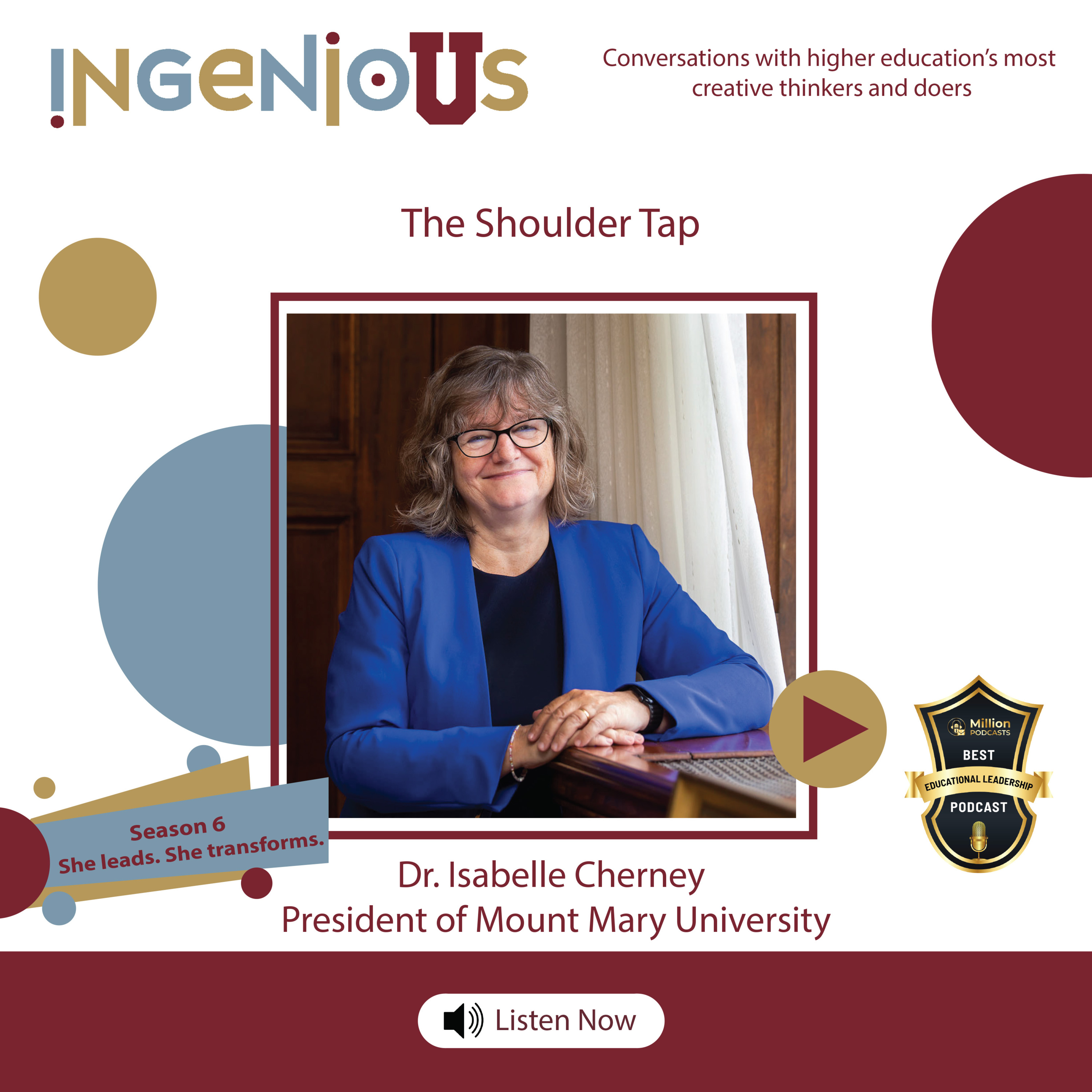
The Shoulder Tap: Dr. Isabelle Cherney on Seeing Possibility in Others

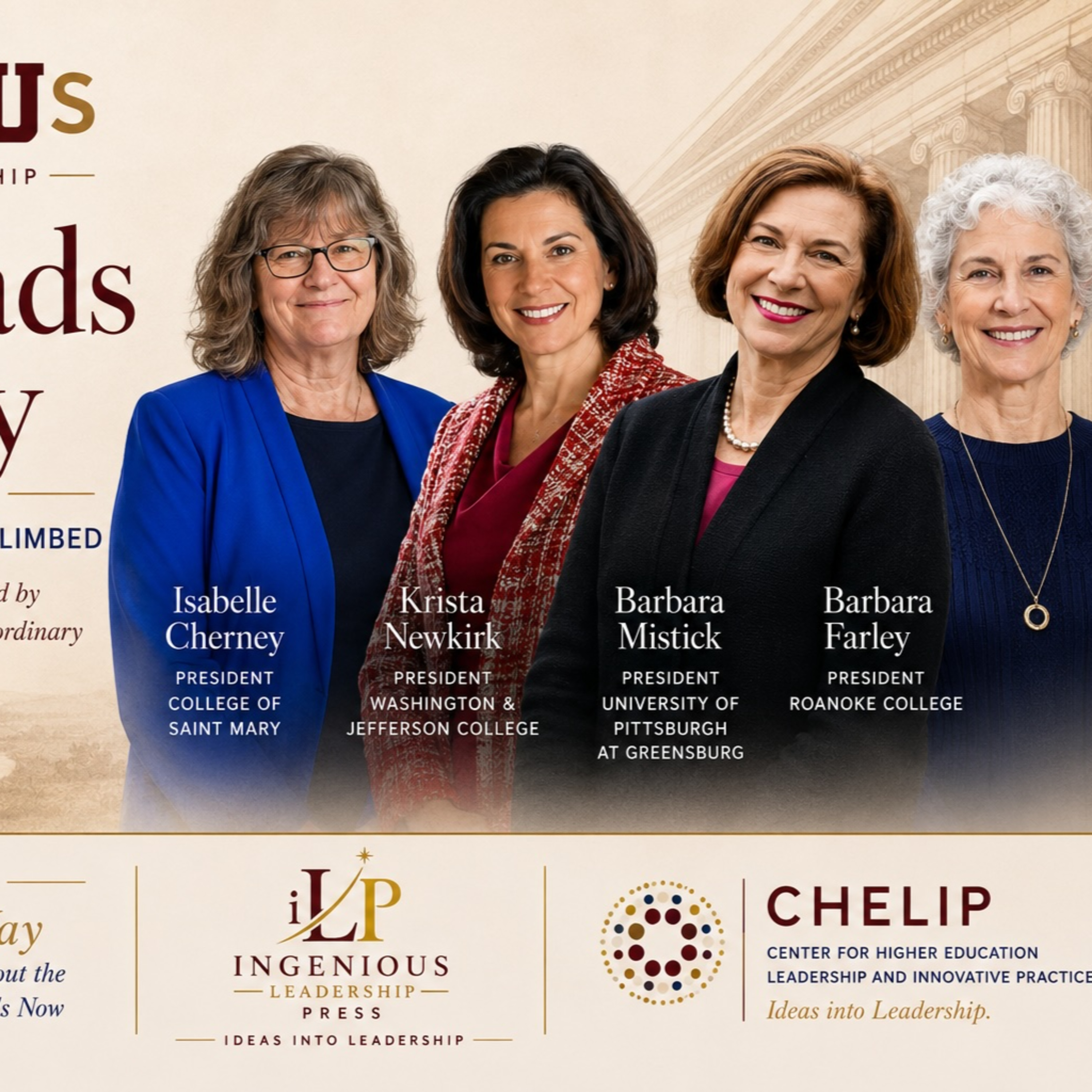
What if the most important thing a leader can do is help someone see possibilities they cannot yet see in themselves?In this episode of IngenioUs, Melissa Morriss-Olson sits down with Dr. Isabelle Cherney, President of Mount Mary University in Milwaukee, Wisconsin, for a thoughtful and inspiring conversation about leadership, humanpotential, and the power of believing in others.Born and raised in Switzerland, Dr. Cherney brings a unique global perspective to her work as a university president. A developmental psychologist by training and a passionate advocate for women and children, she has dedicatedmuch of her career to understanding how people develop, learn, and discover their strengths.What emerges throughout this conversation is a powerful theme that has shaped both her personal journey and her leadership philosophy: the importanceof the "shoulder tap." Again and again throughout her life, someone recognized potential in her before she recognized it in herself and encouraged her to pursue opportunities she never imagined. Today, as president of one of the nation's few remaining women's universities, she strives to do the same forothers.Melissa and Dr. Cherney discuss:• Growing up in Switzerland and how living across cultures shaped herapproach to leadership• Her academic research on psychology, gender, and human development• The unexpected path that led her to the university presidency• What she has learned about leading as an introvert in a highly visible role• The creation of Mount Mary's Institute for the Advancement of Women and Children• Why women often hesitate to pursue leadership opportunities—and how we can change that• The importance of mentors, sponsors, and leaders who see possibilities in others• Her vision for the future of higher education and the need for greater flexibility, innovation, and collaborationThroughout the conversation, Dr. Cherney offers a compelling reminder that leadership is not about titles or authority. It is about helping people recognize their own potential and creating opportunities for them to thrive.Whether you are an aspiring leader, a seasoned professional, an educator, or someone seeking inspiration, this episode offers wisdom, encouragement, and practical insights about leading with empathy, courage, and purpose.About Dr. Isabelle CherneyDr. Isabelle Cherney is President of Mount Mary University, a Catholic university in Milwaukee, Wisconsin, dedicated to educating women and advancing social justice. A developmental psychologist, scholar, and higher educationleader, she has devoted her career to empowering individuals and expanding opportunities for women and underserved populations.Host: Dr. Melissa Morriss-OlsonPodcast: IngenioUs Leadership*Season 6: Extraordinary Women Leaders in Higher Education

June 2, 2026Episode 2946 min

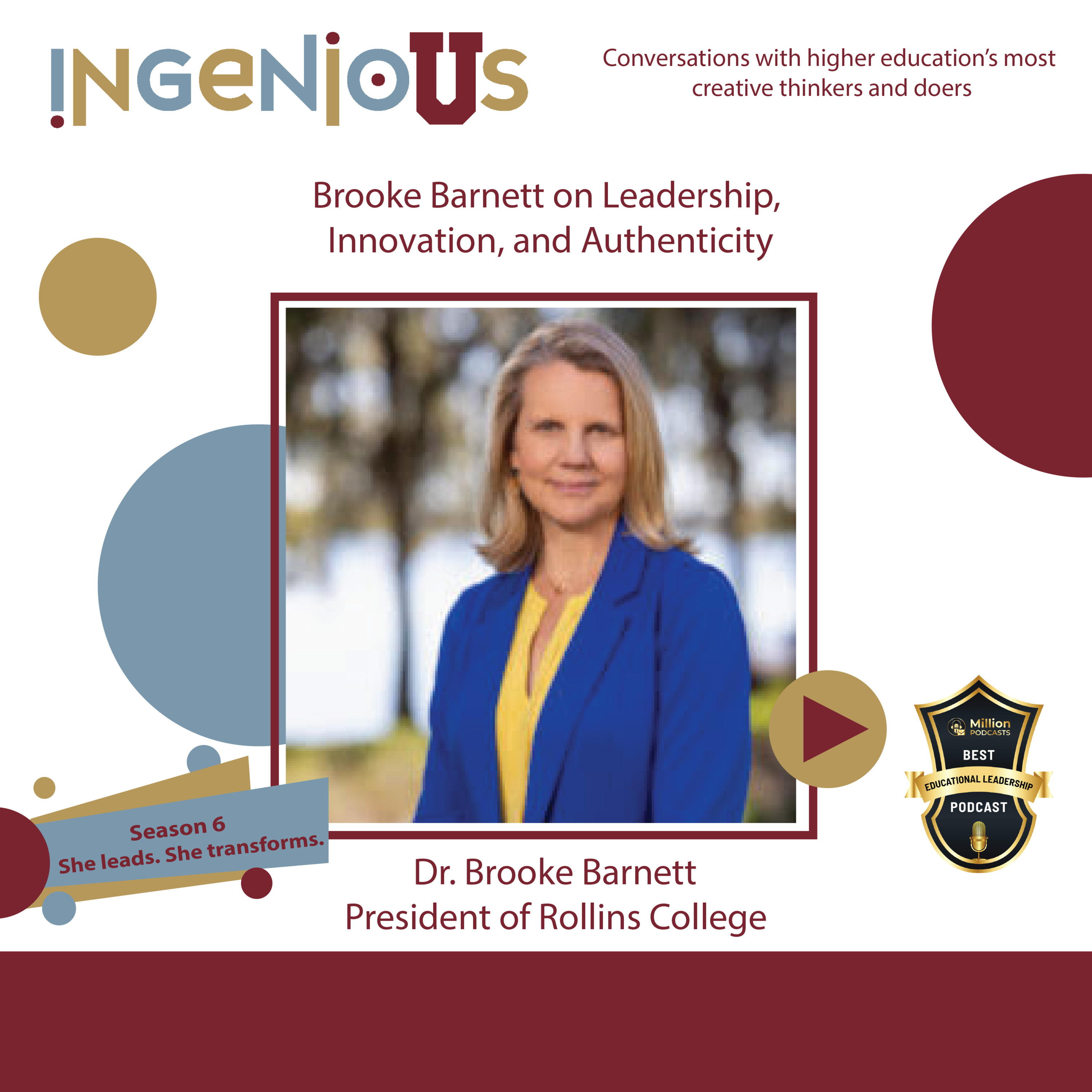
Brooke Barnett: Leading with Curiosity, Connection, and Courage at Rollins College

In this episode of IngenioUs, Melissa Morriss-Olson sits down with Dr. Brooke Barnett, President of Rollins College, for a candid and inspiring conversation about authentic leadership, innovation, and the evolving future of higher education.Just months into her presidency, Dr. Barnett reflects on the experiences that shaped her leadership journey—from growing up in rural Kentucky and beginning her career in journalism to becoming a First Amendment scholar,provost, and now college president. Along the way, she shares how curiosity, relationships, and a deep commitment to community have guided her leadershipphilosophy.Together, Melissa and Brooke explore:The power of curiosity as a leadership strength Why authentic, relationship-driven leadership matters more than ever The transition from faculty member to senior leadership Leading innovation while staying grounded in institutional mission The future relevance of the liberal arts in the age of AI The emotional complexity of presidential decision-making Women’s leadership and the unique pressures faced by women presidents Resilience, self-awareness, and sustaining oneself in demanding leadership roles Dr. Barnett also offers an inside look at the exciting vision unfolding at Rollins College, including the institution’s “Innovation Triangle” and its commitment to experiential learning, creativity, and human-centered education.Thoughtful, insightful, and refreshingly honest, this conversation offers valuable wisdom for current and aspiring leaders both within and beyond higher education.About Our GuestDr. Brooke Barnett is the President of Rollins College in Winter Park, Florida. A former journalist and media law scholar, she previously served in senior leadership roles at Butler University and Elon University. Her leadership is known for its authenticity, collaborative spirit, and commitment to innovation rooted in mission and community.

May 19, 20261 min

The Loneliness of Seeing It Clearly Before Others Do. Melissa Morriss-Olson

There is a moment in leadership that doesn’t get talked about very often.It’s not the moment when a decision is made. It comes earlier—when something starts to become clear, but not yet to everyone else.In this short video, Dr. Melissa Morriss-Olson introduces her latest reflection on this often-overlooked phase of leadership: the space between recognizing a shift and bringing others along.Drawing on conversations with university presidents, she explores what it means to:• see something before others do• navigate the timing of action• communicate through uncertainty• and “hold” an institution through changeThis is the part of leadership that can feel isolating—and yet, it’s often where the most important work begins.🎥 Watch the video for a brief introduction📖 Read the full essay here: https://ingeniousu.wpcomstaging.com/We’d love to hear what resonates with your own leadership experience.

May 12, 2026Episode 2649 min

The Listening Strategist: Leading with Courage, Clarity, and Conviction in Times of Change

In this episode of IngenioUs, I sit down with President Krista L.Newkirk J.D.of the University of Redlands—an extraordinary leader whose journey to the presidency is as compelling as her approach to leadership.From her early years growing up on a cattle ranch in Missouri, to her career as an attorney, to leading complex institutional transformation, Krista’s story is one of resilience, adaptability, and purpose. What stands out most is her ability to navigate high-stakes decisions with both analytical rigor and deep humanity.At the heart of her leadership is a powerful—and often overlooked—skill: listening. As Krista shares, truly listening means understanding not just what people say, but what they feel—and that insight shapes how she leads, makesdecisions, and builds trust across her institution.In our conversation, we explore:Krista’s unconventional path to the college presidency What she learned stepping into leadership for the first time—and what surprised her most Why communication is more complex than we think (“people hear what they fear”) How she approaches decision-making in moments of uncertainty and risk What it really takes to lead mergers and institutional transformation The importance of authenticity, humility, and surrounding yourself with the right team Her candid perspective on women in leadership todayWhy rebuilding trust in higher education is one of the most urgent challenges ahead If you’re a leader in higher education—or aspire to be—this is an episode you won’t want to miss.About Our GuestDr. Krista Newkirk is President of the University of Redlands. With a background in law and higher education leadership, she has led significant institutional transformation, including mergers and strategic growth initiatives, while remaining deeply committed to student success andmission-driven leadership.

May 8, 20267 min

Beyond Enrollment: The Power of ‘Stickiness’ in Higher Education. David Staley

What makes a university—and its surrounding city—sticky?In this episode, David J. Staley explores a powerful concept shaping the future of higher education: stickiness—the ability of a college or university not only to attract students, but to inspire them to stay, build careers, and contribute to the region after graduation.Drawing on a recent consulting experience at a Midwestern university, Staley reflects on a familiar challenge: institutions successfully bring students in, only to watch them leave for opportunities elsewhere. He contrasts this with “sticky” ecosystems like Ohio State and Columbus, where a dynamic interplay between university strengths and regional opportunities encourages graduates to remain and thrive.The episode introduces the idea of a “stickiness index”—a framework for assessing how well institutions and cities retain talent. Factors include:Alignment between academic programs and local job marketsInternship and career pipelinesSocial connections and campus engagementQuality of life and affordabilityEntrepreneurial and innovation ecosystemsStaley argues that stickiness is not accidental—it requires a deliberate, collaborative strategy between universities, civic leaders, and employers. It also calls for a reimagining of alumni engagement, shifting from long-term connection-building to immediate post-graduation retention efforts.Importantly, he reframes the common narrative of “brain drain” as something more subtle: “brain leakage”—where talent is developed locally but gradually seeps away due to lack of opportunity or connection. For institutions facing enrollment pressures and questions about value, a focus on stickiness offers a compelling path forward—one that integrates enrollment, student experience, workforce development, and regional vitality into a unified strategy.🔑 Key TakeawaysStickiness = Attraction + Retention: It’s not enough to enroll students; success means keeping them after graduation.Ecosystems Matter: Universities and cities must work together to create opportunities and quality of life that retain talent.Social Embeddedness Counts: Relationships, engagement, and belonging influence whether graduates stay.From Brain Drain to Brain Leakage: Talent loss is often gradual—and preventable.A Strategic Opportunity: A “stickiness strategy” can serve as a roadmap for institutional resilience and regional growth.🎯 Why This MattersAs higher education faces increasing disruption—from demographic shifts to economic pressures—institutions must think beyond traditional metrics. “Stickiness” reframes success in terms of long-term impact, regional contribution, and human connection.👤 About the AuthorDavid J. Staley is a historian, author, and thought leader on the future of higher education. His University Design column explores innovative ideas shaping institutions and their role in society.

April 21, 202646 min

The Builder President: How Summer McGee Is Reimagining Higher Education with Vision, Data, and Heart

In a time when higher education is facing profound questions about its value, purpose, and future, what does it take to lead with both clarity and conviction?In this episode of IngenioUs, I sit down with Dr. Summer McGee,president of Lenoir-Rhyne University—a dynamic and forward-thinking leader whose career has been defined by building: building programs, building strategy, and building institutions that grow and thrive.From her earliest days as a faculty member launching a new academic program to her leadership today as a two-time college president, Summer has consistently approached leadership with a builder’s mindset. In our conversation, she shares what she has learned across her leadership journey and how she is navigating one of the most complex moments in higher education.We explore:Why higher education leaders must once again articulate the value of a college degree The critical question every institution must answer: Why do we exist—and what do we do better than anyone else? What she learned from leading a major institutional turnaround at Salem Academy and College The invisible work of the presidency—and how she manages the weight of leadership How authenticity, relationships, and joy (including competitive pinball!) shape her leadership style Why data-driven decision making and storytelling go hand-in-hand What women need to know before stepping into senior leadership roles Throughout the conversation, Summer offers a powerful reminder that leadership is both deeply strategic and deeply human—and that the future of higher education will be shaped by those who can do both well.About the GuestDr. Summer McGee is the president of Lenoir-Rhyne University. A two-time college president and former founding dean, she is known for her expertise in academic innovation, enrollment growth, and institutional transformation. Her leadership is grounded in a commitment to student success, strategic clarity,and building organizations that are positioned to thrive in a rapidly changing higher education landscape.Key TakeawaysGreat leadership in higher education requiresbalancing heart and strategy Institutions must clearly define and communicate their distinctive value Transformation is possible—even in resource-constrained environments—when vision and alignment are strongAuthenticity and vulnerability are strengths, not liabilities, in leadership Sustainable leadership depends on support systems, boundaries, and moments of joy Connect & Learn MoreFollow IngenioUs for more conversations with innovative leaders shaping the future of higher education.

April 14, 20261 min

What Leaders Know—but Cannot Fully Say. Melissa Morriss-Olson

In this episode of IngenioUs, Melissa Morriss-Olson explores a dimension of leadership that doesn’t often get named—but is deeply felt by those in leadership roles.We talk a lot about transparency in leadership. We encourage it. We expect it. And in many cases, we equate it with effective leadership.But what happens when leaders can’t fully share what they know?Drawing from recent conversations with college and university presidents, Melissa reflects on a different kind of tension—one that sits at the intersection of responsibility, judgment, and trust.This is not about what leaders avoid saying.It’s about what they cannot fully say—even when they want to.In this episode, Melissa explores:Why transparency in leadership is more complex than we often acknowledgeThe real constraints leaders navigate—legal, ethical, and humanThe emotional weight of holding information that cannot yet be sharedAnd what it means to lead with integrity when full disclosure isn’t possibleThis conversation is grounded in real leadership stories and reflects a broader pattern Melissa is seeing across higher education today.Leadership is not simply about being transparent—it’s about exercising judgmentThere are moments when responsible leadership requires restraint, not disclosureTrust is built not through constant information-sharing, but through consistency and integrity over timeSome of the most important dimensions of leadership are the least visibleShe expands on these ideas in more depth in her latest blog:👉 What Leaders Know—but Cannot Fully SayAs you think about your own leadership:How do you navigate the tension between being transparent and being responsible?If this resonates with you, we'd love to hear your thoughts.Feel free to connect or share your perspective.IngenioUs explores leadership in higher education through candid conversations with presidents and changemakers who are navigating complexity, driving innovation, and leading with purpose.

April 9, 20268 min

Educable: Rethinking Intelligence, Education, and the Future of Learning. David Staley

In this episode, David J. Staley reads from his latest University Design blog entry, Educable, where he explores a provocative new concept drawn from Leslie Valiant’s recent work: that what truly distinguishes humans is not intelligence—but educability.What if education is not simply about acquiring knowledge or skills, but about undergoing a fundamental “state change”—a transformation in how we think, act, and understand the world? And what if this idea reshaped how we assess learning, design degrees, and even imagine the future of artificial intelligence?Staley challenges us to reconsider long-standing assumptions about education versus training, the purpose of higher education, and what it really means to be “educated” in a rapidly evolving world.Key Ideas ExploredEducability vs. Intelligence: A new framework for understanding human uniquenessEducation as “State Change”: Learning as deep cognitive transformation, not just information transferRethinking Assessment: What if grades reflected the degree of transformation rather than performance?Education vs. Training: Why education prepares us for the unforeseenArtificial Educability: A bold vision for the future of AI beyond current modelsThe Future of Teaching: Imagining new methods for educating both humans and machinesWhy This MattersAt a time when higher education is under pressure to demonstrate value and relevance, this episode invites us to think more expansively. If education is truly about transformation—about changing who we are—then our current systems of grading, credentialing, and ranking may be missing the point.Staley’s reflections open the door to a more ambitious vision of higher education—one centered on human development, adaptability, and lifelong learning.📖 Read the Full Blog👉 Educable by David J. Staley🎙️ About the AuthorDavid J. Staley is a higher education philosopher, strategist, futurist, and designer. He serves as an Honorary Faculty Fellow in Innovation at CHELIP and is the author of Alternative Universities, The AI Symposium, and other works exploring the future of higher education and knowledge systems.🔗 About the SeriesThis episode is part of the University Design series, published under the IngenioUs blog label, which explores bold, forward-thinking ideas about the future of higher education.

April 7, 2026Episode 2247 min

“What Are You Going to Do About It?”: Grandview U President Rachelle Keck on Agency, Leadership, and the Power of Possibility

In this episode of IngenioUs, Melissa Morriss-Olson speaks with Rachelle Keck PhD, JD, president of Grandview University, about leadership, agency, and the evolving future of higher education.Rachelle’s path to the university presidency is far from traditional. After more than two decades practicing law, she transitioned into higher education leadership and eventually became the president of Grandview University in Des Moines, Iowa. In this conversation, she shares how her experiences as a first-generation college student, a woman leader inhigher education, and one of nine siblings growing up in rural Missouri shaped her leadership philosophy.Rachelle discusses the leadership lessons she learned moving from law into higher education administration, the realities of leading a university today, and how institutions can prepare students for a rapidly changing workforce.She also shares the four pillars that guide her leadership every day: love, logic, listening, and learning—a framework that blends analytical decision-making with empathy and collaboration.Throughout the conversation, one powerful question keeps resurfacing—one that Rachelle first heard as a child and now shares with students and emerging leaders:What are you going to do about it?This episode will resonate with anyone interested in women’s leadership, university leadership, higher education innovation, and the future of college leadership.Topics Discussed in This EpisodeLeadership lessons from growing up in a family of nineNavigating college as a first-generation studentTransitioning from a career in law to higher education leadershipWhat it really means to serve as a college president todayShared governance and collaborative leadership in universitiesLeading institutions during times of uncertainty and changeThe importance of representation and women presidents in higher educationPreparing students for a future shaped by technological changeThe framework that guides Rachelle's leadership: Love, Logic, Listening, and LearningAbout the GuestRachelle Keck is president of Grandview University, a private university in Des Moines, Iowa. Before entering higher education leadership, she spent more than twenty years practicing law. Her leadership focuses on student opportunity,institutional sustainability, and preparing graduates for meaningful careers and lives of purpose.About the PodcastIngenioUs is a higher education leadership podcast hosted by Melissa Morriss-Olson, Distinguished Professor of Higher Education Leadership at Bay Path University and author of IngenioUs Leadership: Creating Solutions to Wicked Problems in Higher Education.Each episode features conversations with innovative leaders who are shaping the future of higher education.

March 24, 2026Episode 2352 min

The Power of Place: Carol Quillen on Leadership, History, and Reconnecting Communities

In this episode of the IngenioUs Leadership Podcast, Melissa Morriss-Olson sits down with historian and higher education leader Carol Quillen, former president of Davidson College and now President and CEO of the National Trust for Historic Preservation.Carol brings a historian’s lens to leadership—one grounded in humility, courage, and a deep respect for the power of community and place. Over the course of the conversation, she reflects on her leadership journey from growingup in a small historic town in Delaware to leading one of the nation’s most respected liberal arts colleges.Carol shares insights about what leadership really means, why she believes it is fundamentally about helping communities create the conditions for change, and what she learned about guiding an institution through moments of uncertainty, including the challenges of the COVID-19 pandemic.The conversation also explores her current work with the National Trust for Historic Preservation, where she is thinking deeply about how historic places can help Americans reconnect with the complexity of their shared history. At a time when public conversations often feel abstract and polarized, Carol argues that standing in the places where history actuallyhappened can open the door to more thoughtful dialogue and renewed civic understanding.This episode is a thoughtful reflection on leadership, community, and the enduring importance of place in shaping how we understand ourselves and one another.Key Themes from the ConversationLeadership as Context BuildingCarol describes leadership not as a title or position but as the work of helping a community create the conditions it needs to live up to its highest aspirations.Courage and Humility in LeadershipTwo qualities she believes are essential for leaders navigating complexity and uncertainty.Listening and Trust BuildingHow leaders create environments where people can speak honestly, disagree respectfully, and work together toward shared goals.Leading Through CrisisReflections on guiding Davidson College through the COVID-19 pandemic and the importance of transparency when decisions must be made with incomplete information.The Power of Institutional CultureWhy understanding the history and identity of an organization is critical when leading change.The Power of Place in Civic LifeHow historic sites—from Gettysburg to Monticello to immigrant tenements—help us confront the complexity of American history and foster deeper conversations about our shared future.Advice for Emerging LeadersCarol encourages young leaders to focus less on career planning and more on doing the work that is right in front of them.About Carol QuillenCarol Quillen is President and CEO of the National Trust for Historic Preservation and the former president of Davidson College, where she served for eleven years.A historian by training, Carol previously spent many years on the faculty at Rice University and held several administrative leadership roles there. She is widely respected for her thoughtful approach to leadership, institutional change, and civic engagement.Her current work focuses on the role historic places can play in strengthening communities and fostering dialogue about the nation’s shared past and future.About the IngenioUs Leadership PodcastThe IngenioUs Leadership Podcast explores how leaders createsolutions to complex challenges in higher education and beyond. Through conversations with innovative and thoughtful leaders, the podcast highlights ideas, experiences, and perspectives that help listeners think differently aboutleadership today.

Is this your show?

Claim this listing to keep it up to date, reach guests who want to pitch you, and manage bookings with Guestify.

Claim this listing

More Business podcasts