Find partners
Higher Ed Storytelling University

Higher Ed Storytelling University

Hosted by John Azoni

BusinessEducationInterviews guests

Episodes

110

Latest episode

Jun 2026

Language

EN

About the show

A podcast dedicated to helping higher ed marketers tell better stories and enroll more students. Hosted by video producer and storytelling coach, John Azoni, these episodes provide quick-win practical advice you can put to use in your marketing right away.

Listen to episodes

60 recent
June 10, 2026Episode 11053 min

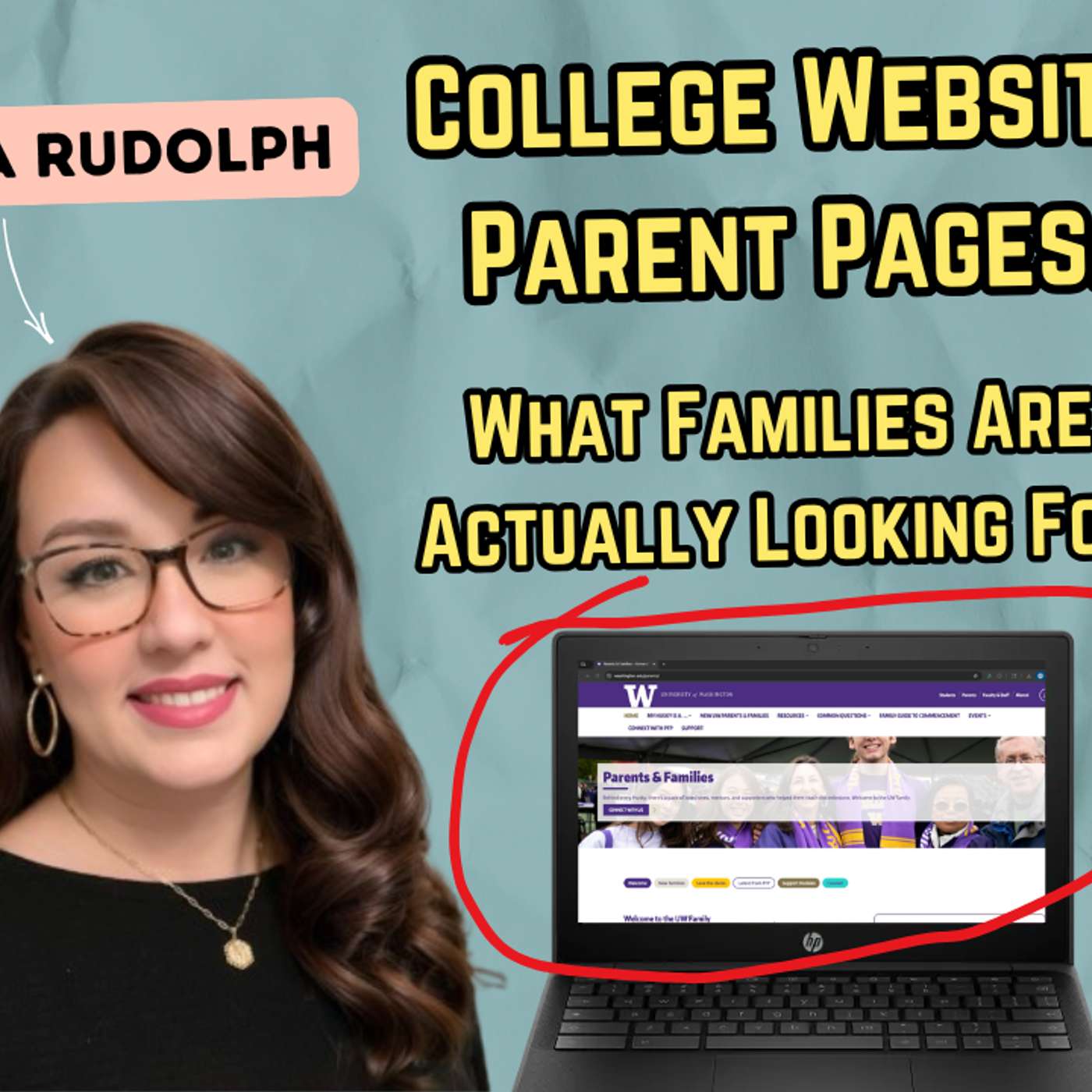
#110 - What College Parents Actually Need From Your Website, and What Higher Ed Is Getting Wrong w/ Laura Rudolph

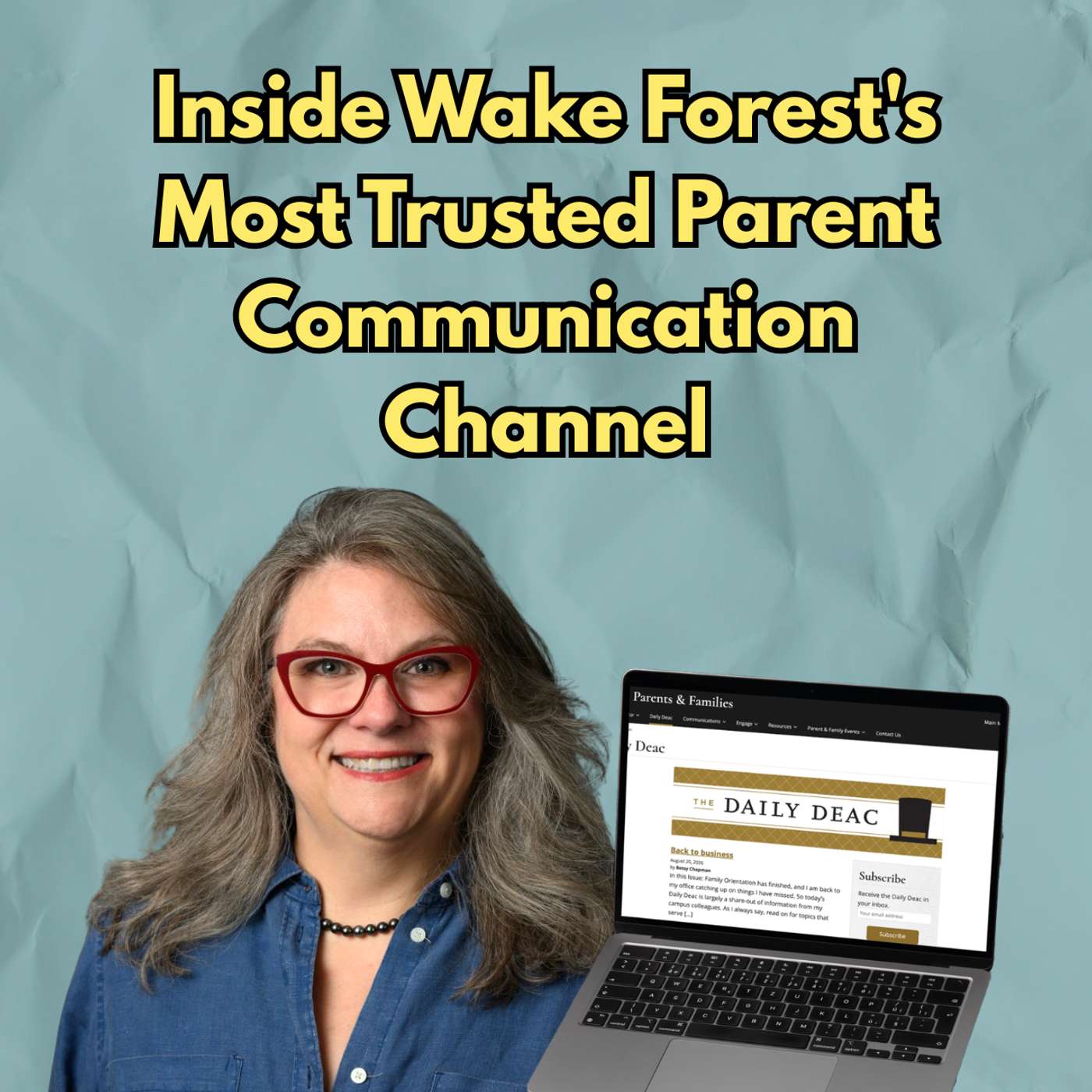
Most college parent pages were built by someone who ran out of time and dumped every link they didn't know what to do with into a pile. Laura Rudolph has spent a decade trying to fix that.Laura is the founder of Square One Consulting, where she helps colleges communicate more clearly and — as she puts it — speak more human. She started her career as a journalist with a crime beat, fell into enrollment marketing, and eventually realized that the audience nobody was talking to — parents — was the one she was most drawn to write for. Turns out, skeptical Gen X parents who want honesty and hate marketing fluff are basically the ideal audience for a former investigative journalist.In this episode, Laura breaks down why most parent pages fail, what good actually looks like, and the three pieces of content she'd build first if she were starting from scratch. We also walk through real examples from University of Washington, UT Austin, Hamilton, and Wake Forest — and Laura shares a free AI-powered tool she just launched that lets you drop in a URL or paste a parent email and get an honest assessment of whether it's actually working.In this episode:Why most parent pages are "informationally present but emotionally absent" — and what that costs youThe filing cabinet problem: why organizing your site around your org chart is failing families who don't know what a bursar doesThe three content pieces Laura would build first: a "Start Here" guide, a "What Families Worry About" hub, and a "How to Support Without Taking Over" sectionWhy telling parents why you want their contact info resulted in a dramatic increase in opt-ins at Laura's former institutionWhat University of Washington, UT Austin, Hamilton, and Wake Forest are doing right — and what makes each of them a model worth studyingThe parent-to-parent trust play most schools are completely ignoringWhy there's a middle ground between helicopter parenting and institutional silence — and how your content can actually help create itThe free tool: Laura's AI-powered Parent & Family Communication Analyst is live at squareoneky.com. Drop in a URL or paste an email and get a scored, tiered review of how well your communication is actually working for a parent audience. It's free.Good parent page examples mentioned:University of Washington: https://www.washington.edu/parents/University of Texas at Austin: https://parents.utexas.edu/Hamilton College: https://www.hamilton.edu/parentsWake Forest University: https://parents.wfu.edu/Providence College (honorable mention for parent blog): https://parents.providence.edu/Connect with Laura:Website: squareoneky.comLinkedIn: linkedin.com/in/laurakrudolphConnect with John:LinkedIn: linkedin.com/in/johnazoniWebsite: unveild.tvNewsletter: unveild.tv/newsletter

May 27, 2026Episode 10942 min

#109 - "May 1st Is Halftime, Not the Finish Line": A Yield and Melt Survival Guide w/ Rita Winthrop

If your school just came off a yield season that didn't go the way you hoped — or if you're staring down summer melt and wondering what to actually do about it — this episode is for you.Rita Winthrop is a marketing consultant with 15 years in higher ed and edtech who helps institutions and brands build content that actually moves people. She runs Rita Winthrop Consulting out of Newport, Rhode Island, specializing in enrollment email campaigns, LinkedIn ghostwriting for higher ed executives, and content strategy that doesn't just fill a calendar. She also has a lot of feelings about yield season — which is exactly why I wanted to get her on the show.Rita has a rare background: she was both an admissions counselor and the person writing the MarCom for her team at the same time. That dual perspective shapes everything she talks about in this episode — why the disconnect between admissions and MarCom is so damaging, what actually moves students from accepted to enrolled, and why May 1st is halftime, not the finish line.In this episode:Why the personalized experience students get with their admissions counselor so often evaporates the moment they deposit — and what a good handoff actually looks likeWhat bad yield communication strategy looks like in practice: too much volume, too many CTAs, and content that forgets it's talking to a 17-year-old making the biggest financial decision of their lifeWhy parent communications deserve their own dedicated strategy with its own tone, cadence, and content — and why most schools treat parents as an afterthoughtWhat you can still do right now if you didn't make your class — including how to re-engage fence sitters without looking desperateWhy silence is the biggest driver of summer melt, and what a smart anti-melt campaign looks like from May through AugustTransfer students as an underutilized population — why they should be a year-round conversation, not a backup planWhat EdTech vendors consistently get wrong about the people they're selling to (and why cold emailing admissions counselors in April will get you yelled at)Resources mentioned:Mailed It! by Day Kibilds and Ashley Budd:https://emailbook.co/ Connect with Rita:LinkedIn:https://www.linkedin.com/in/rita-winthrop/Website: https://ritawinthrop.comConnect with John:LinkedIn: https://www.linkedin.com/in/johnazoniWebsite: https://unveild.tvNewsletter: https://unveild.tv/newsletter
May 6, 2026Episode 10850 min

#108 - AI Findability: How to Structure Your College’s Website to Answer Questions (Without The FAQ Dump Page)

If you've been feeling the pressure to overhaul your entire web presence for AI search, this episode is your permission slip to take a breath.Georgy Cohen is a content strategist who has spent her career in and around higher ed — in-house at universities, at agencies, and as an independent consultant. She joined the show to talk about one of the most practical and overlooked problems in higher ed marketing: how to actually structure your website so it answers the questions prospective students are asking — without relying on the sprawling, ungovernable FAQ page that becomes a dumping ground the moment you create it.Georgy brings a content strategy and information architecture lens to a conversation that usually stays at the surface level of SEO and branding. The result is a genuinely useful framework for thinking about your web content on two levels at once — what the human sees and what the bots are crawling — and why attending to both doesn't have to mean starting from scratch.In this episode:Why FAQ pages are well-intentioned but create more problems than they solve — and what to do insteadThe difference between the "viewable web" and the "semantic web," and why higher ed is mostly only thinking about one of themWhy clear communication fundamentals will get you most of the way to AI findability — and why panicking won'tHow to bridge the gap between subject matter experts (faculty, financial aid staff) and the content strategists who know how to structure informationWhy higher ed's reluctance to have a point of view is hurting both their brand and their findabilityThe role user research should be playing — and why it's underusedTwo short books Georgy recommends for anyone who wants to build a foundational understanding of content strategy and information architectureResources mentioned:Everyday Information Architecture by Lisa Maria Marquis: The Elements of Content Strategy by Erin KissaneAbout Schema Markup: https://schema.org/docs/schemas.htmlhttps://www.google.com/webmasters/markup-helper/u/0/https://search.google.com/test/rich-resultshttps://www.seerinteractive.com/insights/higher-education-schema-how-your-school-can-win-googleConnect with Georgy:LinkedIn: Georgy Cohen: https://www.linkedin.com/in/georgy/georgycohen.com

April 22, 2026Episode 10739 min

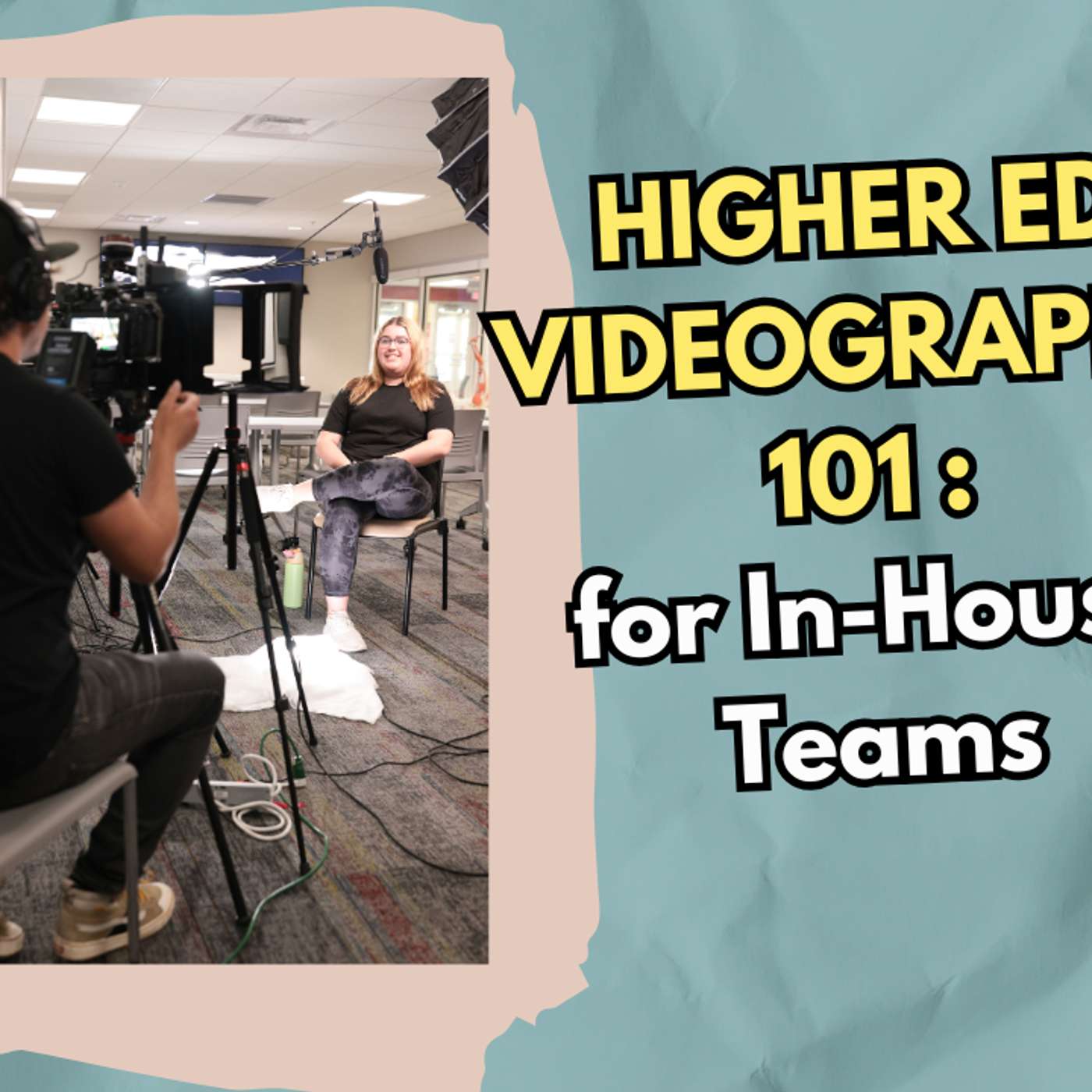
#107 - Higher Ed Videography 101 for In-House Teams: A Crash Course in Elevating Your Videos

In this solo episode, John breaks down the fundamental camera settings and workflow decisions that can immediately elevate your video quality—whether you're brand new to video or looking to refine your technical foundation as an in-house higher ed videographer.Key takeaways:The four critical camera settings: frame rate (shoot 24fps for cinematic look), aperture (lowest f-stop for background blur), shutter speed (set to 2x your frame rate), and ISO (keep as low as possible to avoid grain)Why shooting in 4K but editing in 1080p gives you flexibility without unnecessary file sizesThe case for auto white balance in run-and-gun scenarios to avoid color correction nightmaresWhy shooting in LOG color profiles often creates more problems than it solves for in-house teamsHow to avoid the two biggest stabilization mistakes: micro-jitter from handheld shooting and overusing gimbal shotsAudio quality matters more than video quality—record directly into your camera and hide those lav micsThink about workflow and asset management, not just the single video you're making right nowConnect with John:Email: john@unveild.tvLinkedIn: https://www.linkedin.com/in/johnazoniWebsite: https://unveild.tvNewsletter: https://unveild.tv/newsletter
March 25, 2026Episode 10624 min

#106 - CRUSH Yield Season With a Simple Google Doc w/ John Azoni

In this solo episode, John addresses a critical gap in how colleges use video content during yield season. Most institutions have great video content scattered across platforms, but admissions counselors often don't have easy access to share it in one-on-one conversations with prospective students—exactly when it could make the biggest impact.Key takeaways:Video shouldn't just be a broadcast tool measured by views—it's a powerful one-to-one communication assetFive strategic views from an admissions counselor to fence-sitting students may be more valuable than 5,000 algorithm-driven viewsMarketing, social media, and admissions teams often operate in silos, missing opportunities to leverage existing contentA simple Google Doc library organized by student questions can bridge this gap in an afternoonDon't just rely on the algorithm to deliver your content—be the algorithm by hand-delivering the right video at the right momentMeasure success not just through broadcast metrics, but through counselor feedback on whether videos helped close enrollment gapsResources mentioned:Free Google Doc template: https://unveild.tv/strategytoolboxConnect with John:LinkedIn: https://www.linkedin.com/in/johnazoniEmail: john@unveild.tvWebsite: https://unveild.tvNewsletter: https://unveild.tv/newsletter

March 11, 2026Episode 10548 min

#105 - How Pratt Institute is Helping Change the Narrative on Creative Education w/ Jolene Travis

My guest today is Jolene Travis, Assistant Vice President for Communications and Marketing at Pratt Institute. In this episode, Jolene shares how Pratt built a comprehensive campaign to combat negative headlines about creative arts education and shift public perception.Jolene discusses the "Power of a Creative Education" framework that emerged from a single question from her president: "What are we going to do about these headlines?" She walks through the internal process of building messaging that all stakeholders could see themselves in, the importance of listening to faculty pushback, and how strategic media relations generated nine top-tier placements including The New York Times, NBC Nightly News, and WNYC—all amplifying a counter-narrative that painting and drawing programs have waiting lists while critics claim art school is dead.Key Takeaways:GEO (Generative Engine Optimization) is critical for higher ed—95% of AI citations come from earned media, not your website.A creative education teaches critical questioning and problem-solving, not just technical skills—it prepares graduates to pivot across industries.Internal alignment on messaging is non-negotiable—if faculty and staff don't see themselves in your framework, it won't work externally.Success in creative fields isn't always a Google salary—art residencies, grants, and having a "bar gig that supports your creative work" are valid markers of success.The most compelling messages often come from proximity to leadership—Jolene captured "there's a waiting list for painting and drawing" from staffing her president at an event.A single data point (applications up in fine arts) became the foundation for 9 major media placements when paired with proper media prep and relationship building.Partner with peer institutions rather than compete—a chorus is stronger than a single voice when shifting narratives.NBC produced a full campus segment without ever visiting campus because Pratt had organized B-roll in their digital asset management system.Zoom waiting room videos are an overlooked touchpoint—Pratt's 30-second video plays in 60,000 meetings annually, creating brand impressions before conversations even start.Start your campaign by listening, not by pushing out your message—understand what the other side is saying first.Holiday breaks are ideal times to think through big strategic challenges.Connect With Jolene:LinkedIn: https://www.linkedin.com/in/jolenetravis/Resources Mentioned:Pratt Institute websiteBynder (Digital Asset Management system)Muck Rack GEO reportThe New York Times: "Pratt School of Art applications up" coverageWNYC/Gothamist: Trend piece on NYC art school applicationsNBC Nightly News segment on AI and creativityBlog post on Zoom waiting room videos: https://unveild.tv/blogConnect With John:LinkedIn: https://www.linkedin.com/in/johnazoniWebsite: https://unveild.tvNewsletter: https://unveild.tv/newsletter
February 25, 2026Episode 10452 min

#104 - Why College Websites Are Failing Prospective Students and How to Fix It w/ Pez Perry from Squiz

My guest today is Pez Perry (Robert Perry), Principal Consultant at Squiz. In this episode, Pez shares his expertise on why most higher education websites fail prospective students and what institutions need to do differently.Pez discusses the fundamental disconnect between how universities organize their websites (around internal structures and stakeholder priorities) versus how prospective students actually search for information. He explains why the future of university websites looks more like ChatGPT than traditional navigation menus, and offers practical advice for making websites more user-centered.Key Takeaways:Most university websites are organized around internal departments and leadership priorities rather than user questions and needs.Red flags of poor website design include president statements on the homepage, navigation by department names, heavy jargon, and homepage carousels with drone footage.Prospective students don't understand university terminology like "provost," "dean," "bursar," or "vice chancellor."The future of university websites is moving toward ChatGPT-style interfaces where users ask questions in natural language and receive immediate answers.Gen Z students (your future applicants) already expect AI-powered, conversational interfaces in their daily lives.University of Edinburgh embeds scholarship information directly on course pages, eliminating the need for students to navigate away to find financial aid details.Monash University gives departments freedom to experiment with content within clear brand guidelines.Universities are innovation hubs in research but surprisingly conservative in their digital communication strategies.The quickest win: eliminate jargon, acronyms, and high readability levels from your website content.Don't assume you know what students want—ask them through surveys, webinar registration questions, and intake forms.Content should answer user questions first, then deliver brand messaging second.Connect With Pez:LinkedIn: https://www.linkedin.com/in/robertpezperry/Resources Mentioned:University of Edinburgh website: https://www.ed.ac.uk/Monash University website: https://www.monash.edu/Squiz: https://www.squiz.net/Connect With John:LinkedIn: https://www.linkedin.com/in/johnazoniWebsite: https://unveild.tvNewsletter: https://unveild.tv/newsletter
February 11, 2026Episode 1031 hr 2 min

#103 - Reversing a 40% Enrollment Drop at Montana University w/ Jenny Petty & Stephanie Geyer

In this episode, Jenny Petty and Stephanie Geyer talk about their experiences in higher education marketing, focusing on their collaborative efforts at the University of Montana. They discuss the challenges of enrollment decline, the importance of storytelling, and the revitalization of campus traditions. The conversation also touches on the significance of indigenous representation and the future of marketing strategies in higher education.TakeawaysThe importance of mentorship in career development.Building a modern marketing team requires collaboration and innovation.Revitalizing campus traditions can enhance community engagement.Storytelling is a powerful tool in higher education marketing.Indigenous representation is crucial for fostering belonging.Enrollment strategies must adapt to changing demographics.Creating a brand identity requires input from the entire campus community.Digital marketing strategies are essential for modern enrollment efforts.Emphasizing retention is as important as recruitment.Continuous learning and adaptation are key in higher education marketing.Links:Jenny’s Linkedin: https://www.linkedin.com/in/jennydurnanpetty/Stephanie’s Linkedin: https://www.linkedin.com/in/stephanie-geyer-553a862/Subscribe to the Higher Ed Storytellers Digest. A weekly newsletter for higher ed MarCom leaders: unveild.tv/newsletter

January 28, 2026Episode 10245 min

#102 - The Tiny Team Behind Felician University’s Viral Short-Form Video Hits w/ Christine Albano

In this conversation, Christine Albano discusses her journey in social media management within higher education, particularly at Felician University. She shares insights on the importance of social media as a research tool for prospective students, the creative processes behind successful campaigns, and the challenges of managing a student content team. Christine emphasizes the need for authenticity in content creation and the role of AI as a supportive tool in marketing strategies. The discussion also covers engagement strategies, including giveaways and contests, and the future direction of Felician's content strategy, including a new podcast initiative.Key Takeaways:1. Social media is how prospective students research colleges: Platforms like Instagram and TikTok function as search engines, giving students a real look at campus life before they ever visit a website.2. Strong engagement comes from relevance and creativity: Content performs best when it highlights real experiences, hands-on learning, and student voices rather than polished marketing clichés.3. Student content teams need structure, trust, and training: Clear guardrails, hands-on coaching, and shared creative processes help students contribute effectively while staying on brand.4. Giveaways and interactive formats can drive real momentum: Well-designed campaigns (like Felician’s anti-melt giveaway) can sustain interest, boost engagement, and support enrollment goals.5. Authenticity and smart use of AI strengthen content strategy: Honest storytelling resonates most, while AI works best as a supportive tool for ideation, captions, and efficiency—not a replacement for human creativity.Relevant links:Instagram: https://www.instagram.com/felician_university/TikTok: https://www.tiktok.com/@felicianuniversityYoutube: https://www.youtube.com/@FelicianUniversityLinkedin: https://www.linkedin.com/school/felician-university/Facebook: https://www.facebook.com/felicianuniversity

January 14, 2026Episode 10155 min

#101 - Why Advancement MarCom Is Still the Underdog (And Why That Needs to Change) w/ Dan Giroux

In this episode, host John Azoni sits down with Dan Giroux, independent consultant and former senior advancement communications leader at Drexel University, to explore why Advancement Marketing & Communications (MarCom) is one of the most overlooked — yet most critical — functions in higher education today.Dan shares insights from his three-act career journey (agency, in-house, and independent consulting), discusses the structural challenges holding advancement teams back, and outlines practical, realistic ways institutions can create more authentic, impactful content — even with limited resources. The conversation dives deep into storytelling, leadership alignment, donor engagement, and why higher ed can learn a lot from modern creators like MrBeast when it comes to community-driven philanthropy.This episode is a must-listen for advancement leaders, MarCom professionals, and anyone navigating fundraising, alumni engagement, or institutional storytelling in a rapidly changing higher-ed landscape.Key takeaways:Advancement MarCom plays a bigger role than many institutions realize: When it’s treated as tactical support instead of a strategic function, schools miss opportunities to drive engagement, loyalty, and giving.Collaboration starts with leadership alignment: Strong partnerships between Central MarCom and Advancement leaders make cross-team collaboration possible; misalignment at the top creates silos everywhere else.Authentic storytelling comes from specificity, not polish: Donors and alumni connect more deeply with real, detailed stories than with highly produced, generic campaign messaging.Stewardship is a growth strategy, not an afterthought: Post-gift communication and impact storytelling strengthen relationships and increase long-term support.Limited resources don’t have to limit impact: Small teams can scale by prioritizing the right work, using freelancers strategically, and building repeatable content systems.

Is this your show?

Claim this listing to keep it up to date, reach guests who want to pitch you, and manage bookings with Guestify.

Claim this listing

More Business podcasts