Find partners
The Happiness Index - Data. Insight. Stories

The Happiness Index - Data. Insight. Stories

Hosted by Matt Phelan

BusinessInterviews guests

Episodes

187

Latest episode

Oct 2026

Language

EN

About the show

Research, data, evidence and the stories of people focused on employee engagement, workplace happiness and driving performance at work. Connect with Matt via LinkedIn https://www.linkedin.com/in/matthewphelan/ You can download The Happiness Index's Global Workplace Happiness Report here https://thehappinessindex.com/the-global-workplace-happiness-report/

Listen to episodes

60 recent
October 21, 202631 min

Decisions that carry Judgment, Data and Story with Fiona McDonnell

This week on the podcast, our host Matt Phelan sits down for an inspiring, practical conversation with Fiona McDonnell , veteran business executive and author of Decisions That Carry: How Leaders Build Trust Through Judgment, Data and Story . Drawing on 30 years of global leadership experience at consumer giants like Kraft, Kellogg's, and Nike, Fiona breaks down the hidden mechanics of leadership judgment and why making a decision is only half the battle. Discover: The Yellow Bag framework. Why judgment isn't just about crunching numbers. It is an internal toolkit of lived experience, core values, intuition, and authentic story that every leader carries into the room. The trap of "decorated" data. Why having vast amounts of data can actually blind us. Discover how organisations often use metrics retroactively to decorate decisions and defend internal politics rather than reveal the truth. Decision portability. Why some leadership decisions gain instant momentum while others collapse. Truly portable decisions are built on clarity, warmth, authenticity, and accessibility so teams can run with them without distortion. AI vs. human context. How to leverage artificial intelligence for high-data, high-context scenarios without sacrificing the vital human judgment needed when context is low and stakes are high. Fiona argues that we spend endless time and resources gathering data to make a decision, yet almost no effort ensuring it carries through successfully afterwards. True leadership trust is built when your choices reflect both robust insight and unshakeable personal integrity. Are you ready to unpack what you’re carrying into your next meeting? 📕 Get Fiona's new book here 🌏 Global Workplace Happiness Report 2026 🇬🇧 UK Workplace Happiness Report 2026 📊 Talk to an expert
October 9, 20265 hr 14 min

The Global Workplace Happiness Report 2026 - Full report

Listen to the audio version of The Global Workplace Happiness Report 2026, read by our AI avatar of our Co-Founder and Co-CEO, Matt Phelan! Drawing on over 1.9 million data points from employees across 115 countries, the Global Workplace Happiness Report is the most comprehensive study into workplace engagement and happiness ever conducted. We connect human neuroscience with daily business performance. Traditional engagement surveys tell you what’s happening. We tell you why it matters and what to do next. Inside, you’ll find evidence-based insights and practical strategies from leading experts in culture, health, happiness, and organisational performance. This isn’t just another survey. It’s the research shaping the future of work, wellbeing and performance worldwide. 🌏 Download the Global report: https://thehappinessindex.com/the-global-workplace-happiness-report/ 🇬🇧 Download the UK report: https://thehappinessindex.com/uk-workplace-happiness-report/

October 1, 202637 min

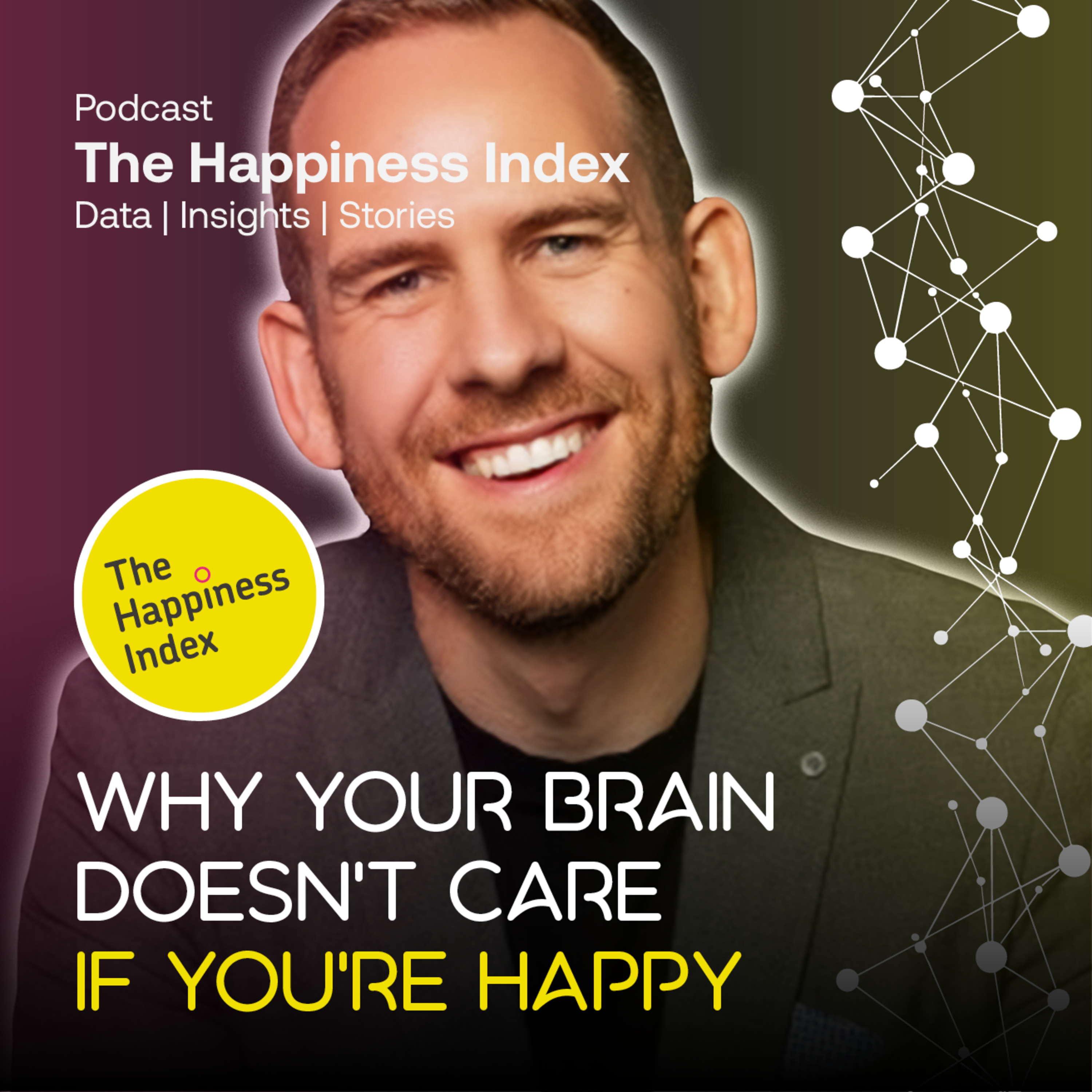
Why your brain doesn't care if you're happy with Declan Edwards

This week, our host Matt Phelan sits down with Declan Edwards , founder of BU Happiness College, podcast host, and author of How to Be Happy . Known across Australia as "that happiness guy," Declan has spent over a decade translating dense positive psychology research into practical, everyday skills. Matt and Declan unpack why chasing future success ruins present happiness, how to reframe gratitude, and why happiness is an intentional daily practice. We explore: 🧠 The brain's survival trap. Why your brain doesn't care if you're happy. Its primary job is survival, meaning it is naturally hardwired with a negative cognitive bias that scans for threat and danger rather than joy. 🏆 The "I'll be happy when" myth. Why treating happiness as a future destination tied to an achievement or milestone is a gamble that rarely pays off. Real success is a secondary consequence of living intentionally today. 🛠️ The 5 core skills of happiness. A breakdown of the core curriculum from BU Happiness College: managing emotions, introspecting, retraining the brain out of negative cognitive bias, knowing yourself deeply, and aligning your life to your values. ☕ The learnable skill of savouring. How moving past the "attention economy" and intentionally experiencing a moment—like drinking a good coffee—rewires your brain to enjoy the life you already have. 🔌 The 3 dimensions of disconnection. Why feeling severed from yourself, from others, or from a broader purpose drains emotional well-being across global workforces. Declan argues that happiness isn't a fixed trait or a mystical destination. It is a skill—much like learning a language or playing an instrument—that requires curiosity, daily practice, and the permission to suck at it while you learn. Are you ready to stop chasing success and start practising happiness? 🌏 Global Workplace Happiness Report 2026: https://thehappinessindex.com/the-global-workplace-happiness-report/ 🇬🇧 UK Workplace Happiness Report 2026: https://thehappinessindex.com/uk-workplace-happiness-report/ 📊 Talk to an expert: https://thehappinessindex.com/request-a-demo/

September 16, 202639 min

Olya Yakzhina: Is HR part of the employee experience problem?

This week, our host Matt Phelan returns to the podcast for an insightful conversation with Olya Yakzhina , Head of People & Culture at Work.Life—sponsors of both the Global Workplace Happiness Report 2026 and the upcoming UK edition. Olya also hosts The Modern Employer podcast. In this five-minute summary of their high-impact discussion, Matt and Olya tackle the delicate friction between building a culture people love and demanding high performance. We explore: 📈 The performance-engagement correlation. Why simply setting up metrics and demanding output fails without engagement. True high performance begins by raising the baseline employee experience. ⚙️ Operational hygiene vs. emotional atmosphere. How HR teams get trapped fixing visible, defensible operational tasks while neglecting intangible feelings like belonging and inspiration. 🏰 The Disneyland principle of workplace systems. Every system creates an emotional reaction. Like the underground tunnels at Disneyland, HR processes should run seamlessly behind the scenes rather than creating friction in employees' faces. 🐅 The sleeping tiger trap. Why organisations over-invest in early onboarding while neglecting long-term employees. Leaders naturally rush to manage immediate risks (the running tiger) while letting tenured talent drift (the sleeping tiger). 🏢 Presence vs. real culture. Why presenteeism is a mindset—not a location. Presenteeism bias exists just as strongly in remote and hybrid teams as it does in traditional offices. Olya argues that every system, framework, and policy must be designed with its emotional output in mind. When HR over-operationalises without considering human feelings, it stops being the solution and becomes part of the problem. Are you ready to rethink your workplace systems?

July 7, 202635 min

The accidental manager crisis and the cost of untrained leaders with Kay Gunn

This week on the podcast, our host Matt Phelan sits down for a deep, insightful conversation with someone who has been a trusted partner since the early days of The Happiness Index. His guest is Kay Gunn MSc FCIPD , a veteran people director and the founder of her own leadership development consultancy - Kay Gunn Limited. Kay specialises in a critical yet chronically under-invested area of business: training first-time people managers. Drawing from her extensive background in professional sport and elite customer service operations, Kay helps organisations stop the automatic promotion trap before it breaks their teams. We explore 📉 The accidental manager stat. Shocking research from the Chartered Management Institute reveals that 82% of managers enter their roles as "accidental managers"—promoted because they are technically great at their jobs, but given zero formal training on how to actually lead people. 🧠 The spouse-level mental health impact. A startling global statistic shows that 60% of employees say their job is the biggest factor influencing their mental health. In fact, a manager has just as much impact on an employee's mental well-being (69%) as their spouse. 💸 The true cost of the promotion mistake. Promoting your star technical performer into a management role they hate creates a massive financial and cultural tax. It leads to disengaged teams, client dissatisfaction, and an average upfront cost of £19,000 just to replace a basic entry-level manager. 🚪 The anonymity of exit surveys. Why traditional exit interviews fail to capture the real reasons people leave. Employees rarely have the emotional energy to risk a hostile reaction, making anonymous data collection essential for uncovering toxic management. 🎯 Deliberate development over old work biases. Why organisations must decouple ambition from headcount. True business maturity means building alternative career pathways where an individual’s financial growth and responsibility can expand without forcing them to manage a team. Kay argues that you would never allow someone to drive a train or fly a plane without a qualification, yet we routinely hand over the physical and mental well-being of entire workforces to completely untrained leaders. With major legislative changes and hybrid complexities on the rise, continuing the accidental manager model is a financial and human risk businesses can no longer afford to take. Are you ready to stop treating leadership development as the exception and make it the norm? 📊 Check out The Happiness Index https://thehappinessindex.com/

June 25, 20264 min

Andrea D Carter: Why is belonging a metabolic resource?

Matt Phelan catches up backstage at Google HQ in London with Andrea D Carter , a renowned neuroscience researcher and a core contributor to the Global Workplace Happiness Report 2026 . In this high-impact five-minute conversation, you will discover: 🧠 The personal spark. How navigating the real-life pain of raising neurodivergent teenagers drove Andrea to decode the neuroscience of workplace inclusion. 🚗 The brake and gas analogy. Why operating in a culture of "fitting in" forces employees into self-protection mode. It is the cognitive equivalent of driving with your foot on the brake and the gas simultaneously. 🔋 The metabolic resource. The science showing that when true belonging is present, the brain expends less energy. This allows your people to achieve peak performance with significantly less effort. ⚖️ The 50-50 rule. Moving past one-sided accountability. True social cohesion means the manager and the employee share equal responsibility to see, understand, and validate each other. Andrea argues that belonging is a fundamental human need—just like food and water. When organisations fail to build a culture of genuine belonging, they are actively draining the cognitive and physical energy required for performance. Are you ready to take your foot off the brake? 🚀 The Global Workplace Happiness Report 2026: https://tinyurl.com/GWHR2026

June 18, 20264 min

What is the most important data point for modern leadership? With Viktoria Otero del Val

Matt Phelan welcomes back a good friend and headline sponsor of the Global Workplace Happiness Report 2026, Viktoria Otero del Val from Pluxee. In this lightning-fast snippet, Matt fires over one vital question: What is the most important data point for modern leadership? In under five minutes, discover: 🗺️ The multidimensional reality. Why looking at a person as the sum of all their coexisting realities—work, family, and community—completely changes the management dialogue. ⚽ The volunteer surprise. The striking metric showing that 66% of UK workers are actively engaged in voluntary work or sports coaching outside of their day jobs. 👥 The 1-to-1 connection. The single piece of advice for the 250 CEOs in the room on how to take employee engagement from a theory to a daily habit. Viktoria argues that managers must stop treating team members as one-dimensional resources. Success requires understanding the whole individual and meeting them exactly where they are on their personal journey. Are you ready to see your people in full colour? 🚀 The Global Workplace Happiness Report 2026: https://tinyurl.com/GWHR2026

June 11, 20264 min

Inside the Global Workplace Happiness Report with Stefan Tornquist

This week, we’re changing things up. Our host Matt Phelan is back in the chair, and he’s turning the microphone on Stefan Tornquist . After spending months hosting our Global Workplace Happiness Report 2026 series, Stefan is stepping onto the other side of the desk as a guest. Stefan is the lead author of the report and the managing director of Executive Summary Research. He’s spent over 30 years leading complex research projects and translating vast datasets into actionable business strategies. In this lightning-fast five-minute conversation, Matt asks Stefan to take off his researcher hat and share what surprised him most about the final data. We explore: 📊 The titanic operation. The massive logistics behind crunching 82,000 responses, 1.9 million data points, and 90,000 qualitative open-text answers. ⚖️ The gender divide. The striking, everywhere-we-looked finding that women scored lower than men in 28 out of 29 categories across all age groups and seniorities. 💼 The workplace paradox. Why companies mistakenly treat employment as a transaction, while your people inherently experience it as a relationship. 🔮 The 2027 roadmap. A look ahead at the future of the project, focusing on wider geographic spreads and deeper qualitative context. Stefan argues that the highest-order elements of work always come down to connection. If you want to build a resilient business, you must stop looking at your headcount as an expense line and start building a real relationship infrastructure. Are you ready to see the real story behind the numbers? 🚀 The Global Workplace Happiness Report 2026: https://tinyurl.com/GWHR2026

June 5, 20263 min

What is radical kindness in leadership in 3 minutes?

Natalie Semmes from Kind-Hive: What is radical kindness in leadership? Matt Phelan catches up backstage with Natalie Semmes , CEO of Kind-Hive and contributor to the Global Workplace Happiness Report 2026. In this lightning-fast snippet, Matt asks one core question: What is radical kindness, and why is it the ultimate business multiplier? In three minutes, discover: 🧠 The human-first lens. Why sharing your authentic story and showing up as a vulnerable human being transforms the way people view leadership. 🤝 Radical kindness. Moving past the fluff to define kindness as a strict, non-negotiable strategy required to inspire true employee outperformance. 📈 The EBITDA multiplier. The striking, evidence-based research shows that human-first organisations are 34% more likely to double their EBITDA over 10 years. Natalie argues that there is a better way to do business. Before you can grow your bottom line, you must first have the courage to show up as a real human being. Are you ready to tap into radical kindness? 🚀 The Global Workplace Happiness Report 2026: https://tinyurl.com/GWHR2026

June 3, 20263 min

Kaly Little from Google: "What is radical safety in the AI era?"

Matt Phelan sits down at Google HQ in London with Kaly Little, Head of HR, UK Large Customer Sales at Google and contributor to the Global Workplace Happiness Report 2026. He asks her one quick question: What is radical safety in the AI era? In under three minutes, discover: 🚀 Radical safety. Why absolute psychological safety is the non-negotiable permission slip for Google’s famous moonshot thinking and 10x innovation. 🤖 Human in the loop. Moving past the jargon to place human creativity and strategy at the absolute center of technological advancement. 🧠 Automation bias. The crucial role of HR in building critical thinkers so teams do not rely too heavily on AI tools. Kaly argues that the AI era requires leaders who can coach teams to tap into their brains differently, using technology to free up space for bigger, bolder strategy. Are you ready to build radical safety? 🚀 The Global Workplace Happiness Report 2026: https://tinyurl.com/GWHR2026 Guest bio Kaly Little is Head of HR, UK Large Customer Sales at Google. She focuses on deeply supporting teams, coaching managers to become better leaders, and championing the "human in the loop" approach to technological transformation.

Is this your show?

Claim this listing to keep it up to date, reach guests who want to pitch you, and manage bookings with Guestify.

Claim this listing

More Business podcasts