

Find partners
Goldcasting Podcast

Goldcasting Podcast

Hosted by Staffan Zetterström & Fabian Niklas

BusinessTechnologyInterviews guests

Episodes

77

Latest episode

Aug 2026

Language

EN

About the show

Learn how to make money in the foundry industry. Listen to the discussions of Staffan Zetterström and Fabian Niklas. Also enjoy the stories of our Guests. goldcasting.substack.com

Listen to episodes

60 recent
August 6, 202656 min

GN 77 - The biggest Trends from the China Diecasting 2026

Everybody says China is fast. But what does that actually mean when you stand on the show floor at China Diecasting 2026 and look at the technologies, materials, machines, and supplier strategies developing in real time? In this Gold Nugget, Fabian Niklas takes listeners directly into the exhibition halls in Shanghai to understand why the Chinese die casting market moves at a pace that many European and North American companies struggle to compare with. Instead of one studio guest, this episode brings together perspectives from across the industry: Moritz Weidt from Magma, Günther Prunner from voestalpine, Danny Wu from Bole, Colin from Regal Metal, Michael Cinelli from Bühler, Rene Hordijk from Frech, and Adisak Banpot from Thailand Die-Casting Association. The conversation moves beyond the usual headline of gigacasting. Magnesium, thixomolding, semi-solid processing, tool steel requirements, alloy development, battery trays, production efficiency, and cost pressure all come into focus. What emerges is not a simple story of one trend replacing another, but a view into an ecosystem where companies invest early, test quickly, and push technologies into industrial application at remarkable speed. This is a grounded trade fair episode about what China Diecasting 2026 reveals for foundries, die casters, OEMs, toolmakers, simulation providers, alloy suppliers, and anyone trying to understand where the industry may be heading next. Key Topics: * China’s speed is not just a cliché * Gigacasting is already becoming an established topic * Magnesium becomes one of the strongest show-floor signals * Thixomolding and semi-solid magnesium move into the spotlight * Tool steel requirements change with larger and different castings * Alloy development is becoming part of the competitive picture * Efficiency is the next phase of megacasting * The China Diecasting 2026 trend picture is broader than one technology “What we see here is outstanding and is definitely not comparable with the rest of the world from my point of view.” Günther Prunner, voestalpine, 00:11:26 Watch or listen to this episode to hear what Fabian found on the floor at China Diecasting 2026 — from magnesium and thixomolding to the next phase of gigacasting, tool steels, alloys, and the production efficiency challenges shaping the industry. Thank you for listening. I’ll see you in the next episode, where I’ll continue to bring you the latest insights and updates from the casting world. Don’t forget to ask questions, write comments, or make suggestions for future episodes. See you in the Podcast, Fabian No time for every Goldcasting episode? We launched the Goldcasting Executive Briefing : a paid newsletter with the key strategic takeaways from Goldcasting in a shorter, sharper format. It is built for foundry leaders, suppliers, and industry professionals who want to understand what the latest conversations mean for their business, margins, customers, and future strategy, but lack the time to listen to all the episodes. It is also the best way to support Goldcasting. Subscription price: 29€/month or 290€/year Get full access to Goldcasting 🏆 at goldcasting.substack.com/subscribe
July 23, 202624 min

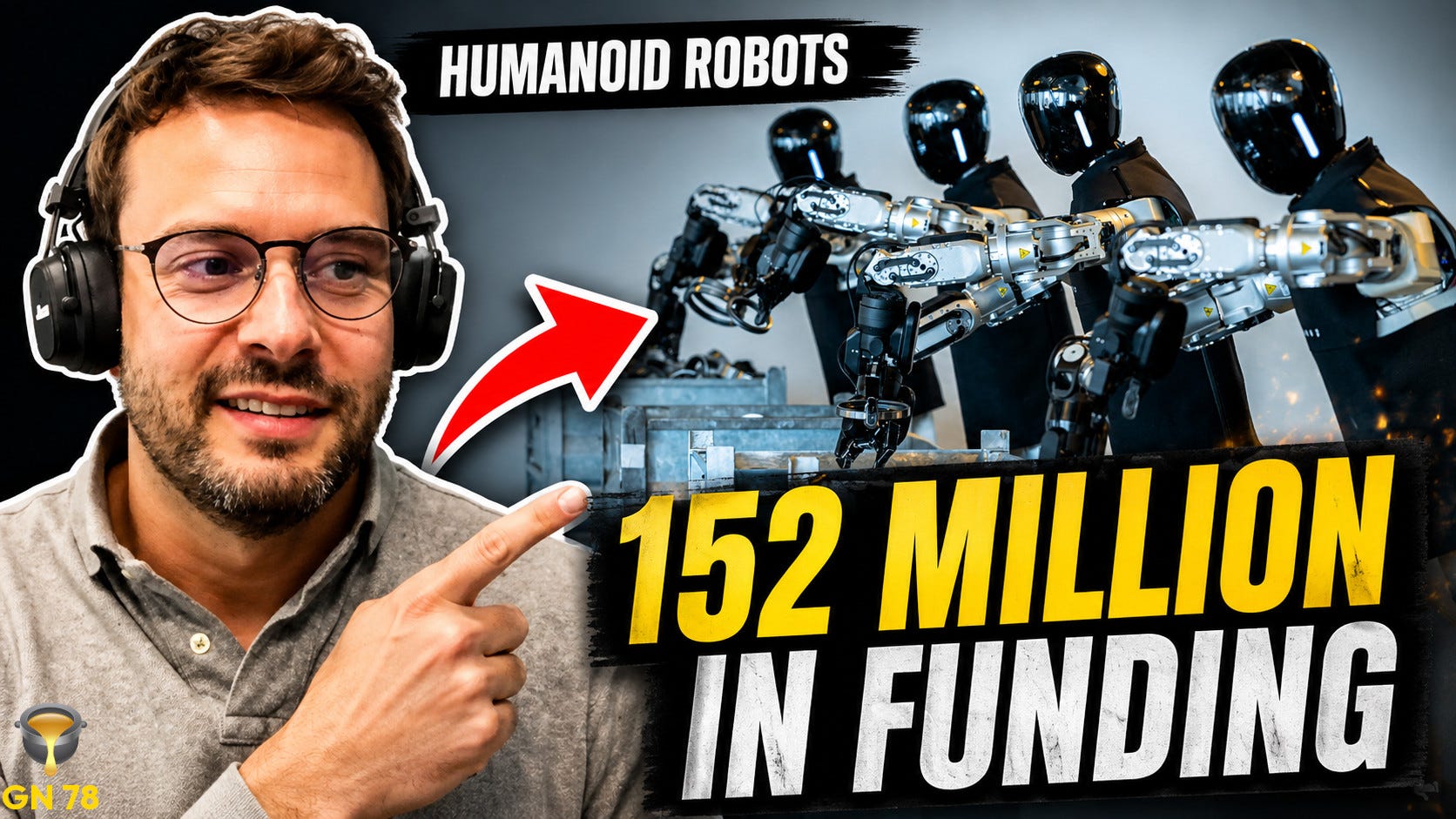
GN 76 - We have something to tell you

After three years and 76 episodes, the Goldcasting Podcast is entering a new chapter. Staffan is stepping away from the podcast, while Fabian will continue Goldcasting in a slightly different format. But this is more than a farewell episode. We use the moment to reflect on what has changed in the die casting and foundry industry since the podcast began; from the pressure on automotive volumes to the rise of new applications in energy storage, telecom, server cooling, humanoids, ADAS, AI, and other fast-moving industrial markets. We also look at what foundries need to do next. Waiting for automotive RFQs and relying on old business models is becoming riskier. The future belongs to foundries, engineers, and suppliers who can create markets, support design, educate new customers, and become solution partners rather than just capacity providers. This episode is a transition point for Goldcasting, but also a grounded conversation about where the industry may be heading and why skilled foundry people, technical content, market creation, and new ways of working will matter more than ever. Key Topics * A New Chapter for Goldcasting * Why the Podcast Will Continue * From Capacity Provider to Solution Partner * The Importance of Design Support * Market Creation beyond Automotive * Gigacasting and the Talent Opportunity * Why Foundries Need to Be Brave * The Future Format of the Podcast “Imagine that 76 episodes and yet many to come in the future from Goldcasting, but look at the statistics 215,000 views on only YouTube” Watch or listen to GN 76 to hear Fabian and Staffan reflect on three years of Goldcasting, explain what is changing for the podcast, and discuss why the foundry industry needs new skills, new markets, and a more active role in shaping future casting applications. Thank you for listening. We’ll see you in the next episode, where we’ll continue to bring you the latest insights and updates from the casting world. Don’t forget to ask questions, write comments, or make suggestions for future episodes. See you in the Podcast, Fabian and Staffan No time for every Goldcasting episode? We launched the Goldcasting Executive Briefing : a paid newsletter with the key strategic takeaways from Goldcasting in a shorter, sharper format. It is built for foundry leaders, suppliers, and industry professionals who want to understand what the latest conversations mean for their business, margins, customers, and future strategy, but lack the time to listen to all the episodes. It is also the best way to support Goldcasting. Subscription price: 29€/month or 290€/year Get full access to Goldcasting 🏆 at goldcasting.substack.com/subscribe
July 9, 202650 min

GN 75 - Is Traditional Die-Casting dead? Luca Greco explains

Is traditional die casting really dead, or is the industry simply being forced to change faster than many foundries expected? In this Gold Nugget, Fabian Niklas and Staffan Zetterström speak with Luca Greco about gigacasting, new markets, automotive pressure, and why die casting still has a strong future for companies willing to move.Luca Greco is a project manager in the technical department of a small foundry in Northern Italy. He is also known in the die-casting world for his online presence through his gigacasting newsletter.The conversation looks beyond the usual debate around large machines and Tesla-style castings. Luca, Fabian, and Staffan discuss what gigacasting has changed, why small foundries cannot wait for the old automotive business to return, and where new opportunities may appear in humanoid robots, drones, lightweight transportation, EV startups, and other emerging industries.Traditional die casting is not dead, but the companies that survive are the ones that stop waiting for drawings to arrive and start showing new industries what die casting can actually solve. Key Topics * The pressure on traditional foundries * Gigacasting as a catalyst for the whole industry * Why new markets matter now * Selling manufacturing knowledge, not only castings * The marketing problem in die casting * Finding a niche before it is too late * Recruiting young talent into foundries * Tesla, first principles, and manufacturing speed “Absolutely. We got to look at the new markets. Not just humanoids. Even small markets. Go find your niche.” Watch or listen to GN 75 to hear Luca Greco, Fabian Niklas, and Staffan Zetterström discuss why traditional die casting is under pressure, why that does not mean the end of the industry, and how foundries can position themselves for the next generation of cast products. Thank you for listening. We’ll see you in the next episode, where we’ll continue to bring you the latest insights and updates from the casting world. Don’t forget to ask questions, write comments, or make suggestions for future episodes. See you in the Podcast, Fabian and Staffan No time for every Goldcasting episode? We launched the Goldcasting Executive Briefing : a paid newsletter with the key strategic takeaways from Goldcasting in a shorter, sharper format. It is built for foundry leaders, suppliers, and industry professionals who want to understand what the latest conversations mean for their business, margins, customers, and future strategy, but lack the time to listen to all the episodes. It is also the best way to support Goldcasting. Subscription price: 29€/month or 290€/year Get full access to Goldcasting 🏆 at goldcasting.substack.com/subscribe
June 25, 202653 min

GN 74 - Vanish or Dominate in AI Search

AI search is changing how industrial customers discover suppliers, compare technologies, and prepare purchasing decisions. For foundries and manufacturing companies, the old assumption that customers will call early, ask basic questions, and involve suppliers in the first design discussion is becoming less reliable.In this episode of the Goldcasting Podcast, Fabian Niklas and Staffan Zetterström speak with Bernd Quehenberger, who leads organic growth at Speedmetrics and has a background in process engineering. Together, they discuss what happens when engineers, buyers, designers, and decision-makers ask ChatGPT, Gemini, Claude, Copilot, or Google AI for answers before they ever contact a foundry.The conversation explains why AI search is not just “SEO with a new name.” It is a new discovery layer in which companies can either become part of the answer or disappear from the decision-making process. For foundries, suppliers, and technical B2B companies, the challenge is no longer only to be good at what they do. They also need to make their expertise visible, up to date, credible, and useful enough for both humans and AI systems to recognize.This is a practical discussion about content, trust, technical authority, customer education, and the commercial risk of staying invisible while competitors become the answer. Key Topics * Why customer discovery has changed * The difference between Google search and AI search * Why SEO still matters, but is no longer enough * Owning a topic instead of chasing a keyword * Why original human expertise matters * Content strategy for foundries and technical suppliers * The commercial value of educating customers before they call * Why AI search is an opportunity for smaller specialists “There’s a big opportunity in the foundry industry or all related industries, to start creating the right content for the right audience to really unlock growth” Watch or listen to GN 74 to understand how AI search is reshaping customer discovery in foundry and manufacturing markets, and what technical companies can do to become part of the answers their future customers already trust. Thank you for listening. We’ll see you in the next episode, where we’ll continue to bring you the latest insights and updates from the casting world. Don’t forget to ask questions, write comments, or make suggestions for future episodes. See you in the Podcast, Fabian and Staffan No time for every Goldcasting episode? We launched the Goldcasting Executive Briefing : a paid newsletter with the key strategic takeaways from Goldcasting in a shorter, sharper format. It is built for foundry leaders, suppliers, and industry professionals who want to understand what the latest conversations mean for their business, margins, customers, and future strategy, but lack the time to listen to all the episodes. It is also the best way to support Goldcasting. Subscription price: 29€/month or 290€/year Get full access to Goldcasting 🏆 at goldcasting.substack.com/subscribe
June 11, 202629 min

GN 73 - Humanoid Robots

Humanoid robots are often presented as an AI story. But for the foundry industry, the more interesting question is not only what the robot can think, learn, or do. It is what these machines will need to be made from, how they can be industrialized, and where die casting can become a serious enabler. In this host-led episode, Fabian Niklas and Staffan Zetterström look at humanoid robots from a foundry perspective. They discuss why robots that can move through human environments may create a new generation of non-automotive casting demand, especially for lightweight, stiff, thin-walled structural components produced on machine sizes already common in many foundries. The episode connects AI, machine learning, regional supply chains, industrialization, safety, and manufacturing scalability. For die casters, the key point is clear: humanoid robots are not just a futuristic product category. They may become a major market where foundries need to position themselves early, explain what casting can do, and meet a very different type of customer than the traditional automotive buyer. Key Topics * Humanoid robots as a new casting market * Why humanoids are built for human environments * The foundry opportunity beyond gigacasting * Industrialization is where foundries can add value * AI makes scaling different * Regional supply chains and security concerns * Robots as support systems, not only products “Industrialization is the keyword when it comes to humanoids and die-casting” Watch or listen to GN 73 to hear Fabian and Staffan explain why humanoid robots could become a serious new market for die casters, and why foundries should start thinking about robots as hardware platforms, not only as futuristic AI products. Thank you for listening. We’ll see you in the next episode, where we’ll continue to bring you the latest insights and updates from the casting world. Don’t forget to ask questions, write comments, or make suggestions for future episodes. See you in the Podcast, Fabian and Staffan No time for every Goldcasting episode? We launched the Goldcasting Executive Briefing : a paid newsletter with the key strategic takeaways from Goldcasting in a shorter, sharper format. It is built for foundry leaders, suppliers, and industry professionals who want to understand what the latest conversations mean for their business, margins, customers, and future strategy, but lack the time to listen to all the episodes. It is also the best way to support Goldcasting. Subscription price: 29€/month or 290€/year Get full access to Goldcasting 🏆 at goldcasting.substack.com/subscribe
May 28, 202640 min

GN 72: The Japanese Die-Casting Market

Japan is one of the most important die casting markets in the world, but it is also one of the hardest to understand from the outside. Strong OEM relationships, compact factory layouts, high expectations on cycle time, and a very structured supplier landscape make it a market with its own rules. In this Gold Nugget, Fabian Niklas and Staffan Zetterström speak with Atsumori Fujie, Founder of Vitto Corp., about how the Japanese die casting industry works, where demand is growing, and why automotive, vehicle strategies, robotics, semiconductors, and industrial applications all matter to the market’s future. The conversation also examines Rheocasting, gigacasting, low-silicon alloys, scrap usage, and the pressure to reduce reliance on primary aluminium. Atsumori explains why Japanese OEMs are increasingly interested in Rheocasting as a means of combining castability, mechanical performance, and recycled-material strategies. This is a grounded look at a market that is technically advanced, commercially disciplined, and difficult to enter, but not impossible for companies with a strong enough process, product, or niche capability. Key Topics * The structure of the Japanese die casting market * Why Japanese foundries focus so strongly on cycle time * A close supplier network around Japanese OEMs * Rheocasting as a renewed opportunity in Japan * Scrap, low-silicon alloys, and sustainability pressure * Gigacasting and the as-cast performance challenge * Hybrid vehicles and Japan’s different electrification path * Opportunities beyond automotive “To become a new supplier for the Japanese OEM, you have to find new applications” Watch or listen to GN 72 to understand how the Japanese die casting market works, why it is difficult to enter, and why Rheocasting, recycled aluminium, low-silicon alloys, and hybrid vehicle production are becoming central topics for Japanese foundries and OEMs. Thank you for listening. We’ll see you in the next episode, where we’ll continue to bring you the latest insights and updates from the casting world. Don’t forget to ask questions, write comments, or make suggestions for future episodes. See you in the Podcast, Fabian and Staffan No time for every Goldcasting episode? We launched the Goldcasting Executive Briefing : a paid newsletter with the key strategic takeaways from Goldcasting in a shorter, sharper format. It is built for foundry leaders, suppliers, and industry professionals who want to understand what the latest conversations mean for their business, margins, customers, and future strategy, but lack the time to listen to all the episodes. It is also the best way to support Goldcasting. Subscription price: 29€/month or 290€/year Get full access to Goldcasting 🏆 at goldcasting.substack.com/subscribe

May 14, 202637 min

GN 71: The Powerhouse BYD and the 15th Five-Year-Plan

BYD looks like an overnight success story. A company that barely registered as a global car brand a decade ago is now reshaping markets, challenging established OEMs, and forcing the automotive industry to rethink what scale, speed, and vertical integration really mean. Fabian Niklas and Staffan Zetterström look behind the rise of BYD: from batteries and hybrid strategy to government support, supply chain control, pricing pressure, quality concerns, and the broader industrial logic behind China’s long-term planning. The discussion also moves beyond BYD itself when we connect the company’s growth to the next strategic focus areas in China’s Five-Year Plan, including semiconductors, robotics, drones, energy storage, biomedicine, and aerospace. Key Topics * BYD did not happen overnight * The battery became the center of the car * Vertical integration as a strategic weapon * Hybrid strategy and market fit * Government support and industrial policy * The risks behind rapid growth * Chinese competition will not disappear if BYD slows down * The Five-Year Plan points beyond cars “BYD opened the door to make the customers accept buying a Chinese car” Watch or listen to GN 71 to understand why BYD’s rise matters beyond electric cars and what China’s next Five-Year Plan could mean for manufacturing, casting, mobility, and industrial competition. Thank you for listening. We’ll see you in the next episode, where we’ll continue to bring you the latest insights and updates from the casting world. Don’t forget to ask questions, write comments, or make suggestions for future episodes. See you in the Podcast, Fabian and Staffan No time for every Goldcasting episode? We launched the Goldcasting Executive Briefing : a paid newsletter with the key strategic takeaways from Goldcasting in a shorter, sharper format. It is built for foundry leaders, suppliers, and industry professionals who want to understand what the latest conversations mean for their business, margins, customers, and future strategy, but lack the time to listen to all the episodes. It is also the best way to support Goldcasting. Subscription price: 29€/month or 290€/year Get full access to Goldcasting 🏆 at goldcasting.substack.com/subscribe
April 30, 202638 min

GN 70: AI - The Enemy that we Love

AI is no longer something the foundry industry can laugh off as a distant software trend. Large language models are already being used by engineers, buyers, designers, and decision-makers to explore manufacturing options, compare processes, prepare for meetings, and form first impressions of suppliers. In this episode, Fabian Niklas and Staffan Zetterström look at AI from the perspective of foundry guys, not AI experts. The central concern is not that LLMs (Large Language Models) exist. The real problem is that LLMs often provide poor or outdated answers about casting because the foundry industry has not produced enough accessible, up-to-date, publicly available information for these systems to learn from. That has direct commercial consequences. If an engineer, product designer, or purchasing team asks an LLM whether a part should be cast, the answer may be shaped by outdated textbook assumptions rather than by modern high-pressure die-casting practices. In the worst case, AI does not just misunderstand casting, it quietly sends potential customers somewhere else. The episode is a grounded conversation about what AI can do, where it fails, and why foundries should start testing it from the perspective of their target customers. Key Topics * Why AI drives customers away from casting When an engineer asks an LLM for manufacturing advice, the answer depends on the information available online. If current casting knowledge and marketing material are missing, the model may recommend against casting based on outdated assumptions. * The foundry industry has a visibility problem AI often fails to distinguish between older textbook descriptions and modern die-casting processes. The issue is not only technical accuracy but also the lack of publicly searchable material showing what today’s foundries can actually do. * Try AI Seach from your customer’s perspective Ask the same questions your target customers would ask. Search for your process, your applications, your company, and your alternatives and then see whether AI leads people toward your capabilities or away from them. * AI is useful, but only with the right input LLMs depend heavily on the quality of the question, the available data, and the user’s ability to judge the answer. It can produce convincing text even when the technical conclusion is weak or incomplete. * Marketing cannot be fully outsourced to AI AI can help organize, draft, and accelerate communication, but it cannot replace a company’s identity, technical judgment, or real application knowledge. If a foundry uses AI to create marketing without understanding marketing or without the LLM understanding the foundry industry, the result can be polished but wrong. * Use AI as a servant, not a decision maker LLMs work best for narrow, practical tasks such as compiling information, sorting notes, drafting first versions, or preparing summaries. It should support human expertise, not replace the expert who understands the process, the customer, and the risk. * Be careful with confidential data Never put NDA-protected drawings, specifications, or internal notes into public AI systems. The more sensitive the information, the more important it becomes to think about data control, private systems, and who can access the output. * Start with real bottlenecks, not grand visions Instead of trying to automate an entire foundry at once, start where AI can remove low-value manual work. The practical value comes from reducing friction in specific tasks while keeping a human in control. “We can do amazing things, but who cares if no one sees them?” Watch or listen to GN 70 to hear Fabian and Staffan test what AI gets wrong about casting, why that matters for new business development, and how foundries can start using AI by asking the same questions their future customers are already asking. Thank you for listening. We’ll see you in the next episode, where we’ll continue to bring you the latest insights and updates from the casting world. Don’t forget to ask questions, write comments, or make suggestions for future episodes. See you in the Podcast, Fabian and Staffan Get full access to Goldcasting 🏆 at goldcasting.substack.com/subscribe

April 16, 202644 min

GN 69 - Rheocasting explained

Rheocasting is one of the most discussed, misunderstood, and often misjudged technologies in the die casting industry. Some see it as a miracle process. Others remember failed trials from the past and dismiss it completely. In reality, the truth is far more interesting. Rheocasting is neither golden paint nor science fiction. It is a highly capable extension of high-pressure die-casting that opens the door to new alloys, new applications, and new business, but only if it is understood and applied correctly. In this episode, hosts Fabian Niklas and Staffan Zetterström take on the questions they have been hearing for years from foundries, designers, buyers, and engineers. What exactly is Rheocasting? Why did so many early attempts fail? What is solid fraction? Why does flow behaviour change so dramatically? And what does it actually mean in terms of tool life, machine size, leak tightness, and structural performance? What starts as a technical explanation quickly becomes a broader discussion about process discipline, alloy strategy, production stability, and total cost of ownership. If you have ever seen Rheocasting as a niche process or an unstable curiosity, this conversation will give you a very different picture. Key Topics * What Rheocasting actually is, and what it is not A clear explanation of Rheocasting as an addition to high pressure die casting, not a replacement for it, and why it should be seen as a tool to expand the application range of HPDC. * Why did the previous trial castings fail? Why the process does not fix poor die casting fundamentals, and why metal hygiene, vacuum, tooling, and thermal management must already be under control before Rheocasting can deliver results. * Semi-solid slurry, thixotropy, and the importance of solid fraction An accessible explanation of how slurry behaves, why it may look solid but flow like a liquid under shear, and why the magic only starts once you reach the right solid fraction. * Why older Rheocasting systems struggled A practical look at why so many historical approaches failed in production, and why temperature-controlled systems are not enough when alloy chemistry and liquidus temperature keep shifting in real foundry life. * Why does enthalpy-controlled slurry making change the game? How the RheoMetal approach creates a much more stable slurry condition, and why that stability is one of the key reasons Rheocasting can work reliably in serial production today. * Why alloy selection becomes much more interesting How Rheocasting opens a much wider alloy window than conventional HPDC, including lower-silicon alloys, stronger heat-treatable alloys, recycled alloys, and materials designed for thermal conductivity or sustainability. * Leak tightness, structural performance, and new applications Why Rheocasting is attractive for demanding parts such as structural castings and high-pressure leak-tight components, where conventional die casting often reaches its limits. * Why machine size can go down while part capability goes up How reduced projected area, less gating mass, and lower knocking effects can significantly reduce required locking force and machine size. * Tool life, OEE, and the economics behind the process Why the business case for Rheocasting is not only about part quality, but also about lower tool wear, better stability, and real savings in total cost of ownership. * What Rheocasting could mean for gigacastings Why the discussion is shifting from “can it be done?” to “what does it do for OEE, tool lifetime, and large-scale economics?” especially in very large structural applications. “Rheocasting is not Golden Paint” Rheocasting is not a shortcut around good die-casting practices. It does not reward sloppy fundamentals. But when the basics are in place, it becomes a serious industrial tool that can solve problems conventional HPDC cannot solve so easily. That is what makes this episode so valuable. It does not present Rheocasting as hype. It presents it as what it really is, as a process extension with very real technical and commercial advantages, provided you understand the rules of the game. Thank you for listening. We’ll see you in the next episode, where we’ll continue to bring you the latest insights and updates from the casting world. Don’t forget to ask questions, write comments, or make suggestions for future episodes. See you in the Podcast, Fabian and Staffan Get full access to Goldcasting 🏆 at goldcasting.substack.com/subscribe

April 2, 202659 min

GN 68 - Diversity replaces Cycle Time as a Success Factor

The foundry industry is not just fighting cycle time, cost pressure, and shrinking automotive volumes anymore. It also struggles to build effective teams that can actually lead transformation out of the crisis. In this episode, sponsored by the Euroguss, hosts Fabian Niklas and Staffan Zetterström speak with Tiziana Tronci and Isabel Jeschek about why diversity, fresh perspectives, and courageous leadership may become far more important than the industry has been willing to admit. What starts as a conversation about equality quickly becomes something much more fundamental. This Gold Nugget explores why mixed teams outperform closed circles, and why change management is no longer optional if the industry wants to stay relevant. From family-business succession to software developers in stubborn old organizations, from trust and boldness to data and leadership culture, this episode shows that the future of die casting will not be decided by machines alone. If you still think diversity is a side topic, this conversation will likely challenge that assumption. Key Topics * Why diversity is becoming a real success factor in die casting A discussion about why foundries can no longer rely on homogeneous teams and old routines if they want to manage today’s transformation. * How mixed teams improve decision-making Why age, gender, background, and professional perspective all matter when companies are forced to rethink markets, business models, and customer needs. * Why is the biggest barrier still mindset The real challenge is not technology or economics, but the cultural mentality inside the foundry industry itself. * What leadership must look like during transformation The role of the leader is not just to decide, but to listen, moderate, give trust, create space, and allow new ideas to develop. * Why courage matters more than routine A conversation about boldness, responsibility, and why managers must dare to bring in people who do not look, think, or work like the old organization. * What happens when outsiders enter a traditional industry Both guests reflect on how coming from different sectors can be difficult at first, but ultimately becomes a source of freshness, new thinking, and strategic value. * Why change management has to come from the top Transformation cannot simply be dropped into an old structure. It has to be moderated, supported, and actively led by management. * Why data matters, but not without people Facts and market analysis are essential, but only become useful when combined with experience, interpretation, and real dialogue across teams. * What the Euroguss Women in Die Casting initiative revealed The first conference panel showed strong interest across the industry and made clear that this topic is no longer niche, but increasingly strategic. “I don’t hire smart people and tell them what to do. I hire smart people, and they tell me what to do.” This episode is not really about equality as a checkbox topic. It is about performance. The die casting industry is under pressure from declining utilization, shifting customer demands, emerging technologies, and a market that no longer rewards passive routines. In that environment, companies need new competencies, new perspectives, and leaders who are brave enough to let those perspectives challenge the status quo. If the industry wants a future, it has to do more than buy new machines. It has to build new teams, new leadership habits, and new ways of thinking. Because the real question is no longer whether change is needed. It is whether the people leading the change are ready to let others in. Thank you for listening. We’ll see you in the next episode, where we’ll continue to bring you the latest insights and updates from the casting world. Don’t forget to ask questions, write comments, or make suggestions for future episodes. See you in the Podcast, Fabian and Staffan Get full access to Goldcasting 🏆 at goldcasting.substack.com/subscribe
Is this your show?

Claim this listing to keep it up to date, reach guests who want to pitch you, and manage bookings with Guestify.

Claim this listing

More Business podcasts