

Find partners
Gimme Some Truth | Investing, Financial Advice for High-Net-Worth Families and Individuals

Gimme Some Truth | Investing, Financial Advice for High-Net-Worth Families and Individuals

Hosted by Walkner Condon Financial Advisors

Episodes

285

Latest episode

Jul 2026

Language

EN-US

About the show

In a world full of financial information – and misinformation – what do you believe and incorporate into your life, and what do you throw away? As an independent, fee-only financial advisor, one of our founding pillars is education. Through accessible, transparent communication, we help filter out the noise for our clients to allow them to focus on their financial future. The goal of our podcast, Gimme Some Truth, is no different. From the corner of Monroe St. in Madison, WI, we cover the intersection of financial planning, investing, and everyday life. Disclosure: walknercondon.com/podcast

Listen to episodes

60 recent
July 20, 202615 min

How to Tap Into Your Portfolio Without Triggering Capital Gains Tax — Box Spread Portfolio Loans Explained

What if you could access the money in your investment account without selling a single share or triggering capital gains tax? In this episode of Gimme Some Truth, Ian and Alicia break down pledged asset lines (PALs) — what they are and how they work — and then introduce a newer, lesser-known alternative: the box spread portfolio loan. With lower interest rates, lower minimums, better tax treatment, and fewer restrictions on how you use the funds, box spread loans are quickly becoming a go-to strategy for investors sitting on large unrealized gains. If you've ever thought "I need cash but I don't want to sell," this episode walks you through exactly how to think about it. 🔑 Key topics covered: * What a pledged asset line is and how secured lending works * How box spread loans differ from PALs, HELOCs, and margin loans * Why box spread loans offer rates around 4% with minimums as low as $10K * The tax deductibility advantage most people don't know about * How interest payments become capital losses (and why that matters) * Real-world scenario: $100K invested, now worth $500K — what are your options? * Using box spread loans to diversify a concentrated position without triggering taxes * No restrictions on use of funds, setup in 1–2 weeks 📖 Check out our full blog post for more in-depth details on box spread loans. 📅 Book an appointment: walknercondon.com 📌 Chapters: 0:00 – Introduction & What Are Pledged Asset Lines (PALs)? 0:47 – The "PAL" Joke & Why Box Spread Loans Might Be Your Best Friend 1:04 – What Makes Box Spread Loans Different? 1:29 – What Is Secured Lending? How Does Borrowing Against Investments Work? 2:21 – Interest Rates & Other Lending Options Beyond PALs 2:41 – Introducing Box Spread Loans — A New Option for Individual Investors 4:26 – Benefits: Lower Rates (~4%), Lower Minimums ($10K vs. $100K), Better Tax Treatment 6:28 – The Tax Deductibility Advantage Over PALs and HELOCs 6:58 – Real-World Use Cases: Why Clients Are Choosing This 9:28 – Scenario Walkthrough: $100K Invested, Now Worth $500K — What Are Your Options? 10:33 – How Interest Becomes a Capital Loss — And Why That Matters 12:25 – Using Box Spread Loans to Diversify AND Eliminate Capital Gains Tax 16:00 – No Restrictions on Use of Funds (Unlike PALs or HELOCs) 17:22 – Speed & Flexibility: Set Up in 1–2 Weeks 20:25 – Why Working With a Financial Advisor Matters 23:45 – Disclaimer #BoxSpreadLoan #PledgedAssetLine #PAL #CapitalGainsTax #TaxPlanning #InvestmentStrategy #HELOC #SecuredLending #WealthManagement #FinancialPlanning #TaxEfficient #Liquidity #UnrealizedGains Subscribe @walknercondon Visit our website for more financial planning resources and educational information: https://www.walknercondon.com ———————————————— ADD US ON: LinkedIn: https://linkedin.com/company/walkner-condon-financial-advisors-llc Facebook: https://facebook.com/walknercondon
July 6, 202618 min

Non-Qualified Deferred Compensation (NQDC)— Risks, Rewards & What to Know Before You Elect

Non-qualified deferred compensation could be one of the most valuable benefits you're not using. In this episode of Gimme Some Truth, we break down NQDC — a powerful but often overlooked benefit available to executives and high earners at many public companies. They cover how it works, who it's for, the key risks involved, and why planning ahead is critical before open enrollment season hits. If you're a senior leader, executive, or high-income earner at a public company, this episode could save you a significant amount in taxes — or help you avoid a costly mistake. 🔑 Key topics covered: * What "non-qualified" actually means and how NQDC differs from a 401(k) * How elections work and why NQDC is so inflexible once you commit * Choosing your payout timeline strategically * The biggest risk: what happens to your money if your company goes under * How investments work inside an NQDC plan * RSUs, taxes, and why your situation requires a personalized approach * What happens to your NQDC if you leave your company * Why you can't afford to wait for HR to bring this up 📌 Chapters: 0:00 – Introduction to Non-Qualified Deferred Compensation 0:42 – Who Has Access & How Common Is It? 1:52 – Why You Need to Ask About This Benefit 4:00 – What "Non-Qualified" Actually Means 4:54 – How Elections Work & The Inflexibility of NQDC 7:11 – Choosing Your Payout Timeline 8:14 – Best Use Cases: Who Should Use NQDC? 9:16 – The Key Risk: Company Creditworthiness 10:38 – 401(k) vs. NQDC — What's Protected? 11:13 – Annual Enrollment & The Exact Sciences Example 12:38 – How Investments Work Inside NQDC 13:26 – Don't Wait for Your Company to Tell You 15:25 – What Happens If You Leave Your Company? 16:13 – RSUs, Taxes & Why One Size Doesn't Fit All 16:55 – The Importance of Planning With Your Full Team 19:04 – When to Start the Conversation With Your Advisor 22:46 – Studio/Podcast Studio Announcement 24:09 – Disclaimer 📩 Have questions about your NQDC plan or open enrollment? Reach out to Walkner Condon to talk through your options. #NQDC #DeferredCompensation #ExecutiveCompensation #FinancialPlanning #TaxPlanning #401k #RSU #OpenEnrollment #WealthManagement #HighEarners #ExecBenefits #StockCompensation Subscribe @walknercondon Visit our website for more financial planning resources and educational information: https://www.walknercondon.com ———————————————— ADD US ON: LinkedIn: https://linkedin.com/company/walkner-condon-financial-advisors-llc Facebook: https://facebook.com/walknercondon
June 22, 202621 min

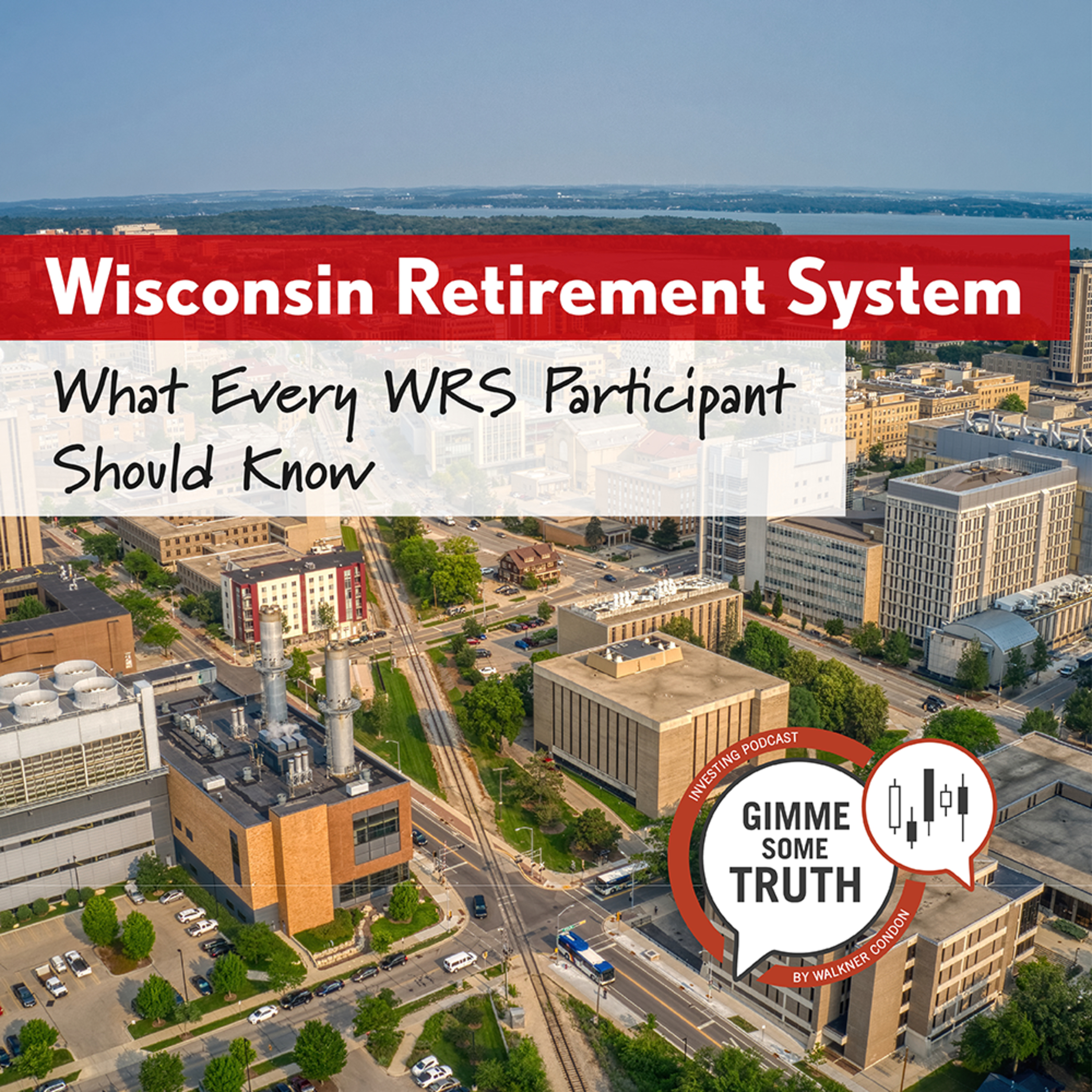
Wisconsin Retirement System Explained — What Every WRS Participant Should Know

The Wisconsin Retirement System is one of the best-funded public pension plans in the country — but most participants don't fully understand how it works or how to maximize it. In this episode of Gimme Some Truth, Nate, Andrew, and Clint break down everything you need to know about the WRS and ETF. Whether you're a state employee, teacher, or public sector worker in Wisconsin, this episode is packed with practical insight to help you make smarter decisions with your retirement benefits. Topics include how the pension actually works, the Core vs. Variable investment decision, what to do as retirement approaches, common misconceptions that cost people money, and how to think about it if you're considering leaving public service for a private sector role. 🔑 Key topics covered: * What the WRS is and how the pension benefit is calculated * Why the WRS is one of the healthiest pension plans in the US * WRS vs. Social Security as a guaranteed income floor * Core Fund vs. Variable Fund: the 60/40 vs. 100% stock decision * The one-time switch back to Core and what to do as retirement approaches * Why "I have WRS, I don't need to save anything else" is a dangerous assumption * Leaving for the private sector: is that 15% raise actually worth it? * How to read your WRS statement and use ETF office projections 📌 Chapters: 0:00 – Introduction & Clint's Background With WRS 1:01 – Why This Topic Matters & Common Misconceptions 4:42 – What Is a Pension? WRS Basics Explained 6:51 – WRS vs. Social Security: Building a Guaranteed Income Floor 7:00 – Core vs. Variable: Investment Options Inside the Plan 9:36 – Approaching Retirement: The One-Time Core Switch & Practical Steps 11:27 – "WRS Is Enough" — Why You Should Still Save Outside the Plan 12:34 – Is Leaving for a Private Sector Job Worth It? 16:07 – Private Pensions: What's Different & What to Watch Out For 17:44 – Final Tips: Reading Your Statement & Visiting the ETF Office 📬 Have questions about your WRS benefits or retirement plan? Reach out to the team at walknercondon.com #WRS #WisconsinRetirementSystem #ETF #WisconsinPension #PublicPension #RetirementPlanning #StateEmployees #TeacherRetirement #PensionPlan #FinancialPlanning #CoreVsVariable #PublicSectorRetirement #Wisconsin Subscribe @walknercondon Visit our website for more financial planning resources and educational information: https://www.walknercondon.com ———————————————— ADD US ON: LinkedIn: https://linkedin.com/company/walkner-condon-financial-advisors-llc Facebook: https://facebook.com/walknercondon
June 8, 202618 min

Why Retirement Is Harder Than You Think, Part 2: Hidden Costs, Tax Traps & Tough Conversations

Clint and Nate are back for another honest conversation about what retirement actually looks like — and what most people don't see coming. Retirement planning isn't just about the numbers. In this episode of Gimme Some Truth, Clint and Nate dig into the real social and financial challenges that catch people off guard once they stop working. They start with something almost nobody plans for: what happens when spouses have completely different visions of retirement. One partner wants to travel, the other wants to keep working part-time — and neither has said it out loud. From there, they tackle the "I'll just consult" plan that so many pre-retirees lean on. It sounds easy in theory, but the reality is more complicated than most people expect — especially once you factor in the tax implications, Medicare timing, and Social Security coordination. The conversation also covers one of the most emotionally loaded topics in retirement planning: gifting money to your kids. Clint and Nate explain how well-meaning gifts can create unintended expectations, and why transferring your house to your children before you pass away can trigger serious tax consequences (including losing the stepped-up cost basis). They also break down a growing line item in retirement budgets: wellness spending. Personal trainers, red light therapy, supplements, gym memberships — these costs add up faster than most people anticipate, and they're rarely part of the original plan. Whether you're five years out from retirement or already there, this episode will help you think more clearly about the financial and personal decisions ahead — and why open communication with your spouse, your kids, and your advisor is the most valuable tool you have. Topics covered: - Why couples often enter retirement with completely different mindsets - The "I'll just consult" plan and why it's harder than it sounds - Financial impact of part-time consulting on taxes, Medicare, and Social Security - How gifting money to your kids can create unintended expectations - Why transferring your house to your children is usually a tax mistake - The emotional hurdle of taking your first portfolio withdrawal - Die With Zero philosophy and how to build a gifting plan the right way - Budgeting for wellness in retirement — personal trainers, therapy, and more - Why open communication is the #1 tool in your retirement toolkit Chapters: 0:00 – Introduction & Best Movie Sequels 2:10 – What Retirement Really Feels Like 3:25 – Couples & Mismatched Retirement Mindsets 5:55 – The "Maybe I'll Consult" Boomerang 8:19 – Gifting Money to Kids: The Slippery Slope 8:45 – Financial Impact of Consulting (Taxes, Medicare, Social Security) 9:33 – The First Withdrawal Is the Hardest 11:56 – Die With Zero & Gifting Plans Done Right 14:05 – Healthcare & Wellness Costs in Retirement 14:06 – Transferring Your House to Your Kids (Don't Do It) 15:28 – Red Light Therapy, Trainers & the Real Wellness Budget 15:55 – Final Thoughts & Communication as the Core Theme 16:34 – Disclaimer Subscribe @walknercondon Visit our website for more financial planning resources and educational information: https://www.walknercondon.com ———————————————— ADD US ON: LinkedIn: https://linkedin.com/company/walkner-condon-financial-advisors-llc Facebook: https://facebook.com/walknercondon

May 25, 202622 min

Gifting Money to Family: Tax Rules, Common Mistakes & What You Need to Know in 2026

Thinking about gifting money or assets to your kids or other family members? Before you write that check or transfer that stock, there are some important tax rules and planning pitfalls you need to understand. In this episode of Gimme Some Truth, Nate, Evan, and Polly break down everything you need to know about lifetime gifting — from the 2026 annual gift tax exclusion ($19,000 per recipient) to the lifetime gift tax exemption ($15 million individual / $30 million for married couples). They explain when you need to file Form 709, what types of assets you can gift, and why gifting appreciated stock can actually backfire thanks to the step-up in basis trap. The conversation goes beyond tax rules into the real-world side of gifting that most people overlook. How do you talk to your kids about receiving a large gift? What happens to your child's college financial aid if you gift them money at the wrong time? And why does relinquishing control over the gift matter more than most people realize? They also cover custodial accounts vs. 529 plans, the tax implications of gifting real estate, and the most common pitfalls advisors see when clients try to gift without a plan. Whether you're thinking about helping your kids with a down payment, funding a grandchild's education, or simply passing along wealth while you're alive to see it enjoyed, this episode gives you the framework to do it the right way. Topics covered: - What assets you can gift (cash, stock, real estate, and more) - 2026 annual gift tax exclusion ($19,000) and when to file Form 709 - Lifetime gift tax exemption ($15M individual / $30M married) - The step-up in basis trap when gifting appreciated stock - Real estate gifting considerations - Why communication with gift recipients matters - How gifting affects college financial aid and FAFSA - Custodial accounts vs. 529 plans - Why relinquishing control is essential - Where to start before you gift - Common gifting pitfalls to avoid Check out the related blog post for additional information - https://walknercondon.com/blog/gifting-to-family-members-what-to-know-before-you-give/ Chapters: 0:00 – Introduction & Evan's CFP Journey 1:49 – Polly's Milestone: First Tooth & the Tooth Fairy Economy 3:03 – What Assets Can You Gift? 4:50 – 2026 Annual Gift Tax Exclusion ($19,000) & Form 709 6:13 – Lifetime Gift Tax Exemption ($15M Individual / $30M Married) 6:50 – Gifting Stock: The Step-Up in Basis Trap 9:04 – Real Estate & Other Asset Gifting Considerations 9:57 – Why Communication with Recipients Matters 11:37 – Impact on College Aid & FAFSA 12:41 – Custodial Accounts & 529 Plans 14:52 – The Importance of Relinquishing Control 15:47 – Where to Start Before You Gift 18:13 – Common Gifting Pitfalls to Avoid 21:16 – Best Gifts We Ever Received 21:56 – Closing Thoughts & Contact Information Subscribe @walknercondon Visit our website for more financial planning resources and educational information: https://www.walknercondon.com ———————————————— ADD US ON: LinkedIn: https://linkedin.com/company/walkner-condon-financial-advisors-llc Facebook: https://facebook.com/walknercondon

May 11, 202625 min

Why Retirement Is Harder Than You Think: Emotional and Financial Realities Explained

What really happens when you retire? In this episode of Gimme Some Truth, hosts Nate Condon and Clint Walkner pull back the curtain on the social and financial realities of retirement — the identity shifts, emotional challenges, and money complexities that most people never see coming. Retirement isn't just a financial milestone — it's a major life transition. From the identity crisis that hits when you no longer have a job title, to the emotional weight of watching your portfolio balance go down instead of up, Nate and Clint explore the retirement planning topics that financial advisors rarely talk about. They cover the psychological phases of retirement, how to build structure and purpose after leaving work, why the distribution phase is the most complex part of financial planning, and how stress testing your retirement plan can bring real peace of mind. Whether you're 10 years out from retirement or stepping into it now, this conversation will help you understand what to expect — and how to prepare for the emotional and financial realities of life after work. Topics covered: retirement identity crisis, emotional phases of retirement, retirement planning psychology, building routines in retirement, losing work community, retirement portfolio drawdown anxiety, retirement spending planning, financial advisor for retirees, distribution phase financial planning, non-linear retirement spending, stress testing retirement plan, retirement readiness. 📌 Chapters: 0:00 – Introduction & Why Retirement Is Harder Than It Looks 1:46 – The Phases of Retirement — When the "Vacation" Feeling Wears Off 2:00 – The Retirement Identity Crisis: Who Are You Without Your Job? 3:06 – Scheduling Your Day & Building New Routines After Work 4:06 – Losing Your Work Community & Why It Hits Harder Than Expected 6:29 – The Emotional Burden of Watching Your Portfolio Balance Decline 7:38 – Could You Be Retired Longer Than You Worked? 9:58 – Why You Need a Financial Advisor in Retirement & What to Look For 11:38 – The Distribution Phase: The Most Complex Part of Financial Planning 16:11 – Non-Linear Retirement Spending: Budgeting for Big Unexpected Expenses 18:37 – The Psychology of Big Money Movements in Retirement 21:14 – Stress Testing Your Retirement Plan for Peace of Mind 22:21 – Wrapping Up Part 1 & What's Coming in Part 2 Subscribe @walknercondon Visit our website for more financial planning resources and educational information: https://www.walknercondon.com ———————————————— ADD US ON: LinkedIn: https://linkedin.com/company/walkner-condon-financial-advisors-llc Facebook: https://facebook.com/walknercondon

April 27, 202622 min

AI and Value Investing: Is the Growth Stock Era Over?

In this episode of Gimme Some Truth, we explore the massive shift happening in the markets. For over a decade, Growth stocks have dominated, but Artificial Intelligence might be the very catalyst that brings Value Investing back to the forefront. We break down the "AI Build-out" and why sectors typically labeled as "Value"—like Energy, Utilities, and Industrials—are becoming the backbone of the AI revolution. If you are worried about S&P 500 concentration risk and being too heavy in Big Tech, this episode is a must-watch. What we cover in this episode: - The Growth vs. Value Trade: Why the tide is turning after 15 years. - AI Disruption: How AI is actually challenging the valuation of traditional growth companies. - Concentration Risk: The dangers of a tech-heavy portfolio in today's market. - The AI Infrastructure Play: Which value sectors stand to gain the most from the AI build-out. - Market History: Lessons from past bubbles (2000, 2008) and how they apply to the AI boom. Don't let recency bias dictate your strategy. We discuss why now is the time to review your portfolio and ensure you aren't over-exposed to a single trade. 🕒 Timestamps: 00:00 Value vs Growth Returns01:22 AI Shakes Up Markets01:59 Hazel AI Fintech Example03:43 S&P 500 Concentration Risk06:02 Data Centers Favor Value07:12 Jobs Fed and Deflation10:44 Valuations Small Caps13:51 Index Funds Need Rebalance17:27 Pasta Picks Break20:21 Diversify Before Storms21:24 Disclosures and Outro#ValueInvesting #GrowthStocks #AIInvesting #StockMarket2026 #PortfolioDiversification #TechBubble #S500 #FinancialAdvice #GimmeSomeTruth #MarketRotation #ValueVsGrowthSubscribe @walknercondon Visit our website for more financial planning resources and educational information: https://www.walknercondon.com ————————————————ADD US ON:LinkedIn: https://linkedin.com/company/walkner-condon-financial-advisors-llc Facebook: https://facebook.com/walknercondon #ValueInvesting #GrowthStocks #AIInvesting #StockMarket2026 #PortfolioDiversification #TechBubble #S500 #FinancialAdvice #GimmeSomeTruth #MarketRotation #ValueVsGrowth Subscribe @walknercondon Visit our website for more financial planning resources and educational information: https://www.walknercondon.com ———————————————— ADD US ON: LinkedIn: https://linkedin.com/company/walkner-condon-financial-advisors-llc Facebook: https://facebook.com/walknercondon

April 20, 202619 min

Q1 2026 Analysis: Geopolitical Tensions, The Saas Selloff, and Volatility Returns

Join hosts Syl Michelin, CFA and Clint Walkner as they break down the key market themes from Q1 2026. In this episode, Syl and Clint cut through the headlines to focus on what the market is actually telling investors — covering geopolitical tensions, energy prices, AI infrastructure spending, the SaaS selloff, crypto, gold, bonds, and international stocks. From the 10% market correction to the value vs. growth repricing, they analyze what matters most for your portfolio in 2026. Whether you're evaluating US mega cap tech valuations after the selloff, considering international diversification, or wondering if bonds deserve a place in your portfolio, this episode delivers data-driven market analysis you can act on. Topics covered: Q1 2026 market recap, geopolitical risk and market corrections, oil prices in historical context, AI energy demand and infrastructure, SaaS creative destruction, value vs. growth investing, crypto and gold performance, market timing pitfalls, bond investing in 2026, international stocks vs. US stocks, non-USD diversification strategies. 📌 Chapters: 0:00 – Introduction & Q1 2026 Market Overview 0:29 – Disconnect Between Headlines & Market Reality 1:27 – Geopolitical Tensions & the 10% Market Correction 2:35 – Oil Prices in Historical Context 3:55 – AI Infrastructure & the Energy Demand Problem 7:20 – The SaaS Apocalypse & Creative Destruction 9:55 – Value vs. Growth Repricing in Q1 2026 10:40 – US Mega Cap Tech Valuations After the Selloff 11:10 – Crypto & Gold Selloff Explained 13:54 – Why Timing the Market Around Events Fails 16:34 – International Stocks vs. US Stocks 17:57 – The Case for Bonds in 2026 18:54 – International Bonds & Non-USD Diversification Subscribe @walknercondon Visit our website for more financial planning resources and educational information: https://www.walknercondon.com ———————————————— ADD US ON: LinkedIn: https://linkedin.com/company/walkner-condon-financial-advisors-llc Facebook: https://facebook.com/walknercondon

April 13, 202618 min

Abbott Acquires Exact Sciences: Planning Opportunities for Employees with Company Stock

With Exact Sciences stockholders officially approving the merger with Abbott on February 20, 2026, the Q2 closing date is fast approaching. For employees, this means unvested RSUs are accelerating, 401(k) holdings are shifting to cash, and a significant "tax cliff" is looming in 2026.In this deep dive, Clint Walkner and Mitch DeWitt break down the strategic financial moves Exact Sciences employees can make now to protect their windfall and minimize the IRS’s cut.What We Cover:- The $105 Cash Payout: How the all-cash deal impacts your RSUs, PSUs, and ESPP.- The 2026 Tax Spike: Why accelerated vesting could push you into a higher tax bracket and how to "bunch" deductions to fight back.- 401(k) & HSA Strategies: Should you pivot to Pre-Tax or Roth during a windfall year?- Risk Management: How to handle the uncertainty of future roles and potential layoffs post-merger.- Charitable Giving: Using Donor-Advised Funds (DAFs) to offset your 2026 gains.Timeline of the Deal:0:00 Deal Overview: The Abbott/Exact Sciences Merger1:00 Updates: What’s changed since the November announcement?3:43 Cash Deal Timing: Preparing for a Q2 2026 close5:12 2026 Tax Planning: Managing the "Windfall Year"9:04 Advanced Moves: Charity, DAFs, and Trading Windows10:43 Goal Assessment: What to do with the cash (Debt vs. Savings)14:12 Employment Risk: Liquidity and Emergency Reserves16:48 Next Steps: Coordinating with your Tax ProResources for Exact Sciences Employees: https://walknercondon.com/blog/what-happens-to-my-exact-sciences-stock-after-the-abbott-acquisition/ Visit our website for more financial planning resources and educational information: https://www.walknercondon.com ————————————————ADD US ON:LinkedIn: https://linkedin.com/company/walkner-condon-financial-advisors-llc Facebook: https://facebook.com/walknercondon

March 30, 202617 min

Is the U.S. Dollar Losing Reserve Currency Status? The Data Says…

Is the U.S. dollar losing its status as the world’s reserve currency — or is the de-dollarization narrative overblown?In this episode of Gimme Some Truth, we separate fact from fiction on de-dollarization, global reserve currency shifts, and what the data actually says about the future of the U.S. dollar. With growing headlines about central banks buying gold, BRICS nations exploring alternatives, and tariff policies impacting currency markets, many investors are asking whether dollar dominance is fading.We examine reserve currency data, gold allocations, global liquidity dynamics, and why the U.S. dollar still represents roughly 55–60% of global reserves. More importantly, we discuss what this means for portfolio construction, currency diversification, international investing, and risk management in 2026 and beyond.If you’re concerned about currency risk, inflation, or global capital flows, this breakdown provides historical perspective and practical investment strategy.🎯 What You’ll Learn:- What de-dollarization really means- Why the de-dollarization narrative is trending now- The role of gold in central bank reserves- How tariff policy impacts U.S. dollar strength- Why the dollar remains the dominant global reserve currency (55–60%)- The liquidity advantage of U.S. capital markets- Where capital flows when investors reduce dollar exposure- How to position your portfolio for currency fluctuations💡 Key Insights:- Today’s dollar levels are similar to the 1990s — possibly normalization, not crisis- No viable alternative currency matches U.S. market depth and liquidity- Unhedged international stocks and bonds provide currency diversification- Every fiat currency depreciates over long time horizons- “The Death of the Dollar” narrative dates back to 1968📊 Portfolio Strategies for Currency Risk:- Invest in unhedged foreign equities and bonds- Consider precious metals and commodities as diversifiers- Understand how currency movements impact international returns- Maintain strategic global diversification⏱️ CHAPTERS:0:00 Introduction 16:16 De-Dollarization Explained16:58 Why De-Dollarization Is Trending17:47 Gold & Global Reserve Currency Shifts18:39 U.S. Dollar Policy & Political Impact19:56 Tariffs and Their Impact on the Dollar21:15 Dollar Normalization vs. Crisis Narrative21:51 Where Capital Flows When Leaving the Dollar22:34 The Data: Why the Dollar Is Still Dominant23:57 Why There’s No True Alternative Reserve Currency25:18 Portfolio Construction for Currency Risk26:25 Foreign Stocks & Currency Exposure28:52 “The Death of the Dollar” (1968 Perspective)30:26 Historical Context & Long-Term Trends31:38 Precious Metals & Commodity Allocation32:38 Final Thoughts📚 Read the full analysis: https://walknercondon.com/blog/de-dollarization-rise-of-currency-alternatives/ 📞 Talk to an advisor: www.walknercondon.com #dedollarization #USDollar #CurrencyMarkets #GlobalInvesting #ReserveCurrency #PortfolioStrategy #InternationalInvestingSUBSCRIBE: @walknercondon For more on this topic and others check out the blog on our website: https://walknercondon.com/blog/ Visit our website for more financial planning resources and educational information: https://www.walknercondon.com ————————————————ADD US ON:LinkedIn: https://linkedin.com/company/walkner-condon-financial-advisors-llc Facebook: https://facebook.com/walknercondon

Is this your show?

Claim this listing to keep it up to date, reach guests who want to pitch you, and manage bookings with Guestify.

Claim this listing

More Business podcasts