Find partners
Future U Podcast - The Pulse of Higher Ed

Future U Podcast - The Pulse of Higher Ed

Hosted by Jeff Selingo, Michael Horn

EducationNewsCommentaryInterviews guests

Episodes

239

Latest episode

Oct 2026

Language

EN

About the show

Jeff Selingo and Michael Horn discuss what’s next for higher education and talk with the newsmakers you want to hear from most. Find the latest news and insights into the current trends in higher ed on the Future U. Podcast.

Listen to episodes

60 recent
October 13, 202644 min

New Formula for Success: Location, Location, Location

A donor recently gave $3 billion to Carnegie Mellon University, in part to build a new campus in Florida. It’s just the latest example of colleges staking out new territory far from their main campuses. Jeff and Michael give their analysis of the trend, as they reflect on a range of recent developments in higher education. Other topics this episode include the enrollment crisis at Syracuse University, a report out of Cornell on the purpose of the university, and how colleges can balance academic rigor and student success. This episode is made with support from Ascendium Education Group. Chapters 0:00 - Intro 1:56 - What Should Students Still Have to Work Through? 6:39 - Balancing Mastery Learning and AI 9:55 - Knowing When to Bring In AI 10:49 - Rethinking Assessment 12:12 - A Case Study on Northeastern’s Co-Op Program 18:57 - Geography’s Increasingly Role In Higher Ed 26:03 - Colleges Face New ‘Enterprise Risks’ 30:34 - Sponsor Break 31:17 - Colleges Look to Clarify Their Purpose 27:31 - Do Colleges Really Prepare Students for Jobs? 35:26 - Judgement Requires Knowledge 38:14 - Moving ‘Beyond Silos’ 41:33 - Making Pathways Dependable 43:51 - Wrap-Up Relevant Links “ Northeastern University: A New Model for Higher Education?, ” Harvard Business School case study. “ Why some universities are gobbling up campuses all over the place, ” by Michael Horn in The Boston Globe. “ After Missing Its Enrollment Goal, Syracuse is Questioning Everything, ” in The Chronicle of Higher Education. “ MIT’s Ad Hoc Committee on AI Use in Teaching, Learning, and Research Training Report, ” by the Massachusetts Institute of Technology. “ The State of Higher Education 2026, ” by Jeff Selingo. “ The Future of the American University, ” a report from Cornell University.
September 29, 202637 min

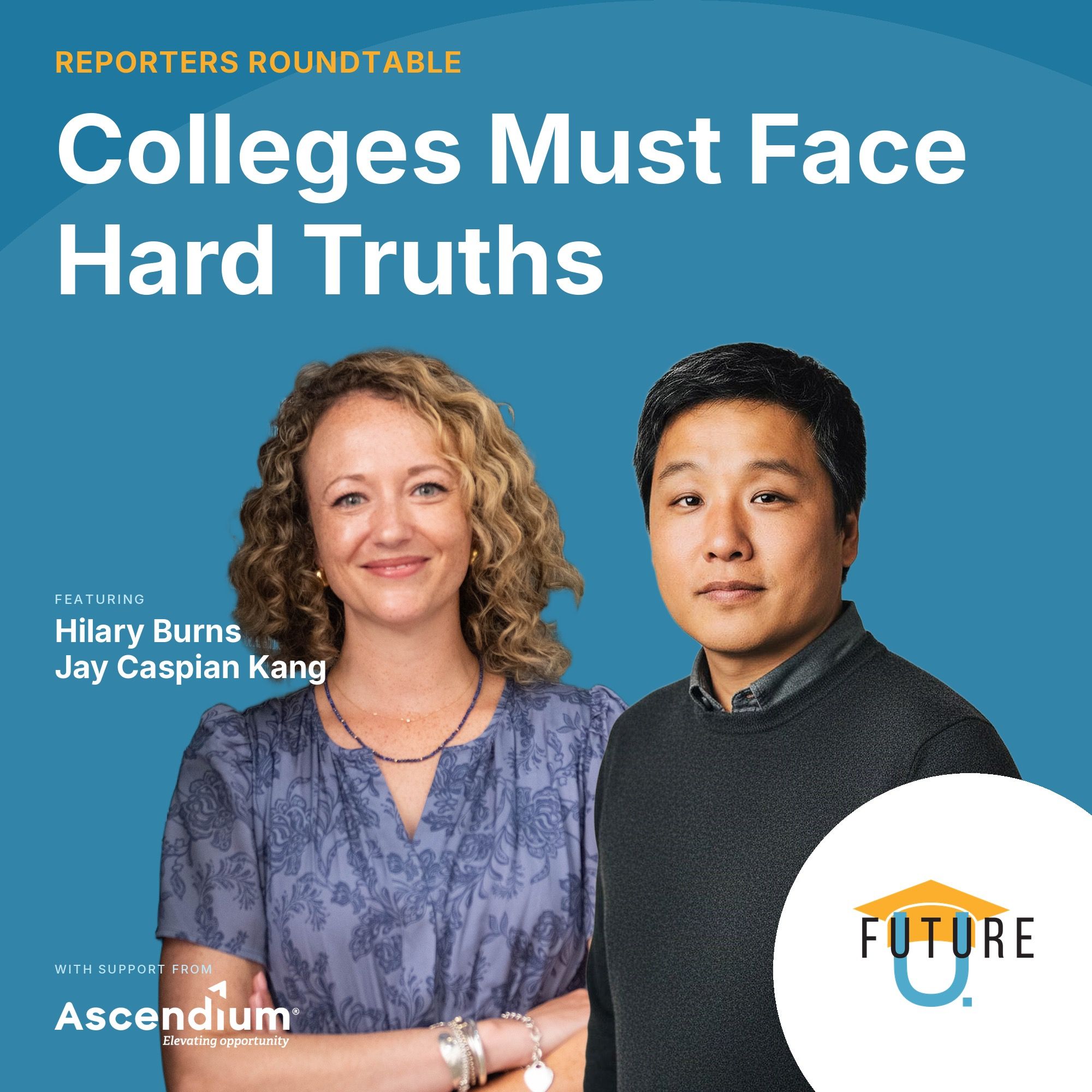
Reporters Roundtable: Colleges Must Face Hard Truths

For this season’s roundtable with leading higher ed reporters, Jeff and Michael focused around a key question: What are insiders at colleges missing about the changing public perception of the sector? Our guests — Hilary Burns of The Boston Globe and Jay Caspian Kang of The New Yorker — both offered a sobering critique that might surprise some college leaders. The reporters also wondered whether the traditional business model could hold up to mounting financial pressures. This episode is made with support from Ascendium Education Group. Chapters 0:00 - Introduction 2:19 - What Insiders Miss About the Moment in Higher Ed 5:25 - Higher Ed Stories That Spark the Most Feedback 11:18 - Will College Continue to Be Worth It? 14:20 - Are Co-ops a Fad or a Lasting Trend? 17:53 - A ‘Flashing Red Light’ for Higher Ed 21:04 - ‘These Towns Would Be Really Boring’ 22:12 - The State of Higher Ed in New England 24:06 - The Continuing Lure of College 38.12 - What’s Coming for Higher Ed? 31:00 - A Looming Reckoning for Boston Colleges? 32:56 - What’s Happening With International Students? 34:09 - How Research Cuts Will Impact Colleges 34:53 - Is the Era of Colleges for Exploration and Ideas Over? Relevant Links: College Town newsletter , from The Boston Globe. “ The Reason Dozens of Mass. Colleges Could Close (Hint: It's Not Trump) ,” by Hilary Burns, in The Boston Globe. “ The Despair of the Professor in the Age of AI ,” by Jay Caspian Kang in The New Yorker. “ Higher Ed Leaders Fear International Students Will Stop Coming Amid Research Cuts, ” by Hilary Burns, in The Boston Globe. “ Will A.I. Make College Obsolete? / Eight Predictions ,” by Jay Caspian Kang, in The New Yorker

September 22, 202653 min

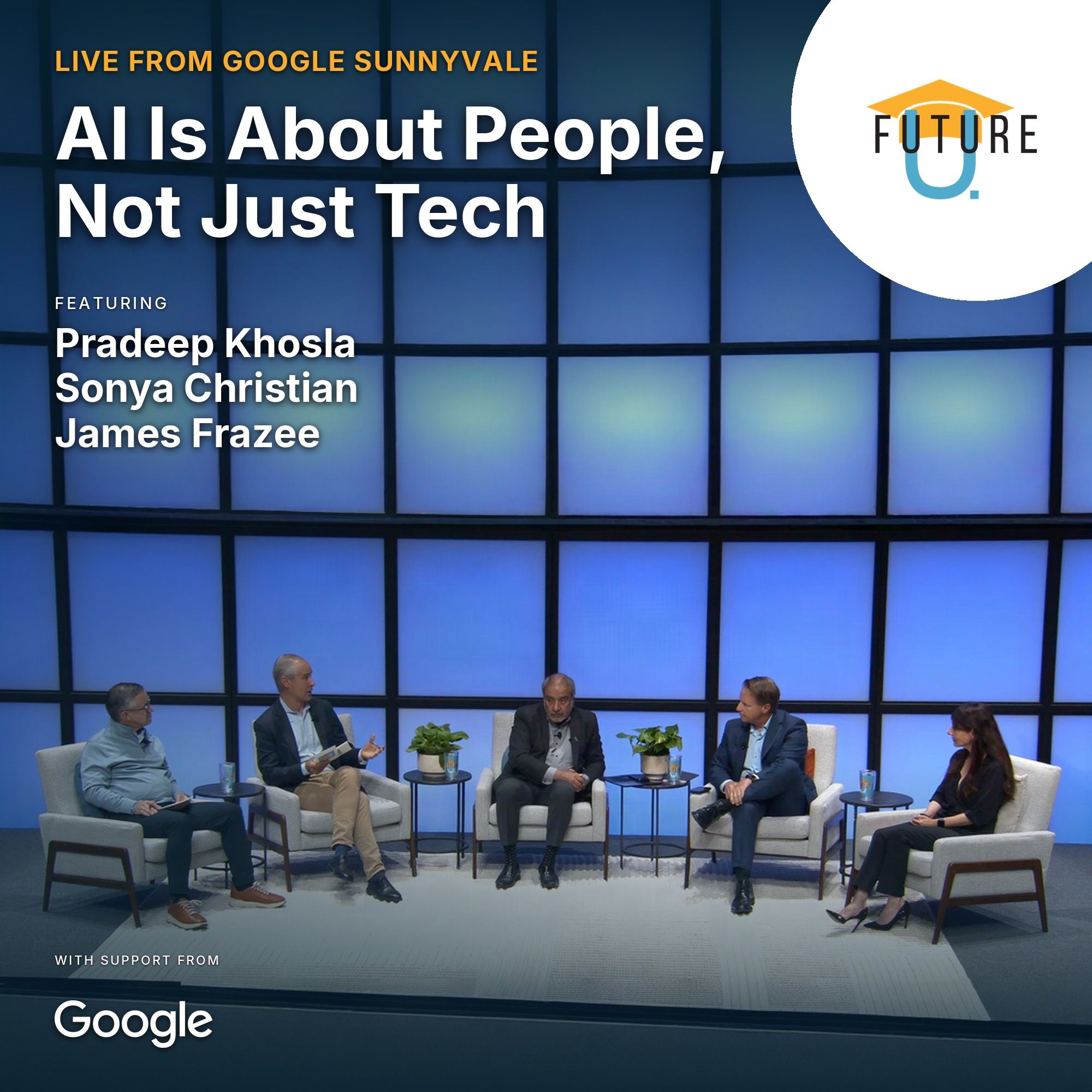
Live from Google: AI Is About People, Not Just Tech

Universities can build all the AI infrastructure they want, but if faculty aren't on board, none of it lands in the classroom. Recent surveys make clear what many academic leaders already sense but rarely say out loud: there's a real and widening divide between faculty skepticism and administrative impatience on AI. The question isn't who's right. It's how you close the gap. In this episode, Jeff and Michael explore this topic with Pradeep Khosla (Chancellor, University of California, San Diego), Sonya Christian (Chancellor, California Community College System), and James Frazee (VP and CIO, San Diego State University). This episode is made with support from Google. Chapters 0:00 - Episode Trailer 2:20 - Intro 3:36 - Why Are Students Both Using, and Booing AI? 6:10 - How Should College Leaders Talk About AI? 10:05 - Is Inconsistency in AI Policy a Feature or a Bug? 12:52 - Using Data to Drive Faculty Discussions on AI 14:33 - Invest in People, Not Just Tools 16:33 - Helping Faculty Feel Safe to Try AI 20:24 - Can Colleges Afford AI In Times of Budget Crisis? 23:26 - Encouraging All Disciplines to Try AI 26:30 - Do Professors Trust Administrators on AI? 30:14 - Sponsor Break 30:44 - AI’s Impact on the Value of the Degree 34:48 - How is AI Really Impacting the Job Market? 38:08 - The Future of Assessment 42:38 - Does Traditional Faculty Governance Work for AI? 45:46 - What Professors Do That AI Can’t 46:41 - When Industry Moves Faster Than Education 49:12 - The Importance of Faculty Development in AI 52:15 - Closing Thoughts on AI at Colleges Relevant Links “ AI Is Routine for College Students, Despite Campus Limits, ” Lumina | Gallup. AI in Action video series at California State University System. “ Cal State students widely use AI tools, but mistrust results and fear job impact, ” in EdSource.

September 15, 202655 min

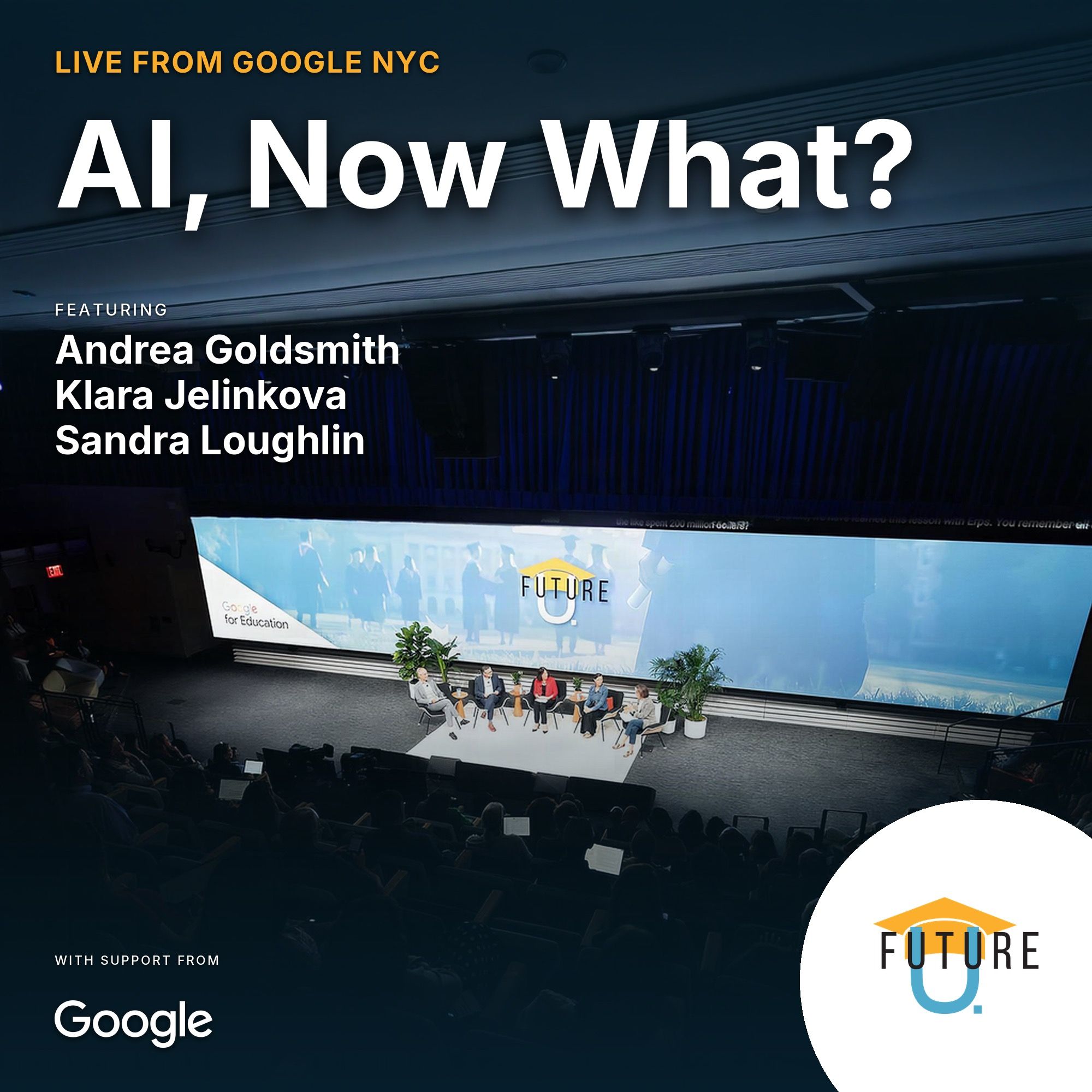
Live from Google NYC: AI, Now What?

Higher ed has spent four years managing AI through policies, restrictions, and isolated pilots. That approach bought time, but is time running out? Students are caught in a patchwork of incoherent expectations, and the labor market is shifting faster than the curriculum. In this episode featuring Andrea Goldsmith (President, Stony Brook University), Klara Jelinkova (VP and CIO, Harvard University), and Sandra Loughlin (Chief Learning Scientist, EPAM Systems), Jeff and Michael dig into what colleges can do to move from fragmented experimentation to a coherent, campus-wide AI strategy that preserves the right level of friction for students. This episode is made with support from Google for Education. Chapters 0:00 - Intro 4:33 - Should Colleges Forge More Coherent AI Policies? 9:29 - What Are the Cost and Benefits of the Patchwork Approach to AI? 12:06 - A Case for a Coherent AI Strategy at Colleges 15:33 - A Case Against Standardization in AI 18:08 - How Can College Leaders Measure AI Progress? 20:46 - The Importance of Stopping Some AI Pilots 20:24 - How to Make Decisions When AI Changes So Rapidly 23:59 - Sponsor Break 24:29 - Should Colleges Build, Buy, or Partner on AI 27:54 - Should Undergrads Learn AI From Day 1? 31:41 - What Research Shows About AI and Learning 34:12 - Convincing Students to Build Human Skills 38:49 - Do Selective Colleges Need to Change? 41:24 - How Can Colleges Show They Teach Durable Skills? 43:50 - Is Higher Ed Ready to Fully Assess Learning? 46:26 - How Will Colleges Deal With the Costs of AI? 48:26 - AI Could Help Some Colleges Leapfrog Others 50:50 - Colleges That Get AI Right Will … 52:15 - Closing Thoughts on AI at Colleges Relevant Links “ Why College Could Matter More than Ever in the AI Era, ” by Michael Horn.

September 8, 202643 min

Colleges Face New Pressures to Define Themselves

We’re kicking off our tenth season of Future U. And as a new school year gets underway, Jeff and Michael reflect on a slew of pressing issues facing higher ed. Forget the idea that every college has to be comprehensive. The new challenge for every college will be deciding what to offer and how to sell their value to increasingly skeptical students and parents. And college leaders must also contend with new directives from the Education Department, what to do about AI, a growing loneliness crisis on campus, and more. This episode is made with support from Ascendium Education Group. Chapters 0:00 - Intro 2:17 - Four Tests Colleges Should Have for Offering a Degree 8:16 - The Challenge of Measuring Student Outcomes 10:33 - Facing the Realities of the One Big Beautiful Bill 13:00 - Is Coherence in AI Policy a Bug or a Feature? 18:10 - MIT’s ‘Clarion Call’ About AI 19:51 - Cheating Is Not the Problem 21:02 - Is College Still Worth It? 24:30 - College Is More Than Just Classes 27:47 - Unpacking the Linda McMahon Letter 29:50 - Colleges Try to Be Clearer About Price 30:54 - Can AI Reduce Administrative Costs? 32:16 - But Aren’t Students Still Clamoring to Go to College? 35:31 - Is Dual Enrollment the Answer? 38:41 - A Growing Student Loneliness Crisis 40:26 - Will the University of California Bring Back the SAT? 41:41 - Previewing Future Episodes Relevant Links: “ Leading Faculty in an AI Era, ” by Jeff Selingo. “ From Programs to Payoff, ” by Jeff Selingo. “ The Value of Live in a World of Abundant AI, ” by Michael Horn on Substack. “ For Those Who Think Earnings Premium Accountability Started With OBBB, ” by Phil Hill in OnEdTech. “ AI can now credibly complete most undergraduate assignments, MIT warns, ” in The Washington Post. “ McMahon’s ‘National Call to Action’ Draws Measured Response From Higher Education, ” in US News and World Report. “ UC Expedites Timeline for Determining Whether to Restore Testing Requirement , ” in Inside Higher Ed. “ Even College Students Have Stopped Hanging Out, ” in The Atlantic.

August 4, 202651 min

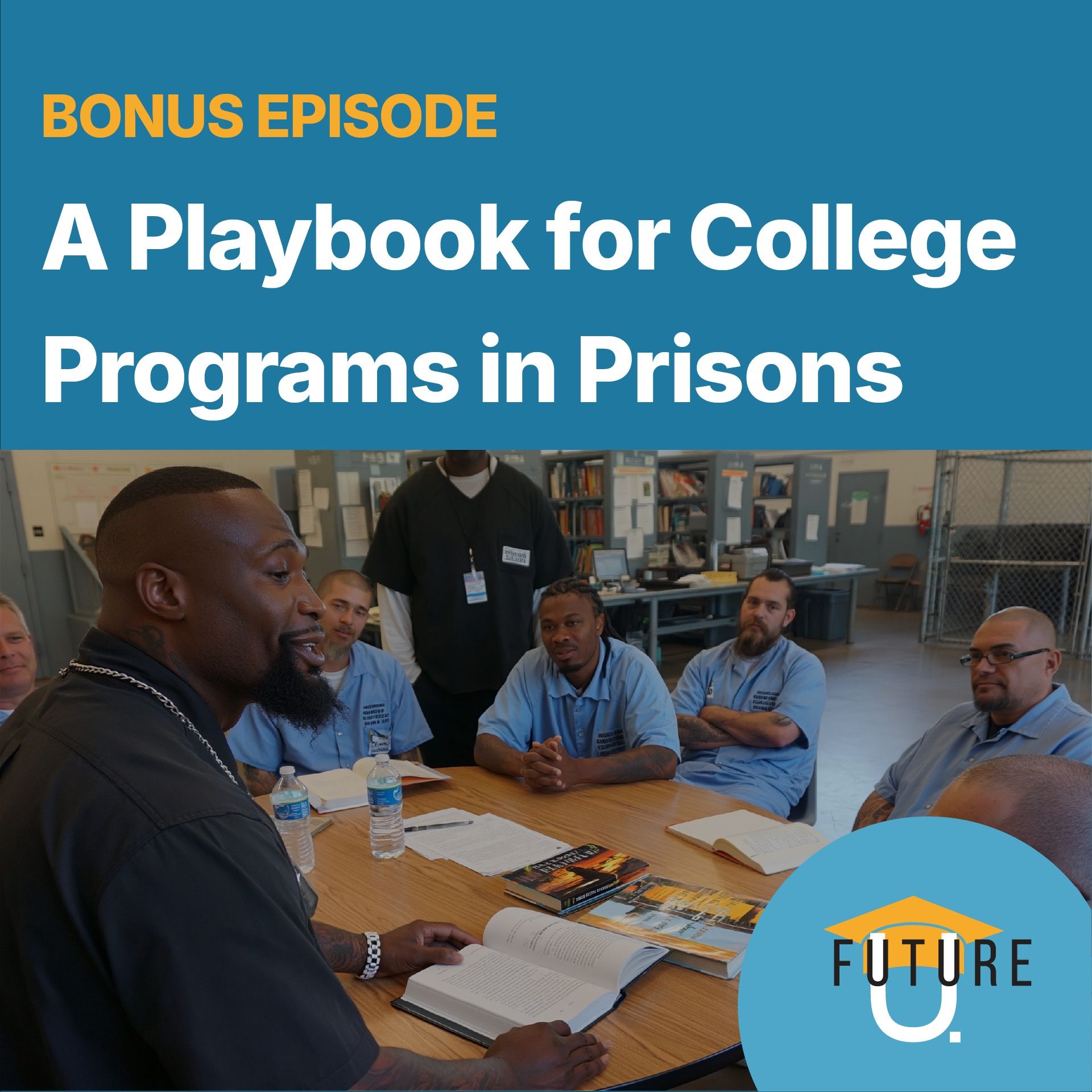
A Playbook for College Programs in Prisons

We’ve been wondering how prison education programs have grown since the reinstatement of Pell grants for incarcerated learners a couple of years ago. So we sent our producer Jeff Young to learn more. It turns out colleges wanting to set up programs face complicated logistics and cultural challenges. To help, several states have recently set up statewide consortiums to help. On this episode we hear from the director of a new program in Minnesota building a playbook for colleges hoping to serve incarcerated students. This episode is made with support from Ascendium Education Group. Chapters 0:00 - Intro 2:06 - A New Statewide Coalition 3:08 - How Financial Aid Rules Changed In 2023 5:27 - Prison Education Programs Need a Range of Resources 6:40 - Have College Prison Programs Expanded In Recent Years? 7:28 - Colleges Don’t Know Where to Start With Prison Programs 8:32 - What Is the Model for Minnesota’s New Prison Education Consortium? 10:40 - What Professors Need to Know About Teaching in Prison 12:24 - A Guidebook for Prison Education Programs 13:50 - A Student’s Perspective on Higher Ed in Prison 20:40 - The Importance of Learning While in Prison 23:15 - How a Prison Program Changed a Student’s Outlook 24:48 - A Student’s Advice for Professors Teaching in Prison 26:05 - Sponsor Break 26:24 - Online v. In-Person Prison Education Programs 29:29 - When Students Take Ownership of Prison Education Programs 32:17 - Cultural Factors of Setting Up Programs in Prison 33:47 - Technology Needed for Prison Education Programs 35:55 - A Student’s Perspective on Edtech in Prison 39:42 - What’s the Policy Outlook for Prison Education? 41:52 - An Argument for Non-Credit Programs in Prisons 44:51 - What’s the Future for Prison Education? 48:46 - Improving Re-entry Support Relevant Links “ Reinstating Pell Grants in Prisons Moves Slowly After 26-Year Ban, ” in Inside Higher Ed. “ State Coalitions Emerge as Key Infrastructure for Higher Education in Prison, ” in Open Campus. “ Advancing Opportunities for Higher Learning: An Evaluation of Minnesota's New Higher Education in Prison Programs, ” by the U of Minnesota’s Center for Urban & Regional Affairs. Check out our previous episodes on the topic: “‘ College Unbound’ from the Traditional Model ” from 2024 and “ College in Prison ” from 2022. Connect with Michael Horn: Sign Up for the The Future of Education Newsletter Website LinkedIn X (Twitter) Threads Connect with Jeff Selingo: Dream School: Finding the College That's Right for You Sign Up for the Next Newsletter Website X (Twitter) Threads LinkedIn Connect with Future U: Twitter YouTube Threads Instagram Facebook LinkedIn Submit a question and if we answer it on air we'll send you Future U. swag! Sign up for Future U. emails to get special updates and behind-the-scenes content.

June 16, 202636 min

Season 9 Wrap-Up: Why Mission Matters More Than Ever

It’s a time of change in higher education. Jeff and Michael look back on what they learned over the course of this ninth season of Future U in a one-on-one discussion. They recap key moments and share their favorite episodes. And one theme keeps emerging: “it’s all about institutional mission.” Chapters 0:00 - Intro 1:08 - Many of Today’s Challenges Were Predicted 10 Years Ago 3:51 - Why Mission Is Key 4:56 - A ‘Ghost Town Campus’ 12:35 - Big Deficits at Colleges 13:47 - The Fire Sale on MBAs 17:05 - How to Restore Trust in Higher Ed 19:17 - The Many Software Vulnerabilities for Colleges 24:29 - How to Design the AI University 26:52 - Jeff’s Favorite Episode of Season 9 30:58 - Michael’s Favorite Episode of Season 9 33:11 - Thanks to the Podcast Team Relevant Links: “ Season 9 Annual Listener Survey ” - Help us prepare for next season “ 2026: The seismic shifts for transforming the future of higher education, ” by Jeff Selingo, in The Chronicle of Higher Education “ Sonoma State University is in crisis. Can a new president save it, ” in The San Francisco Chronicle. “ What happens when students let an economist pick their college? ,” in Marketplace. “ Harvard’s FAS Is Running a $365 Million Structural Deficit. The Problems Started Well Before Trump, ” in The Harvard Crimson. “ There is a Fire Sale on MBAs, ” in The Wall Street Journal. “ Report of the Committee on Trust in Higher Education, ” by Yale University. “ Designing the AI University, ” by Jeff Selingo. “ Leading Faculty in an AI Era, ” by Jeff Selingo. " The Lie at the Center of Higher Education, " by Melik Peter Khoury. Connect with Michael Horn: Sign Up for the The Future of Education Newsletter Website LinkedIn X (Twitter) Threads Connect with Jeff Selingo: Dream School: Finding the College That's Right for You Sign Up for the Next Newsletter Website X (Twitter) Threads LinkedIn Connect with Future U: Twitter YouTube Threads Instagram Facebook LinkedIn Submit a question and if we answer it on air we'll send you Future U. swag! Sign up for Future U. emails to get special updates and behind-the-scenes content.

June 3, 202649 min

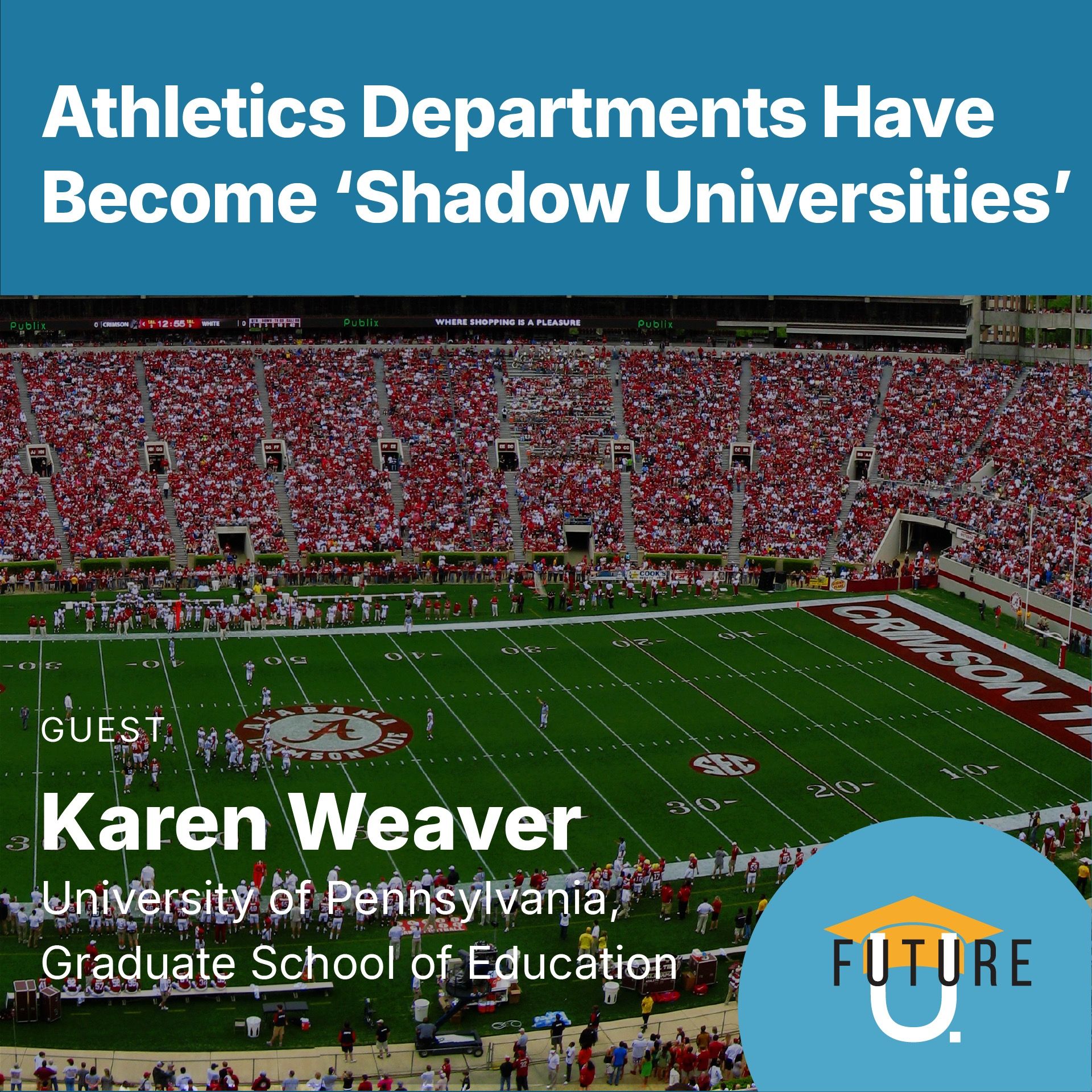
Athletics Departments Have Become ‘Shadow Universities’

The college athletics arms race has created a complex financing puzzle for many institutions. That has led athletics departments to become a kind of ‘shadow university’ within their campuses, with their own systems and processes. And university leaders need to pay closer attention. For this episode, Jeff and Michael talk with Karen Weaver, an expert on the finances behind college athletics. Do colleges need a whole new board structure for sports? Chapters 0:00 - Introduction 1:35 - Why All College Leaders Should Care About College Athletics 4:14 - Introducing Our Guest, Karen Weaver 5:12 - What Are University Presidents and Board Members Missing About College Sports? 6:38 - How is the Transfer Portal Impacting Graduation Rates? 8:26 - Do Athletics Align With College Mission Statements? 9:51 - What Washington Should Do to Regulate College Sports 11:50 - What If College Sports Lost Tax-Exempt Status? 13:23 - How Women’s Sports and Olympic Sports Fit In? 16:20 - Do NCAA Classifications Work Anymore? 20:22 - Who Defines Success for College Sports? 20:53 - Is Athletics Worth It As a ‘Front Porch’ of the College? 22:08 - How Should College Athletics Be Reformed? 25:36 - The Growth of Club Sports 29:18 - Do We Know the ROI of College Athletics? 34:00 - Getting Beyond Football and Basketball 37:05 - Connecting Athletics to Work-Integrated Learning 40:05 - Why Are People ‘All In’ on College Athletics 40:59 - How Injuries Play a Role 42:48 - The Connection Between Research and Athletic Prestige 45:07 - Is a Whole New Governance Structure Needed for Athletics? 46:05 - Lightning Round with Karen Weaver Relevant Links: “ Four quick thoughts on the Protect College Sports Act: aka a college sports bill you should actually pay attention to, ” by Matt Brown in his Extra Points newsletter. “ Sport Finance: Where the Money Comes From and Where the Money Goes ,” by Karen Weaver. “ Trustees and Presidents: A Podcast for University Leaders, ” by Karen Weaver “ Understanding College Athletics: What Campus Leaders Need to Know About College Sports ,” by Karen Weaver “ The Future of Elite Youth Sports Is Here—and It’s a Mess, ” in The Wall Street Journal. “ Range: Why Generalists Triumph in a Specialized World Range: Why Generalists Triumph in a Specialized World, ” by David Epstein.

May 19, 202659 min

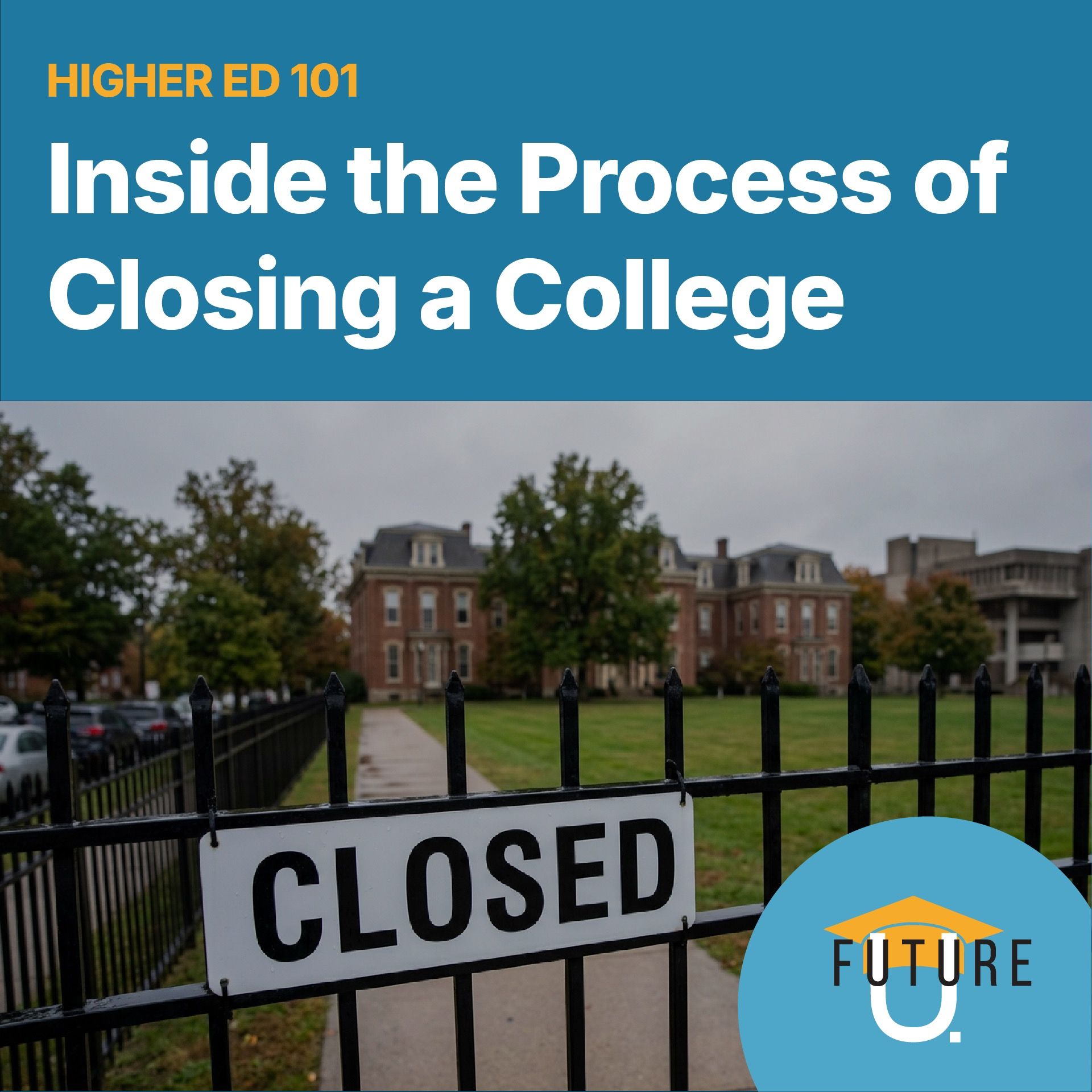
Higher Ed 101: Inside the Process of Closing a College

Closing down a college turns out to be a big job. For this episode, Jeff and Michael talk with a specialist on the complex and emotional process, Doug Moore. He shares all the things that college presidents and trustees should know—as well as surprising moments as he has helped colleges navigate finances, lawsuits, community impact, teach-outs, and more. And he explains why he sees signs of hundreds of college closures on the horizon. Relevant Links “ The Looming College-Enrollment Death Spiral, ” by Jeff Selingo in The Atlantic. “ History auctioned as Iowa Wesleyan closes its doors, ” in Homegrown Iowan. Chapters 0:00 - Intro 1:04 - The Surprising Complexity of Closing a College 3:00 - How a ‘College Closure’ Found that Profession 5:17 - How Do Colleges Find a Closer? 9:00 - Walking Through the Early Phases of Closing a Campus 14:53 - What Happens After the Final Graduation Ceremony? 18:55 - ‘Community Freebie Days’ 22:33 - What’s The Most Surprising Thing a Closing Campus Had to Auction Off? 26:12 - Warning Signs That a College Might Fail 28:19 - Why College Sports Can Shutter Colleges 30:26 - 400 Colleges Could Fail in the Next 10 Years 32:11 - 20 or 30 Colleges Could Close This Year 33:18 - Why Don’t More Colleges Merge? 35:00 - Is Anyone Buying Closed Colleges? 38:33 - The Emotional Toll of Closing a College 42:06 - Sponsor Break 42:35 - Did Higher Ed Build Too Many Colleges? 49:28 - What Is Emotionally Lost When Colleges Disappear? 51:43 - What Will Happen to All These Closed Campus Facilities? Connect with Michael Horn: Sign Up for the The Future of Education Newsletter Website LinkedIn X (Twitter) Threads Connect with Jeff Selingo: Dream School: Finding the College That's Right for You Sign Up for the Next Newsletter Website X (Twitter) Threads LinkedIn Connect with Future U: Twitter YouTube Threads Instagram Facebook LinkedIn Submit a question and if we answer it on air we'll send you Future U. swag! Sign up for Future U. emails to get special updates and behind-the-scenes content.

May 5, 202642 min

The College Where Funding Follows Students’ Earnings, Not Enrollment

Most public colleges get state funding based on “seat time,” — how many students are sitting through classes. Over a decade ago, leaders at Texas State Technical College bet on an experimental funding model that ties state support to the employment outcomes of their graduates. For this episode, we hear from the architect of the unusual approach, Michael Bettersworth, the college’s vice chancellor and chief marketing officer. And Jeff and Michael explore the lessons that all types of colleges can take from rethinking funding models to better match their missions. This episode is made with support from Ascendium Education Group. Chapters 0:00 - Introduction 3:49 - A College That Only Gets Paid When Students Get Jobs 6:42 - How the Unusual Funding Model Started 9:49 - How Has the Funding Model Gone? 12:05 - Voters Approve Endowment for a Technical College 13:20 - A Quest to Better Map Skills Colleges Teach to Jobs 18:52 - The Importance of ‘Occupational Identity’ 21:17 - Should Other Types of Colleges Try This Funding Model? 23:40 - How Much Should Colleges Be Responsible For Student Employment Outcomes? 25:43 - How Is AI Changing the Conversation About Skills? 29:01 - Creating Incentives to Map Teaching to Jobs 31:20 - How Can We Know What Skills Are Actually Needed in Certain Jobs? 34:41 - Funding Models Should Match College Missions 39:58 - Lightning Round with Michael Bettersworth Relevant Links “ If— ” by Rudyard Kipling “ Inventing a Job-Skills Machine, ” by Rebecca Koenig in EdSurge “ Taxonomies of Human Performance, ” by Edwin A. Fleishman. “ Marc Andreessen says AI layoffs are a farce: Companies are 75% overstaffed, and AI is the ‘silver bullet excuse’ to clean house, ” in Fortune.

Is this your show?

Claim this listing to keep it up to date, reach guests who want to pitch you, and manage bookings with Guestify.

Claim this listing