Find partners
Future Cities · Sustainability, Energy, Innovation, Climate Change, Transport, Housing, Work, Circular Economy, Education & Environmental Solutions

Future Cities · Sustainability, Energy, Innovation, Climate Change, Transport, Housing, Work, Circular Economy, Education & Environmental Solutions

Hosted by One Planet Podcast · Creative Process Original Series

Episodes

139

Latest episode

Apr 2026

Language

EN

About the show

What will the city of tomorrow look like? We are living in the Century of the City. Cities are the main drivers of creativity and innovation. Yet, a great number of people have little or no conception of what their future will look like when it comes to creating resilient, sustainable, and liveable cities. Even though a significant majority are intent on learning more about climate disruption, energy, transport, water, air, waste, education, and jobs. In a decade of transformative change, Future Cities podcast tells stories about the best in democracy, culture, urbanism, and society. It is a story of the cities of tomorrow told in a relevant, exciting, and accessible way by the many stakeholders and changemakers reimagining and reshaping our future. www.oneplanetpodcast.org www.creativeprocess.info

Listen to episodes

9 recent
June 16, 2026Episode 12481 hr 18 min

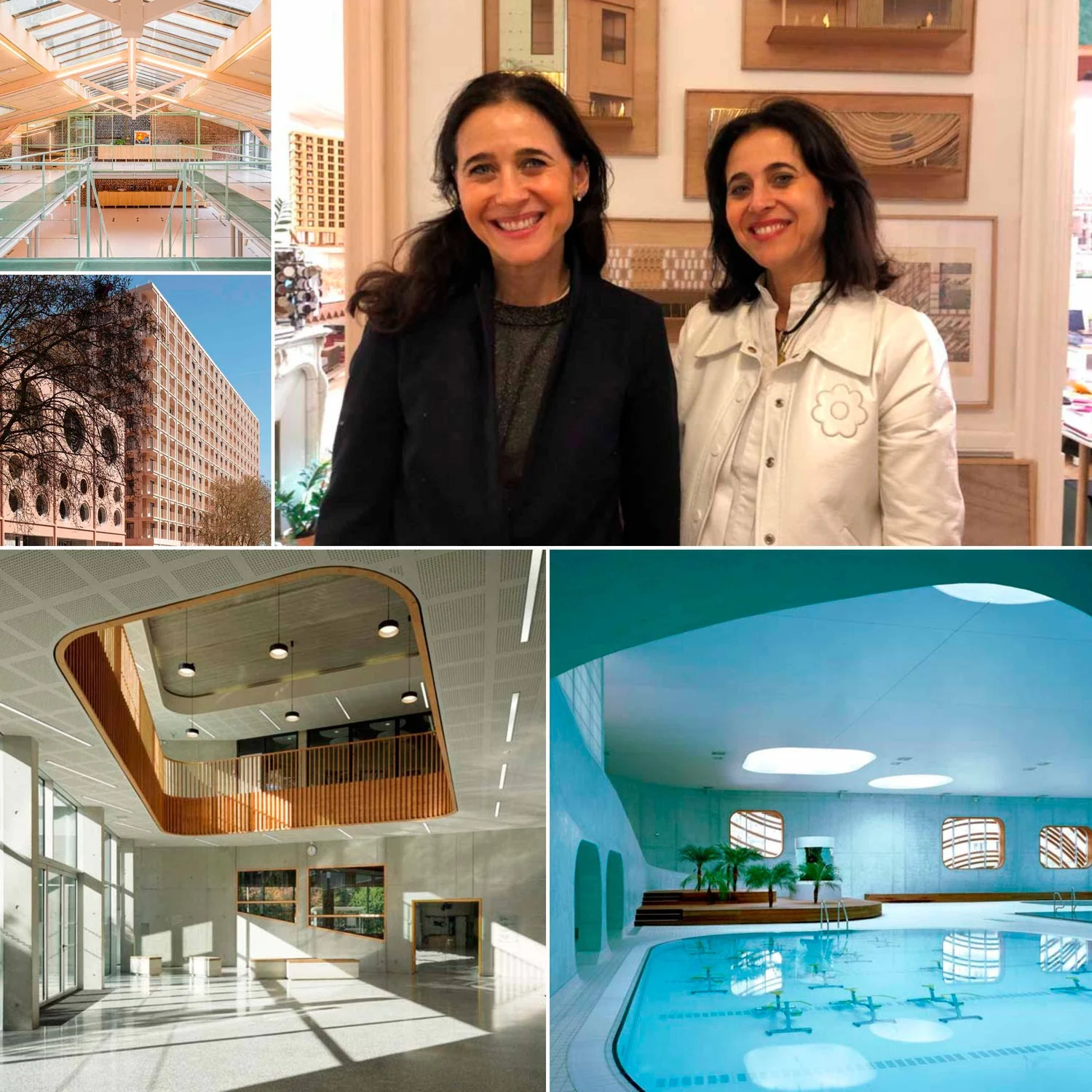
Future Cities: Building Bridges Between Memory, Nature & Architecture w/ SALWA & SELMA MIKOU

“Architecture should bring a true sensation of wellbeing. We were really lucky to experience that as children, and now as architects, we try to bring all that we learned into our practice.”Salwa and Selma Mikou are the founders of Paris-based Mikou Architecture. Born in Fez, Morocco and educated in Paris, they have spent the last two decades reimagining the relationship between the built environment and the cultural landscape.After honing their craft under two of the world’s most iconic architects, Jean Nouvel and Renzo Piano, they founded their own studio. For them, architecture is a living interaction with landscape and what they call the Atlas of Resonance, interpreting the hidden layers of a territory, geology, memory, and craft. It is a philosophy that rejects the generic, seeking instead to weave together technological innovation with local materials. Whether it is a mosque in the north of England or a hybrid innovation hub in a former royal manufactory, their work asks a fundamental question: How does space shape the way we think, learn and remember?They were selected by Rem Koolhaas to represent Morocco at the Venice Biennale. Most recently, they were commissioned by Hermès to create a 17,000-square-meter facility that bridges industrial performance with poetic expression. At the heart of their practice is a belief that architecture is not just about building—it’s about shaping relationships: between people, between past and future, between technology and craft.(0:04) The Intuitive Knowledge of Living Art(4:24) The Medina and the Geometry of Childhood(8:18) The Social Spaces of Rooftops(13:46) The Intuitive Knowledge of Living Art(15:31) Contextual Echoes & Traces of the Site(19:18) The Twin Dynamic and Confrontation with 'l'autre'(26:42) The Temples of Water(33:24) The Mosque as Pure Spatiality(38:01) The Crisis Period and Structural Systems(48:24) Building Culture with Yves Saint Laurent & Pierre Bergé(51:38) The Wast ed-dar (وسط الدار) and the Heart of a Building(57:02) Preserving the Human Core of Expression(1:04:29) Urban Acupuncture in the Modern City(1:08:46) The Smells and Sounds of Home(1:10:02) Balance, Nature, and SisterhoodEpisode Websitewww.creativeprocess.info/podInstagram:@creativeprocesspodcast

May 18, 2026Episode 125635 min

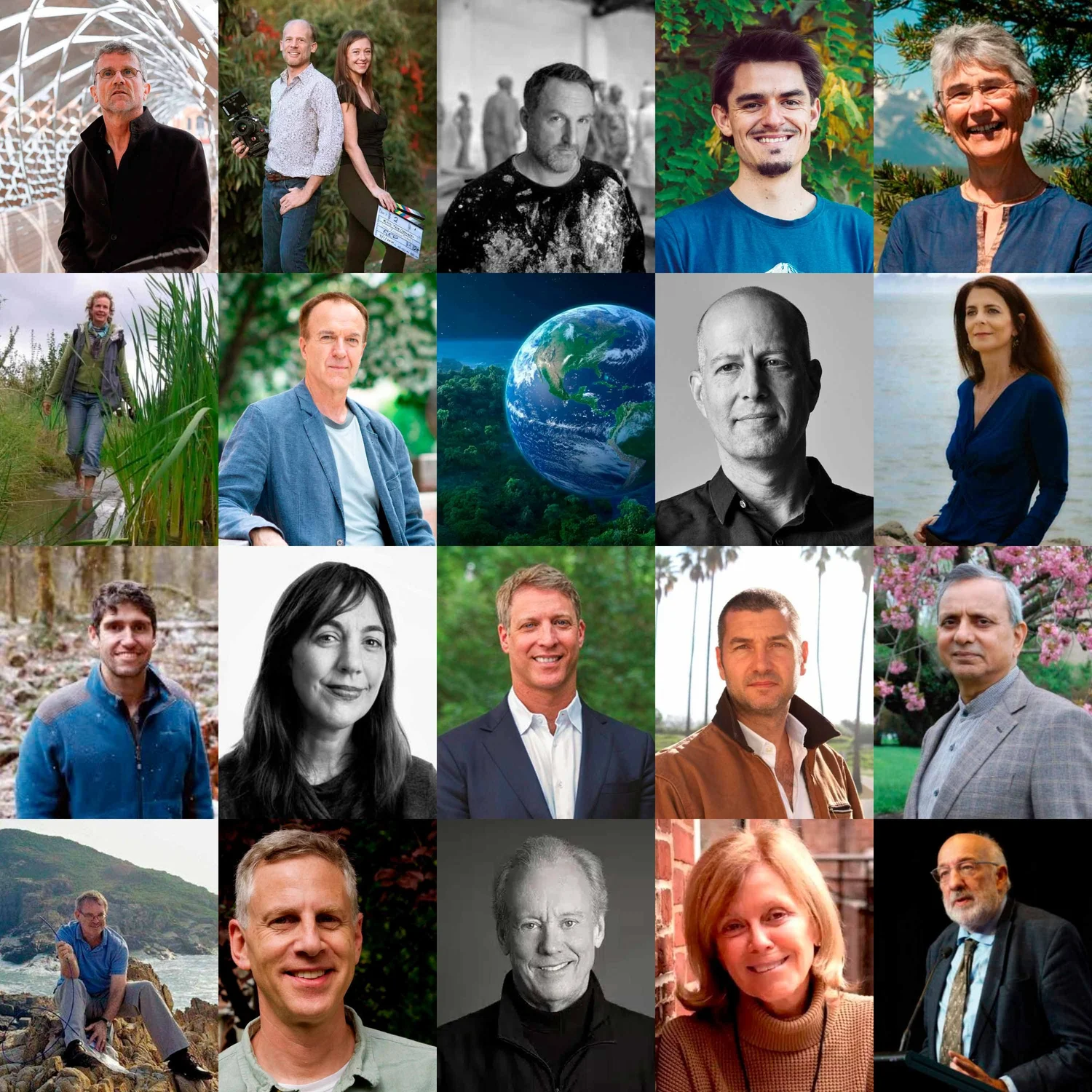
Cities of the Future: Regeneration and Redesigning Our Relationship with Nature

Today, we examine how we will adapt to a changing climate and learn to listen to the Earth.(0:00) Abrahm Lustgarten(Reporter, ProPublica) (3:00) Jon Gertner (Author, The Ice at the End of the World) (5:32) Bill Hare (CEO, Climate Analytics) (6:35) Rob Nixon (Prof. Environmental Humanities, Princeton) (8:12) Louis de Jaeger (Co-founder, Food Forest Institute) (10:06) Kathleen Rogers (Pres., EarthDay.org) (11:31) Rebecca Tickell (Filmmaker, Groundswell) (13:42) Ben Goldfarb (Author, Crossings) (14:56) Jane Madgwick (CEO, Plantlife International) (19:23) Jason deCaires Taylor (Sculptor, Underwater Museums) (21:02) William McDonough (Architect, Cradle to Cradle) (23:19) Euan Nisbet(Scientist, Royal Holloway) (26:06) Roland Geyer (Author, The Business of Less) (28:15) Ron Gonen (CEO, Closed Loop Partners) (29:34) Paul Shrivastava (Co-President, Club of Rome) (30:14) Carlo Ratti (Architect, Dir., MIT Senseable City Lab) (31:24) Osprey Orielle Lake (Founder, WECAN) (32:38) Liza Featherstone (Journalist) (33:41) Yolanda Kakabadse (Fmr. President, WWF)For more, listen to their full interviewsEpisode Site: https://www.creativeprocess.info/interviews-featured/anth-regen

April 18, 2026Episode 55622 min

Why Do We Listen to the Talkers More Than the Builders Saving the Planet? - TOM CHI - Highlights

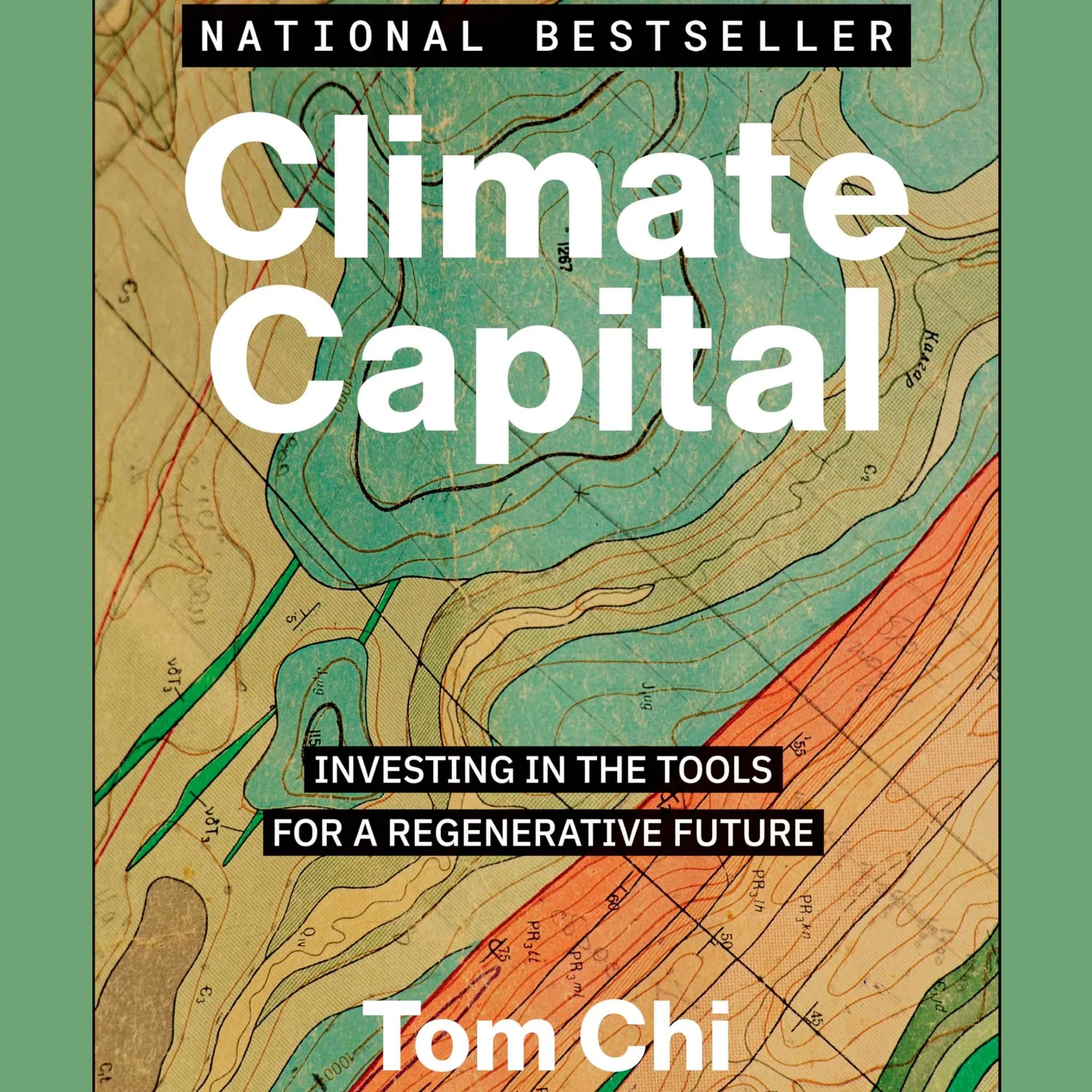
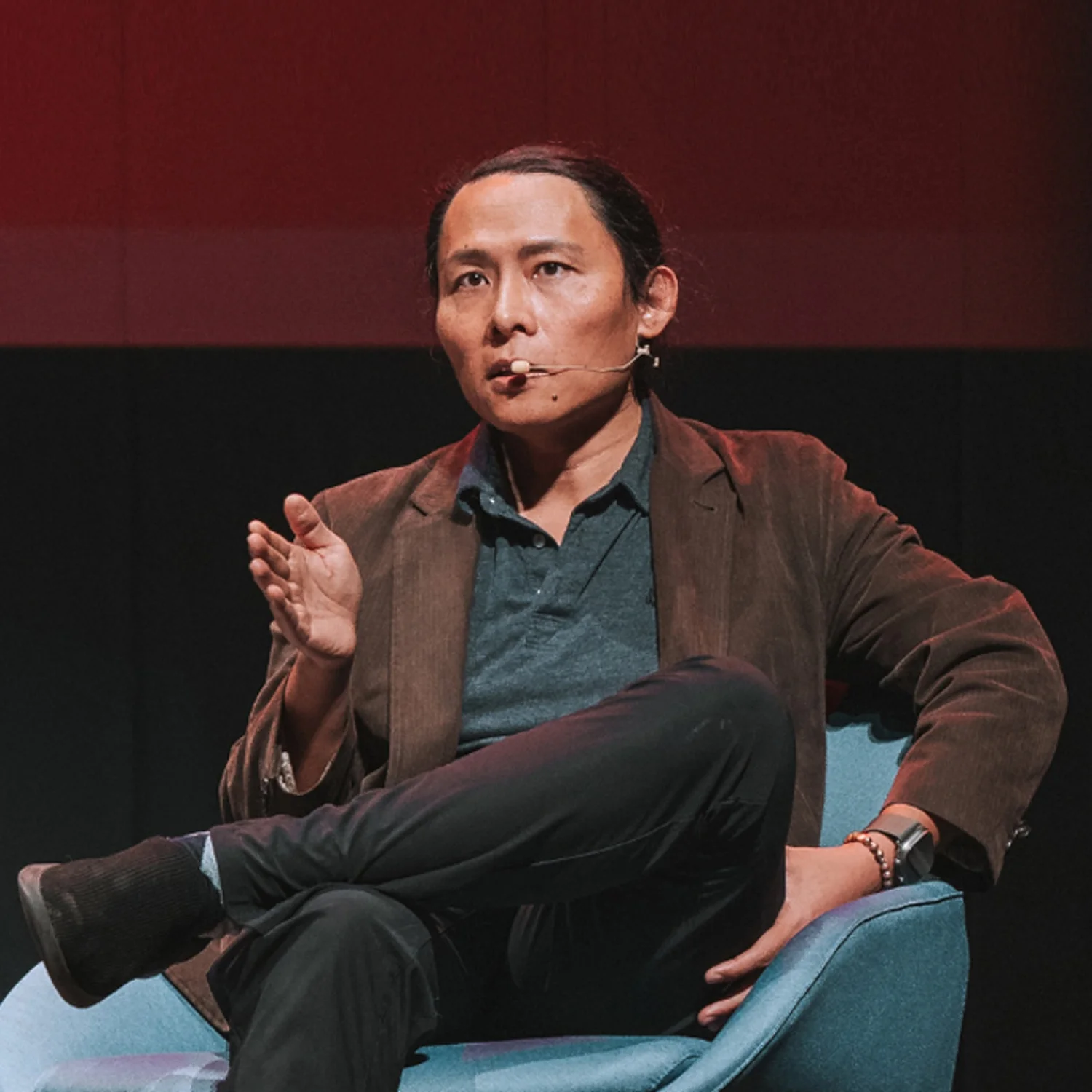
Why does our economy treat environmental destruction as an inevitable side effect rather than a massive design flaw? How can shifting our focus from polarizing "talkers" to practical "builders" literally save the planet? We are repeatedly told that the climate crisis is too vast and volatile to solve, but what if the true obstacle is simply bad design?Tom Chi is a physicist, designer, inventor, and investor whose work has shaped everything from Google Glass and rapid prototyping at Google X to some of the most ambitious climate technologies being built today. He’s now the founding partner of At One Ventures, where he invests in deep-tech companies focused on a bold goal: a world where humanity is a net positive to nature.Tom’s new book, Climate Capital: Investing in the Tools for a Regenerative Future, reframes economics itself—not as a fixed law, but as a design discipline that can be reimagined to align with the physical realities of our planet. Drawing on science, systems thinking, and lessons from nature, the book offers a grounded, practical framework for moving beyond both climate doom and empty optimism—and toward real, regenerative solutions. Today’s conversation is about what Tom calls the 4Cs: Capital, Compassion, Climate, and Community—but also about agency, responsibility, and what becomes possible when we stop treating the future as something that happens to us and start designing it deliberately.0:00) Build Integrity: Choosing Builders Over TalkersWhy prioritizing those who physically create solutions over those who merely debate them is essential for systemic change(1:21) Overcoming Powerlessness Through Creativity, Critical Thinking, Community CompassionUtilizing a specific framework of portable skills to move from climate anxiety into meaningful, iterative action(2:22) Capital Misallocation: Taxing What We Want to SeeA critique of current tax structures that burden labor while under-taxing capital and failing to serve societal needs(3:47) The Volatility Gap: Why Average Temperatures MisleadUnderstanding why increasing climate volatility—rather than just average temperature rise—is the true driver of human distress(6:19) Economics As Design: Redesigning The Global EngineMoving beyond "physics envy" in economics to treat the global market as a discipline that can be redesigned for better outcomes(9:11) Depth Over Breadth: Reforming Education Through Experience(13:30) Local Resilience: How Cities Can Lead The TransformationPractical, block-by-block strategies for urban adaptation, from expanding tree canopies to improving household efficiency(16:33) AI and Robotics in Agriculture(19:12) Human-Centric AI: Flipping The Priority Of Automation(20:18) Thinking In Pictures: A Language Beyond WordsEpisode Websitewww.creativeprocess.info/podInstagram:@creativeprocesspodcast

April 18, 2026Episode 5551 hr 27 min

Climate Capital with TOM CHI - Google X Co-founder, Founding Partner At One Ventures

“In the book I spend a bunch of time basically teaching skills and teaching frameworks of thinking. Not to indoctrinate, it's not a framework like an ideology where you need to believe exactly these things. This is a lot more about how does one use their minds effectively to solve problems that have been solved before. Of course, I work on things that have to do with investment and climate and the future of the economy and automation. The main things I'm trying to teach in the book are skills around creativity, critical thinking, community compassion and frameworks around how to go and use that on problems that should be relatively portable to a bunch of problems that are meaningful to you. The way that education needs to change is that people need to actively be working on things that truly matter to them so that over time they end up being able to go make that difference.”Tom Chi is a physicist, designer, inventor, and investor whose work has shaped everything from Google Glass and rapid prototyping at Google X to some of the most ambitious climate technologies being built today. He’s now the founding partner of At One Ventures, where he invests in deep-tech companies focused on a bold goal: a world where humanity is a net positive to nature.Tom’s new book, Climate Capital: Investing in the Tools for a Regenerative Future, reframes economics itself—not as a fixed law, but as a design discipline that can be reimagined to align with the physical realities of our planet. Drawing on science, systems thinking, and lessons from nature, the book offers a grounded, practical framework for moving beyond both climate doom and empty optimism—and toward real, regenerative solutions. Today’s conversation is about what Tom calls the 4Cs: Capital, Compassion, Climate, and Community—but also about agency, responsibility, and what becomes possible when we stop treating the future as something that happens to us and start designing it deliberately.(0:00) Overcoming Powerlessness through Creativity, Critical Thinking, Community CompassionWhy broad hopelessness about the future is a purposeful tactic to maintain the status quo.(7:16) How average temperature metrics fail to communicate the true danger of extreme climate volatility.(11:54) Economics as Design(17:11) Multi-disciplinary Learning Centered on Real-World Impact(26:12) Local Resilience(31:15) Tax & Capital Misallocation(36:52) Build Integrity(45:32) AI and Robotics in Agriculture(51:08) The First Honeybee Vaccine(56:11) The Entropy Curve of Pollution(1:15:31) Human-Centric AIFlipping the priority of automation to serve the collective good rather than enriching a select few(1:20:59) Thinking in PicturesHow learning to communicate and problem-solve without language fueled a career in deep tech inventionEpisode Websitewww.creativeprocess.info/podInstagram:@creativeprocesspodcast

April 18, 2025Episode 112012 min

Performance, Politics, Art & Society w/ Sociologist RICHARD SENNETT - Highlights

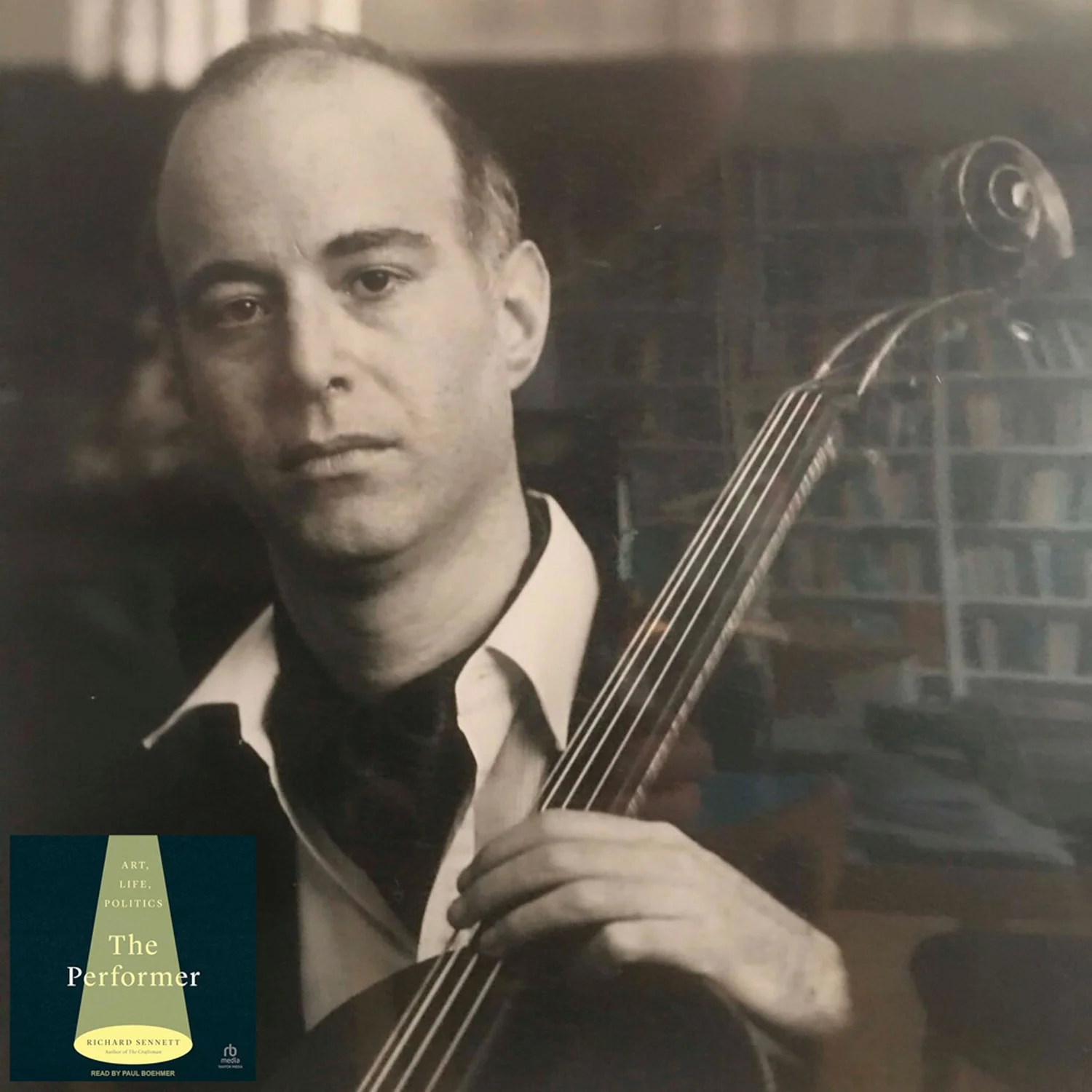
“I'm really interested in the relation between performance and ritual. Where do those two separate?”Richard Sennett grew up in the Cabrini Green housing project in Chicago, attended the Juilliard School in New York, and then studied social relations at Harvard. Over the last five decades, he has written about social life in cities, changes in labour, and social theory. His books include The Performer: Art, Life, Politics, The Hidden Injuries of Class, The Fall of Public Man, The Corrosion of Character, The Culture of the New Capitalism, The Craftsman, and Building and Dwelling. Sennett has advised the United Nations on urban issues for the past thirty years and currently serves as member of the UN Committee on Urban Initiatives. He is the Centennial Professor of Sociology at the London School of Economics and former University Professor of the Humanities at New York University.“I want to show what is kind of the basic DNA that people use for good or for ill. What are the tools they use, if you like, of expression that they use in the creative process?”Episode Websitewww.creativeprocess.info/podInstagram:@creativeprocesspodcast

April 17, 2025Episode 111931 min

The Performer: Art, Life, Politics with RICHARD SENNETT, Sociologist & Author

“We look at creative work as though the very creative process itself is something good. These are tools of expression, and like any tool, you can use them to damage something or to make something. They can be turned to very malign purposes, for instance, in the operas of Wagner. So I wanted to do this set of books, I want to show what is kind of the basic DNA that people use for good or for ill. What are the tools they use, if you like, of expression that they use in the creative process?”Richard Sennett grew up in the Cabrini Green housing project in Chicago, attended the Juilliard School in New York, and then studied social relations at Harvard. Over the last five decades, he has written about social life in cities, changes in labour, and social theory. His books include The Performer: Art, Life, Politics, The Hidden Injuries of Class, The Fall of Public Man, The Corrosion of Character, The Culture of the New Capitalism, The Craftsman, and Building and Dwelling. Sennett has advised the United Nations on urban issues for the past thirty years and currently serves as member of the UN Committee on Urban Initiatives. He is the Centennial Professor of Sociology at the London School of Economics and former University Professor of the Humanities at New York University.Episode Websitewww.creativeprocess.info/podInstagram:@creativeprocesspodcast

September 21, 202423 min

Future Cities, Utopian Visions & Embracing Imperfection - SCOTT DOORLEY & CARISSA CARTER - Co-authors of Assembling Tomorrow - Highlights

“Today, someone is putting the finishing touches on a machine-­ learning algorithm that will change the way you relate to your family. Someone is trying to design a way to communicate with animals in their own language. Someone is designing a gene that alters bacteria to turn your poop bright blue when it’s time to see the doctor. Someone is cleaning up the mess someone else left behind seventy years ago yesterday. Today, someone just had an idea that will end up saving one thing while it harms another…To be a maker in this moment—­ to be a human today—­ is to collaborate with the world. It is to create and be created, to work and be worked on, to make and be made. To be human is to tinker, create, fix, care, and bring new things into the world. It is to design. You—­ yes, you!—­ might design products or policy, services or sermons, production lines or preschool programs. You might run a business, make art, or participate in passing out meals to the poor. You may write code or pour concrete, lobby for endangered species legislation or craft cocktails. Wherever you fit in, you are part of shaping the world. This is design work.”– Assembling TomorrowA Guide to Designing a Thriving FutureScott Doorley is the Creative Director at Stanford's d. school and co author of Make Space. He teaches design communication and his work has been featured in museums and architecture and urbanism and the New York Times. Carissa Carteris the Academic Director at Stanford's d. schooland author of The Secret Language of Maps. She teaches courses on emerging technologies and data visualization and received Fast Company and Core 77 awards for her work on designing with machine learning and blockchain.  Together, they co authored Assembling Tomorrow: A Guide to Designing a Thriving Future.www.scottdoorley.comwww.snowflyzone.comhttps://dschool.stanford.edu/www.penguinrandomhouse.com/books/623529/assembling-tomorrow-by-scott-doorley-carissa-carter-and-stanford-dschool-illustrations-by-armando-veve/www.creativeprocess.infowww.oneplanetpodcast.orgIG www.instagram.com/creativeprocesspodcast

March 22, 202310 min

Highlights - MANUELA LUCÁ-DAZIO - Exec. Director of Pritzker Architecture Prize - Fmr. Exec. Director of Venice Biennale, Visual Arts & Architecture Dept.

“I think the Pritzker Architecture Prize has the power to foster and enhance the discussion on the one end. And on the other end, it has also the power to involve a more global discussion. So it's not just limited to architects because ultimately architecture is what we live in and we use every day of our lives. So all of us should be involved in this discussion. It's really a common responsibility where the architect, who from my point of view is the translator and the interpreter and the catalyst of all this. So we should rethink what sustainability is and combine the art of architecture and the benefits to humanity and the built environment. This, I think, is a lesson for every single architect from all over the world.”Manuela Lucá-Dazio is the newly appointed Executive Director of the Pritzker Architecture Prize. In this capacity, she works closely with the jury, however, she does not vote in the proceedings. She is the former Executive Director, Department of Visual Arts and Architecture of La Biennale di Venezia, where she managed exhibitions with distinguished curators, architects, artists, and critics to realize the International Art Exhibition and the International Architecture Exhibition, each edition since 2009. Preceding that, she was responsible for the technical organization and production of both Exhibitions, beginning in 1999. She holds a PhD in History of Architecture from the University of Roma-Chieti, Italy and lives in Paris, France.www.pritzkerprize.com www.pritzkerprize.com/jury#jury-node-2236 www.labiennale.org/enwww.creativeprocess.info www.oneplanetpodcast.org IG www.instagram.com/creativeprocesspodcast

May 31, 20229 min

Highlights - Nicholas Christakis - Author of “Blueprint” - Dir. - Human Nature Lab, Yale

“So cities are amazing. Now, why are they amazing? Well, there's one aspect that relates to some of the work that my lab does on human social interactions, which is the main focus of what my lab does. We look at the mathematical, biological, psychological, and social underpinnings and consequences of human social interactions...As the size of the population grows, the combinatorial complexity, the network complexity rises superlinearly. So a city that's 10 times the size has a hundred times as many social possible social connections. And it's the social connections between people that lead to the creation of new ideas, people mixing and bumping into each other with different occupations and different business ideas, and different ways of life. So one of the ideas about cities is that they are these creative places and, as they get bigger and bigger, they get more and more creative. That's just one thought that connects networks to cities in the 21st century”Nicholas Christakis, MD, PhD, MPH, is a social scientist and physician who conducts research in the areas of biosocial science, network science and behavioral genetics. He directs the Human Nature Lab at Yale University and is the co-director of the Yale Institute for Network Science. Dr. Christakis has authored numerous books, including Blueprint: The Evolutionary Origins of a Good Society published in 2019 and Apollo's Arrow: The Profound and Enduring Impact of Coronavirus on the Way We Live published in 2020. In 2009, Christakis was named by TIME magazine to their annual list of the 100 most influential people in the world.Nicholas Christakis humannaturelab.net/people/nicholas-christakisHuman Nature Lab: humannaturelab.netYale Institute for Network Science yins.yale.edusociology.yale.edu/people/nicholas-christakisBlueprint: The Evolutionary Origins of a Good Society Apollo's Arrow: The Profound and Enduring Impact of Coronavirus on the Way We LiveTRELLIS - Suite of software tools for developing, administering, and collecting survey and social network data: trellis.yale.edu.The Atlantic: “How AI Will Rewire Us: For better and for worse, robots will alter humans’ capacity for altruism, love, and friendship”www.theatlantic.com/magazine/archive/2019/04/robots-human-relationships/583204/www.creativeprocess.infowww.oneplanetpodcast.org

Is this your show?

Claim this listing to keep it up to date, reach guests who want to pitch you, and manage bookings with Guestify.

Claim this listing

More Technology podcasts