Flocode: Engineering Insights dives into the dynamic intersection of Python coding and engineering. Tailored for civil and structural engineers, this podcast uncovers practical coding applications, explores AI tools, and delves into broader engineering topics. While it complements our newsletter, expect a more spontaneous and lively dialogue. Join us for a journey of discovery at flocode.dev flocode.substack.com
Listen to episodes
17 recent
September 8, 202652 min
#106 - Podcast - Tim Rawling | CalcTree in 2026
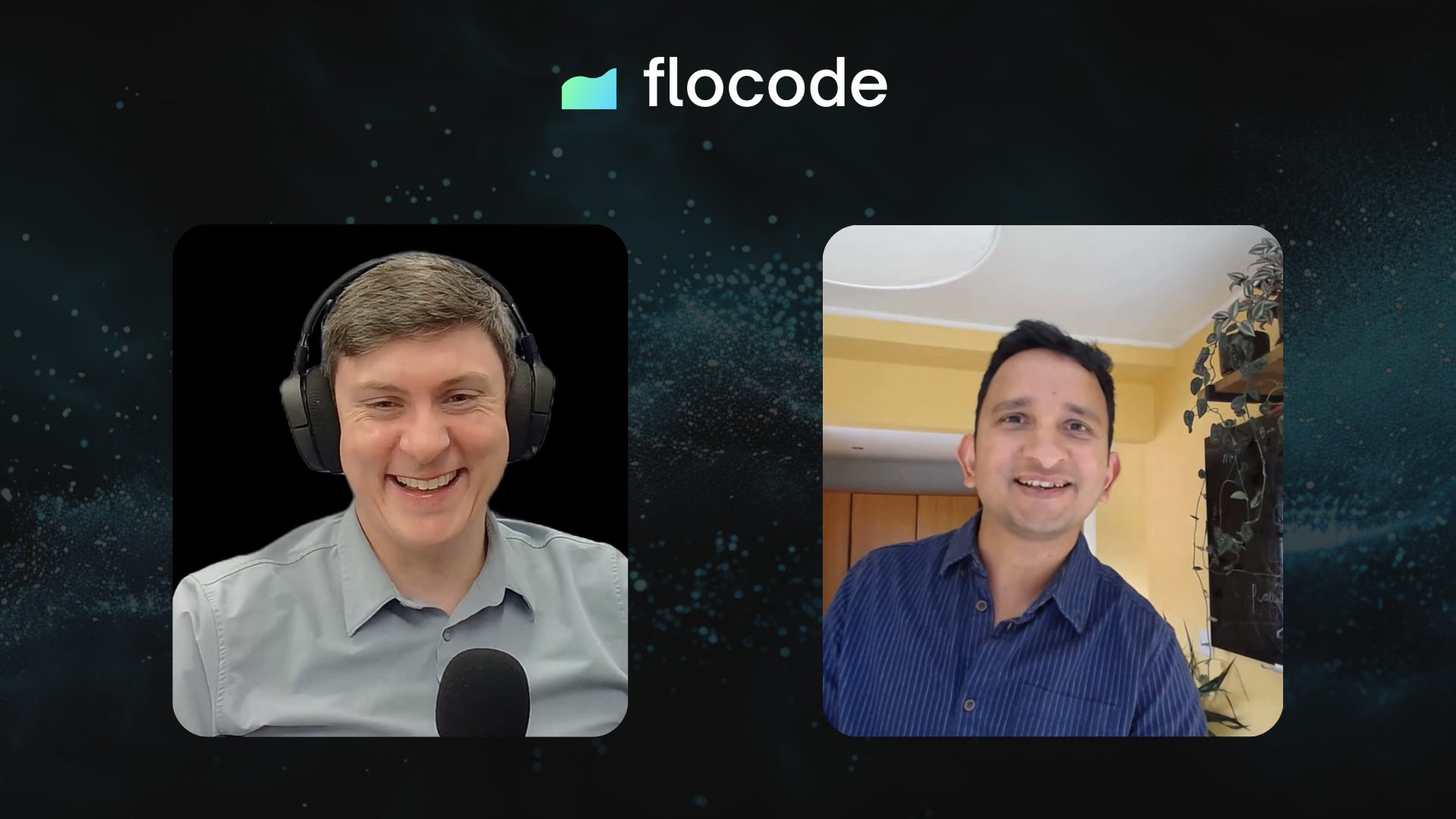
This episode’s guest is Tim Rawling, a Founder at CalcTree , a calculation management platform now about four years old. He was on the podcast a couple of years ago, not long after he started there, when the product was positioned as calculation tool that had interesting collaboration and management capabilities. Here we are, two years later and he’s covered a lot of ground since then. Tim is based in Australia and spends a lot of time talking to global engineering firms about the same set of problems. He is also still on the tools, pushing code and testing workflows, which makes this a worthwhile conversation. We are working on adjacent problems from different directions, and it’s fascinating to explore how we are all riding these waves of innovation and change together. CalcTree sits somewhere between Notion and Mathcad. Pages are markdown, calculations run on MathJS with native unit arithmetic, and there is a Python engine behind the page for anything the calculation library does not cover. Multiple people can work the same page live. The AI layer builds calculations, reviews them, and reads from a vectorized workspace knowledge base so it produces work in the context of your own standards and checklists. Before the call I sent Tim two unlabeled datasets and a Python script with no context. In the episode he turns that into a run-of-river hydro report on the platform, pretty cool. Other ground covered: * Adopting a tool like this and making decisions with so many options * Model selection inside the platform, and how effort and thinking settings trade against a monthly token allowance * The billable hours problem. If the work takes less time, what happens to the fee. * Linked references, so a reviewer can click a code clause in a calculation and land on the actual table with its surrounding context rather than a screenshot * The dependency graph view, and what it’s for * Quality assurance and control. I recommend subscribers take a look for themselves, CalcTree is a powerful platform and full of useful features for team-based engineering work. There is a generous free tier with access to the built-in template library, which contains around a hundred calculations across Australian, US and European codes. Tim like the GLM models, GLM 5.3 has recently released and I think it’s a great model too. Worth checking out on Fireworks . Great to speak with Tim, as always. See you in the next one.James 🌊 Get full access to Flocode: Engineering Insights 🌊 at flocode.substack.com/subscribe
Welcome back to another episode of the Flocode Podcast ! Today, we're kicking off 2025 with a deep dive into open-source tools for structural engineering. Our guest is Morten Engen , a civil engineer at Multiconsult and Adjunct Associate Professor at the Norwegian University of Science and Technology (NTNU) . Morten is the lead developer of Structural Codes , an open-source Python library which paves a new path for how engineers approach capacity based design. This episode is a live, hands-on demonstration, almost like a webinar, where Morten walks us through Structuralcodes, complete with practical coding examples and insights. Whether you're a seasoned python programmer or just getting started, you'll gain valuable knowledge about bridging engineering, coding and how our design codes are shaped. Show Notes: * Episode Highlights : * Welcome to the Flocode Podcast and introductions. * About Dr. Morten Engen: career journey and academic background. * What is Structural Codes, and why was it developed? * An overview of the library: focusing on Eurocode 2 and reinforced concrete. * Challenges and inspirations in maintaining an open-source capacity tool. * Practical workflows: integrating Structural Codes with engineering tools like FEM software. * Live coding walkthrough: setting up and using Structural Codes. * Expanding to other codes like ACI and Canadian standards. * Modular architecture and customization for unique engineering needs. * Encouraging community contributions and future plans for Structural Codes. * Key Links : * Structural Codes Documentation * GitHub Repository for Structural Codes (Star it, fork it, provide feedback and commentary!) * FIB Model Code Information * Connect with Morten Engen on LinkedIn I really appreciate Morten’s efforts in leading the structuralcodes project. It’s a fantastic contribution to our industry and I hope that Flocode listeners investigate it, use it and ultimately help to shape it with practical feedback and suggestions. This is my own personal intent as well. I am working toward implementing aspects of ACI 318-19 and CSA A23.3. If anybody is interested in helping with this, get in touch. Thanks to Morten for sharing his excellent work and thank you all for your time and attention. See you in the next one. James 🌊 Get full access to Flocode: Engineering Insights 🌊 at flocode.substack.com/subscribe
Hello everyone, welcome back to another episode of the Flocode Podcast! Today, I’m joined by Peter Debney, a chartered structural engineer with over 35 years of experience in both engineering practice and engineering software development. Peter has worked extensively with Arup as part of their Oasys software team, contributing to some of the most advanced solutions for finite element analysis (FEA), structural design, and crowd simulation. Peter is also the author of one of my favorite engineering books, ‘ Computational engineering ’. It’s the first engineering book that I’ve read in a long time that made me smile. Full of practical advice and ‘engineeringisms’ that help you think more clearly. I read it on my phone during my daily commute over a few weeks. Loved it. IStructE Online Store | Peter Debney - Computational engineering Topics Covered in ‘ Computational engineering ’: * Design (including parametric design) * Modelling (and its problems) * Analysis (basics and methods/linear, nonlinear, and dynamic) * Optimization * AI and machine learning * The future of engineering software I highly recommend Peter’s book to all structural engineers. It’s full of invaluable advice and insights on how to think critically about engineering and approach problems in the most practical way, and not just in relation to computational design. I wish there were more books like it. We dive into some of these topics today, but we'll also be discussing Peter's career journey, how he transitioned from traditional structural engineering to becoming a domain expert in computational design, and his involvement with the Institution of Structural Engineers (IStructE), where he’s currently the Chair of the Yorkshire Regional Group and a member of the Digital Workflows and Computational Design Panel. We talk about the increasing role of automation, machine learning, and AI in engineering workflows, and how computational tools are shaping the future of the industry. Peter shares his insights on avoiding common pitfalls in FEA models and the benefits of understanding structural behavior before relying on software. We explore the mindset required for modern engineers to succeed in a world that increasingly relies on computational approaches. Peter offers great advice for young engineers on how to approach computational design, mastering problem-solving techniques, and even how learning a musical instrument can improve your understanding of dynamics in structural engineering. Links to items discussed: * Sydney Opera House 50 years on (A great read) * Confessions of a Computational Engineer (Peter’s talk for IStructE on his career path) * https://www.oasys-software.com/ (Oasys Structural Software) I also want to acknowledge Peter's inspiring journey. He has overcome significant personal challenges, including dyslexia and speech barriers, and has become a powerful advocate for progression and adaptive approaches to neurodiversity in our profession. Another great discussion with a fascinating character. These podcasts are a lot of fun and I appreciate the kind words from everybody, wherever you are on the planet. I loved Peter’s book. It reminded me of the great ‘Structures: Or Why Things Don't Fall Down’ by JE Gordon . Another great read and one that Peter noted as an inspiration. I always welcome recommendations for new books, please comment below with your suggestions. See you in the next one! James 🌊 Get full access to Flocode: Engineering Insights 🌊 at flocode.substack.com/subscribe
Hi all 👋, Welcome back. Today I’m speaking to my friend, Connor Ferster. Connor has been operating in the Python for Engineering space for a few years now and has become a leading voice. He is the founder of StructuralPython . He is the author of the highly regarded StructuralPython course, which teaches engineers practical, Python-based solutions to streamline workflows and address real-world challenges in structural design. His next project, Engineering Automator , digs into engineering automation, guiding engineers on integrating custom Python solutions into their specific work environments for optimal efficiency and giving you a chance to maintain your sanity amidst the ever-increasing demands of the industry. In this episode, we discuss: * Engineering toolkits and workflow automation * Python for complex structural calculations * Open-source tools in structural engineering * Educational gaps in engineering with Python Connor is also a key contributor to the open-source engineering community. His python libraries, handcalcs and forallpeople , are popular engineering tools. * handcalcs renders LaTeX math expressions in a way that mirrors traditional handwritten math (like MathCad). * forallpeople is a robust units management library simplifying the complexity of unit conversions. These open-source projects not only demonstrate his technical approach but highlight his dedication to making engineering tools more accessible to everyone. He’s an open book, pushing things forward. That’s what it’s all about. Connor also contributes to the development of Pynite , an open-source structural analysis library led by Craig Brinck. Listen to episode on Pynite here 🔗🎙. Connor is helping to formalize and drive consistency in Pynite, making it even more accessible and reliable to structural engineers worldwide. Recently, he left his position at RJC Engineering here in Vancouver to focus on StructuralPython full-time, and I’m excited to see what new ideas, courses, and tools he’ll come up with, given the extra bandwidth. Check out his recent series of interviews with engineers who have used Python to create their own workflow solutions. It’s always a pleasure to speak with him and I hope our listeners take a closer look at his work and upcoming Engineering Automator course, his waitlist is currently open. You can also go to https://engtoolkit.com to get your free: * PDF framework for building your own automated engineering toolkit * Links for Connor’s full, unlisted, video interviews Connor is always welcome on this podcast, and I look forward to following his journey in the years to come. See you in the next one. James 🌊 Get full access to Flocode: Engineering Insights 🌊 at flocode.substack.com/subscribe
October 15, 20241 hr 11 min
#046 - Flocode Podcast 🌊 | Liam Brannigan - Data Science and Civil/Structural Engineering
Welcome back to another episode of the Flocode Engineering Insights Podcast. Today, I’m speaking with Liam Brannigan. Liam is an experienced data scientist, fellow Irishman, and the creator of an excellent course on Polars, one of Python’s fastest-growing data manipulation libraries. Liam is also a contributor to Polars fantastic documentation . In this episode, we’ll be taking a bird’s-eye view of the data science landscape and exploring how it can benefit practicing engineers. Liam brings excellent insights from his diverse career across multiple domains, spanning everything from finance to oceanography and now, data engineering. * Check out Liam’s course here: Data Analysis with Polars * I have taken Liam’s course on Polars, it’s concise, clear and easy to implement. While I still use Pandas, I am using Polars more and more as my data sets increase in size and fidelity and as I gain comfort in the methods. It’s very similar to Pandas, the transition is pretty smooth for the most part - will talk about this in more detail soon. * Follow Liam on LinkedIn . We dive into why data science is becoming more important for modern engineers, the advantages of using tools like Polars and Pandas, and how these technologies can improve workflows, boost efficiency, and handle larger datasets more effectively than traditional tools like Excel. I had a great chat with Liam, because of this broad background he is uniquely positioned to understand the pros and cons of data engineering principles in a civil/structural engineering context. There’s a lot of great information in this episode. Huge thanks to Liam for coming on the podcast, really enjoyed it. See you in the next one! James 🌊 Get full access to Flocode: Engineering Insights 🌊 at flocode.substack.com/subscribe
In today’s episode, I welcome Ramaseshan Kannan, the Head of Computational Science at Arup and a Royal Academy of Engineering Industrial Fellow. With a PhD in Numerical Linear Algebra from the University of Manchester and a career that spans both industry and academia, Ramaseshan is at the forefront of research in our industry as it relates to computational science, machine learning, and numerical analysis. * Connect with Ramaseshan Kannan | LinkedIn At Arup, Ramaseshan drives the development of advanced algorithms and finite element solvers, bringing innovation to the built environment. His work is a powerful blend of theory and practice, pushing the boundaries in high-performance computing, uncertainty quantification, and optimization. This area of research is one of deep personal interest to me. While Ramaseshan delves into the underlying theory and mechanics, myself and many others are on the other side of the fence, trying to implement the types tools and ideas that he creates into practical applications for our clients and projects. It’s an exciting time to be in engineering, as more tools are becoming available that are increasingly approachable, though each comes with its own learning and opportunity costs. The decisions we make about which tools to invest our time in are crucial—and often, it’s only in hindsight that we understand their true value. But such is the art of progress, it’s only after the fact we realize we were banging our head against the wall. My conversation with Ramaseshan was both inspiring and thought-provoking. I had a fantastic discussion with him, and I look forward to our next conversation. He’s a remarkable thinker, and I’m eager to see where his ideas and his work will lead. Thank you for being part of the Flocode community. It’s been a lot of fun so far. I will have more announcements soon. See you in the next one. James 🌊 Notes: * What Could Possibly Go Wrong? Meta Tools for Digital Tools and Workflows 🛠️ - By Ramaseshan Kannan * CSIC Research Talk by Dr Ramaseshan Kannan “Blending data-and computational sciences for sustainability” * Royal Academy of Engineering Ramaseshan spoke briefly about the potential of LLM’s in the geometry or parametrization space and since our conversation, I found the following: World Labs , a newly formed company, said Friday (Sept. 13) that it has raised $230 million to build large world models (LWMs) that “perceive, generate and interact with the 3D world.” “We aim to lift AI models from the 2D plane of pixels to full 3D worlds — both virtual and real — endowing them with spatial intelligence as rich as our own,” the company said in a Friday post on LinkedIn. Source: World Labs Raises $230 Million to Build Spatially Intelligent AI Pretty interesting! Get full access to Flocode: Engineering Insights 🌊 at flocode.substack.com/subscribe
September 3, 202454 min
#042 - Flocode Podcast 🌊 | Craig Brinck - Pynite and Finite Element Analysis in Python
Todays guest is Craig Brinck. The mastermind behind Pynite, my favourite structural analysis library for Python. Craig is a Senior Structural Engineer at Carollo Engineers, based in Herriman, Utah, with a Master’s degree from the University of Utah. During our conversation, Craig shares the story behind Pynite—how it evolved from his early experiments in Excel and VBA to a robust Python package that simplifies structural analysis. I am a big fan of Pynite, I think it’s an incredibly useful and flexible tool for Structural Engineers. It’s free, powerful and open-source. What more could you want? Some of my favourite features include: * Fast and easy frame analysis. * Well crafted functions and methods to build models quickly and gain insights. * Great Documentation. * Visualizations and Plotting. Whether you're dealing with beams, columns, or plates, Pynite is designed to be a lean and accessible tool for engineers who want to dive deep into finite element analysis without the licensing requirements of commercial software. It’s an open book, with fully visible source code. It was a very interesting discussion for me personally, since I’ve been using Pynite myself for a number of years and have always looked forward to discussing it with Craig. Craig has extended an open invite to the Flocode Community to assist in the maintenance and future development of Pynite. * Pynite GitHub * Pynite Documentation * Craig’s LinkedIn If you are interested or have some ideas, changes or practical examples you would like to share, make sure to open up the discussion at: https://github.com/JWock82/PyNite/discussions I plan to share some more of my own insights on Pynite soon. Thank you for being a part of Flocode. See you in the next one. James 🌊 Get full access to Flocode: Engineering Insights 🌊 at flocode.substack.com/subscribe
August 13, 202458 min
#039 - Flocode Podcast 🌊 | Dr. MZ Naser - Machine Learning in Structural Engineering
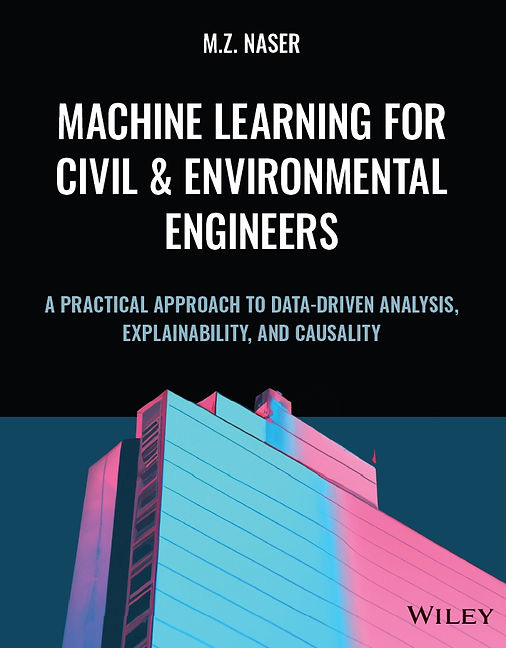
Welcome back to the Flocode Podcast! I’m excited to welcome Dr. MZ Naser, an assistant professor at Clemson University. Dr. Naser is a leading expert in integrating advanced technologies in civil and structural engineering, with a PhD from Michigan State University. His research focuses on many applications of ML in Engineering and his primary focus for this PhD was on fire engineering and the shear response of composite steel girders exposed to fire. He has authored several influential books, including: * Machine Learning for Civil and Environmental Engineers This book was my introduction to Dr. Naser’s work. It contains an excellent overview of the ML landscape and is a great starting point for engineers interested in ML. * Interpretable Machine Learning for the Analysis, Design, Assessment, and Informed Decision Making for Civil Infrastructure * Leveraging Artificial intelligence into Engineering, Management, and Safety of Infrastructure In this episode, we discuss the rapid advancements in machine learning and its potential to revolutionize civil engineering. Dr. MZ Naser shares his perspective on the current state of machine learning and its practical applications in the engineering sector. The discussion concludes with advice for engineers on how to start learning machine learning and its potential future impacts on the industry. This is a topic I really enjoy and I believe we will see adoption of ML tools increase exponentially over the coming years as the industry realizes the practical benefits and relative ease of adopting these tools. For those interested in the basics of Machine Learning, check out a previous Flocode article that covers the fundamentals of Linear Regression: #003 - Machine Learning for Civil and Structural Engineers | 01: The Fundamentals Important Links: * Visual Introduction to Machine Learning - Check this out, very cool. * LinkedIn: Dr. MZ Naser * Personal Website: Dr. MZ Naser * Dr. MZ Naser - Clemson University Faculty Page I had a great time talking to Naser and I look forward to our next discussion! If any subscribers have guest recommendations or specific topics they would like me to explore, please let me know in the comments. See you in the next one! James 🌊 Get full access to Flocode: Engineering Insights 🌊 at flocode.substack.com/subscribe
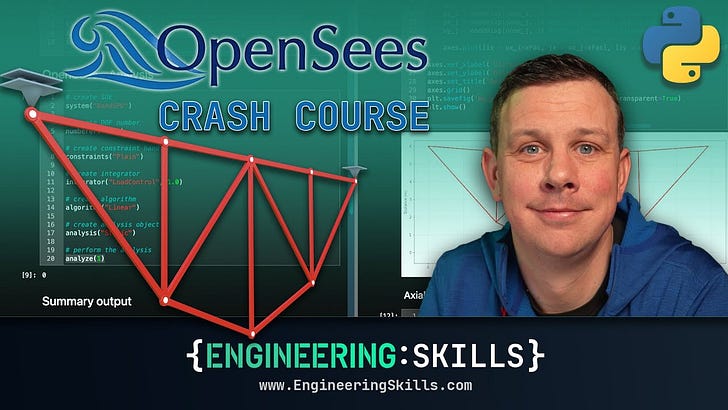
Hello everybody, I hope you’re all thriving out there! I’m back with another podcast episode, speaking to Dr. Seán Carroll. Dr. Carroll is a chartered engineer and founder of engineeringskills.com , where he teaches a broad range of structural engineering courses, many of which include Python and other open-source tools. With a Ph.D. in Civil Engineering Dynamics from the University of Nottingham, he has extensive experience in higher education, including: * Senior Lecturer in Structural Engineering at the University of Exeter * Assistant Professor in Structural Engineering at the University of Warwick Dr. Carroll has helped over 20,000 online learners enhance their skills. His courses are designed for both students and professionals, offering practical applications of structural dynamics, finite element analysis, concrete/steel design and much more. There is a wealth of information from basic to advanced topics and many of the courses employ Python to demonstrate practical examples or key concepts. This is an excellent resource for anybody who feels the need to brush up on or expand their technical understanding of core engineering concepts. Often, we are buried in code requirements and project specifications, and get lost in the minutiae. A solid grasp of the fundamentals is the cornerstone of effective engineering. Join Dr. Carroll on engineeringskills.com and take a look at the course library . Seán has provided a 30% off link for the Flocode Community, valid until the end of August 2024. Please use: FLOCODE30 I’m a member of EngineeringSkills and have taken a number of Seán’s courses. His material is thorough, clear and excellently presented. He got me started on Blender , a fantastic 3D modelling tool that has become a great addition to my toolbox, particularly for building complex FE and CFD models with irregular geometry. I’ve also leaned on his ‘Multi-Degree of Freedom Dynamics, Modal Analysis and Seismic Response Simulation in Python’ course as well as a few others. You can connect with Seán on LinkedIn and Youtube . Check out his fantastic introduction to OpenSeesPy . We had a great chat and I look forward to doing it again. See you in the next one. James 🌊 Get full access to Flocode: Engineering Insights 🌊 at flocode.substack.com/subscribe
June 14, 202427 min
#033 - A Discussion on Engineering Skills
The ‘Insights’ series is a broader look at engineering. We will explore some ideas, philosophies and lessons learned. Today, we dig into some key skills for professional engineers. While these might not be the definitive top skills, they are important. I have included the article below if you prefer to read rather than listen. I execute some side missions during the podcast, so some additional topics are covered exclusively in the audio version. In this episode, I share what I believe are pivotal skills for engineers. It's important to note that these views are my own and may not align with the broader industry consensus. Every engineer has unique experiences and perspectives, contributing to a diverse range of valid opinions. I offer one viewpoint among many. We'll be exploring: * Cross-disciplinary understanding * System-level thinking * Adaptability in problem-solving * Ethical engineering * Storytelling and visualization * Plus, a bonus skill: Managing personalities and conflicts These skills are more than just theoretical concepts; they're practical tools that can significantly advance your efficacy as an engineer. Books Mentioned * "The Obstacle Is the Way" by Ryan Holiday - Goodreads * "The Feynman Lectures on Physics" by Richard Feynman - Goodreads * "Six Easy Pieces" by Richard Feynman - Goodreads * "Sapiens: A Brief History of Humankind" by Yuval Noah Harari - Goodreads Your thoughts and perspectives are valuable; please add your comments. James 🌊 Interdisciplinary Understanding The crux of my message revolves around the interdisciplinary nature of engineering projects. Professionals in civil, structural, mechanical, geotechnical, and electrical engineering are often highly specialized in their domains. However, a broader understanding of how these areas intersect becomes pivotal, especially when coordinating complex designs. Think of it as a Venn diagram, where each circle represents a different engineering discipline. The overlap, though seemingly small, is where the magic happens. Being fluent, or even moderately conversant, in these overlapping areas offers a significant edge in managing and orchestrating intricate projects. It's a universal truth in engineering or any organization, for that matter. A few examples that come to mind. * Mechanical and structural discussing operating loads for pumps/valves/support systems. * Prefab components or modular engineered solutions being installed into a larger global structure. * Equipment suppliers and issues surrounding weight, access, constructability, sequencing, lead times, etc. * Environmental review or community engagement * Lab testing or more specialist work like specific concrete mix design, interpreting instrumentation data, or other sub-disciplines often engaged on larger projects. The gaps between these specializations and the often loosely defined scope limits are where the challenges instantiate themselves {🐍👀}. So, why is this cross-disciplinary fluency so crucial? Simply put, it's about aligning diverse objectives that, while distinct, often intertwine with the work of other teams. By understanding these connections, we can navigate the complexities of collaboration more effectively. Every project I've been part of has reaffirmed this. A broad grasp of various fields doesn't just add value—it's often the linchpin in transforming a complex project from a jumble of individual efforts into a well-oiled machine. Systems Level Thinking In a past episode , we discussed the parallels between programming and engineering and some viable problem-solving strategies in both. Systems-level thinking is another great example. Systems-level thinking is an analytical approach to understanding complex systems by examining the linkages and interactions between the components that comprise the entirety of that system. It’s about seeing the 'big picture' rather than focusing on individual elements in isolation. Key aspects of system-level thinking include: * Interconnectedness: Recognizing that changes in one part of a system can have ripple effects throughout the entire system. * Holistic Perspective: Focusing on the whole system rather than just its individual parts. * Contextual Awareness: Understanding how external factors, such as environmental, social, or economic elements, impact the system. * Feedback Loops: Identifying how actions within the system produce reactions which may influence future actions. * Dynamic Nature: Appreciating that systems are constantly evolving and that solutions may need to adapt over time. Imagine it as adjusting a lens. One moment, you're zoomed in, immersed in the intricate details of your design – the specifications, the technical requirements. You're focused on the minutiae, ensuring every aspect of your work is heading in the right direction. But, at a moment's notice, you need to zoom out. You shift from a micro to a macro perspective, taking in the entire landscape of the project. Why is this shift significant? Because the decisions you make in those detailed designs don't always exist in isolation. They can ripple through the project. For instance, a small change in your design could lead to significant alterations in geometry, impacting other team members' work. It might necessitate logistical shifts or even affect procurement timelines. This is where system-level thinking intersects with interdisciplinary understanding. It's about recognizing that your piece of the puzzle is part of a larger one. Fractal puzzle pieces, if you will. This constant reframing – moving between the granular details and the overarching project goals – requires cognitive flexibility and a broad understanding of engineering principles. Who's affected by your decisions? How do your actions impact the timeline, the budget, and the overall project flow? It's about wearing different hats, understanding different perspectives, and always being ready to adjust your approach based on the project’s evolving needs. It is important to appreciate that this skill develops over time as you gain experience. However, asking the right questions and keeping this concept in mind will accelerate this process considerably. Adaptability in Problem-Solving Consider the early stages of a project: brainstorming sessions ensue, conceptual designs are outlined, plans take shape, and expectations are formed. Brainstorming and concept design are the best parts of a project; I love it—engineering freedom. Then, the sh*t hits the fan. The transition from theory to practice often reveals the fluid nature of real-world conditions. When on-site work commences—boots are on the ground. Drilling, digging, constructing, implementing—and unforeseen challenges arise. It's in these moments that the ability to pivot becomes invaluable. Adaptable problem-solving is more than a skill; it's a mindset. It's about maintaining composure and responsiveness in the face of new challenges. The key lies in how we interpret and react to changing conditions. Can we remain calm and solution-oriented? Can we extract critical information from evolving scenarios to make informed decisions? These are the hallmarks of an effective engineer. Being adaptable also means being resourceful. It involves evaluating the available information and considering various options. By asking intelligent questions, we can draw additional insights out of situations, guiding us toward more informed, nuanced solutions. The value is immense if you can work towards becoming this type of hypothetical question master. I have always loved people that ask good questions. They elevate the room, and they promote better thinking. In essence, adaptability in engineering is about thriving within constraints, whatever they may be. It's about seeing change not as an obstacle but as an opportunity, as annoying and cliched as that sounds. This mindset, which requires rigorous cultivation and willpower, can transform challenges into triumphs, ensuring that you are always part of the solution. Ethical Engineering This is a broad topic, and I’ll try to do a dedicated episode on ethical engineering topics because so much falls into this very interesting bucket. Many issues are grey areas, philosophical discussions that can be quite polarizing for people. In my experience working in several countries and jurisdictions, while ethical considerations are universally acknowledged as crucial, they often need to receive extra emphasis during execution. This is easy to say, but the world is a complicated place. In reality, there’s often a layer of financial or legal abstraction between the words in a contract and the real-world application. Ultimately, everything hinges on the context of local culture, project budgets and regulatory requirements. It’s easy to whine about it as a backseat driver, but I don’t have a clean solution other than to try your best to be vocal about issues you encounter in the most productive manner possible and offer viable solutions or alternatives. There are many topics to consider under the ‘ethical engineering umbrella’ and many deep dives. One aspect of my industry that I find extremely interesting is First Nations’ engagement and partnerships. This is a huge focus here in BC, Canada. For subscribers in other parts of the world, First Nations people in Canada refer to the diverse groups of Indigenous peoples who were the original inhabitants of the land that is now Canada. There are over 600 recognized First Nations governments or bands across Canada. It’s been a fascinating journey for me, an Irish immigrant (I moved here after university in 2010), observing the complex interactions of FN communities with the federal and provincial governments. Given the topic’s history and politics, there is a lot to unpack, which I will hopefully do in a future post. It’s certainly not my area of expertise, but from a purely sociological and personal learning perspective, there are many valuable discussions to be had. Professionals involved in large-scale projects often face compartmentalization and time constraints, making it challenging to engage fully with the multifaceted aspects of ethical engineering. Few clients are willing to pay to philosophize. It’s a difficult thing to nail down. Navigating complex and bureaucratic regulatory environments is a constant challenge in my work. These regulations significantly impact project timelines and execution strategies. Energy projects, my neck of the woods, whether they involve wind, solar, hydro, nuclear, or thermal energy, require a careful balance between societal power needs and environmental impacts. There has been a recent push to modernize the process ( The Importance of Streamlining Hydropower Licensing ). This balance is not just a technical challenge but an ethical one, highlighting the need for engineers to consider the broader implications of their work. I’m still not sure where we are supposed to find the time/budget to consider all these things! Storytelling & Visualization Effective communication, particularly through storytelling and visuals, shapes project outcomes and guides stakeholder decisions. Communication is about transmitting ideas and concepts. “Our language allows us to share information about objects, events, and ideas that are not present at the moment.” - Yuval Noah Harari, Sapiens. Throughout my career, I've encountered communicators of all stripes. Some have been exceptionally clear and concise, providing value and insight with every word spoken. Elite communication skills are both impressive and impactful, whether it's articulating a problem, offering a solution, or eliciting valuable responses through sharp, insightful questioning. Such individuals understand the power of clear, concise updates and instructions. It’s a game-changer. One of my heroes, Richard P. Feynman , is a master of this craft. His ability to distill complex concepts in various branches of physics into simple, understandable explanations is inspiring. I highly recommend digging into his work if you are interested in physics and the nature of reality. For me, receiving clear instructions is like a breath of fresh air. It gives me a clear direction, allowing me to dive straight into the task at hand. In contrast, vague or poorly communicated instructions can be a real headache. This is particularly true in engineering, where project requirements often have a degree of intentional ambiguity. We're frequently walking a tightrope, balancing general criteria with specific project needs, and there isn't always a clear-cut path to follow. Sometimes, an owner or a client is still determining what they want, so it takes some creative reasoning and preparation to get everything outlined in an actionable plan that aligns with their objectives. This ambiguity often leads to some engineering 'freestyling.’ In these situations, the ability to communicate effectively becomes even more critical. The skill of storytelling and visualization helps immensely here. Visualization, in particular, is a tool I value. It's about painting a picture in the mind's eye, helping others to see and understand complex concepts or problems. The ability to do this effectively can significantly enhance understanding and collaboration in a project. Your effectiveness is only as strong as your ability to communicate it. Managing Personalities or Conflict If you’re a human being, you will inevitably run into personality clashes and people that frustrate the living daylights out of you. Folks that make the veins in your temple pulse so violently, it’s like they’re drumming for Metallica. Perhaps you’re a jaw clencher? Determined to powderize your molars. It’s just the nature of being human, there’s an arch nemesis out there for all of us! Everything they say elicits some sort of primal reaction convincing you it’s the stupidest thing you’ve every heard. Maybe you’ve white-knuckled your way through this entire article despite me being that very person. If you’re still here, I appreciate it. It’s not easy. Navigating personality clashes and conflicts in the workplace can be a real challenge. I have my share of war stories, but I won't dive into those. Generally, my strategy is to take a step back and try to see the bigger picture. Often, I find that the person causing the friction is under significant stress themselves. It's like they're a character in their own intense Brazilian soap opera (apologies to the Brazilians but you guys have been my most dramatic friend demographic by at last 10X), and I'm just an extra. I try to avoid taking things personally, which is easier said than done, but losing your cool professionally rarely ends well. Of course, there are times when confrontation or a reality check is necessary. But I approach these situations with extreme caution. It's about finding that balance between standing your ground and maintaining professional decorum. The arts of negotiation, de-escalation, and defusing are all in this bucket, and they warrant some consideration so that you’re ready, if required, to step into the ring. And in the very worst of cases, clocking up some mat time in BJJ will (a) help blow off some steam and (b) give you the tools to fold your mortal enemies into pretzels or as some people say folding peoples clothes while they’re still in them. I jest, don’t do this. Closing Wrapping up today's article, let's quickly revisit our skills list: * Cross-disciplinary understanding * System-level thinking * Adaptability and problem-solving * Ethical engineering * Storytelling and visualization * Managing personalities and conflict Discover more about how flocode can enhance your engineering toolkit by visiting flocode.dev and stay updated with our latest insights and resources through this newsletter at flocode.substack.com . What do you think about engineering skills? Let’s discuss below. See you in the next one. James 🌊 Get full access to Flocode: Engineering Insights 🌊 at flocode.substack.com/subscribe
Is this your show?
Claim this listing to keep it up to date, reach guests who want to pitch you, and manage bookings with Guestify.