Find partners
Fintech Ki Baat

Fintech Ki Baat

Hosted by by Shreyas Jani

BusinessInterviews guests

Episodes

147

Latest episode

Aug 2026

Language

EN

About the show

Fintech ki Baat is an attempt to extract insights about the Fintech ecosystem of India and capture those insights in a bite sized format of audio and video podcast

Listen to episodes

60 recent
August 29, 202621 min

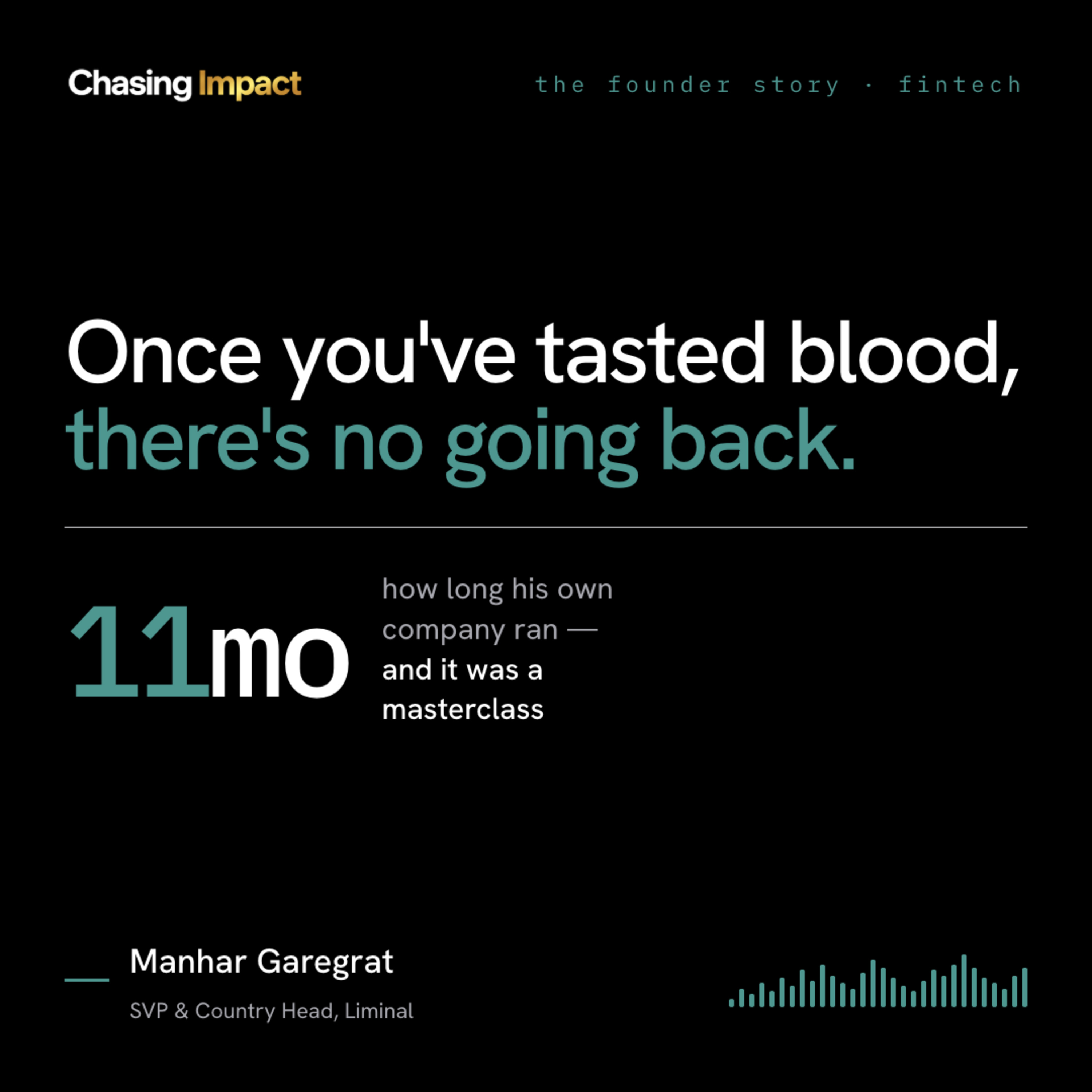
From 35 to 750 Employees,Then He Walked Away to Start Over FT. Manhar Garegrat, SVP, Liminal Custody

Manhar Garegrat joined CoinDCX when it was 35 employees. He left when it had grown to 750, right as the Indian crypto market went from banned to wide open.Then he did something most people wouldn't: walked away from that kind of growth and that kind of salary to co-found Panthera, a Web3 infrastructure startup that pivoted from retail wallets to B2B just four months in, when the retail thesis didn't hold up. Eleven months later, after raising money proved harder than the enthusiasm warranted, he moved on to Liminal, where he now heads the country business.In this founder story, Manhar takes us through his path from digital marketing and mobile app growth into crypto, what 14 months of back-and-forth with Singapore's Monetary Authority actually taught him about regulation, why conviction sometimes has to override the numbers, and his honest take on why entrepreneurship isn't something you fully walk away from once you've done it. ⏱️ Timestamps: 0:00 – Introduction 1:43 – From Final Cut Pro to fintech to crypto: how the career actually happened 3:34 – Joining the VDA space in 2019, and learning from the OGs of 2012- 134:33 – Building Panthera's foundation at CoinDCX 5:35 – Scaling from 35 to 750 employees after the RBI ban was quashed 6:34 – 14 months with Singapore's Monetary Authority: what regulators actually want 9:16 – Starting Pantheira: the bet on Web3 infrastructure 9:54 – The retail wallet pivot: what Instagram and Meta's crypto ambitions taught him 12:38 – Taking the leap: letting go of a CoinDCX salary 13:04 – Why raising funds was harder than expected 16:16 – Life after Panthera: joining Liminal 17:30 – Three don'ts for aspiring entrepreneurs 🎙️ Chasing Impact covers six sectors shaping the next decade of India: Fintech, AI, Climate, Mobility, HealthTech, and Defence. 🔔 Subscribe for a new episode every week.
August 20, 202637 min

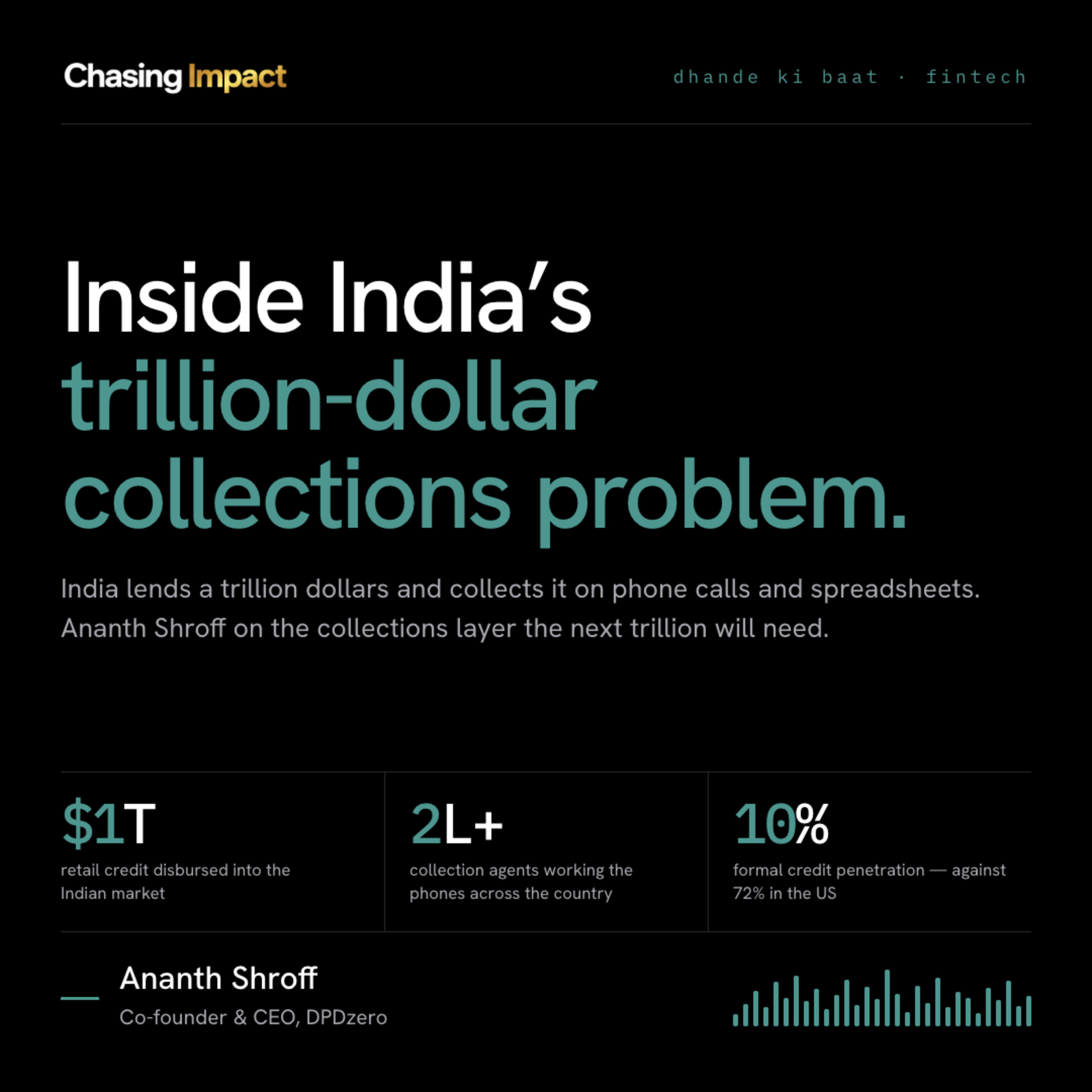
Inside India's Trillion Dollar Collections Problem | Ananth Shroff, Founder & CEO, DPDzero

India has disbursed a trillion dollars in retail credit. Some of it doesn't come back on time. And the system built to collect it runs on thousands of agencies, two lakh-plus agents, and, far too often, abuse.Ananth Shroff walked into a collections agency early in his research and heard it firsthand: agents hurling abuse at borrowers who simply hadn't paid on time. That moment shaped what DPDzero became, a full-stack AI-powered collections platform built to deliver the same efficiency banks get from agencies, minus the compliance risk and the harassment. In this Dhandhe Ki Baat segment, Ananth breaks down exactly how the system works: how DPDzero profiles borrowers using 60 to 70 data points, why their AI agent now handles what used to take one human per 100 borrowers (now one per 300), how personas like "circumstantial defaulters" and "escapist defaulters" get treated differently, and why he believes brand reputation, not just compliance, is what will force this industry to change. ⏱️ Timestamps: 0:00 – Introduction: what DPDzero does 1:19 – What actually happens when a borrower misses an EMI 2:48 – The scale of the problem: $1 trillion in retail credit, 2 lakh+ collection agents 4:16 – The real problems: cost, compliance, and abuse 7:38 – DPDzero's approach: a collections stack banks can integrate into 8:48 – Agency workflow vs DPDzero workflow: Excel sheets vs 70 data points 12:32 – The allocation model: deciding human vs AI treatment 13:02 – The AI collection agent: voice, WhatsApp, and beyond 14:07 – From 1 human per 100 borrowers to 1 per 30014:35 – The agent copilot: how human agents are enabled by AI 18:19 – How much can AI alone convert, and where humans take over 20:07 – Reducing bounce rates with 100% AI intervention 21:34 – Defining the ideal collection system: why they call agents "advisors" 22:53 – Borrower personas: intentional, circumstantial, and escapist defaulters 27:09 – Why brand reputation now matters more than ever in collections 29:34 – The logistics industry parallel: how collections will consolidate 33:15 – The next 5 years: staying ahead by disrupting yourself first 🎙️ Chasing Impact covers six sectors shaping the next decade of India: Fintech, AI, Climate, Mobility, HealthTech, and Defence. 🔔 Subscribe for a new episode every week. 🌐 chasingimpact.in
August 18, 202629 min

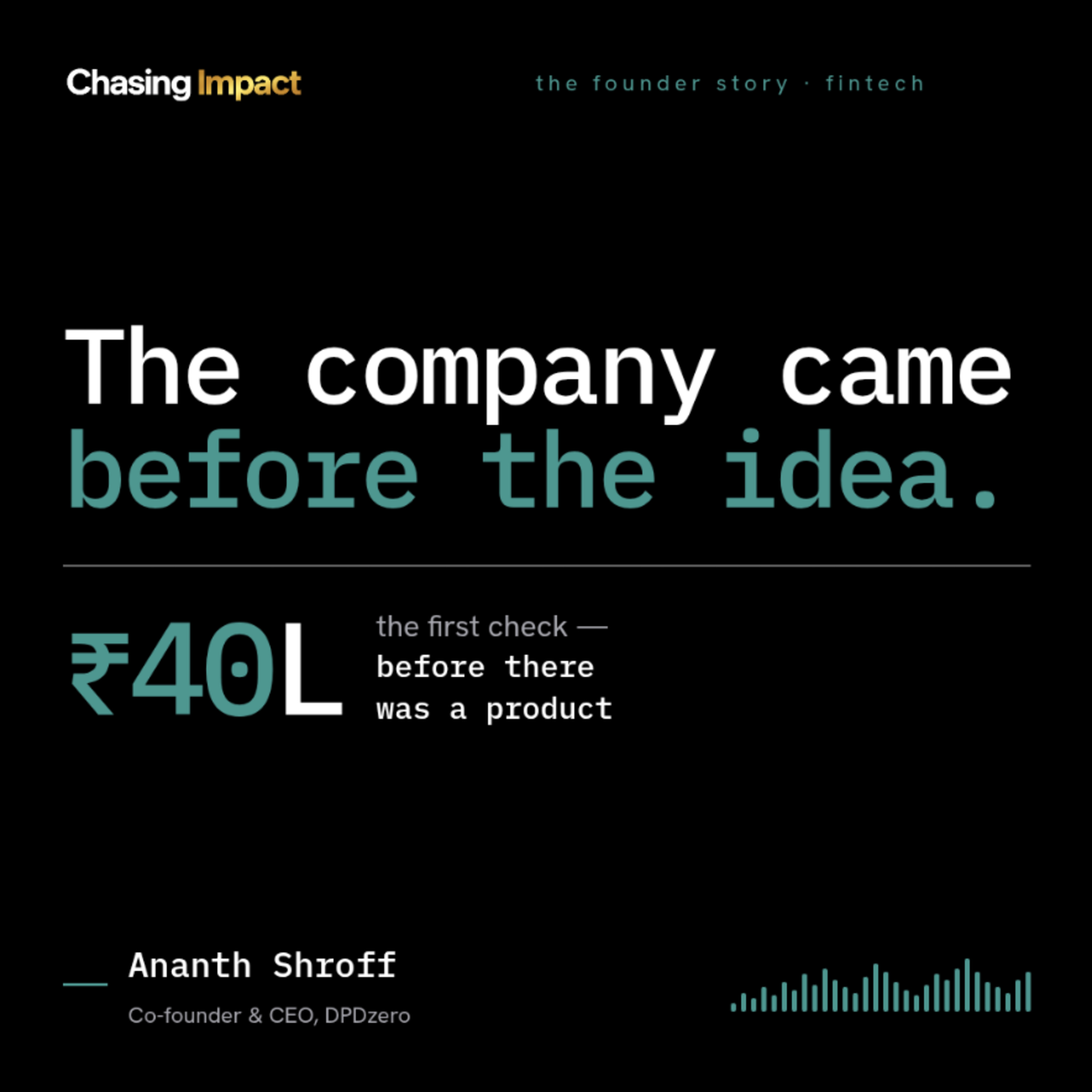
Building India's NexGen Collections Infrastructure Ft. Ananth Shroff, Founder & CEO, DPDzero

DPDzero started as a software company. Banks wouldn't pay for it. So Ananth Shroff and his co-founder Ranjith tore up the plan, and built something banks actually wanted: someone to own the outcome, not just hand them a tool.Their first customer on the new model paid ₹14 lakhs without being asked twice. In this founder story, Ananth takes us through the journey that got him there: quitting a stable HP job at 21 to join a scrappy startup in a 2BHK, launching a fintech business in Indonesia at 22, building BBPS at Setu with Rs 3.5 million in the bank and zero playbook, and the moment he and his co-founder realized their first version of DPDzero was solving the wrong problem entirely. He also gets candid about what it actually takes to survive the pivot: staying adamant about winning while staying completely open on approach, why he needed 24 to 36 months of runway before taking the leap, and why he'd rather waste zero of his 3 lakh remaining hours being unhappy at work. ⏱️ Timestamps: 0:00 – Introduction 2:00 – From HP to a 2BHK startup: the decision that started it all 4:52 – Launching XL's business in Indonesia at 22 5:53 – Joining Setu: zero to one with Rs 3.5 million and no playbook 9:50 – Meeting his co-founder Ranjit, and getting acquired by Pine Labs 10:12 – Starting DPDzero: the first Rs 40 lakh check 13:28 – The wrong hypothesis: why banks wouldn't pay for software 15:34 – The pivot: from software to outcome-based collections 16:04 – The first customer, and the aha moment 17:59 – Advice for founders stuck in the pivot phase 20:08 – Managing the personal front: risk, runway, and family alignment 23:30 – Three things budding entrepreneurs shouldn't do 26:21 – One more: why ambition matters more than anything 🎙️ Chasing Impact covers six sectors shaping the next decade of India: Fintech, AI, Climate, Mobility, HealthTech, and Defence. 🔔 Subscribe for a new episode every week. 🌐 chasingimpact.in
August 11, 202637 min

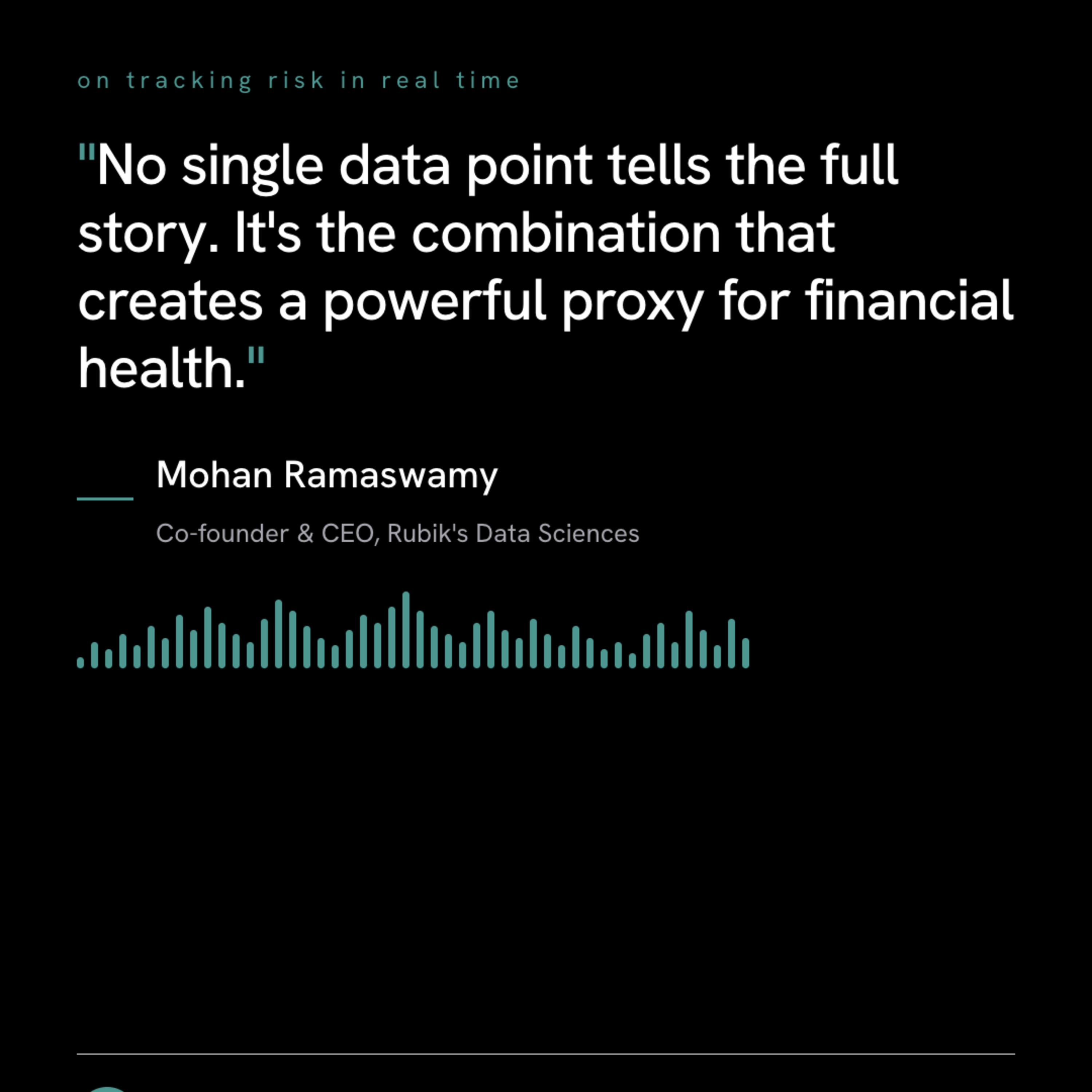
Inside the Data Science Behind India's Credit Decisions Ft. Mohan Ramaswamy

India has 60 million businesses that need credit.Most credit decisions in India still rely on the same static reports and third-party bureau scores. Mohan Ramaswamy, Co-founder and CEO of Rubix Data Sciences, thinks that's the wrong model, and has spent eight years building the alternative.In this Dhandhe Ki Baat segment, he explains how Rubix pulls together GST filings, court records, import-export data, employee sentiment, and over a hundred other sources to build a live, continuously monitored risk score, one that moves the moment a business's real financial health changes, not one that goes stale the day it's issued. ⏱️ Timestamps: 0:00 – What Rubix does 1:08 – From static reports to real-time risk intelligence 3:42 – Lending: assessing businesses with thin or no credit history 10:41 – MSME lending: 120+ data sources behind one risk score 15:29 – Rubix's score vs standard bureau scores 19:35 – Insurance: trade credit and India's under-penetration problem 25:27 – Behind the scenes: what data science actually is 30:15 – Where AI fits, and where it deliberately doesn't 33:44 – What's next for Rubix 🎙️ Chasing Impact covers six sectors shaping the next decade of India: Fintech, AI, Climate, Mobility, HealthTech, and Defense. 🔔 Subscribe for a new episode every week. 🌐 chasingimpact.in

July 29, 202623 min

From CXO to Founder: Building Rubix Data Sciences Ft. Mohan Ramaswamy, Co-Founder & CEO

Four senior executives at an American information company. An average of 25 to 30 years of experience each. And a problem they kept seeing go unsolved: complex, fragmented B2B data that leaders couldn't turn into decisions.So in 2018 they left their CXO roles and built Rubix Data Sciences, a technology-enabled information and analytics business that helps corporates, banks, and insurers make decisions on credit, risk, and supply chain. Their first paying customer came in month five.In this segment, Mohan Ramaswamy shares the founder story: why they left established careers, how they cracked BFSI's famously impenetrable sales process, and his advice for B2B founders trying to land their first customer. ⏱️ Timestamps: 0:00 – Introduction: what Rubix Data Sciences does 2:22 – The Rubik's Cube philosophy: from complexity to clarity, and the ARMS platform 4:44 – The founder story: why four CXOs left to start up 9:26 – Early days: building trust as a bootstrapped B2B startup selling to BFSI 13:04 – The first sale: signing two corporates in month five 16:09 – First fundraise vs first paying customer: which felt better? 18:40 – Advice for B2B founders selling into BFSI 🎙️ Chasing Impact covers six sectors shaping the next decade of India: Fintech, AI, Climate, Mobility, HealthTech, and Defence. 🔔 Subscribe for a new episode every week.

May 12, 20261 hr 2 min

How Flourish Ventures Picks Fintech Winners Ft. Harsh Gupta Principal Flourish Ventures

In this episode of Chasing Impact, Shreyas sits down with Harsh Gupta, Principal at Flourish Ventures, one of India's most active early-stage fintech funds backed by eBay founder Pierre Omidyar.Harsh breaks down how Flourish evaluates fintech startups across credit, embedded finance, green finance, and AI, and shares an inside look at their investment in SalarySafe and the credit-on-UPI thesis.What we cover:-Flourish's evergreen fund model and why it changes how they partner with founders-Venture debt vs venture equity: the mindset shift explained-The embedded finance thesis: platforms, plumbing, and plugins-Why credit-on-UPI is a high-engagement product with real tailwinds-What gets a VC excited in the first 5 minutes of a pitch-AI in fintech: internal adoption vs new investment opportunities-Where Harsh would bet money for the next 3 to 5 years: AI and wealthtech-Whether you are a founder preparing your first pitch or a fintech operator trying to understand how investors think, this episode has something for you.-Connect with Harsh Gupta: linkedin.com/in/harshguptaLearn more about Flourish Ventures: flourishventures.comSubscribe to Chasing Impact for weekly fintech conversations with founders, investors, and ecosystem builders.

April 21, 202647 min

Why AI-Powered is Meaningless (& your Wrapper is Doomed )FT. Inderjit Makkar Founder& CEO Factacy.Ai

In this episode of Fintech Ki Baat Dil Se — Dhande Ki Baat — we sit down with Indrajit Makkar, Founder & CEO of Factacy. AI, for a no-fluff deep-dive into the real state of AI in India. From Shark Tank anecdotes to building AI for lending, collections, KYC, and fraud detection — Indrajit brings 4+ years of on-the-ground perspective on what works, what's hype, and where the real opportunities lie.🔑 What we cover in this episode: What Factacy AI actually builds — and for whom Why wrapper AIs are a dangerous business model The truth about "Agentic AI" vs. basic automation How AI can transform collections for financial inclusion lenders SLMs — the quiet revolution coming to edge devices and small businesses Industries where AI will create the biggest impact: pharma, manufacturing, BFSI, mobility Startupinvestors.ai — ending the ghosting problem for founders AI's macroeconomic impact on India ⏱️ Timestamps: 00:00 — Introduction 00:45 — What does Factacy .AI do? 06:10 — startupinvestors.ai — the backstory 09:00 — Wrapper AIs: hype or value? 13:40 — SLMs and their future 16:30 — Industries AI will transform 21:00 — AI in BFSI: lending, KYC, fraud & collections 30:30 — Agentic AI: myths vs. reality 40:15 — AI's macroeconomic impact on India 45:50 — Closing thoughts 👍 If you found this valuable, like, share & subscribe — it helps us bring more conversations like this. 🔔 Subscribe for weekly episodes on fintech, startups & the future of money in India.

March 26, 202628 min

Entrepreneurship Uncut : Shark Tank S1, Failed Startups & The Real Playbook FT. Inderjit Makkar

What does Entrepreneurship actually look like behind the Cameras, the funding, announcements & the LinkedIn Posts? Indrejit Makkar has seen it all.A decade at S&P building Capital IQ. A recycled denim startup that flopped. An e-cigratte business wiped out overnight by a government ban. A shark Tank Season 1 Pitch that landed funding from Piyush Bansal & Ashneer Grover & then the part nobody talks about: Runiing 2 startups with a team so lean they were doing everything from sweeping to sales.In this Conversation, Inderjit holds nothing back. Why he paused Factacy.ai for 2 years to keep proxgy alive. How that accidentally saved the company when the AI wave hit. Why your Spouse is your biggest invesror even without putting in a rupee & why celebrating funding rounds is the first Sign you've lost the plot. TIMESTAMPS:- 02:52 - How did Inderjit Start his entrepreneurial journey? 08:00 - Experience of featuring on Shark Tank India 11:42 - Journey of Building Factacy.Ai & piece of advice for budding entrepreneurs 19:15 - When you talk about jumping into entrepreneurship, they say you should have a safety net. What was your safety net ? 24:33 - Things Budding Entrepreneurs Should Not Do While Starting a Startup

March 18, 202638 min

From 45 Days to 45 Seconds: Reimagining MSME Lending in India Ft. Chirag Shah Founder & CE0- Pulse

What if an MSME could get a loan approved in seconds instead of weeks ?Chirah Shah Founder & CEO-Pulse, has already made this happen for 7 Million UK Business backed by £3. 4 Billion in Securitised Lending. Now he's bringing that playbook to India. In part 2, we deep dive into how Pules's data engine works, why their daily refresh data beats even credit bureaus, how securitization structures actually function (broken down simply) & what it will take to unlock serious foreign capital for Indian MSME's. We also get into why business insurance in india has a product and an awareness gap, what embedded finance actually looks like when done right, and why Chirag believes fixing MSME Capital access is the real GDP growth engine India needs. TIMESTAMPS 02:11 - What is Pulse all about & what is it building? 04:18 - Why the name Pulse? 05:23 - Product Securitisation 05:49 - Where does Pulse fit in MSME? Is pulse ERP ? or ppe sitting behind ERP? 10:20 - Star Contrast between MSME Lending in U.K Vs India ? 15:36 - What are the other products Chirag see benefit from MSME Platforms? 21:00 - Securitisation of Products in U.K 26:54 - How is Loan Processed 31:19 - Creating Investment Assets for Retail Class& Foreign Investors 32:45 - Thoughts on Foreign Investment Platforms 37:35 - Closing Remarks

March 5, 202622 min

Quit London to Build India's SME Lending Infra Ft. Chirag Shah Founder & CEO- MyPulse

In this episode of Fintech Ki Baat Dil Se, we sit down with Chirag Shah, Founder & CEO of MyPulse, to explore his journey from investment banking in the US and London to building a fintech infrastructure company in India. Chirag shares how the 2008 financial crisis sparked his entrepreneurial journey, why he moved back to India to build MyPulse, and what it takes to build technology that helps SMEs and lenders make smarter financial decisions through data. We cover his journey from Mumbai → US → London (post-2008 credit crisis) → back to India to build MyPulse, plus hard truths on entrepreneurship: don’t over-plan, don’t obsess about being first, and hire a “team of lions.” A must-watch for founders, fintech enthusiasts, and anyone building in the SME and financial data ecosystem. TIME STAMPS 02:16- Chirag Shah’s journey from Mumbai → US → London → India 03:50- Leaving Job & Stepping in the world of Entrepreneurship 05:19- The myth of “first-mover advantage” in startups 07:20- What made you caome back to India from London 08:20- The Journey of Building MyPulse From the Scratch 09:34- Most Humbling piece came across while building MyPulse11:00- Hiring your first team and building a “team of lions” 13:18- Fund Raising in India Vs. Other Foreign Countries 14:50- How do you see B2B model Vs. Unit Economic Model? 18:10- A piece of advice for someone who is starting B2B Business Model & even be revenue positive 21:00- 3 Don'ts for Budding Entrepreneurs. Stay tuned for the next segment Dhande Ki Baat, where we deep dive into how MyPulse is transforming financial intelligence for SMEs.

Is this your show?

Claim this listing to keep it up to date, reach guests who want to pitch you, and manage bookings with Guestify.

Claim this listing

More Business podcasts