Find partners
Embodying change: Transforming power, culture and well-being for people in aid

Embodying change: Transforming power, culture and well-being for people in aid

Hosted by Melissa Pitotti

BusinessHealthFitnessInterviews guestsExplicit

Episodes

67

Latest episode

Feb 2026

Language

EN

About the show

A podcast for humanitarians who want to work in closer alignment to core values like compassion, accountability, solidarity and equity. Born in 2020 in collaboration with CHS Alliance and Mary Ann Clements, the podcast is now entering its next evolution and is hosted by Melissa Pitotti.

Listen to episodes

60 recent
February 18, 2026Episode 6752 min

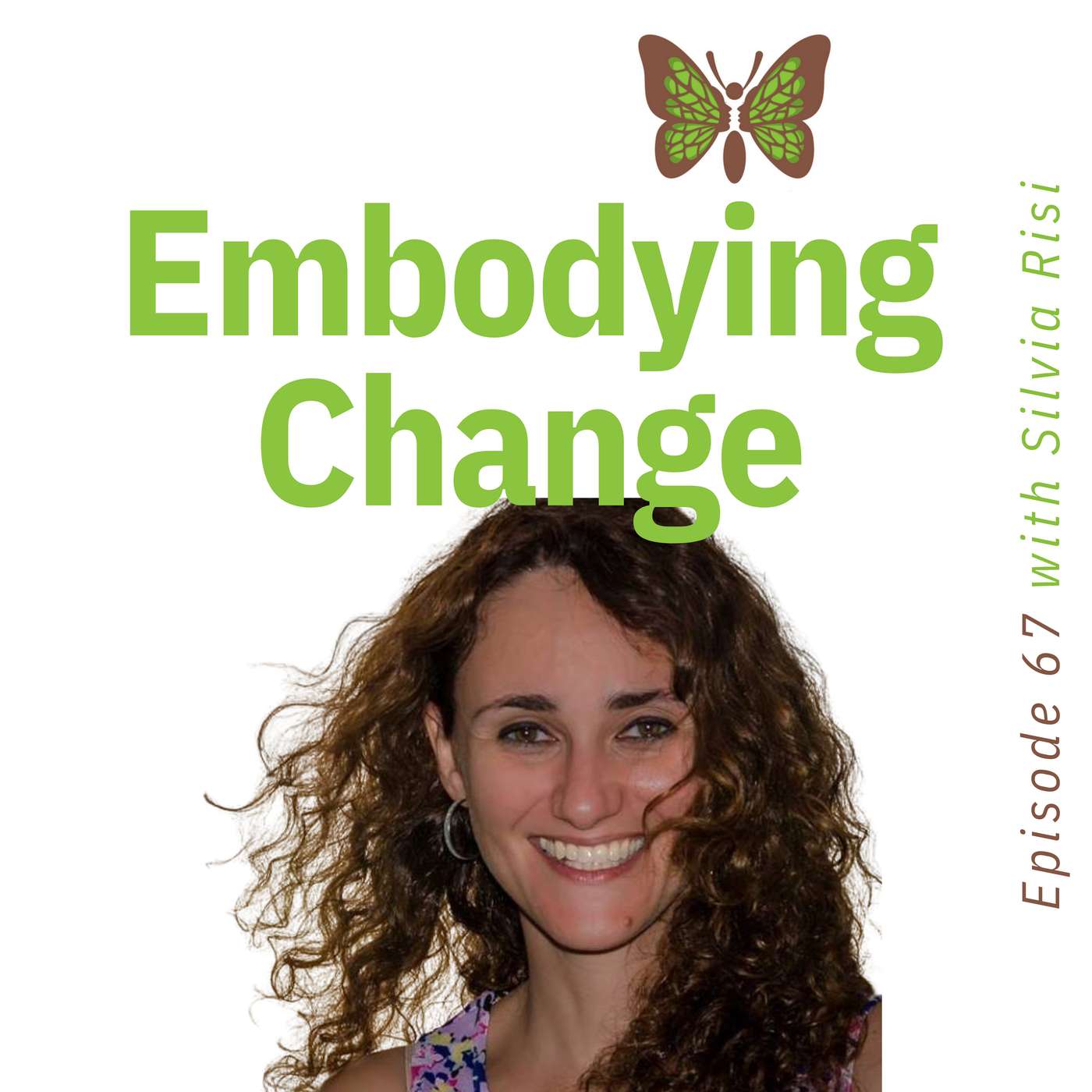
67. Learning how to carry what happened with Silvia Risi

What do you do when your professional world turns upside down? Maybe it’s burnout, harassment, a role abolished, or something else.  An identity shaken. Humanitarian workers are trained to carry other people’s suffering. But what happens when we are the ones carrying something heavy? In Episode 67 of Embodying Change, Melissa Pitotti sits down with Silvia Risi, former humanitarian aid worker turned mental health peer supporter, to explore one powerful idea: recovery is learning how to carry what happened without letting it define or disable your life. After more than 16 years working in conflict and post-conflict contexts, Silvia reached a breaking point that led her to step away from the field. What followed was not an immediate reinvention. It was grief. Identity loss. Slowness. Reconstruction. This conversation explores what it means to pivot, not by erasing what happened, but by integrating it.In this episode, we explore:• Why losing a job can feel like losing yourself• The difference between therapy, coaching, and mental health peer support• What “Nothing about us without us” means in recovery work• Why peer support is horizontal and rooted in lived experience• How hope can be practiced, not just promised• Why "Pivoting Well" starts with grieving well• How humanitarian skills translate into unexpected new chaptersSilvia shares how reconnecting with her values, practicing daily self-kindness, and finding peers who understood the humanitarian context became central to her healing.Because sometimes the goal is not to "move on."Sometimes the goal is to learn how to carry what happened with strength, dignity, and support.About Silvia RisiSilvia Risi worked for over 16 years in humanitarian operations, primarily in conflict and post-conflict settings. Following burnout and workplace psychological harassment, she began a recovery journey that led her toward coaching, professional training in mental health peer support, and a new way of serving the humanitarian workforce.She is currently completing a university diploma in mental health peer support, and neurodiversity at Lyon University.Silvia now serves as a humanitarian mental health peer supporter with CoCreate Humanity, a Swiss association founded in 2019 to strengthen the psychosocial wellbeing of humanitarian workers and their families.About CoCreate HumanityCoCreate Humanity provides:• Multilingual, confidential humanitarian peer support (primarily online)• Advocacy and awareness through art and community events• Working toward professionalization and training in humanitarian peer supportPeer support at CoCreate Humanity is grounded in lived experience, structured training, and ongoing supervision from mental health professionals. It complements, but does not replace, professional mental health care.Learn more about their work or request support: www.cocreatehumanity.org Additional resources mentioned:●      WHO Europe Roadmap (2025): Transforming Mental Health Through Lived Experiencehttps://www.who.int/europe/publications/i/item/WHO-EURO-2025-12307-52079-79927●      Sarah Verrier’s dissertation: Humanitarian Peer Support in Mental Health - A Link in the Chain of Psychosocial Support for Humanitarian Workers (available via CoCreate Humanity website)https://www.cocreatehumanity.org/memoires-final-dissertations  If this episode resonates… If you are navigating mental health challenges, burnout, restructuring, identity shifts, or a career pivot you do not have to carry it alone. Find a peer. Start a conversation. Give yourself permission to grieve what changed. And if this episode felt meaningful, consider sharing it with a colleague who might need to hear it. Because embodying change isn’t about pretending nothing happened. It’s about learning how to carry what happened together.
January 26, 2026Episode 6642 min

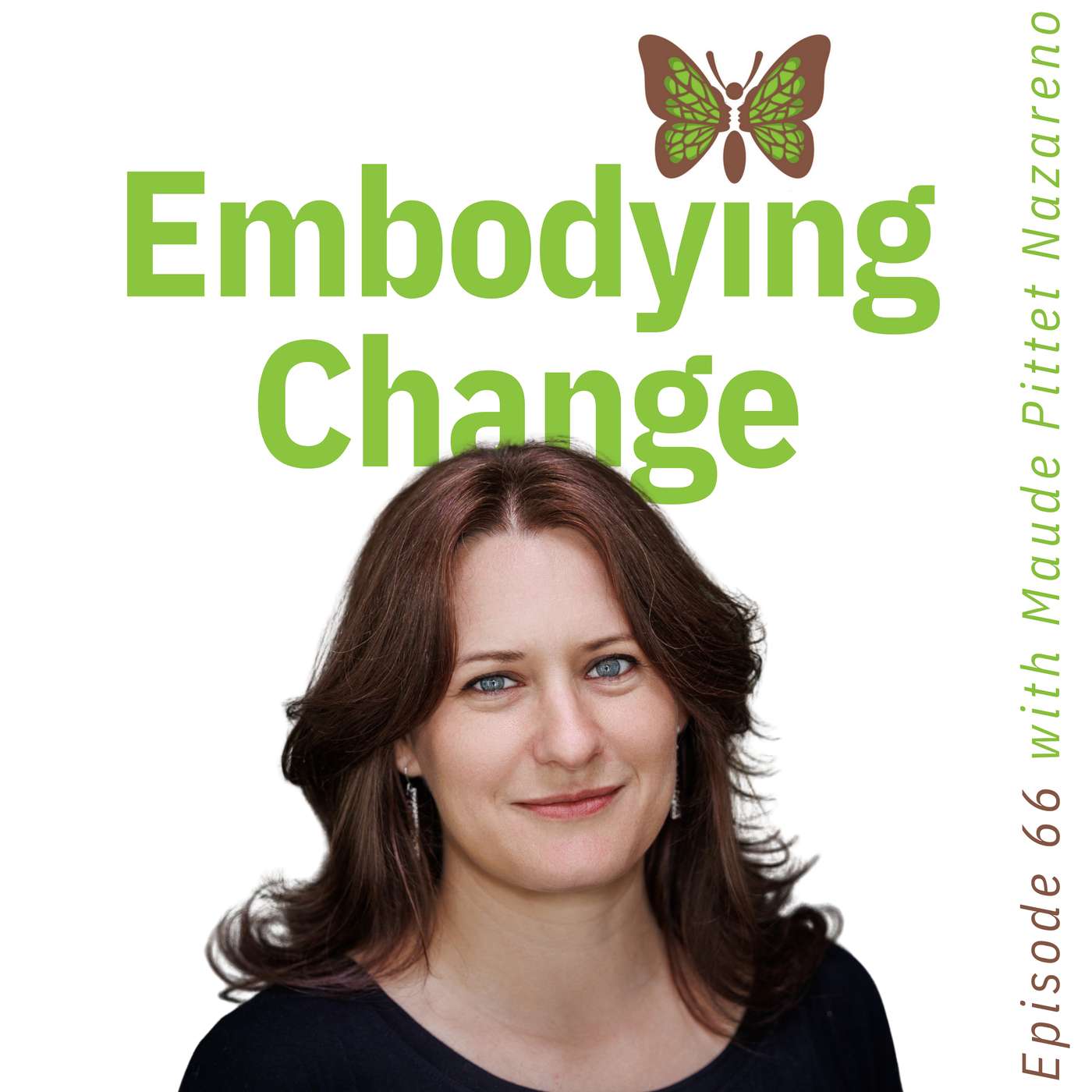
66. AI adoption as a human story with Maude Pittet Nazareno

What if AI adoption isn’t a tech problem, but a trust-and-teams problem? In this conversation, Maude Pittet Nazareno shares what she’s learned from training frontline negotiators on pressure management and supporting organizations with AI-enabled workflow transformation. We explore why “prompt hygiene” matters, how AI can amplify (worsen) existing team tensions, and what it looks like to adopt AI in ways that support (not erode) human connection.In this episode, we cover:What “embodying change” looks like when you’re under pressure (head, heart, and body)Why coping strategies can be “partial,” and how to expand your internal and external resourcesWhat NLP is (in plain language) and why it shows up in pressure management workThe surprising result from a pilot: why self-paced AI training lowered trust and team coaching raised itWhy AI adoption often amplifies existing organizational problems (data mess, team tension, outdated processes)What AI-enabled workflows actually mean (beyond “ChatGPT for emails”)Practical AI literacy: how LLMs work, how to prompt, and how to avoid bias in prompts“Prompt hygiene” for shared team threads (and how to ask AI what assumptions it’s making)How Colaborix’s AI Café creates a space for teams to learn from each otherDetails on the AI Champion Accelerator + how to join with a listener discountResources and linksMaude on LinkedIn: https://www.linkedin.com/in/maude-pittet-nazareno/Maude’s website: https://www.maudepnazareno.com/Colaborix Programs (including Coffee & Champion Accelerator): https://www.colaborix.ai/ai-programsColaborix all upcoming dates & enrolment links: https://www.colaborix.ai/upcoming-ai-eventsOpportunity25% off Colaborix cohort programs (including the AI Champion Accelerator)Use coupon code: ACCESSNOWAbout Maude Pittet NazarenoMaude Pittet Nazareno is a coach and facilitator who helps leaders and teams build clarity, presence, and influence in high-pressure environments, from humanitarian negotiation to organizational transformation. Through her work with CCHN, she supports frontline negotiators to access, assist, and protect communities under extreme stress. At Colaborix, she brings a human-centered approach to AI adoption and workflow transformation, focusing on trust, capability-building, and how teams actually change.

January 9, 2026Episode 651 hr 26 min

65. Reclaiming humanity in the age of AI with Silva Ferretti

AI is already reshaping humanitarian work, evaluation, and decision-making, whether we’re ready or not.The real question isn’t whether to use AI, but how.In this episode of Embodying Change, host Melissa Pitotti is joined by evaluator and systems thinker Silva Ferretti for a wide-ranging, deeply human conversation about what’s at stake as AI accelerates across the humanitarian sector.Silva challenges the idea that evaluation is about compliance and box-ticking, and reframes it as a space for learning, truth-telling, and transformation. She explains why “best practices” often fail in complex contexts, how power quietly shapes what gets summarized and what gets ignored, and why AI is not neutral (especially when used uncritically).You’ll also hear how Silva uses AI in participatory ways: to conduct interviews, surface patterns, validate findings with communities, and even co-create a song that captures her thinking about AI ethics and fluency.This is not a tools episode. It’s a conversation about principles, power, trust, and reclaiming humanity with AI as both the risk and the opportunity.And if you stay until the very end, you’ll hear the full song Silva co-created with AI, bringing the conversation into a different register entirely.Today’s guest: Silva FerrettiSilva Ferretti is a humanitarian evaluator with a background in architecture and planning, known for her work on learning-oriented, complexity-aware evaluation.Rather than treating evaluation as a compliance exercise, Silva focuses on sensemaking, power, relationships, and context, and on creating space for people to talk honestly about what isn’t working, not just what looks good on paper.She is also an early and thoughtful adopter of AI in evaluation, experimenting with its use for pattern recognition, rapid synthesis, participatory validation, and creative communication, while remaining deeply attentive to ethics, bias and human agency.Silva regularly shares reflections and provocations on LinkedIn and collaborates with peers through initiatives such as the International Evaluation Academy.You’ll learnThe 5 Levels of AI Fluency for Values-Led Professionals, from “just try it” to collective ethical useWhat Silva means when she says she’s “not a rebel,” just aligned with humanitarian principlesWhy “best practices” often fail in complex systems (and what works better)A simple, memorable distinction between complicated systems (like rockets) and complex systems (like human relationships)Why AI is not neutral, and how it can quietly amplify power and biasA practical method you can borrow immediately: record → transcribe → summarize → validate togetherThe uncomfortable question facing the sector: are we becoming a logistics and reporting machine, or a principled humanitarian practice?Bonus: You’ll hear how Silva used AI to run 60+ interviews in just days, why the first analysis echoed the manager’s worldview, and how re-running the analysis helped surface the voices (and tensions) that were missing.Resources & linksConnect with Silva Ferretti on LinkedIn : https://www.linkedin.com/in/sferretti/ Silva’s article: AI in Evaluation (International Evaluation Academy Week) https://aea365.org/blog/ai-in-evaluation-by-silva-ferretti/Silva’s song: It starts with trying (Silva’s lyrics, AI-made music) https://peertube.uno/w/6QopXJaTkgGZERs4DTmzJUConcepts referenced: Appreciative Inquiry, complexity vs. complication, humanitarian principles, participatory evaluation

November 17, 2025Episode 641 hr 38 min

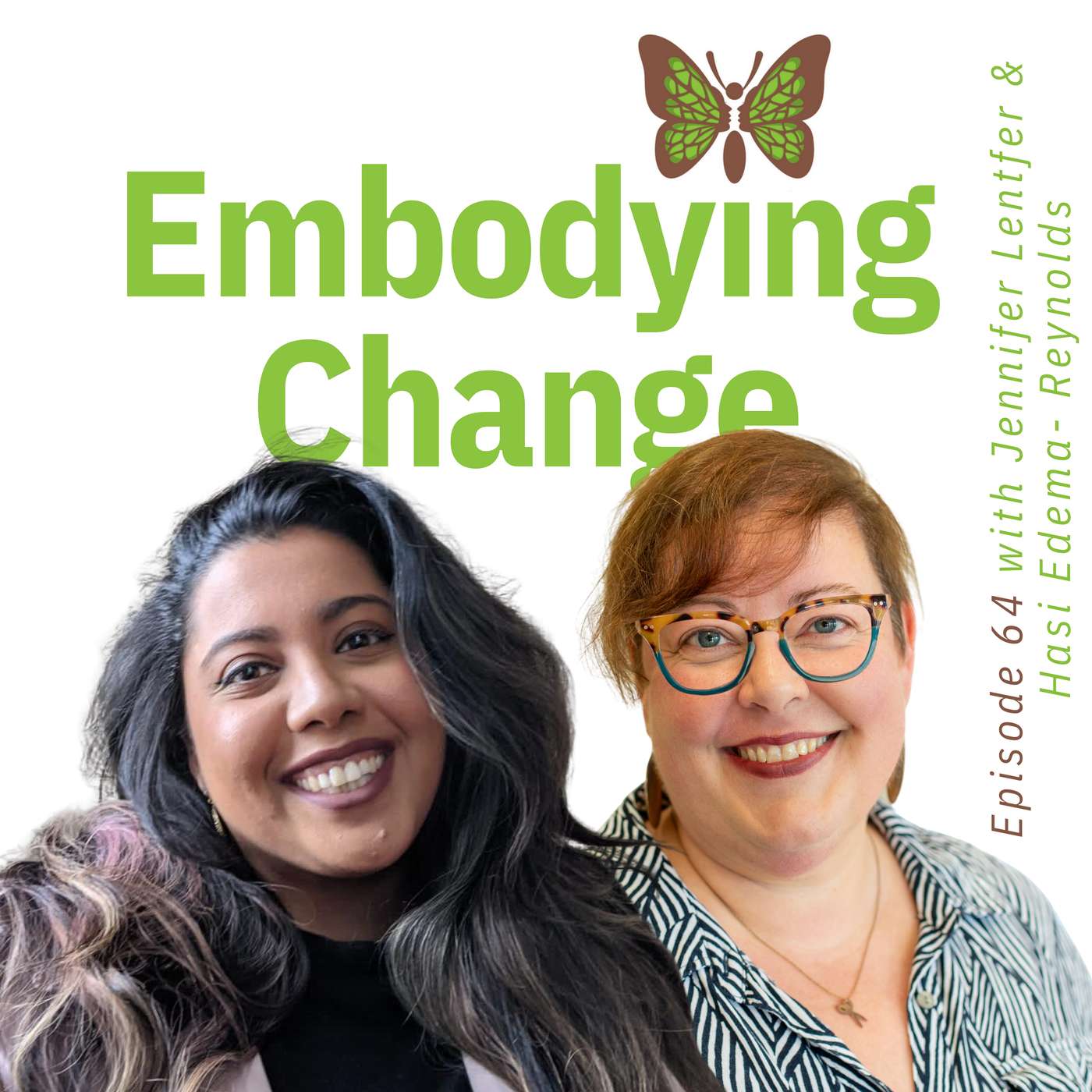
64. From loss to renewal with Jennifer Lentfer and Hasangani (Hasi) Edema-Reynolds

When the structure, pace, and purpose of humanitarian life suddenly fall away, what fills the space that’s left?In this Embodying Change special, host Melissa Pitotti brings together Jennifer Lentfer and Hasangani (Hasi) Edema-Reynolds to explore the eight themes that come up again and again in peer support groups for humanitarians navigating change: identity, commitment, rhythm, balance, boundaries, resonance, joy, and connection.Through storytelling and deep reflection, they trace a path from loss to renewal, asking what it means to stay true to your purpose while rebuilding your life beyond your job title. If you’ve ever questioned who you are outside of your work, this conversation will help you find language, hope, and solidarity for the road ahead.Today’s guestsJennifer LentferFarm girl turned aid worker turned writer, coach, and communications strategist. Jennifer runs EE Consulting, curates the blog How Matters, and shares poetry and collage at JenniferLentfer.com. Formerly named one of Foreign Policy Magazine’s “100 Women to Follow on Twitter,” she supports people to usher in political courage, cultural humility, and an ethic of care within social change organizations. She recently became the Director of Communications for The Center for Rural Affairs in Lyons, Nebraska, USA.→ Connect with her on Linkedin. Hasangani (Hasi) Edema-ReynoldsA humanitarian professional and researcher bridging the humanitarian-development-peace nexus. Over nine years, particularly in fragile and post-conflict contexts, Hasi has built expertise in multi-sector response, recovery and resilience programming, humanitarian advocacy, program management/implementation, and fundraising.  Currently with CDA Collaborative Learning, she supports action research on accountability, conflict sensitivity, and shifting power, and advises on responsible transitions and organizational change.  She holds a Bachelor’s degree in International Relations from the London School of Economics (LSE) and a Master’s in Humanitarian Assistance from Tufts University. Outside work, Hasi finds joy in singing, piano, painting, and travel.→ Connect with her on LinkedIn. You’ll learnWhy grieving the loss of a professional identity is a vital first stepHow to honor commitment to communities while pivotingRhythms and boundaries that sustain life after intense rolesWays to translate humanitarian experience so it resonates beyond the sectorWhy joy and connection are essential, not luxuries, for renewalSimple practices to keep peer support alive between meetingsResources recommendedConnexUs Stopping As SuccessCDA Collaborative Learning ProjectsReimagining Research Course offered by Pause and EffectWhy Resisting Urgency is the First Step in Transforming Organizational Cultures, Bridge of Hope Summit (2025)Donor Transformation Challenge, CIVICUS, 2024Visiter Genève, guided tours by Catherine Hubert-GirodPoem: The Death of the Change MakerBy Jennifer Lentfer Shared with permission. Originally published on How Matters: https://www.how-matters.org/2020/05/04/the-death-of-the-changemaker/I gaze deep into the rectangle below.There, at the bottom of the six feetlays the changemaker.The creator of grand, heroic strategy and ideasto change everything, at once,to change minds and behaviors and alignment,magically.Oh changemaker, how close you lived toconquer and capture and control and contract,how tightly you gripped, fixed,how you wrestled your longing forcertainty, comfort, convenience,how you constructed causation,how you were only taught/thought one way.How you relied on fanciful linearity,determinate, ambitious, utilitarianforce of will plodding, plotting, spent, alone!How you thought you had to carry it all…Now changemaker, laying there in this plot,unable to influence…anythingamidst the falling shovelfuls of soil.There, there, I lay — the irony of former self-elevationno longer lost on me.The earth will fill in my body,its softness, loaminess reclaimed —dismantled and expanded without all the effort.Need, renewal, security looms.It is already welded-ly woven.The maker will be rebirthed.We don't know when,but up through the dirt,the small, incremental, devoted changer may arrive.-----------------------Join the conversationIf this episode sparked something in you, share your reflections on LinkedIn and tag us!

November 5, 2025Episode 6346 min

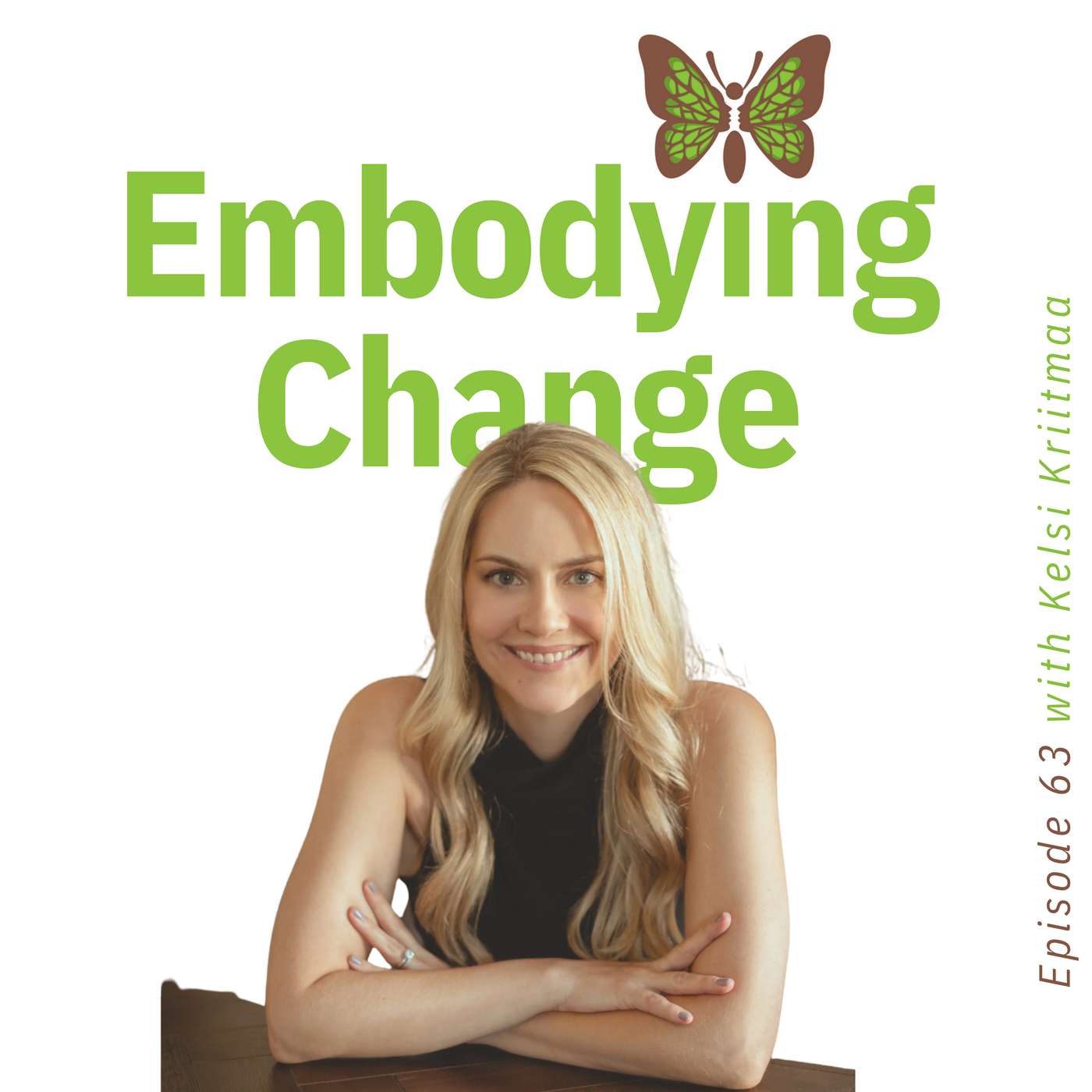
63. Seasons of change with Kelsi Kriitmaa, PhD

When the work that once defined you no longer fits, what comes next?In this heartfelt conversation, strategist and executive coach Kelsi Kriitmaa, PhD joins Melissa to explore what it means to embody change, especially for those in the social-impact and humanitarian worlds. Together, they talk about:Living your values through different seasons of life and careerThe difference between having to pivot and wanting toHow to reframe a “career gap” into a story of growthFinding community and accountability when work feels uncertainWhy sustainable leadership matters more than ever in 2025Whether you’re navigating a career transition, feeling unmoored by sector-wide changes, or simply wondering what’s next, this episode reminds you: you’re allowed to change, and you don’t have to do it alone.Today’s GuestKelsi Kriitmaa, PhD is a strategic advisor, executive coach, and former Chief Operating Officer who helps social-impact leaders and organizations work, lead, and grow, sustainably. After more than ten years living and working across humanitarian emergencies in Africa, the Middle East, and Asia, she moved to Geneva and joined the leadership of a social-impact consulting firm, later serving as COO. With 20+ years spanning multilateral institutions, non-profits, foundations, CSR teams, and mission-driven companies, Kelsi blends sharp strategy with a human-centered lens. She supports leaders and teams on organizational strategy and transitions, and coaches mid- to senior-level professionals and consultants on values-aligned careers and portfolio paths. Kelsi holds a BA in Psychology, an MPH, a PhD in Epidemiology, a CSR certificate, and accredited coaching credentials. She’s been featured in Forbes, Devex, and The Bloom.You’ll LearnHow to test the question: Do I have to pivot, or do I want to?A values-first way to navigate career seasons (and why “having it all” is a myth of timing).The “panic → pause → plan” sequence for layoffs and funding shocks.How to reframe résumé gaps with honesty, clarity, and credibility.Why portfolio careers (multiple revenue streams, multiple identities) are rising in social impact.A simple Top-10 targeting method for focused job search.How to network without feeling salesy, and why “give before you get” works.Accountability pods and co-working rhythms that create momentum.Sustainable leadership trends: psychological safety, realistic workloads, and localized decision-making.First steps if consulting might be for you (and signs it isn’t).Key Quotes by Kelsi “We’re not one identity. We’re allowed to change, and our careers should change with us.” “Change doesn’t mean starting over; it means realigning.” “Quality over quantity: ten intentional targets beat a hundred blind applications.”Resources & MentionsKelsi’s website: https://www.kriitmaa.com/ Kelsi’s take on LinkedIn: The good, bad and ugly: (coming soon)Kelsi’s Group Coaching Programs (including wait list for January 2026 programs): https://www.kriitmaa.com/group-coaching  Devex: https://www.devex.com/ The Bloom: https://readtobloom.com/ Dr. Rebecca Dempster, trained on Internal Family Systems (IFS) - https://resileo.net/   “The Power Pause: How to Plan a Career Break After Kids—and Come Back Stronger Than Ever” by Neha Ruch - link“Toxic Grit: How to Have It All and (Actually) Love What You Have” by Amanda Goetz - linkShow Editor Ziada Abeid is a communications consultant with over a decade of experience spanning media relations, PR, marketing, fundraising, and digital media strategy. She specializes in crafting compelling narratives and data-driven campaigns that amplify brand visibility and engagement. To learn more, visit: linkedin.com/in/ziadaabeid

August 29, 2025Episode 6247 min

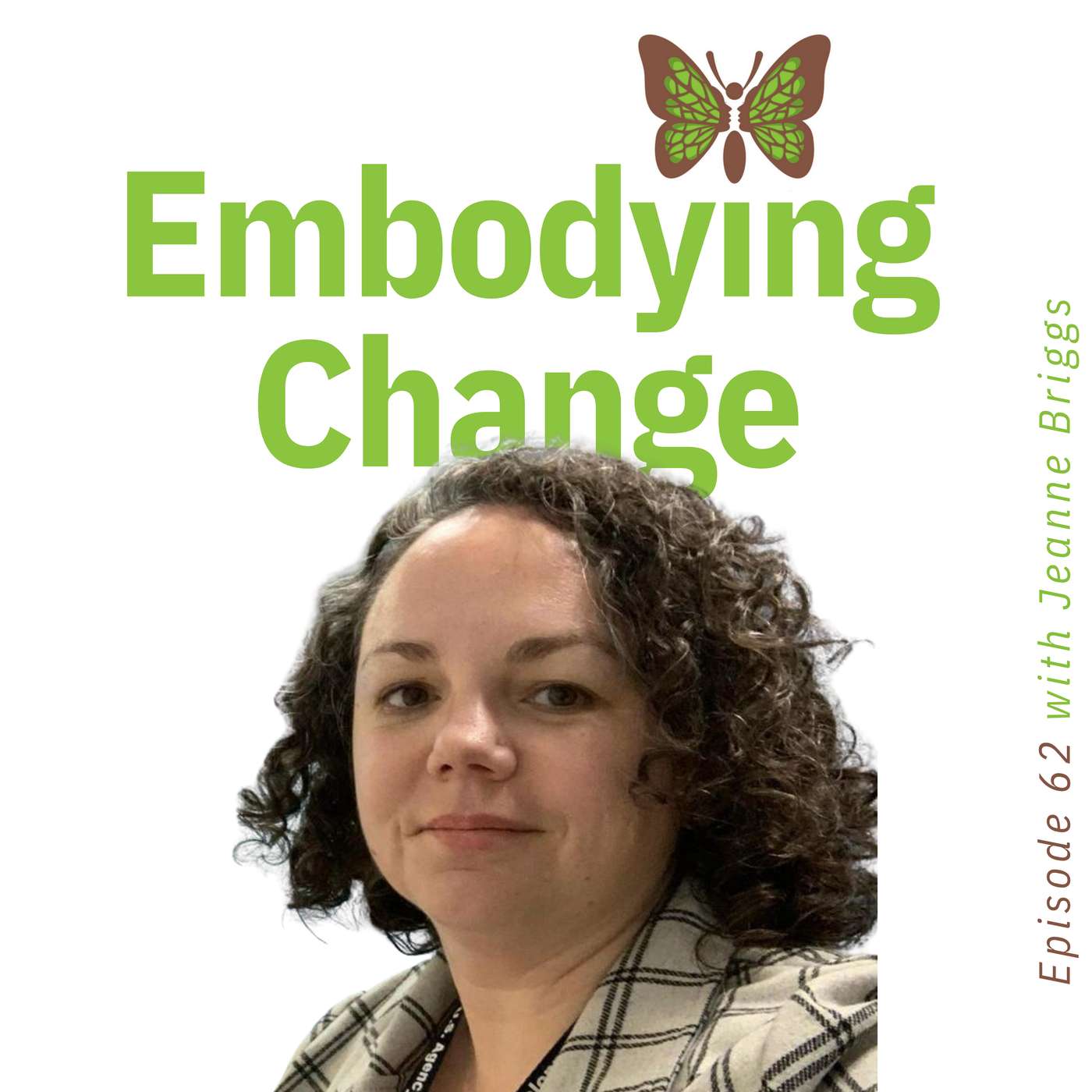
62. When chaos meets order with Jeanne Briggs

What does it take to stay calm when everything is falling apart? In this episode, Jeanne Briggs, an international development professional who thrives on bringing order to chaos, shares lessons from 24 years with USAID that are relevant to our situation today. We explore how to widen your window of opportunity, take a trauma-informed approach to crisis, find clarity in transition, and use peer support as an anchor in turbulent times.IntroductionWhen everything feels like it’s falling apart, who do you want by your side?For many humanitarians and development professionals navigating sudden layoffs, political upheaval, and uncertainty, that person has been Jeanne Briggs. She’s a steady hand in the storm: the one who sees the bigger picture, brings calm to the chaos, and helps people make sense of their options without telling them what to choose.In today’s episode, Jeanne shares her most recent journey from directing a $94M USAID portfolio in the Democratic Republic of Congo to co-founding with other women leaders the Aid Transition Alliance, supporting people in aid through one of the sector’s biggest crises in decades.What you’ll learn What embodying change looks like in times of personal and political upheavalThe concept of “windows of opportunity” in transitions, and how to widen them for yourselfWhy peer support groups can be an anchor in chaotic timesThe difference between “order Muppets” and “chaos Muppets” Practical steps you can take if you’re feeling overwhelmed, unmotivated, or unsure of what’s nextAbout our guestJeanne Briggs describes herself as an international development professional who thrives on bringing order to chaos. For 24 years, she served with USAID, most recently as Director of Democracy, Rights & Governance in the DRC, where she oversaw a $94M portfolio. Her career spans crisis responses from Ebola containment to Afghan evacuations.Jeanne is known as a thoughtful listener who gives honest, gentle feedback, a catalyst for change who specializes in helping people understand their options without dictating their choices. Her superpower? Staying up all night to create frameworks that help others find the clarity they need to make well-informed decisions for themselves.Today, she co-leads the Aid Transition Alliance, providing support, career guidance, and knowledge preservation for a humanitarian and development workforce in flux.Resources and links mentionedOrganization: Aid Transition Alliance [LINK]Organization: OneAID Community [LINK]Book: “The Body Keeps the Score” by Bessel van der Kolk [LINK]Book: “Widen the Window” by Elizabeth Stanley [LINK]Organization: Green String Network (trauma-informed peacebuilding) [LINK]Resource: EMU/STAR Model for Breaking the Cycles of Violence [LINK]Organization: KonTerra Group [LINK]Article: Chaos Theory: A Unified Theory of Muppet Types [LINK] Resource: Georgetown University’s Pivot With Purpose Program [LINK]Episode 59: The power of structured peer support with Carrie Santos [LINK]Episode 37: Get in the “growth zone” with Cindy Rocha [LINK]Article: “You are not alone: Preventing Suicide in a Time of Crisis” [LINK]Join the conversationWhat kind of Muppet are you?  Order or Chaos?  Share your thoughts with us on LinkedIn. Support the showIf you found this conversation helpful, please follow the podcast and leave a quick rating or review.  It helps more people like you to consider Embodying Change.

May 22, 2025Episode 6139 min

61. “Career Pivot” with Wayan Vota

It can feel overwhelming navigating a career pivot, especially in times of uncertainty. But it doesn’t have to be. In today’s episode of Embodying Change, we’re joined by Wayan Vota, founder of Career Pivot, to explore how humanitarian and development professionals can use these very principles to make meaningful career transitions.Wayan shares his personal journey of shifting careers after being laid off and discusses how his platform, Career Pivot, helps people embrace change, find new opportunities, and use their skills in new places, all while staying true to their core values. He walks through his seven-step methodology for job searching and pivoting careers, showing how you can align your professional path with your commitment to improving lives globally.Wayan also highlights how technology, networking, and peer support systems can powerfully support job seekers in their transitions, helping them find new roles that uphold their values and continue their impact.If you're a humanitarian looking to pivot or even redefine your professional journey, this episode will give you tools, inspiration, and insights to take the next step, without compromising on your values.Today’s guest:Wayan Vota is the founder of Career Pivot, a 12,000-member community dedicated to helping professionals find a new job. With over 25 years of experience using technology to improve lives around the world, Wayan has seen firsthand how difficult it can be to pivot, especially when you're deeply committed to humanitarian values. After being laid off in January, Wayan channeled his own experience into creating Career Pivot, a platform designed to help people align their values with their career transitions. Through Career Pivot, Wayan supports job seekers with a 7-step methodology and guides to use Generative AI to accelerate the job search process.You’ll learn:How we can use our core values to guide a successful career pivotThe seven-step process for transitioning careers with clarity and confidenceWhy networking and informational interviews are essential for seeking new rolesHow to leverage LinkedIn and AI tools to streamline your job searchThe power of peer support systems during career transitionsHow Wayan’s personal journey led him to create Career Pivot to help others navigate career changesHow to maintain a commitment to solidarity while transitioning out of international development or the humanitarian sectorResources:Learn more about Career Pivot and get involved at mypivot.substack.com.Career Pivot offers webinars, peer support groups, and guides to help you through every step of your career transitionMentioned in today’s episode:Wayan’s personal blog and resources: mypivot.substack.comThe book Never Search Alone“Welcome to USAID Hunger Games! Worst Game No One Wanted, by Friends of USAID” https://mypivot.substack.com/p/welcome-to-whose-career-is-it-anyway Subscribe and connect:Check out Wayan’s Career Pivot platform for job seekers at mypivot.substack.comConnect with Wayan on LinkedIn: Wayan Vota’s LinkedIn

April 21, 2025Episode 6036 min

60. "The Big Humanitarian Rethink" with Lydia Poole

Lydia Poole discusses "The Big Humanitarian Rethink," a digital consultation she launched with Ben Parker to capture diverse perspectives on reforming the humanitarian system during a period of unprecedented funding cuts. The consultation revealed two distinct camps: "reimaginers" who advocate for radical transformation addressing power imbalances, and "improvers" who prefer incremental change while preserving humanitarian principles. Despite these differences, both groups agree on the need to maintain some international crisis response capabilities. As the humanitarian sector navigates this watershed moment, Lydia emphasizes the urgent need to make difficult choices about what to preserve while avoiding a disorderly collapse of vital services. This conversation offers rare insight into a sector at a crossroads, balancing immediate operational demands with the opportunity for meaningful, long-overdue reform.Today's GuestLydia Poole is a humanitarian financing expert with over 15 years of experience. Along with Ben Parker, Lydia co-created "The Big Humanitarian Rethink" citizen consultation, an initiative to collect diverse perspectives on humanitarian system reform following recent funding cuts. Lydia previously wrote an article published by The New Humanitarian addressing the risks of leaving key decisions about humanitarian system reform to a small group of leaders with vested interests.You'll LearnHow Lydia and Ben launched a digital consultation to give voice to diverse perspectives on humanitarian reformThe major divide between "reimaginers" and "improvers" in approaches to humanitarian reformWhat both camps agree on despite their different visions for the futureHow the humanitarian system is responding to the current funding crisisWhy traditional humanitarian financing models may be at odds with localization effortsThe common ground that could unite different perspectives on reformResourcesThe Big Humanitarian Rethink citizen consultation Find Lydia Poole on LinkedIn"Improving or Reimagining? Mapping key narratives on the Future of Development Cooperation," by Prof. dr. Sara Kinsbergen & Dr. Zunera Rana, Radboud University, April 2025.

March 18, 2025Episode 5948 min

59. Humanitarians' anchor in the storm: The power of structured peer support with Carrie Santos

In a sector increasingly battered by funding cuts, program disruptions, and global uncertainty, where can humanitarian professionals find stability? As the waves of change crash around us, what can serve as our anchor?In this powerful episode, Melissa Pitotti talks with Carrie Santos about how structured peer support groups (also called masterminds or forums) can provide that crucial foundation during turbulent times. They explore how these intentional communities help humanitarians weather career transitions, prevent burnout, and find creative solutions to complex problems when traditional support systems falter.Carrie shares her fascinating journey from working in a donor role to leading overseas programs for the American Red Cross, and then unexpectedly pivoting to run a global organization for entrepreneurs. There, she discovered the profound impact of structured peer support: an approach that successful business leaders have invested in for decades as their hidden compass during times of uncertainty.You'll hear how this powerful practice serves as an anchor for people across industries and cultures, transforming not just their careers, but their marriages, parenting, and overall well-being during life's storms. As Carrie notes, "It's been a great source of mental strength for me... If you want to live in a community where people listen to each other, support each other, and help you when you're stuck–if you want to live in that world, you can create it."If you're feeling adrift amid funding cuts, searching for your next opportunity, or simply wanting to connect with people who understand your unique challenges, this episode reveals how the right peer support network could be the anchor you need to remain steady, purposeful, and persevering.Today's GuestCarrie SantosWith 20 years' experience as an international humanitarian, Carrie has led overseas operations for the American Red Cross and served as a U.S. government donor to local and international organizations. As CEO of Entrepreneurs' Organization, with 16,000+ members globally, she led a network of purpose-driven entrepreneurs seeking to do good while making a profit; including 1,500+ peer support groups. Now she serves as a consultant, helping to build strategic plans for nonprofit and for-profit organizations that are aligned with her purpose of solving the world's problems by ensuring everyone can contribute their talents.You'll LearnWhat makes a high-value mastermind your anchor during professional storms when casual networking falls shortThe intentional structure that makes these groups so effective at providing stability when everything else feels uncertainHow to effectively run a "hot seat" (or "love seat") to get targeted feedback on your challenges when you feel most adriftHow the exchange of real-world experiences in a peer group creates insights that even well-meaning friends can't provideHow to find or create the your own mastermind group to weather today's humanitarian challengesConnect with Carrie onLinkedIn: Carrie Santos Her website: Timko Santos Consulting, LLC: Workshops that WorkAsk her how to join the cohort of DC-based and otherwise located senior female humanitarian and development leaders affected by foreign aid cuts.ResourcesFor Melissa Pitotti’s quick-start guide on how to start your own peer support group email Melissa@FacilitatingTheFuture.net Roman Terekhin's research on peer support groups: https://onlinelibrary.wiley.com/doi/10.1002/job.2845.Ahad Ghadimi's "Forums at Work" approach for implementing peer support in organizations: https://forumsatwork.com/ and his book, Turnaround ArtistsThe Center for Leadership led by Prof. Cezary Wojcik based in Poland: https://center-for-leadership.org/Key Quote"...It's been a great source of mental strength for me... If you want to live in a community where people listen to each other, people support each other, people cheer you on, and people help you when you're stuck… If you want to live in that world, you can create it." - Carrie Santos

February 21, 2025Episode 5942 min

58. “Navigating the storm” with Dr. Lucia Berdondini

In today’s episode, we hear from Dr. Lucia Berdondini, a Gestalt therapist and humanitarian, who shares her journey and the importance of embodying change in times of crisis. She discusses how grief and uncertainty are affecting the humanitarian workforce amidst recent challenges, and how we can support ourselves and others through this transformative period.Key points:The power of "embodying change" and how it applies to both personal and professional crises.Grief and emotional responses in times of uncertainty: why they don’t follow a linear path.The role of community and peer support in navigating crises and finding agency.The importance of creating spaces to reflect and support each other, particularly in the humanitarian sector.Practical strategies from Dr. Berdondini's portal for supporting humanitarian workers’ well-being.About the guest:Dr. Lucia Berdondini is an Associate Professor in Psychology and Course Leader of the Distance Learning MSc Humanitarian Intervention at the University of East London. A BACP Accredited Gestalt Psychotherapist since 2003, she has worked extensively with individuals, couples, and groups. Her research and practice focus on psychosocial interventions in war-affected regions, existential therapies, and intercultural counselling training, with experience in Afghanistan, Angola, India, Syria, and Ukraine. She has authored numerous international academic publications in these fields.Resources mentioned:Dr. Lucia Berdondini’s online portal for well-being and mental health support for humanitarian and healthcare practitioners. [LINK]The session, titled "Singing, Singing, and Counter-Singing", will take place in 26th of February 2025 at 4:00pm (UK time) and will explore the power of voice, music, and rhythm in fostering resilience and well-being in humanitarian and healthcare contexts. The event will be facilitated by Valentina Barlacchi, Gestalt therapist and recently awarded with the MSc Humanitarian Intervention. You can find full details and register HERE.Quotes by Dr. Lucia Berdonini"Embodying change means investing your choices, emotions, and actions into addressing the challenges life throws at you." "In moments of crisis, the first thing we need to do is connect with each other, through listening, sharing, and acknowledging our feelings." "Grief doesn’t follow a linear path. It can surprise you with waves of emotion, and that’s okay. Be patient with yourself." "Humanitarians are not indestructible. They need support just like anyone else." "Let’s look at this challenging time as an opportunity to create new, more decentralized, and more resilient systems of support."

Is this your show?

Claim this listing to keep it up to date, reach guests who want to pitch you, and manage bookings with Guestify.

Claim this listing

More Business podcasts