
Find partners
DesignRush Podcast

DesignRush Podcast

Hosted by DesignRush Podcast

BusinessInterviews guests

Episodes

199

Latest episode

Oct 2026

Language

EN-US

About the show

DesignRush Podcast brings you the best insights and perspectives from industry leaders and C-suite business influencers. Each episode features successful professionals in the digital world, discussing topics ranging from digital strategy and branding to email marketing and entrepreneurship. Whether you're a young professional, a startup entrepreneur, or a business executive, DesignRush Podcast provides valuable knowledge and advice to help you succeed in your career.

Listen to episodes

60 recent
October 28, 2026Episode 15940 min

The Hidden Cost of AI-Generated Ads (It's Not as Cheap as You Think)

Is AI making advertising better, faster, and cheaper, or is it compromising creative quality? Michael Bismuth and Kev Cohen, co-founders of cuz. , explain how generative AI is transforming advertising and commercial production. Drawing on their work with DKNY, Karl Lagerfeld, and Jimmy Butler’s BIGFACE , they reveal why AI alone cannot create great campaigns, why creative direction and human expertise matter, and why AI-generated content is not always cheaper or faster to produce. In this episode, discover how brands can use AI to create campaign variations, turn photography into video, combine generative AI with CGI and traditional production, and maintain a distinctive brand identity. They also explain when AI reaches its limits, how creative agencies can stay competitive, and what business leaders should consider before investing in AI-powered advertising. Timestamps: 0:00 - Intro 1:23 - How did two cousins turn their creative backgrounds into an AI production company? 3:38 - When did AI production become a serious business opportunity? 8:58 - How did an established creative network help an AI production company grow? 11:30 - How can brands use AI without losing their unique identity? 15:19 - How does the creative process work in AI-generated advertising campaigns? 19:29 - Does AI make advertising campaigns faster and cheaper to produce? 21:23 - Why is combining AI with traditional creative tools more effective? 23:23 - Why are brands more concerned about AI looking artificial than using AI? 26:05 - How can brands adopt AI without compromising creative quality or brand identity? 29:00 - How can traditional agencies stay competitive in the age of AI? 32:24 - Can AI marketing campaigns damage brand authenticity and consumer trust? 36:17 - What should business leaders know before investing in AI creative production? 37:21 - How should brands brief an AI creative studio for a campaign? 39:58 - Outro In this episode: Why AI doesn't automatically produce better advertising How creative direction and curation improve AI-generated campaigns Whether AI advertising really saves time and money How brands can combine AI, photography, CGI, and video How to protect brand identity and consumer trust What agencies and business leaders need to know before adopting AI Discover marketing insights and find leading agencies for digital marketing, branding, creative, AI, and business growth at https://r.designrush.com/podcast-159 #AIAdvertising #GenerativeAI #CreativeProduction #BrandStrategy #MarketingStrategy


October 21, 2026Episode 15833 min

The Real Reason People Hate Their Jobs (It's Not Money)

Why workplace culture matters more than salary. We analyze the leadership strategies that actually boost employee commitment. High turnover often stems from a disconnect between business objectives and team well-being. Dr. Todd Dewett breaks down how specific leadership strategies can bridge this gap, proving that salary is rarely the primary driver of retention. We explore how fostering psychological safety allows teams to thrive, shifting the focus from rigid oversight to empowering individual performance. When leaders prioritize clear, honest communication, they create an environment where staff feel truly valued. We examine why CEOs must actively relinquish control to build stronger teams and how specific, intentional conversations can correct toxic habits. This approach ensures that your workplace culture supports long-term success rather than just short-term output, ultimately strengthening overall employee commitment. Discover more marketing insights and find top agencies for digital marketing, branding, creative, AI, and business growth at https://r.designrush.com/podcast-158 Timestamps: 0:00 - Intro 0:49 - Who is Dr. Todd Dewett, and what shaped his career journey? 4:00 - Why do professionals seek time management training? 5:09 - How can professionals discover their ideal career path? 7:47 - Why is authentic communication essential for building stronger workplace relationships? 10:34 - How can leaders build psychological safety by responding to new ideas? 15:30 - How can leaders let go of control and build stronger teams? 18:24 - How can CEOs communicate clearly and align their teams around shared goals? 20:25 - How can executives balance business results with employee well-being? 24:30 - What can CEOs do to build a positive company culture where employees thrive? 26:58 - What conversations help leaders uncover opportunities to improve company culture? 29:49 - What makes company cultures sustainable and successful over the long term? 31:45 - What changes can leaders expect after practicing Dr. Todd Dewett’s advice for 30 days? 32:45 - Outro In this conversation, you'll learn about: • How great leaders build high-performing teams that drive business growth • Why communication and people skills matter for executive success • How to create a company culture that supports long-term business performance • Why empowering employees can be more effective than controlling decisions • How psychological safety encourages collaboration, honest feedback, and stronger teams • How executives can identify and overcome leadership blind spots • Why authenticity and vulnerability help build trust in the workplace • How to manage high-performing employees who negatively affect team culture • Why employee relationships influence retention and organizational stability • How to align company values with leadership behavior and business decisions • What successful leaders understand about sharing authority and responsibility • How small changes in leadership behavior can improve team dynamics in 30 days Whether you're a CEO, founder, executive, entrepreneur, or business leader looking to strengthen your leadership skills, improve company culture, or build more effective teams, this episode offers practical insights into leadership, communication, employee engagement, and sustainable business growth. #Leadership #BusinessGrowth #CompanyCulture #ExecutiveLeadership #Management

October 14, 2026Episode 15726 min

How Unknown Brands Went From Zero to 1 in 5 AI Answers

How do you get your brand into the answers generated by ChatGPT, Gemini, Perplexity, and other AI search platforms? In this episode of the DesignRush Podcast, Delia Rowland, Head of Content at Noble, explains how AI search is transforming brand visibility, why traditional Google rankings are no longer enough, and how third-party mentions influence which brands AI platforms cite and recommend. Drawing on Noble’s research across 79 brands and approximately 600 off-site brand mentions, Delia shares insights into AI search visibility, Generative Engine Optimization (GEO), and the growing importance of earning credible mentions across trusted third-party sources. She explains why brands with four or more high-quality off-site mentions were more likely to sustain AI visibility, while emphasizing that four is not a magic number and that consistent visibility matters more than a one-time result. We also explore how previously low-visibility brands reached roughly one in five AI-generated answers within a month, why ChatGPT and Perplexity often cite different sources, and how marketers can identify the publishers most likely to influence AI-generated recommendations. Delia breaks down how to build an effective AI visibility strategy using real buyer prompts, citation analysis, relevant publisher relationships, and ongoing measurement. She also discusses the challenges of evaluating conflicting AI search research, maintaining accurate brand information across third-party websites, and measuring the impact of AI search on customer acquisition and purchasing decisions. Discover more marketing insights and find top agencies for digital marketing, branding, creative, AI, and business growth at: https://r.designrush.com/podcast-157 Timestamps: 0:00 - Intro 0:57 - Why is AI search visibility more important than Google rankings? 4:15 - How do AI search engines decide which brands to recommend? 5:44 - How did research reveal a four-mention threshold for AI visibility? 7:40 - Why do AI search engines need multiple trusted sources to recommend a brand? 10:23 - How do AI search engines evaluate source credibility and detect misleading brand mentions? 12:43 - How can brands get cited by AI search engines faster? 15:09 - How can established brands grow AI search visibility and maintain a competitive advantage? 16:48 - How can brands identify the best third-party sources for AI search visibility? 19:50 - How can brands maintain AI search visibility through ongoing content and publisher outreach? 22:26 - How will AI search attribution and updated brand mentions shape the future of GEO? 24:56 - Outro In this conversation, you'll learn about: What AI search visibility means for brands and why it matters Why third-party mentions influence AI citations and brand recommendations What Noble's research reveals about the four-mention threshold How smaller brands can increase visibility in AI-generated answers Why ChatGPT, Gemini, and Perplexity rely on different sources How to identify the right publishers for your AI visibility strategy How buyer prompts help shape GEO and AI search optimization Why credible third-party content matters more than spammy SEO tactics How to maintain AI visibility through ongoing measurement and content updates How to evaluate AI search research and avoid treating individual findings as universal rules Why attribution is becoming a major challenge as AI connects search, recommendations, and purchasing decisions Whether you're a CMO, marketing leader, SEO professional, agency owner, founder, or brand strategist, this episode offers practical insights into AI search visibility, GEO, AI citations, and how to make your brand more discoverable when potential customers turn to AI for answers. #AISearch #GEO #ChatGPT #SEO #Marketing

October 7, 2026Episode 15624 min

She Turned Down the Deal and Got a 3-Year Contract Instead

How do you build a successful business through relationships, referrals, and genuine human connection? In this episode, Claudine Pohl, founder of Lemoneight, shares the lessons she learned from scaling businesses internationally, launching Lemoneight during COVID, and building a company that has worked with clients across the global cruise and tourism industry. Claudine explains how Lemoneight reached 15 countries in its first year, why 100% of its business comes through referrals, and how authentic networking and long-term relationships can drive sustainable business growth. We also discuss why referral-based growth can eventually limit expansion, how to choose clients based on shared values, and why saying no to the wrong project led to a three-year contract with Belize. Claudine also shares her perspective on company culture, transparency, cultural awareness, destination marketing, and the importance of having the right people representing a tourism destination. Discover more marketing insights and find top agencies for digital marketing, branding, creative, AI, and business growth at https://r.designrush.com/podcast-156 Timestamps: 0:00 Intro 0:57 How does networking help companies scale internationally? 1:23 Why does authentic networking matter in business? 1:53 How did networking help Lemoneight expand to 15 countries? 5:25 Why does Lemoneight’s referral-based business model work? 8:17 How does Lemoneight prioritize client relationships over profit? 9:54 Can referral-based growth limit a company’s growth? 12:01 What do governments get wrong when improving tourism? 13:23 Why is cultural awareness important for global communication? 14:23 How did saying no win Lemoneight a three-year contract? 15:44 How does transparency build trust in business? 16:57 How does Lemoneight’s culture build stronger human connections? 18:57 When does destination marketing become wasted money? 21:28 What was the biggest business mistake and lesson? 23:18 Where would you start if you had to rebuild your business from zero? 23:57 Outro In this conversation, you'll learn about: • How networking and relationships help businesses scale internationally • How Lemoneight grew to 15 countries during its first year • Why referral-based business models work • When referral-based growth can limit business expansion • How to balance profit with long-term client relationships • Why transparency builds trust in business • How company culture strengthens human-to-human connections • Why cultural awareness matters in global communication • When destination marketing becomes wasted money • The importance of choosing the right clients and business partners • The most expensive business mistakes and lessons from entrepreneurship • How to rebuild a business from zero using social media Whether you're an entrepreneur, business leader, tourism professional, destination marketer, or someone interested in building stronger business relationships, this episode offers practical lessons on sustainable growth, networking, leadership, and human-centered business. #Entrepreneurship #BusinessGrowth #Networking #Tourism #Leadership

September 30, 2026Episode 15525 min

ClickUp Bet $5M on the Super Bowl. Did It Pay Off?

What can BuzzFeed, ClickUp, and the future of B2B marketing teach us about building an audience you actually own? In this episode of the DesignRush Podcast, Kia sits down with Melissa Rosenthal, Co-Founder of Outlever, to discuss platform dependence, organic reach, creative strategy, B2B marketing, AI-generated content, and owned media. Melissa shares lessons from her time at BuzzFeed, Cheddar, and ClickUp, including how platform algorithms can reshape a business, why ClickUp took a consumer-first approach to B2B marketing, and what went into its in-house Super Bowl campaign. They also explore why generic B2B content may become increasingly worthless as AI makes content cheaper to produce, and why perspective, virality, audience ownership, and brand identity are becoming more important. Discover more marketing insights and find top agencies for digital marketing, branding, creative, AI, and business growth at https://r.designrush.com/podcast-155 Timestamps: 00:00 - Intro 00:48 - Why did BuzzFeed decline after becoming a $1.7 billion company? 03:22 - What was the biggest red flag that BuzzFeed’s business model had changed? 05:35 - Why did BuzzFeed’s business model stop working despite its early success? 06:35 - How can content marketing help B2B companies market differently? 08:37 - Which B2B marketing rules can you ignore to create more effective marketing? 09:37 - How much did ClickUp’s in-house Super Bowl ad cost, and what impact did it have? 11:44 - How did ClickUp strategically maximize the impact of its Super Bowl ad? 12:16 - What results made ClickUp’s Super Bowl ad a successful marketing investment? 14:00 - When does leadership input start making creative work worse? 15:33 - How can creative teams push back on CEO feedback without compromising the creative idea? 17:35 - What can borrowed reach and the decline of digital media teach us? 18:56 - Why do some corporate content strategies survive while others lose organic reach? 20:26 - Why is B2B content becoming worthless, and what makes it valuable? 23:21 - How can companies build trust by defining what they stand for? 24:58 - Outro Topics: B2B Marketing • Content Strategy • AI • Owned Media • Brand Strategy • Creative Marketing • BuzzFeed • ClickUp • Outlever #B2BMarketing #ContentMarketing #AI #BrandStrategy #DesignRushFOLLOW DESIGNRUSH Website: https://www.designrush.com/ Instagram: https://www.instagram.com/designrushmag LinkedIn: https://www.linkedin.com/company/designrush

September 23, 2026Episode 15424 min

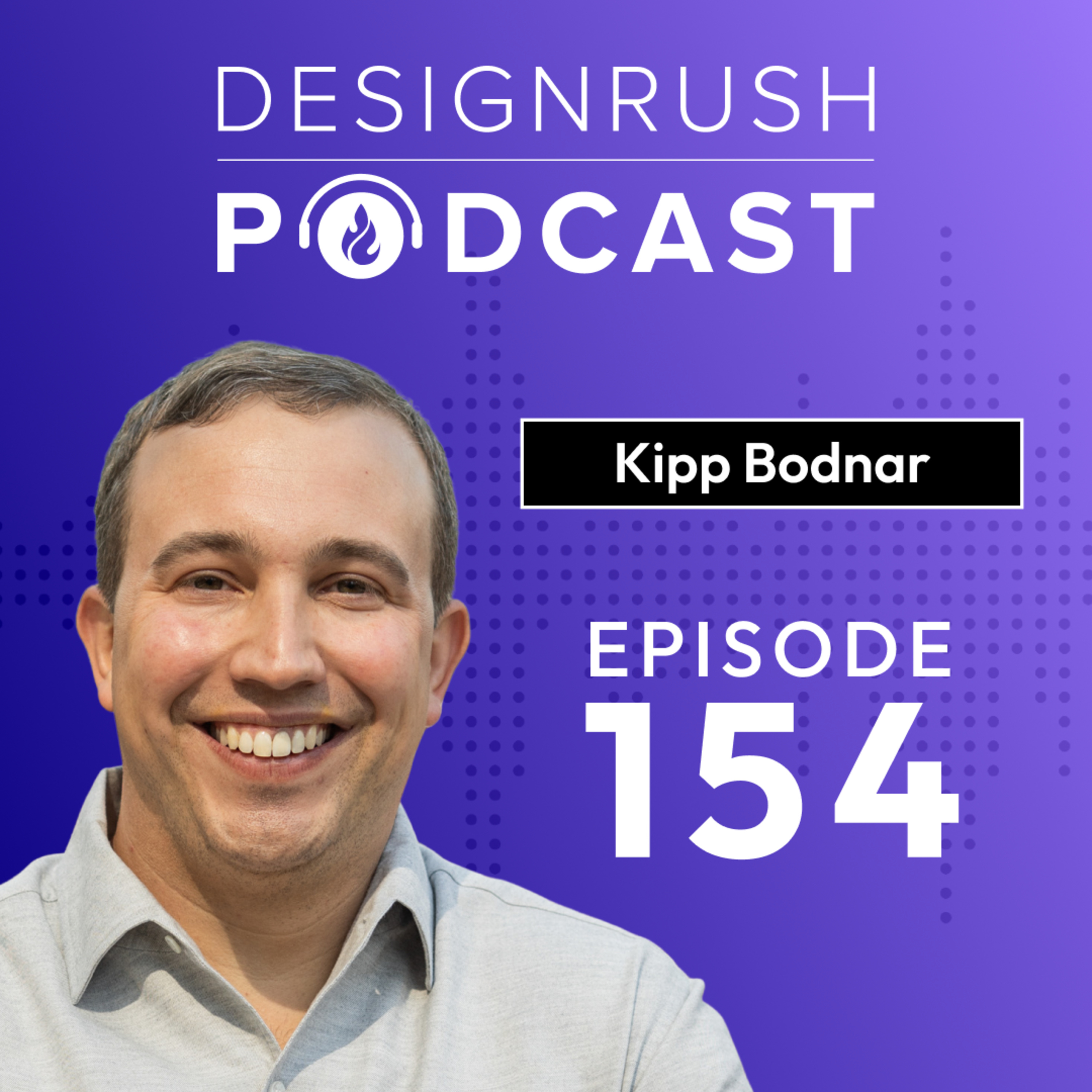
What HubSpot Did After Losing 140 Million Visits

Is the traditional B2B marketing playbook still working? HubSpot CMO Kipp Bodnar joins the DesignRush Podcast to explain why AI marketing is changing the rules, but human judgment still matters. From the Loop Marketing Framework to AI-native teams and marketing automation, Bodnar explores how companies can experiment faster, improve the quality of their work, and adapt without sacrificing creativity, brand voice, taste, or strategic thinking. He also explains why simply adding AI to existing workflows isn't enough. The real opportunity is to rethink how marketing gets done, with focused experimentation, stronger systems, and faster learning. And as AI changes execution, agencies may need to deliver more of what technology cannot easily replace: judgment, market insight, specialized systems, and strategic expertise. For CMOs, CEOs, founders, and B2B marketing leaders, this conversation offers a practical look at how to balance AI automation with human creativity and build a marketing strategy for what comes next. In this episode: 00:00 Intro 00:49 Why is the old marketing playbook no longer working? 02:18 How do you find the right direction when nobody knows the answer? 04:20 What marketing experiments failed at HubSpot, and why? 05:18 How should CEOs approach marketing experiments in the age of AI? 08:05 What is the Loop Marketing Framework and how does it work? 10:32 How does AI Buyer Simulation help marketers test ideas before spending? 12:03 How can marketers use AI without losing human creativity and judgment? 13:39 How is AI changing the writing and editing process? 15:17 What happens to marketing performance if CMOs don't adapt to AI? 17:01 What marketing skills can't AI reproduce? 17:45 How can traditional marketing teams become AI-native? 19:29 How does HubSpot use AI agents and sprints to accelerate marketing execution? 20:04 What will the future of marketing agencies look like in the AI era? 21:28 Which marketing agency services could become less valuable as AI improves? 22:26 Are clients adopting AI faster than marketing agencies? 23:33 What are CMOs afraid to admit about traditional marketing? 23:50 Outro Discover more marketing insights and find top agencies for digital marketing, branding, creative, AI, and business growth at https://r.designrush.com/podcast-154 Related DesignRush resources: AI in Marketing: Use Cases, Benefits, and Impact in 2026 FOLLOW DESIGNRUSH ☑️ Instagram: https://www.instagram.com/designrushmag ☑️ LinkedIn: https://www.linkedin.com/company/designrush DesignRush | Brand Discovery Platform & Agency Directory B2B Media platform driving brand discovery & growth with trends, agency rankings, marketplace & best designs.

September 16, 2026Episode 15333 min

AI Founder: 85% Spend More on AI, Only 22% Make It Work | Jeff Finkelstein

Is AI for business actually worth the hype? Learn how to move past the prototype phase and determine if your project will yield real results. Jeff Finkelstein, founder of Customer Paradigm, joins us to break down the practical realities of deploying new tools. Many companies struggle with scaling their AI investments, often getting stuck in the testing phase without a clear path to production. This discussion focuses on the critical gap between experimentation and generating measurable value. We analyze the metrics that truly matter when measuring AI ROI, ensuring your strategy aligns with long-term growth rather than just following trends. If you are responsible for integrating business technology into your operations, this guide helps you identify when to commit resources and when to pause. Timestamps: 00:00 Intro 00:42 How can businesses turn AI into real business value? 04:16 Why AI strategy must start with the customer? 06:35 Why do AI investments struggle to scale? 10:50 When does AI become a data problem? 12:56 How to test AI before scaling it? 14:27 What makes an AI prototype ready for the real world? 18:09 What should executives consider before deploying AI? 21:47 What AI security risks are businesses underestimating? 23:59 What decisions should AI never make alone? 26:00 Can AI turn weeks of development into hours? 27:53 What should businesses measure to prove AI ROI? 31:07 How should CEOs identify the right AI opportunities? 32:40 Outro Discover more marketing insights and top agencies at https://r.designrush.com/pod Related DesignRush resources: Enterprise AI Deployment Strategy: Nvidia Shows Why AI Deployment Matters Subscribe for more marketing and business strategy breakdowns, and tell us in the comments if you have successfully scaled an AI project yet. FOLLOW DESIGNRUSH ☑️ Website: https://www.designrush.com/ ☑️ Instagram: https://www.instagram.com/designrushmag ☑️ LinkedIn: https://www.linkedin.com/company/designrush ABOUT DESIGNRUSH DesignRush.com is a B2B marketplace connecting businesses with agencies through expert reviews and agency ranking lists, awards, knowledge resources, and personalized agency recommendations for vetted projects.

September 9, 2026Episode 15225 min

The Ad Targeting Mistake That's Wasting Your Budget

Is hyper-targeting actually hurting your ad performance? Learn how to fix your creative strategy with lessons from industry veteran Mack Reynolds. Mack Reynolds, SVP of Global Creative Strategy at Shuttlerock, breaks down the tension between data-driven targeting and creative originality. Whether you are at a startup or a global brand, you need to know how to turn business challenges into actionable ideas without losing your brand identity in the process. We discuss the mechanics of creative testing and how to maintain consistency while scaling your content efforts. If you want to leverage AI for efficiency while keeping your human edge, this conversation provides the tactical framework you need to balance immediate brand growth with long-term equity. Subscribe for more expert leadership lessons, and tell us in the comments how you balance creative risk with business goals. Timestamps: 00:00-00:36 Intro 00:36-03:02 What are the biggest mistakes brands make with their advertising? 03:02-04:00 How can brands stay consistent while creating more content? 04:00-05:27 How can brands stay consistent while creating more content? 05:27-08:08 How do you turn a business challenge into a breakthrough idea? 08:08-09:39 How can an experience elevate a brand? 09:39-11:29 What should brands never compromise on? 11:29-12:57 How should brands balance business goals with brand consistency? 12:57-14:55 How should brands rethink targeting in the age of algorithms? 14:55-16:58 How can brands stay relevant without losing originality? 16:58-19:20 How can brands use AI without losing authenticity?19:20-21:09 How can brands scale creativity without losing originality? 21:09-22:35 How do you turn one creative idea into hundreds of assets? 22:35-24:09 How can brands use every campaign to learn and improve? 24:09-25:11 Should CMOs let go of control to get better marketing results? 25:11-25:50 Outro Discover more marketing insights and top agencies at https://www.designrush.com Related DesignRush resources: Structured Creative Testing Is Becoming the Engine Behind Paid Media Performance: https://news.designrush.com/structured-creative-testing-paid-media-performance AI in Marketing: Risks, Rewards, and the Reality Brands Face: https://news.designrush.com/ai-marketing-risks-brands-cant-ignore Subscribe to the DesignRush Podcast for more actionable lessons on marketing, growth, and business strategy. ☑️ Website: https://www.designrush.com/ ☑️ Instagram: https://www.instagram.com/designrushmag ☑️ LinkedIn: https://www.linkedin.com/company/designrush ABOUT DESIGNRUSH DesignRush.com is a B2B marketplace connecting businesses with agencies through expert reviews and agency ranking lists, awards, knowledge resources, and personalized agency recommendations for vetted projects. #DesignRushPodcast #MarketingStrategy #AdROI #PaidSocial #CreativeStrategy

September 2, 2026Episode 15126 min

Why Your Business Isn't Growing (And How to Fix It)

Discover more marketing insights and top agencies at https://www.designrush.com Lisa Robbin Young has spent over three decades evolving Ark Entertainment Media, steering the business through market shifts, rapid expansion phases, and major strategic pivots. DesignRush Podcast host Kia Johnson speaks with Lisa about the operational frameworks behind long-term business growth, including how Ark doubled its earnings in 2018 and established an 80% client retention model. Lisa also unpacks how founders can eliminate CEO bottlenecks, why transitioning to flexible month-to-month terms increased long-term retention, and how she repositioned her advisory offers around high-stakes decision-making and organizational resilience. What you’ll learn: How an 80% client retention rate fuels predictable business expansion How founders can remove operational bottlenecks to scale team execution Why high-trust delivery models outperform high-friction lock-in contracts How to reposition core offers for resilience during market shifts About Lisa Robbin Young: Founder of Ark Entertainment Media, leading the company's evolution since 1993 Strategic advisor and keynote speaker specializing in business resilience and high-stakes decision-making Doubled company earnings in 2018 while building a membership model with ~80% retention Related DesignRush resources: Customer retention & web design trends: https://www.designrush.com/agency/website-design-development/trends B2B SaaS marketing strategies: https://www.designrush.com/agency/software-development/trends/b2b-saas-marketing Subscribe to the DesignRush Podcast for more practical lessons from founders, CEOs, and business leaders. #DesignRushPodcast #BusinessGrowth #Leadership #ClientRetention #B2BStrategy

August 26, 2026Episode 15029 min

How to Build a $5M Business in 18 Months (Without a Sales Team)

Discover more marketing insights and top agencies at https://www.designrush.com Aditude reached $5 million in annual subscription revenue in roughly 18 months without a sales team. Founder and CEO Jared Siegal explains the business decisions that made that growth possible. DesignRush Podcast host Kia Johnson speaks with Jared about turning an early service business into scalable software, proving product value before asking customers to pay, and using referrals as a powerful growth engine. He also shares why Aditude built a different business model from the rest of its market, when short-term monetization can hurt long-term customer value, and why scaling sometimes requires difficult decisions about the team that helped build the company. What you’ll learn: How to scale without relying on a traditional sales team Why proving value before charging can accelerate adoption How customer referrals can drive business growth How CEOs can build the right team for each stage of growth About Jared Siegal: Founder and CEO of Aditude Built Aditude from a one-person operation into a scalable SaaS business Reached roughly $5 million in annual subscription revenue in about 18 months without a sales team Related DesignRush resources: B2B SaaS growth strategies: https://www.designrush.com/agency/software-development/trends/b2b-saas-marketing Customer acquisition strategies: https://www.designrush.com/agency/digital-marketing/trends/how-to-get-clients-for-digital-marketing Subscribe to the DesignRush Podcast for more practical lessons from founders, CEOs, and business leaders. #DesignRushPodcast #SaaSGrowth #BusinessGrowth #Leadership

Is this your show?

Claim this listing to keep it up to date, reach guests who want to pitch you, and manage bookings with Guestify.

Claim this listing

More Business podcasts