Find partners
Delta: HealthTech Innovators

Delta: HealthTech Innovators

Hosted by Roupen Odabashian

Episodes

58

Latest episode

Feb 2026

Language

EN

About the show

Welcome to 'Delta', a podcast where we delve deep into the world of healthcare transformation. Join us as we speak with Health Tech innovators, leading researchers, forward-thinking engineers, and passionate individuals dedicated to reshaping the healthcare landscape. If you're curious about the future of healthcare and those spearheading positive change, 'Delta' is your essential listen.

Listen to episodes

58 recent
February 24, 20263 hr 57 min

How OpenEvidence Became a $12 Billion AI Healthcare Giant | Full Breakdown

OpenEvidence just hit a $12 billion valuation — here's the full story of how it happened. Daniel Nadler sold his first company, Kensho, to S&P Global for $550 million. Then he turned his attention to one of the most broken systems in the world — medical information.Hosts Roupen Odabashian, MD and Osama Hyder break down the full story of OpenEvidence — the AI-powered clinical decision support platform now used by 40% of US physicians, handling 358,000 queries per day.We cover Daniel's origin story from Toronto to Harvard PhD, the Federal Reserve, and the founding of Kensho in 2013. We explore the $550M S&P acquisition, his parallel career as a published poet and MoMA PS1 board member, co-founder Zachary Ziegler's background, the Mayo Clinic partnership, domain-specific AI architecture, the USMLE 100% score debate, and the explosive growth that followed.The second half dives into the funding roadmap (Series A–D), product expansion into AI Scribe and DeepConsult, the direct-to-physician business model, monetization strategy, competitive analysis, network effects, and bear case risks.Whether you're a physician, a health tech founder, or an AI investor — this is the most in-depth breakdown of OpenEvidence you'll find anywhere.Subscribe for weekly deep dives: deltahealth.tech | Sponsored by PMWC 2026 — use code DELTAHEALTH at pmwcintl.comTimestamps: 00:00 - Hook: Who is Daniel Nadler & Why OpenEvidence Matters 01:46 - Welcome & Host Introductions 05:48 - Daniel Nadler's Origin Story 12:10 - Harvard PhD & The Federal Reserve 17:00 - Founding Kensho Technologies (2013) 22:00 - S&P Global Acquires Kensho for $550M 29:38 - Poetry & Art Career (MoMA PS1) 31:29 - The Information Crisis in Medicine 48:25 - The Founding of UpToDate 1:02:26 - ChatGPT Launches (November 2022) 1:15:00 - Zachary Ziegler's Background 1:21:00 - Self-Funding & Founding OpenEvidence 1:27:46 - The Mayo Clinic Partnership 1:34:46 - Technical Architecture: AI, RAG & Citations 1:46:00 - USMLE 100% Score & The Debate 1:53:30 - Growth: 358,000 Queries Per Day 2:08:00 - Funding Roadmap: Series A Through D 2:40:00 - Future of AI & The Physician Relationship 2:45:17 - Product Expansion: AI Scribe & DeepConsult 3:05:00 - Direct-to-Physician Approach 3:17:20 - Business Model & Monetization 3:32:15 - Competitive Analysis & Network Effects 3:47:00 - Bear Case & RisksHosts: Roupen Odabashian: roupen@deltahealth.tech | linkedin.com/in/roupen-odabashian-md-frcpc-fasco-183aaa142 Osama Hyder: osama@deltahealth.tech | linkedin.com/in/sam-hyder
January 21, 20264 hr 2 min

How Doximity Built a $9B Monopoly Doctors Actually Love | The Full Story

In this episode, we dive deep into the incredible story of Doximity—the "LinkedIn for Doctors" that captured 80% of US physicians and became one of healthcare's most under-the-radar success stories.Thank you for the sponser of today’s episode🎟️ PMWC Conference – Use code DELTAHEALTH at pmwcintl.com for a discount!🔑 What You'll Learn:How founder Jeff Tangney went from Epocrates (the first medical app on iPhone, endorsed by Steve Jobs) to building DoximityWhy Doximity succeeded where competitors like Sermo and Osmosis failedThe brilliant business model that keeps physicians happy while generating billionsHow COVID-19 transformed Doximity's telehealth tools from 1M calls/month to 1M calls/dayStrategic acquisitions: Curative (staffing), Amion (scheduling), and Pathway (AI clinical decision support)The explosive launch of Doximity GPT and the AI scribe warsThe controversial Open Evidence lawsuit shaking up healthcare AI⚠️ Disclaimer: This is not financial advice. Do your own due diligence.Doximity Links🌐 Website: doximity.com📈 Investor Relations: investors.doximity.com💼 Doximity LinkedIn: linkedin.com/company/doximity📱 Doximity App (iOS): apps.apple.com/us/app/doximity/id393714498🏥 Curative (Physician Staffing): curative.com🩺 Pathway Medical: pathway.mdHostsRoupen Odabashian LinkedIn: linkedin.com/in/roupen-odabashian-md-frcpc-fasco-183aaa142/Email: roupen@deltahealth.techSam Hyder LinkedIn: https://linkedin.com/in/sam-hyderEmail: osama@duniya.health🎧 Subscribe for more deep dives into the playbooks of successful healthcare companies!#Doximity #HealthTech #DigitalHealth #Telemedicine #PhysicianNetwork #StartupStory #HealthcareAI #LinkedInForDoctors

January 20, 202634 min

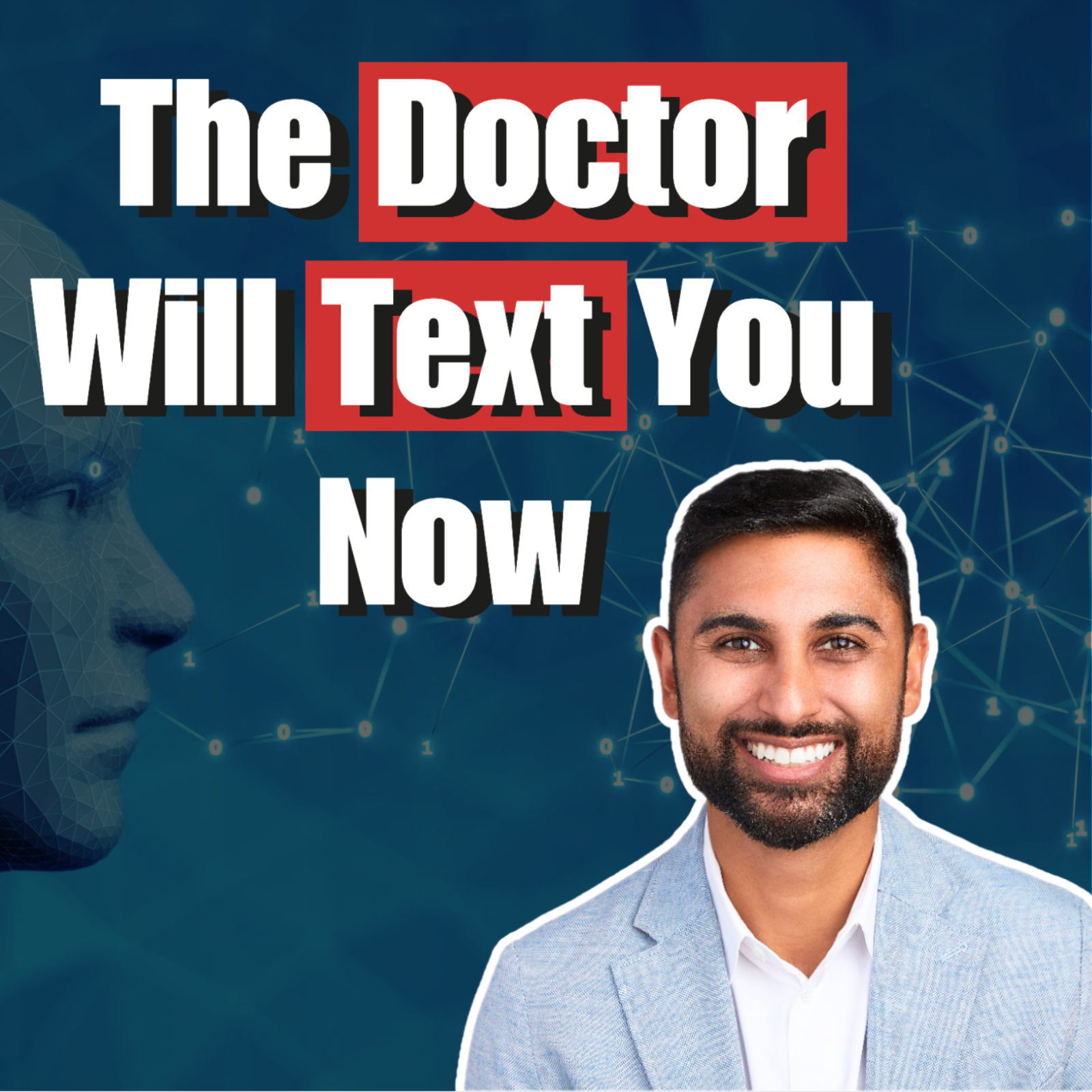
The Doctor Will Text You Now: How Councel Health is Scaling the "Clinician Cockpit" with AI

Join us for an insightful conversation with Dr. Rishi Khakhkhar, Chief Medical Officer at Counsel Health, as we explore how this AI-enabled virtual care company is transforming the way patients access healthcare through chat-based, physician-supervised medical AI.In this episode, we dive deep into:- How Counsel Health combines medical AI with real physicians for safe, supervised care- The patient journey: from AI-powered intake to physician consultation- Asynchronous vs. synchronous care and what it means for busy patients- Emergency escalation protocols and patient safety in AI-enabled care- The "clinician cockpit" - AI tools built for physicians by physicians- The future of longitudinal patient-physician relationships in virtual care- Counsel Health's $35M Series A led by Andreessen Horowitz and Google VenturesDr. Khakhkhar shares his journey from ER physician at Mount Sinai during COVID-19 to helping build the next generation of telemedicine, and why he believes AI will help physicians focus on what matters most - the human moments of care.Timestamps00:00 – Introduction01:28 – Dr. Khakhkhar's Background & How He Joined Counsel Health04:48 – The Patient Journey: From AI Chat to Physician09:00 – Longitudinal Care & the Patient-Doctor Relationship12:00 – Asynchronous vs. Near-Synchronous Care15:00 – Emergency Escalation & Patient Safety Protocols19:00 – AI as a Team Member, Not a Replacement22:00 – Dr. Khakhkhar's Journey: COVID-19 & Virtual Care24:22 – Funding: $35M Series A from a16z & Google Ventures27:00 – The Clinician Cockpit: AI Tools for Physicians31:00 – Isolating the Human Moment in MedicineLinkedIn: https://www.linkedin.com/in/rishi-khakhkharAbout Counsel HealthFounded by Dr. Muthu Alagappan (former CMO of Notable Health, Stanford MD), Counsel Health is an AI-enabled virtual care company on a mission to be the primary doctor for the next billion people on earth.Company Website: https://www.counselhealth.comCompany LinkedIn: https://www.linkedin.com/company/counselhealthFounder LinkedIn (Dr. Muthu Alagappan): https://www.linkedin.com/in/muthualagappan Host: Dr. Roupen Odabashian, MD, FRCPC, FASCOHematology-Oncology Physician | Healthcare Innovation EnthusiastConnect with Us:🎙️ Podcast: Delta HealthTech Innovators💼 Host LinkedIn: https://www.linkedin.com/in/roupen-odabashian-md-frcpc-fasco-183aaa142📧 Email: roupen@deltahealth.techListen on:🍎 Apple Podcasts: https://podcasts.apple.com/us/podcast/delta-healthtech-innovators/id1703827145▶️ YouTube: https://www.youtube.com/@RoubenOdabashianMD🎧 Spotify: https://open.spotify.com/show/2vYC26pNkZVIhsqloNcCm9

January 8, 202638 min

Preventing Dialysis Access Failure: How Auvi Labs is Building a Wearable Ultrasound Device

Preventing Dialysis Access Failure: How Auvi Labs is Building a Wearable Ultrasound Device | Rishab Veldur & Kevin VolkemaIn this episode, I sit down with Rishab Veldur (CEO) and Kevin Volkema (COO) from Auvi Labs to discuss how they're tackling a critical problem in dialysis care. 40% of dialysis patients experience fistula or graft failure within their first year—leading to endless hospitalizations and life-threatening situations.Auvi Labs is building "Beacon," a wearable ultrasound patch that patients can use for just 10 minutes a day to detect early signs of access failure. We dive deep into their journey from a university capstone project to launching clinical pilots, the challenges of building a healthcare startup, and their unique approach to networking and building clinical partnerships.Whether you're a healthcare founder, engineer, or just interested in medtech innovation, this episode is packed with actionable insights.Timestamps • 00:00 – Introduction • 01:00 – The Problem: Dialysis Access Failure • 03:15 – From Acoustic Device to Wearable Ultrasound • 10:06 – The 20-Patient Pilot Study • 11:52 – How to Find Clinical Pilots • 17:40 – Networking Playbook for Healthcare Founders • 21:01 – The Power of a Founder Newsletter • 23:45 – Business Model & Value-Based Care • 29:19 – Biggest Risks & Clinical Integration Challenges • 36:04 – Bottlenecks for ScalingKey Takeaways 1 Start with the problem, not the solution – They pivoted from an acoustic device to ultrasound after learning what patients and physicians actually needed 2 Healthcare is relationship-based – Cold outreach has low success; invest in building genuine connections over time 3 Skip the big conferences early on – Niche events and reaching out to researchers on Google Scholar yields better results 4 Use your student email – Everyone wants to help students 5 Send a newsletter – Share highs AND lows to bring people along on your journey 6 Value-based care is the path – Working with kidney contracting entities can bypass traditional CPT code reimbursementGuest Links • 🌐 Website: auvilabs.com • 💼 Rishab Veldur (CEO) LinkedIn: https://www.linkedin.com/in/rishab-veldur/ • 💼 Kevin Volkema (COO) LinkedIn: https://www.linkedin.com/in/kevinvolkema/Host • 💼 Roupen Odabashian LinkedIn: https://www.linkedin.com/in/roupen-odabashian-md-frcpc-fasco-183aaa142/ • 📧 Email: roupen@deltahealth.tech#healthcarestartup #medtech #dialysis #wearables #digitalhealth #medicaldevice #startup #healthcare #founders

December 15, 202538 min

Dr. Amit Phull - Building Physician-First AI Tools at Doximity

Join us for an incredible conversation with Dr. Amit Phull, Chief Physician Experience Officer at Doximity, as we explore how the largest professional medical network in the United States is revolutionizing healthcare with AI-powered tools built by physicians, for physicians.In this episode, we dive deep into:- How Doximity grew to serve over 80% of U.S. physicians- The development of HIPAA-compliant AI tools including Doximity GPT- The importance of clinician input in healthcare technology- Real-world impact: How AI is saving physicians hours and improving patient care- The acquisition of Pathway (Montreal-based company) and integration of clinical decision support- Privacy-focused AI scribe technology generating millions of notes- Lessons learned from product failures and successesDr. Phull shares his unique journey from computer engineering to emergency medicine, and how maintaining both clinical practice and tech expertise positions him to bridge the gap between technology and healthcare delivery.Timestamps[00:00:00] Introduction & Welcome[00:01:24] Dr. Phull's Journey: Computer Engineer to Emergency Physician[00:04:00] Role as Chief Physician Experience Officer[00:06:41] Why Maintaining Clinical Practice Matters[00:11:04] Introduction to Doximity Tools & Platform[00:14:52] The Secret Sauce: Clinician-Driven Development[00:18:44] Doximity GPT Evolution & HIPAA Compliance[00:22:21] Acquiring Pathway AI (Montreal)[00:28:41] AI Scribe: Privacy-First Documentation[00:30:52] Lessons from Product Failures[00:36:18] Success Story: 10% to 90% Prior Auth Approval RateAbout Our GuestDr. Amit Phull, MDChief Physician Experience Officer, DoximityBoard-Certified Emergency Medicine PhysicianAdjunct Lecturer, Northwestern University Feinberg School of MedicineDr. Phull combines deep expertise in medicine, technology, and strategy. He completed his MD at University of Virginia (where he also earned a BS in Computer Science), finished emergency medicine residency at Northwestern, and has been with Doximity since 2014. He continues to practice emergency medicine while leading physician experience strategy for the nation's largest medical professional network.LinkedIn: https://www.linkedin.com/in/amit-phull-09931667/Doximity Website: https://www.doximity.comDoximity LinkedIn: https://www.linkedin.com/company/doximityMy email: roupen@deltahealth.techYouTube: https://youtu.be/ElB-a5Mubm4

November 19, 202544 min

Why Clinicians Must Learn Tech: OB-GYN to CMO Journey | Healthtech

Why do 30% of patients take medications differently than what's in their medical records? Dr. Eve Cunningham, Chief Medical Officer at Cadence, reveals the shocking gaps in traditional healthcare—and how remote patient monitoring is revolutionizing chronic disease management for 70,000+ patients across 20 health systems.In this episode, we dive deep into:✅ The hidden cost of episodic vs. continuous care✅ How a practicing OB-GYN broke into healthtech leadership✅ Why 20% of medication changes are actually DOWN-titrations✅ The future of AI-powered clinical decision support✅ Real outcomes: 18% fewer hospitalizations, $183/month savings per patientTimeStamps:Dr. Cunningham spent 20 years leading physician groups at Kaiser Permanente, CommonSpirit, and Providence before joining Cadence—a remote patient monitoring company backed by $141M from General Catalyst and Thrive Capital. She shares candid insights on physician leadership, technology transformation, and why clinicians MUST develop technical competency.🎯 Perfect for healthcare entrepreneurs, medtech founders, physicians exploring innovation, and anyone building the future of digital health.KEY TOPICS COVERED:Remote patient monitoring at scale (70,000+ patients)Clinical AI and machine learning in chronic disease managementBreaking into healthtech from clinical practiceValue-based care and Medicare reimbursement (CPT codes 99453, 99454, 99457, 99458)Medication reconciliation and polypharmacy managementVirtual care infrastructure: telehealth, virtual nursing, hospital-at-homeTechnology adoption in large health systemsThe emerging clinician-engineer hybrid roleDeprescribing and down-titration opportunitiesSocial determinants of health and caregiver engagementPUBLISHED OUTCOMES:📊 New England Journal of Medicine: Catalyst validates Cadence's model: https://catalyst.nejm.org/doi/abs/10.1056/CAT.24.0521CONNECT WITH DR. EVE CUNNINGHAM:LinkedIn: https://www.linkedin.com/in/evecunninghammd/🔗 CONNECT WITH CADENCE:Company LinkedIn: https://www.linkedin.com/company/cadencerpmWebsite: https://www.cadence.care/Published Research: https://www.cadence.care/outcomes-report-2024

November 11, 202523 min

AI-Powered Residency Screening: How RankRX Uses LLMs to Fix Unfair Application Filtering

​MalkeAsaad, plastic surgery resident and founder of Rank RX, shares how he built an AI platform using large language models to revolutionize residency application screening. From med school in war-torn Aleppo to Mayo Clinic and MD Anderson, Malke discusses the unfair filtering system that inspired Rank RX—where Nobel Prize laureates get rejected for missing a cutoff by one point—and how AI can make hiring more objective and efficient.What you'll learn:- Why the current residency application system is broken (Nobel Prize winner rejected for 1-point score gap)- How Rank RX uses AI/LLMs to screen 1,000–2,000 applications (30–80 pages each) in minutes- Building a tech team as a physician entrepreneur without coding background- Customer acquisition strategies for healthcare startups (networking, ads, vendor screening)- Market validation: assessing if your solution solves a real problem people will pay forTimestamps- 0:00 – Unfair residency filtering: Nobel Prize winner rejected for 1-point gap- 1:14 – Malke Assad’s journey: From Aleppo to leading U.S. institutions- 3:45 – Rank RX: How AI/LLMs bring objectivity to application screening- 4:21 – How it works: Custom scoring and program-driven selection criteria- 8:36 – Real-world usage: Positive feedback and automated recommendation letter analysis- 10:32 – Building a tech team without a coding background- 17:35 – Key advice for physician entrepreneurs: Turning ideas into scalable companies- RankRX Website: https://www.rank-rx.com/- Malke Assad LinkedIn: https://www.linkedin.com/in/malke-asaad-43b908177- The Match Guy Website: https://thematchguy.thinkific.com

November 2, 202524 min

From FDA Clearance to 1 Billion Views: How This Medical Device Startup Went Viral

When Sahil and his brother started Otoset in their mid-20s, they had no idea their FDA-cleared ear cleaning device would generate over 1 billion social media views and force them to completely pivot their business model.In this episode, Sahil shares the unexpected journey from building a B2B medical device company to creating "the front door to ear care", a direct-to-consumer healthcare network serving 40 million Americans with chronic ear wax issues.🔑 KEY TAKEAWAYS:→ How they became some of the youngest founders to get FDA 510(k) clearance→ The unexpected social media virality that changed everything→ Why they pivoted from partner clinics to owning their own locations→ Marketing strategies: organic content, influencers, and patient education→ The critical role of FDA clearance as a competitive differentiator→ Building credibility before scaling consumer marketing→ Finding the right mentors in healthcare entrepreneurship💡 WHO THIS IS FOR:✓ HealthTech & MedTech founders navigating FDA pathways✓ Startups exploring direct-to-consumer healthcare models✓ Entrepreneurs learning to leverage social media for medical products✓ Anyone interested in the consumerization of healthcare📊 BY THE NUMBERS:- 40 million Americans affected by ear wax buildup- 1 billion+ views across social media- $99 cash-pay model (first treatment)- 20-30 patients/day in company-owned clinics- Expanding to 50+ major metrosTimestamps:00:00 - Introduction: The Brother's Ear Wax Problem01:21 - What is Otoset? The First FDA-Cleared Ear Cleaning Device03:22 - Why FDA Clearance Matters & How They Got It06:56 - The Unexpected Social Media Explosion08:55 - The Strategic Pivot: B2B Device to D2C Healthcare Network11:36 - Business Model: $99 Cash-Pay & Building Owned Clinics15:18 - Beyond Ear Care: Hearing Health & Expansion Plans17:15 - Marketing Strategy: Organic, Influencers & Patient Education20:33 - Building Credibility Before Scaling Consumer Marketing22:35 - Biggest Lesson: Find Healthcare Entrepreneur Mentors Early24:33 - Final Thoughts & Key Takeaways📌 Key Resources & Links🔗 Otoset Website: https://otoset.com/🔗 Otoset Linkedin: https://www.linkedin.com/company/visitallears/🏥 Find a Certified Clinic: https://otoset.com/pages/find-clinic💼 Connect with Sahil: https://www.linkedin.com/in/sahildiwan/

October 6, 202536 min

AI in Medicine is BROKEN: Stanford PhD Exposes the 95% Accuracy Lie | LLMs in Healthcare

Is AI really ready to replace doctors? Stanford PhD researcher Suana reveals shocking truths about medical AI that Big Tech doesn't want you to know. When she tested leading AI models like GPT-4, Claude, and DeepSeek on modified medical questions, their accuracy plummeted by up to 40%!In this eye-opening conversation, we dive deep into:❌ Why 95%+ accuracy on medical exams means nothing in real clinical practice❌ How AI models fail when there's "no right answer" (which happens constantly in medicine)❌ The dangerous gap between flashy headlines and clinical reality✅ How doctors can safely use AI as a co-pilot (not replacement)✅ The future of medical AI evaluation and what needs to changeSuana is a 3rd-year PhD student at Stanford in Biomedical Data Science, pioneering real-world evaluation methods for medical AI. Her research on MedELM and benchmarking is reshaping how we think about AI deployment in healthcare.🔬Key Research Discussed:JAMA Open publication on AI robustness in medical diagnosisMedELM: 35-dataset benchmark suite for real clinical tasksWhy MedQA and USMLE-style tests don't reflect actual patient care⚠️ CRITICAL TAKEAWAY: AI models are trained to always give an answer, even when "none of the above" is correct—a potentially dangerous flaw in medical decision-making.📚 Resources Mentioned:MedELM Leaderboard (public repository available)Research on medical AI evaluation standardsReal-world hospital deployment considerationsTimestamps:0:00 - Introduction: Why Medical AI Evaluation is Broken1:04 - Suana's Journey: From Computer Science to Healthcare AI2:32 - The 3 Critical Problems with Current AI Benchmarks8:28 - The Research: Testing AI with "None of the Above"17:24 - Shocking Results: AI Accuracy Drops 8-40%19:02 - Why AI Can't Say "I Don't Know"23:10 - Take-Home Message: Use AI as Co-Pilot, Not Replacement24:58 - Real Clinical Examples: When AI Actually Helps28:12 - MedELM: The Future of Medical AI Evaluation34:35 - Final Advice for Doctors, Patients & DevelopersWhether you're a physician, healthcare worker, AI developer, or patient curious about medical AI, this conversation will change how you think about artificial intelligence in healthcare.Paper link: https://jamanetwork.com/journals/jamanetworkopen/fullarticle/2837372

September 22, 202524 min

From $60K/Month Revenue Recovery to YC Success: How Ember is Fixing Healthcare's $10B Fraud Problem

Healthcare revenue integrity is broken, and Charlene, CEO of Ember, is fixing it with AI. In this episode, she reveals how hospitals lose millions due to inefficient billing processes and how her platform helps recover 51% of initially denied claims. From her background at Google Health to building a YC-backed startup that's generating over $60,000 per month in additional revenue for clients, Charlene shares the secrets behind focusing on one specific problem and executing flawlessly.Key topics covered: Healthcare revenue cycle management, AI in medical billing, startup focus strategies, building in regulated industries, and the future of healthcare fraud detection. Perfect for healthcare executives, CFOs, startup founders, and anyone interested in healthtech innovation.Timestamps0:00 Introduction & Ember Overview1:05 What is Revenue Integrity in Healthcare?2:31 Ambient Listening & Clinical Documentation4:10 Product Implementation & Integration Process6:02 Real Results: $60K+ Monthly Revenue Recovery8:33 Technical Deep Dive: How Ember Works10:28 Charlene's Background & Healthcare Industry Insights12:53 The $10B Healthcare Fraud Problem16:17 Y Combinator Experience & Startup Focus18:22 Building the Right Team (3-Year Journey)21:44 Future Vision for Ember22:41 Advice for Healthcare Entrepreneurs

Is this your show?

Claim this listing to keep it up to date, reach guests who want to pitch you, and manage bookings with Guestify.

Claim this listing

More Business podcasts