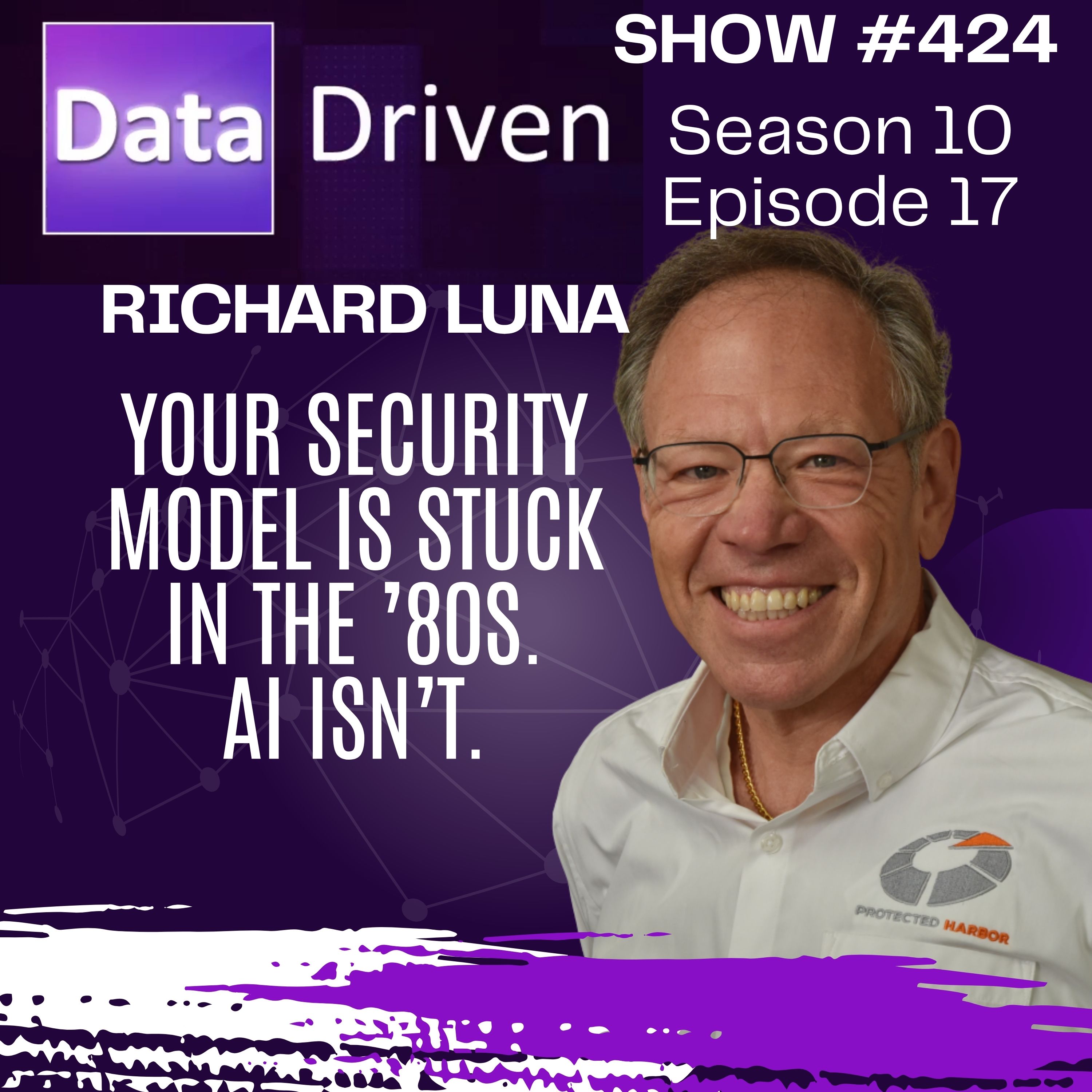
Your Security Model Is Stuck in the ’80s. AI Isn’t.
In this episode of Data Driven, Frank La Vigne talks with Richard Luna, CEO of Protected Harbor, about why security built around keeping attackers outside a network leaves organizations exposed once someone gets in. Richard explains his concern that AI-driven attacks will probe multiple weaknesses at once, and makes the case for layered defenses, network segmentation, and infrastructure designed around the applications it supports. The conversation moves from security architecture to the people and processes that make systems dependable. Richard shares how his team plans for failures, works across technical silos, and tests vendor claims before putting equipment into production. Frank and Richard also explore the promise of AI-assisted coding, the experience junior developers need to build, and the expensive gap between a successful demo and software that holds up under real demand. From a storage cluster that failed on its second day of testing to a deployment that collapsed under load, the episode offers practical lessons in building durable systems and teams that take responsibility for them. Key Takeaways • Design beyond the perimeter. Richard argues for barriers and tripwires inside the environment, with attention to how data moves between systems. • Build around application needs. Storage performance, traffic separation, redundancy, and failure recovery should reflect the actual workload. • Break down technical silos. Developers and infrastructure teams need each other’s knowledge to diagnose problems and implement security effectively. • Keep human judgment in AI-assisted development. Generated code and automated tests still need experienced review and realistic load testing. • Make accountability specific. Divide responsibilities clearly, give engineers a path to ask for help, and involve clients when they own a blocker. • Test before trusting. Vendor assurances and a working demo do not establish how a system will behave in production. About the Guest Richard Luna is the CEO of Protected Harbor. His career has spanned software development, managed services, hosting, DevOps, and SaaS infrastructure engineering. In this conversation, he brings that experience to the design, operation, and security of systems that businesses depend on. Links and Resources Richard on LinkedIn: https://www.linkedin.com/in/richardluna/ Protected Harbor: https://www.protectedharbor.com/ Watch on YouTube - https://youtu.be/y6ZHVmJtf9o Time Stamps 00:00 Why the 1980s security model falls short 01:21 Introducing Richard Luna 02:32 What SaaS infrastructure engineering means 03:53 AI threats, perimeter defenses, and information silos 05:44 Building barriers and tripwires 07:17 Application-aware infrastructure 10:27 Phased change and lessons from Toyota 11:22 Rebuilding infrastructure around the workload 13:37 Collaboration, zero trust, and asking for help 15:35 Data flow, security, and finding the root cause 18:19 Listening to clients and earning long-term trust 20:08 AI-assisted coding and the next generation of developers 21:17 Why generated tests are not enough 25:17 DevOps experience and “works on my machine” 26:58 Learning from the loss of a customer 29:02 Dividing responsibilities without losing accountability 31:56 Oversight meetings that remove obstacles 33:34 Empowering clients and engineers 35:42 Respect, culture, and learning across teams 38:06 Building a business by solving clients’ problems 42:01 Planning for failure instead of fighting fires 43:01 Stress-testing enterprise storage 47:01 A deployment failure and the cost of skipping tests 48:32 Cloud scaling and runaway costs 49:48 Closing thoughts and connecting with Richard Subscribe to Data Driven for more conversations about data science, AI, data engineering, and the people building the systems behind them.