Find partners
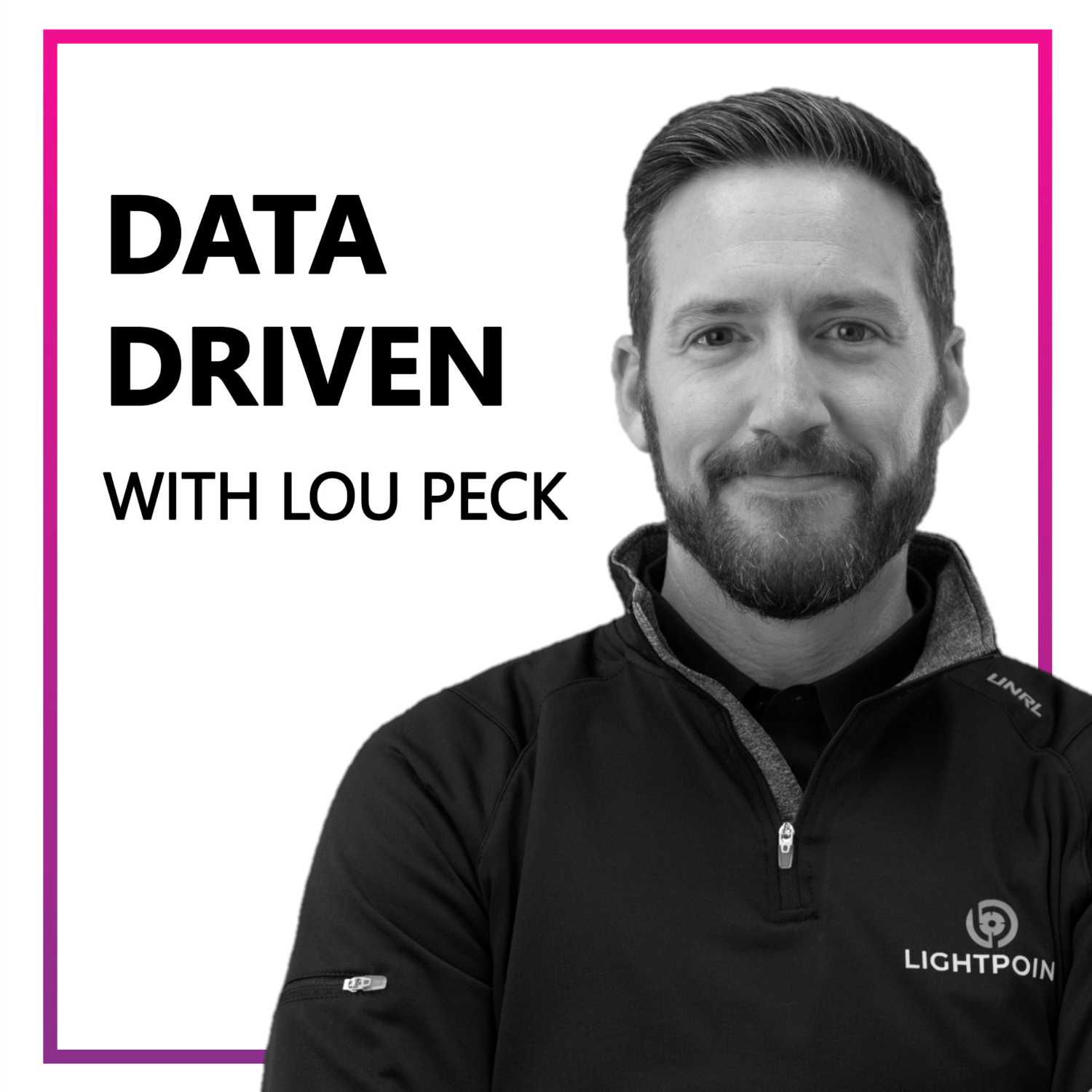
Data Driven with Lou Peck

Data Driven with Lou Peck

Hosted by Lou Peck

TechnologyInterviews guests

Episodes

14

Latest episode

Feb 2026

Language

EN

About the show

Hosted by Lou Peck, Data Driven interviews industry experts about the current and future states of collision reconstruction.

Listen to episodes

14 recent
February 11, 20262 hr 55 min

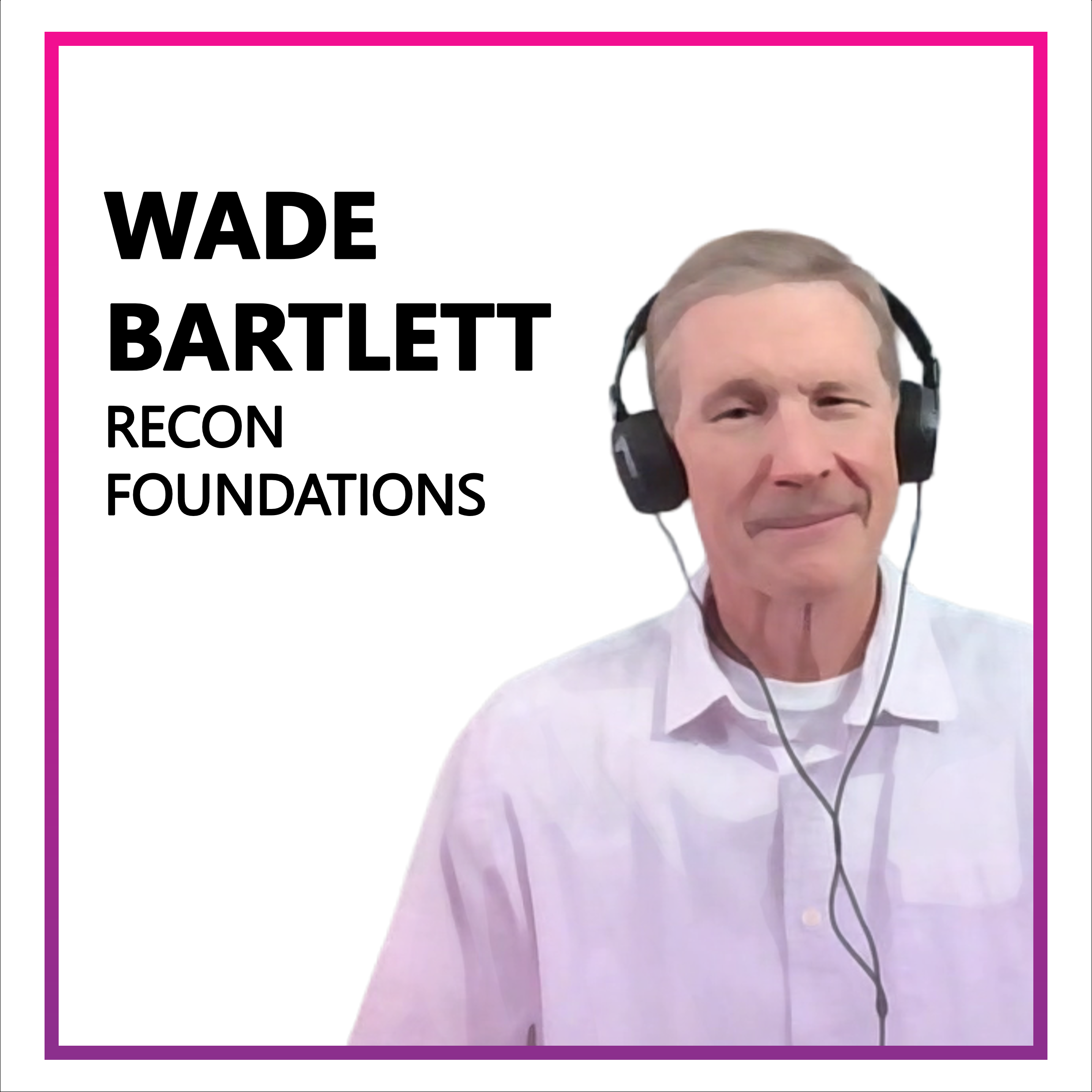
Wade Bartlett: From Engineering to Law Enforcement, Critical Speed Yaw Analysis, and the Power of Constant Learning

Wade has a uniquely broad career. From consulting engineer, to Deputy Sheriff, to Adjunct Faculty at IPTM, to NAPARS Administrator, he’s an integral member of the reconstruction community. Wade has a bachelor’s and master’s in mechanical engineering, a professional engineering license, and is also ACTAR accredited. He’s authored or co-authored nearly 50 technical publications, and has presented at conferences all over the world.We sat down for nearly 3 hours and covered a wide variety of topics, including:- How Wade accidentally became an engineer- Going from failure analysis to accident reconstruction- Handling expert testimony- Overcoming the fear of public speaking- Becoming a police officer- Giving back to the community- Monte Carlo analyses- Critical Speed- Drag Sled wars- Advice for the next generation- And moreYou can watch the podcast and find links from the show here.--Connect with WadeRead Wade's Papers--Timeline of Topics 00:00:00 - Career Overview and the Importance of Meticulous Field Work00:06:21 - Researching Motorcyclist Perception and Response with Eye Tracking00:09:07 - Academic Challenges and Learning to be an Engineering Student00:20:12 - Transitioning from Failure Analysis to Accident Reconstruction00:32:24 - Self-Teaching HVE and the Vital Role of Forensic Photography00:39:05 - Handling First Depositions and Navigating Cross-Examination00:53:46 - Overcoming the Fear of Public Speaking through Teaching and Mentorship01:09:05 - Growth of NAPARS and Modernizing Information Sharing01:35:02 - Becoming a Police Officer and Bridging the Civil-Criminal Data Gap01:56:10 - Applying Monte Carlo Statistical Analysis in Excel02:14:42 - The Science of Critical Speed Yaw and the Drag Sled Research Wars02:40:35 - Advice for the Next Generation: Constant Learning and Multi-Disciplinary Knowledge

November 7, 20253 hr 15 min

Swaroop Dinakar: Exploring Human Factors, ADAS, Fatality Trends, and SHRP2 Data

Swaroop is a Managing Scientist at the famous Driver Research Institute, where he wears many hats including research, education, software development, and analysis of motor vehicle collisions.He holds a bachelor’s in industrial engineering from Die Anon Saggar College of Engineering in India and a Master’s degree in industrial engineering from Texas A&M University, where he focused on human factors.Swaroop has published over 20 papers in the field of human factors and is a member of several driver safety related committees and technical groups.We covered a wide variety of human factors topics, including:The science of evaluating a driver’s responsePedestrian detection and safetyFatality trends and insightsThe SHRP2 data gold mine (Strategic Highway Research Program)Naturalistic braking dataDocumenting nighttime scenesAnd more...Two clarifications from the show:Biomotion is referred to as “biometric” on a few occasions.Fatal pedestrian crashes with intoxicated crash stats: Drivers >0.08 is ~18% and Peds >0.08 is ~30%. Overall ~43% where either one was >0.08.You can watch the podcast and find links from the show here.--Connect with SwaroopDriver Research InstituteResponse / IDRR--Timeline of Topics00:00:00 - Team Growth and Research Methodology Challenges00:04:01 - Unbiased Human Factors Analysis and Study Compilation00:13:22 - Perception-Response Time Variables, Adjustments, and IDRR Development00:20:38 - Journey into Human Factors Engineering00:23:33 - Rising Fatality Trends and Emergency Vehicle Distractions00:31:57 - Haptic Feedback, ADAS Warnings, and System Limitations00:37:02 - Roles at Driver Research Institute and Response Software Overview00:48:23 - Detailed Fatality Trends and ADAS Effectiveness00:50:26 - Pedestrian Safety: Nighttime Visibility and Contributing Factors00:58:20 - Overestimation of Visibility and Retroreflective Clothing Studies01:10:53 - Tennis Ball Visibility Study and Bicyclist/Pedestrian Enhancements01:28:13 - Pedestrian Walking Speeds, Adjustments, and Response Integration01:33:43 - Case Handling: Site Inspections, Tools, and Analysis Process01:45:01 - SHRP2 Naturalistic Data Introduction and Braking Insights02:19:26 - Key Takeaways from SHRP2 Research on Crash Types and Responses02:35:57 - ADAS Challenges: Distractions, Takeover, and Human-Machine Interaction02:46:06 - Looming Effects, Lead Vehicle Detection, and Specific Influences03:05:52 - Expert Testimony Advice and Demonstratives03:09:29 - Turning Crash Analysis into Broader Safety Improvements

October 15, 20252 hr 0 min

Ed Fatzinger: Deconstructing Kawasaki events, exploring Ducati DDM, and all things motorcycle data

Lou sits down with motorcycle data guru, Ed Fatzinger. Ed is the director of accident reconstruction at YA Engineering. He holds a bachelor’s in mechanical engineering from West Virginia University and a master’s in aerospace engineering from Embry Riddle University. He’s also a professional engineer, ACTAR-accredited reconstructionist, and a member of the SAE accident reconstruction committee. He’s published several papers on the topic of motorcycle crash data. In this episode, you’ll learn about:• Kawasaki data and how Ed started down that path• Ducati’s Data Monitoring system• Bombardier’s BUDS data• Airbags vests• Apps• Diagnostic tools• And more…You can watch the podcast and find links from the show here.--Connect with EdEdFatzinger.comYA Engineering--Timeline of Topics00:00:00 – Bikes in the shop and Ducati’s modern tech00:04:03 – Discovering Kawasaki’s hidden EDR system00:07:18 – Breaking barriers: early roadblocks and first contact with Kawasaki00:12:03 – Data mysteries and how manufacturers respond00:15:43 – How motorcycle EDRs actually trigger (and how Ed tested it)00:20:43 – Cracking the code: reverse-engineering and publishing the first papers00:25:03 – Education, persistence, and field testing across the country00:32:48 – Tip-over sensors, power loss, and missing crash data00:37:38 – Inside the data: speed, traction, throttle, clutch, and gears00:47:17 – Validating accuracy and correcting speed data00:52:16 – Power loss anomalies and how to preserve motorcycle EDR evidence01:04:17 – Off-road vehicles, BRP systems, and what “last instant data” really means01:12:21 – Diagnostic tools, Ducati EDRs, and the future of rider data01:34:49 – Airbag vest systems and data availability01:41:23 – Ducati Data Analyzer and practical applications01:56:54 – Smartphone-based data01:59:24 – Lessons learned and how to connect with Ed

September 18, 202542 min

Matt DiSogra and Jeff Hirsch: Bendix data and developing a translation protocol

Lou sits down with Matt DiSogra of Delta |v| and Jeff Hirsch of Drive Forensics to discuss their recent SAE paper, Examination of the Data Structures of the Bendix® Data Recorder.The podcast is available to watch here.--Connect with MattConnect with JeffRead their paper (DiSogra, M., Hirsch, J., and Yeakley, A., "Examination of the Data Structures of the Bendix® Data Recorder," SAE Technical Paper 2025-01-8712, 2025)--Timeline of Topics00:00 - Introduction and BDR Basics03:59 - BDR Modules, Data, and Triggers09:27 - Data Retrieval and SAE Paper Overview12:50 - Translation Process and Validation23:15 - Practitioner Implications and Options29:20 - Future Plans and Insights34:55 - Industry Trends--Links from the show can be found here.

September 8, 20253 hr 5 min

Jarrod Carter: Presenting at trial, mentoring young recons, managing a firm, and finding balance.

Lou sits down with Jarrod Carter of Origin Forensics to discuss presenting at trial, mentoring young recons, managing a firm, and finding balance.The podcast is available to watch here.--Connect with Jarrod Origin Forensics--Timeline of Topics00:00:00 - Introduction and the "Rub Some Dirt on It" philosophy07:28:00 - Managing caseload and scope of work12:18:00 - Building and running a recon team27:16:00 – Presenting to the court36:42:00 - Education and mentors41:47:00 - Energy methods and restitution46:53:00 - Teaching juries01:02:49 - Public speaking and testimony skills01:09:24 - Continuous learning and new tools01:13:29 - Demonstratives and exhibits01:25:07 - Hiring and nurturing a team, prioritizing family, and avoiding burnout02:17:17 - AI in recon02:49:44 - Future of AI (AGI, Reasoning)--Links from the show can be found here.

May 30, 20251 hr 31 min

Randy Bauder + Taylor Walker: Tools and Tactics for Acing the ACTAR Examination

Lou sits down with Randy Bauder and Taylor Walker to discus the ACTAR exam – why they sought accreditation, how they prepared, and their advice for others taking the test. --Connect with RandyLearn more about ACTARRead about the accreditation process--Timeline of TopicsRandy Bauder00:00:00 – Introduction to the show and Randy’s background00:04:33 – Randy’s decision to pursue accreditation00:08:13 – The application process and requirements to sit for the exam00:10:46 – Distinction between ACTAR and PE00:12:30 – Preparation for the exam00:20:30 – Reference materials used during the exam00:25:50 – The morning session00:31:37 – The afternoon session00:34:35 – Finding out the results00:36:41 – Advice for others seeking accreditation Taylor Walker00:39:40 – Introduction to Taylor’s background00:45:03 – Taylor’s decision to pursue accreditation00:52:20 – Training prior to the exam00:55:09 – Preparation for the exam01:02:44 – Advice for others seeking accreditation01:04:48 – Tools used during the afternoon session01:12:12 – The morning session01:17:01 – The afternoon session01:25:58 – Finding out the results01:26:42 – Would you do anything differently a second time around?--Resources DiscussedAndy Rich’s Prep Course CA Association of Accident Reconstruction Specialists (CA2RS) California Peace Officer Standards and Training IPTM Courses – Crash Investigation and ACTAR Prep Northwestern University Center for Public Safety Rusty Haight | Collision Safety InstituteYouTube Test Prep

October 4, 20241 hr 56 min

Jeff Suway: quantifying luminance with a camera, video analysis, & his love of retroreflective tape

Lou sits down with Jeff Suway of JS Forensics to discuss how he got into recon, the current state of his firm, Jeff's real love: retroreflective tape, quantifying luminance with a camera, video analysis, and much more.The podcast is available to watch here.--Connect with JeffJS ForensicsNitere--Timeline of Topics00:00:00 – Jeff’s background and introduction to forensics00:20:16 – JS Forensics: Jeff’s vision for the company and his current team00:31:45 - Jeff’s fascination with retroreflective tape00:44:35 – Quantifying luminance with a consumer grade camera00:59:00 – Presenting in the courtroom01:02:26 – How to take contrast measurements01:19:53 – Nitere applications01:28:11 – Necessities for a recon trying to do nighttime analysis01:39:57 – Methods and tools Jeff’s experimenting with01:43:06 – How Jeff stays in touch with the latest tech in the industry01:47:11 – Rapid fire: What Jeff uses point clouds for, best investment under 5k, and most used papers--Papers Discussed (in order of appearance)Suway, J., Suway, S., “A Method for digital Video Camera Calibration for Luminance Estimation” Society of Automotive Engineers (SAE) World Congress and Exhibition, 2017, SAE Paper No. 2017-01-1368Suway, J., Suway, S., "A More Robust Method for Digital Video Camera Calibration for Luminance Estimation" SAE Technical Paper 2022-01-0802, 2022Muttart, J., "Factors that Influence Drivers' Response Choice Decisions in Video Recorded Crashes," SAE Technical Paper 2005-01-0426, 2005, https://doi.org/10.4271/2005-01-0426.Cipriani, A., Bayan, F., Woodhouse, M., Cornetto, A. et al., "Low Speed Collinear Impact Severity: A Comparison Between Full Scale Testing and Analytical Prediction Tools with Restitution Analysis," SAE Technical Paper 2002-01-0540, 2002, https://doi.org/10.4271/2002-01-0540.Suway, J., Welcher, J., “A Quantitative Method for Accurately Depicting still photographs or video of a night-time scene Utilizing Equivalent Contrast” Society of Automotive Engineers (SAE) World Congress and Exhibition, 2016, SAE Paper No. 2016-01-1463.

February 9, 20243 hr 12 min

Jeff Muttart: driver response, autonomous vehicles, training novices, and the evolution of recon.

Lou sits down with Jeff Muttart to discuss driver response, autonomous vehicles, training novices, and the evolution of recon.The podcast is available to watch with video here.--Connect with JeffDriver Research InstituteResponseEducationDrivers’ Response in Emergency Situations BookPublished PapersSwaroop Dinakar--Timeline of Topics00:01:22 The origin of a data junkie00:13:02 The 16-year-old driver00:23:52 Moving from the police department to academia00:31:36 Jeff’s first success00:40:07 The PRT of automated vehicles00:52:14 Why are ped fatalities on the rise even with the increase in ADAS-equipped vehicles?01:04:42 Analyzing the SHRP-2 data01:17:53 Where are humans most vulnerable?01:29:27 Access to video01:39:39 Age as a factor01:54:30 Jeff’s current toolkit02:12:55 Autonomous vehicles02:28:33 Predictions for the future02:36:27 Motorcyclist PRT research02:44:58 Applying the literature02:53:22 What tool will be gone in 5-10 years?02:57:02 Driver Research Institute and the future--Studies, Literature, and Tools Discussed100 Motorcyclists StudyDevelopment and Evaluation of Driver Response Time Predictors Based upon Meta AnalysisHuman Performance Lab at UMass Amherst (HPL)Konica Minolta Luminance MeterPart 563Risk and Perception Training (RAPT)Strategic Highway Research Program (SHRP)SHRP-2Sony Alpha 7S IISWOV

November 29, 20231 hr 59 min

Tim Cheek and Matt DiSogra: heavy vehicle data and its proliferation, the modern HVEDR toolkit, and the future of the field.

Lou sits down with Tim Cheek and Matt DiSogra to discuss heavy vehicle data and its proliferation, the modern HVEDR toolkit, and the future of the field.The podcast is available to watch with video here.--DELTA |v| Forensic EngineeringTim CheekMatt DiSograSAE Course - Accessing and Interpreting Heavy Vehicle Event Data RecordersHVEDR.com--Timeline of Topics00:01:23 Tim and Matt’s backgrounds00:05:45 Definition of HVEDR00:12:42 What sources of data are available on a heavy vehicle and how do you access them?00:30:21 Preparing for a heavy vehicle inspection and triaging once you’re there00:39:55 How do you keep up with it all?00:43:44 Last stop data00:49:45 Fault code setting event and the associated data00:57:43 Autonomy in heavy trucking01:06:59 What tools are needed to access Bendix data?01:13:05 Sharing knowledge in a changing environment01:16:58 WABCO Systems01:19:57 Increase in data sources01:24:53 Accessing trailer data01:27:25 Modern toolkit for a heavy truck inspection01:40:08 Will event data recorders ever replace recons?01:48:31 How to drink out of the fire hose without getting your face blown off--Systems, Tools, and Companies DiscussedBendixBosch CDRCumminsDearborn GroupDetroit AssuranceMack VolvoMecanica ScientificNEXIQOmnitracsPart 563Safety DirectWABCOWaymoWingman Fusion System

September 22, 20232 hr 27 min

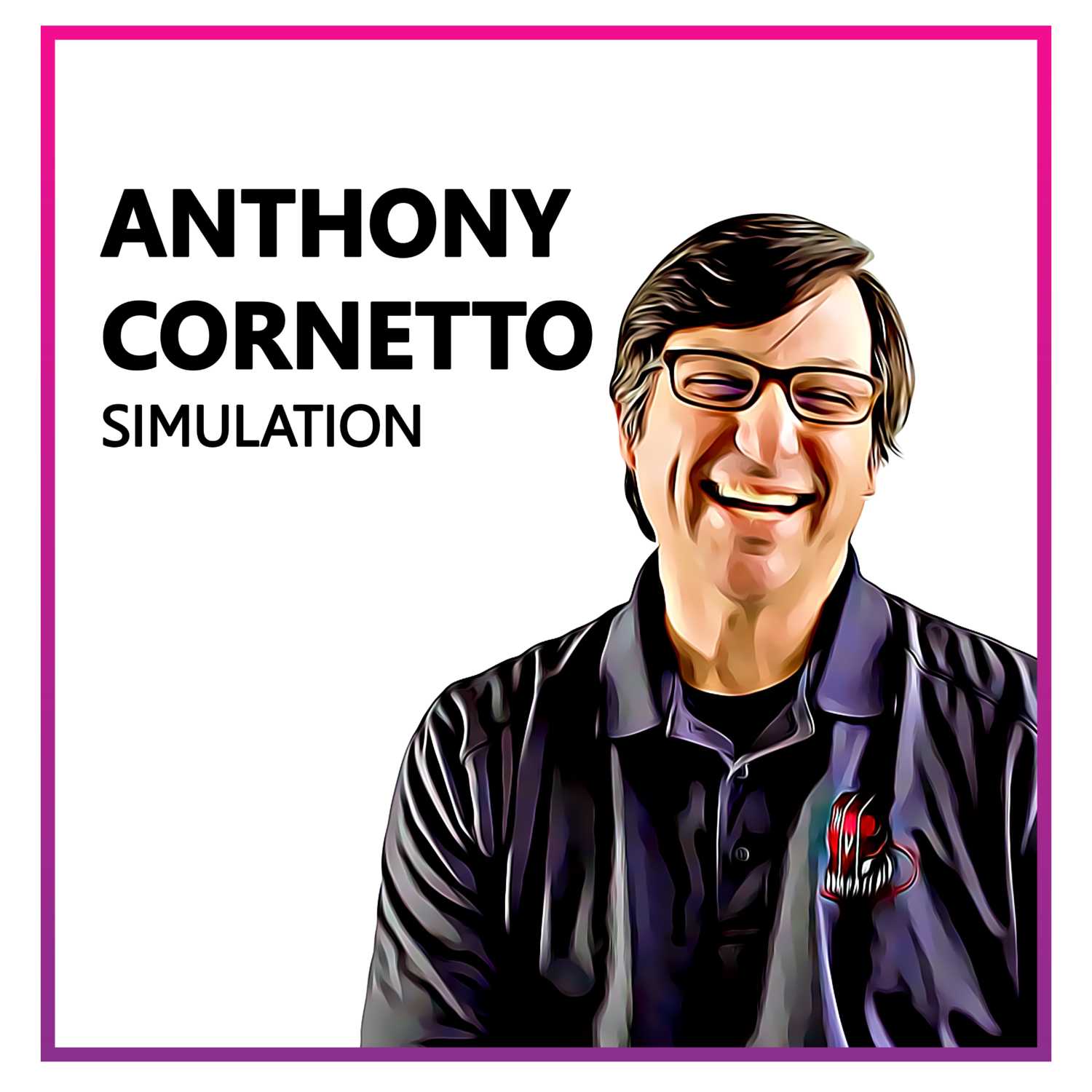
Anthony Cornetto: the state of computer simulation, acquiring HVE, building a Blender-based super tool, and the integration of AI.

Lou sits down with Anthony Cornetto to discuss the state of computer simulation, acquiring HVE, building a Blender-based super tool, and the integration of AI.The podcast is available to watch with video here.A rough transcript of the podcast can be found here.--Connect with TonyMomentaHVE--Timeline of Topics00:01:23 Tony’s background00:09:14 The purchase and expansion of HVE00:34:48 Blender and its application in collision reconstruction00:54:01 Creating 3D models00:58:41 The future of Blender and HVE - from simulation to beautiful visualization01:04:21 What’s in Tony’s current toolkit?01:13:15 Best tool under $5,00001:17:02 360 cameras01:23:24 Resources for continued education01:27:23 What does the future of HVE look like?01:37:229 Low-Poly modeling01:43:04 All-in-one super tool?01:55:57 How will AI integrate into recon?02:09:19 Most used tool in Tony’s current arsenal02:10:58 What’s inside the future toolkit of a reconstructionist, and what isn’t?--Software / Tools Discussed3DF Zephyr3ds MaxBlenderCarSimCloudCompareCycles RenderDyMESHEDCRASHEDSMAC4Garmin VIRB Ultra 360Leica BLK360Lightpoint Low-Poly MeshesOpenDroneMapSIMONUnreal EngineA full list can be found here.

Is this your show?

Claim this listing to keep it up to date, reach guests who want to pitch you, and manage bookings with Guestify.

Claim this listing

More Technology podcasts