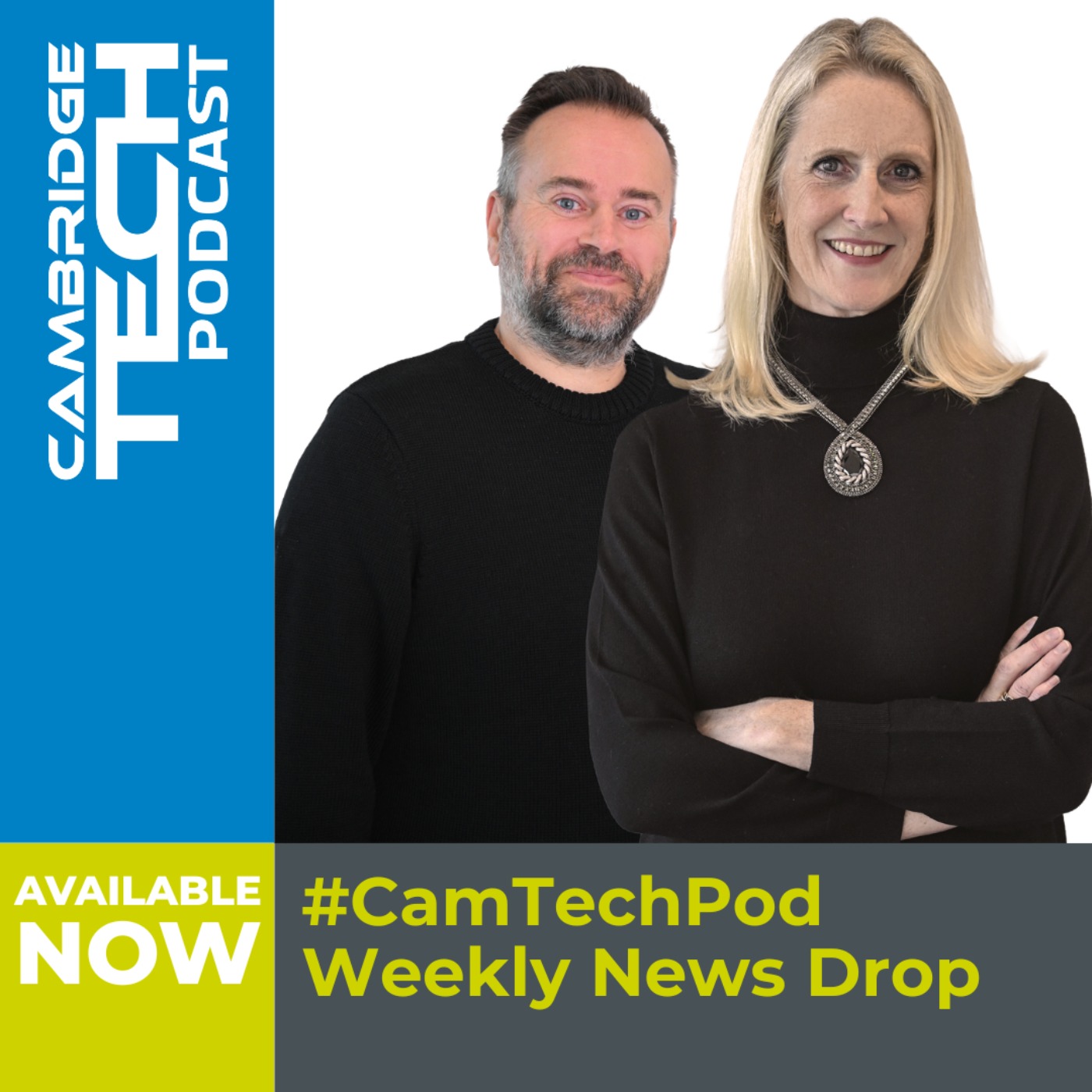
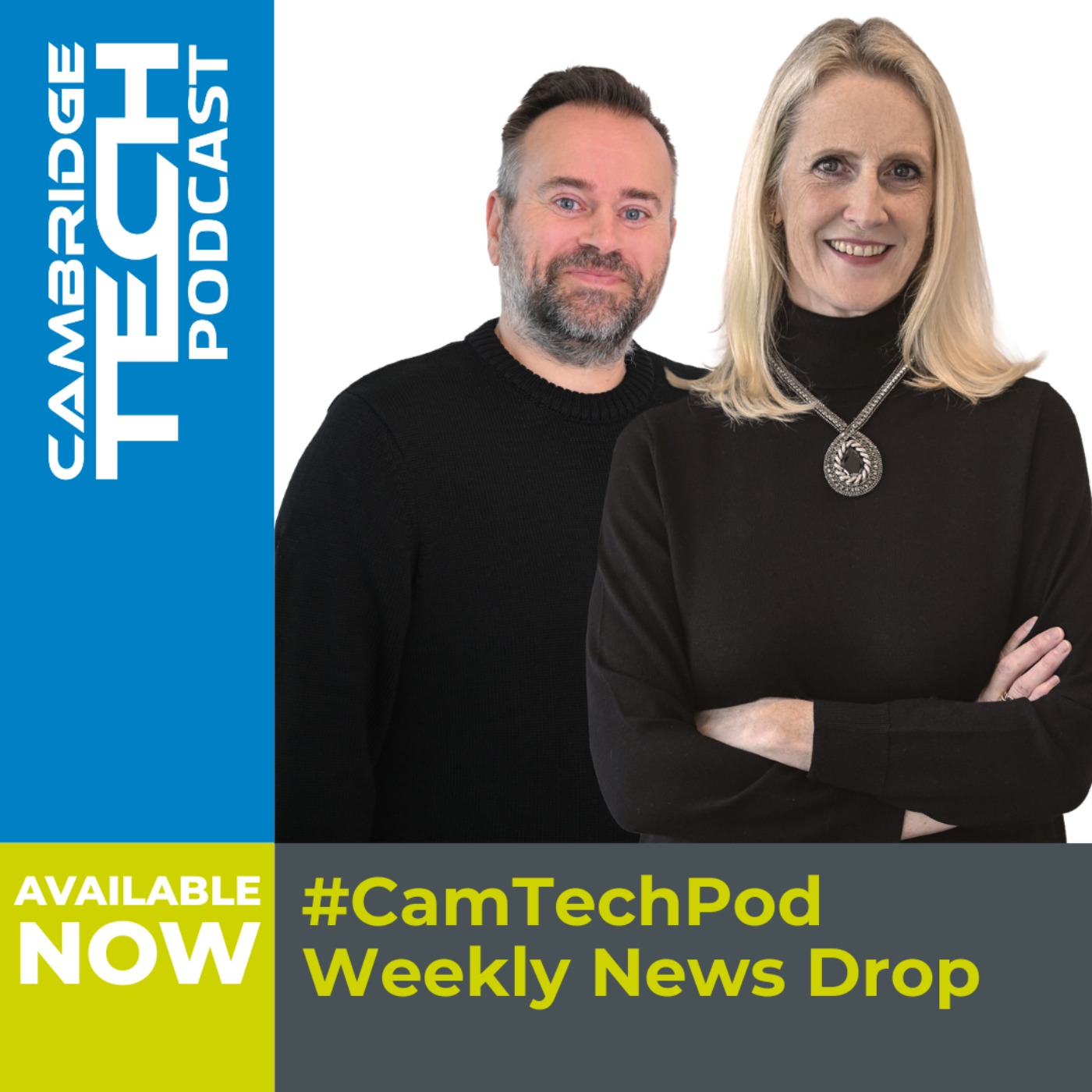
Your weekly tech news download from in and around Cambridge, plus in-depth conversations with the founders, innovators, and enablers within the Cambridge tech ecosystem. Published every week and hosted by James Parton and Faye Holland. Get in touch with the show via info@cambridgetechpodcast.com Hosted on Acast. See acast.com/privacy for more information.
Listen to episodes
60 recent
October 2, 20262 min
Weekly News Drop - 2 October 2026
Cambridge Tech Podcast Weekly News Drop - 2 Oct 2026 The weekly Tech news roundup from in and around the Cambridge Tech cluster. Featuring Cambrionix, Intralink, Raspberry Pi, Chinese International Economic Cooperation Association, Innovate Cambridge, Cambridge Enterprise, Cambridgeshire and Peterborough Combined Authority, Cambridge Innovation Capital, Paragraf, EPSRC, Hannah Goldsmith, The Centre for Computing History. Produced by Cambridge TV #CamTechPod Hosted on Acast. See acast.com/privacy for more information.
September 29, 202627 min
The Internet Watch Foundation: How Tech Can Protect Children Online
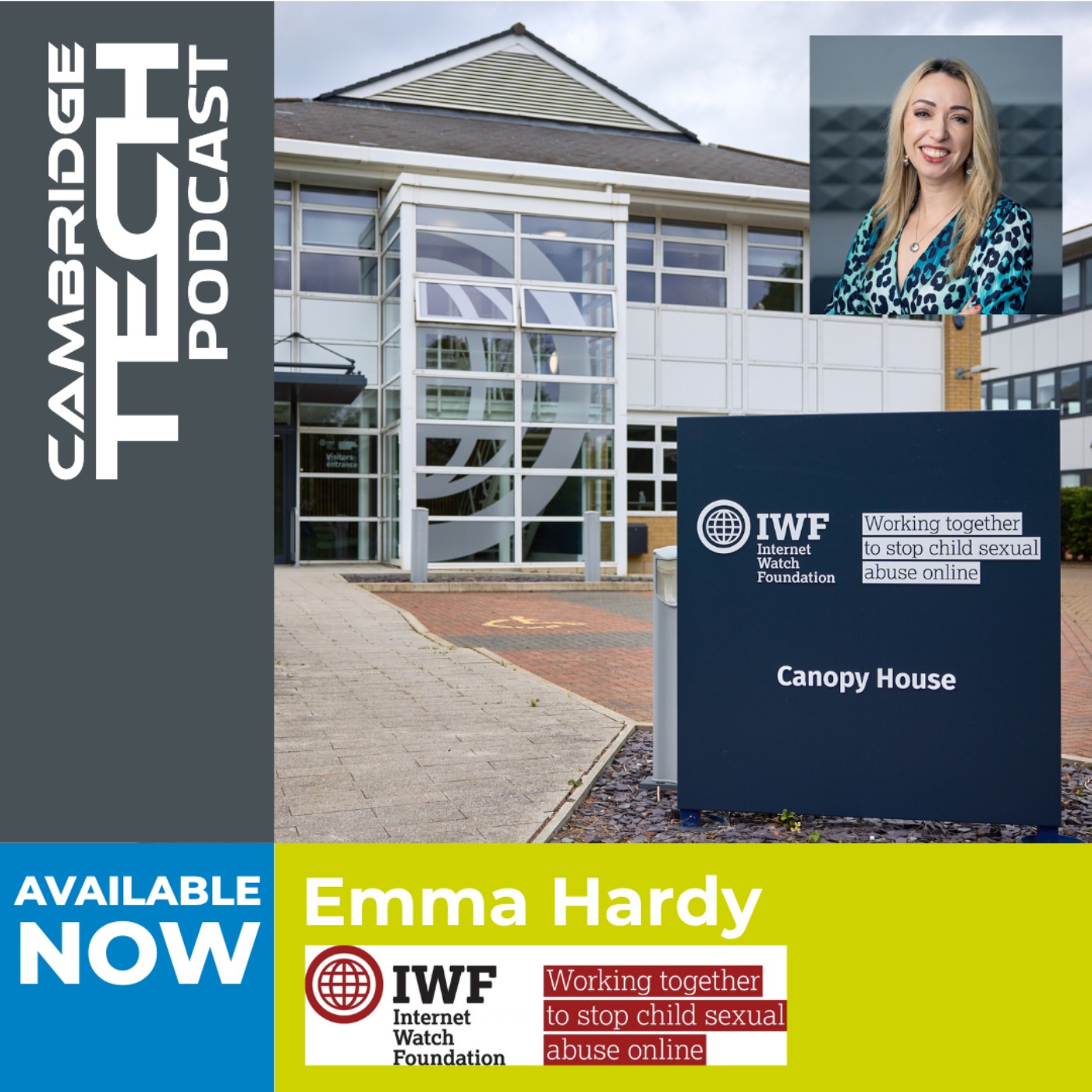
Please note this episode covers some difficult topics, specifically the issue around child sexual abuse, which some listeners may find distressing. Listener discretion is advised. In this episode of the Cambridge Tech Podcast, hosts Faye Holland and James Parton speak with Emma Hardy, Communications Director at the Internet Watch Foundation, about the fast-moving fight to prevent child sexual abuse online. Emma brings a clear message for founders, investors and product leaders: safety cannot be an afterthought. From generative AI to user generated content, every new capability can create opportunities for harm as well as value. The strongest companies consider both from day one. The Internet Watch Foundation, or IWF, is a UK charity that identifies and works to remove online child sexual abuse imagery. Its teams combine specialist human judgement with technical tools, intelligence and partnerships across industry, government, law enforcement and academia. Emma explains how digital fingerprints, known as hashes, can help prevent previously identified imagery from being uploaded again on participating platforms. “Build it safe from the start. Don’t try and retrofit safety.” For startups and tech companies, the practical takeaway is simple: build safety into the product, the business model and the operating culture. Emma encourages teams to examine how an idea could be misused before it reaches scale, rather than attempting to retrofit protections after harm has occurred. The IWF can support organisations, particularly those handling user generated content, with expertise and services designed to make platforms safer. This is an essential listen for anyone building, backing or governing technology. Subscribe to the Cambridge Tech Podcast for candid conversations with the people shaping safer, smarter innovation across the UK tech ecosystem. Headline sponsor Holden Polestar Produced by Cambridge TV #CamTechPod Hosted on Acast. See acast.com/privacy for more information.
September 25, 20262 min
Weekly News Drop - 25 September 2026
Cambridge Tech Podcast Weekly News Drop - 25 September 2026. The weekly Tech news roundup from in and around the Cambridge Tech cluster. Featuring Cambridge Vacuum Engineering (CVE), Cambridge Atomworks, Riverlane, Discovery District Maryland, Kendall Square, Boston, University of Maryland, British Business Bank, Andrew Cock-Starkey, Optimisey, Internet Watch Foundation. To submit your own news, visit https://www.cambridgetechpodcast.com and click "Call the Show" Produced by Cambridge TV #CamTechPod Hosted on Acast. See acast.com/privacy for more information.
September 22, 202625 min
Cambridge Tech Week 2026: Where Ecosystems, Capital and Big Questions Converge
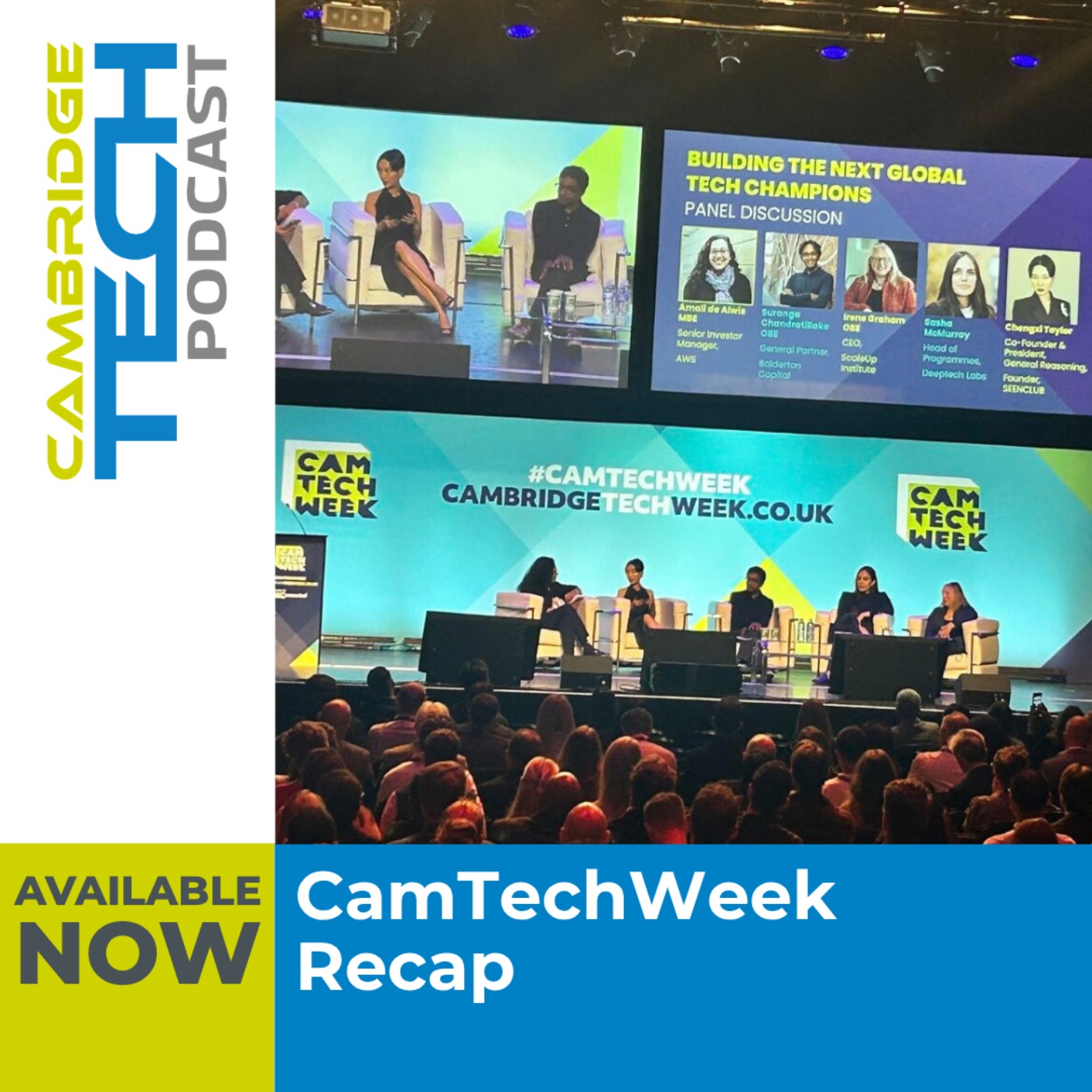
Cambridge Tech Week has firmly earned its place as a must-attend moment for the UK innovation community. In the latest Cambridge Tech Podcast, hosts Faye Holland and James Parton are joined by Cambridge Angels Emmi Nicholl to reflect on a packed week of founder conversations, investor insight and the big questions shaping the sector. The Week retained its distinctive Cambridge energy: busy, organic and full of chance encounters. Alongside familiar faces were new connections across manufacturing, defence, security and international innovation ecosystems. Innovation Alley was once again a phenomenal success with one founder describing the session with Cambridge Angels “the most productive 25 minutes they had spent all year”. The Cambridge x Manchester Partnership offered tangible evidence of cross-cluster momentum, with four joint investments already spanning therapeutics, technology and life sciences. The lesson for founders is that regional networks are becoming increasingly connected, and a broader investor base may be closer than it appears. One of the week’s most compelling discussions examined the increasingly blurred boundary between civilian and military technology. The debate did not offer easy answers, but it made the need for active governance impossible to ignore. For technologists, the challenge is not only what can be built, but what should be built, and how companies set ethical boundaries as dual-use applications emerge. During the rest of 2026, #CamTechPod will be covering some of the key sessions from #CamTechWeek so subscribe on all major podcast platforms or visit cambridgetechpodcast.com to hear more of the conversation. Headline sponsor Holden Polestar Produced by Cambridge TV #CamTechPod Hosted on Acast. See acast.com/privacy for more information.
September 18, 20262 min
Weekly News Drop - 18 September 2026
Cambridge Tech Podcast Weekly News Drop - 18 September 2026. The weekly Tech news roundup from in and around the Cambridge Tech cluster. Featuring Cambridge Tech Week, CWConnected, Echion Technologies, and Cambridge Enterprise. Produced by Cambridge TV #CamTechPod Hosted on Acast. See acast.com/privacy for more information.
September 15, 202652 min
10 Years of the Maxwell Centre: Where Cambridge's Deep Tech Future Is Being Built
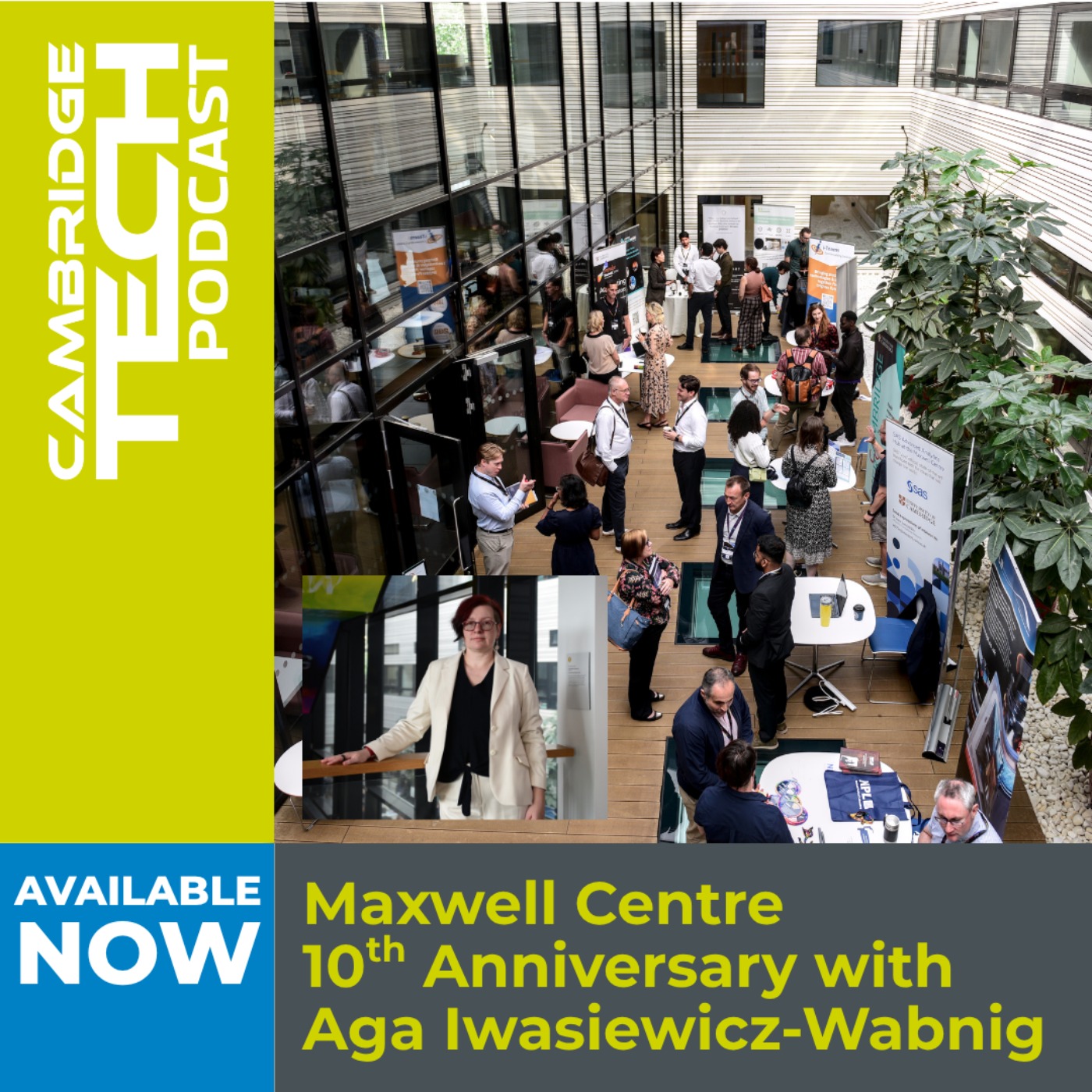
10 Years of the Maxwell Centre: Where Cambridge's Deep Tech Future Is Being Built James heads to the Maxwell Centre at the University of Cambridge to mark its first decade, sitting down with four remarkable people who between them span the full arc from foundational physics research to frontier AI startups. If you want to understand how Cambridge actually turns brilliant science into world-changing companies, this is the episode to listen to. The Maxwell Centre opened in 2016 as a deliberate act of disruption: a place where academics, industry partners and entrepreneurs could work side by side without walls or barriers. A decade later, it has become one of the most quietly influential spaces in the UK innovation landscape. We hear from: Professor Sir Richard Friend FRS FREng, Founding Director, Maxwell Centre Professor George Malliaras FRS, Prince Philip Professor of Technology and Director, Institute for Biomedical Innovation (IBI) Loubna Bouarfa, Founder, FactTrace, Sterlina Smith, Global Lead for AI and Society, SAS, and Dr Aga Iwasiewicz-Wabnig, Director, Maxwell Centre "You're never going to run out of good challenges to tackle. And if you're in a place like Cambridge where other people are doing their 150% to tackle the problem they're passionate about, it's just impossible to stand still." Subscribe on all major podcast platforms or visit cambridgetechpodcast.com . 🎧 Headline sponsor Holden Polestar Produced by Cambridge TV #CamTechPod Hosted on Acast. See acast.com/privacy for more information.
September 11, 20262 min
Weekly News Drop - 11 September 2026
Cambridge Tech Podcast Weekly News Drop - 11 September 2026 The weekly Tech news roundup from in and around the Cambridge Tech cluster. Featuring Quantinuum, OutSee, Innovate UK, Empirical Ventures, Pragmatic Semiconductor, Doctor Paul James, Frontier Developments, Disney, Cambridge Science Park, Cambridge Tech Week, Maxwell Centre. Produced by Cambridge TV #CamTechPod See less Hosted on Acast. See acast.com/privacy for more information.
September 8, 202634 min
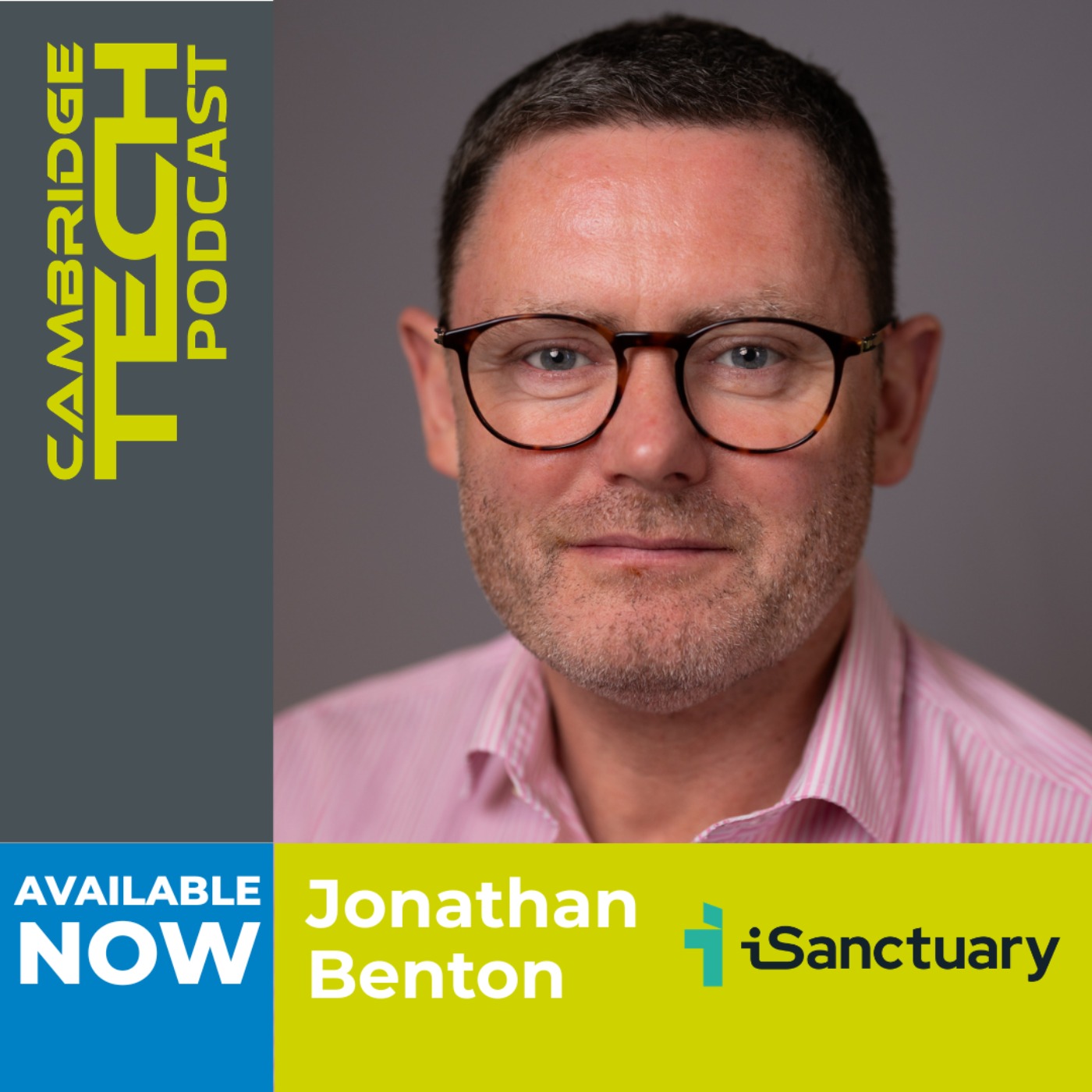
From Scotland Yard to the Blockchain: How Jonathan Benton Is Fighting Back Against the Crypto Fraud Epidemic
This week we sat down with Jonathan Benton , Founder and CEO of iSanctuary , and it is one of the most remarkable founder stories we have heard. In the episode we cover: Why crypto fraud has reached epidemic scale and why only 0.1% of cases ever reach prosecution How REKTify works and the world-first legal cases that proved it The plan to automate at massive scale and become the blockchain equivalent of the banking system's fraud marker infrastructure What 30 years of public service actually teaches you about building a company "If you've done 25 years of public service, it never really leaves your blood." Hosted on Acast. See acast.com/privacy for more information.
September 4, 20262 min
Weekly News Drop - 4 September 2026
Cambridge Tech Podcast Weekly News Drop - 25 September 2026. The weekly Tech news roundup from in and around the Cambridge Tech cluster. Featuring Pragmatic Semiconductor, Mission Therapeutics and NeuraLight. Produced by Cambridge TV #CamTechPod Hosted on Acast. See acast.com/privacy for more information.
September 1, 202639 min
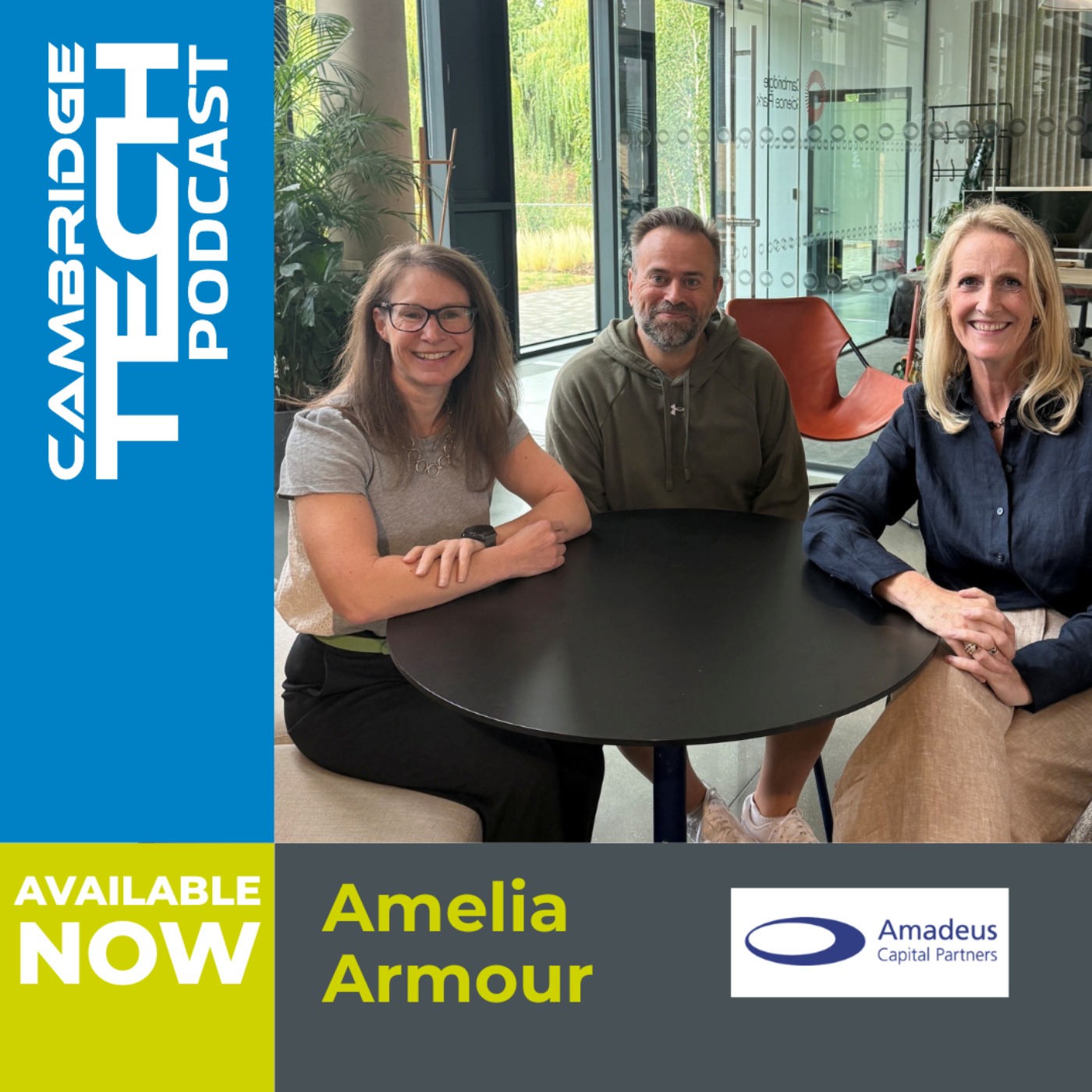
Amelia Armour on Why the UK's Moment Has Finally Arrived
We sat down with Amelia Armour , Partner at Amadeus Capital Partners , for one of the most insightful conversations we've had about the state of UK deep tech investment, and the mood is genuinely optimistic. The headlines? The UK's first half of 2026 has been the strongest for venture since 2022, with $17 billion flowing into UK-backed companies. Cambridge unicorns are arriving with real momentum. And the long-standing complaint about scale-up capital? It's finally being addressed. Amelia covers a lot of ground in this one: Why the value in AI has shifted deep into the stack — and what that means for founders The pension fund revolution that could transform UK venture over the next decade Why Playground Global setting up in the UK is such a significant signal The non-dilutive funding strategies that are quietly changing the runway equation for early-stage companies What Amadeus actually looks for when deal flow is at record levels — and how to cut through Whether you're raising, building, or investing, this is essential listening. Subscribe on all major podcast platforms or visit cambridgetechpodcast.com . Headline sponsor Holden Polestar Produced by Cambridge TV #CamTechPod Hosted on Acast. See acast.com/privacy for more information.
Is this your show?
Claim this listing to keep it up to date, reach guests who want to pitch you, and manage bookings with Guestify.