Find partners
Ctrl+Alt+AI

Ctrl+Alt+AI

Hosted by BigID

Episodes

53

Latest episode

May 2026

Language

EN

About the show

Rebooting the way we think about AI, data, & risk.

Listen to episodes

53 recent
May 29, 202625 min

How Agentic AI is Transforming Enterprise Engineering and Development

AI agents are appearing across every enterprise platform, but most still struggle to move beyond scripted automation into systems that can reason, adapt, and operate within real workflows.On this episode of Ctrl + Alt + AI, Dimitri Sirota,  speaks with Matt Swann, former CTO at Nubank and Booking.com, and a seasoned technology leader. Matt shares his insights on the shift from traditional AI to agentic AI, where AI systems act as autonomous team members rather than simple assistants.They explore practical strategies for implementing agentic AI across engineering, marketing, and sales, discuss approaches to governance and data protection, and reveal how leaders can balance innovation with enterprise risk. Matt offers guidance for companies navigating the rapidly evolving AI landscape, ensuring teams can adopt agentic technology safely and efficiently.What to expect:How agentic AI can act as a team member rather than a tool, enhancing productivity while requiring careful governance and oversightWhy preparing data, controlling access, and implementing robust monitoring are essential to reduce AI risk and maintain trust in enterprise environmentsHow leaders can create flexible strategies that allow adaptation to evolving AI models and infrastructure while balancing cost, security, and operational impactThings to listen for: (00:00) Meet Justin Heller(02:49) Evolution from LLMs to agentic AI(03:40) How early-stage vs. large enterprises adopt AI differently(05:00) Agents as staff augmentation(06:46) Managing multiple AI models and vendor choices(10:18) Use cases: sales, marketing, engineering, and commercial operations(13:03) Key considerations for implementing agentic AI safely(15:28) Governance across people, process, and technology(16:47) Addressing token spend and proactive AI cost management(19:01) Cutting through AI security noise using frameworks(22:00) Integrating humans and agents in security and operations(24:35) Looking ahead: the future of agentic AI
May 6, 20269 min

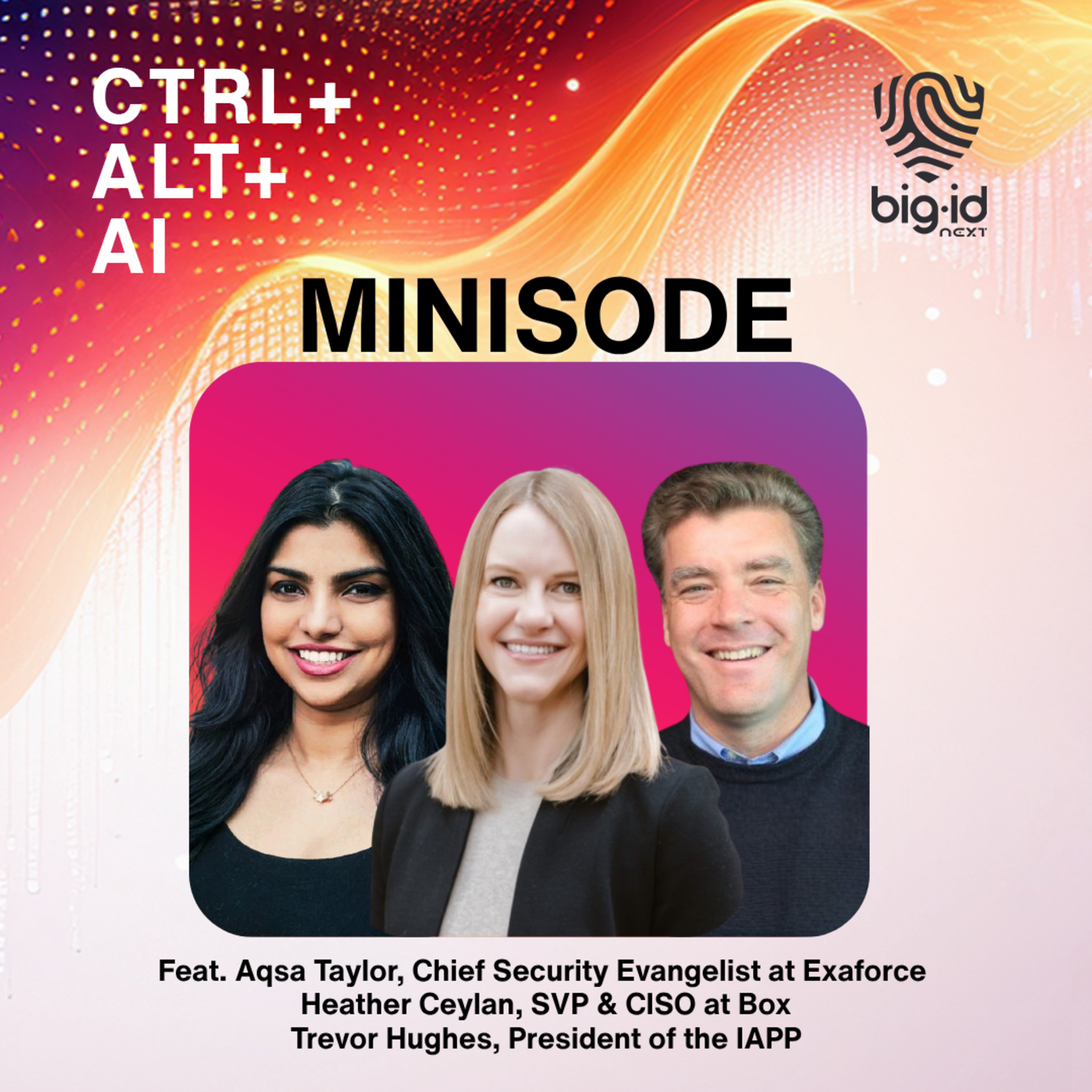
Minisode: Who Owns AI in the Enterprise?

AI adoption is moving faster than most security strategies can keep up, and many teams are still treating it like a contained tool instead of a shared risk.On this minisode of Ctrl + Alt + AI, host Dimitri Sirota brings together key insights from past conversations with Trevor Hughes, President of the IAPP; Heather Ceylan, SVP & Chief Information Security Officer at Box; and Aqsa Taylor, Chief Security Evangelist at Exaforce, to break down what leaders are consistently getting wrong about AI risk. Drawing from discussions with security and data experts, Dimitri connects the dots across identity, access, and data exposure to show how AI is quietly expanding the attack surface.This short-form episode focuses on the patterns emerging across organizations, from unseen AI usage to gaps in data control, and what that means for security teams trying to respond in real time.In this episode, you’ll learn:Why AI adoption is happening without centralized visibilityHow data exposure increases once it enters AI systemsWhy traditional security timelines no longer match AI-driven riskThings to listen for: (00:00) Why AI risk is often underestimated (00:45) AI adoption without visibility across teams (01:30) The shift from tools to shared risk (02:20) How AI expands access to sensitive data (03:40) Why response time is now a critical gap (05:10) Patterns across recent security conversations (06:30) Data control before AI ingestion (08:00) What security leaders need to rethinkListen to the full episodes here:How AI Risks Are Changing Privacy and What Security Leaders Must Do About It feat. Trevor HughesWhy Agent Identity Is Now a Security Priority feat. Heather CeylanWhy AI Breaks Traditional Security Playbooks feat. Aqsa Taylor

April 22, 202627 min

How Data Governance and AI Intersect in Large Enterprises

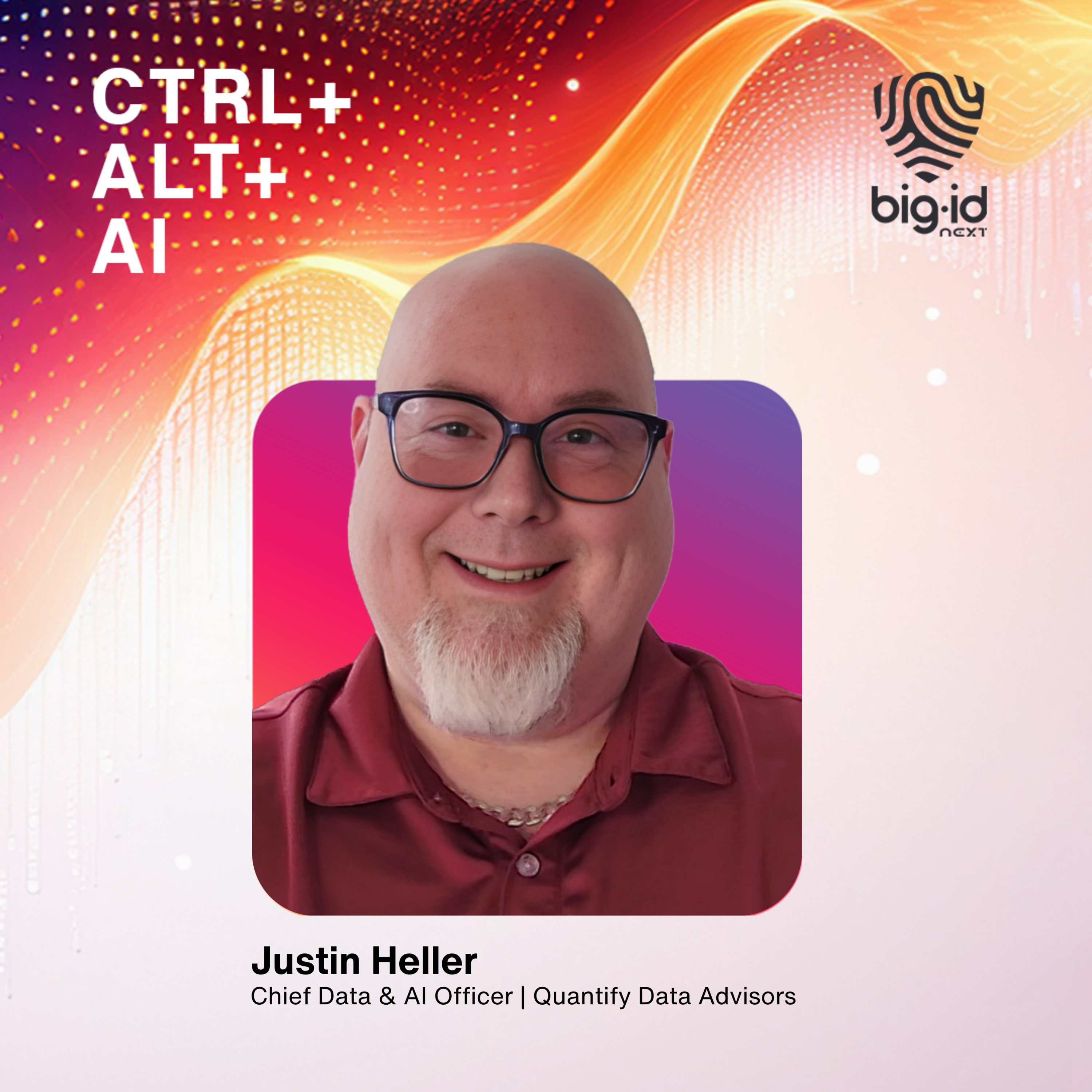
AI agents are appearing across every enterprise platform, but most still struggle to move beyond scripted automation into systems that can reason, adapt, and operate within real workflows.On this episode of Ctrl + Alt + AI, Dimitri Sirota,  speaks with Justin Heller, former Chief Data Officer at Synchrony Financial and Chief Data & AI Officer of Quantify Data Advisors, about how organizations can leverage their existing data to reduce cyber risks, manage unstructured data, and integrate AI effectively. Justin, formerly the Chief Data Officer at Synchrony Financial, shares insights on the evolving role of data governance in an AI-driven world and the importance of shifting from a "pilot" mentality to creating sustainable AI-driven business value. Tune in as they unpack the complexities of managing both structured and unstructured data, ensuring relevance, and achieving true data governance alignment with emerging AI technologies.What to expect:How organizations can use existing data assets to reduce cyber risks and enhance AI initiativesWhy relevance, not just accuracy, is the key to effective AI and data managementThe importance of connecting unstructured data, metadata, and AI systems for better decision-makingThings to listen for: (00:00) Meet Justin Heller(01:25) Justin’s transition from CDO to data advisor(02:35) From structured to unstructured data in AI environments(04:24) Why context engineering is critical for AI-driven business decisions(06:00) Moving beyond AI pilot projects to sustainable value(08:30) How data stewards can work with AI tools(09:00) Integrating AI across existing business processes(10:03) Building governance models for unstructured data(13:00) AI in unstructured data repositories: Best practices(15:00) Measuring ROI from generative AI in enterprises(18:00) Cross-functional collaboration for effective AI implementation(20:00) The role of CDAOs in driving AI-related outcomes(21:30) Shifting from pilot programs to ongoing AI-driven business value

April 1, 202624 min

Inside AgentForce: The Future of Autonomous AI

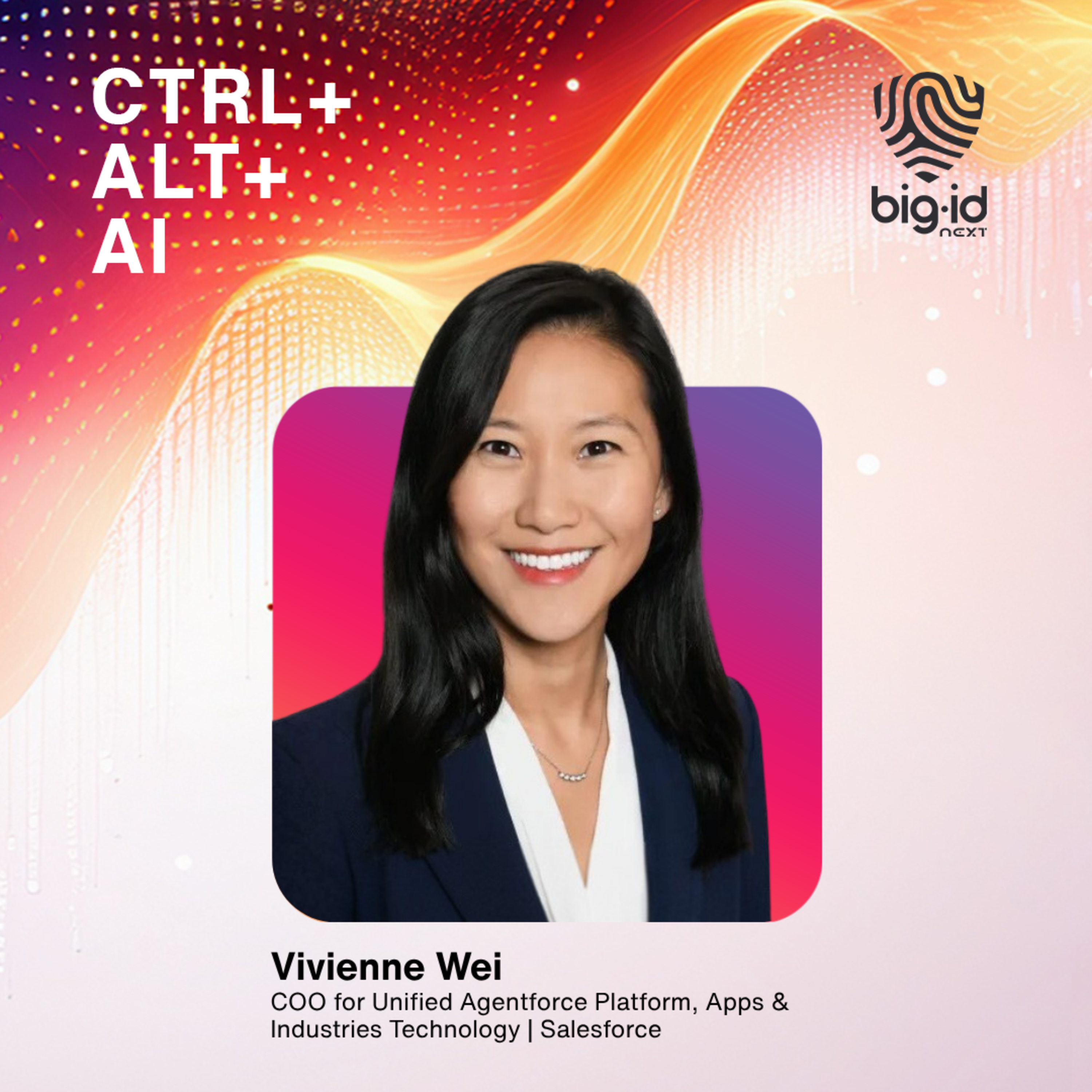
AI agents are appearing across every enterprise platform, but most still struggle to move beyond scripted automation into systems that can reason, adapt, and operate within real workflows.On this episode of Ctrl + Alt + AI, host Dimitri Sirota sits down with Vivienne Wei, COO for Unified Agentforce Platform, Apps & Industries Technology at Salesforce, to examine what it actually takes to deploy agentic AI at scale. Vivienne leads the unified Agentforce platform, which brings together data, governance, and AI to enable agents that can act autonomously across enterprise systems.She explains how agentic AI differs from earlier automation, why context engineering is becoming a core requirement, and how governance models must evolve as agents become active participants in business processes. For security and data leaders, this discussion highlights a shift already underway. Agents are not just interacting with data. They are acting on it, which raises new questions around access control, accountability, and trust.What to expect:Agentic AI requires governance models built for non-human actorsContext engineering determines whether agents are useful or riskyHow to start with business outcomes, not agent capabilitiesThings to listen for: (00:00) Meet Vivienne Wei(01:25) What Agentforce is and how it works(02:35) Defining agentic AI vs traditional automation(04:24) Why context engineering is becoming critical(06:00) Governing agents as non-human identities(08:30) Policy enforcement and access control for agents(09:00) The shift toward multi-agent orchestration(10:03) How different enterprise agents will interact(11:24) Observability and monitoring agents in production(13:00) Personal productivity vs enterprise transformation(15:00) Where companies should start with agentic AI(18:00) Operating models across IT and business teams(20:00) Measuring ROI from agents in real deployments(21:30) Workforce impact and organizational resistance(23:00) What the next year of agentic AI may bring

March 18, 202622 min

What Enterprises Still Don’t Understand About AI Risk

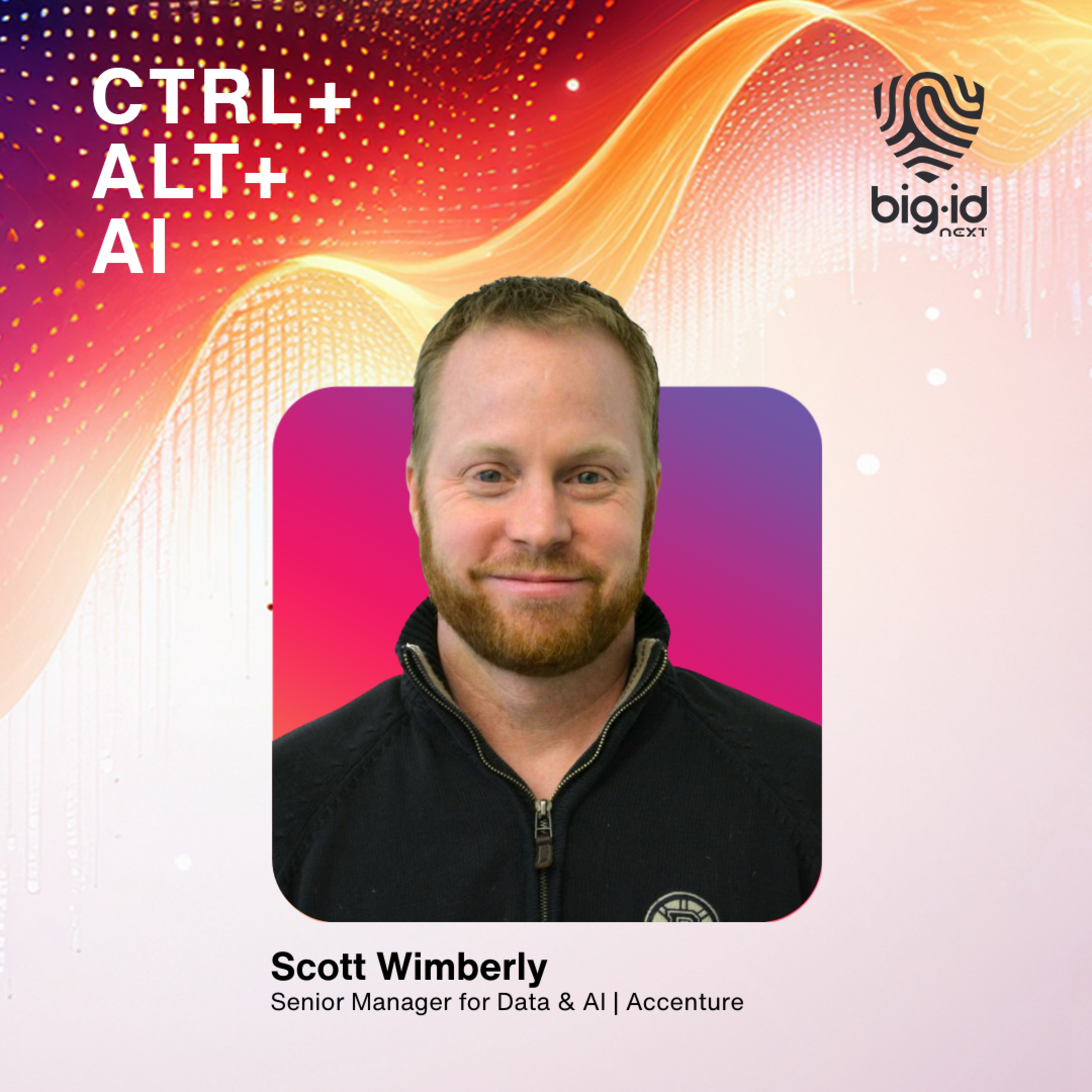
AI adoption is accelerating, but many organizations are discovering the same problem. The technology is moving faster than the data foundation required to support it.On this episode of Ctrl + Alt + AI, host Dimitri Sirota speaks with Scott Wimberly, Senior Manager for Data & AI at Accenture, about why enterprise AI success still depends on disciplined data management.Scott explains how the shift from traditional machine learning to generative AI has exposed weaknesses in how companies manage their data. Fragmented systems, poor governance, and inconsistent data models make it difficult for organizations to trust AI outputs.The conversation explores how enterprises can address these challenges through clearer data ownership, better governance, and practical approaches that focus on solving smaller problems first. For security leaders, data teams, and AI practitioners, the discussion offers a grounded view of what it takes to turn AI investments into real business results.In this episode, you’ll learn:How early excitement about generative AI outpaced enterprise data readinessHow legacy systems and fragmented data environments create major barriers for AI programsWhy enterprise leaders should focus on measurable outcomes and ROI when investing in AIThings to listen for: (00:00) Meet Scott Wimberly(01:32) Why AI and data strategy must go together(02:53) How AI evolved from ML to generative models(05:10) Moving beyond chatbots to real AI decision systems(06:05) Why data ownership matters more than traditional stewardship(07:44) The growing importance of unstructured data for AI(13:42) LLMs, SLMs, and the rise of enterprise AI agents(15:11) How MCP connects enterprise data with external models(17:06) Why legacy systems make AI adoption difficult(20:15) Why ROI still determines whether AI projects succeed(22:16) Solving AI challenges one problem at a time

February 16, 202629 min

Why AI Breaks Traditional Security Playbooks

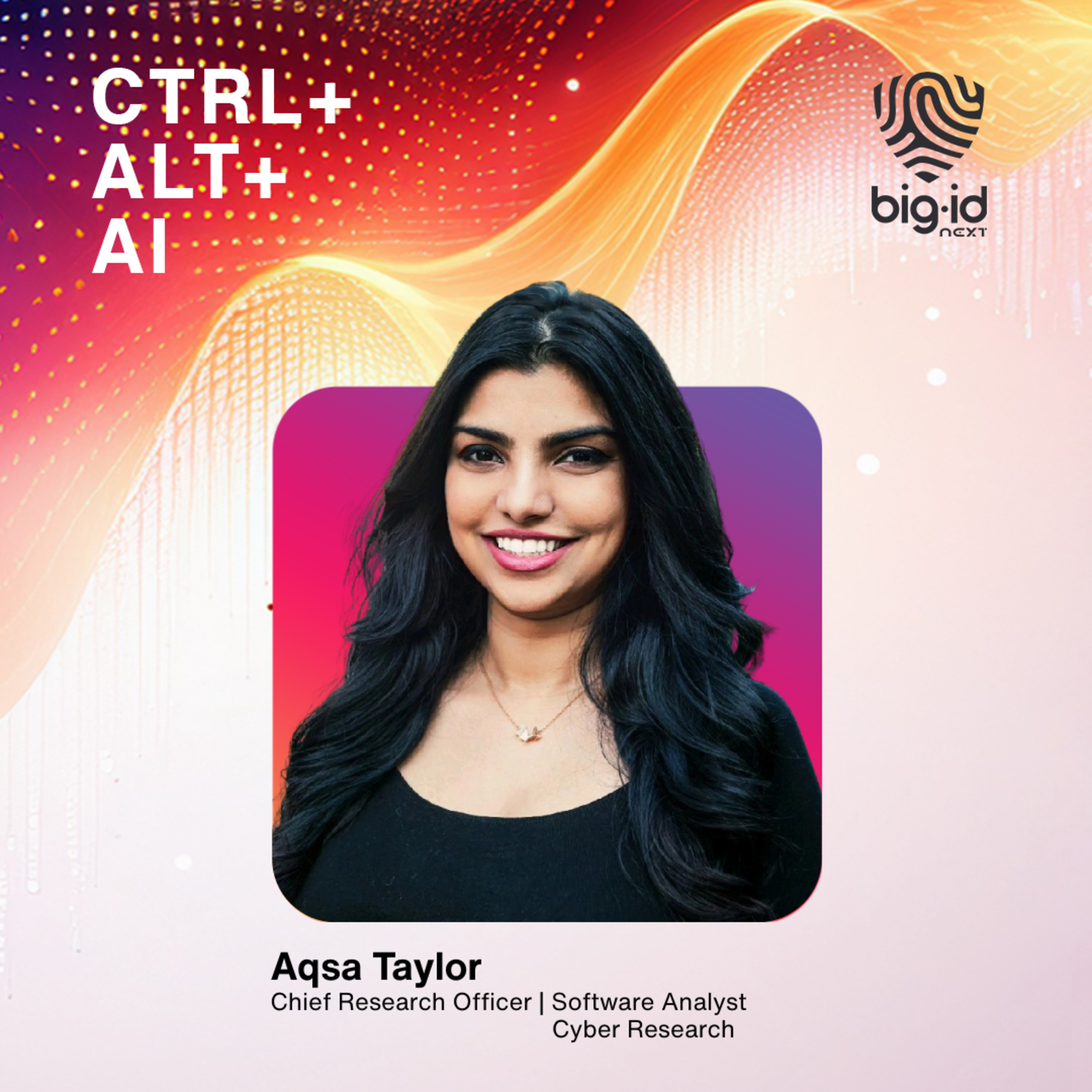
AI has quietly embedded itself across the enterprise but many security teams are still guarding it like a single tool, not the shared risk it’s become.On this episode of Ctrl + Alt + AI, host Dimitri Sirota sits down with Aqsa Taylor, Chief Research Officer at Software Analyst Cyber Research, to break down how AI is changing the speed, scale, and structure of modern cyber threats. Drawing from direct conversations with CISOs, Aqsa explains why AI shortens attack timelines, lowers the barrier for sophisticated threats, and forces security teams to rethink response and recovery.The conversation focuses on what security leaders are missing as AI spreads across employees and third-party platforms. Aqsa outlines why securing AI requires treating it as an ongoing lifecycle tied to core security fundamentals rather than a one-time deployment.In this episode, you’ll learn:Why AI-driven attacks demand faster containment, not more alertsHow overprivileged AI access quietly expands security riskWhy cleaning data before it reaches AI should be the top of mindThings to listen for: (00:00) Meet Aqsa Taylor(00:22) Why AI risk connects directly to data security(01:15) What CISOs are focused on right now(02:23) AI use is unavoidable inside organizations(03:51) Securing models and the data behind them(04:27) How AI speeds up attacks and response pressure(06:10) Data filtering, privileges, and prompt risk(07:15) LLMs, copilots, and agents create different risks(09:31) Cleaning data before it reaches AI(11:19) Why humans should stay in the loop(14:21) AI-driven phishing and malware scale faster(18:01) Testing AI SOC tools against real incidents(21:15) Governance helps but fundamentals matter more(24:31) Managing third-party AI access and visibility(26:49) Fix fundamentals before chasing AI threats

January 14, 202632 min

How AI Investing Shapes the Next Tech Cycle

AI became expensive the same way anything does: by outpacing the world around it.Join us in this episode with Noah Yago, Vice President of Cisco Investments at Cisco, to trace how generative AI reached this moment and what comes next. Drawing on decades of experience across venture capital, corporate development, and global investing, Noah walks through how Cisco thinks about AI not as a single breakthrough, but as a sequence of bets across models, data, infrastructure, and geography.We tackled early machine learning investments to today’s foundation models, then forward into world models, spatial intelligence, and sovereign AI stacks. Noah also explains why capital concentration shapes outcomes, why enterprise adoption looks different from consumer hype, and why regional data and regulation are quietly redefining how AI systems are built and deployed.Rather than predicting a single winner, this episode explores how AI markets actually form, how costs eventually fall, and why staying close to the fastest growers matters more than betting on any one narrative.In this episode, you’ll learn:Why AI markets reward early scale and how access to capital directly affects talent, cost structures, and long-term survivalHow world models and spatial intelligence change compute economics and improve reasoning beyond text-based systemsWhat enterprise and public sector adoption reveal about on-premise AI, regulatory pressure, and hybrid deployment strategiesThings to listen for: (00:00) Meet Noah Yago(01:15) From founder to venture investor inside Cisco(03:59) How Cisco began treating AI as a core investment focus(05:32) The four AI categories Cisco invests in(07:31) Competing foundation models and concentrated capital(09:45) Regional AI stacks and data sovereignty pressures(13:54) Why model performance is flattening(15:21) World models and the next phase of AI reasoning(18:19) Data as a moat across text, video, and 3D(19:32) Sovereign AI clouds and state-driven infrastructure(22:56) Why enterprises are reconsidering on-prem AI(28:42) Capital intensity and winner-take-all dynamics

December 10, 202531 min

Why Agent Identity Is Now a Security Priority

AI agents are moving fast, and security teams are scrambling to keep up.Join us as Heather Ceylan, SVP & Chief Information Security Officer at Box, who has spent the last several years leading security teams through rapid change from the explosive growth years at Zoom to her current work shaping Box’s AI posture.Heather shares what it actually feels like to run security at a time when agents can be created in minutes, permissions matter more than ever, and governance committees are struggling to keep pace. She explains why treating agents as identities fundamentally changes the model, how MCP servers introduce new exposure points, and why her team is embedding AI directly into SOC work, design reviews, and vulnerability remediation.It’s a grounded look at how a CISO makes sense of AI while everything around the role continues to shift.In this episode, you’ll learn:Why agents need their own identities and permissions rather than inheriting access from the people who create themHow SOC teams can shift from constant alert triage to real threat hunting with the help of AI agentsHow AI can speed up vulnerability remediation by creating pull requests that engineers only need to review and mergeThings to listen for: (00:00) Meet Heather Ceylan(00:58) Career path from healthcare to Zoom to Box(03:58) Risks of AI agents accessing unstructured content(05:18) Why agent identity and permissions are the new priority(06:50) The challenge of discovering and governing ephemeral agents(08:16) How sandboxes and policies support safe experimentation(09:20) AI governance gaps and the need for dedicated ownership(13:10) Defining AI governance across technical and legal domains(16:17) The rise of MCP servers and new exposure points(18:05) Four AI bets transforming Box’s SOC and security workflows(23:31) KPIs and measuring AI’s impact on security teams(25:27) Resource trade-offs when adopting AI in security(27:58) Managing the complexity of model selection and trust(29:58) Should companies form dedicated AI security teams?

November 26, 2025Episode 232 min

Privacy Professionals on the Front Lines of AI Risk

Security and privacy leaders are under pressure to sign off on AI, manage data risk, and answer regulators’ questions while the rules are still taking shape and the data keeps moving. On this episode of Ctrl + Alt + AI, host Dimitri Sirota sits down with Trevor Hughes, President & CEO of the IAPP, to unpack how decades of privacy practice can anchor AI governance, why the shift from consent to data stewardship changes the game, and what it really means to “know your AI” by knowing your data. Together, they break down how CISOs, privacy leaders, and risk teams can work from a shared playbook to assess AI risk, apply practical controls to data, and get ahead of emerging regulation without stalling progress.In this episode, you’ll learn:Why privacy teams already have methods that can be adapted to oversee AI systemsBoards and executives want simple, defensible stories about risk from AI useThe strongest programs integrate privacy, security, and ethics into a single strategyThings to listen for: (00:00) Meet Trevor Hughes(01:39) The IAPP’s mission and global privacy community(03:45) What AI governance means for security leaders(05:56) Responsible AI and real-world risk tradeoffs(08:47) Aligning privacy, security, and AI programs(15:20) Early lessons from emerging AI regulations(18:57) Know your AI by knowing your data(22:13) Rethinking consent and data stewardship(28:05) Vendor responsibility for AI and data risk(31:26) Closing thoughts and how to find the IAPP

October 15, 202531 min

Building AI Agents That Actually Reason

AI agents are becoming part of everyday business, but building ones that reason and adapt is still a challenge.On this episode of Ctrl + Alt + AI, host Dimitri Sirota sits down with Joe Miller, Chief AI Officer of Vivun, to explore how enterprises are creating agents that move beyond simple automation. Joe shares what it takes to design systems that can model knowledge, fit into company culture, and genuinely support teams in their work.We examined where current approaches fall short, explored what’s possible as AI matures, and discussed how leaders can prepare for the next stage of intelligent agents in security and enterprise environments.In this episode, you’ll learn:How reasoning and knowledge representation shape the future of AI agentsWhy cultural fit matters for the successful adoption of intelligent assistantsWhat enterprises should expect as agent technology maturesThings to listen for: (00:00) Meet Joe Miller(01:42) Physics background shaping an AI career(04:44) Why presales roles inspired Vivun’s creation(05:29) GPT-3 surprises and the UX breakthrough(08:37) GPT-5’s plateau and persistent hallucinations(12:32) Moving from a small pond to a big ocean(15:08) How Ava supports the full pipeline(21:38) Culture as the differentiator for AI agents(28:21) Should AI agents specialize or do everything?

Is this your show?

Claim this listing to keep it up to date, reach guests who want to pitch you, and manage bookings with Guestify.

Claim this listing

More Technology podcasts