Find partners
Beginner's Mind

Beginner's Mind

Hosted by Christian Soschner

Episodes

221

Latest episode

May 2026

Language

EN-US

About the show

Blueprints for Builders and Investors Hosted by Christian Soschner From pre-seed to post-IPO, every company—especially in deep tech, biotech, AI, and climate tech —lives or dies by the frameworks it follows. On Beginner’s Mind, Christian Soschner uncovers the leadership principles behind the world’s most impactful companies—through deep-dive interviews, strategic book reviews, and patterns drawn from history’s greatest business, military, and political minds. With over 250 interviews, panels, and livestreams, the show ranks in the Top 10% globally—and is recognized as the #1 deep tech podcast. With 35+ years across M&A, company building, board roles, business schools, ultrarunning, and martial arts, Christian brings a rare lens: What it really takes to turn breakthrough science into business—how to grow it, lead it, and shape the world around it. 🎙 Expect each episode to deliver: Founder & Investor Blueprints : How breakthrough technologies scale from lab to IPO Historical & Biographical Frameworks : Timeless playbooks from the world's great builders Leadership & Communication Mastery : Tools to inspire, persuade, and lead at scale Whether you're building the next biotech success, investing in AI, or leading a climate tech company through hypergrowth—this podcast gives you the edge. Listen in. Apply what matters. Build companies that last. 📬 Join the newsletter & community: https://lsg2g.substack.com/

Listen to episodes

60 recent
May 25, 2026Episode 925 min

Alasdair Milton, KPMG | Why Precision Medicine Still Fails Patients (SPARK20 – 168)

Only one in three eligible lung cancer patients receives the targeted therapy they should get.That is not a failure of science.It is a failure of delivery.After more than two decades of precision oncology, biopharma has never had better tools: cell and gene therapy, in vivo CAR-T, antibody-drug conjugates, AI-enabled diagnostics, organoids, multi-omics, and global clinical data.Yet too many breakthroughs still fail to reach the bedside.Patients fall through fragmented systems.Data does not move cleanly.Community oncologists are overloaded.Tests are missed, delayed, or misread.Promising assets die in quarterly portfolio reviews.And healthcare systems built for pills, tablets, and chronic disease management are now being asked to deliver personalized medicine at scale.In this SPARK20 highlight episode, Alasdair Milton, PhD, Principal at KPMG and leader of the firm’s Precision & Advanced Therapies practice, explains why the future of biopharma will not be decided by science alone.It will be decided by translation.From lab bench to boardroom.From data to decisions.From treatment to prevention.Alasdair brings more than 20 years of experience across life sciences strategy, commercial due diligence, precision medicine, advanced therapies, cell and gene therapy, biopharma M&A, diagnostics, and global healthcare transformation.This conversation moves from the precision medicine delivery crisis to China’s biotech acceleration, from AI and organoids to trapped pharma assets, from lifelong wellness to the one skill every future biotech leader needs:The ability to translate complex science into business strategy, capital allocation, and patient impact.What You’ll Learn in 22 MinutesWhy only one third of eligible lung cancer patients receive targeted therapy(00:01:53)And why precision medicine still breaks in everyday clinical practice.Why science keeps compounding even when systems fail(00:04:33)Including in vivo CAR-T, functional cures, gene therapy, and antibody-drug conjugates.Why innovation does not move in a straight line(00:05:20)How technologies can look dead for years before suddenly changing the market.Why China’s biotech speed matters(00:07:36)How AI, organoids, scale, and execution are changing the global innovation map.Why great science dies inside Big Pharma(00:09:20)And how deprioritized assets can become billion-dollar companies when externalized properly.Why the industry must move from sickness to lifelong wellness(00:10:03)Alasdair’s vision for a more proactive, preventive, data-driven healthcare system.Why pharma needs better ways to rescue shelved assets(00:13:06)Including examples such as SpringWorks, Cerevel, and new models for unlocking trapped value.How a 400-person Scottish island shaped Alasdair’s worldview(00:15:07)The personal story behind his resilience, discipline, and leadership style.Why careers and companies are never linear(00:17:19)What Alasdair learned after moving to Boston and losing his role within weeks.Why the future belongs to translators(00:20:06)The most valuable skill in biotech: explaining complex science to business leaders, investors, and boards.How to connect with Alasdair Milton and the KPMG Precision & Advanced Therapies team(00:21:47)Quotes to Carry With You📌 “We’ve been doing precision medicine in lung cancer for decades, over two decades, and we’re still not getting it right.” (00:01:53)📌 “This is where this incredible world of genomic science bumps up against the realities of everyday clinical practice.” (00:03:31)📌 “When I was doing my PhD 28 years ago, the idea that you could even have a targeted cell therapy was almost like science fiction.” (00:04:41)📌 “The speed was just astonishing.” (00:07:47)📌 “We’ve been a sickness industry. We’ve treated disease, chronic disease. But can we move more towards lifelong wellness and preemptive health?” (00:10:03)📌 “There’s not a systematic way to collect all of the incredible science and incredible assets that go on the shelf every quarter.” (00:13:06)📌 “There’s great science that never sees the light of day because it’s killed in a quarterly portfolio review.” (00:15:00)📌 “Your career is never linear.” (00:17:19)📌 “You have to be able to build the bridge between the lab and the business world.” (00:20:06)Why This Conversation MattersPrecision medicine is often described as the future of healthcare.But the future does not arrive because the science is ready.It arrives when diagnostics, data, reimbursement, clinical workflows, manufacturing, capital, leadership, and incentives finally work together.That is the real challenge now facing biopharma.Not whether innovation can happen. It already is.The question is whether leaders can build the systems that allow innovation to reach patients.Alasdair Milton is one of the rare voices who can explain that challenge across science, strategy, capital, and execution.If you are a founder, investor, operator, scientist, board member, policymaker, or family office looking at the future of biotech, precision medicine, advanced therapies, pharma M&A, AI in healthcare, or China’s rise in biopharma, this episode is worth your time.👉 Listen now.Share it with someone building the future of medicine.Follow Beginner’s Mind for more conversations with the people shaping biotech, capital, and healthcare.Topics: precision medicine, biopharma, biotech, KPMG, Alasdair Milton, cell and gene therapy, in vivo CAR-T, targeted therapy, lung cancer, oncology, AI in healthcare, organoids, China biotech, pharma M&A, SpringWorks, Cerevel, advanced therapies, diagnostics, translational science, venture capital, healthcare strategy.Send us Fan Mail Join Christian Soschner for expert coaching. 50% Off - With 35+ years in deep tech, startups/scaleups, and public companies, Christian offers power video sessions. Elevate strategy, execution, and leadership. Book Now.Support the showJoin the Podcast Newsletter: Link

May 17, 2026Episode 81 hr 0 min

#176 - Why Smart People Say Yes: 7 Lessons from Influence by Robert Cialdini

Some books explain how the world works.Influence explains why people move.Why someone takes the meeting.Why an investor leans in.Why a customer trusts.Why a team follows.Why a board stays stuck.Why a founder keeps defending a decision that stopped making sense months ago.Robert Cialdini’s Influence: The Psychology of Persuasion is one of those books that becomes more valuable the longer you build, invest, sell, negotiate, hire, and lead.Because at some point, you realize something uncomfortable:Most decisions are not made after perfect analysis.They are made under pressure.With incomplete information.With too many options.Too little time.And a nervous system looking for shortcuts.That is where Cialdini’s work becomes powerful.He shows that human beings rely on recurring decision triggers: reciprocation, liking, social proof, authority, scarcity, commitment and consistency, and unity.These are not tricks.They are part of the operating system of human behavior.And if you build or invest in companies from Series A to IPO and beyond, these forces are everywhere.They show up in fundraising.In sales.In hiring.In pricing.In board meetings.In investor updates.In partnerships.In leadership.And in the quiet signals people read before they ever say yes or no.A founder can have the better product and still lose because nobody trusts the signal.A CEO can have the right strategy and still fail because the team never feels real unity.An investor can see the data and still follow the crowd because social proof feels safer than independent judgment.A service provider can have rare expertise and destroy their own value by being too available.A board can keep supporting a flawed decision because everyone wants to stay consistent with what they already said.That is why this book matters.Not because it teaches manipulation.But because it teaches respect for human nature.The best builders do not work against psychology.They work with it.They understand that a small act of generosity can open a door.That people need to like you before they seriously negotiate with you.That visible proof often matters before deep proof gets examined.That authority begins before you speak.That scarcity protects value.That commitment can create momentum — or trap you.And that the strongest companies often feel less like transactions and more like “we.”In this episode, I translate Cialdini’s seven principles into practical lessons for founders, CEOs, investors, and operators building companies in the real world.Not as abstract psychology.As boardroom practice.As fundraising practice.As sales practice.As leadership practice.As reputation practice.And as a defense system against being influenced by people who understand these principles better than you do.What We CoverReciprocation Why small, right-sized generosity works better than aggressive asking.Liking Why manners, presence, and positive repeated contact still matter more than most people admit.Social Proof Why people judge you by the company you keep — and why markets often follow visible signals before they examine fundamentals.Authority Why titles, suits, posture, calmness, and credibility shape decisions before logic enters the room.Scarcity Why unlimited availability destroys value — and why thoughtful limits can increase demand.Commitment and Consistency Why small yeses become large decisions, and why founders must learn to ask: “Knowing what I know now, would I still choose this?”Unity Why the deepest form of influence is not persuasion, but the feeling that “we are in this together.”Timestamps(00:00) Introduction(02:05) Big Idea – Instant Influence: Primitive Consent for an Automatic Age(05:35) Author’s Background(07:38) Reciprocation – The Old Give and Take… and Take(13:34) Liking – The Friendly Thief(18:55) Social Proof – Truths Are Us(24:41) Authority(32:10) Scarcity – The Rule of the Few(38:00) Commitment and Consistency – Hobgoblins of the Mind(45:00) Unity – We-Ness and the Power of Shared Identity(51:19) Key Takeaways(53:53) Personal Reflection(56:18) Final WordsWhy This Episode MattersIf you raise capital, this episode helps you understand why investors lean in before they fully understand the deck.If you sell, it helps you see why trust is often built before the formal pitch begins.If you lead, it helps you design cultures where people commit because they identify with the mission, not because they were told to comply.If you invest, it helps you protect yourself against false signals: fake authority, fake scarcity, fake social proof, and beautifully packaged nonsense.And if you build companies, it reminds you of something simple:Human nature is not a side issue.It is the terrain.The best founders, investors, and leaders learn to read it.Because capital does not move only toward logic.People do.Send us Fan Mail Join Christian Soschner for expert coaching. 50% Off - With 35+ years in deep tech, startups/scaleups, and public companies, Christian offers power video sessions. Elevate strategy, execution, and leadership. Book Now.Support the showJoin the Podcast Newsletter: Link

April 25, 2026Episode 71 hr 56 min

EP 175: Stefanie Schubert | Why Smart People Lose Negotiations Before They Start

Most leaders think negotiation begins when both sides sit down to talk numbers. By then, trust, incentives, timing, internal alignment, and first impressions have already shaped the outcome. That is why smart founders, executives, investors, and board members can have the right facts and still walk away with the wrong result.In this episode of Beginner’s Mind, Stefanie Schubert explains why negotiation is not a last-minute performance at the table. It is a leadership capability that starts much earlier, in the way people prepare, build trust, frame value, listen, manage emotions, and understand what the other side truly needs.Stefanie is a Professor of Economics at SRH University Heidelberg, a Negotiation Advisor, Keynote Speaker, and ICF-certified Executive Coach. Her work combines behavioral economics, game theory, negotiation, executive coaching, and real-world business practice, with experience in complex business environments, alliance management, and biopharma. This conversation moves from the practical to the profound: why intelligent people still make weak decisions, why preparation often matters more than persuasion, why pushing people creates resistance, how ballroom dancing explains negotiation better than many textbooks, and why investors, scientists, founders, and corporate leaders often speak past each other without realizing it.We also explore John Nash, A Beautiful Mind, first offers, anchoring, emotional decision-making, AI-driven profiling, trust in virtual environments, and why rejection in fundraising is not necessarily the end of the negotiation.As Stefanie puts it:(01:50:33) “You bring in something. It’s not that you beg for money with the investor.”That may be the core lesson of the episode.Good negotiation is not domination. It is not theatre. It is not a bag of tricks. It is the discipline of understanding value, shaping the game, and entering the room with enough clarity to build something useful with another person.Selected moments(00:00:00) Why smart people lose negotiations early(00:04:24) Negotiation starts before the table(00:07:57) Why smart people still decide poorly(00:13:25) Influence creates value not manipulation(00:18:21) Human shortcuts quietly kill opportunities(00:25:08) Ballroom dancing reveals negotiation resistance(00:28:44) Active listening creates leadership leverage(00:34:06) Authenticity beats dominance in leadership(00:37:05) How to de-escalate emotional negotiations(00:45:05) Game theory without mathematical intimidation(00:52:57) A Beautiful Mind and collaboration traps(01:00:47) First offers and anchoring pressure(01:06:37) Internal alignment before external negotiation(01:12:25) Why emotions can be rational(01:17:20) Fast thinking versus sustainable judgment(01:32:25) AI profiling can poison first impressions(01:40:59) Trust building before formal deals(01:45:04) Why investor rejection is not final(01:47:24) Designing negotiations from first contact(01:48:11) Create value before dividing value(01:50:28) Confidence before asking for capitalFollow Beginner’s Mind for long-form conversations on leadership, capital, technology, negotiation, and the people shaping what comes next.Send us Fan Mail Join Christian Soschner for expert coaching. 50% Off - With 35+ years in deep tech, startups/scaleups, and public companies, Christian offers power video sessions. Elevate strategy, execution, and leadership. Book Now.Support the showJoin the Podcast Newsletter: Link

April 11, 2026Episode 62 hr 5 min

EP 174: Wanwipa Siriwatwechakul | Funding the Next Industrial Era

Most people still treat climate solutions as a cost.Wanwipa Siriwatwechakul argues that this is exactly why so many leaders miss the real opportunity.The next industrial era will not be built by patching old systems, but by redesigning them from the ground up.In this episode of Beginner’s Mind, Wanwipa explains why industrial decarbonization is not mainly about sacrifice, compliance, or adding expensive fixes to yesterday’s infrastructure. It is about building better systems, stronger companies, and entirely new categories of value creation.A chemical engineer trained at MIT and Princeton, former professor, and Partner at Vectors Capital, Wanwipa works at the intersection of climate tech, synthetic biology, industrial innovation, and early-stage venture capital. Her perspective is grounded in both science and scale: what matters is not only whether a breakthrough works in the lab, but whether it can survive the journey from one gram to one ton, from prototype to product, from curiosity to adoption.We talk about why the strongest climate companies redesign industries instead of decorating old ones, why synthetic biology is emerging as a new industrial toolkit, how startups like Huue Bio, Ingrediome, and Solidec reveal very different scale-up strategies, and why the best founders treat breakthroughs as hypotheses to test rather than theories to defend.As Wanwipa puts it:(01:57:02) “See climate solutions not as cost, but as funding the next industrial era.” What you’ll hear in this episodeWhy decarbonization becomes far more powerful when industries are redesigned, not merely optimized How synthetic biology can replace toxic, waste-heavy industrial chemistry with cleaner production models Why great science is only the starting point, and why scale is where most companies really live or die What founders can learn about resilience, coachability, timing, and relentless customer discovery How climate tech can create competitive advantage, new revenue streams, and distributed industrial resilience Why Southeast Asia may become a powerful region for the next wave of climate and bioindustrial growth Selected moments(00:00:56) From Professor to Climate Tech Venture Capital(00:09:27) Why Climate Change Became Personal in Thailand(00:14:11) From Pure Discovery to Real Market Impact(00:23:00) Decarbonization by Redesigning Industry(00:30:06) The Climate Tech Mistake Costing Investors Money(00:34:17) Solidec and the Future of Distributed Manufacturing(00:38:50) Why Big Companies Resist Industrial Reinvention(00:46:21) How Great Founders Turn Pivots Into New Markets(00:50:50) Customer Discovery in Deep Tech and Climate Startups(00:53:08) Great Science Must Become Products People Use(01:00:39) Synthetic Biology as the New Industrial Toolkit(01:10:15) How Climate Startups Find Early Adopters(01:13:19) Founder Resilience and the Stomach of Steel(01:21:15) Venture Capital and the Crucial Why Now(01:57:02) Climate Solutions as Funding the Next Industrial Era Follow the show for more long-form conversations on technology, capital, leadership, and the people shaping what comes next.Send us Fan Mail Join Christian Soschner for expert coaching. 50% Off - With 35+ years in deep tech, startups/scaleups, and public companies, Christian offers power video sessions. Elevate strategy, execution, and leadership. Book Now.Support the showJoin the Podcast Newsletter: Link

March 28, 2026Episode 51 hr 3 min

EP 173: Bret Kugelmass | The West Bet on the Wrong Energy Future

Power demand is rising faster than the systems meant to support it.AI, electrification, and industry all need stable energy, but the dominant story sold to the public was far simpler than reality. In this episode, Bret Kugelmass explains why the real bottleneck was never just climate ambition, but how the West misunderstood energy itself.For years, nuclear was framed as too dangerous, too slow, too expensive, and politically untouchable. Meanwhile, electricity demand kept rising, industrial resilience became strategic again, and the gap between energy ambition and physical reality widened.This conversation gets underneath the narrative. (Recorded November 2023)Bret Kugelmass, Founder and CEO of Last Energy, argues that the nuclear debate was never only about science or safety. It was also about incentives, regulation, public perception, delivery models, and the failure to distinguish what is inherent to the technology from what is imposed by the system around it.Drawing on his path from Silicon Valley entrepreneurship into deep energy infrastructure, Bret explains why he believes the West solved for the wrong variables, why wind and solar alone cannot carry modern industrial societies in many regions, and why the real breakthrough in nuclear may not come from reinventing the reactor, but from reinventing how power plants are built, sold, and deployed.As he puts it: (00:33:11) “Solve the wrong problem brilliantly and you’ll be the only one who cares.”This episode is not just about nuclear energy. It is about first-principles thinking, product-market fit in deep tech, and the kind of contrarian founder logic required to build where politics, infrastructure, and capital collide.What You’ll Learn in This Episode 1️⃣ Why Bret says the West misunderstood the real energy bottleneck 2️⃣ Why net zero may be the wrong framing for climate ambition 3️⃣ What most people still get wrong about nuclear waste, safety, and Fukushima 4️⃣ Why nuclear’s real challenge is cost and construction, not physics 5️⃣ How Last Energy reframed the business by selling electricity, not reactors 6️⃣ What founders can learn from solving the right problem before scalingSelected Timestamps (00:04:29) Introduction (00:04:29) Defining climate goals beyond net zero (00:13:46) Bret discovers nuclear mission and truth (00:19:44) Chernobyl versus Fukushima what truly matters (00:21:39) Nuclear's unmatched physics for abundant energy (00:30:08) Ideal world nuclear plants in 18 months (00:36:02) Solving the right problem before building (00:42:58) First principles simplicity as Last Energy’s edge (00:51:16) Securing 30 billion through true product market fit (00:54:05) Last Energy vision for tens of thousands of gigawatts (00:56:12) Taking ultimate responsibility to drive massive global progress🎙️ Beginner’s Mind Top 10% globally. Conversations for founders, investors, executives, and policymakers shaping biotech, deep tech, energy, and industrial transformation.Follow the show for more long-form conversations on technology, capital, and the people building what the future will actually run on.Send us Fan Mail Join Christian Soschner for expert coaching. 50% Off - With 35+ years in deep tech, startups/scaleups, and public companies, Christian offers power video sessions. Elevate strategy, execution, and leadership. Book Now.Support the showJoin the Podcast Newsletter: Link
March 8, 2026Episode 459 min

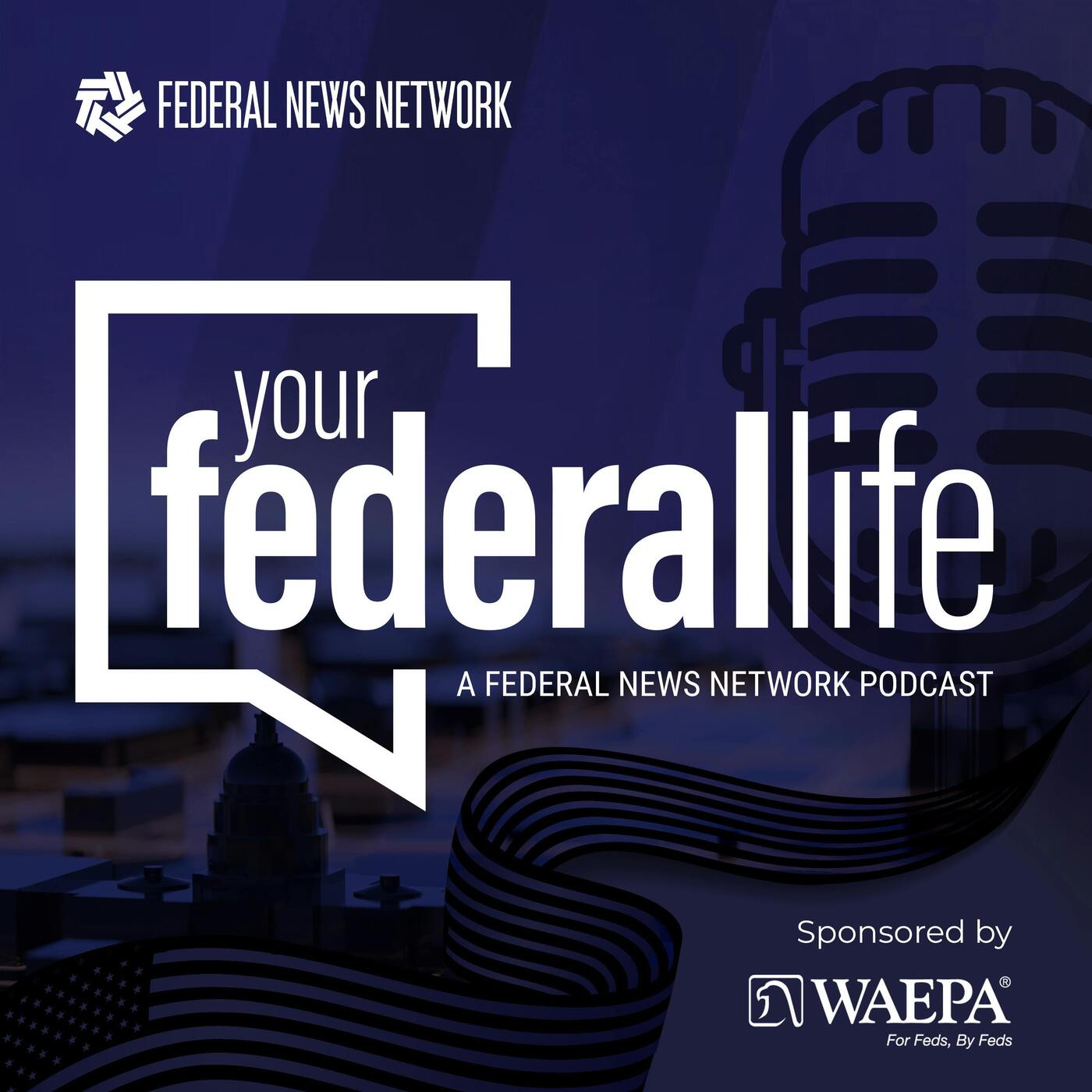
#172 - Fast Forward Thinking: Why Most Investments Fail — And How Elite VCs Think Differently

Most investors think they’re rational.Most founders think they’re disciplined.Most boards think they’re strategic.They’re usually wrong.In this episode, we unpack Fast Forward Thinking by Luis Pareras — a physician turned deep-tech venture capitalist who distilled decades of investing under scientific uncertainty into 40 brutally structured rules.This is not a summary.It’s a decision upgrade for founders, operators, board members, and capital allocators navigating the high-stakes terrain from Series A to IPO and beyond — where bias compounds, capital misallocates, and timing determines survival.Across seven tightly structured lessons, we explore how elite investors actually think:Why consensus is often a red flagWhy opportunity abundance demands ruthless selectivityWhy the first meeting should never closeWhy innovation compounds through milestones — not miraclesWhy exit logic must exist from day oneWhy managing error asymmetry beats being “right”And why teams — not ideas — determine survival under pressureThis episode translates Pareras’ venture logic into executive practice — with direct applications for capital allocation, hiring, governance, and strategic design.You’ll walk away with frameworks, sharper filters, and board-level questions that immediately improve judgment.Key TakeawaysBias Is the Silent Capital Killer Consensus feels safe. It often destroys upside.Selectivity Is Survival Abundance demands disciplined rejection.Curiosity Beats Closure The first meeting earns the second.Innovation Is Staged Breakthroughs are milestone-based progressions.Exit Thinking Is Structural Capital is deployed against time horizons.Error Asymmetry Shapes Returns Managing Type I and Type II errors defines long-term performance.Teams Outperform Ideas Execution discipline and cognitive flexibility win under uncertainty.Timestamps(00:00) Introduction(04:17) The Big Idea(08:33) Who Is Luis Pareras(12:03) Takeaway 1: Cognitive Bias Is the Hidden Enemy of Good Decisions(18:55) Takeaway 2: Deal Flow Is Abundant — Selectivity Is the Real Skill(24:16) Takeaway 3: The First Meeting Is Not About Closing(29:04) Takeaway 4: Innovation Is a Process(35:20) Takeaway 5: Exit Awareness Shapes Investment Logic(39:59) Takeaway 6: Error Types Matter More Than Individual Outcomes(44:38) Takeaway 7: Teams and Judgment Matter More Than Ideas(49:15) Key Takeaways: The Fast Forward Operating System(54:25) Personal Reflection and EndWhy ListenUpgrade how you evaluate opportunities — before committing capital.Sharpen how you structure innovation — before chasing breakthroughs.Design decision systems that reduce catastrophic error.And build organizations that survive uncertainty.If this episode sharpens your thinking:Follow the show.Share it with someone who allocates capital.And bring these questions into your next board meeting.Because in venture, public markets, and corporate strategy alike —returns are rarely accidental.Send us Fan Mail Join Christian Soschner for expert coaching. 50% Off - With 35+ years in deep tech, startups/scaleups, and public companies, Christian offers power video sessions. Elevate strategy, execution, and leadership. Book Now.Support the showJoin the Podcast Newsletter: Link

February 3, 2026Episode 31 hr 6 min

EP 171 - Björn Cochlovius: Why Brilliant Biotech Breaks at Manufacturing

Most biotech breakthroughs don’t fail in the lab.They fail when science meets manufacturing reality.And by the time this bottleneck appears, tens of millions are already sunk.This episode examines the most under-discussed failure point in modern biotech: the gap between scientific discovery and scalable, usable healthcare solutions.While science has never been stronger—and big pharma excels at market access—companies that can translate breakthrough biology into industrialized medicines remain rare. Manufacturing, regulation, clinical design, usability for patients and physicians, and global scalability still form a narrow bottleneck where most value is lost.In this conversation, Björn Cochlovius, CEO of Eleva, explains why so many promising biologics fail late—and how Eleva deliberately built a platform designed not to replace existing systems, but to rescue projects that would otherwise be abandoned.Drawing on decades across immunology, biotech leadership, and translational medicine, Björn offers a grounded, operator-level view on what it actually takes to move from elegant science to real-world impact.As he puts it:(00:28:59) “In biotech, courageous decisions often look wrong—until years later.”This discussion goes beyond manufacturing alone. It explores why turning scientific concepts into ready-to-deploy healthcare solutions—complete with clinical data, regulatory pathways, scalable production, and high usability—remains one of the hardest industrial challenges of our time.What You’ll Learn in This Episode1️⃣ Why biologics often fail late—after science already worked2️⃣ Why manufacturing is only one part of a deeper industrial bottleneck3️⃣ How Eleva approaches risk when others walk away4️⃣ Why courage, not optimization, drives breakthrough biotech decisions5️⃣ How AI supports discovery—without replacing human judgment6️⃣ What Europe gets right—and still gets wrong—about scaling biotech🧭 Selected Timestamps(00:03:00) Why biotech breakthroughs fail at manufacturing(00:07:18) Three takeaways for founders and investors short on time(00:08:36) Why biologics production breaks at scale(00:11:41) Salvaging proteins that standard systems cannot produce(00:15:27) The hidden opportunity in “failed” proteins(00:17:21) Why late-stage manufacturing failure destroys value(00:19:35) Why Eleva builds its own pipeline, not just a platform(00:22:46) Glycosylation as a source of better efficacy(00:27:03) Courageous decisions when everyone else has failed(00:30:04) Risk management through parallel scientific bets(00:32:08) Why similar proteins behave differently in patients(00:37:08) AI as a tool, not a replacement for human judgment(00:41:02) Why humans must remain accountable in drug discovery(00:44:25) The tension between basic research and development(00:46:01) Managing the handover between scientific universes(00:50:38) The CEO’s real job: building teams smarter than yourself(00:53:11) Leadership humility and protecting the team(00:56:11) How leaders recharge under long-term pressure(00:59:13) Europe’s biotech bottleneck and why there is still hope(01:02:20) Final reflection: turning science into systems that scale🎙️ Beginner’s Mind Top 10% globally. Conversations for founders, investors, executives, and policymakers shaping the future of biotech, deep tech, and healthcare.Follow the show for more episodes where science meets strategy—and leadership determines what actually scales.Send us Fan Mail Join Christian Soschner for expert coaching. 50% Off - With 35+ years in deep tech, startups/scaleups, and public companies, Christian offers power video sessions. Elevate strategy, execution, and leadership. Book Now.Support the showJoin the Podcast Newsletter: Link

January 25, 2026Episode 21 hr 56 min

EP 170 - Jim Pulcrano: Why Most Venture Capital Fails And What Europe Still Gets Wrong

Nine out of ten startups fail, yet Europe keeps funding them the same way.Governments replace judgment with bureaucracy, capital replaces experience, and failure is misunderstood instead of learned from.This conversation exposes why venture capital is a profession, not a policy tool — and why getting this wrong quietly kills innovation.In this episode, Jim Pulcrano, Adjunct Professor at IMD and longtime venture investor, explains why most venture capital systems fail before capital is even deployed.Drawing on four decades across Silicon Valley, Europe, and academia, Jim dismantles the myth that VC success comes from spreadsheets, credentials, or government programs. Instead, he shows why pattern recognition, lived experience, and exposure to failure are the real differentiators.As Jim puts it:(01:13:27) “Silicon Valley is the world’s capital of failure — and also the capital of learning.”That mindset difference explains why Europe struggles to scale founders, why governments unintentionally create zombie companies, and why operators consistently outperform theorists when backing the next generation of companies.This is not a motivational episode. It’s a structural diagnosis of how innovation ecosystems actually work — and where Europe still gets in its own way.💡 What You’ll Learn in This Episode1️⃣ Why most venture capital fails long before money is invested2️⃣ Why governments cannot replace judgment, experience, or risk-taking3️⃣ Why operators outperform bankers as investors4️⃣ Why failure is data — not stigma — in high-performing ecosystems5️⃣ What Europe must change to unlock its next innovation cycle👤 About Jim PulcranoJim Pulcrano is an Adjunct Professor at IMD with over four decades of experience across venture capital, entrepreneurship, and executive education. He has worked extensively in Silicon Valley and Europe, advising founders, investors, and institutions on scaling companies, leadership development, and venture capital as a professional discipline.💬 Quotes (01:13:27) “Silicon Valley is the world’s capital of failure — and also the capital of learning.” (01:33:58) “You have to be there at midnight when you’re trying to make a decision on Sunday night.” (01:40:14) “I’ve never met a successful entrepreneur who hasn’t been weeks from running out of money.” (01:23:21) “A government purchase order is worth more than the same amount in cash.”🧭 Timestamps(00:04:25) Why most startups fail — and why that’s not the real problem (00:09:55) Why Europe still misunderstands venture risk (00:16:42) Why founders matter more than ideas (00:24:13) Why governments create zombie startups (00:32:34) Why operator VCs outperform financial engineers (00:40:14) Failure as data, not disgrace (00:48:26) Why venture capital cannot be taught without simulation (01:04:48) What LPs should really look for in fund managers (01:19:46) Government as customer vs government as controller (01:30:10) Why young people should not rush into VC (01:32:38) Why empathy separates great investors from average ones (01:45:13) Leadership shifts from startup to scale-up (01:50:06) Three changes Europe must make now🎙️ Beginner’s MindTop 10% globally. The leading podcast for founders, investors, and policymakers shaping the future of biotech, deep tech, and innovation.Follow the show to explore more conversations like this one — where science meets strategy and leadership builds the future.Send us Fan Mail Join Christian Soschner for expert coaching. 50% Off - With 35+ years in deep tech, startups/scaleups, and public companies, Christian offers power video sessions. Elevate strategy, execution, and leadership. Book Now.Support the showJoin the Podcast Newsletter: Link
January 11, 2026Episode 136 min

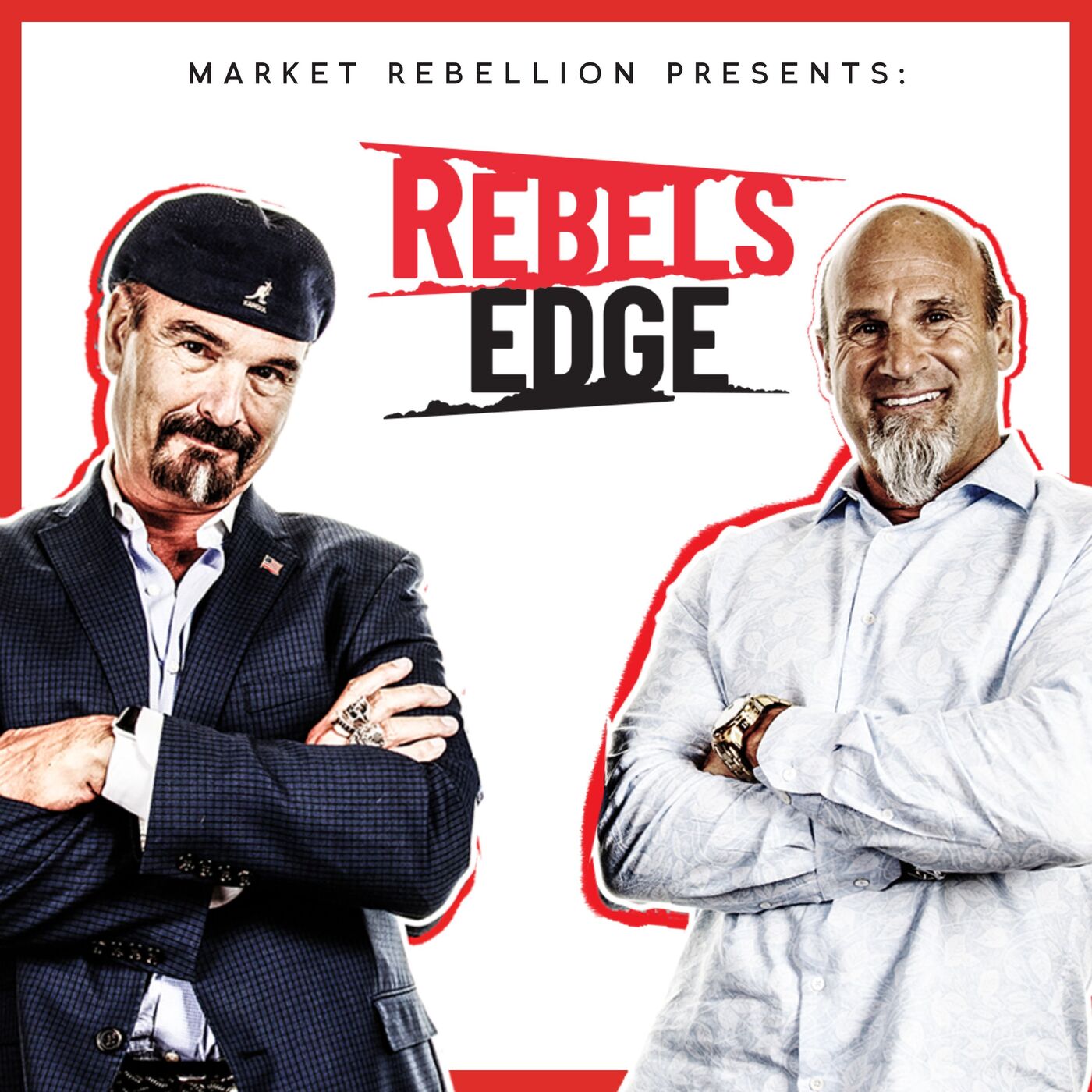
EP 169 - Why New Year’s Goals Fail by February - Even for Disciplined People

Most goals don’t fail because of laziness or lack of ambition.They fail quietly — buried under daily noise, competing priorities, and forgotten intentions.By March, even the most meaningful goals have slipped down the list… replaced by urgency, meetings, and excuses.In the last years, whenever I work with companies or people in my executive coaching a pattern showed up frequently.In private life: marathons abandoned, educations postponed, mountains left unclimbed. In business: bold visions diluted, priorities scattered, companies losing momentum — not because the goal was wrong, but because it was never protected.This Year in Review 2025 episode is my answer to that problem.After working with founders, executives, and teams throughout the year, one truth became unavoidable:Big goals don’t fail because people stop caring. They fail because they lose daily contact.So I stripped goal-setting down to what actually works.To make it memorable, I revisited the conversations of 2025 and selected six voices — from politics, investing, entrepreneurship, and professional sport — each illustrating one essential principle for achieving meaningful goals.No hype. No motivational slogans. Just a clear, calm framework you can apply immediately to your most important goal for 2026.🧭 What You’ll Learn in This Episode1️⃣ Why discipline and motivation are overrated — and what replaces them2️⃣ How goals quietly disappear without friction or resistance3️⃣ Why choosing one goal is the highest-leverage decision you can make 4️⃣ How to keep goals present without pressure or obsession 5️⃣ Why process builds identity — and outcomes don’t 6️⃣ What real commitment looks like when nobody is watching⏱️ Timestamps(00:00) Why New Year’s Resolutions Collapse — and What Actually Works(02:57) Karl Nehammer — “Sometimes there is no guidebook” (04:19) How Goals Quietly Disappear (07:56) Alex Dang — Focus, Selection, and Knowing When to Fold (11:45) Hack Away the Unessential — Choosing One Goal (14:05) Fabrizio Conicella — Skills Entrepreneurs Need in 2026 (17:54) Why You Must Review Goals Daily (19:43) Jason Foster — Setting Big Goals and Chipping Away (20:48) Process Over Outcome (22:48) Alasdair Milton — Doing the Work When Nobody Is Watching (26:05) Start Now — Before It Feels Comfortable (27:50) Vadim Fedotov — What Commitment Really Means (30:54) Before You Leave — Ed Sheeran’s Approach to Progress🎙️ About This EpisodeThis episode isn’t about setting more goals. It’s about protecting one goal that actually matters — whether you’re building the next NVIDIA, scaling a company, or working toward a personal milestone.If 2025 taught us anything, it’s this:Clarity beats intensity. Direction beats urgency. Process beats motivation.May 2026 be the year your most important goal doesn’t get lost.I’m glad you’re here.Send us Fan Mail Join Christian Soschner for expert coaching. 50% Off - With 35+ years in deep tech, startups/scaleups, and public companies, Christian offers power video sessions. Elevate strategy, execution, and leadership. Book Now.Support the showJoin the Podcast Newsletter: Link

December 30, 2025Episode 232 hr 42 min

EP 168 - Alasdair Milton: The Innovation Inflection Point: Why 70% of Cures Never Reach Patients

Breakthrough science has never been stronger — yet patients still miss life-saving therapies.Despite decades of innovation, most precision medicines fail at the last mile of healthcare delivery.The problem isn’t discovery. It’s how science, capital, and systems are aligned — or not.Possessing elite science is no longer enough to win in the multi-trillion-dollar biopharma ecosystem.As innovation shifts from West to East and from treatment to prevention, leadership teams struggle to bridge scientific depth with incentives, execution, and real-world delivery. Capital follows speed and scale — not intention — and healthcare systems built decades ago are failing to keep up.In this episode, Alasdair Milton, Principal at KPMG, explains where innovation actually breaks — and what must change for cures to reach patients at scale. From diagnostics and data silos to capital allocation and prevention models, this conversation reframes the next decade of precision medicine.💡 What You’ll Learn in This Episode1️⃣ Why only a fraction of eligible patients receive precision therapies2️⃣ How delivery systems — not science — kill innovation outcomes3️⃣ Why prevention is the next major value shift in healthcare4️⃣ How capital allocation decisions quietly determine patient access5️⃣ What leaders must change now to compete in the next biopharma cycle👤 About Alasdair MiltonAlasdair Milton is a Principal at KPMG advising global biopharma leaders on strategy, transactions, and innovation models. With a PhD in cancer biology and two decades at the intersection of science and capital, he works with executives navigating precision medicine, prevention, and large-scale healthcare transformation.💬 Quotes That Reframe the Debate(01:00:20) “Great science only creates value when translated into clear commercial decisions.”(01:37:24) “Power has swung decisively to pharma, with biotechs now starved for capital and leverage.”(01:36:10) “Markets shift fast, but leverage always follows capital, data, and disciplined execution.”(02:26:30) “Life sciences must move from treating sickness to predicting risk and sustaining lifelong wellness.”(01:46:24) “China is catching up fast, and by the 2030s, truly innovative molecules may originate there.”🧭 Timestamps(00:04:04) Shifting from treating disease to preventing it(00:05:32) Turbulent markets, steady scientific progress(00:07:03) In-vivo CAR-T and the next leap in cellular medicine(00:11:00) From chronic disease management to functional cures(00:20:20) Bridging specialized science with corporate strategy(00:21:55) Translating lab precision into business language(00:22:07) Bridging scientific depth to business acumen(00:57:40) Turning complex science into decisive commercial implications(01:08:46) Why in-person collaboration still drives leadership and learning(01:11:48) Navigating the $200B biopharma patent cliff through M&A(01:17:25) Capital concentrates on de-risked teams with proven leadership(01:18:17) Interpreting the biotech market recovery and tailwinds(01:28:26) Long-term capital returns as pharma reclaims deal leverage(01:38:03) Navigating IRA impacts and macro headwinds(01:43:39) China’s rapid ascent in the global monoclonal pipeline(01:46:24) China accelerates the eastward shift in global innovation(02:07:31) Precision medicine redefines individualized healthcare outcomes(02:09:03) Standardized data transforms healthcare delivery(02:16:57) AI across the precision medicine continuum(02:26:30) From reactive treatment to proactive lifelong wellness Send us Fan Mail Join Christian Soschner for expert coaching. 50% Off - With 35+ years in deep tech, startups/scaleups, and public companies, Christian offers power video sessions. Elevate strategy, execution, and leadership. Book Now.Support the showJoin the Podcast Newsletter: Link

Is this your show?

Claim this listing to keep it up to date, reach guests who want to pitch you, and manage bookings with Guestify.

Claim this listing

More Business podcasts