Find partners
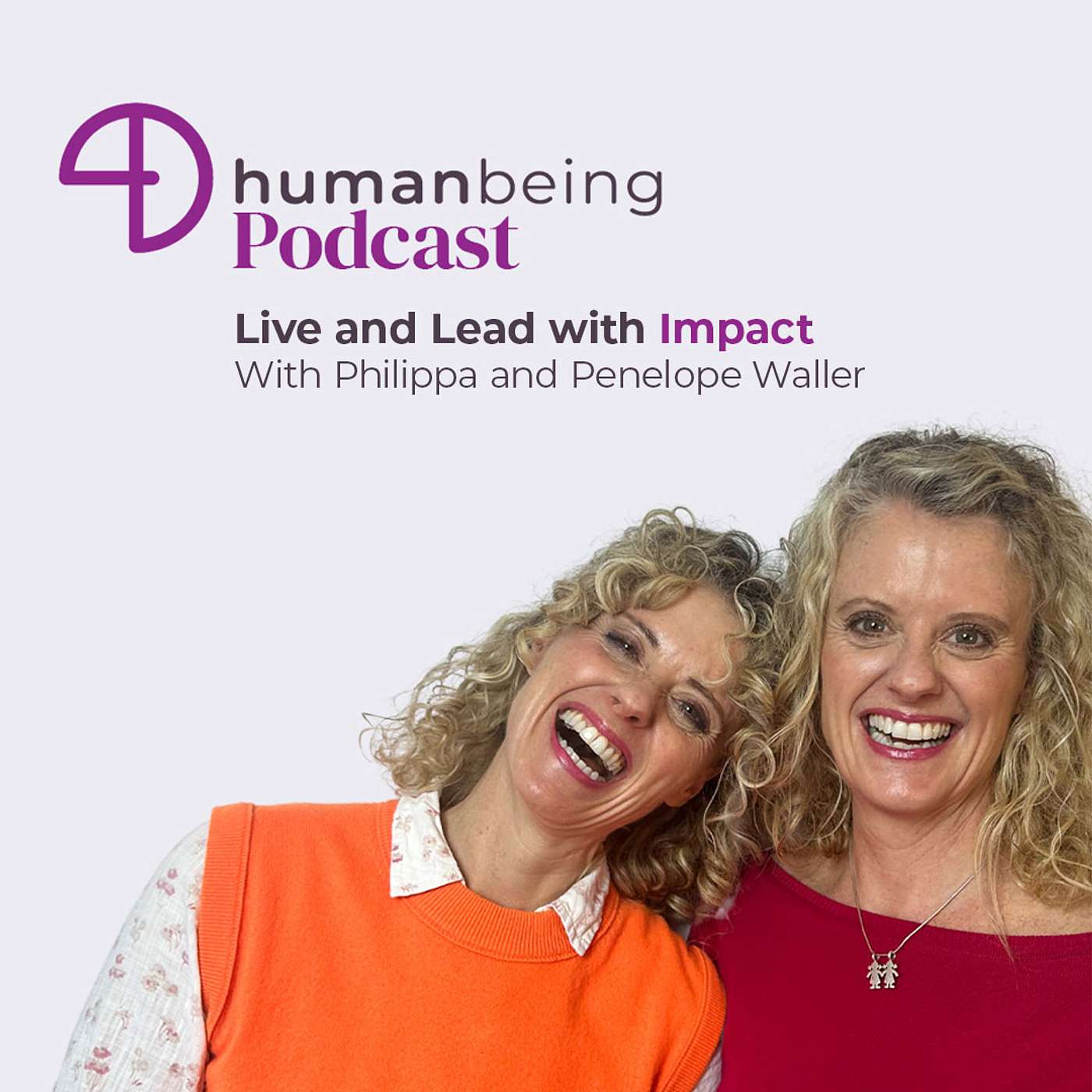
4D Human Being Podcast | Live and Lead with Impact

4D Human Being Podcast | Live and Lead with Impact

Hosted by 4D Human Being

Episodes

166

Latest episode

Aug 2026

Language

EN-GB

About the show

Are You Happening to the World or is the World Happening to You? Welcome to the 4D Human Being Podcast, where we dive deep into the world of personal and professional development. Hosted by co-directors Penelope and Philippa Waller, this podcast offers a refreshing blend of insightful discussions, practical advice, and transformative strategies. 4D Human Being bring you the very best in communication skills, leadership development, emotional intelligence all within this very podcast, inspiring you to become a more empathetic, focused, and successful leader. Whether you're looking to elevate your personal WellBeing, enhance your professional impact, or explore the profound joy of connecting with others, the 4D Human Being Podcast is your go-to source for fostering growth and navigating the complexities of the human experience. Join us as we explore how to thrive in all four dimensions of life, and not just be a 3D human doing, but a 4D Human Being.

Listen to episodes

60 recent
September 3, 20261 hr 5 min

Your Online Impact: Why the first ten seconds on screen decide how the whole call goes

You are on camera to your colleagues every single day. But are you actually showing up? Most of us stumbled into the online world and never stopped to ask whether the way we show up virtually is working for us or against us. The slippers. The bad lighting. The wandering eyeline. The energy that disappears the moment the camera switches on. It is all having an impact, and most of the time we have no idea. In this first episode of their four part Online Impact series, Phil and Pen get into exactly what it takes to command a virtual room with the same confidence, energy and presence you would bring in person. Because the online world is not going anywhere, and waiting until you are back in the room to make an impact could cost you more than you think. From the science of why tech compresses your energy before your audience even sees you, to why your background is silently telling people what to think about you before you have said a single word, this episode is packed with practical, immediately usable tools that will change how you show up online from your very next meeting. And here is something worth sitting with. 82% of regular meeting attendees say that video conferencing increases their cognitive load and fatigue. Your audience is already tired before you have started. What you do in those first few seconds matters more than you think. In this episode you'll discover: The 4D2C Physical dimension tools including posture, gesture levels and facial expressions and why they matter twice as much online as they do in the room Why your environment, lighting, framing and background are doing more work than you realise and how to take control of them How to dial up your energy online and why you need to push it further than feels comfortable The pitfalls that are quietly undermining your virtual presence including drifting in, flat lining and the wandering eyeline By the end of this episode, we want you to do one thing. Before your next online meeting, check your framing, get your shoulders back, set your intention and ask yourself this. If people could only see me and not hear me right now, what would they think? This is episode one of a four part series on remote impact. Stay tuned for episodes on virtual engagement, remote leadership and uniting remote teams.

August 20, 20261 hr 6 min

How to Build Executive Presence, One Dimension at a Time

Most people are waiting to be noticed. The people with executive presence make it impossible not to notice them. Part two of Phil and Pen's Executive Presence series is here, and this time it is all about the tools. The practical, immediately usable things you can do in your next meeting, your next conversation and your next online call to start commanding the room with confidence. Because here is the thing: Executive presence is not something you are born with. It is something you build. And in this episode, Phil and Pen give you exactly what you need to start building it today. From the four dimensions of executive presence and a tool for each one, to the authority trap and why levelling the playing field with more senior people is not about losing respect but about showing up as an equal, this episode is packed with tangible, real world tools that will change how people experience you the moment you walk into a room. And here is something worth sitting with. We often compare our internal experience to what we see in other people's external appearance. They are not the same thing. Not even close. Everyone in that room is carrying something. The difference is who has learned to own the space anyway. In this episode you'll discover: The SCRIPTS framework and how the way you use your voice is shaping your executive presence more than you realise The three things tool and why this one simple structure will instantly make you look more confident, credible and in control How to take up more space physically and why your gesture levels are one of the most underrated executive presence tools there is Why arrogance and defensiveness are both the enemy of executive presence and what to do instead By the end of this episode, we want you to try one thing. In your very next meeting, notice your gesture levels, get your voice in the room early and ask yourself this question: If people could not hear me, would they still want to look at me? Because presence does not build itself. But with the right tools, it absolutely can be built. Haven't listened to part one yet? Head back and start there first.

August 6, 20261 hr 5 min

The Room Reads You First: What Executive Presence Really Is and Why It's Quietly Deciding Your Next Promotion

Does your executive presence walk into the room before you do? There is a reason some people walk into a room and everything shifts. It is not luck. It is not seniority. It is executive presence, and in this episode Phil and Pen are going to show you exactly how to start owning it. Executive presence is one of the most requested topics in Phil and Pen's coaching work. And the reason is not because people lack skill or knowledge. It is because competence alone will never be enough to get you to the next level. What gets you there is what people believe about you. And that is something you can learn, develop and own. In this first of two episodes, Phil and Pen get into the deeper internal work that sits underneath every great communicator and leader you have ever admired. From the locus of control and why so many of us are still unconsciously seeking approval from the room, to the Parent Adult Child model and how corporate hierarchy can quietly push you back into a childlike state without you even realising it. Think about two leaders standing in front of you. Same experience, same knowledge, same role. But one of them makes you want to follow them anywhere. That difference is executive presence. And it shows up in the words you use, the space you take up, and what you silently communicate before you have even opened your mouth. Research from the Centre for Talent Innovation found that executive presence accounts for roughly 26% of what senior leaders say it takes to get to the next promotion. A quarter of the decision comes down to presence rather than performance. But zoom into that 26% and it gets even more interesting. Within executive presence itself: 67% Gravitas: composure, decisiveness and depth under pressure 28% Communication Style: not what you say but how you say it 5% Appearance: the layer most people over-invest in and the one that is weighted least Two thirds of the presence judgement that shapes your career comes down to gravitas alone. Not your slides. Not your outfit. How you show up when it counts. In this episode you'll discover: What executive presence actually is and why competence alone will never be enough to get you to the next level The Locus of Control model and how to shift from seeking external validation to leading from a place of internal confidence The Parent Adult Child model and how to spot when hierarchy is quietly diminishing your presence Practical awareness tools including the Executive Presence Line Up, the diminutive words to drop immediately, and why curiosity might be the single most underrated executive presence skill there is By the end of this episode, we want you to ask yourself one question. If the people in your last meeting could only see you and not hear you, how would they have ranked your presence in the room? Because the room reads you before you ever say a word. Stay tuned for part two where Phil and Pen give you the tangible communication tools to dial up your executive presence and make people sit up and take notice.

July 23, 202656 min

The Positive Response: Rewiring Your Responsitivity

What if you could change the way you respond to almost anything, in the time it takes to take a breath? This episode is your toolkit. Phil and Pen get practical and give you the tools to consciously shift your response patterns, communicate more positively, receive feedback with grace, and start spreading a culture of Responsitivity around you. In part two of their Responsitivity series, Phil and Pen move from awareness into action. Four key areas: how to shift your internal mindset in the moment, how to change the way you communicate in real time, how to receive both compliments and challenging feedback without defaulting to the negative, and how to help the people around you do the same. From the Neural Reframe, takes you from a full vent all the way through to a genuine positive reframe, to the simple but powerful shift of changing yes but to yes and, this episode is packed with tools you can use before your next meeting, your next conversation, or your next difficult moment at work or at home. And here is something worth sitting with: filtering is not the same as lying. You do not have to tip the whole bucket of your truth into every conversation. As a leader, you only ever need some of the truth, not all of it. Choosing what is useful to share is not dishonesty. It is smart communication. It is leadership. In this episode you'll discover: The Neural Reframe and the 2% Truth: two internal tools to change the story running in your head The Intentional Impression: how putting one word in your head before a conversation can completely change how you show up How to receive a compliment without deflecting it, and why deflecting is not humility How to shift the mood in a room, a team or an organisation one conversation at a time By the end of this episode, we want you to try one thing. Before your next conversation today, put one word in your head. Just one. And notice what changes. Responsitivity ripples. And it starts with you.

July 9, 202650 min

Is Your First Response Always the Problem? The Responsitivity Shift

Are you a NEGATIVE RESPONDER? Notice the very firsts word that come out of your mouth when someone asks how your week is going? If it is not good news, you are not alone. And it is not a personality flaw. It is negativity bias, and every single one of us has it. But here is the thing. Left unchecked, it quietly shapes how you communicate, how you lead, and how the people around you feel every single day. In this episode, Phil and Pen introduce one of their favourite concepts: Responsitivity : when response meets positivity , and the intentional choice to catch your default negative response before it leaves your mouth and choose something better instead. From the science of why our brains are wired like Velcro for the bad and Teflon for the good, to the moment a team leader says, "Great, but it didn't have to take that long, did it?" and watches the whole room deflate in an instant, this episode is full of real-world examples that will make you see your own communication habits in a completely new light. And here is a stat worth sitting with: you are six times more likely to be disengaged at work if you believe your manager focuses more on what you do wrong than what you do right. The drip, drip, drip of negative responses is not just uncomfortable. It becomes the culture. In this episode you'll discover: What negativity bias actually is, where it comes from, and why it is so hard to override Why deflecting a compliment is not humility. It is negativity bias wearing humility as a mask The Teflon and Velcro principle and what it means for how you give feedback, lead teams and handle relationships Six simple awareness tools to catch your default response and shift into Responsitivity By the end of this episode, we want you to notice the very first word that comes out of your mouth in your next conversation. Because those small, ordinary, completely unremarkable moments are drip, drip, dripping your communication style, your leadership and your culture every single day. Stay tuned for the next episode where Phil and Pen go further into the practical tools to bring Responsitivity to life in your conversations, your team and your organisation.

June 26, 20261 hr 11 min

I'm Right, You're Wrong: How the Polarity Trap Is Holding You Back

Do you know someone who always has to be right? Or maybe you have found yourself stuck in that exhausting loop where you just cannot see eye to eye with someone, no matter how hard you try. You know they are wrong. They are equally convinced you are. And somehow, nobody ever moves. In this episode, Phil and Pen give you the awareness and the tools to break free from the 'I'm right, you're wrong trap' for good, so you can stop falling out with people, stop going round in circles, and start having conversations that actually move things forward. Phil and Pen explore one of the most common and costly patterns in human behaviour: getting locked into an I'm right, you're wrong mindset. Otherwise known as 'Polarity Thinking.' At work, at home, on the road, Polarity Thinking shows up everywhere. And most of the time, we do not even realise we are doing it. From the science behind why our brains are wired to dig in and fight, to the moment two drivers lock eyes on a narrow country lane and neither will back down, this episode is packed with real-world examples and simple, practical tools that will change how you handle every difficult conversation from this point forward. In this episode you'll discover: Why we default to right and wrong thinking, a deeper look at polarity thinking and why it is so hard to snap out of it How to spot when you or someone else has got stuck in the trap before it escalates into conflict Why the answer is never just compromise and what actually works instead Six simple tools to raise your awareness and stop the pattern in its tracks By the end of this episode, you will never look at a disagreement the same way again. Because the problem is almost never the issue. It is the trap. More from The Polarity Trap in the 4D Human Being Managing Difficult Conversations series, coming soon to 4D On Demand. And do not miss the next episode of the 4D Human Being Podcast, where Phil and Pen go beyond awareness and into how you actually break free from polarity thinking for good.

June 14, 20261 hr 5 min

Six Skills for 2026: 6. Visionary

When did you last imagine the future? Not predict it. Not react to someone else's version of it. But truly, boldly imagine what could be possible? AI is exceptional at giving you data, analysis and execution. But it cannot dream. It cannot vision. It cannot look beyond what already exists and imagine what might be. That is uniquely, powerfully yours. And in the age of AI, it is about to become the most valuable skill in the room. In this final episode of their Six Skills for 2026 series, Phil and Pen explore the skill they believe will define the leaders, teams and businesses of the next decade: being Visionary. They break it down into three powerful pillars: Imagining, Planning and Communicating, and why developing all three is no longer optional for anyone who wants to shape the future rather than simply react to it. From the extraordinary story of Victorian engineer Joseph Bazalgette, who doubled the size of London's sewage tunnels based not on data but on bold imagination, saving the city from catastrophe generations later, to the neuroscience of why scrolling through social media is quite literally shutting down your creative and visionary thinking, this episode is packed with science, stories and practical tools that will change how you think, lead and communicate from today. And here is a stat worth sitting with: 85% of CEOs say vision is the single most critical skill they need in their leaders. Yet 40% of employees have no idea how their role connects to the vision of their organisation. The gap between where we are and where we need to be has never been greater, or more exciting. In this episode you'll discover: Why being visionary is the most AI proof skill you have and how to start owning it How your smartphone habit is closing down your imagination and what to do about it The three pillars of visionary leadership: Imagining, Planning and Communicating with passion Practical, daily tools to unlock your visionary thinking, from the weekly vision window to the backwards diary By the end of this episode, we want you to ask yourself one question: If the future is coming whether you imagine it or not, what would you build if you started from scratch today?

May 28, 20261 hr 5 min

Six Skills for 2026: 5. Relatability

Are you using your superpower? AI can write your strategy, analyse your data and automate your processes. But it will never make another human being feel truly seen, heard and understood. That is your superpower. And this episode will show you exactly how to make the most of it, and create the kind of impact only you as a 4D human being can make. In this episode you will discover why Relatability is not a soft skill but your single greatest competitive advantage in the age of AI, and why the leaders, teams and businesses that master it will be the ones that win. Phil and Pen explore the fifth of their Six Skills for 2026: Relatability. They break it down into three powerful pillars: Sharing, Caring and Communicating, and why these are hardwired into our very survival as a species. This is not about being nicer at work. This is biology, neuroscience and human evolution, and it is the difference between a team that performs and one that truly thrives. From the neuroscience of oxytocin and why human connection is the precondition for great work, to the sponge cake to red velvet cake story of how Homo sapiens outpaced every other species simply by sharing ideas, this episode is packed with science, stories and real-world examples that will shift how you show up every single day and inspire those around you. And here is a stat worth sitting with: research shows that social isolation is the physiological equivalent of smoking 15 cigarettes a day. How you show up for the people around you, colleagues and customers alike, matters more than you think. In this episode you'll discover: Why Relatability is a biological survival skill and what that means for how you lead and work in the age of AI How genuine empathy and perspective-taking create the neurological conditions for creativity, productivity and psychological safety The real reason people leave companies (hint: it's not the pay) and what to do about it Practical, daily tools to dial up your relatability, from the half-formed idea practice to caring under pressure By the end of this episode, we want you to ask yourself one question: What if today your job title was Chief Relatability Officer? What is the first thing you would implement today? Sources: Holt-Lunstad et al., Brigham Young University (2010) | Perceptyx Workplace Loneliness Study (2023)

May 14, 20261 hr 4 min

Six Skills for 2026: 4. Adaptability

Your plan is not the final goal. It never was. Does it feel like someone just quietly turned up the speed on the treadmill — and nobody asked if you were ready? Because life is moving fast right now. Really fast. And most of us are just trying to keep our footing, quietly hoping that today might be the day nothing new gets thrown at us. It won’t be. But here’s the good news. The leaders and teams who thrive aren’t the ones with the tightest plan. They’re the ones who’ve trained themselves to move without one. And that’s a skill — not a personality trait you either have or you don’t. In the fourth instalment of their Six Skills for 2026 series, Phil and Pen get into what adaptability actually looks like in practice — not as an abstract buzzword, but in your body, your meetings, and your leadership in real time. In this episode, they walk you through how to: Treat your plan as a hypothesis, not a contract — releasing the route doesn’t mean abandoning the goal Understand what your body is doing when change arrives — and why willpower alone will never be enough Reframe failure as data — and build a team culture where adaptation is celebrated, not hidden Use the weekly pivot review — a simple habit that transforms how you respond to the unexpected Model adaptability as a leader — because your team will follow exactly what they see at the top When the ground shifts beneath you, there are three choices. Wait. Stagnate. Or create. The competitive advantage now isn’t knowledge. It’s the speed at which you can learn. And here’s the thing — you are far more remarkable at this than you give yourself credit for. ----- As mentioned in this episode, Philippa explores the improvising mindset and how every connection and interaction shapes your reality in her TEDx Talk. Watch it here: The Improvising Mindset

April 30, 202658 min

Six Skills For 2026: 3. Curiosity

You’re not stuck. You’re resisting. Start exploring instead of defending. In this episode, the third in our six-part series on the critical skills for 2026, we focus on curiosity and why it matters now more than ever. From AI to everyday decisions, the world is shifting fast. The question is not whether change is happening. It is how curious you are willing to be in response to it. This is not about becoming someone new overnight. It is about recognising the patterns that keep you fixed, defensive, and closed off, then learning how to move through them with intention. And curiosity is the skill that changes the outcome. We explore why so many people stay in “expert mode” and how that mindset quietly limits growth, opportunity, and connection. You will hear how resistance shows up in meetings, relationships, and leadership, often disguised as confidence or experience. And more importantly, what to do about it. Why resistance to change is natural, but dangerous if left unchecked The shift from expert to explorer and why it matters now more than ever How fear, ego, and internal rules quietly block curiosity Simple ways to practise curiosity in real conversations and decisions In your professional and personal life, answers will only take you so far. The real value is in the questions you ask and the ground you are willing to explore. So the next time you feel yourself shutting down, defending, or rushing to the answer… Pause. And ask one more question.

Is this your show?

Claim this listing to keep it up to date, reach guests who want to pitch you, and manage bookings with Guestify.

Claim this listing

More Business podcasts