Find partners
Y Combinator Startup Podcast

Y Combinator Startup Podcast

Hosted by Y Combinator

Episodes

350

Latest episode

Nov 2026

Language

EN-US

About the show

We help founders make something people want. The Y Combinator Podcast is where builders talk about building. From the earliest days of an idea to scaling a company that changes the world, YC partners and founders share real stories, lessons, and tactics from the frontlines.

Listen to episodes

60 recent
November 18, 202654 min

How To Build The Future: Eric Glyman, Co-CEO of Ramp

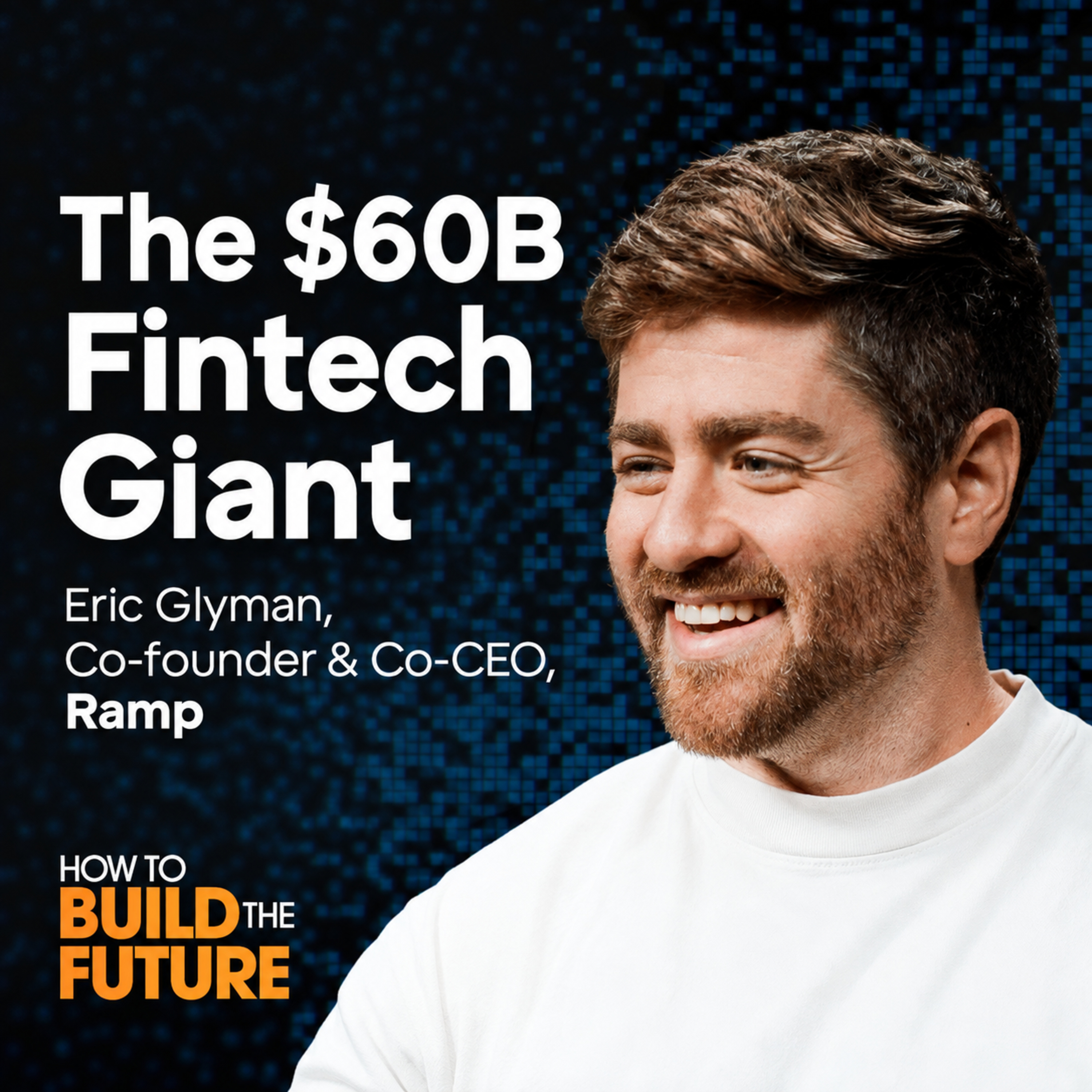
Ramp started with a simple promise: help companies save time and money. Seven years later, it’s a $60 billion platform running the financial operations of tens of thousands of businesses, with more than $2 billion in annual revenue.Now, Ramp is using AI not just inside its products, but to rethink how the company itself works.On this episode of How to Build the Future, Ramp co-founder and CEO Eric Glyman joins Garry Tan to talk about the company’s journey from its earliest days and how AI has made some people at Ramp radically more productive. That shift led Ramp to rethink how work gets done across the organization, and Eric believes it could eventually let even large companies move with the speed of startups again.

November 16, 20261 hr 0 min

The Rise Of AI Coworkers

At SpaceXSI, Lauren Tan and Roman Ugarte are on the core team that took Grok Bot from first line of code to launch in seven weeks. It lets you spin up AI teammates with their own identities and logins, and they just keep working in the background. Their marketing team gave a bot its own ad budget. Lauren built an entire feature with her bot in one Slack thread without ever opening Cursor. They joined us on the Lightcone to talk about what it’s actually like working next to bots every day, and how the hard part is shifting from doing the work to figuring out what to do and why.

November 7, 202644 min

How To Build The Future: Paul Graham & Amjad Masad

Replit was building toward the AI coding era years before it had a name. In 2024, the company shipped an agent that could take a request in plain English, work through errors, provision its own infrastructure, and keep going until the software actually worked. The model companies even reached out to ask how Replit had pulled it off.Co-founder and CEO Amjad Masad had been thinking about making programming radically more accessible since 2008, and Replit’s original pitch deck predicted AI-generated code before the Transformer paper was published. Today, that same technology is moving into banks, manufacturers, and other large companies, where Amjad says teams are replacing software projects once scoped at $10 million with $250,000 of Replit.On How to Build the Future, Paul Graham sits down with Amjad to talk about why Replit was so well positioned when coding agents arrived, what comes after vibe coding, and his bigger vision for the “self-driving company,” where AI agents increasingly build and operate the software a company needs.

November 4, 20269 min

How To Go From Researcher to Founder

Google, Anthropic, and Databricks were all started by founders with PhDs. But they’re exceptions to the rule. Many of the instincts that help researchers succeed in academia can often work against them when building a startup.YC Visiting Partner Francois Chaubard knows both worlds. He’s currently a PhD student, previously did research in Fei-Fei Li’s lab, and founded and ran Focal Systems (W16).In this episode of Startup School, Francois breaks down 10 mindset shifts researchers need to make to become formidable founders, from learning to thrive without grades or deadlines to distinguishing interesting problems from important ones, moving faster with imperfect information, and starting with what customers actually want.

October 30, 202648 min

What Happens When Everyone Can Build Software

Supabase has become one of the default backends for the AI coding era. The open source Postgres platform now has 13 million users, spins up more than a million databases every week, and roughly 70% of its new activity is coming from agents.As coding shifts from developers writing software by hand to agents building on their behalf, Supabase has been rebuilding itself around that new user.Supabase co-founder and CEO Paul Copplestone joins Garry, Harj, and Jared on the Lightcone to talk about what happens when everyone can become a builder. They dive into why personal software may become as common as personal documents, how to design products that agents actually want to use, and why knowing what to build may matter more than knowing how to build it.

October 28, 20261 hr 5 min

The New Full-Stack Designer

Marvin Schwaibold leads the product design studio at Shopify, where his team is rethinking some of the company’s most important products for the AI era. Before Shopify, he co-founded the design studio Molly, working with companies including Apple and Google and building a reputation for highly crafted, interactive design.In this episode of Design Review, Marvin joins YC’s Aaron Epstein to show how AI has changed his process, from using Figma as a scratchpad to building working prototypes directly with tools like Codex. He explains why designers are becoming more like editors, how AI is making them more full-stack, and why taste and judgment matter even more when the tools can build almost anything.Then they review viewer-submitted websites and break down how hierarchy, motion, typography, and restraint can make a product feel more intentional.

October 23, 202647 min

This Is How You Should Actually Make Launch Videos

There’s a misconception that a successful launch video needs to cost tens of thousands of dollars and feel like a high-production commercial. But Farza Majeed has a different approach. Farza is the founder of Clicky and previously built Buildspace, one of the largest online schools for people working on their own ideas. He’s been making videos for over a decade, and today his posts regularly get millions of views. Rather than treating launches as rare, high-stakes moments, he’s made them part of the everyday process of building a company. Farza sat down with YC’s Aaron Epstein to share his playbook for turning demos into stories people actually want to watch. He breaks down how he scripts videos that still feel off the cuff, why founders should launch constantly, and how to figure out which channels actually convert.

October 22, 202647 min

How To Stand Out In A World Of AI Designs

Magic Patterns (YC W23) is one of the fastest-growing design tools in AI, helping product teams turn ideas into interactive, code-backed prototypes in minutes. Alex Danilowicz and his co-founder, both front-end engineers, built Magic Patterns to solve a problem they had themselves: finding a better way to turn ideas into something visual. They were among the first teams building prompt-to-design tools back in 2023.In this episode of Design Review, Alex joins YC’s Aaron Epstein to demo Magic Patterns and its new MagicOS canvas, where teams can bring together prompts, images, PRDs, and other context to explore ideas visually. Then they review a handful of startup websites to break down what makes a site feel “vibe coded,” where founders go wrong, and how to make AI-generated design feel more intentional.Chapters:00:00 - What Magic Patterns is03:01 - Nine months of pivots05:59 - Using the MCP from Cursor08:21 - The end stage is compressed now11:23 - Demo: postcards for every meetup city15:35 - The RollerCoaster Tycoon chocolate theme park18:17 - Site 1: Ego21:39 - Inputs you can't type into23:59 - Site 2: Sentient OS27:57 - "Free" should be giant30:20 - Instrument Serif and the em dash32:01 - Site 3: CeraNovus36:59 - Site 4: Slashy38:36 - Nobody clicks your tabs43:08 - Getting better at design as an engineer46:07 - What's next: Magic OSApply to Y Combinator: https://www.ycombinator.com/applyWork at a startup: https://www.ycombinator.com/jobs

September 26, 202629 min

Robot-Use Agents: Why General-Purpose Models May Win in Robotics

One of the biggest surprises in AI over the last few years has been how well coding agents generalize beyond software. In a recent essay, MIT professor Philip Isola argued that we may be entering the era of robot-use agents: general-purpose models that can control different robots, write policies, and learn new physical tasks with little or no robot-specific training.In this episode of Decoded, we're joined by the founders of Waddle Labs and RoboCurve, two of the startups whose work helped drive this realization. They're working at the frontier of using general-purpose models to control robots, and their recent demos helped inspire the growing conversation around robot-use agents. Together, we dig into the research behind that idea, from code-as-policies and vision-language-action models to the harnesses and evals needed to make these systems work in the real world.

September 18, 202636 min

The State of Startups in 2026

YC works with thousands of founders every year, which gives us an early look at how startups are changing. Right now, the shift is striking: startups are moving from bits to atoms, nearly one in five YC companies has a solo founder, and companies are reaching meaningful revenue faster than ever.In this episode of The Lightcone, Garry, Jared, Diana, and Harj dig into what’s driving these changes and what they mean for founders. They discuss how AI is making it possible for smaller teams to take on more ambitious problems, why experienced founders are having a resurgence, and why knowing what to build is becoming more important than simply knowing how to build it.

Is this your show?

Claim this listing to keep it up to date, reach guests who want to pitch you, and manage bookings with Guestify.

Claim this listing

More Technology podcasts