Find partners
An Hour of Innovation: AI, Product, Tech and Career Growth

An Hour of Innovation: AI, Product, Tech and Career Growth

Hosted by Vit Lyoshin

Episodes

119

Latest episode

Jun 2026

Language

EN-US

About the show

An Hour of Innovation is a weekly podcast for product leaders, engineers, founders, and tech professionals building the future of technology. Hosted by Vit Lyoshin, a product leader, each episode explores how real products are built, from AI and machine learning to product strategy and execution, through conversations with top innovators, scientists, and industry leaders. You’ll gain practical insights, career lessons, and real-world perspectives on product management, software engineering, startups, and technology leadership.

Listen to episodes

60 recent
June 9, 2026Episode 11959 min

Is Your Job Safe? The New Diamond-Shaped Career Path

Most people think learning AI means using ChatGPT. But the real challenge is learning the skills that will keep you valuable in an AI-driven workforce.In this episode of An Hour of Innovation podcast, Vit Lyoshin speaks with Taniya Mishra, founder and CEO of SureStart and an AI researcher focused on preparing the next generation for the future of work.Vit and Taniya explore why AI literacy is becoming essential, how artificial intelligence is reshaping education and careers, and what students, professionals, and leaders need to learn to thrive in a world where humans increasingly work alongside AI agents. The conversation covers AI education, workforce development, career readiness, and the skills that may matter most in the age of AI.They discussed* Why AI literacy goes beyond using ChatGPT effectively* The hidden danger of trusting confident AI outputs* How AI agents are changing workplace collaboration models* Why analytical thinking matters more than technical skills* The workforce pyramid is becoming a diamond-shaped career path* Future careers created by artificial intelligence adoption* How schools are adapting to AI-driven workforce changes* Building AI fluency and responsible AI decision-making* Student startups solving real-world problems with machine learning* Emerging opportunities in health tech, cybersecurity, and AITaniya Mishra is the founder and CEO of SureStart, an AI education company focused on bringing AI fluency to students around the world. After spending more than a decade building and researching artificial intelligence in both industry and startup environments, she recognized a growing gap between technological innovation and education. Through SureStart, she works with schools, educators, researchers, and industry leaders to help students develop the skills needed for an AI-powered future. Her perspective combines deep technical expertise with a practical understanding of workforce trends, making her uniquely positioned to discuss how education, careers, and artificial intelligence are evolving together. Taniya's work has helped students launch startups, pursue AI research, and prepare for the rapidly changing future of work.Timestamps00:00 Introduction01:20 Understanding AI Literacy07:57 AI in Education: Current Trends and Challenges14:16 Preparing Students for the Future Workforce19:08 Navigating Job Market Changes24:38 Advice to Younger Generation27:19 The Mission of Sure Start: Bridging the AI Education Gap34:17 Success Stories of Young Innovators37:55 Curriculum Development and Flexibility40:22 Staying Current in a Rapidly Evolving Industry45:13 Encouraging School Adoption of AI Education46:42 Future Technological Trends and Opportunities53:39 Innovation Q&AConnect with Taniya* Website: https://mysurestart.com/ * LinkedIn: https://www.linkedin.com/in/taniya-mishra-phd/ * X: https://x.com/taniyatts Support the PodcastIf you enjoy the podcast, you can support it by exploring the tools below.These are affiliate links, meaning the show earns a small commission at no extra cost to you.MeetGeek: Record, transcribe, summarize, and share insights from every meeting. https://get.meetgeek.ai/yjteozr4m6lnAmplemarket: Step into the future of sales: Human + AI. Empower reps, uncover opportunities, and grow revenue.https://grow.amplemarket.com/04e068165684-affiliateDatabox: Turn business performance data into clear answers your team can understand, explain, and act on – instantly.https://join.databox.com/vhw0wbr9qg9o For inquiries about sponsoring An Hour of Innovation, email iris@anhourofinnovation.comConnect with Vit* Substuck: https://anhourofinnovation.substack.com/* LinkedIn: https://www.linkedin.com/in/vit-lyoshin/ * X: https://x.com/vitlyoshin

May 26, 2026Episode 11852 min

Why Enterprise AI Fails After the Demo | David Bauer

Most enterprise AI projects fail after the demo because real-world data infrastructure is far messier, more fragmented, and more insecure than most companies realize.In this episode of An Hour of Innovation podcast, Vit Lyoshin speaks with David Bauer, co-founder and CTO of Axonis. David is an AI systems architect and expert in federated AI, enterprise security, and large-scale predictive systems.Vit and David explore why so many enterprise AI projects never reach production, how centralized data lakes are becoming “data swamps,” and why the future of AI may depend on securely bringing models directly to production data instead of moving sensitive data into centralized systems. The conversation also dives into AI agents, cybersecurity risks, predictive analytics, and lessons learned from building high-stakes AI systems for government and national security environments.They discussed:* Why enterprise AI fails after successful demos* The hidden “last mile” problem in enterprise AI* Why data lakes become unusable “data swamps”* Federated AI architecture for secure enterprise systems* AI agents and emerging cybersecurity risks* Why production data breaks most AI implementations* How sensitive enterprise data should stay decentralized* Predictive COVID analytics used by government agencies* AI infrastructure lessons from DARPA and national security* Why future AI systems won’t rely on promptsDavid Bauer is an AI systems architect focused on federated AI, enterprise security, and large-scale distributed intelligence systems. His work spans enterprise AI infrastructure, predictive analytics, secure data architectures, and agentic AI workflows operating in highly sensitive environments. Over the years, David has contributed to projects connected to national security, government AI initiatives, and advanced predictive modeling systems used for logistics and operational planning.Timestamps00:00 Introduction01:14 AI Challenges in Enterprises03:15 Understanding Last Mile AI Problem05:22 Exploring Federated AI and Its Benefits09:10 Security Considerations in Federated AI13:08 Implementing Federated AI: Trade-offs and Frameworks15:55 Real-World Applications of Federated AI19:12 Example of Using Federated AI21:16 How to Start with Federated AI25:29 Lessons from COVID Data Tracking33:21 Innovation in High-Stakes Environments39:28 The Future of AI Agents in the Workplace42:25 Cybersecurity Challenges with AI Agents48:18 Innovation Q&AConnect with David* Website: https://www.axonis.ai/ * LinkedIn: https://www.linkedin.com/in/dr-bauer/ Connect with Vit* Substuck: https://anhourofinnovation.substack.com/* LinkedIn: https://www.linkedin.com/in/vit-lyoshin/ * X: https://x.com/vitlyoshin Support the PodcastIf you enjoy the podcast, you can support it by exploring the tools below.These are affiliate links, meaning the show earns a small commission at no extra cost to you.Kit: Email marketing that automates your growth. https://partners.kit.com/xqcc7ca2ahlmGoogle Workspace: Collaborative way of working in the cloud, from anywhere, on any device.https://referworkspace.app.goo.gl/A7wHMeetGeek: Record, transcribe, summarize, and share insights from every meeting. https://get.meetgeek.ai/yjteozr4m6ln For inquiries about sponsoring An Hour of Innovation, email iris@anhourofinnovation.com
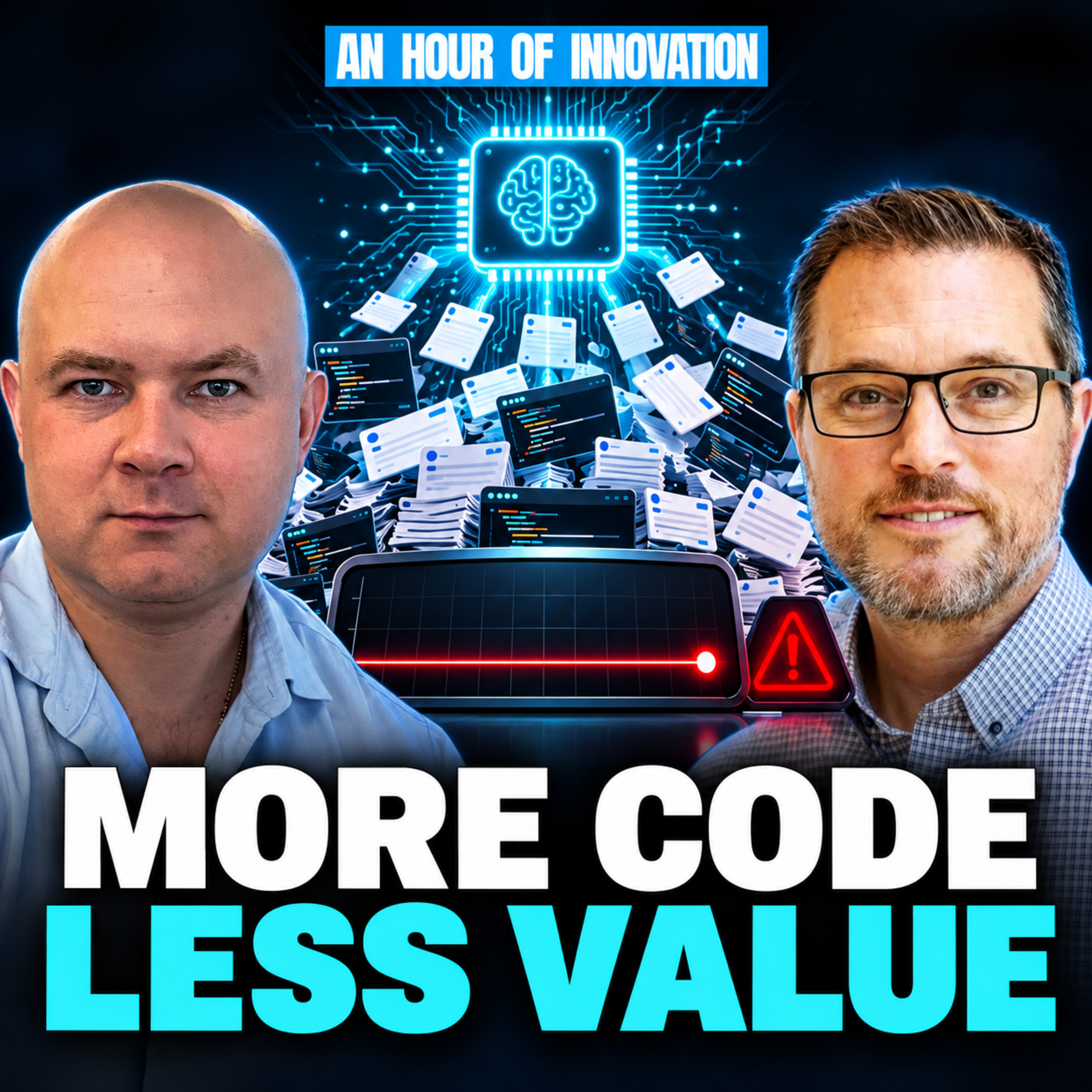
May 19, 2026Episode 11745 min

The Framework for Building AI-Native Organizations | Melissa Reeve

Most AI transformations fail not because of the technology, but because companies are still operating with structures built for a pre-AI world.In this episode of the An Hour of Innovation podcast, Vit Lyoshin speaks with Melissa Reeve, AI transformation strategist and author of the book Hyperadaptive, about what it actually takes to build AI-native organizations. Vit and Melissa explore why traditional enterprise structures struggle with AI adoption, how agentic AI changes workflows and careers, and why companies must rethink governance, learning loops, value streams, and decision-making to stay competitive in the AI era.They discussed:* Why most AI transformation initiatives stall inside enterprises* The hidden problem with traditional organizational structures* How agentic AI changes workflows and operational models* AI-native organizations versus legacy enterprise operating systems* Why companies rush into AI too early* AI governance models built for constant technological change* How AI reshapes careers and workforce adaptability* The future of AI-powered decision-making in organizations* Why value streams matter more in AI-driven businesses* Building hyperadaptive companies through continuous organizational learningMelissa Reeve is an AI transformation strategist focused on helping organizations become more adaptive, AI-native, and resilient in rapidly changing environments. Her work combines systems thinking, Agile transformation, Lean manufacturing principles, and enterprise AI strategy into a practical framework for organizational redesign. She is the author of Hyperadaptive, a model that helps companies evolve beyond traditional siloed structures into continuously learning and adapting organizations. Melissa’s perspective stands out because she focuses less on AI tools themselves and more on how AI fundamentally changes decision-making, workflows, governance, and the future of work inside enterprises.Timestamps00:00 Introduction02:18 Understanding AI in Business03:31 The HyperAdaptive Model: Origins and Insights07:58 Five Capabilities of the Hyperadaptive Model09:34 1. AI Augmented Decisions11:39 2. Integrated Learning Loops14:12 3. Value Orientation17:42 4. AI-Powered Sensing19:37 5. Continuous Adaptation22:09 Stages 1: Foundation25:10 Stage 2: Task Augmentation27:59 Stage 3: Agentic AI31:45 Stage 4: Scaling AI35:09 Stage 5: Hyperadaptive AI37:30 Where to Start Implementing the Hyperadaptive Model40:25 How Will Organizations Look Like 20 Years From Now41:58 Connect with Melissa42:53 Innovation Q&AConnect with Melissa* Website: https://hyperadaptive.solutions/ * LinkedIn: https://www.linkedin.com/in/melissamreeve/ * Book: https://www.amazon.com/Hyperadaptive-Rewiring-Enterprise-Become-AI-Native/dp/1966280262 Support the PodcastIf you enjoy the podcast, you can support it by exploring the tools below.These are affiliate links, meaning the show earns a small commission at no extra cost to you.AdCreative.ai - Generate ad banners, texts, photoshoots, and videos that outperform those of your competitors.https://free-trial.adcreative.ai/velg2js91det-96w1liAmplemarket - Step into the future of sales: Human + AI. Empower reps, uncover opportunities, and grow revenue.https://grow.amplemarket.com/04e068165684-affiliateDatabox - Turn business performance data into clear answers your team can understand, explain, and act on – instantly.https://join.databox.com/vhw0wbr9qg9o For inquiries about sponsoring An Hour of Innovation, email iris@anhourofinnovation.com Connect with Vit* Substuck: https://anhourofinnovation.substack.com/* LinkedIn: https://www.linkedin.com/in/vit-lyoshin/ * X: https://x.com/vitlyoshin
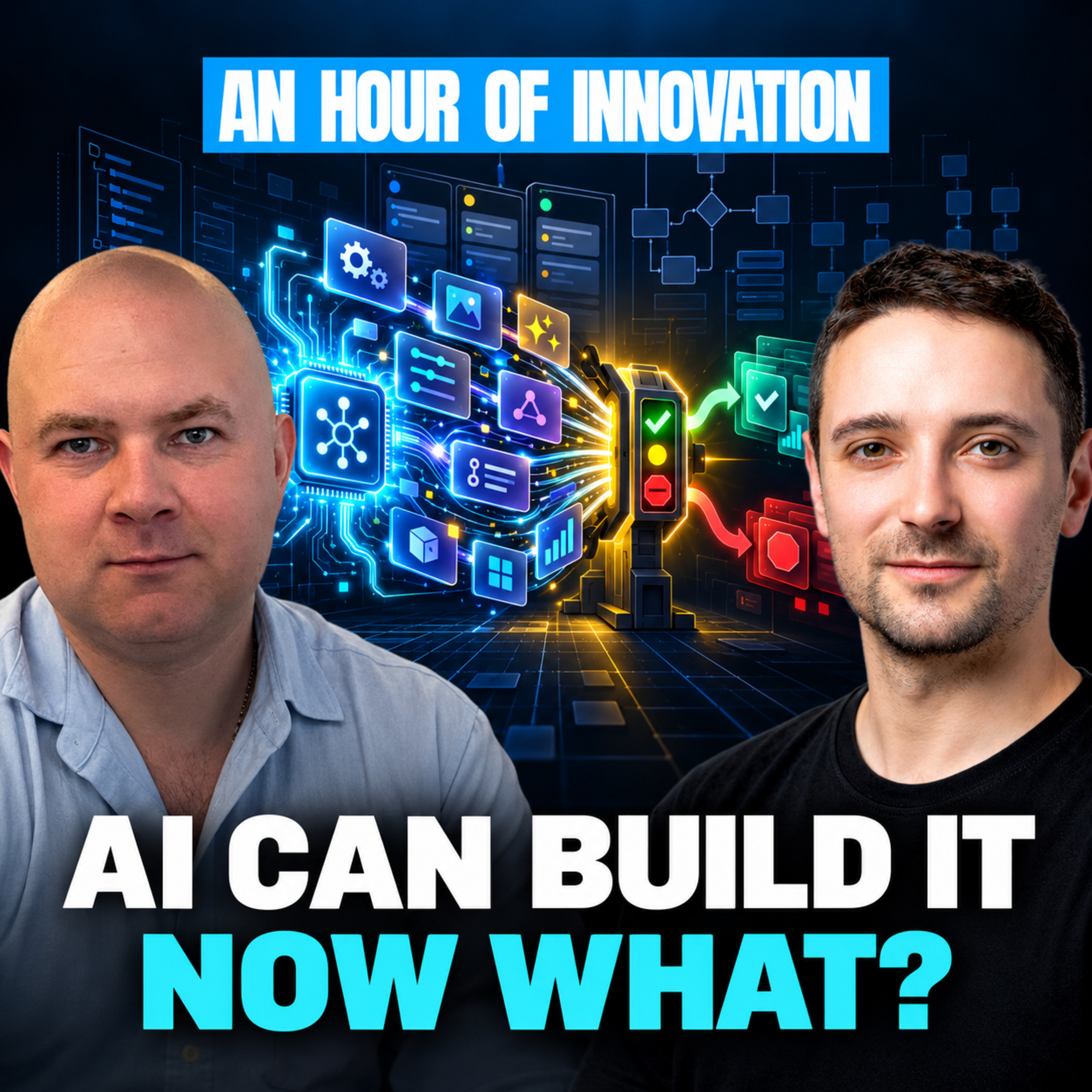
May 12, 2026Episode 11647 min

DEXA Founder: Why Drone Delivery Is Bigger Than Amazon

Drone delivery is no longer science fiction. Autonomous drones may completely transform last-mile logistics, local commerce, and the future of instant delivery.In this episode of An Hour of Innovation podcast, Vit Lyoshin speaks with Beth Flippo, CEO and founder of DEXA, one of the few FAA-certified unmanned airlines in the United States. Vit and Beth explore how autonomous drone delivery is becoming commercially viable, why regulation became a competitive advantage instead of a barrier, and how AI-powered logistics systems could fundamentally change the way people receive goods. The conversation dives into drone technology, robotics, automation, last-mile delivery, and the future of autonomous systems.They discussed:* Why drone delivery is finally becoming economically viable* How FAA certification creates a competitive moat for startups* The future of 15-minute autonomous local delivery systems* Why addresses may disappear from the delivery infrastructure* How drones outperform trucks in last-mile logistics* The hidden complexity behind autonomous drone operations* Why robotics startups struggle with hardware manufacturing challenges* How AI and drones could reshape consumer behavior* Future robot-to-robot coordination in logistics and commerce* Why instant delivery may create entirely new industriesBeth Flippo is the CEO and founder of DEXA, a drone delivery company building autonomous logistics systems for commercial use. Her team developed one of the few FAA-certified unmanned airline platforms operating in the United States, placing DEXA among a very small group of companies working at the frontier of autonomous aviation. Beth is known for her practical approach to innovation, combining deep technical understanding with real-world operational execution in a highly regulated industry. Her perspective is especially valuable because she is not talking about future concepts; she is actively building and deploying autonomous delivery systems today. In this conversation, Beth shares rare insights into the economics, infrastructure, regulation, and technological realities behind the future of drone delivery.Timestamps00:00 Introduction01:28 Why Drone Delivery Is Finally Real02:59 Building an Autonomous Delivery System06:36 FAA Certification for Drone Startups10:32 How Drone Delivery Actually Works14:24 The Future of Instant Delivery16:08 Why Addresses May Disappear19:41 New Business Models Around Drones21:21 The Economics of Drone Delivery23:34 How Fast Delivery Changes Consumer Behavior26:27 Hardware Challenges in Robotics Startups30:06 Winning Trust From Enterprise Clients31:57 The Regulation Problem in Robotics34:17 Inside an Autonomous Drone System35:44 The Hardest Part of Building DEXA40:12 The Future of Last-Mile Logistics43:21 Innovation Q&AConnect with Beth* Website: https://flydexa.com/ * LinkedIn: https://www.linkedin.com/in/beth-flippo-102b9822/ Support the PodcastIf you enjoy the podcast, you can support it by exploring the tools below.These are affiliate links, meaning the show earns a small commission at no extra cost to you.Kit: Email marketing that automates your growth. https://partners.kit.com/xqcc7ca2ahlmLeadpages: All-in-one conversion rate optimization solution. Capture leads, run experiments, and scale smarter. https://try.leadpages.com/jorgsmx8wadwMeetGeek: Record, transcribe, summarize, and share insights from every meeting. https://get.meetgeek.ai/yjteozr4m6ln For inquiries about sponsoring An Hour of Innovation, email iris@anhourofinnovation.com Connect with Vit* Substuck: https://anhourofinnovation.substack.com/* LinkedIn: https://www.linkedin.com/in/vit-lyoshin/ * X: https://x.com/vitlyoshin

May 5, 2026Episode 11547 min

XMAQUINA Founder: Why Robots Will Replace Jobs, But Make Owners Rich

AI isn’t just automating work. It’s creating a new machine economy where robots earn money.And the real question is: who owns them? In this episode of An Hour of Innovation, Vit Lyoshin speaks with Mauricio Zolliker, co-founder of XMAQUINA, about the future of robotics, AI agents, and the emerging machine economy. They explore how humanoid robots are evolving from tools into autonomous economic agents, and why ownership, not intelligence, will define who benefits from this shift.The conversation dives into robotics investing, decentralized infrastructure, and what it means for individuals as AI and automation scale.They discussed:* How robots evolve into autonomous economic agents* Why AI agents will move from digital to physical* The machine economy explained in simple terms* Who will own robots and control future wealth* Risks of massive inequality from centralized robotics ownership* How blockchain enables robot-to-robot financial transactions* Why traditional banking fails for machine payments* Robot as a service and real-world business models* How individuals can invest in robotics startups early* Future of humanoid robots in everyday life and workMauricio Zolliker is the co-founder of XMAQUINA, a platform that opens access to robotics investments through decentralized infrastructure. Mauricio operates at the intersection of AI, robotics, and blockchain, building systems that allow individuals, not just institutions, to participate in the next wave of technological growth. His work centers on the idea that machines will soon become economic actors, capable of earning, spending, and transacting independently. Rather than focusing only on automation, Mauricio explores how ownership of these systems can reshape wealth distribution. His perspective combines technical insight with a clear vision of how the machine economy could evolve over the next decade. Timestamps00:00 Introduction01:49 The Rise of Robotics in the Economy05:41 Decentralizing Access to Robotics Investment09:27 What is XMAQUINA?11:50 Community-Driven Investment Ecosystem15:11 The Future of Autonomous Robots and Wallets21:06 Ownership and Wealth Distribution in the Machine Economy25:57 Understanding Machine Capital and Its Implications27:03 The Future of Resource Sharing and Tokenization30:18 The Role of Robots in Everyday Life32:48 Envisioning a Future with Autonomous Machines35:01 The Evolution of Robotics and Its Economic Impact42:22 AI Complications in Robotics44:28 Innovation Q&AConnect with Mauricio* Website: https://www.xmaquina.io/ * LinkedIn: https://www.linkedin.com/in/mauricio-z-08a331ab/ * X: https://x.com/ZolKilla Support the PodcastIf you enjoy the podcast, you can support it by exploring the tools below.These are affiliate links, meaning the show earns a small commission at no extra cost to you.Google Workspace: Collaborative way of working in the cloud, from anywhere, on any device.https://referworkspace.app.goo.gl/A7wHDatabox: Turn business performance data into clear answers your team can understand, explain, and act on – instantly.https://join.databox.com/vhw0wbr9qg9o Gamma: Effortless AI design for presentations, websites, and more.https://try.gamma.app/bbocsmkc6cj7 For inquiries about sponsoring An Hour of Innovation, email iris@anhourofinnovation.com Connect with Vit* Substuck: https://anhourofinnovation.substack.com/* LinkedIn: https://www.linkedin.com/in/vit-lyoshin/ * X: https://x.com/vitlyoshin

April 28, 2026Episode 11448 min

We Can Cure Diseases… So Why Doesn’t It Scale?

We can cure some diseases in a single treatment, but scaling those breakthroughs across healthcare is still one of the hardest problems in biotech and pharma.In this episode of An Hour of Innovation, Vit Lyoshin speaks with Tara Austraat-Churik, partner at Blue Matter, and a biotech and pharma expert working on AI-driven drug discovery, clinical development, and bringing new therapies to market. Vit and Tara explore how AI in biotech is reshaping drug discovery, why personalized medicine is closer than ever, and what’s actually preventing these breakthroughs from scaling to reach more patients.They discussed:* How AI is transforming drug discovery and pharma innovation* Why biotech breakthroughs struggle to scale* The true bottleneck: data silos limiting AI in pharma* Why $3M cures exist but remain inaccessible to most* How CRISPR and gene therapy are changing medicine* The reality behind personalized medicine and patient treatment* Digital twins and the future of clinical trials in healthcare* Manufacturing challenges in scaling cell and gene therapies* Why healthcare economics slow down life-saving innovation* Future trends in AI, biotech, and pharma developmentTara Austraat-Churik works at the intersection of biotech, pharma, and AI, helping companies turn scientific breakthroughs into real-world treatments. She focuses on drug discovery, clinical development, and the operational challenges of bringing therapies to patients. Tara has firsthand experience with how decisions are made across the pharma value chain, from early research to market access. She brings a practical perspective on what works, what fails at scale, and why promising innovations often struggle to reach the people who need them most. Her insights help bridge the gap between cutting-edge science and real-world healthcare impact.Timestamps00:00 Introduction02:23 How AI Helps in Biotech05:08 Breakthroughs in Biotech and Pharma08:12 AI's Role in Drug Discovery09:27 Challenges in Implementing AI Solutions13:24 Understanding Cell and Gene Therapy16:58 Current Breakthroughs in Gene Therapy18:30 Scaling Challenges in Cell and Gene Therapies25:28 AI's Impact on Genomics and Gene Therapy27:01 CRISPR: Revolutionizing Research and Treatment28:37 AI-Enhanced Labs: The Future of Discovery29:57 Opportunities for AI in Clinical Trials31:04 Opportunities for AI in Digital Twins 31:41 Opportunities for AI in Decentralized Trials32:51 Opportunities for AI in Medical Writing34:03 How Digital Twin in Medicine Will Work35:07 The Evolution of Personalized Medicine40:34 Tara's Exciting Biotech and Pharma Developments44:59 Innovation Q&AConnect with Tara* Website: https://bluematterconsulting.com/ * LinkedIn: https://www.linkedin.com/in/tchurik/ Support the PodcastIf you enjoy the podcast, you can support it by exploring the tools below.These are affiliate links, meaning the show earns a small commission at no extra cost to you.* Google Workspace: Collaborative way of working in the cloud, from anywhere, on any device.https://referworkspace.app.goo.gl/A7wH* Kit: Email marketing that automates your growth.https://partners.kit.com/xqcc7ca2ahlm* Webflow: Create custom, responsive websites without coding.https://try.webflow.com/0lse98neclhe* Amplemarket: Step into the future of sales: Human + AI. Empower reps, uncover opportunities, and grow revenue.https://grow.amplemarket.com/04e068165684-affiliate For inquiries about sponsoring An Hour of Innovation, email iris@anhourofinnovation.com Connect with Vit* Substuck: https://anhourofinnovation.substack.com/* LinkedIn: https://www.linkedin.com/in/vit-lyoshin/ * X: https://x.com/vitlyoshin
April 21, 2026Episode 11346 min

A Startup Advisor on Why Most Startups Fail! They Skip This One Step

Most startups fail because they skip this one step.In this episode of An Hour of Innovation, Vit Lyoshin speaks with Ohad Shaked, a startup advisor, co-founder, and CEO at ThinkUp, helping early-stage teams validate ideas, find product-market fit, and build scalable businesses. They break down a practical playbook for startup validation, customer interviews, and MVP development, showing why most founders build too early and how to reduce failure risk with the right approach.They discussed:* Why startup validation matters more than building products early* Common mistakes founders make in customer interviews* How to identify real user pain and market demand* Step-by-step process to validate startup ideas quickly* How many interviews do you actually need for validation* MVP development: what to build and what to skip* Signs you’re reaching product-market fit with real users* Why users lie in interviews and how to get the truth* Go-to-market strategy basics for early-stage startups* How AI accelerates research, validation, and product developmentOhad Shaked works closely with early-stage founders to help them turn ideas into real businesses. He focuses on validation, market understanding, and building products that people actually want, not just ideas that sound good. Through his work, Ohad has seen consistent patterns in why startups fail and what successful founders do differently. He combines practical frameworks with real-world experience to guide entrepreneurs through the messy early stages of building a company. His insights are grounded, tactical, and highly relevant for anyone trying to launch or grow a startup today.Timestamps00:00 Introduction02:39 Understanding Your Customer Persona06:23 Validating Ideas and Prototypes10:25 Conducting Effective Customer Interviews12:12 Building a Business Model and Financial Planning18:40 Developing Your MVP22:03 Achieving Product-Market Fit24:54 Analyzing Product Performance and User Engagement26:00 Effective Channels for Product Promotion28:30 Understanding Funding Stages and Requirements30:57 Common Pitfalls in Startup Development32:24 First 90 Days Results34:05 Leveraging AI for Accelerated Development36:19 Current Trends in Startup Focus38:04 When to Pivot or Persist with an Idea39:49 Introducing ThinkUp: A Supportive Platform for Founders42:49 Innovation Q&AConnect with Ohad* Website: https://thinkup.global/ * LinkedIn: https://www.linkedin.com/in/ohad-shaked111/ Support the PodcastIf you enjoy the podcast, you can support it by exploring the tools below.These are affiliate links, meaning the show earns a small commission at no extra cost to you.Capsule CRM: Capsule CRM puts sales, projects, and customer service in one tidy place. Clarity, calm, control - how running your business should feel.https://get.capsulenow.io/s6u778mhdtsyDatabox: Turn business performance data into clear answers your team can understand, explain, and act on – instantly.https://join.databox.com/vhw0wbr9qg9oGamma: Effortless AI design for presentations, websites, and more.https://try.gamma.app/bbocsmkc6cj7EverWebinar: EverWebinar replicates your live delivery automatically so your audience gets the same experience even when you’re not there.https://try.kartra.com/ghomdy459gxr-xvggcn For inquiries about sponsoring An Hour of Innovation, email iris@anhourofinnovation.com If you want to be a guest on the podcast, fill out this form: https://tally.so/r/QK5928Connect with Vit* Substuck: https://anhourofinnovation.substack.com/* LinkedIn: https://www.linkedin.com/in/vit-lyoshin/ * X: https://x.com/vitlyoshin
April 14, 2026Episode 11253 min

AI Projects Are Failing | Here's What Everyone Gets Wrong

Most AI projects fail because of messy data, not the LLM models everyone blames.In this episode of An Hour of Innovation, Vit Lyoshin speaks with Max Vermeir, VP of AI Strategy at ABBYY, about why AI and LLM implementations fail in real business environments. They break down how unstructured data, document processing, and real-world constraints impact AI systems far more than the models themselves. This conversation goes beyond AI hype to explore what actually works when building AI products in production.They discussed:* Why most AI projects fail in enterprise environments* The real challenge of unstructured data for LLMs* How document AI impacts business automation and workflows* Deterministic vs probabilistic AI systems explained simply* Why LLMs always return answers, even when incorrect* Hidden costs of using AI models in production systems* Why simple solutions often outperform complex AI models* What product managers misunderstand about AI implementation* Framework for building reliable AI products in production* Future of AI agents and engineering productivity shiftsMax Vermeir is the VP of AI Strategy at ABBYY, where he focuses on applying AI to real-world business problems, especially around document processing and automation. He works at the intersection of AI technology and enterprise systems, helping organizations turn unstructured data into usable insights. Max is known for his practical, no-hype perspective on AI, focusing on what actually works in production rather than demos. His experience gives him a unique view into why many AI projects fail and how to build systems that deliver real value.Timestamps00:00 Introduction01:35 AI in Business Operations03:56 Understanding Document AI06:57 Challenges in Document Processing10:15 The Importance of Data Accuracy11:59 Deterministic vs. Probabilistic AI16:38 High ROI Use Cases for Document AI18:50 Common Underestimations in AI Product Development21:48 Engineering Challenges in AI Projects25:26 Implementing AI Feature as a Product Manager27:36 Frameworks for AI Implementation32:00 The Impact of AI on Engineering Productivity35:35 Skills for the Future: Adapting to AI40:08 The Resurgence of Command Line Interfaces41:55 The Rise of AI Agents47:55 Innovation Q&AConnect with Max* Website: https://www.abbyy.com/ * LinkedIn: https://www.linkedin.com/in/maximevermeir/ This Episode Is Supported By* WhatConverts: Prove and Grow Marketing ROI.https://partners.whatconverts.com/fwkyx76c8teq* Webflow: Create custom, responsive websites without coding.https://try.webflow.com/0lse98neclhe* Vista Social: Effortlessly manage high volumes of content across multiple social media channels.https://join.vistasocial.com/nxb7u28wvd25* Optery: Remove your home address, phone, and other private info from Google, and 955+ sites.https://get.optery.com/tqehvz2yvwym For inquiries about sponsoring An Hour of Innovation, email iris@anhourofinnovation.com Connect with Vit* LinkedIn: https://www.linkedin.com/in/vit-lyoshin/ * Substuck: https://anhourofinnovation.substack.com/ * X: https://x.com/vitlyoshin
April 7, 2026Episode 1111 hr 1 min

Why the Real Opportunity in Space Isn’t Rockets

The biggest opportunity in space tech isn’t rockets - and most people in tech are already behind.In this episode of An Hour of Innovation, Vit Lyoshin speaks with Denis Kalyshkin, a venture capitalist focused on deep tech and the space industry, about how satellites, AI, and falling rocket launch costs are transforming space into a new data-driven economy. They explore how space technology is already impacting everyday life, why Earth observation data is becoming a competitive advantage, and where the biggest opportunities lie for builders, engineers, and startups. This conversation reframes space innovation from exploration to real-world business impact.They discussed:* Why space technology already impacts your daily life* How satellite data creates new business opportunities* The real reason space startups are growing rapidly* Earth observation use cases across industries and markets* How AI is transforming space exploration and autonomy* Why did the drop in rocket launch costs change the entire industry* The shift from space infrastructure to data applications* Opportunities for engineers entering the space tech industry* Future of lunar mining, zero-gravity manufacturing, and energy* Why the biggest value is in analyticsDenis Kalyshkin is a venture capitalist specializing in deep tech, with a strong focus on space technology, startups, and innovation ecosystems. He works closely with founders to commercialize complex technologies and turn them into scalable businesses. Denis is also the co-creator of the Space Ambition blog and newsletter, where the team shares insights on emerging trends in the space economy.His perspective combines technical understanding with market-driven thinking, making him uniquely positioned to explain where real value is being created.Timestamps00:00 Introduction03:54 The Importance of Space Technology07:14 Changes in the Space Industry12:08 Understanding Earth Observation18:47 Applications of Earth Observation Data24:46 AI in Space: The Future of Autopilots31:31 Opportunities in Space Tech for Engineers33:02 The Future of Space Launches35:29 Navigating Space Traffic and Satellite Maneuvers37:17 The Evolution of Space Stations38:27 Pharmaceutical Innovations in Zero Gravity39:57 The Potential of Lunar and Asteroid Mining40:54 The Economics of Space Manufacturing42:01 Understanding Lunar Mining45:44 The Value of Helium-3 and Future Energy Solutions49:35 Water Mining on the Moon51:06 Innovative Ideas for Moon Colonization55:43 Innovation Q&AConnect with Denis* Website: https://www.i2bf.com/ * LinkedIn: https://www.linkedin.com/in/denis-kalyshkin/ * Space Ambition Newsletter: https://spaceambition.substack.com/ * Ask VC: https://www.askvc.org/ This Episode Is Supported By* MeetGeek: Record, transcribe, summarize, and share insights from every meeting.https://get.meetgeek.ai/yjteozr4m6ln* Kit: Email marketing that automates your growth.https://partners.kit.com/xqcc7ca2ahlm* Google Workspace: Collaborative way of working in the cloud, from anywhere, on any device.https://referworkspace.app.goo.gl/A7wH* AdCreative.ai: Generate ad banners, texts, photoshoots, and videos that outperform those of your competitors.https://free-trial.adcreative.ai/velg2js91det-96w1li For inquiries about sponsoring An Hour of Innovation, email iris@anhourofinnovation.com Connect with Vit* Substuck: https://anhourofinnovation.substack.com/* LinkedIn: https://www.linkedin.com/in/vit-lyoshin/ * X: https://x.com/vitlyoshin
March 31, 2026Episode 11045 min

Nobody Talks About This Risk in AI Innovation

AI innovation is moving fast, but AI regulation will decide what survives.In this episode of An Hour of Innovation, Vit Lyoshin speaks with Jake Ward, co-founder and chairman of Developer Alliance, about how AI regulation, tech policy, and government decisions are shaping the future of software development. They explore the growing tension between rapid innovation and slow-moving regulation, and why developers and founders must understand how policy impacts what they can build. This conversation dives into AI, startups, and the hidden forces influencing product success.They discussed:* Why AI regulation can shut down startups overnight* The real risk developers ignore in AI innovation* How government policy shapes software development decisions* Why predicting the future of AI is nearly impossible* The tension between innovation speed and regulation lag* How developers can influence public policy conversations* What most founders misunderstand about building in AI* Why regulation often follows failure, not prevention* The future of search, AI agents, and interfaces* How AI tools are changing product development workflowsJake Ward is the co-founder and chairman of Developer Alliance, an organization focused on giving developers a voice in public policy and technology regulation. He has spent years working at the intersection of software development, startups, and government, helping bridge the gap between innovation and policy. Jake brings a unique perspective on how regulation impacts real-world products and business models. His experience spans advising developers, engaging with policymakers, and building companies in rapidly evolving tech environments. He focuses on helping builders understand not just how to create technology, but how to navigate the systems that determine whether it can succeed.Timestamps00:00 Introduction02:44 Challenges Facing Developers Today05:10 Impact of Policy on Development08:59 Balancing Regulation and Innovation16:59 Government and AI Collaboration21:08 AI Integration in Government27:09 Future of Tech and Government Relationships30:39 Advice for Aspiring Software Engineers35:00 Government's Role in Innovation Investment38:35 Innovations in Space and Data Centers40:57 Optimism in Innovation and Human Connection41:44 Innovation Q&AConnect with Jake* Website: https://news.devalliance.org/ * LinkedIn: https://www.linkedin.com/in/jacobmward/ Support the PodcastIf you enjoy the podcast, you can support it by exploring the tools below.These are affiliate links, meaning the show earns a small commission at no extra cost to you.WhatConverts: Prove and Grow Marketing ROIhttps://partners.whatconverts.com/fwkyx76c8teqWebflow: Create custom, responsive websites without codinghttps://try.webflow.com/0lse98neclheVista Social: Effortlessly manage high volumes of content across multiple social media channelshttps://join.vistasocial.com/nxb7u28wvd25Unitel Voice: Handle business calls like a boss with a virtual phone number and a work-from-anywhere phone systemhttps://unitelvoice.partnerlinks.io/hvp7nyius0uz For inquiries about sponsoring An Hour of Innovation, email iris@anhourofinnovation.com Connect with Vit* Substuck: https://anhourofinnovation.substack.com/* LinkedIn: https://www.linkedin.com/in/vit-lyoshin/ * X: https://x.com/vitlyoshin
Is this your show?

Claim this listing to keep it up to date, reach guests who want to pitch you, and manage bookings with Guestify.

Claim this listing

More Technology podcasts