
Find partners
The Public Sector Show by TechTables

The Public Sector Show by TechTables

Hosted by Joe Toste

TechnologyInterviews guests

Episodes

155

Latest episode

Aug 2026

Language

EN

About the show

Where Public Sector CIOs Become Better Leaders. TechTables helps public sector CIOs and their teams become better leaders through real conversations, relationships, and trusted insights.

Listen to episodes

60 recent
August 24, 2026Episode 24246 min

#242: "We Thought We Had Playbooks" — Organizational Will and Disaster Recovery | Phoenix, Boise & ITRG

Earlier this year I sat down at the inaugural WRITA spring conference with Chuck Boyer (Assistant CIO, City of Phoenix, and WRITA Conference Chair), Nick Phillips (CISO, City of Boise), and Scott Magerfleisch (Executive Counselor, Info-Tech Research Group , former CIO, City of Greeley, CO). A backup can be healthy. A recovery can still fail. Boise's infrastructure team brought in Info-Tech to build a real disaster recovery plan — not because anything had gone wrong, but because "we know what to do" was living in people's heads instead of on paper. 3.5 days in a room with IT staff only, no business units. They worked through 15 applications. The city has more than 200. What Nick took away wasn't about storage. It was watching application owners and managers realize that the thing they'd been calling a playbook couldn't be handed to someone else and executed. Chuck has a phrase for why the necessary changes stall out anyway: organizational will. Scott's version of the same idea, applied to AI, is that you have to name the problem before you name the tool. We also talked about: Why every ERP conversation turns into "while we're in here, let's redo the chart of accounts" Business relationship managers (BRMs), and getting to a department before they've already bought the product Public works asked the cyber team to come teach. So did the library. Lessons Learned. Timestamps 01:48 "Hire for fit, train for skill" 04:58 Culture change dies the moment a leader asks the team to go first 10:22 Why Boise brought in Info-Tech to build a real disaster recovery plan anyway 12:25 200+ server-based apps. They got through 15. 13:04 "We thought we had playbooks. I don't think we truly did." 16:16 Technical debt, aging servers, and the organizational will it takes to touch them 20:24 "We can't do AI for the sake of AI" 22:46 The messy, ugly side of AI nobody's posting about on LinkedIn 25:44 Phoenix's plan: council meetings, agendas, minutes and resolutions, all in an LLM 30:05 Boise's BRMs 32:46 Public works asked the cyber team to come teach. So did the library. Lessons Learned. 36:21 A Colorado city sent over a million dollars to an attacker after a contractor's email was compromised 40:24 "You're not competing with your neighbor"

August 20, 2026Episode 24120 min

#241: Pilots De-Risk AI — They Don't Scale It | City of Avondale & Polimorphic

Earlier this year I sat down at the inaugural WRITA spring conference with Jeff Scheetz (CIO, City of Avondale) and Zach Duguid (AI Engineering Manager, Polimorphic ). Jeff's answer to what he'd put in front of a room of local government CIOs isn't a success story. It's the horror stories — the scary stuff nobody puts in the press release. Most of this episode is the unglamorous work that prevents it. Zach walked through what Polimorphic does before an agent ever answers a resident: a Knowledge Base Health Check that seeds up to 500 questions against a city's own content, then reruns them weekly or monthly to confirm what the agent answers and which sources it pulled from. We also talked about: Why pilots de-risk AI and then stall before they scale across departments Single sign-on inside the city, four or five logins outside it Jeff's next 18 months: consolidate, standardize, clean up after the growth Timestamps 01:55 "I just got a new dog. How do I register him?" — the AI answers, then files the form 03:43 "We're not selling services. There's no checkout cart." So what is a city website for? 04:55 The caller doesn't know the address. They know the coffee shop. The map does the rest. 07:24 A water outage in Utah, live on the phone line the moment staff post it 09:14 Single sign-on inside the city. 4-5 logins outside it. Nobody's solved this. 10:22 30-40 departments, each with its own process — and the war against too many toggles 11:47 19 years in: how much security pain can you inflict before staff route around you? 12:56 "We had to move very quickly for years. Now we finally get to go clean it up." 14:14 Your chatbot is quoting agenda minutes from a decade ago — the check that catches it first 16:30 A 20-year employee retires. Where does the knowledge go, and can AI hold it? 18:18 Pilots de-risk AI. They don't scale it. Why Zach wants it treated as infrastructure. 19:28 Jeff's ask for the roundtable: not the AI wins, the horror stories

July 23, 2026Episode 24045 min

#240: Cut 2% Now — or 15% Later: How Local Government CIOs Win Funding

Recorded at the inaugural WRITA spring conference, this episode brings together Scott Conn (CIO, City of Mesa and WRITA chair), Mary Wynne (CEO, Fusion Learning Partners/PTI), and returning guest Chris Stewart (CRO, Freeit Data Solutions, former City of Austin CIO). They unpack how WRITA was built as an all-hands regional alternative to CIO-only clubs, and how leaders are handling local government IT budget cuts — through tools-first strategy, real partnerships over transactional vendors, transparent communication, and continued investment in professional development. Guests Scott Conn , Chief Information Officer, City of Mesa, Arizona; Founder, WRITA Mary Wynne CEO, Fusion Learning Partners (Public Technology Institute) Chris Stewart Chief Revenue Officer, Freeit Data Solutions (former CIO, City of Austin) Timestamps ( 05:45 ) Scott’s problem with “CIOs-only clubs”—and the idea that became WRITA ( 09:17 ) Four sponsors, one rule: bring an implementation—not a sales pitch ( 15:36 ) Flat budgets, higher quotes—and why doing the same with less is now hard ( 17:05 ) Tools first, people second: Mesa’s strategy for keeping services moving ( 18:00 ) Two sentences. Fifteen minutes. Why only two vendors in ten earn the full meeting ( 19:24 ) Before you buy another tool, are you using the one you already own? ( 26:23 ) The rumor mill starts before the decision does ( 27:00 ) Mesa’s budget glide path: 2% now instead of a drastic 15% later ( 35:00 ) Accountability overcorrected—and then trust caught up ( 37:23 ) “The best leaders are the best learners” ( 42:07 ) The budget line Mary says leaders should think twice before cutting

July 13, 2026Episode 23947 min

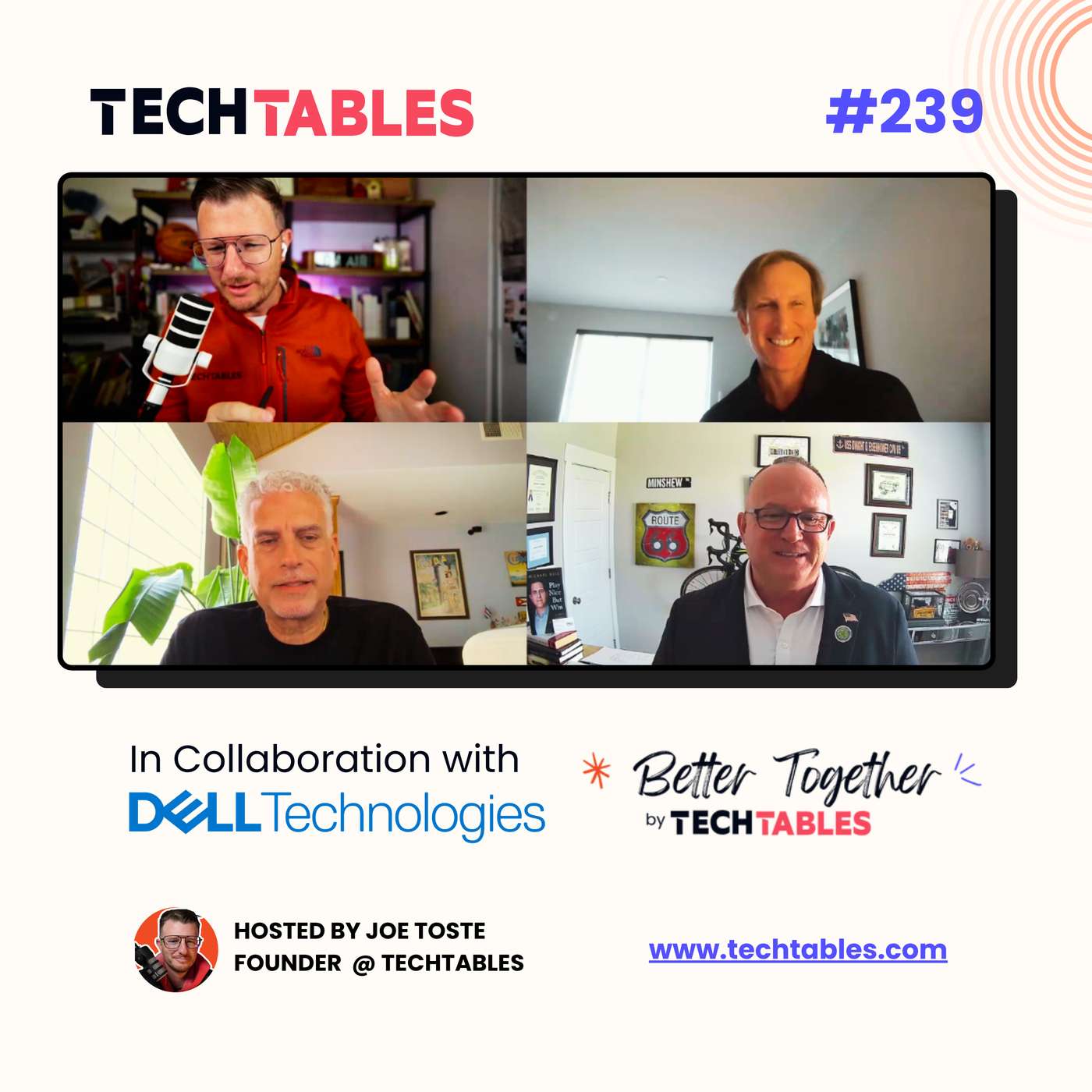
#239: The AI Bill Nobody Can Budget For | Broward County, NC Courts & Dell Technologies

Broward County has 31 cities, 67+ lines of business, and 14 IT managers that CIO Domenic DiLullo has to keep in sync - while a property tax measure heading to the ballot could reshape his entire budget. Glenn Mack just took over as CTO of the North Carolina courts: 100 counties, 105 courthouses, from Murphy to Manteo. He walked in from 17 years in public safety and found the AI policy was… non-existent. And Jon Minshew spent 30 years in North Carolina state government - CIO for the governor's office, and later the state's first Chief Customer Officer - before crossing over to Dell Technologies, where he now advises the same CIOs he used to sit alongside. We put all three on one recording, and the conversation went somewhere most AI conversations never go: the invoice. At one point I said I was hoping market forces would bring AI prices down over time. Dom cut me off mid-sentence: "I disagree. I wholeheartedly disagree." When a county CIO pushes back that hard on air, you listen to why. Guests Domenic DiLullo CIO, Broward County, Florida Glenn Mack CTO, North Carolina Administrative Office of the Courts Jon Minshew Chief Strategist, Dell Technologies Timestamps ( 03:38 ) NC Courts overview: 100 counties, 105 courthouses, Odyssey eCourts ( 05:05 ) Broward overview: 31 cities, 67–70 lines of business, AI investment ( 08:43 ) Courts' AI readiness: "the policy was there was none" ( 11:50 ) Legislative pressure, "just do AI" ( 12:39 ) Broward's data foundation + two-year CAP policy, 30 use cases ( 15:00 ) Token uncertainty vs budgets: "nobody wants that surprise bill ( 18:54 ) The cab with no meter ( 23:41 ) $40K server now $75K; no relief until 2030 ( 28:24 ) Jon's advising playbook: outcome-first workshops, quick wins ( 30:31 ) Buy-in: directors, CFOs, chief justices - and lobbying for funding ( 31:19 ) The skill-set gap; vendors working themselves out of a job ( 36:36 ) "You can buy the car - but can you afford the car?"

June 30, 2026Episode 23836 min

#238: 40 CIOs. 40 Different Missions. How LA County's CIO Holds IT Together — with Info-Tech Research Group

Los Angeles County is the largest county in the U.S. serving over 10 million people across 40+ different departments. They just passed a $46 billion budget. And their CIO, Peter Loo, has to coordinate with 40 other CIOs to get anything done. That’s not a technology problem. That’s one of the hardest leadership and governance challenges in all of public sector — and Peter has been doing it for over 30 years because, as he put it, “You can see the impact you make directly in the services being delivered.” That stayed with me. I coach high school basketball for the same reason. I sat down with Peter and Hannes Scheidegger , Chief Global Services Officer at Info-Tech Research Group , on-site at the 36th floor of The Gas Company Tower in downtown Los Angeles. Peter and Hannes have been working together since around 2010 — across an EHR implementation at five hospitals, a data center consolidation from 42 facilities down to one T5, a countywide voting system, and more. This is one of the longest, most tested partnerships I’ve seen in public sector. And the lessons transfer far beyond LA. Guests Peter Loo , Chief Information Officer, Los Angeles County, CA Hannes Scheidegger , Chief Global Services Officer, Info-Tech Research Group Timestamps ( 0:00 ) Peter Loo introduces LA County — 40 departments, 40 CIOs, and a $46 billion budget ( 2:00 ) The EHR origin story — five hospitals, one system, five different implementations ( 4:00 ) What made it succeed — executive commitment, empowered steering committees, and a “not if but how” mindset ( 8:00 ) AI governance lessons — why principles beat prescriptive guidelines, and how LA County worked with GovAI Coalition ( 12:00 ) How Info-Tech engages — blueprints, guided implementations, workshops, and full consulting ( 16:00 ) The data center consolidation — 42 data centers, some were closets, some next to refrigerators ( 18:00 ) How to communicate with executives — the language of value, risk, and constituent services ( 22:00 ) The most contentious meeting of Hannes’ career — CIOs in one room who thought they’d agreed. They hadn’t. ( 28:30 ) “We want you to do what you did for DHS” — the moment that defined the partnership ( 33:00 ) Closing advice — commit to the mission, be patient and persistent, always do it as a “we”

June 24, 2026Episode 23736 min

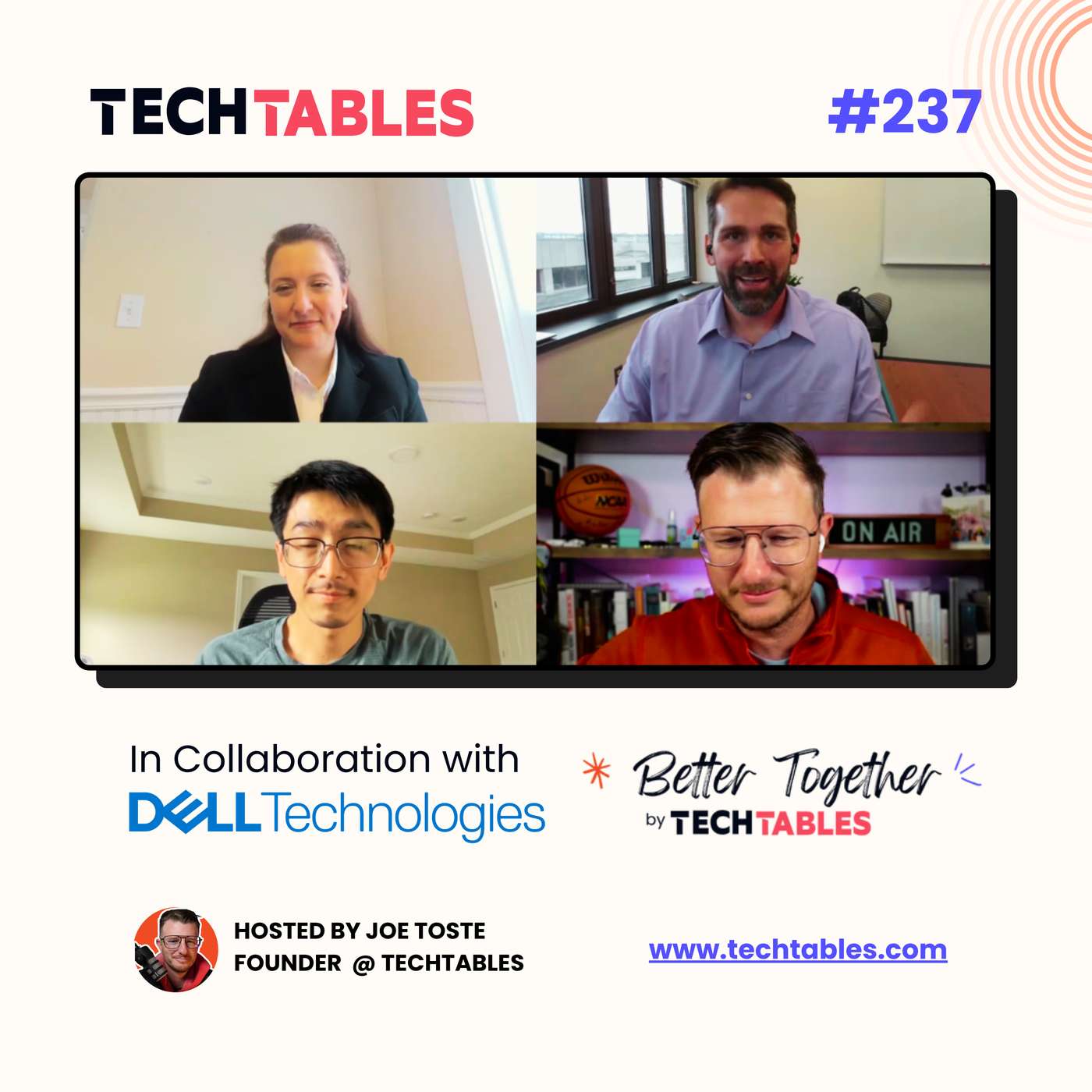
#237: University of Pittsburgh & Dell Technologies: Can AI Wearables Predict a Heart Attack Before It Strikes?

What if your wearable could do more than track steps - and actually help detect cardiovascular risk before symptoms appear? Heart disease is the deadliest disease on the planet. In the U.S. alone it killed close to 300,000 - more than cancer. And it’s a quiet killer: by the time you feel a symptom, the damage is usually already done. Pengfei Zhou, Assistant Professor at the University of Pittsburgh’s School of Computing and Information, is trying to catch it earlier - building AI-powered wearables that read your heart continuously instead of waiting for a checkup. That tracks with something deeper for me: my brother-in-law is a spinal surgeon, and a book called Outlive got him thinking about the “four horsemen” of disease. Heart disease topped the list. He’s been mostly plant-based ever since. I sat down virtually with Pengfei, Matt de Lima Barbosa (Director of IT, Pitt’s School of Computing and Information), and Adrienne Garber, Chief Technology & Innovation Strategist for Higher Education at Dell Technologies, to talk about their partnership. What emerged is a live case study in what happens when a researcher, an embedded IT team, and a technology partner actually commit to the same problem instead of working around each other. Guests Pengfei Zhou , Assistant Professor, University of Pittsburgh School of Computing and Information Matt de Lima Barbosa , Director of Information Technology, University of Pittsburgh School of Computing and Information Adrienne Garber , Chief Technology & Innovation Strategist, Higher Ed, Dell Technologies Timestamps ( 01:00 ) Inside Pitt’s School of Computing and Information ( 02:45 ) Pengfei Zhou’s teaching and research focus ( 03:53 ) AIoT, wearables, and heart monitoring ( 07:04 ) How Dell’s higher ed innovation pilot reached Pitt ( 10:41 ) Why localized AI matters for health data ( 12:18 ) How embedded IT helps researchers move faster ( 13:41 ) Dell’s role as connective tissue between researchers and IT ( 18:18 ) Combining PPG and ECG signals for better blood pressure monitoring ( 21:00 ) The “Who Not How” Moment: Helping researchers move faster ( 25:12 ) AI, deep learning, and solving real problems

May 27, 2026Episode 23637 min

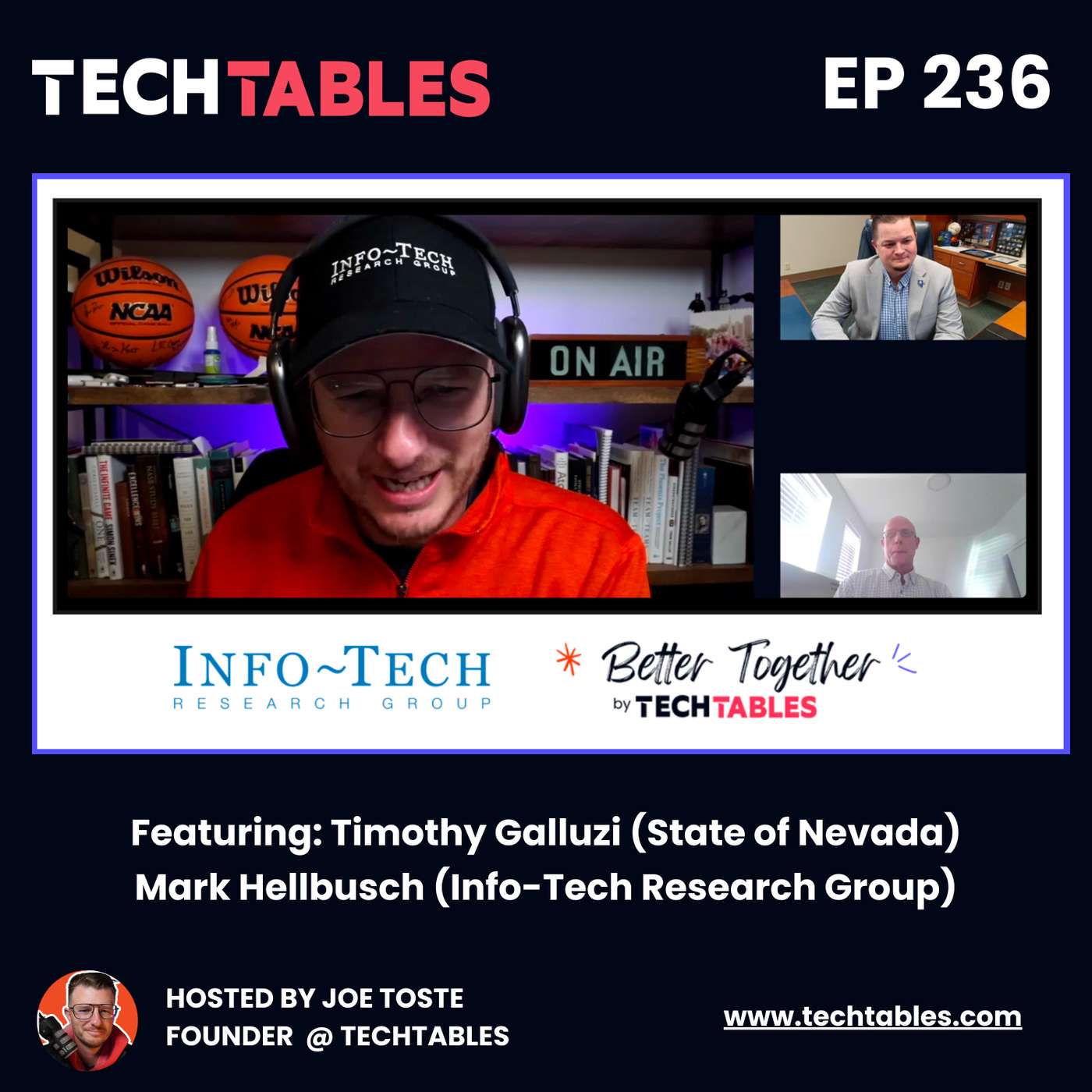
#236: How Nevada Recovered from a Statewide Cyber Attack in 28 Days (And What Every CIO & CISO Should Do Before It Happens to Them)

Nevada woke up to a ransomware attack that took 60+ state agencies offline. No ransom paid. Full recovery in 28 days. State CIO Timothy Galluzi and Info-Tech's Mark Hellbusch break down the largest ransomware attack in Nevada state history - how the network came back in 48 hours, how they kept citizen trust through radical transparency, and what every state CIO, CISO, and public sector IT leader needs to know about incident response, Zero Trust Architecture, and building the partnerships that actually show up when it matters. Featuring Timothy Galluzi , CIO State of Nevada Mark Hellbusch , Director, AI Security & Privacy, Info-Tech Research Group Timestamps ( 00:00 ) Every 39 seconds - ransomware by the numbers ( 01:00 ) The call Tim never wanted to get ( 05:50 ) 18-20 hour days and kicking people out of the office ( 08:00 ) Managing public comms with an active adversary watching ( 14:30 ) NASCIO community: peer intel sharing in a crisis ( 16:00 ) When Info-Tech showed up vs. the cold call vendors ( 17:30 ) "28 days of success" - building the after action report ( 24:00 ) Assembly Bill One: unanimous vote, statewide SOC ( 30:00 ) Trusted partner vs. vendor - the real difference ( 34:00 ) Zero Trust: 80% risk reduction and $1.5M ROI

May 20, 2026Episode 23520 min

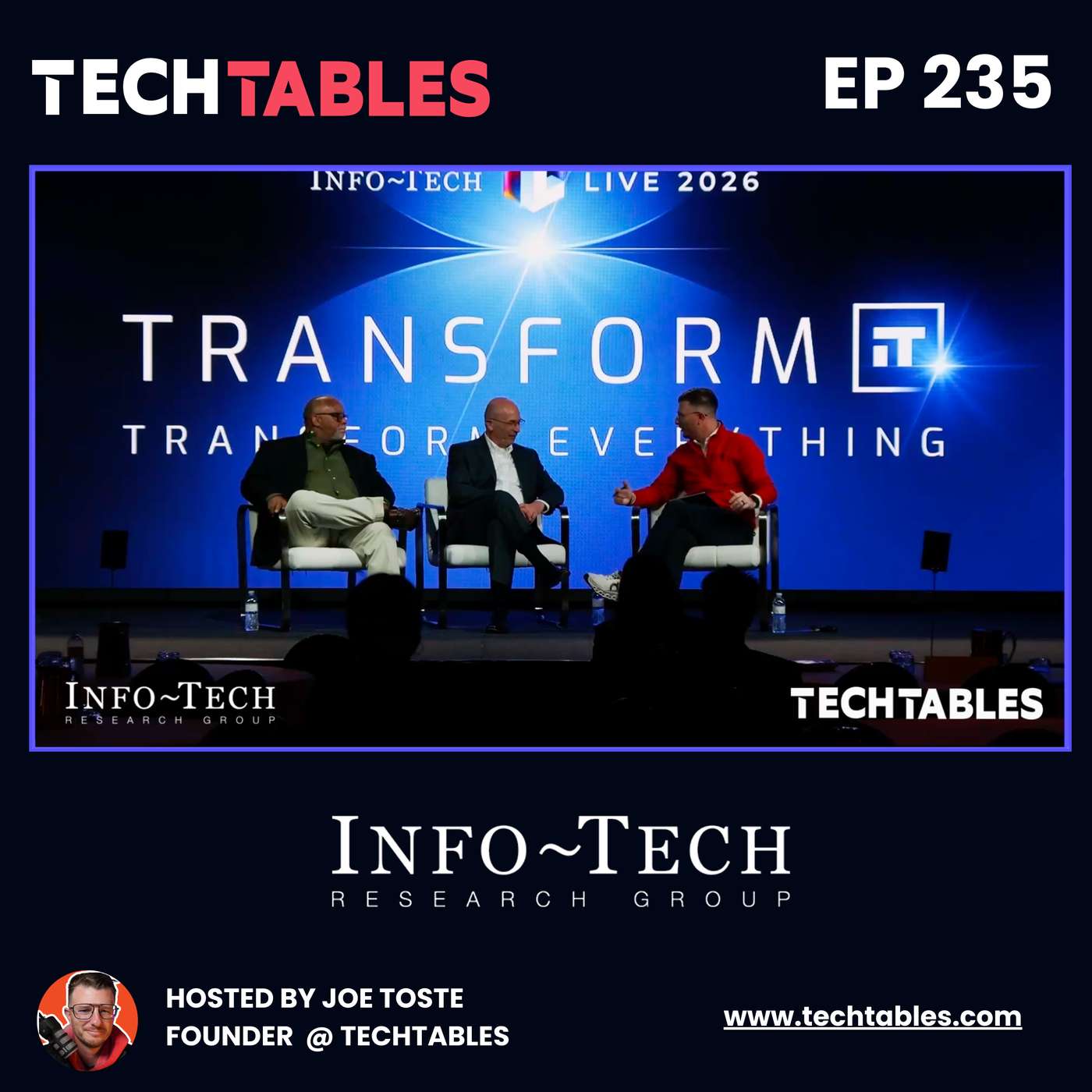
#235: The Edu-pocalypse Is Here - What Higher Ed CIOs Need to Do Now

In this episode, Mark Roman and Carlos Thomas from Info-Tech break down the enrollment cliff, AI disruption, and cultural skepticism hitting Higher Ed - and why the CIO is the one best positioned to lead through it. Guests Mark Roman , Managing Partner for the Education Business, Info-Tech Research Group Carlos Thomas , IT Executive Consultant, Info-Tech Research Group Timestamps ( 1:45 ) What CIOs are excited about in Higher Ed - the question that flips the conversation ( 3:20 ) AI, Agentic AI, and Bloom's Taxonomy - why the CIO is becoming a campus leader ( 5:00 ) The CIO as technology-informed COO - Carlos on the elevation of the role ( 6:30 ) The enrollment cliff and South Africa - how demographics are reshaping institutions worldwide ( 9:00 ) CIO to COO - why the person who sees everything is the one who should run the organization ( 11:00 ) The diplomat skillset - navigating faculty politics and getting things done ( 13:00 ) The "edu-pocalypse" - DOGE, the Department of Education, and cultural skepticism toward Higher Ed ( 15:00 ) AI token data - two-thirds of all AI tokens are being consumed in education ( 19:00 ) The podcast topics they'd love to do next - students and responsible AI

April 21, 2026Episode 23440 min

#234: You Can't Turn Off 911 While You Modernize It - And You Can't Close an Airport Either

Episode Summary What do you do when you can't stop the thing you're trying to fix? Three returning guests sit down for one of the most honest conversations about public sector modernization we've had on the show. From the latest on SF's 911 cloud migration, to what it means to modernize Harry Reid International Airport in real time while simultaneously designing the technology architecture for a second commercial airport 20 miles south, to Seguin's workforce transformation from one staff member with a degree and zero certifications in 2018 to 13 degrees and 27 certifications today - join us for this powerful conversation about leadership, community, and what it means to let others carry the message. Featuring Michelle Geddes CIO San Francisco Department of Emergency Management Rishma Khimji CITO Clark County Department of Aviation (Harry Reid International Airport) (now CIO Greater Orlando Aviation Authority) Shane McDaniel CIO City of Seguin, TX | TAGITM Past President Timestamps ( 04:55 ) - The LinkedIn Banter Origin Story ( 07:20 ) - Michelle: SF's 911 Cloud Journey & Hybrid Architecture ( 09:25 ) - ESInet, Copper Lines Failing in LA & State Partnership ( 11:14 ) - AI for Multilingual 911 Dispatch ( 12:47 ) - Rishma: Harry Reid's Second Airport - 20 Miles South ( 14:31 ) - Using General Aviation Airports as Innovation Labs ( 16:40 ) - Computer Vision at Checkpoints & the 3-Year Rolling Stack ( 18:23 ) - Shane: Seguin's Workforce Story - 0 to 27 Certifications ( 23:48 ) - The Amazon Warehouse Hire & The Best Buy Delivery Driver ( 36:12 ) - TAGITM: The Solution Is in the Room ( 39:13 ) - Leadership, Community & Letting Others Carry the Message Listen now: YouTube x Apple x Spotify Whenever you’re ready, there are 3 ways you can connect with TechTables: 1. 📬 The TechTables Newsletter Thanks for reading TechTables! Get early access to new episodes, insights, upcoming events, and more — straight to your inbox. Join now: https://www.techtables.com/ 2. 🤝 Are you a local government CIO who wants to become a better leader? Check out our high-trust, vendor-free peer group built for local government CIOs tackling real challenges, honest conversations, and an authentic desire to become a better leader — our next retreat is September 23rd-25th in Denver! Apply to Join → https://techtables.com/communities-local-government 3. 🤝 The Better Together Virtual Series The narrative-driven series bringing together industry partners and public sector CXOs. Discover the compelling stories that unfold when we stop working in silos and start building together. »»» Email joe@techtables.com to learn more. Platinum Newsletter Sponsor: Missed out on Info-Tech LIVE in New Orleans? No worries, you can join TechTables & Info-Tech Research Group at Info-Tech LIVE 2026 - Las Vegas (June 9 - 11, 2026)! Gold Newsletter Sponsor: SentinelOne - Learn how SentinelOne empowers this state to stay secure. Verizon Frontline -The advanced network that keeps first responders connected when it matters most. Carahsoft - The Trusted Public Sector IT Solutions Provider™, supports government agencies and education/healthcare markets. Contact your Carahsoft rep today to access special discount pricing exclusively through the TechTables + Carahsoft partnership! This is a public episode. If you would like to discuss this with other subscribers or get access to bonus episodes, visit techtables.substack.com

April 17, 2026Episode 23348 min

#233: Is "Modernization" a Cop-Out? With City of Boston, Clark County & Dell Technologies

Episode Summary Boston's CIO thinks "modernization" is what you say when you've stopped investing. Clark County thinks AI should handle your entire move to a new city. Dell thinks you can't do any of it without clean data. Three takes. One conversation about what government services actually look like when they work. Featuring Santi Garces is Chief Information Officer at the City of Boston - leading a team that spans user researchers, designers, economists, and policy analysts, and currently building open-source MCP infrastructure to connect AI tools with city services at scale. Bob Leek is Chief Information Officer at Clark County, Nevada - overseeing technology for the 11th largest county in the country, home to Las Vegas, with a strategy centered on helping large diverse communities thrive through people, process, and technology solutions such as AI governance, and drone-assisted emergency response. Carrie Smith is Chief Technology and Innovation Strategist at Dell Technologies - covering the East and tracking modernization trends across state and local government nationwide, with a focus on helping cities start with the right problem instead of the right product. Timestamps ( 2:00 ) Boston's AI-powered website search - 400% improvement in positive feedback, built in-house ( 7:00 ) Clark County's AI framework - AI as a "how," not a "what," built around four constituent personas ( 12:00 ) Dell's field view - why clean data has to come before any AI solution( 17:00 ) Santi's beef with "modernization" - why small, continuous investment beats the big bang approach ( 20:00 ) Philadelphia's illegal dumping problem - how a vendor conversation became a drones-as-first-responders pitch ( 25:00 ) Clark County drones - 30 to 60 second emergency response combined with ShotSpotter ( 31:00 ) Boston's MCP server - building open source infrastructure so AI tools can talk to city services reliably ( 35:00 ) The pace problem - Bob on why the universe shifting every 17 days is the CIO's real challenge ( 39:00 ) Leadership and resilience - Carrie on stage three breast cancer, Bob on internal promotions, Santi on growing up in Colombia Listen now: YouTube x Apple x Spotify Whenever you’re ready, there are 3 ways you can connect with TechTables: 1. 📬 The TechTables Newsletter Thanks for reading TechTables! Get early access to new episodes, insights, upcoming events, and more — straight to your inbox. Join now: https://www.techtables.com/ 2. 🤝 Are you a local government CIO who wants to become a better leader? Check out our high-trust, vendor-free peer group built for local government CIOs tackling real challenges, honest conversations, and an authentic desire to become a better leader — our next retreat is September 23rd-25th in Denver! Apply to Join → https://techtables.com/communities-local-government 3. 🤝 The Better Together Virtual Series The narrative-driven series bringing together industry partners and public sector CXOs. Discover the compelling stories that unfold when we stop working in silos and start building together. »»» Email joe@techtables.com to learn more. Platinum Newsletter Sponsor: Missed out on Info-Tech LIVE in New Orleans? No worries, you can join TechTables & Info-Tech Research Group at Info-Tech LIVE 2026 - Las Vegas (June 9 - 11, 2026)! Gold Newsletter Sponsor: SentinelOne - Learn how SentinelOne empowers this state to stay secure. Verizon Frontline -The advanced network that keeps first responders connected when it matters most. Carahsoft - The Trusted Public Sector IT Solutions Provider™, supports government agencies and education/healthcare markets. Contact your Carahsoft rep today to access special discount pricing exclusively through the TechTables + Carahsoft partnership! This is a public episode. If you would like to discuss this with other subscribers or get access to bonus episodes, visit techtables.substack.com

Is this your show?

Claim this listing to keep it up to date, reach guests who want to pitch you, and manage bookings with Guestify.

Claim this listing

More Technology podcasts