
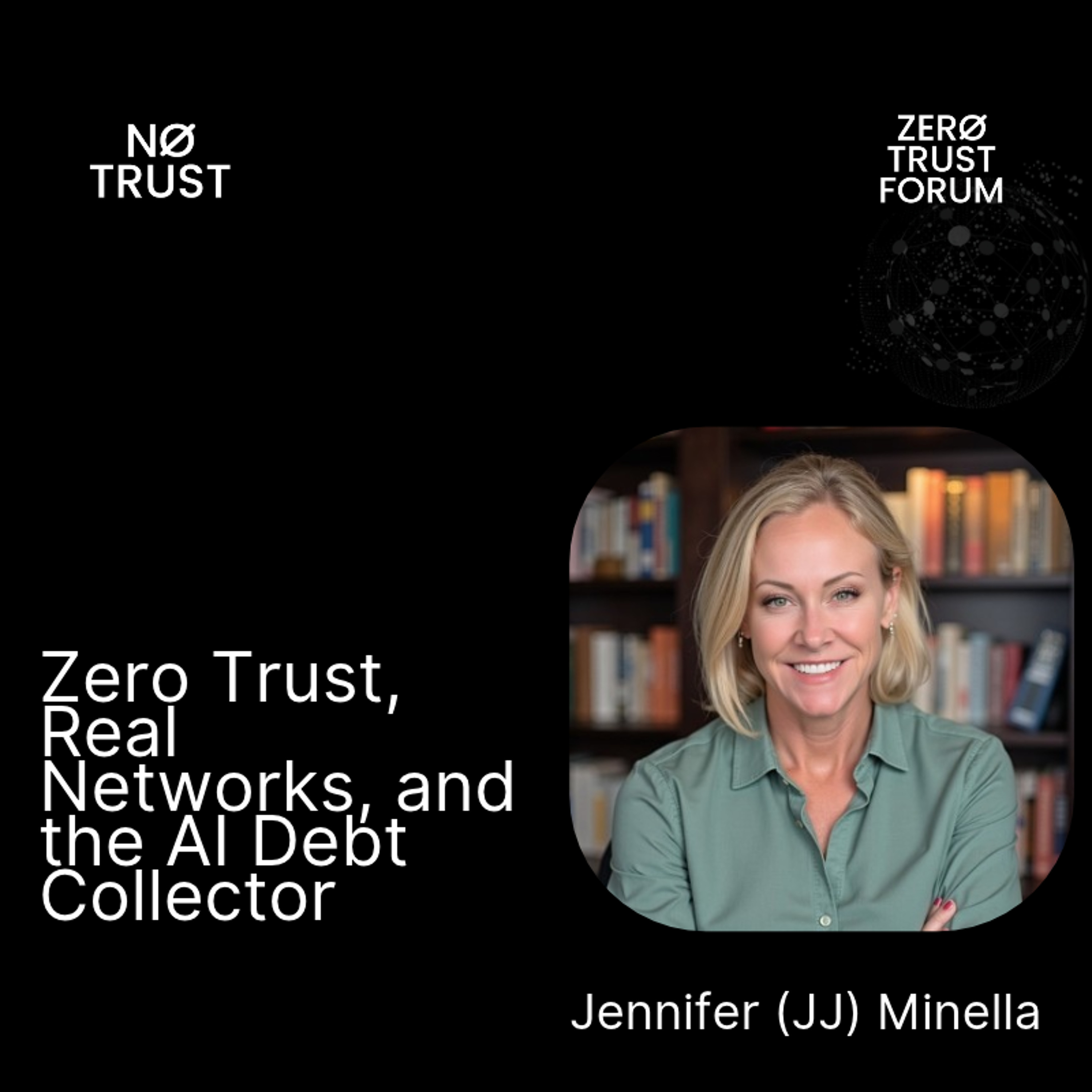
Zero Trust, Real Networks, and the AI Debt Collector with Jennifer (JJ) Jabbusch
In this episode, network security consultant JJ Jabusch returns to the No Trust podcast to explore with Jaye Tillson and John Spiegel why Zero Trust programmes stumble when networking and security teams have different ideas about what they’re trying to achieve. Drawing on his experience with multi-vendor networks, JJ explains why a request to segment a network can be more complicated than it sounds. Before engineers can decide where to enforce a policy, they need to know which devices they can identify, what those devices need to communicate with, and what they can see once a connection is established. The conversation explores how a shared architecture helps both teams work through those questions, particularly when industrial equipment and IoT devices are involved. John introduces the idea of agentic AI as a “technical-debt collector”. A temporary firewall rule can stay in place for years because nobody remembers why it was added or what might break if it’s removed. The team considers what happens when an AI agent can use that access at machine speed, and why documenting the original decision matters as much as recording the configuration itself. JJ also shares his plans for NetSecConf, a community-focused network security conference in North Carolina, and explains why vendor-neutral education matters for the next generation of network engineers. The team discusses where automation can help across platforms, how engineers can verify rules translated by AI, and why organisations need to give people time to develop and maintain those skills. Finally, JJ offers some practical advice for engineers juggling learning with the demands of keeping a network running. Even an hour a week can give you time to try a script, practise using AI safely, or understand why a system works before you have to troubleshoot it. The episode wraps up with Thanksgiving food traditions and a Yorkshire pudding wrap. Key Takeaways: • Networking and security teams need a shared definition of Zero Trust and a clear objective for each change. • Segmentation depends on understanding which devices need to communicate and why. • Inconsistent device identity and limited visibility make policy harder to enforce across IoT, OT and remote access environments. • Architecture diagrams and documentation help engineers understand why systems work and what might break when they change. • A temporary exception can become long-term technical debt when its purpose goes undocumented. • Agentic AI raises the stakes for limiting access and reducing blast radius. • Cross-vendor automation takes skills, time and ongoing maintenance. • Engineers need to verify that AI-translated rules preserve the intent of the original policy. • Vendor-neutral education gives engineers foundations they can apply across platforms. • Protecting even an hour a week creates space to learn and experiment safely. Follow & Subscribe on all Podcast platforms. What is the Zero Trust Forum about? It’s about empowering zero trust security professionals with strategies, architecture, and real world journeys to secure the digital future, the right way! Follow the Zero Trust Forum on LinkedIn – www.linkedin.com/company/zero-trust-forum/ Follow Jaye Tillson on LinkedIn – www.linkedin.com/in/jaye-tillson/ Follow John Spiegel on LinkedIn – www.linkedin.com/in/john-spiegel-2011543/